Understanding the Challenge: Low Scores, Unique Specialty, and the IMG Perspective
Applying to a Medicine-Psychiatry combined program as an international medical graduate with a low Step score can feel like you are stacking challenges: an uncommon specialty, the IMG label, and below average board scores. Yet every year, applicants with these exact profiles match successfully.
This IMG residency guide will focus specifically on low Step score strategies for those interested in med psych residency (also referred to as medicine psychiatry combined programs). Whether you have a low Step 1 score, failed a Step exam, or worry about matching with low scores, your file can still be made compelling—if you understand how program directors think and how to strategically reshape your application.
Why Medicine-Psychiatry Is Different
Combined Internal Medicine–Psychiatry programs are small, academically oriented, and tend to attract applicants who:
- Are interested in complex, high-comorbidity patients
- Think in biopsychosocial and systems-of-care terms
- Have a track record of intellectual curiosity and resilience
This means:
- Numbers matter, but they are not the whole story
- Programs look closely at narratives, letters, and longitudinal interests
- They value applicants who can tolerate ambiguity and integrate different perspectives
For an IMG with low scores, this can actually be an opportunity: your story, experiences, and fit with the niche of med-psych can carry more weight than in some larger categorical specialties.
Step Scores in Context: What “Low” Really Means for IMGs and Med-Psych
Before you design a strategy, you need to understand what you’re working with.
What Counts as a “Low” Step Score?
For IMGs, “low” is not a single number. It depends on:
- Year of graduation
- Attempt history (first attempt vs repeat)
- Specialty competitiveness
- Overall application strength
As a rough orientation:
Step 1 (numeric era)
- Below ~215–220: Often viewed as below average for IMGs in most core specialties
- Fail on Step 1: Significant red flag but not always fatal, especially if:
- You passed on the next attempt with a clear score jump
- Step 2 CK and later exams are solid
Step 2 CK
- Below ~225–230 for IMGs may feel low for med-psych–interested internal medicine tracks
- A fail on Step 2 CK is usually more concerning than Step 1, but still can be overcome with strong subsequent performance and an otherwise compelling application
The key distinction: One modestly low score vs. a pattern of weak performance or multiple failures. Programs are asking:
- “Is this applicant safe to graduate and pass boards?”
- “Do they show growth and resilience after setbacks?”
Your entire strategy should help them answer yes to both.
How Combined Medicine-Psychiatry Programs View Scores
Compared to categorical Internal Medicine or categorical Psychiatry:
- Med-psych programs are small and often university-based
- They may have slightly higher numerical expectations than community psychiatry programs, but they also:
- Care more about intellectual fit
- Notice genuine dual-interest in medicine and psychiatry
- Often have faculty champions who are themselves non-traditional or interdisciplinary
For an international medical graduate, a low Step score is a concern, but you can offset it with evidence that:
- You can handle complex cognitive work
- You are reliable, resilient, and coachable
- You have a consistent bi-directional interest in both internal medicine and psychiatry
Strategy 1: Academic Damage Control and Score-Risk Management
Your first task is to stabilize the academic narrative in your file.
1. Own and Explain, Don’t Hide
If you have:
- A low Step 1 score
- A fail on Step 1 or Step 2
- Other academic issues (delayed graduation, remediation)
You should address this clearly and briefly in your personal statement or ERAS “Additional Information” section, NOT in an apologetic or defensive way.
Example framing:
“I took Step 1 during a period when I was simultaneously preparing for my final university exams and working part-time to support my family. My time management was poor, and I underestimated the adjustment required for US-style exams. I did not perform to my potential.
I then restructured my study approach completely—joining a structured Qbank schedule, regularly self-testing, and seeking mentorship. This resulted in a significant improvement on Step 2 CK, which better reflects my current knowledge and approach to learning.”
Key principles:
- Be truthful and specific (without over-sharing personal details)
- Show insight, growth, and concrete changes you made
- Emphasize the upward trend and what it suggests about your future performance
2. Create a Strong Upward Academic Trend
For applicants with below average board scores, your strongest tool is:
- A higher Step 2 CK score than Step 1 (if you still have numeric scores)
- A strong Step 3 result (if you’ve taken or can realistically take it)
- Strong clinical evaluations and clerkship grades on US rotations
Action steps:
If you haven’t taken Step 2 CK yet:
- Treat it as your “redemption exam” and invest heavily in preparation
- Aim to overperform your Step 1 by 10–20+ points if possible
If you already have a low Step 2 CK:
- Consider taking Step 3 before or during the match cycle, if:
- Your visa situation allows it
- You can realistically score solidly above your previous performance
- Do not rush into Step 3 just to have it—another poor score hurts more than no exam
- Consider taking Step 3 before or during the match cycle, if:
Programs know Step 3 is challenging. A pass with a reasonably solid score can reassure them that:
- You are board-eligible material
- You are at lower risk of struggling during residency
3. Strategic School and Transcript Positioning
If your medical school:
- Has a reputation for strong clinical training
- Has graduates who previously matched into internal medicine, psychiatry, or med-psych
Highlight this on your CV and during interviews:
- Mention notable alumni (if appropriate)
- Describe distinctive features: integrated mental health teaching, strong internal medicine system
If your transcript has weak spots (failed rotations, repeat years):
- Explain concisely, then pivot to later strength:
- “I repeated my third-year internal medicine exam after initially failing due to inadequate exam technique. During the repeat rotation I received honors and strong evaluations from my clinical supervisor.”
Strategy 2: Making Your Clinical Profile “Med-Psych Strong”
For combined programs, your clinical profile must clearly show genuine, balanced interest in both medicine and psychiatry.

1. US Clinical Experience Tailored to Med-Psych
Aim for both:
- Internal Medicine rotations (preferably inpatient, academic or university-affiliated)
- Psychiatry rotations (CL psychiatry, inpatient psych with strong medical comorbidity, or integrated care)
Strategically, ideal experiences for a medicine psychiatry combined applicant include:
Consult–Liaison (CL) Psychiatry:
- Psychiatry consulted on medically ill inpatients
- Shows you can bridge medicine and psychiatry
Primary care or internal medicine with integrated behavioral health
- Demonstrates appreciation of collaborative care models
Inpatient medicine service caring for complex patients** (cirrhosis, CHF, COPD with depression, substance use, delirium, etc.)**
During these rotations, act like a med-psych resident in training:
- Volunteer to follow patients with both medical and psychiatric conditions
- Offer to present on topics that integrate both fields (e.g., “Management of depression in patients with heart failure”)
- Ask preceptors specifically for feedback on how you handle complex, overlapping problems
2. Letters of Recommendation That Speak to Med-Psych Qualities
For an IMG with low Step scores, letters often matter more than usual.
Aim for at least:
- 1–2 letters from Internal Medicine attendings (preferably U.S. academic setting)
- 1–2 letters from Psychiatry attendings (ideally someone who has seen you with medically complex patients)
- If possible, one letter from a physician directly affiliated with a med-psych or CL service
Ask letter writers to comment specifically on:
- Your ability to manage both medical and psychiatric aspects of care
- Your clinical reasoning with complex, multi-problem patients
- Your resilience, work ethic, and teachability after challenges
- Any evidence that your clinical performance exceeds what your scores might suggest
You can say something like:
“Because my Step scores are not as strong as I hoped, it would be extremely helpful if you could comment on my clinical performance, reliability, and ability to manage complex, dual-diagnosis patients—especially where it may not be reflected in my test results.”
3. Show Longitudinal Interest, Not Just a Last-Minute Switch
Programs are wary of applicants who suddenly “discover” med-psych at the last second. Show a trail of interest:
- Early courses or experiences in:
- Psychosomatic medicine
- Addiction medicine
- Behavioral medicine within internal medicine
- Volunteer work:
- Free clinics serving patients with significant mental health needs
- Homeless outreach, addiction support, or chronic illness support groups
- Research or QI projects:
- Improving outcomes in medically ill patients with depression
- Reducing readmissions by addressing psychiatric comorbidities
Use your CV and personal statement to connect the dots:
“Throughout medical school, I was drawn to patients whose medical illness was inseparable from their psychiatric conditions—patients who kept returning to the hospital not just because of heart failure, but because of untreated depression and addiction. This pattern led me to seek out consult-liaison psychiatry and internal medicine rotations, and ultimately to the medicine psychiatry combined pathway.”
Strategy 3: Crafting a Compelling Narrative That Outweighs Low Scores
Your personal statement, ERAS experiences, and interviews must build a coherent, memorable narrative of who you are beyond the numbers.
1. Personal Statement for Med-Psych as an IMG with Low Scores
Your med-psych personal statement should:
- Acknowledge academic challenges briefly (if significant)
- Emphasize how you think about complex patients
- Show why you need both medicine and psychiatry to practice the way you envision
Structure suggestion:
- Opening story: A patient or experience where medical and psychiatric issues were deeply intertwined.
- Development: How this led you to seek out dual-exposure experiences (rotations, research, volunteer work).
- Address the elephant (briefly, if needed):
- “While my USMLE scores are not as strong as I would like, they do not fully reflect my clinical performance or commitment. Through subsequent training and rotations, I have demonstrated…”
- Future vision: How you imagine your role as a med-psych physician (e.g., CL psychiatry, integrated primary care, academic leadership, global mental health in medically ill populations).
Make sure you sound like someone who belongs in an intellectually demanding, integrated specialty, rather than someone simply escaping low scores in other fields.
2. Using Experiences to Show Depth, Not Just Volume
On ERAS, choose experiences that highlight:
- Working with underserved populations with high medical-psychiatric burden
- Roles requiring persistence and responsibility (leadership in clinics, teaching, quality improvement)
- Any evidence of “bi-directional thinking”—considering medical, psychological, and social dimensions of cases
Example of a strong Experience description:
“During my CL psychiatry rotation at [Hospital], I followed patients on the internal medicine and surgery services whose anxiety, depression, and substance use complicated their medical recovery. I collaborated daily with medicine residents to adjust treatment plans, address delirium and withdrawal, and coordinate outpatient mental health follow-up. This role taught me to think across disciplines, negotiating between cardiology, psychiatry, and social work to create unified care plans.”
3. How to Talk About Low Scores in Interviews
If asked directly:
- Acknowledge without defensiveness
- Describe what went wrong factually (insufficient time, poor exam strategy, personal stressors—without appearing unstable)
- Explain what you changed in your approach
- Point to later evidence of improvement (Step 2, Step 3, clinical evaluations, letters)
Example response:
“My Step 1 score was lower than I had hoped. At that time, I underestimated how different US-style multiple-choice exams were from my school’s exams, and I did not have a structured question bank approach. After that experience, I changed my strategy completely—building a daily schedule, using timed blocks, and actively tracking my weak areas. The result was a significantly improved performance on Step 2 CK and positive feedback on my U.S. clinical rotations. I think that process taught me how to adapt my learning style and has made me more effective at absorbing complex material—skills I’ll bring into residency.”
Strategy 4: Application Tactics, Program Targeting, and Backup Planning
With matching with low scores, your strategy of where and how you apply can be just as important as what’s in your file.
1. Understand the Med-Psych Landscape
Medicine psychiatry combined programs are:
- Few in number (dozens, not hundreds)
- Often university-based or at large teaching hospitals
- Frequently competitive among applicants with strong narratives and varied backgrounds
Actionable steps:
Make a list of all med-psych programs and review:
- Their websites
- Current and past residents’ backgrounds (how many IMGs? any non-traditional paths?)
- Emphasis: CL psychiatry, primary care, inpatient med-psych units, addiction, etc.
Contact current residents (especially IMGs) politely via email or LinkedIn:
- Ask about program culture
- Ask whether they have known residents with below average board scores
2. Parallel Applications: Categorical Internal Medicine and Psychiatry
For an IMG with low Step scores, relying only on med-psych is risky because of:
- Small number of positions
- Variability in IMGs accepted annually
A smart backup structure is:
- Apply to medicine psychiatry combined programs where your profile aligns
- Simultaneously apply to:
- Categorical Psychiatry programs
- Categorical Internal Medicine programs (especially IMG-friendly, community or university-affiliated)
Tailor your materials:
- One med-psych personal statement
- One psychiatry personal statement
- One internal medicine personal statement
Each should:
- Share core themes (complex patients, resilience, IMG experience)
- Emphasize the dimension most relevant to that specialty
Your chances overall increase significantly when you apply to:
- A broad range of psychiatry programs, especially IMG-friendly ones
- A targeted list of internal medicine programs with known IMG acceptance and tolerance for varied scores
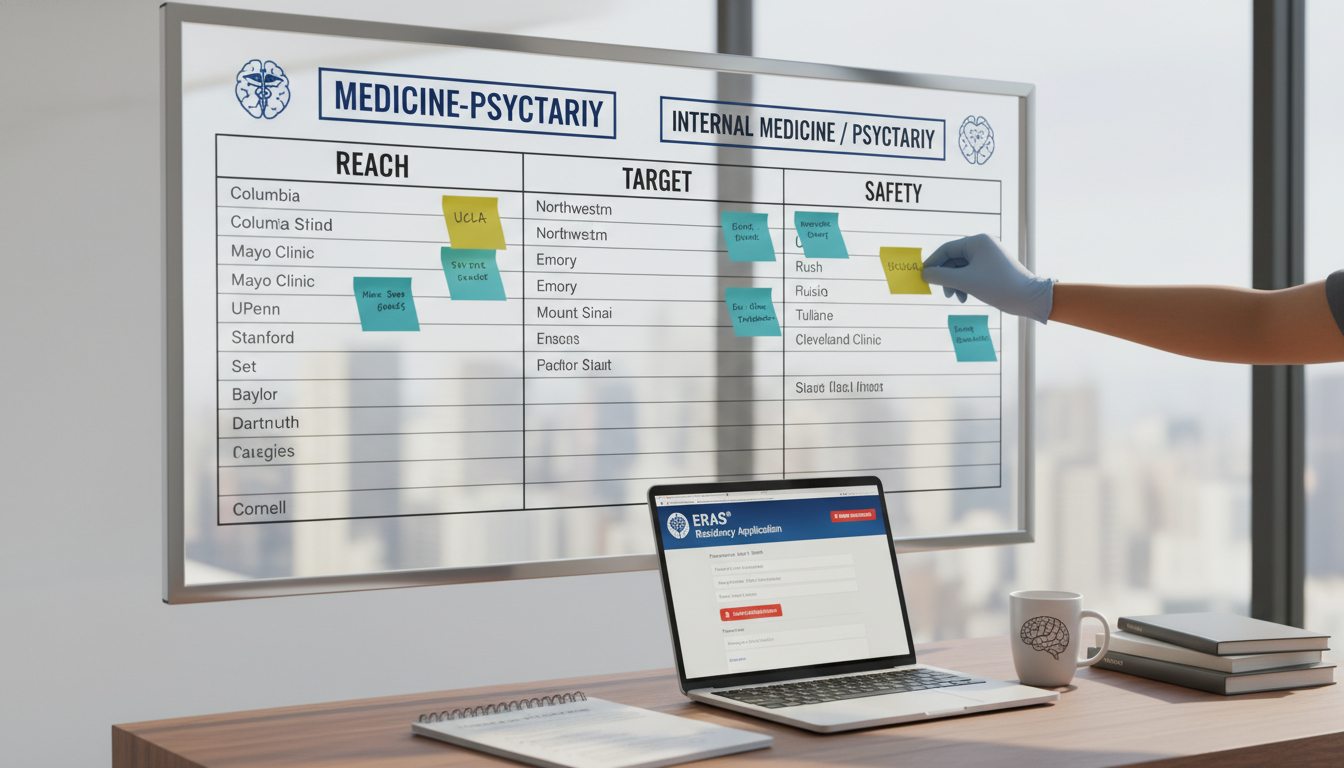
3. Program Filters and Realistic Targeting
Many programs use automated filters on:
- Step scores
- Number of attempts
- Year of graduation
To maximize your chances:
Look for programs that:
- Explicitly state they consider holistic review
- Mention mission-driven care, underserved populations, addiction, or integrated care—these often value story and fit more heavily
- Have current IMG residents (check websites, social media, Doximity, FREIDA)
Avoid over-investing in:
- Extremely top-tier academic centers that rarely take IMGs, unless you have some compensating strength (exceptional research, strong U.S. mentors, unique language/skills)
4. Strengthen Your Profile in the Year Before Applying (If You Have Time)
If you are still 6–18 months from applying, consider:
Research in med-psych–relevant topics:
- Depression in chronic illness
- Somatic symptom disorders
- Substance use in cardiac or liver disease patients
- Publications or posters at conferences (APA, ACP, APM, etc.)
Quality improvement projects:
- Reducing readmissions in patients with both CHF and depression
- Screening and management of delirium on internal medicine wards
Formal additional training or coursework:
- Online or in-person certificates in:
- Behavioral medicine
- Addiction medicine
- Global mental health
- Psychosomatic medicine
- Online or in-person certificates in:
This helps counteract low Step scores by showing you are intellectually engaged and academically active.
Frequently Asked Questions (FAQ)
1. Can I match into a Medicine-Psychiatry residency as an IMG with a low Step 1 score?
Yes, it is possible, but more challenging. Your chances improve significantly if:
- Your Step 2 CK (and Step 3, if taken) show improvement
- You have strong U.S. clinical experience in both internal medicine and psychiatry
- You obtain high-quality letters that directly address your clinical competence and resilience
- You apply strategically to a mix of med-psych, psychiatry, and internal medicine programs
The lower your scores and the more attempts you needed, the more critical it becomes to have a robust backup plan and a clear, compelling narrative.
2. Should I take Step 3 before applying to help overcome low scores?
If you can confidently prepare and perform better than your previous attempts, Step 3 can:
- Reassure programs that you are likely to pass boards
- Offset concerns about a low Step 1 score or borderline Step 2 CK
However:
- If you are not well-prepared, another low or failing score is significantly more damaging than having no Step 3 at all.
- Consider your time, finances, and visa constraints, as well as whether you can realistically show an upward trend.
3. How many Medicine-Psychiatry programs should I apply to, and how should I balance this with categorical programs?
Apply to all med-psych programs that are:
- Open to IMGs (check current or past residents)
- Reasonably aligned with your interest and background
Because there are very few med-psych positions nationally, you should not rely solely on them. Pair this with:
- A broad application to categorical psychiatry programs, especially those known to be IMG-friendly
- A targeted list of categorical internal medicine programs with a track record of accepting IMGs with varied scores
This multi-pronged approach gives you the best chance of matching while still pursuing your passion for integrated care.
4. How can I explain my low scores without sounding like I’m making excuses?
Use a three-part structure:
- Brief context – One or two sentences about the main factors (e.g., underestimating the exam style, poor test strategy, life stressor).
- Concrete changes – Specific actions you took afterward: new study schedule, Qbank use, mentorship, practice exams.
- Evidence of improvement – Higher subsequent scores, strong clinical evaluations, successful completion of demanding rotations.
Focus on growth and responsibility, not on blaming circumstances. Programs are often less concerned with the fact that you struggled once than with whether you took that struggle seriously and grew from it.
A low Step score does not have to define you as an international medical graduate. In medicine psychiatry combined programs in particular, your clinical insight, resilience, and authentic commitment to integrated care carry substantial weight. By carefully managing your academic narrative, deliberately strengthening your med-psych profile, and applying strategically across combined and categorical pathways, you can transform a numerical weakness into a broader story of persistence and fit—and significantly improve your chances of matching, even with below average board scores.