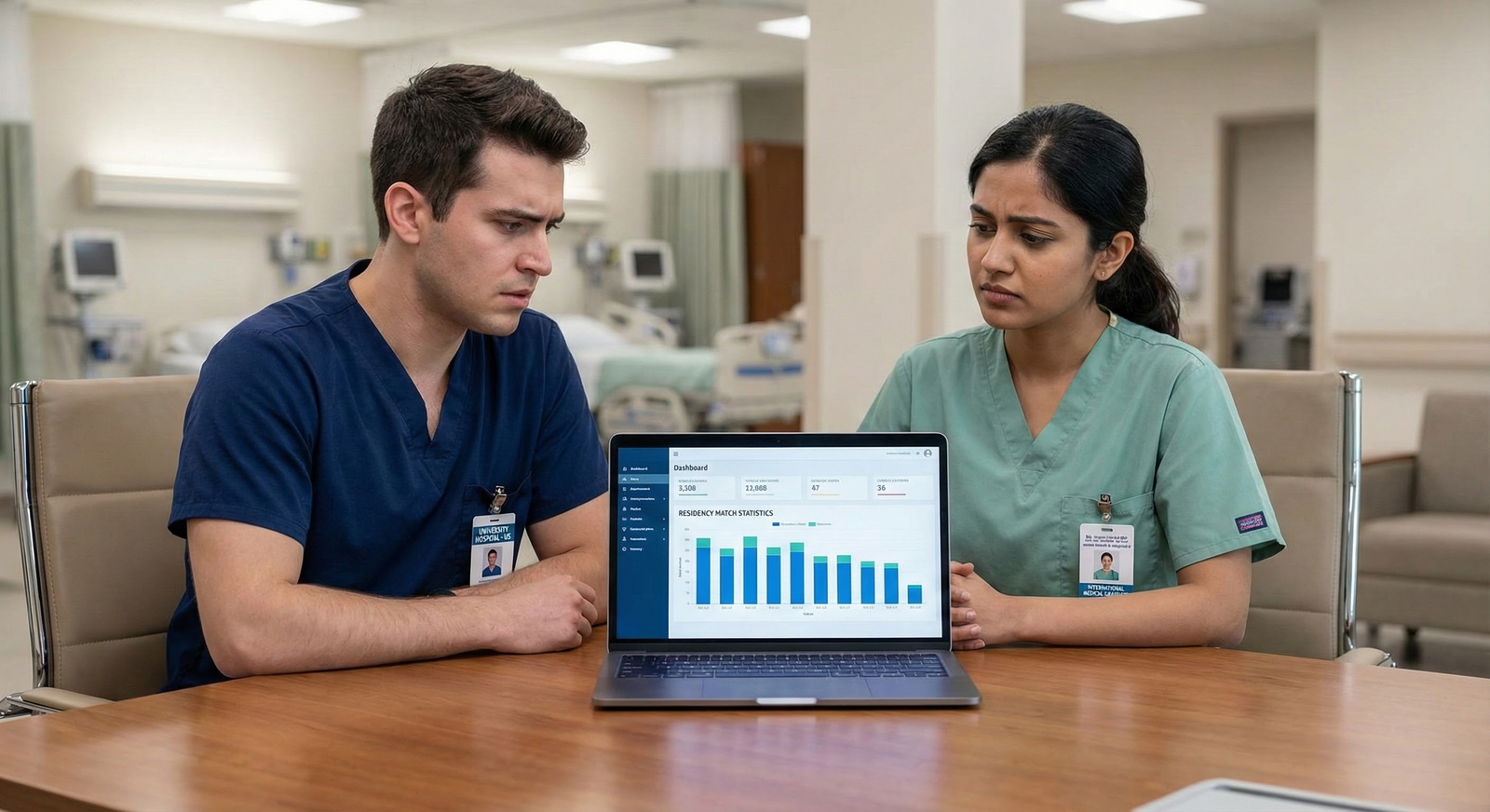
Understanding the Challenge: Low Step Scores as an IMG on the Pacific Coast
For an international medical graduate (IMG), applying to residency programs on the U.S. Pacific Coast—especially California—is highly competitive even with strong scores. When you add a low Step 1 score or below average board scores (Step 2 CK), the challenge feels much bigger. But it is not impossible.
This IMG residency guide focuses on strategies for low Step scores specifically tailored to:
- IMGs targeting California residency programs
- IMGs interested in west coast residency positions (California, Oregon, Washington)
- Candidates worried about matching with low scores, especially a failed or low Step 1
You cannot change your past scores, but you can control your strategy. Many IMGs with less-than-ideal scores match every year because they understood the landscape and calibrated their application, timelines, and narrative accordingly.
This article will help you:
- Understand how Pacific Coast programs actually view low scores
- Prioritize where and how to apply (and where not to waste energy)
- Build a portfolio that offsets a low Step score
- Craft a compelling story that reassures programs about your readiness
- Use targeted tactics for California residency programs vs. other west coast states
How Programs on the Pacific Coast View Low Scores
Before planning strategy, you need to know what you’re up against.
1. Why West Coast and California Are Especially Competitive
Residency programs in California, Oregon, and Washington are often flooded with applications from:
- U.S. MD and DO students who want to stay on the west coast
- Strong IMGs with significant U.S. experience
- Applicants drawn by lifestyle, weather, and big health systems
California residency programs in particular have:
- Historically fewer spots per applicant compared to some other regions
- A strong preference at many institutions for U.S. graduates
- Many programs that get thousands of applications per year
For an international medical graduate with a low Step 1 score, this means:
- Some programs will auto-screen you out purely on numbers
- Other programs may consider you only if the rest of your file is exceptional
- A focused, realistic list and strategic positioning become essential
2. What “Low Score” Means in Practice
“Low” depends on context and year, but for most recent cycles:
- Step 1 (now Pass/Fail):
- A failure on the first attempt is a major red flag
- A pass on second attempt is still concerning but can be overcome with a strong Step 2 CK and narrative
- Step 2 CK:
- Below average board scores usually means < ~230 for IMGs in competitive states (this may vary year to year)
- A score under ~220 (or especially < 210) limits options substantially on the Pacific Coast but doesn’t necessarily eliminate them
Rather than obsessing over the number itself, focus on:
- Relative performance: Is Step 2 significantly higher than Step 1?
- Trend: Improvement suggests growth and remediation of weaknesses
- Context: Illness, major life events, or testing conditions (explained carefully in your application when appropriate)
3. What Pacific Coast Programs Actually Care About
Scores open the door to an interview, but programs on the west coast—especially academic and California residency programs—will heavily weight:
- U.S. clinical experience (USCE), ideally hands-on
- Strong, specific letters of recommendation from U.S. faculty
- Ability to communicate clearly in English with patients and teams
- Professionalism, reliability, and “team fit”
- Any ties to the region (living there, family, previous school/work)
- Commitment to underserved populations, diverse communities, or specific patient demographics
A low Step 1 or Step 2 score is only one part of your story. Your mission is to ensure it is not the main part.
Core Strategies to Offset Low Step Scores as an IMG
This section focuses on what you can do to actively counterbalance a low Step 1 or Step 2 CK score.

1. Maximize Step 2 CK and (If Applicable) Step 3
With Step 1 now Pass/Fail, Step 2 CK is the key numeric differentiator.
If you already have a low Step 1:
- Treat Step 2 CK as your redemption exam
- Aim intentionally for significant improvement relative to Step 1
- Use high-yield resources (UWorld, NBME practice forms, Anki) with a structured schedule
If you already took Step 2 and the score is low:
- Consider taking Step 3 before the match if feasible and if you think you can do well.
- A solid Step 3 (especially > 220–230) can:
- Reassure programs about clinical reasoning
- Help for visa-seeking IMGs, as some programs prefer/require Step 3 for H-1B
But only take Step 3 if you are prepared to score clearly better than your previous exams. Another low score may reinforce the concern.
2. Build Strong, Hands-On U.S. Clinical Experience (USCE)
USCE is often the single most powerful tool for IMGs with low scores, especially in California and along the Pacific Coast.
Prioritize:
- Sub-internships / acting internships if you’re still a student or in a flexible internship year
- Hands-on observerships or externships where you can:
- Document histories
- Present patients
- Participate in rounds
- Be evaluated directly
When possible, choose USCE in the specialty and region you’re targeting:
- Example: An IMG applying to Internal Medicine in California secures a 4-week inpatient rotation at a community hospital in the Los Angeles area, obtains a strong letter from the rotation director, and participates in quality improvement (QI) work there.
Even if you can’t find USCE in California, U.S. experience anywhere—especially at academic or community teaching hospitals—is better than none.
3. Target the Right Program Types
For an international medical graduate with low Step scores, your odds are often higher at:
- Community-based programs (vs. highly academic university programs)
- Hospitals serving underserved or rural populations
- Programs known to be IMG-friendly (check residency websites, FREIDA, and match statistics)
- Newer programs or smaller programs that don’t get as many applicants
In California specifically:
- Many prestigious academic centers (UCSF, UCLA, Stanford, UCSD, etc.) are extremely competitive, especially for IMGs with low scores. You can apply, but do not rely on them.
- Focus on community and county hospitals, safety-net systems, and institutions that clearly list accepting IMGs in their prior classes.
In Oregon and Washington:
- Overall fewer residency spots than some other regions, but some programs are more open to IMGs, particularly in Family Medicine and Internal Medicine.
- Again, focus on community programs and those with a track record of training IMGs.
Use tools like:
- FREIDA (filter by “Accepts IMGs”)
- Program websites showing current residents’ backgrounds
- NRMP’s “Interactive Charting Outcomes” and anecdotal reports from IMG forums
This is not about “settling”; it’s about playing the odds intelligently.
4. Strengthen Your Letters of Recommendation (LoRs)
With a low Step 1 or Step 2, your LoRs carry more weight.
Aim for:
- 3–4 letters, at least 2 from U.S. physicians in your specialty of interest
- Letters that describe you with specific examples, not just generic praise
Example of strong content in a letter:
“Dr. K worked on our inpatient medicine service at [Hospital Name] for four weeks. They demonstrated excellent clinical reasoning despite language and system differences, consistently arriving prepared with differential diagnoses and management plans. Their presentation of complex patients, including a case of septic shock, was clear and concise and improved notably over the month.”
Tips:
- Request letters from attendings who know your work well, not just big names.
- Provide them with your CV, personal statement draft, and a list of cases or projects you worked on.
- Politely ask if they feel they can write you a strong letter—this wording gives them space to decline if they cannot.
5. Demonstrate Academic Engagement: Research, QI, and Teaching
You don’t need a long list of publications, but you should show that you engage with medicine beyond minimum requirements, especially if scores are weak.
Options:
- Case reports or case series from USCE or home institution
- Participation in quality improvement projects (e.g., reducing readmissions, improving vaccination rates)
- Small-scale research or chart reviews – even a poster at a regional meeting helps
For Pacific Coast interest:
- If you can, work on projects that relate to west coast health issues:
- Homelessness and healthcare
- Substance use disorders (opioids, methamphetamine)
- Migrant or agricultural worker health
- Asian, Latino, and Pacific Islander community health
These demonstrate awareness of local patient populations and challenges.
Tailoring Your Application to the Pacific Coast as an IMG

1. Clarify Your Geographic Strategy: California vs. Rest of West Coast
You may dream of a California residency program, but as an international medical graduate with low Step scores, you should think in tiers:
Tier 1 (High ambition): A small number of California programs you truly fit—maybe community Internal Medicine or Family Medicine programs where:
- They list IMGs in recent classes
- They don’t explicitly require high cut-off scores
- You have some connection (USCE, relatives, previous research)
Tier 2 (Main target): A larger group of west coast (including non-California) IMG-friendly programs, especially in:
- Family Medicine
- Internal Medicine
- Psychiatry in some settings
- Possibly Pediatrics, depending on your profile
Tier 3 (Safety & breadth): Programs in other regions of the U.S. known to be IMG-friendly and less saturated than the Pacific Coast (e.g., Midwest, certain Southern states, some Northeast community programs).
If you prioritize the Pacific Coast at all costs, you may need to accept a higher risk of going unmatched, particularly if your scores are significantly below average.
A pragmatic approach:
- Apply broadly nationwide, but signal your Pacific Coast interest in your personal statement and interviews.
- Consider training elsewhere initially and moving to the west coast after residency or via fellowship.
2. Customize Your Personal Statement for the Region
Your personal statement should address three things clearly:
- Why this specialty?
- Why you’re ready for residency despite low scores?
- Why the Pacific Coast / California specifically?
Elements to include:
- Genuine connections to the region:
- Family or close friends living in California, Oregon, or Washington
- Prior educational or work experience on the west coast
- USCE in Pacific Coast hospitals
- Understanding of the region’s patient population:
- Comfort with diverse, multilingual communities
- Experience with underserved or marginalized groups
Do not make your low Step 1 or Step 2 the center of your story, but you can address it briefly and strategically, especially if there’s a clear explanation and documented improvement.
Example framing:
“During my Step 1 preparation, my father suffered a stroke, and I split my focus between caregiving and study. My initial performance did not reflect my true potential. After that experience, I restructured my study approach, sought academic mentorship, and ultimately demonstrated stronger clinical mastery on Step 2 CK and in my U.S. clinical rotations.”
Avoid blaming, making excuses, or over-explaining. One concise, honest paragraph is sufficient.
3. Highlight Regional and Cultural Competencies
Residency programs on the Pacific Coast often serve:
- Large immigrant communities (Latino, Asian, Pacific Islander)
- LGBTQ+ populations
- Rural or indigenous communities (in certain areas of Washington and Oregon)
- Patients experiencing homelessness or substance use disorders
Use your CV and statement to show:
- Language skills (e.g., Spanish, Mandarin, Tagalog, Vietnamese)
- Experience working with diverse or low-resource populations
- Comfort discussing mental health, addiction, and social determinants of health
These strengths can make you a more attractive candidate even if scores aren’t ideal.
Application Logistics, Timing, and Interview Strategy
1. Apply Early, Completely, and Broadly
For an IMG residency guide focused on matching with low scores, timing is not optional—it is strategic:
- Submit ERAS as early as possible once the application opens for submission.
- Have all letters, USMLE transcripts, and forms ready before programs start downloading applications.
- Apply to a large number of programs within your realistic range, not just a handful in California.
For many IMGs with low Step 1 or Step 2 CK:
- 100+ applications in Internal Medicine or Family Medicine is common.
- You may narrow somewhat if you have strong connections or unique strengths, but under-applying is a common cause of going unmatched.
2. Program Signaling and Communication
If your specialty uses program signaling (e.g., in some fields), allocate signals thoughtfully:
- A few to Pacific Coast programs that are realistic and align with your profile
- Some to IMG-friendly programs in other regions
Outside of formal signaling:
- You can send polite, concise emails to program coordinators or directors if:
- You have a strong, specific connection to the program or community
- You recently completed USCE there
- A major update occurred (e.g., Step 3 passed, recent publication)
Keep emails short, respectful, and avoid mass-mailing generic messages.
3. Interview Prep: Addressing Your Scores Confidently
If you’re invited to interview, your low Step 1 or below average board scores are clearly not a deal-breaker for that program. Now your job is to reassure them that numbers do not define your future performance.
Common questions you might face:
- “Can you tell me about your USMLE scores?”
- “What did you learn from that experience?”
Effective approach:
Acknowledge the issue directly:
- “My Step 1 score is not as strong as I would have liked.”
Provide brief, honest context (if appropriate):
- “At that time, I was balancing [brief context], and I did not yet have an effective study strategy for U.S.-style exams.”
Highlight growth and improvement:
- “Since then, I changed my approach, sought mentorship, and focused on applying concepts clinically. This led to improved performance on Step 2 CK and, importantly, on my U.S. clinical rotations where supervisors praised my reasoning and reliability.”
Reassure with evidence:
- Strong Step 2/3
- Solid USCE evaluations
- Good clinical performance and feedback
Practice answering this out loud until you sound confident, reflective, and forward-looking, not defensive or ashamed.
Long-Term Planning if You Don’t Match on the First Try
Despite best efforts, some IMGs with low scores do not match in their first cycle, especially when aiming primarily for Pacific Coast or California residency programs. If that happens, the year between cycles is crucial.
1. Avoid “Gap Years Without Growth”
A gap year where nothing changes is highly damaging. Instead:
- Seek more U.S. clinical experience
- Work as a research assistant, clinical observer, or medical scribe if possible
- Publish a case report or small study
- Improve communication and documentation skills
Programs want to see clear evidence of forward movement, not stagnation.
2. Reassess Specialty and Geographic Flexibility
After an unsuccessful attempt:
- Re-evaluate if your dream specialty and region are realistically aligned with your profile.
- For example, if applying to surgery with a low Step 1 and 2 CK on the west coast, realistically consider shifting to a less competitive field like:
- Internal Medicine
- Family Medicine
- Psychiatry (depending on region and program)
Similarly, re-evaluate if California-only is worth the unmatched risk, or if starting residency elsewhere and later migrating to the Pacific Coast is smarter.
3. Strengthen the Weakest Part of Your Application
Identify your biggest weaknesses beyond scores:
- Limited or no USCE? Prioritize that first.
- Weak or generic LoRs? Get new, stronger letters.
- Communication issues? Consider formal courses, speech coaching, or more immersive clinical roles.
Then re-apply with a substantially improved file, not just the same application recycled.
FAQs: Low Step Score Strategies for IMGs on the Pacific Coast
1. Can an IMG with a low Step 1 score still match into a California residency program?
Yes, but the odds depend on:
- How low the score is and whether you passed on the first attempt
- The strength of your Step 2 CK (and possibly Step 3)
- The quality of your U.S. clinical experience and letters
- How IMG-friendly the specific California program is
Your chances are generally better at community-based, IMG-friendly programs rather than top-tier academic centers. Applying broadly nationwide while including a targeted set of California programs is usually more effective than a California-only strategy.
2. Is it better to apply only to the west coast if that’s where I want to live?
Not if you have low Step scores. The Pacific Coast, especially California, is one of the most competitive regions. To maximize your chance of matching with low scores, you should:
- Apply broadly across multiple regions
- Still signal your interest in Pacific Coast life and patient populations
- Consider training elsewhere and relocating after residency or via fellowship
Being flexible geographically often makes the difference between matching and going unmatched.
3. Will a strong Step 2 CK or Step 3 erase a low Step 1?
It won’t erase it, but it can significantly mitigate the concern. Programs will see:
- Improvement and growth over time
- Better mastery of clinical material
- Evidence that you can handle residency-level cognitive demands
Combined with solid USCE and strong LoRs, a clear upward trend from Step 1 to Step 2 CK (and possibly Step 3) can make many programs more comfortable inviting you for an interview.
4. How many programs should I apply to as an IMG with low scores?
There’s no universal number, but for most IMGs with a low Step 1 or below average Step 2 CK:
- Internal Medicine / Family Medicine: often 80–150+ programs, depending on how low the scores are and your other strengths
- More competitive specialties usually require even more breadth and may still be difficult on the Pacific Coast
It’s more important that you apply strategically (IMG-friendly, realistic programs) than just widely. A conversation with an advisor familiar with IMG outcomes can help refine your list.
By understanding the unique landscape of west coast residency programs, especially California residency programs, and by building a strategic portfolio that emphasizes USCE, strong letters, improvement in scores, and regional fit, an international medical graduate with a low Step 1 score or other below average board scores can still build a path to success. The key is not perfection, but intentional planning, honest self-assessment, and steady, visible progress.