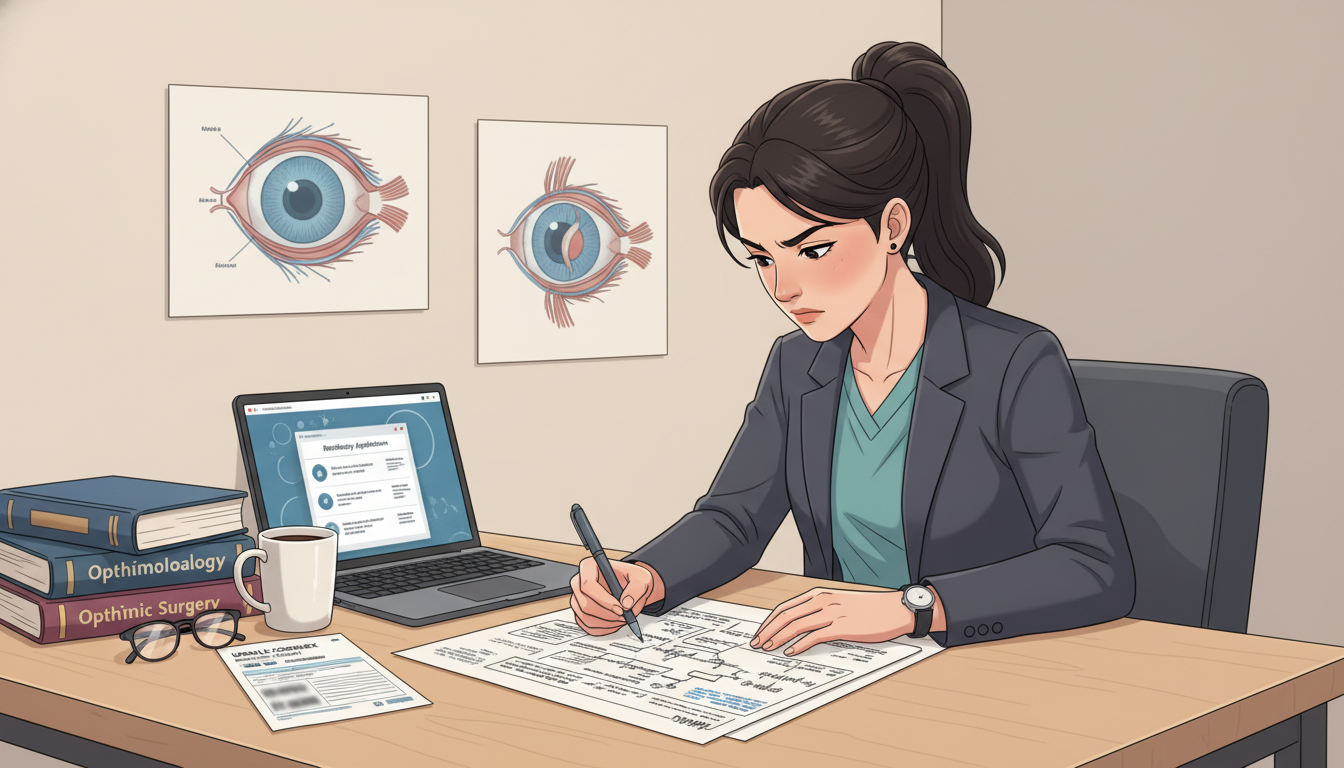
A low USMLE Step score can feel like a door closing, especially if you are an international medical graduate (IMG) aiming for a highly specialized area like Pediatrics-Psychiatry or Triple Board (Pediatrics/Psychiatry/Child & Adolescent Psychiatry). But it does not end your journey. Program directors care about more than just one number—especially in smaller, more relationship-driven fields like pediatrics and psychiatry.
This IMG residency guide will walk you through concrete, realistic strategies to offset a low Step 1 or Step 2 score, build a strong application story, and maximize your chances of matching in Peds-Psych or Triple Board programs—even with below average board scores.
Understanding Your Scores in Context
Before building a strategy, you need a clear, honest picture of where you stand.
What Counts as a “Low” Step Score?
Step 1: Now reported as Pass/Fail, but many IMGs still have a 3-digit score from prior years.
- For IMGs, historically, scores < 220 have been considered “below average” for more competitive specialties.
- For Pediatrics and Psychiatry, programs may still accept candidates with lower scores if other aspects are strong.
Step 2 CK: Still reported as a 3‑digit score and increasingly more important.
- A Step 2 CK score ≤ 220–230 is often viewed as low relative to many matched applicants.
- However, pediatrics and psychiatry are not as score-obsessed as fields like dermatology or orthopedic surgery.
When we talk about “low Step score strategies” or “matching with low scores,” we typically mean:
- Step 1 marginal pass or low 3-digit score (if applicable), and/or
- Step 2 CK < 230 or significantly below your school’s median.
How Program Directors Use Scores in Peds-Psych Fields
For Pediatrics, Psychiatry, and Triple Board programs, scores are:
- Initial screeners: Many programs have cutoffs to manage large volumes of applications.
- Risk indicators: Low scores raise concerns about:
- Passing future in-training exams
- Passing ABP/ABPN boards
- Handling academic stress
But these specialties also heavily weigh:
- Commitment to working with children and families
- Empathy, communication skills, and professionalism
- Longitudinal interest in psychiatry or child mental health
- Clinical performance, especially in US or high-quality settings
Your mission: minimize the risk signal of your scores and maximize the strength signal of everything else.
Step 1: Analyze Your Profile and Set Realistic Targets
Before you act, evaluate your full profile honestly.
Key Questions to Ask Yourself
What is the exact nature of my score issue?
- Low Step 1 but stronger Step 2 CK?
- Both Step 1 and Step 2 lower than average?
- Any exam failures or attempts?
Do I have any strengths that clearly offset the score?
- Strong clinical grades or honors (especially in pediatrics or psychiatry)
- Robust research in child mental health or developmental pediatrics
- Significant volunteer/community work with children or vulnerable populations
- Excellent English fluency and communication skills
What is my timeline?
- Applying immediately in the next cycle?
- Flexible to do a research year, observerships, or a prelim/intern year?
How broad is my geographic and program preference?
- Willing to apply nationwide?
- Open to community and smaller programs, not just academic centers?
The more flexible and proactive you can be, the better your chances of success.
Setting Specialty and Pathway Priorities
For an IMG targeting pediatrics-psychiatry with low scores, you need to decide where to focus:
Triple Board (Pediatrics/Psychiatry/Child & Adolescent Psychiatry)
- Highly specialized, very small number of programs, low total spots.
- More selective; many programs are academic and competitive.
- With low scores, this is a reach, but not always impossible if your profile is otherwise outstanding.
Categorical Pediatrics or Categorical Psychiatry
- More positions, broader range of program types.
- With low Step scores, this is usually a more realistic primary target.
- You could later pursue:
- Child & Adolescent Psychiatry fellowship after general psychiatry
- Developmental-Behavioral Pediatrics or Child Abuse Pediatrics after pediatrics
- Collaborative care, integrated behavioral health roles in pediatrics
For many IMGs with below average board scores, a smart strategy is:
- Apply broadly to categorical Pediatrics and Psychiatry programs,
- Apply selectively to a few Triple Board programs where you have ties, experiences, or strong contacts,
- Emphasize your long-term vision of working at the intersection of pediatrics and psychiatry.

Step 2: Turn Low Scores into a Coherent Story
You cannot hide a low score—but you can frame it.
Owning Your Scores Without Making Excuses
In your personal statement and interviews, aim for:
- Brief acknowledgment of the low score or failure (if present)
- Clear explanation, not excuse:
- Adjustment to new language or education system
- Personal or family health crisis (described succinctly and professionally)
- Poor early test-taking strategy or lack of familiarity with USMLE format
- Evidence of growth:
- Improved performance on later exams, clinical evaluations, or in-course exams
- Structured changes you made (study plans, resources, mentoring, mental health support)
- Any passing of in-country licensure exams or other standardized tests since then
Example framing (for a low Step 1 score):
“My Step 1 score does not reflect my actual medical knowledge or work ethic. At the time, I underestimated the exam’s style and lacked guidance on how to prepare effectively. I responded by seeking mentorship, restructuring my study methods, and focusing on targeted question-based learning. This change in approach is reflected in my stronger clinical evaluations and improved performance on Step 2 CK and in-service exams in my home institution.”
If your Step 2 CK is also low, focus on:
- Consistently strong clinical performance
- Patient feedback, supervisor comments
- Any objective evidence of improvement (e.g., later institutional exams)
Highlighting Your Assets as an International Medical Graduate
As an international medical graduate aiming for peds psych residency, you bring strengths that many US graduates simply don’t have:
- Cultural and linguistic diversity useful in child mental health
- Experience with resource-limited settings and complex psychosocial situations
- Comfort with extended families, community structures, and stigma around mental health
Make sure your story emphasizes:
- Experience working with children and families in different cultural contexts
- How you handle communication about sensitive topics (abuse, suicide, trauma, developmental issues)
- Your motivation to bring this global perspective into US pediatrics-psychiatry care
Building a Peds-Psych Narrative
To differentiate yourself from applicants with higher scores, construct a coherent narrative around why you belong in pediatrics-psychiatry:
Connect the dots between:
- Past experiences:
- Pediatric rotations, child psychiatry electives, child neurology
- Volunteering with children with developmental delays, autism, or trauma
- Community psychiatry or school-based mental health projects in your home country
- Present actions:
- Research in ADHD, autism, depression, anxiety, or developmental disorders
- Quality improvement work in pediatric behavioral health screening
- Electives in pediatric psychiatry services, integrated pediatric-behavioral health clinics
- Future goals:
- Providing integrated care addressing both physical and mental health in children
- Working in underserved communities or culturally diverse populations
- Developing programs to reduce stigma and improve access to child mental health services
This narrative makes your application memorable and can outweigh modest scores in the eyes of the right program.
Step 3: Strengthen the Rest of Your Application Aggressively
With low Step scores, the bar for everything else is higher. You need to intentionally build compensating strengths.
1. Clinical Experience: USCE and Targeted Rotations
Programs want to see you succeed in the US system.
Aim for:
- US Clinical Experience (USCE):
- Observerships, externships, sub-internships, or hands-on electives if possible
- Strongest impact if done in pediatrics, psychiatry, or child psychiatry
- Exposure to:
- Inpatient pediatrics
- Outpatient pediatric clinics, especially those with behavioral health integration
- Adolescent psychiatry, child and adolescent psychiatry units, developmental clinics
For each experience:
- Show responsibility, reliability, and initiative
- Ask for strong, detailed letters of recommendation from US faculty who can comment on:
- Clinical reasoning
- Communication with children and families
- Professionalism
- Adaptability as an IMG
If you can secure even one or two powerful US letters in pediatrics or psychiatry, it can dramatically improve your chances despite low scores.
2. Research and Scholarly Work in Peds-Psych Themes
You do not need a PhD or dozens of publications, but you do want evidence that you think deeply about child mental health.
Options include:
- Helping with ongoing research in:
- ADHD, autism spectrum disorder, learning disorders
- Depression, anxiety, self-harm in adolescents
- Trauma-informed care, child abuse, foster care populations
- Quality improvement projects:
- Implementing screening tools (PHQ-9, PSC-17, Vanderbilt, M-CHAT) in pediatric clinics
- Improving follow-up rates for kids referred to mental health services
- Case reports:
- Interesting pediatric cases with psychiatric or developmental dimensions
- Collaborative work with pediatrics and psychiatry mentors
Even if your Step scores are low, a CV showing:
- 1–2 abstracts or posters
- 1–3 case reports or small manuscripts
- Active involvement in a peds-psych research group
signals seriousness and academic potential.
3. Letters of Recommendation: Quality Over Quantity
With below average board scores, letters can heavily influence whether your application gets a deeper review.
Try to secure:
- At least one letter from a pediatrician
- At least one letter from a psychiatrist or child psychiatrist
- Ideally, letters that:
- Directly reference how you handle complex psychosocial or behavioral issues
- Comment on your empathy, ability to connect with children and families, and resilience
- Explicitly reassure programs about your ability to handle residency-level demands despite test performance
A letter that says, “I would rank this applicant in my top 5% despite their scores” can be more powerful than any one-point improvement on Step 2 CK.
4. Personal Statement and ERAS Application
Use these to build your integrated story:
Focus your personal statement on:
- Why the intersection of pediatrics and psychiatry resonates with you
- A few specific anecdotes:
- A child with chronic illness and depression
- A family struggling with developmental delays and social stigma
- A case from your home country that highlighted missing mental health resources
- Reflection on:
- What you learned
- How it shaped your career direction
- Why you need training in the US system
On your ERAS application:
- Highlight all experiences with children, adolescents, and mental health
- Use experience descriptions to show:
- Longitudinal commitment, not just one short rotation
- Increasing levels of responsibility
- Specific skills (motivational interviewing, psychoeducation, working with interpreters, advocacy)
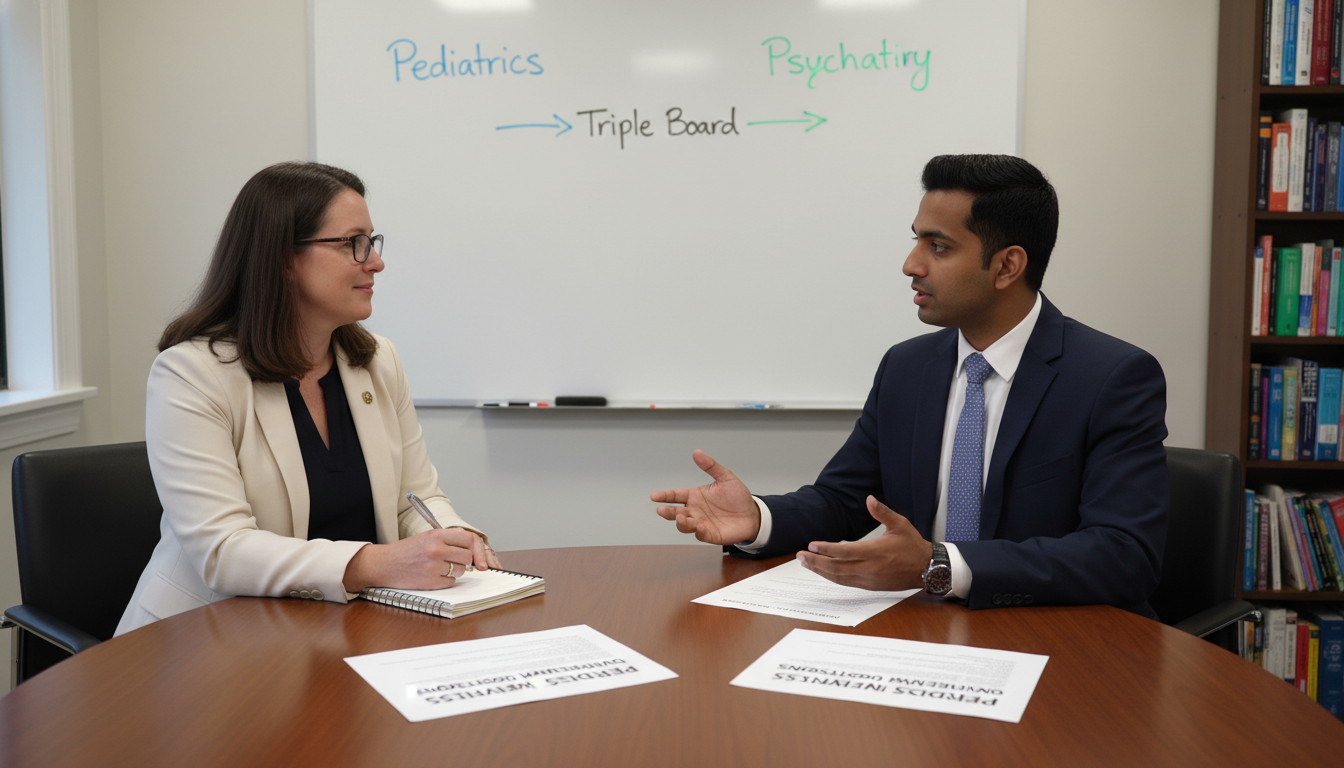
Step 4: Application Strategy for Matching with Low Scores
Even with an excellent story, your outcome will depend heavily on strategy.
Be Strategic About Program Selection
For an IMG residency guide in Peds-Psych, especially with low Step scores, aim for:
- Broad application list:
- 60–100+ programs if financially feasible, especially if both Step scores are low
- Include a mix of:
- Community-based pediatrics and psychiatry programs
- University-affiliated but IMG-friendly programs
- Careful selection of Triple Board programs:
- Apply to Triple Board only if:
- You have clear peds-psych experiences and letters
- Your narrative strongly supports this pathway
- Realistically treat these as bonus opportunities, not your only plan
- Apply to Triple Board only if:
Focus on programs that:
- Traditionally interview or match IMGs
- Have mission statements emphasizing:
- Underserved populations
- Global health, cultural competence, or community psychiatry
- Are located in regions with higher IMG representation (e.g., parts of the Midwest, South, and certain urban centers)
Avoid limiting yourself only to big-name academic centers; many smaller programs will be more flexible about scores if you show true commitment and strong interpersonal skills.
Apply Smartly to Pediatrics vs Psychiatry vs Triple Board
Depending on your relative strength and interest:
If your pediatrics exposure is much stronger than your psychiatry exposure:
- Apply more heavily to pediatrics programs.
- Still demonstrate interest in behavioral/developmental pediatrics and child mental health.
If your psychiatry background and letters are stronger:
- Focus on psychiatry programs, emphasizing long-term goals in Child & Adolescent Psychiatry.
If you have balanced experiences and strong mentoring in both:
- Apply to both pediatrics and psychiatry.
- Selectively apply to a handful of triple board programs where your connections or experiences are strongest.
Be sure your application materials (personal statement versions, letters emphasized) are tailored for each track, even if your overarching goal is the same: caring for children’s physical and mental health.
Addressing Red Flags Proactively
If beyond low scores you also have:
- Attempt/failure on Step 1 or Step 2
- Extended gaps since graduation
- Limited USCE
You’ll need additional steps:
- Consider a research or clinical research year in the US:
- Especially in pediatrics, psychiatry, or child psychiatry
- Provides new recent experience, letters, and academic productivity
- Consider a transitional or preliminary year:
- Sometimes a year in internal medicine or pediatrics in your home country or another system can help—if it leads to strong, recent letters and evidence of clinical competence
- Keep your knowledge current:
- Participate in continuing medical education (CME)
- Join professional organizations (AACAP, AAP, APA sections, especially those focusing on child mental health)
Step 5: Excel in Interviews and Communication
Once you’ve cleared the initial filter despite low scores, interviews are where you win or lose.
Practice Your Score Narrative
You will almost certainly be asked about your scores or any attempts.
Your response should:
- Be short, honest, and non-defensive
- Turn the focus to what you changed and what you learned
- Reassure them that:
- You’ve developed effective strategies for exam preparation
- You understand the importance of passing in-training and board exams
- Your recent performance indicates readiness
Example:
“My Step 1 score was lower than I had hoped. At that time, I was still adapting to the exam format and did not use sufficient question-based resources. After that experience, I changed my preparation strategy completely—focusing on practice questions, test-taking skills, and regular self-assessment. While my Step 2 score is still not as high as some applicants, my clinical evaluations, recent standardized assessments, and feedback from supervisors show that I’ve addressed the gaps. I’m confident I can succeed on in-training and board exams with the structured approach I now use.”
Demonstrate Core Peds-Psych Qualities
Programs in pediatrics and psychiatry care deeply about personal characteristics:
- Warmth and empathy
- Patience with children and families
- Clear, structured communication
- Comfort with uncertainty and complex psychosocial situations
- Ability to reflect on your own biases and emotional responses
In interviews:
- Share specific clinical stories:
- A child with a chronic illness and emerging depression
- A family struggling to accept a developmental diagnosis
- Working with multidisciplinary teams (social work, psychology, education)
- Reflect on:
- How you approached the family
- What you learned about communication, stigma, or trauma
- How this confirms your desire to train in pediatrics-psychiatry
Ask Smart Questions
Show that you understand what makes Peds-Psych and Triple Board unique:
Ask about:
- Opportunities for integrated pediatric-behavioral health rotations
- Collaboration between pediatrics and psychiatry departments
- Access to child and adolescent psychiatry clinics during pediatrics or psychiatry training
- Mentoring for those interested in developmental-behavioral pediatrics or child psychiatry fellowships
Thoughtful questions can help interviewers see you as a serious, aligned candidate, which often matters more than a few extra points on Step 2 CK.
Final Thoughts: Redefining Success with Low Scores
For an IMG with low Step 1 or Step 2 CK scores, aiming for pediatrics-psychiatry or even triple board can feel intimidating. But many program directors—especially in child-focused specialties—are open to applicants who:
- Are authentically committed to child and adolescent health, including mental health
- Have built a cohesive, experience-based narrative
- Demonstrate growth, resilience, and professionalism
- Show that they can thrive clinically, even if their standardized test record is imperfect
Your scores may close some doors but not all of them. By being strategic, transparent, and proactive, you can still build a training path that leads you to work at the intersection of pediatrics and psychiatry.
FAQs: Low Step Score Strategies for IMGs in Pediatrics-Psychiatry
1. Can I match into Triple Board with a low Step score as an IMG?
It is possible but challenging. Triple Board programs are few and relatively competitive. With a low Step score, you typically need:
- Strong, focused experiences in both pediatrics and psychiatry (especially child psych)
- Excellent, specific letters from both fields
- A clear statement of why Triple Board is necessary for your goals
- Often some U.S. clinical or research experience
Treat Triple Board as a reach option, while applying more broadly to categorical pediatrics and/or psychiatry programs that can still lead you to work in child mental health.
2. Should I still apply if my Step 2 CK is below 220?
Yes—especially in pediatrics and psychiatry—but with strategy:
- Apply widely, including community and IMG-friendly programs.
- Work hard to strengthen other elements: letters, USCE, research, personal statement.
- Consider delaying your application by one cycle if you can:
- Improve your CV with research, USCE, or a research year in the US.
- Understand that some programs will screen you out automatically, but others will take a holistic view.
3. How many programs should I apply to as an IMG with low scores?
There is no single number, but typically:
- 60–100+ programs is common for IMGs with low scores applying in pediatrics or psychiatry.
- Include a balanced mix of:
- Community-based and university-affiliated programs
- Different geographic regions
- Programs known to match IMGs
The lower your scores and the older your year of graduation, the broader your application should be.
4. What is the single most important thing I can do to offset a low score?
There is no single magic fix, but for many IMGs, the highest-yield steps are:
- Securing strong, specific letters of recommendation from US-based pediatricians and psychiatrists who can personally vouch for your clinical ability.
- Building a compelling, consistent story of commitment to pediatrics-psychiatry through your experiences, research, and personal statement.
- Demonstrating recent, strong clinical performance in relevant settings.
Combined, these elements can convince the right programs that you are worth interviewing and training—even if your USMLE scores are below average.