
Understanding Your Situation: Low Scores, High Potential
Being an international medical graduate (IMG) with a low Step score can feel like a permanent label—but it isn’t. Many IMGs successfully match into sun belt residency programs every year despite a low Step 1 score, a failed attempt, or generally below average board scores. The key is approaching the process with strategic planning, realistic targeting, and consistent execution.
In the context of this IMG residency guide, “low Step score” or “below average board scores” usually means:
- Step 1: below ~215–220 (or a fail on first attempt before pass/fail transition)
- Step 2 CK: below ~230–235, or a fail on first attempt
But numbers alone never tell the full story. Programs—especially many southern residency programs in the Sun Belt—also look for:
- Evidence of clinical competence and professionalism
- Fit with their patient population and institutional mission
- Consistency and upward trend (improvement over time)
- Reliability and work ethic, especially valued in community and safety-net hospitals
Your goal is to package your profile so that programs see the whole candidate, not just the score.
This article focuses on concrete, Sun Belt–specific strategies for matching with low scores as an IMG: how to position yourself, where to apply, and what to prioritize.
The Sun Belt Advantage: Why Location Matters
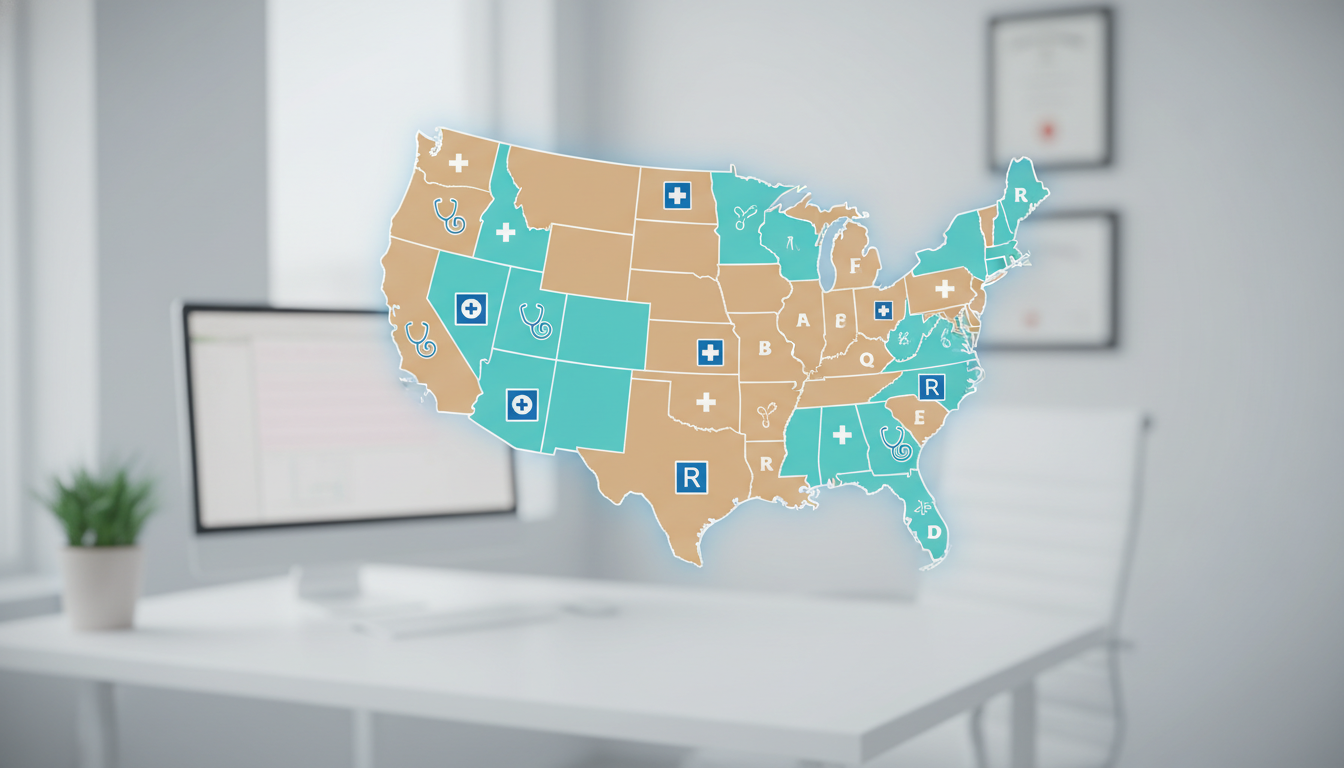
The “Sun Belt” refers to a warm-weather band across the southern United States, generally including:
- California, Nevada, Arizona, New Mexico
- Texas, Oklahoma
- Louisiana, Mississippi, Alabama
- Georgia, Florida, South Carolina, North Carolina
- Sometimes Tennessee and Arkansas
Many of these states host IMG-friendly and service-oriented programs where mission fit, language skills, and patient-centered qualities can partially offset lower scores.
Why the Sun Belt Can Be Strategic for IMGs with Low Scores
High-volume, diverse patient populations
- Large immigrant, uninsured, and underserved communities
- Programs often value bilingual or multilingual candidates
- Community and county hospitals may weigh work ethic and commitment heavily
Some programs are more flexible with scores
While top-tier academic centers everywhere are highly score-conscious, many:
- Community programs
- Newly accredited or expanding programs
- Safety-net and rural-track programs
in Sun Belt states may not have rigid score cutoffs, especially if:
- You demonstrate strong clinical skills
- You show long-term interest in serving their population or region
Growing number of residency slots
- Texas, Florida, and other Sun Belt states have been expanding GME positions
- Newer programs may be more open to motivated IMGs who help them build their reputation
Language and cultural advantages
If you speak Spanish, Portuguese, Arabic, Vietnamese, Hindi, or other languages common in Sun Belt communities, you can:
- Highlight this as a key asset
- Show alignment with patient demographics in your personal statement and interviews
Sun Belt Specialties and Settings Where IMGs with Low Scores Can Be Competitive
You’re not closed out of competitive specialties forever, but with low scores your probability improves if you focus on:
- Internal Medicine (community-based)
- Family Medicine
- Pediatrics (community-focused)
- Psychiatry (though it’s getting more competitive)
- Transitional Year or Preliminary Medicine (for a stepping-stone strategy)
And more specifically:
- Community or county hospitals
- Programs outside major “top-name” academic centers
- Programs in smaller cities and rural areas of Sun Belt states
Honest Self-Assessment: Know Your Numbers, Build Your Story
To design effective low Step score strategies, you must understand your full profile—strengths and weaknesses—and then actively manage them.
Step 1: Clarify Your Score Profile
Write down:
- Step 1: score, number of attempts, year taken
- Step 2 CK: score, number of attempts, year taken
- OET / English proficiency, if applicable
- Any failures or attempts on any exam
Then ask:
Is your weakness score-only, or are there multiple red flags?
- Low score but no gaps, no professionalism issues, good clinical evidence → easier to work with.
- Multiple exam failures, long gaps, or professionalism concerns → still possible, but you must be even more strategic.
Is there an upward trajectory?
- Slightly low Step 1 but stronger Step 2 CK → emphasize growth and clinical strength.
- Multiple low or failed attempts on both exams → you must demonstrate competence through other metrics (USCE, strong LORs, structured remediation, etc.)
Step 2: Identify Compensating Strengths
For IMGs, especially with below average board scores, compensating strengths can include:
- Strong US clinical experience (USCE) with US-based, specialty-relevant hands-on exposure
- Excellent, specific letters of recommendation from US attendings
- Solid communication and interpersonal skills
- Leadership roles, teaching, or community involvement
- Significant research or QI projects (less critical for community programs but can still help)
- Language skills aligned with Sun Belt patient populations
Consider this simple “profile balance” exercise:
Example A:
- Step scores: Step 1 fail → pass; Step 2 CK: 225
- USCE: 3 months of in-person Internal Medicine rotations in Texas and Florida
- LORs: 2 detailed US letters emphasizing reliability and clinical reasoning
- Extras: Speaks fluent Spanish; volunteer work in free clinics
This candidate can reasonably aim for:
- Community IM in Texas/Florida, Family Medicine across the Sun Belt, possibly Pediatrics in more IMG-friendly programs.
Example B:
- Step scores: Step 1: 204; Step 2 CK: 212; 1 fail on Step 2
- USCE: 1 observership only
- LORs: Mostly from home country
- Gaps: 4-year gap after graduation
This person’s immediate priority isn’t applying widely; it’s repairing the profile before the next cycle:
- More, higher-quality USCE
- Fresh US letters
- Possibly research, QI, or structured observerships in IMG-friendly Southern residency programs
Targeting the Right Sun Belt Programs With Low Scores
Your match chances depend as much on where you apply as who you are. For an international medical graduate, the correct targeting in the Sun Belt is crucial for matching with low scores.
Step 1: Identify IMG-Friendly Southern Residency Programs
Use multiple data sources:
- FREIDA (AMA)
- NRMP Charting Outcomes / Program Director Survey
- Residency program websites and social media
- Word-of-mouth through IMG forums, alumni, and mentors
Look for:
- Programs that clearly state they accept IMGs
- Programs that show significant IMGs in current resident rosters
- Community hospitals, safety-net or county hospitals, and smaller university-affiliated programs
In Sun Belt states, pay attention to:
- Texas: many community IM/FM programs; newer Psychiatry and Pediatrics programs in smaller cities
- Florida: numerous community programs; many with large IMG presence
- Georgia, Alabama, Mississippi, Louisiana: smaller programs that may be less score-obsessed if you fit their mission
- Arizona, New Mexico: programs serving large underserved and indigenous or Hispanic populations
- California: can be competitive overall, but some community FM, IM, and Psychiatry programs are IMG-friendly if you bring language and cultural competence
Step 2: Understand Score Cutoffs and Filters
Many programs use ERAS filters:
- Minimum Step 1 / Step 2 CK score
- Maximum number of attempts
- Maximum years since graduation
- USCE requirement
Action items:
Be realistic
If a program’s website or past applicants repeatedly mention a hard minimum of 230 and no attempts, and your Step 2 is 215 with an attempt, skip it. Save your money.Focus on “holistic” review programs
Some explicitly note:- “We review each applicant holistically”
- “We do not have fixed score cutoffs”
- “We value diverse backgrounds and life experiences”
Leverage program size
- Large community programs (15+ residents per year) often interview more broadly.
- Newer programs may be more open to applicants who are energetic and help build their identity.
Step 3: Use Strategic Application Volume
With low scores, a narrow application strategy is risky. For most IMGs with scores below average:
- Internal Medicine or Family Medicine: 80–150+ applications may be needed
- Psychiatry/Pediatrics: possibly similar or slightly fewer if your profile is strong elsewhere
But make sure those applications are:
- Concentrated in IMG-friendly, score-flexible Sun Belt programs
- Avoiding ultra-competitive academic centers where your low Step 1 score is an automatic screen-out

Strengthening Your Application Beyond Scores
To overcome a low Step 1 score or other below average board scores, you must make every non-score part of your file work harder for you.
1. Maximize US Clinical Experience (USCE) in the Sun Belt
Prioritize:
- Hands-on clerkships / externships in your target specialty
- Locations in the same region where you plan to apply (e.g., IM rotations in Texas, Florida, Georgia)
- Settings that generate strong, detailed letters (smaller teams, direct attending contact)
Tactics:
- Aim for at least 2–3 months of USCE if feasible
- Try to obtain at least 2 US letters from Sun Belt faculty
- Show up consistently: punctuality, responsibility, proactive but not overbearing
Impact on low Step score profiles:
- Demonstrates real-world performance beyond test scores
- Shows that US attendings trust you with patient care
- Mitigates fears that low scores equal poor clinical competence
2. Craft a Targeted Personal Statement
Your personal statement should not be an essay about “test-taking anxiety,” but you also shouldn’t pretend the problem doesn’t exist.
Strategies:
- If you have a low Step 1 score but stronger Step 2/clinical performance, briefly mention:
- Acknowledge difficulty: “My Step 1 score does not reflect my current level of clinical knowledge.”
- Show growth: “I restructured my study approach, sought mentorship, and my Step 2 CK performance demonstrates this improvement.”
- Focus 80–90% of the statement on:
- Why this specialty fits you
- Why the Sun Belt region and its communities matter to you
- How your background (language, culture, previous practice) serves their patients
Make it program-type specific:
- For community/safety-net programs: emphasize service, continuity, cultural competence, and commitment to underserved patients.
- For university-affiliated programs: include interest in education, QI, or research if you have it.
3. Obtain High-Impact Letters of Recommendation
For an IMG residency guide focused on matching with low scores, letters are especially important.
Aim for letters that are:
- From US attendings in your chosen specialty
- Detailed with specific examples:
- “Led the morning pre-round discussions”
- “Handled complex diabetic patient with minimal supervision”
- “Communicated fluently in Spanish with several patients”
- Explicitly addressing concerns:
- “Although Dr. X’s exam scores were not among the highest, in clinical practice they function at the level of a PGY-1 resident.”
Consider asking your letter writer:
- “Would you feel comfortable writing me a strong letter for US residency, even though my exam scores are not ideal?”
A lukewarm letter can hurt you more than no letter from that person.
4. Repair Gaps and Red Flags Proactively
If you have:
- Multiple exam failures
- Long time since graduation (>5–7 years)
- Gaps in clinical activity
Then:
Stay clinically active (even in your home country):
- Work in hospitals or clinics if possible
- Engage in QI projects or teaching medical students
Document remediation efforts:
- Extra courses in clinical knowledge or exam skills
- Study plans designed with mentors or advisors
- Improved performance in recent assessments
Use the ERAS “additional information” sections to:
- Briefly explain what happened
- Focus more on what you learned and changed rather than the problem itself
Interview and Post-Interview Strategy in the Sun Belt
Securing interviews is the hardest part for many IMGs with low scores. Once you get one, you must convert that chance.
Before the Interview: Research and Tailoring
For each program:
- Know their mission statement and patient population
- Check their resident roster for IMGs and language diversity
- Identify specific aspects that fit your story:
- Community-based continuity clinics
- University affiliation but strong focus on underserved populations
- Rotations across smaller Sun Belt towns and rural sites
Prepare answers to:
- “Tell me about yourself.”
- “Why this specialty?”
- “Why our program and region?”
- “Can you talk about your board scores?”
When discussing your low Step 1 score or other exam issues:
- Be concise and non-defensive:
- “I struggled early with timing and question strategy, which shows in my Step 1 result. Since then, I changed my approach—focused on active learning, question blocks under exam conditions—and my clinical performance and Step 2 CK are much more reflective of my abilities.”
- End with evidence of improvement:
- Strong USCE evaluations
- Recent successes (e.g., mini-CEX, in-service-style exams)
During the Interview: Demonstrate Fit and Reliability
Southern residency programs frequently value:
- Humility and teamwork
- Strong communication
- Ability to work with diverse, often vulnerable patient populations
- Long-term commitment to the region or similar communities
Show this by:
- Sharing concrete clinical stories:
- “During my rotation in a Texas border clinic, I worked with many uninsured Spanish-speaking patients…”
- Emphasizing continuity and primary care interests if genuine
- Highlighting multi-lingual abilities and cultural understanding
After the Interview: Thoughtful Communication
You don’t need to bombard programs with emails, but you can:
- Send personalized thank-you notes to interviewers
- Mention specific aspects you appreciated:
- “Your description of the clinic serving migrant farmworkers in the region resonated strongly with my background and goals.”
- If truly ranking a program highly, consider a sincere interest email closer to rank-list time (without making false promises).
Putting It All Together: A Sample Strategy Roadmap
To turn this IMG residency guide into action, here’s a simplified 12–18 month plan for an IMG with low Step scores aiming at Sun Belt programs.
Month 0–3: Assessment and Repair
- Clarify your full exam history and academic record.
- If Step 2 CK not yet taken:
- Develop a disciplined study schedule and aim to outperform your Step 1.
- Begin researching IMG-friendly Southern residency programs and note patterns:
- Which specialties?
- Which states?
- What score trends?
Month 3–9: Build Experience and Relationships
- Secure USCE or observerships in Sun Belt states, ideally in:
- Internal Medicine
- Family Medicine
- Pediatrics or Psychiatry (if those are your targets)
- Collect strong US letters from attendings who have seen you work closely.
- Engage in at least one:
- QI project
- Community outreach
- Teaching role
that you can tie to serving Sun Belt communities.
Month 9–12: Application Preparation
- Write a compelling personal statement explicitly connecting:
- Your background → Sun Belt communities
- Your clinical strengths → their program’s mission
- Tailor your CV and experiences to highlight:
- Service, language skills, and resilience
- Any clear upward trend in performance
- Build your program list:
- Majority: community and smaller university-affiliated programs across Texas, Florida, Georgia, Alabama, Mississippi, Louisiana, Arizona, New Mexico, Carolinas, etc.
- Fewer: highly competitive academic centers (unless you have a particularly strong non-score profile).
Month 12–18: Interview and Rank Season
- Practice interview questions with a mentor, especially around:
- Low Step score discussion
- Cultural and communication scenarios
- Attend interviews with:
- Professionalism and punctuality
- Clear emphasis on fit with their patient population and region
- Rank programs based on:
- Their willingness to support IMGs
- Your genuine interest in their training environment
- Geographic and lifestyle considerations (but avoid ranking only the “nicest city” programs if they are ultra-competitive)
FAQs: Low Step Score Strategies for IMG in the Sun Belt
1. Can I match into a Sun Belt residency program with a Step 1 failure or very low Step score?
Yes, it is possible—especially in community Internal Medicine, Family Medicine, and some Pediatrics or Psychiatry programs in the Sun Belt. You will need:
- A clear, honest narrative about what went wrong and what changed
- Strong Step 2 CK if not yet taken, or at least evidence of clinical improvement
- Robust USCE and powerful, specific LORs from US attendings
- Strategic targeting of IMG-friendly southern residency programs with historically flexible score policies
2. Should I delay applying to improve my profile, or apply as soon as I can?
If you currently have:
- Multiple exam failures,
- Minimal or no USCE, and
- No strong US letters,
then it’s generally better to take 1–2 extra years to strengthen your profile than to spend money on a very low-yield application cycle. Use the time to gain Sun Belt USCE, build relationships, and show academic growth or remediation.
3. Is it worth applying to competitive specialties like Radiology or Dermatology if I have below average board scores as an IMG?
With low scores and IMG status, your probability in highly competitive specialties is extremely low. If you’re determined, some choose a stepping-stone route:
- Match into Internal Medicine or Transitional Year first
- Build an exceptional record, research, and US connections
- Then attempt to transfer or re-apply
However, this is difficult and not guaranteed. For most IMGs with low Step scores, targeting IM, FM, Psych, or Pediatrics in Sun Belt states is a more realistic and satisfying path.
4. How can I find specific Sun Belt programs that are IMG-friendly and flexible with low scores?
Combine several approaches:
- Use FREIDA to filter by specialty, state, and whether they accept IMGs
- Review program websites for:
- Percentage of IMGs in the resident roster
- Statements about holistic review or lack of strict cutoffs
- Join IMG groups and forums focused on Texas, Florida, and other southern states
- Talk to alumni from your medical school who matched in the Sun Belt
- Look at recent match lists from IMGs with similar profiles to yours
Focus your energy and resources on those programs rather than chasing big-name centers that are unlikely to overlook low scores.
By combining honest self-assessment, Sun Belt–specific targeting, strong USCE, and a compelling story of growth and service, an international medical graduate with low Step scores can still build a realistic, effective path to residency in the southern United States.