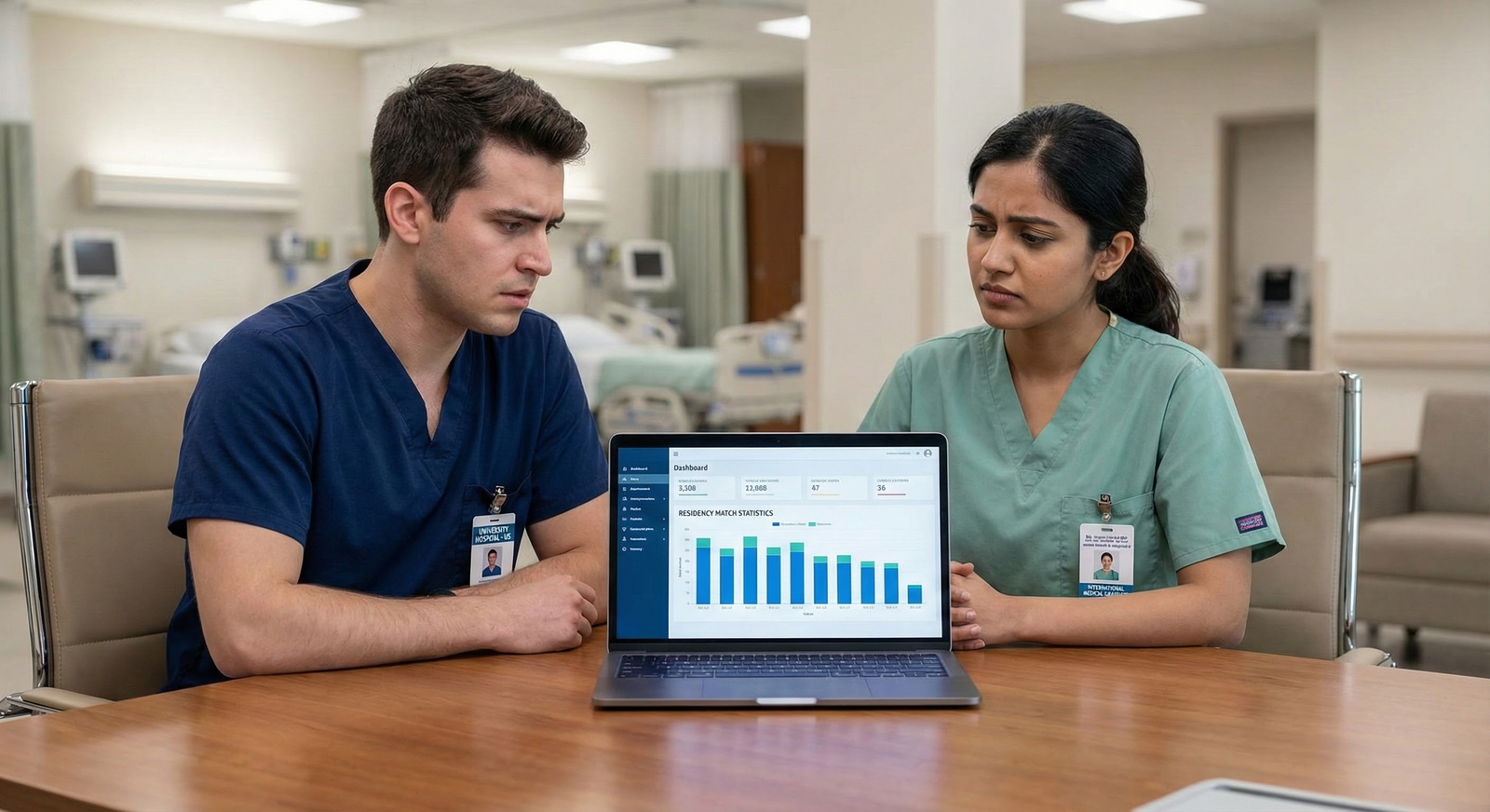
Understanding the Challenge: Low Step Scores as an IMG in Pathology
As an international medical graduate (IMG) interested in pathology residency, a low Step score (or below average board scores) can feel like a permanent barrier. It is not. It does change your strategy, your timeline, and your target programs—but it does not automatically close the door to a pathology match.
This IMG residency guide focuses on practical, step-by-step strategies for matching in pathology with:
- A low Step 1 score (or pass on Step 1 but low Step 2 CK)
- Below average board scores compared to U.S. seniors
- Attempts or gaps that make your application more “risky” in the eyes of programs
You will not be able to change your previous scores. Your power lies in:
- Strategic program selection
- Deliberate profile-building for pathology
- Strong performance on Step 2/3 and OET
- Maximizing U.S. clinical/pathology exposure
- Professional networking and communication
The goal of this article is to give you a realistic, action-focused roadmap to make your application as strong as possible despite low scores.
Step Scores in Pathology: How Much Do They Really Matter?
Program directors do care about scores—even in pathology, which is often considered less competitive than some clinical specialties. But how they weigh them is important to understand.
How Pathology Programs Use USMLE Scores
In many pathology programs, your USMLE scores are used to:
- Screen for interview invitations (especially Step 2 CK now that Step 1 is pass/fail)
- Assess basic medical knowledge and test-taking ability
- Predict your likelihood of passing the American Board of Pathology (ABP) exams
- Compare you against a large pool of applicants quickly
For IMGs, programs may be even more careful about scores because:
- They may not be familiar with your medical school
- They worry about visa issues and support
- They want assurance you can handle exams and certification
This does not mean they reject all applicants with low Step scores. It means that if your scores are low, other parts of your application must be exceptional and consistent with a pathology-focused profile.
What is Considered a “Low” Score?
Definitions can vary, but for the purpose of strategy:
- Step 1 (when numeric):
- Below ~215–220 is often considered “low” by many programs
- Step 2 CK:
- Below ~225–230 may be considered below average for IMG applicants
- Attempts / Failures:
- Any failed attempt on Step 1 or Step 2 CK is a major red flag but not always an automatic rejection
If you have a low Step 1 score but a strong Step 2 CK (especially 240+), you can partly compensate. If both are low or you have failures, you must be even more strategic—with more time, more preparation, and more targeted applications.
Why Pathology Is Still a Reasonable Option with Low Scores
Pathology has characteristics that can work in your favor:
- Historically lower fill rates and fewer U.S. graduates choosing it compared to some competitive specialties
- Many programs are more interested in:
- Proven interest in pathology
- Evidence you can handle the ABP exams
- Strong work ethic and professionalism
- Good communication skills
For an international medical graduate, pathology can be a realistic specialty for matching with low scores—if you build a compelling, pathology-centered application.

Building a Pathology-Centered Application to Offset Low Scores
Your central strategy is to make every part of your application say:
“This person is deeply committed to pathology, has proven skills in this field, and will be safe to train.”
1. Pathology-Focused Clinical and Lab Experience
For an IMG residency guide targeting pathology, one of the strongest weapons you have is direct pathology exposure in the U.S. or in reputable institutions abroad.
Types of Experience That Help
U.S. Pathology Observerships / Externships
- Ideal: 1–3 months in academic pathology departments
- Activities may include:
- Sitting in sign-out sessions with attendings
- Attending tumor boards, CPCs, and didactic conferences
- Observing grossing and autopsies (if allowed)
- Outcome: Strong letters of recommendation (LoRs) from U.S. pathologists
Pathology Research
- Retrospective chart reviews with pathological correlations
- Quality improvement projects in pathology workflows
- Digital pathology, AI in pathology, or image analysis
- Case reports and case series focusing on interesting pathology findings
Home Country Pathology Experience
- Work as a pathology resident, demonstrator, or trainee
- Work in a histopathology lab with responsibilities such as:
- Gross specimen handling (under supervision)
- Preparing slides
- Handling cytology samples
- Institutions with international recognition carry more weight
How to Present This Experience in Your Application
- CV / ERAS Experiences:
- Use clear titles: “Pathology Observership,” “Surgical Pathology Research Fellow,” “Histopathology Trainee”
- Detail specific tasks:
- “Attended daily sign-out sessions in surgical pathology”
- “Participated in tumor boards focusing on GI malignancies”
- “Contributed to manuscript on digital pathology in breast cancer”
- Personal Statement:
- Explain how exact experiences led you to choose pathology
- Highlight moments that showed you the intellectual depth and diagnostic role of pathology
This level of detail helps programs trust that you are not simply choosing pathology because it is “easier to get into,” but because it is your genuine career path.
2. Letters of Recommendation (LoRs) That Override Score Concerns
For an international medical graduate with low Step scores, strong, specific LoRs from pathologists can be more valuable than one extra publication.
Aim for:
- At least 2–3 LoRs from pathologists, preferably:
- At least one from a U.S. or Canadian academic institution, and
- One from a place where you spent significant time (e.g., research, training, or long observership)
What makes a strong LoR for pathology:
- The writer knows you personally and professionally
- They can comment on:
- Diagnostic thinking and attention to microscopic details
- Work ethic, reliability, and ability to learn
- Communication skills with clinicians and team members
- They may address your scores indirectly:
- “Despite initial lower standardized test scores, Dr. X has demonstrated excellent fund of knowledge and rapid improvement…”
If a respected pathologist states they would “rank you highly” or would “welcome you as a resident,” that can significantly soften the impact of low exam performance.
3. Research and Publications in Pathology
Research shows initiative, academic ability, and curiosity—especially valuable in a more academic specialty like pathology.
You do not need a first-author NEJM paper. What you do need is:
- Consistency: A few pathology-related outputs look better than one big random paper in a non-pathology field
- Relevance: Focus on areas of pathology that align with your interests (e.g., hematopathology, GI pathology, cytology)
- Evidence of completion:
- Published articles or accepted manuscripts
- Posters at national or regional pathology meetings (USCAP, CAP, APC, local university conferences)
- Online or institutional research presentations
If your scores are low, research experience over 6–24 months can be a powerful way to:
- Extend your timeline until you have a strong, pathology-heavy application
- Build strong relationships with pathology faculty
- Earn meaningful LoRs
- Show you can think and work at a high academic level
Exam Strategy: Using Future Exams to Compensate for Past Scores
You cannot change a low Step 1 score, but you can still influence:
- Step 2 CK
- Step 3 (if timing allows)
- OET Medicine or other English language tests (for visa and communication demonstration)
1. Step 2 CK: Your Best Chance to Recover
If you already have a low Step 1 score (or just a pass), a strong Step 2 CK is one of your most effective tools for matching with low scores overall.
Aim for:
- At least above 230, ideally ≥240, especially as an IMG
- A strong upward “trend” compared to Step 1 if Step 1 was numeric and low
Strategic recommendations:
- Give Step 2 CK priority over rushing into applications
- Delay your application year by one cycle if:
- Your preparation is weak
- You would likely get only a marginal Step 2 CK score
- Use targeted resources:
- NBME practice exams to estimate readiness
- UWorld & AMBOSS with focus on pathology-heavy concepts and clinical correlations
A big jump from a low Step 1 to a strong Step 2 CK communicates:
“I learned how to study more effectively. I matured. I can pass the ABP exams.”
2. Step 3: Optional but Helpful in Some Situations
Step 3 is not a requirement for all pathology programs, but for an IMG with below average board scores, it can help in several ways:
- Demonstrates clinical and exam competence
- Reduces concerns that you may struggle academically
- Makes you more attractive to programs that sponsor H-1B visas (if Step 3 is required by your state or hospital)
When Step 3 is particularly beneficial:
- You have multiple low scores or a failure, but you can now show a high Step 3 score
- You want to apply to programs that:
- Are “IMG-friendly” but cautious about exam performance
- Prefer applicants with completed Step 3 for visa/logistics reasons
Only take Step 3 when you are prepared to score at least solidly (no failures). Another low score will not help.
3. English Proficiency and Communication Skills
Pathology is not just microscope work. Residency requires:
- Presenting at tumor boards
- Communicating with surgeons, oncologists, and clinicians
- Writing clear, accurate reports
If English is not your first language:
- Prepare for and perform well in OET Medicine or other English exams required for ECFMG
- Practice spoken communication:
- Case presentations
- Short pathology teaching sessions
- Mock interviews (online or with mentors)
Strong English and communication skills can distinguish you from other IMGs, especially if your scores are lower.

Smart Program Selection and Application Strategy for IMGs with Low Scores
With low Step scores, your choice of programs and how you apply can be the difference between no interviews and multiple interviews.
1. Targeting the Right Type of Pathology Programs
Broadly, think of programs as:
- Highly competitive / research-intensive academic centers
- Top-tier university hospitals
- Very research-based, often prefer U.S. graduates or strong-scoring IMGs
- Mid-tier academic / community-affiliated programs
- Mix of clinical and academic pathology
- Many IMGs train here successfully
- Community-based pathology programs
- Often more service-oriented, variable in research
- Some are highly IMG-friendly
With low scores, your main focus should be on IMG-friendly, mid-tier, and community programs, especially those with:
- A clear history of accepting IMGs
- No strict score cutoffs or “holistic review” policies
- Slightly lower or flexible USMLE expectations
How to identify these:
- Use NRMP data and program websites to check:
- Percentage of IMGs in current residents
- Visa sponsorship (J-1, H-1B)
- Average scores if listed
- Check forums, residency explorer tools, and official program statements about IMGs
- Email or call programs (professionally) for clarification on:
- Whether they consider applicants with attempts or low scores
- Whether they sponsor visas
2. Applying Broadly and Realistically
For international medical graduates with low scores, applying broadly is essential.
Typical numbers (these are approximate and vary by year):
- With strong scores: 30–40 programs may be enough
- With low Step scores: 50–80+ programs may be needed
Focus on:
- Programs outside major metropolitan hotspots where competition is less intense
- States that historically have more IMGs in pathology residency
- Programs listed as IMG-friendly in credible match statistics
Avoid wasting applications on:
- Programs that explicitly require a minimum score higher than yours
- Programs that state “no visa sponsorship” if you need a visa
- Ultra-competitive university programs with few or no IMGs unless you have something extraordinary (major research, strong U.S. LoRs)
3. Timing and Multiple Match Cycles
If your current profile is:
- Low Step 1 and low Step 2
- Minimal pathology experience
- No U.S. exposure
- No research
Then applying immediately may result in no interviews and wasted money.
Instead, consider a 2–3 year strategic plan:
Year 1:
- Improve Step 2 CK (if not yet taken or if very low)
- Begin/continue pathology-related research or lab work
- Arrange an observership or short-term experience
Year 2:
- Continue research or lab position
- Take Step 3 (if helpful)
- Strengthen English and interview skills
- Build strong LoRs
Match Cycle:
- Apply broadly with a much stronger, pathology-focused application
If you do not match on the first attempt:
- Expand research or clinical work
- Seek feedback from programs where you interviewed
- Adjust your program list further (more IMG-friendly emphasis)
Persistence, combined with steady profile improvement, is often the difference-maker for IMGs with below average board scores.
Interview and Communication Strategies: Turning a Weakness into a Narrative
Even with low Step scores, once you receive an interview invitation, you are on more equal footing. Now, your goal is to strengthen the program’s confidence in you.
1. Addressing Low or Failed Scores Professionally
If asked directly in an interview:
- Be honest, brief, and composed
- Avoid blaming external factors excessively (e.g., “the exam was unfair”)
- Focus on:
- What went wrong (briefly and specifically: immature study strategy, personal stress, misunderstanding exam style)
- What you changed (resources, discipline, time management, practice exams)
- What the improvement shows (Step 2 CK or Step 3, better clinical knowledge)
Example response:
“During my first exam, I underestimated how different the USMLE is from my university exams and relied mainly on passive reading. My score was lower than I expected. I took that as a serious wake-up call. For Step 2, I changed my approach: I used UWorld extensively, did timed practice NBMEs, and built a strict schedule. As a result, my Step 2 CK improved significantly, which I believe better reflects my true abilities and my capacity to learn from setbacks.”
The key is to own your weakness and demonstrate growth.
2. Highlighting Strengths That Matter in Pathology
During the interview, emphasize qualities particularly important in a pathology residency:
- Attention to detail and patience with microscopic work
- Analytical and pattern-recognition skills
- Team collaboration with clinicians, surgeons, and lab staff
- Written and oral communication
Give concrete examples:
- Cases from your observership where you contributed to clinicopathologic correlation
- Research projects that required meticulous data review and slide evaluation
- Situations where you taught pathology concepts to other students or clinicians
3. Demonstrating Genuine Interest in the Program
Programs, especially in smaller or community-based settings, highly value residents who:
- Will stay for the duration
- Fit well into their culture
- Are truly interested in their specific structure (e.g., strong hematopathology division, early exposure to autopsy, integrated AP/CP training)
Before each interview:
- Research:
- Faculty interests
- Recent publications
- Unique aspects of the training program
- Prepare tailored questions:
- “I noticed your program has a strong cytopathology service. How early do residents get exposure to FNA procedures and cytology sign-out?”
- “I’m very interested in academic careers. How are residents supported to present at national meetings?”
For an IMG with low scores, coming across as well-prepared, engaged, and genuinely interested can significantly elevate your ranking.
FAQs: Low Step Score Strategies for IMGs in Pathology
1. Can I match into pathology residency as an IMG with a low Step 1 score?
Yes, many IMGs with low Step 1 scores (and now Step 1 pass only) successfully match in pathology each year, especially if they:
- Obtain a strong Step 2 CK score
- Build solid pathology experience (observerships, research, lab work)
- Secure strong LoRs from pathologists
- Target IMG-friendly programs strategically and apply widely
A low Step 1 score changes your strategy, not your entire future.
2. Is pathology a good specialty choice if my scores are low?
Pathology can be a realistic and rewarding option, but you should not choose it only because you believe it is “easier to get into.” You need:
- Genuine interest in diagnostic and microscopic medicine
- Willingness to spend years in labs, at microscopes, and in multidisciplinary meetings
- Commitment to ongoing learning and board preparation
If you are truly interested and build a strong pathology-centered profile, pathology is one of the more attainable specialties for an IMG with below average board scores.
3. How many pathology programs should I apply to as an IMG with low scores?
In most cases:
- Plan to apply to 50–80+ programs, especially if:
- You have one or more low scores
- You have any failed attempts
- You require a visa
Focus on:
- IMG-friendly programs
- Mid-tier academic and community programs
- States and regions that historically train many IMGs in pathology
Quality research and observerships can allow slightly fewer applications, but broad application remains essential.
4. Is it worth delaying my application by a year to improve my profile?
For many IMGs with low Step scores, yes, it can be worth it—if you use the time strategically:
- Improve or solidify Step 2 CK (and possibly Step 3)
- Gain relevant pathology experience and research
- Obtain strong LoRs from pathologists
- Strengthen English and communication skills
Entering the match with a much stronger, pathology-focused application often leads to more interviews and better chances than applying quickly with a weak profile.
If you’d like, I can help you draft a personalized 1–2 year plan based on your exact Step scores, graduation year, visa needs, and current pathology experience.