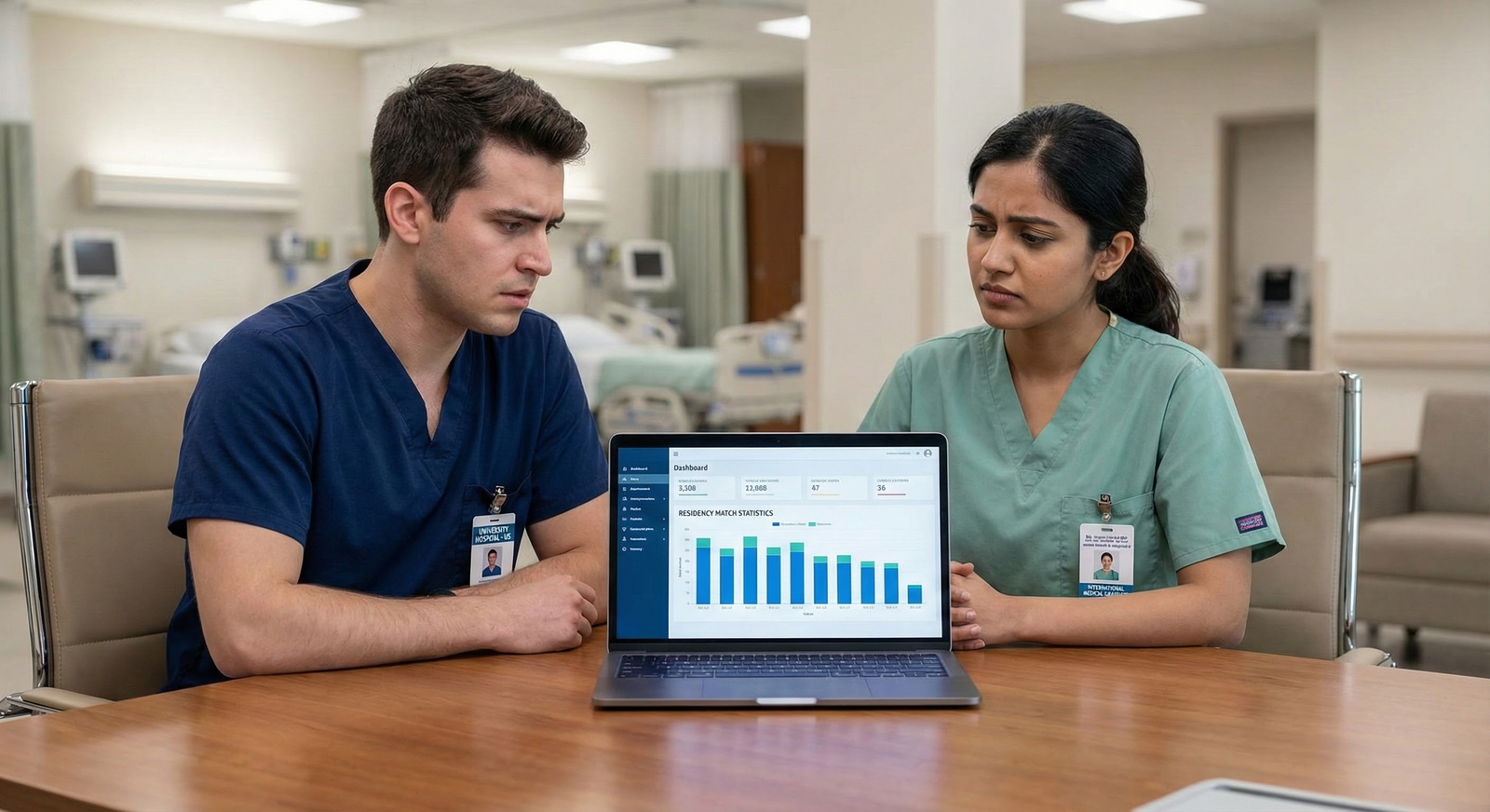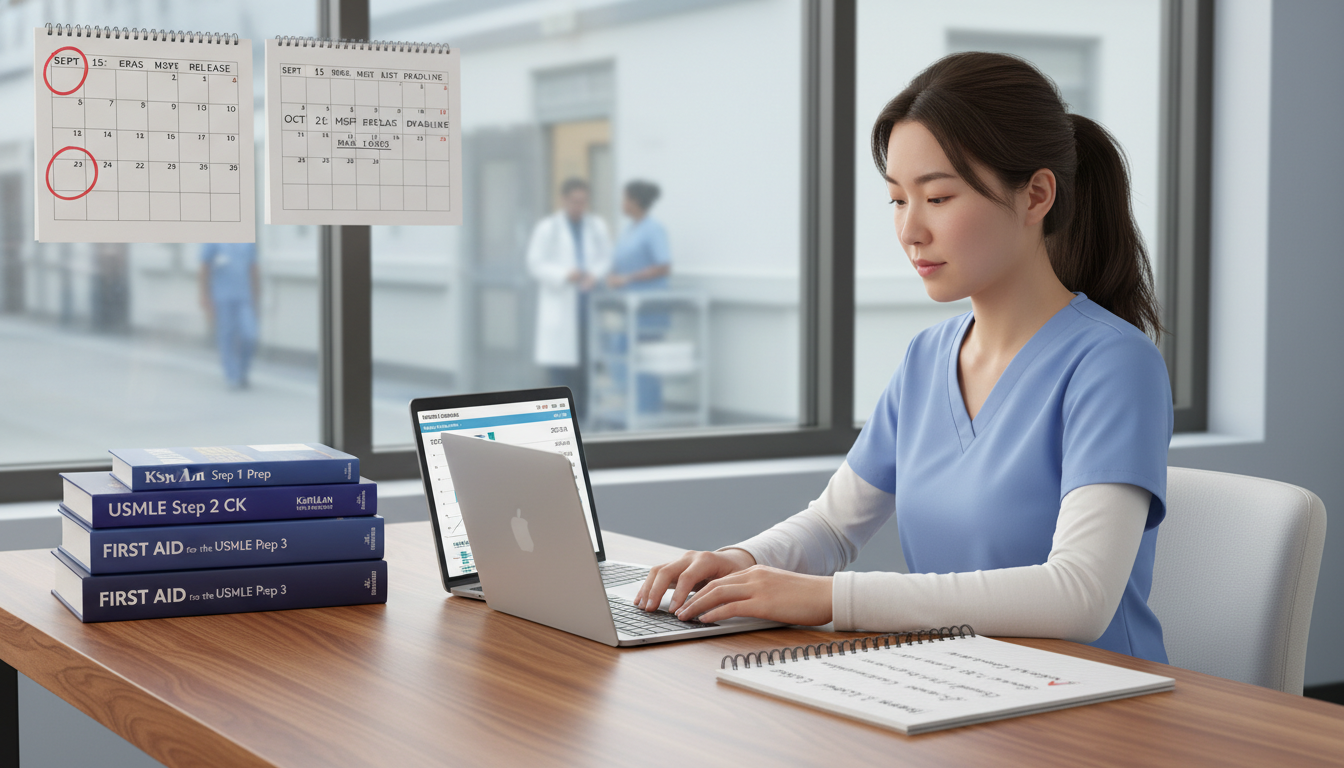
Clinical informatics is one of the most exciting growth areas in medicine—sitting at the intersection of patient care, data science, and health IT. But if you’re worried about a low Step 1 score or below average board scores, you may be asking: Is clinical informatics still within reach? And if so, how do I strategically position myself to match?
This guide walks you through realistic, high-yield strategies to pursue a clinical informatics fellowship and build a career in health IT, even if you’re matching with low scores or have past exam setbacks.
Understanding Clinical Informatics and the Match Landscape
Clinical informatics is a subspecialty focused on how information is captured, processed, and used in healthcare. Typical activities include:
- Designing and optimizing EHR workflows
- Building clinical decision support tools
- Leading health IT training and implementation efforts
- Working with data analysts to improve quality and safety
- Bridging communication between clinicians and IT/developer teams
Training Pathway: How You Actually Get There
Clinical informatics is an ACGME-accredited subspecialty. You don’t match directly into it from medical school. Instead:
- Complete a primary residency (e.g., Internal Medicine, Pediatrics, Emergency Medicine, Pathology, Family Medicine, Anesthesiology, etc.).
- Become board-eligible or board-certified in your primary specialty.
- Apply for a clinical informatics fellowship (usually 2 years).
- Sit for the Clinical Informatics board exam after fellowship.
This structure actually helps candidates with a low Step score: your final fellowship prospects depend less on Step 1/2 and more on:
- How you performed in residency
- What informatics work you did along the way
- Your demonstrated commitment and skills in health IT
In other words, the tests that are haunting you now will matter less by the time you apply to informatics fellowship—if you play the long game intelligently.
How Much Do Low Step Scores Really Matter for Clinical Informatics?
You’re reading a guide in the category STRATEGIES_FOR_LOW_STEP_SCORES for the RESIDENCY_MATCH_AND_APPLICATIONS phase, so let’s be specific.
Step Scores vs. Long-Term Informatics Potential
For residency:
- Programs still use board scores as an initial filter (especially for competitive specialties).
- A low Step 1 score or below average board scores can limit your interview pool.
- Holistic review is increasing, but filters still exist.
For clinical informatics fellowship:
- Most programs are less score-driven and more trajectory-driven:
- What have you done that relates to informatics?
- Do you speak the language of health IT?
- Can you show genuine, sustained interest?
Many successful fellows:
- Did not come from “top” residencies
- Did not have stellar board performance
- Built a portfolio of real informatics contributions over time
What Program Directors Care About for Informatics
When informatics fellowship directors review applications, they typically prioritize:
- Leadership in health IT projects (EHR optimization, CDS tools, quality dashboards)
- Evidence of technical literacy (e.g., SQL, Python, R, basic programming, data wrangling)
- Scholarly output related to informatics (posters, QI, publications)
- Letters that describe you as:
- A bridge between clinicians and tech
- Reliable, analytical, and collaborative
- Someone who understands workflows and change management
Your Step 1 score rarely decides your fellowship fate—what you do between now and fellowship application does.
Strategy 1: Choose a Residency Path that Keeps Informatics Open
Your first big decision is where and in what you train for residency. If you’re matching with low scores, you need to be both pragmatic and strategic.
Step 1: Prioritize Match Probability Over Prestige
Even if you’re passionate about informatics, you can’t get there without completing a primary residency. For applicants with below average board scores:
- Apply more broadly, including:
- Community and university-affiliated programs
- Smaller academic centers
- Less competitive geographic regions
- Consider specialties with:
- Broader informatics opportunities
- Historically lower score thresholds than derm, ortho, etc.
Common home specialties for clinical informaticians include:
- Internal Medicine
- Family Medicine
- Pediatrics
- Emergency Medicine
- Pathology
- Anesthesiology
- Psychiatry
If your scores are limiting, being flexible about specialty and location can be the difference between matching and not matching.
Step 2: Target Programs with Health IT Infrastructure
Even as a lower-scoring applicant, you can filter for programs that will give you exposure to health IT training and informatics:
Look for clues in program descriptions:
- Mentions of:
- “Quality improvement and patient safety”
- “EHR optimization projects”
- “Data analytics” or “clinical dashboards”
- “Informatics faculty” or “Chief Medical Information Officer (CMIO)”
- Affiliation with:
- Academic medical centers
- Large health systems using robust EHR platforms (Epic, Cerner/Oracle, etc.)
When emailing programs or interviewing, ask:
- “Do your residents have opportunities to work on EHR optimization or data-driven QI projects?”
- “Is there a physician informaticist or CMIO who mentors residents?”
Even if your scores are low, this signals serious interest and can differentiate you.

Step 3: Understand That the “Perfect” Informatics Program Is Not Required
You don’t need a residency with a formal “informatics track” to build a strong informatics portfolio. Many successful fellows came from:
- Smaller community programs that used a major EHR
- Programs with one informatics-minded faculty member
- Places where they created their own projects and niche
A supportive PD + large EHR install + curiosity > name-brand prestige, especially when starting with low scores.
Strategy 2: Build an Informatics Portfolio That Outweighs Low Scores
Your long-term goal is clear: make any reader of your application say, “This is an informatics person,” regardless of your Step scores.
2.1 Start Skill-Building Early (Even Before Residency)
If you’re still in med school or in a gap year:
- Take free/low-cost courses on:
- Introduction to SQL
- Python or R for data analysis
- Health informatics fundamentals
- Platforms: Coursera, edX, Udemy, DataCamp, etc.
- Aim for:
- 1–2 basic programming/data courses
- 1 course directly in health informatics or digital health
Add these to your CV under:
- “Technical Skills”
- “Online Coursework and Certificates”
This doesn’t erase a low Step 1 score, but it changes the narrative: you struggled with one type of exam, but you’ve proactively developed relevant skills.
2.2 Create Visible, Concrete Outputs
In residency, your goal is to build artifacts that prove your informatics interest:
Examples:
- QI project:
- Build a simple dashboard tracking adherence to a sepsis bundle using EHR data
- Co-lead a project reducing unnecessary lab orders via order set redesign
- Workflow analysis:
- Map the current admission process and propose a more efficient EHR workflow
- Decision support:
- Work with IT to design or refine an alert for high-risk medications
Even if your role is:
- “Data wrangler”
- Power user of the EHR
- Liaison between clinicians and IT
…you can present this clearly on your CV and in your personal statement.
2.3 Collaborate with Non-Physician Informatics and IT Staff
Many residents miss this huge opportunity:
- Build relationships with:
- Clinical informatics analysts
- Epic/Cerner physician builders
- Data scientists and QI specialists
- Ask to:
- Sit in on build meetings
- Participate in testing changes to order sets
- Join ongoing analytics or QI projects
On your application, you can describe:
“Collaborated with clinical informatics analysts to redesign ED discharge order sets, reducing clicks and improving documentation completeness.”
This type of practical work can impress fellowship directors far more than a numeric Step score.
Strategy 3: Addressing Low Scores Without Letting Them Define You
You’ll need to manage the narrative around your low Step 1 score or below average board scores across your application.
3.1 Decide Whether to Address Scores Directly
Use the “Additional Information” section or a brief line in your personal statement if:
- There were clear, time-limited circumstances:
- Illness, family crisis, documented learning disability, late diagnosis of ADHD, financial hardship, etc.
- Your performance dramatically improved later:
- Step 1: 205; Step 2 CK: 245
- Failed an exam once, then consistently passed/upper-third on all later measures
Avoid:
- Making the entire personal statement about your scores
- Sounding defensive or blaming
- Over-disclosing sensitive details without benefit
Instead, use a short, factual, growth-oriented framing:
“My Step 1 score does not reflect my true potential as a clinician or future informaticist. During that period, I faced [brief context]. Since then, I have demonstrated consistent improvement, including [later exam performance, strong clinical evaluations, leadership roles, informatics projects].”
3.2 Show a Clear Upward Trajectory
Compensate for low early scores with:
- Strong clinical performance (especially in residency)
- Trusted leadership roles (chief resident, QI champion, EHR super user)
- Increasingly sophisticated informatics work over time
Program directors love trajectories. Someone who struggled early but is clearly rising, engaged, and productive is often valued over someone with perfect scores but minimal initiative.
3.3 Use Letters of Recommendation to Reframe Your Story
Ask letter writers to:
- Highlight your:
- Analytical thinking
- Systems perspective
- Reliability with complex projects
- Communication with IT and clinical teams
- Mention your resilience and growth:
- “Early standardized test performance was not representative of their clinical and academic performance now.”
Letters that explicitly de-emphasize the importance of early test scores and emphasize your current excellence can neutralize some bias.
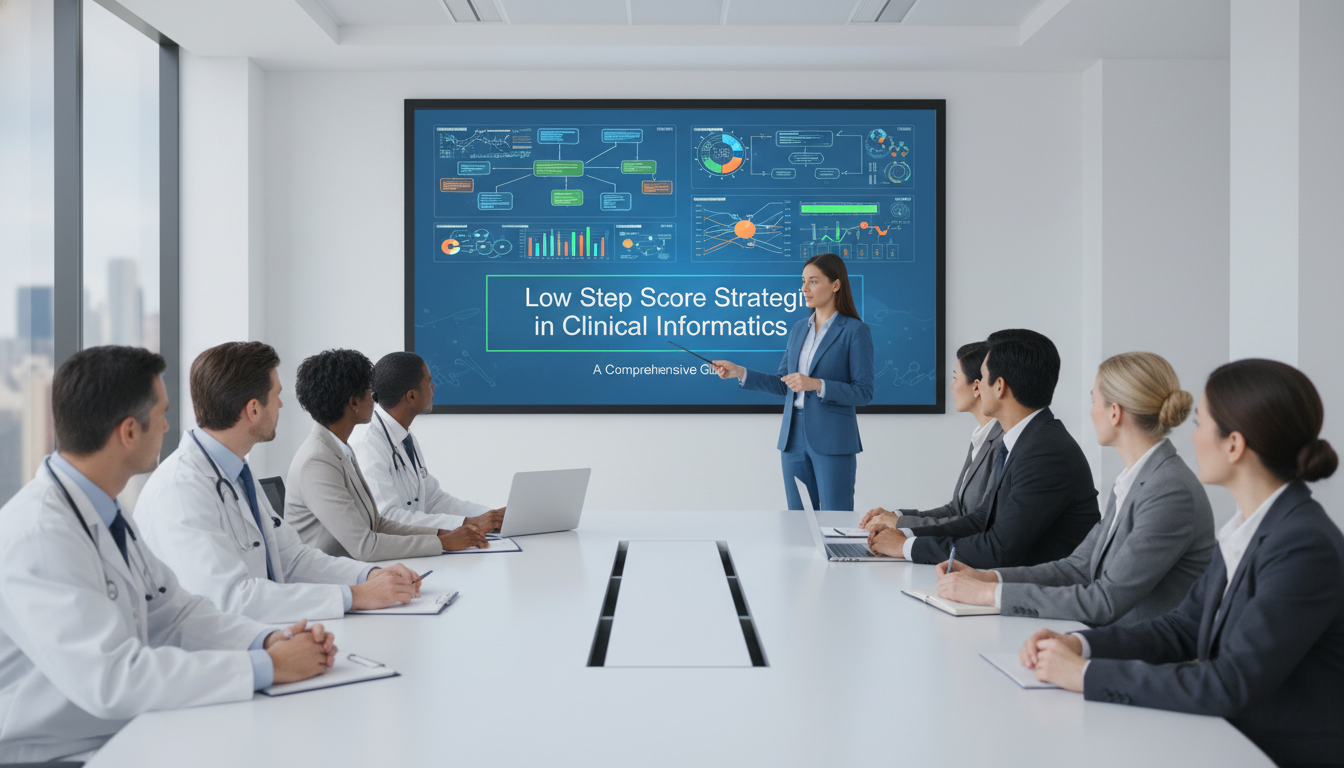
Strategy 4: Timing and Tactics for Informatics Fellowship Applications
Once you’re in residency and building your portfolio, you need a concrete game plan for applying to clinical informatics fellowship.
4.1 Learn the Timeline Early
Although processes may vary by institution, planning ahead is crucial:
- PGY-1–2 (or early-mid residency):
- Begin informatics projects
- Identify local mentors (CMIO, informatics faculty, IT leaders)
- ~18–24 months before graduation:
- Start reaching out to programs
- Attend virtual info sessions/webinars
- ~12 months before graduation:
- Submit applications (often via ERAS or program-specific portals)
- Schedule interviews
By this point, your Step scores are baseline facts. What matters more:
- The body of work you can describe
- The clarity of your career vision
4.2 Target Programs That Value Non-Traditional Pathways
Not all clinical informatics fellowships are identical. Some are:
- Highly academic, research-heavy, and may lean toward applicants from “top” residencies
- More pragmatic, implementation-focused, and open to applicants from diverse backgrounds
With lower scores, emphasize programs that:
- Are embedded in large health systems more than solely research institutes
- Highlight:
- Implementation science
- EHR optimization
- Quality and safety
- Talk explicitly about multidisciplinary teams and adult learners
These environments often place more weight on what you’ve actually done than on old exam scores.
4.3 Use Your Personal Statement to Connect Scores, Skills, and Purpose
Your informatics fellowship personal statement should:
1. Open with a concrete story
Example:
- A patient safety near-miss that led you to examine workflow and decision support
- Frustrations with EHR usability that you turned into a project
2. Define your arc
- Brief mention of earlier academic challenges (if you choose to)
- Emphasis on:
- Curiosity about systems and data
- Contributions you’ve made in residency
- Skills you’ve deliberately built
3. Explain Why Clinical Informatics Specifically
Not just “I like tech” but:
- “I want to reduce alert fatigue by designing smarter CDS tools.”
- “I’m passionate about closing care gaps using population health dashboards.”
- “I want to lead health IT training that actually reflects clinicians’ real workflows.”
4. Close with future goals
- Roles you envision:
- CMIO, associate CMIO, informatics lead within a health system
- Academic clinician-informaticist
- Hybrid clinical + health IT leadership roles
Spell out why this subspecialty is the logical culmination of your experiences, not a backup plan because of scores.
Strategy 5: Non-Fellowship Paths Into Clinical Informatics
If your scores limited your options or you encounter roadblocks, there are alternative paths into health IT and informatics.
5.1 Clinician Builder / Physician Champion Roles
Many organizations have:
- Physician champions for EHR implementation or optimization
- Builder roles where clinicians configure order sets, smart phrases, and workflows (often trained by the vendor)
With strong interest and internal networking, you can:
- Take on these roles during or after residency
- Build a track record that can later be leveraged:
- To step into formal informatics positions
- Or to strengthen a future fellowship application
5.2 Health IT and Industry Roles
Some physicians transition directly into:
- Health IT companies (EHR vendors, digital health startups, analytics firms)
- Medical director or clinical consultant roles in health tech
Here, your Step 1 score is largely irrelevant compared to:
- Clinical credibility
- Communication skills
- Understanding of clinician workflows
- Ability to translate between clinical and technical teams
5.3 Additional Training Options
If you need to further strengthen your profile:
- Master’s programs in:
- Biomedical Informatics
- Health Informatics
- Public health with informatics focus
- Certificate programs in:
- Data analytics
- Healthcare quality and patient safety
- Health IT leadership
These can:
- Provide formal credentials
- Open doors to informatics collaborations
- Compensate for weaker board scores by demonstrating commitment and capability
Putting It All Together: A Sample Roadmap for a Low-Score Applicant
Scenario:
- Step 1: 205 (before pass/fail)
- Step 2 CK: 218
- Matched into a community internal medicine residency in a large health system using Epic
PGY-1:
- Become an early adopter and “super user” of the EHR on your team
- Start a small QI project:
- E.g., increasing documentation completeness for heart failure discharge instructions
- Complete an online SQL and “Intro to Health Informatics” course
PGY-2:
- Partner with QI/informatics staff to:
- Build a simple dashboard pulling heart failure metrics from the EHR
- Present results at a local/regional meeting
- Ask your PD for time to work with the health system’s informatics team on:
- Order set review
- Documentation templates
PGY-3:
- Take on a formal role as “resident EHR liaison” or QI chief
- Initiate a second project focusing on CDS tools, e.g.:
- Redesigning an alert to reduce unnecessary telemetry
- Secure letters from:
- PD describing leadership and growth
- An informatics director or CMIO highlighting your systems thinking
Application to Clinical Informatics Fellowship:
- Personal statement:
- Focuses on your journey from frustrated EHR user to systems improver
- Brief, context-limited explanation of early scores
- CV:
- Lists 2–3 substantive informatics/QI projects
- Technical skills: SQL, basic Python/R, experience with Epic build/testing
- Interviews:
- Emphasize practical experience and ability to work across clinician–IT boundaries
This candidate may never impress with raw Step scores, but will stand out as someone already functioning like a junior informaticist.
FAQs: Low Step Scores and Clinical Informatics
1. Can I still pursue clinical informatics with a very low Step 1 score or a failed attempt?
Yes. Your Step 1 score itself does not bar you from a clinical informatics fellowship. The more serious obstacle is matching into a primary residency. Once you’re in residency and later applying for fellowship, your track record in health IT training, informatics projects, and clinical performance matters far more than your early exam history. A failed attempt should be briefly explained if there was a clear cause, but your focus must be on showing recovery, growth, and informatics accomplishments.
2. Do fellowship program directors actually care about board scores?
They care, but usually less than residency programs do. Many informatics fellowship directors focus on:
- What you’ve done (informatics projects, QI work, EHR initiatives)
- How well you integrate with interdisciplinary teams
- Your ability to think about systems, workflows, and data
Below average board scores may be a minor concern, but often become secondary if you bring strong letters, tangible outputs, and a coherent career story.
3. What can I do right now as a medical student with low scores to prepare for clinical informatics?
You can start by:
- Taking online courses in:
- Basic programming (Python/R)
- SQL
- Introductory health informatics
- Getting involved in any project that touches:
- EHR optimization
- Data analysis for QI
- Digital health or telemedicine implementation
- Seeking mentors who:
- Are involved in informatics, QI, or health IT at your institution
Then, when applying for residency, target programs that use robust EHR systems and mention analytics, QI, or informatics in their materials.
4. Is it possible to work in health IT and informatics without completing a formal clinical informatics fellowship?
Yes. Many physicians work in informatics-heavy roles without formal fellowship training, such as:
- EHR physician champions or builders
- Health IT medical directors
- Clinical consultants for EHR vendors or digital health companies
However, a clinical informatics fellowship and board certification can expand your leadership opportunities, credibility, and long-term career flexibility. If your scores have been a barrier historically, building a strong informal informatics portfolio can open either path—fellowship or directly into health IT roles.
Low exam scores are stressful and can feel determinative, but in clinical informatics, they are rarely the end of the story. If you secure a residency position, use every year to accumulate skills, experiences, projects, and relationships that demonstrate you are fundamentally an informatics-minded physician. Over time, that portfolio can outweigh a low Step score and position you for a rewarding career at the heart of healthcare and technology.