
USMLE scores matter, but they are not the whole story—especially for a motivated Caribbean IMG who is strategic, realistic, and willing to put in the work. If you have a low Step 1 score, below average board scores overall, or even a Step 1 fail, you can still build a pathway to a residency in Seattle or elsewhere in Washington state. It will require planning, transparency, and targeted action.
This guide focuses on low Step score strategies for Caribbean IMGs, with special attention to Seattle residency programs and Washington state residency opportunities. You’ll learn how to reframe your profile, where to focus your energy, and how to communicate your story effectively during the residency match process.
Understanding Your Position as a Caribbean IMG With Low Scores
Before you can develop a strategy, you need a clear, unemotional understanding of how program directors may see your application.
How Programs View Caribbean Medical School Residency Applicants
Being a Caribbean IMG (e.g., from SGU, AUC, Ross, Saba) already places you in a more scrutinized category compared with US MD and many US DO grads. Add a low Step 1 score or below average board scores, and your application often gets an additional layer of concern:
- Concerns about knowledge gaps or test-taking ability
- Worry about board pass rates (especially for internal medicine, family medicine, and prelim years)
- Questions about reliability and resilience
However, many program directors know that Caribbean medical school residency applicants can be excellent clinicians, especially if they:
- Show strong clinical evaluations and sub-internships in the US
- Demonstrate upward trends (e.g., stronger Step 2 CK score, improved in-training exams)
- Bring maturity, work ethic, and strong communication skills
For SGU students in particular, there is a long and established track record of the SGU residency match, including graduates matching into programs in Washington state. That institutional track record can help, but it doesn’t erase the impact of a low score—you must still address it head-on.
Step 1 Pass/Fail: Why Scores Still Matter
Even though Step 1 is now reported as pass/fail, legacy scores and “low pass” concerns still exist for some recent graduates and for programs that remember earlier numeric thresholds. For those who took Step 1 when it was scored:
- A significantly low Step 1 score or Step 1 fail is a red flag, especially if followed by a mediocre Step 2 CK.
- Programs may worry about board exam risk for ABIM, ABFM, or other specialty boards.
If you’re dealing with a low Step 1 score:
- Your Step 2 CK score becomes critical—it’s your first and best chance to show academic recovery.
- Your clinical performance and letters of recommendation (LoRs) become key in offsetting test concerns.
The Seattle and Washington State Residency Landscape for Caribbean IMGs
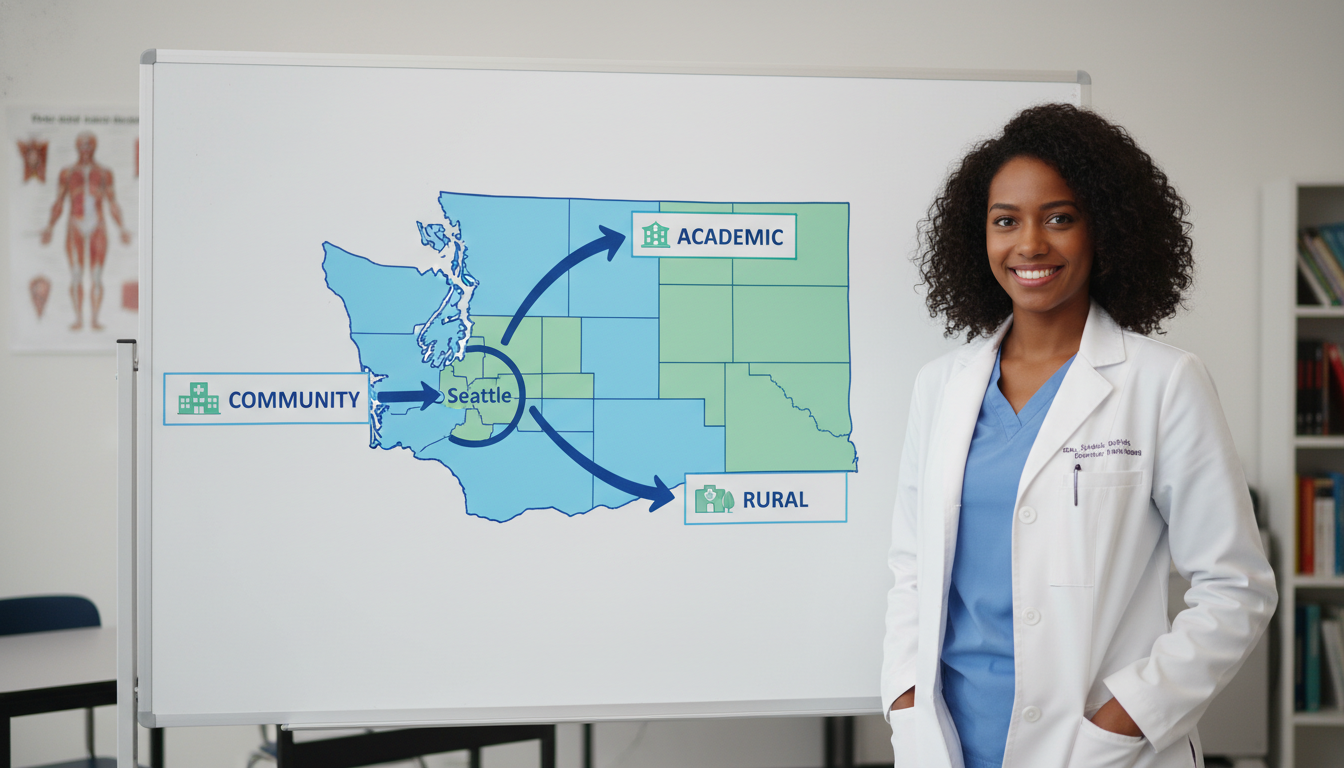
Seattle and the broader Washington state residency scene are moderately competitive, with several academic and community programs. As a Caribbean IMG with low scores, you’ll need to understand where your realistic opportunities lie.
Types of Programs in Washington State
Key categories:
Large Academic Centers (e.g., UW-affiliated programs)
- Typically more competitive
- Higher proportion of US MD/DOs
- Will often scrutinize USMLE performance closely
- Not impossible for Caribbean IMGs, but harder with below average board scores
Community-Based and Community-Affiliated Programs (in Seattle suburbs and other Washington cities)
- Often more IMG-friendly
- May be more holistic in evaluating applications
- Still value Step 2 CK strongly, but may offer more flexibility if other parts of the application are excellent
Rural and Underserved-Focused Programs
- Especially in central and eastern Washington
- Often open to IMGs committed to primary care and underserved populations
- May prioritize fit, service orientation, and continuity of care over just test scores
Realistic Specialties in Seattle for Low Scores
With low Step scores as a Caribbean IMG, your most realistic paths in Washington state include:
- Internal Medicine (community or hybrid programs)
- Family Medicine
- Pediatrics (select community programs)
- Psychiatry (depending on local competitiveness)
- Transitional Year / Preliminary Internal Medicine (as a bridge, not always ideal but sometimes strategic)
Less realistic (though not impossible) with low scores:
- Radiology, Dermatology, Orthopedics, Neurosurgery, ENT, Ophthalmology
- Most competitive fellowships directly from med school (e.g., IR, radiation oncology)
Focus your efforts where your odds are reasonable; then you can shape your niche (e.g., hospitalist, outpatient, fellowship later) once you are safely in a residency.
Core Strategies to Offset a Low Step Score
Your strategy rests on three pillars: academic recovery, clinical excellence, and application optimization. You must outperform expectations in all three.
1. Maximize Step 2 CK and Any Remaining Exams
If you haven’t taken Step 2 CK yet, this becomes your top priority.
Targets:
- If Step 1 is low or failed once: Aim for significantly above-average Step 2 CK for IMGs (often 10–15 points higher than your Step 1, if numeric).
- If Step 1 is pass/fail but your school performance is average or below: Aim to clearly surpass the mean for your specialty of interest.
Action Steps:
- Delay your ERAS submission slightly (but not too much) if you need extra prep time to boost Step 2 CK.
- Use NBME practice exams and UWorld self-assessments to estimate readiness; do not take Step 2 until your practice scores are within your target range.
- Treat Step 2 CK as your redemption attempt—this is where you demonstrate that your low Step 1 score is not your ceiling.
If you’ve already taken Step 2 CK and it’s also low:
- Focus on COMLEX/other exams (if applicable) and any in-training exams once in residency.
- Double down on clinical evaluations, strong LoRs, and meaningful projects that showcase competence and reliability.
2. Build a “Clinical Heavy” Application
Seattle residency programs and other Washington state residency sites will pay close attention to US clinical experience (USCE) and how you function in the real clinical environment.
Key components:
Strong US Rotations (Especially in or Near Washington)
If possible, secure:
- Audition rotations / Sub-internships (“sub-Is”) in programs that:
- Are IMG-friendly
- Have historically taken SGU or other Caribbean graduates
- Are within Washington or the broader Pacific Northwest if Seattle is your target region
During these rotations:
- Show up early, stay late, and volunteer for work.
- Write excellent notes, follow up on labs, and be proactive.
- Clarify your interest in their program and ask directly what you can improve.
A glowing clinical evaluation from a sub-I can neutralize concerns around a low Step 1 score by proving you are a safe, competent, and hardworking intern-level trainee.
High-Quality Letters of Recommendation
Prioritize 3–4 strong, US-based LoRs, ideally:
- From attendings in your chosen specialty (e.g., IM for internal medicine applications)
- At least one from a core clinical faculty member or program director if possible
- Preferably from US-based academic or community hospitals in respected settings
Ask letter writers to address, if appropriate:
- Your ability to synthesize complex information despite prior test scores
- Your reliability, resilience, and response to feedback
- Your performance at or above the level of current interns
3. Create a Compelling Personal Narrative
Programs want to know: Why should we trust you despite low Step scores?
Develop a clear, consistent narrative that includes:
Honest acknowledgment, not excuses
- Briefly mention that your Step 1 score does not reflect your current capabilities.
- Avoid blaming the school system, exam style, or external events unless truly central (and even then, keep it minimal and factual).
Evidence of growth
- Improved Step 2 CK
- Strong clinical evaluations
- Academic or quality improvement projects demonstrating knowledge and initiative
Connection to Seattle / Washington state
- Family or personal ties to the region
- Previous time living or rotating in the Pacific Northwest
- A genuine interest in serving Washington’s diverse and underserved populations
Craft this narrative in your personal statement, ERAS experiences, and interview answers. Consistency is critical.
Targeted Application Strategy for Seattle and Washington
You cannot afford a generic application strategy if your goal is to match in or near Seattle with low scores.
1. Program List Strategy: Breadth and Realism
With matching with low scores as a Caribbean IMG, you should:
- Apply to a broad range of programs, not just in Seattle, but across Washington and other IMG-friendly states.
- Include:
- A few “reach” programs (e.g., some UW-affiliated community programs)
- A solid core of IMG-friendly community programs in Washington and neighboring states
- Backup programs in regions with historically high IMG acceptance (Midwest, some Southern states)
Aim for:
- Internal Medicine / Family Medicine: Often 60–120+ programs total for a lower score IMG
- If limited by finances, prioritize quality over sheer number, but avoid applying to <50 programs in competitive locations.
2. Using SGU Residency Match and Caribbean Networks
If you’re from SGU or another well-known Caribbean school, leverage:
Alumni match lists:
- Identify Caribbean medical school residency graduates who matched into Seattle residency programs or elsewhere in Washington.
- Note which programs have repeatedly accepted Caribbean IMGs—those are prime targets.
Alumni outreach:
- Politely email or message alumni:
- Ask about the program’s culture and IMG-friendliness.
- Request honest feedback on your competitiveness with a low Step 1 score and how they would strengthen your application.
- Never directly ask for a “hook-up,” but do ask for advice and possibly a brief Zoom chat.
- Politely email or message alumni:
3. Region-Specific Positioning: Why Seattle, Why Washington?
Your application will be stronger if your interest in Seattle and Washington state feels genuine, not just “I like the mountains.”
Emphasize:
- Interest in urban populations and health disparities (for Seattle-based programs)
- Interest in rural primary care (for central/eastern Washington and WWAMI region programs)
- The region’s emphasis on integrated behavioral health, telemedicine, and preventive care
- Commitment to long-term practice in the Northwest if that’s true
Weave this into:
- Personal statement (one general, one region-focused version if needed)
- Supplemental application essays (if used)
- Interview responses about “Why our program?” and “Why this location?”

Interview and Post-Interview Strategies With Low Scores
If you secure interviews, you’ve already cleared a major barrier—now you must convert them.
1. Addressing Low Step Scores in Interviews
When asked about your low Step 1 score or below average board scores:
Keep it to a 3-part, 60–90 second answer:
Context (brief):
- “I took Step 1 during a period when I was still adjusting to a new learning system and underestimated how to prepare effectively.”
Ownership and learning:
- “I took full responsibility, reevaluated my study methods, sought faculty mentorship, and completely changed my approach.”
Evidence of improvement and current readiness:
- “That led to a stronger Step 2 CK performance, consistently high clinical evaluations, and strong feedback from attendings who feel I function at an intern level. I’m confident my current work reflects who I am much better than that earlier score.”
Avoid:
- Overly emotional explanations
- Long stories about personal hardship that overshadow your growth
- Any hint of blaming external factors as the primary cause
2. Demonstrating Fit Beyond Test Scores
Programs in Seattle and Washington want residents who:
- Work well in team-based, interprofessional environments
- Communicate clearly with patients across cultures
- Handle the high volume and variety of cases seen at regional centers
Show this by:
- Sharing specific stories from your clinical rotations—difficult cases, teamwork, conflict resolution
- Emphasizing times you took initiative (e.g., starting a small QI project on your rotation)
- Highlighting experience with underserved populations, refugees, migrant workers, or urban clinics
3. Thank-You Notes and Post-Interview Communication
After interviews:
- Send brief, specific thank-you emails within 24–48 hours.
- Mention:
- A concrete aspect of the conversation or program that resonates with you
- How your skills and experiences align with their mission
- If Seattle is your top preference, you can express strong interest (but be honest if you say “top choice”).
While thank-you notes won’t erase low scores, they reinforce professionalism and genuine interest—qualities that can help tip decisions between similar candidates.
Additional Options if You Don’t Match the First Time
If you go unmatched, it is not the end of your path—it’s a signal that your current strategy needs adjustment.
1. SOAP (Supplemental Offer and Acceptance Program)
During SOAP:
- Be ready with:
- A revised, SOAP-optimized personal statement
- Updated CV
- Focus on:
- Preliminary Internal Medicine / Transitional Year spots
- Family Medicine and less competitive IM programs
Even a prelim or transitional year, if chosen well, can give you:
- Fresh US LoRs
- A chance to prove yourself clinically
- Connections for a categorical position in the following cycle
2. Strengthen Your Profile in a Gap Year
If you don’t match and don’t secure a prelim / TY spot, consider a structured year to upgrade your application:
- Clinical research or QI year in an academic or community hospital (preferably in or near Washington if Seattle remains your target)
- Clinical observer/extern roles with hands-on exposure where possible
- Tutoring roles or teaching assistant posts that demonstrate mastery and communication skills
Use this time to:
- Build new, stronger LoRs
- Publish or present if possible (even small QI posters help)
- Show continued clinical engagement, not just test prep or inactivity
Putting It All Together: A Sample Action Plan
For a Caribbean IMG with a low Step 1 score targeting Seattle residency programs:
PGY-1 Application Year Timeline Example
12–18 months before ERAS opens
- Plan Step 2 CK; aim for significant improvement
- Line up US clinical rotations—prioritize the Pacific Northwest if you can
- Identify SGU (or your school’s) alumni in Washington state residency programs and start networking
6–9 months before ERAS
- Take Step 2 CK when practice scores are at/above your target
- Begin drafting your personal statement and region-focused versions
- Request letters from rotation attendings while experiences are fresh
3–4 months before ERAS
- Finalize your program list: a mix of Seattle/Washington targets plus broad backup programs nationwide
- Prepare for virtual interviews (tech setup, mock interviews, answers for low scores)
ERAS submission and interview season
- Apply early with a complete application
- Tailor communications for Seattle and Washington programs to emphasize regional fit
- Use each interview to highlight your clinical strengths and growth story
Post-interview
- Send professional thank you emails
- Rank programs realistically, prioritizing IMG-friendly programs with strong clinical training and a culture where you can thrive
FAQs: Low Step Score Strategies for Caribbean IMGs in Seattle
1. Can I match into a Seattle residency program with a low Step 1 score or failed attempt as a Caribbean IMG?
Yes, but it is challenging. Your chances improve significantly if you demonstrate a strong Step 2 CK, excellent US clinical evaluations, and compelling letters of recommendation. You’ll also need to be realistic—focus not only on central Seattle academic centers, but also community and regional programs in Washington and nearby states. Demonstrating clear, long-term interest in serving the Pacific Northwest also helps.
2. How many programs should I apply to if I have below average board scores?
For internal medicine or family medicine, many Caribbean IMGs with low scores apply to 60–120+ programs. The exact number depends on finances and how many IMG-friendly programs you can identify. If Seattle or Washington state residency is a priority, apply broadly there but also include numerous backup programs in other regions with better IMG acceptance.
3. Does being from SGU (or another top Caribbean school) help offset a low Step score?
It helps somewhat, primarily because programs are familiar with the SGU residency match track record and know many successful SGU grads. However, it does not erase a weak exam history. You still need to prove recovery through Step 2 CK, strong USCE, and excellent LoRs. Use your school’s alumni network aggressively to identify IMG-friendly programs in Seattle and Washington and to seek guidance.
4. Should I delay applying for a year to improve my chances?
If your Step 2 CK score is not yet where it needs to be, or if you lack strong US clinical experience, delaying one cycle to strengthen your profile can be strategic. Use that year to:
- Improve exam performance (if any exams remain)
- Complete high-quality US rotations
- Engage in research or QI projects and secure strong LoRs
For many Caribbean IMGs with low scores, a planned, strategic gap year is better than entering the Match with a weak, rushed application—especially when targeting competitive regions like Seattle.
With focused planning, honest self-assessment, and targeted action, a low Step score does not have to define your career. As a Caribbean IMG, you can still carve out a path to strong training in Seattle or elsewhere in Washington—if you build a powerful clinical story, leverage your networks, and apply strategically.