
Understanding Your Position as a Caribbean IMG with a Low Step Score
Caribbean medical school graduates are a major part of the U.S. residency workforce, especially in primary care and community hospitals. At the same time, programs along the Pacific Coast (California, Oregon, Washington, Alaska, Hawaii) tend to be among the most competitive in the country.
If you are a Caribbean IMG aiming for a west coast residency—especially California residency programs—and you have a low Step 1 or Step 2 score, your path will require strategy, clarity, and precision rather than hope alone.
This article assumes:
- You are a Caribbean IMG (e.g., SGU, AUC, Ross, Saba, etc.)
- You have a low Step score or below average board scores
- You are specifically interested in the Pacific Coast: California, Oregon, Washington, possibly Alaska and Hawaii
- You want to maximize your chances of matching despite these challenges
We’ll walk through:
- How to interpret “low Step scores” in today’s context
- West coast–specific realities (and myths) about Caribbean medical school residency outcomes
- Concrete strategies to offset a low Step 1 or Step 2 CK
- How to build a west coast–focused application list
- Timing, signaling, and interview strategy
- Practical examples and action plans
What “Low Step Score” Really Means for Caribbean IMGs
Step 1: Now Pass/Fail, but History Still Matters
USMLE Step 1 is now reported as pass/fail. But for many Caribbean IMGs:
- You may have a numerical Step 1 score from previous cycles
- You may have needed more than one attempt to pass
- Or your Caribbean medical school residency dean’s letter may still reflect an internal ranking tied to Step 1–related performance
For residency programs, especially on the west coast:
- A Step 1 fail is still a major red flag, but not an automatic rejection if the rest of the file is strong.
- A low Step 1 score (for those with numeric scores) can be offset by:
- A strong Step 2 CK score
- Excellent clinical evaluations and letters
- Evidence of upward trajectory
Step 2 CK: The New Gatekeeper
With Step 1 now pass/fail, Step 2 CK is the primary quantitative screen. Programs may not publish explicit cutoffs, but in practice:
- Many Pacific Coast programs expect Step 2 CK ≥ 240+ for U.S. grads in competitive specialties.
- For Caribbean IMGs, realistic competitiveness often begins around 230+, with exceptions based on holistic review and specialty.
If you have a low Step 2 CK (e.g., under 225) or multiple attempts, you are in “matching with low scores” territory. That doesn’t mean “no chance.” It means:
- You must apply strategically, not broadly at random.
- Every other part of your application must be deliberately optimized.
Defining “Low” vs “Below Average”
Instead of fixating on the word “low,” think in categories:
For IMGs generally (varies by year and specialty):
- Competitive: ≥ 240–245
- Average: ~225–235
- Below average board scores: ~215–225
- High-risk / very low: ≤ 210 or multiple failures
For Caribbean IMGs targeting the Pacific Coast:
- Below average board scores are rarely fatal if:
- You target IMG-friendly, community-based programs.
- You avoid selective programs (e.g., flagship university hospitals) as your primary focus.
- You leverage strong U.S. clinical experience (USCE) and letters of recommendation.
How the Pacific Coast Differs: Reality Check for Caribbean IMGs
California and the Pacific Coast: More Competitive by Default
California residency programs, particularly in major cities (Los Angeles, San Diego, San Francisco Bay Area, Seattle, Portland):
- Receive very high application volume.
- Tend to prefer:
- U.S. MDs
- Strong U.S. DOs
- Select international medical graduates with exceptional applications.
Programs in Oregon and Washington are also competitive and may have:
- A strong regional mission (serving the Pacific Northwest population)
- Preference for applicants with regional ties
This doesn’t mean no Caribbean medical school residency spots exist on the west coast—it means:
- They’re more concentrated in community and safety-net hospitals, often:
- Community internal medicine
- Family medicine
- Transitional year and prelim programs
- SGU residency match data and similar reports show that Caribbean grads do match to west coast programs, but:
- Matches cluster in primary care and less competitive specialties.
- Scores tend to be stronger than the average Caribbean graduate, or other parts of the application are extraordinary.
California Licensing & Program Requirements
If you aim for California residency programs, pay attention to:
- California Medical Board–approved schools
- Most major Caribbean schools (like SGU, AUC, Ross) are recognized; verify your school’s status directly with the board.
- Minimum exam attempts and scores
- Some California programs won’t consider applicants with multiple Step attempts.
- Recent graduation preference
- Many west coast programs prefer within 3–5 years of graduation, especially with continuous clinical activity.
If you have a low Step 1 score or low Step 2 CK, or a gap after graduation, you will need to compensate with:
- Recent, strong U.S. clinical experience
- A clear, coherent explanation for any red flags

Core Strategies to Offset Low Step Scores as a Caribbean IMG
1. Maximize Step 2 CK (and Step 3 if Applicable)
If you haven’t yet taken Step 2 CK:
- Treat it as your “redemption exam.”
- Aim for a score that’s clearly above your Step 1 performance and, if possible, near or above the national mean.
- Consider delaying the exam a short, strategic amount of time if:
- NBMEs indicate you’re scoring below 220, and
- You can realistically raise your performance with dedicated study.
If you already have a low Step 2 CK:
- Consider Step 3 as an opportunity to show improvement—particularly helpful for:
- Reapplicants
- Older graduates
- Applicants with multiple Step attempts
Step 3 won’t fix everything, but:
- A solid Step 3 (e.g., ≥ 220) can reassure programs you’ve stabilized academically.
- It’s especially valued by community internal medicine and family medicine programs that care about board pass rates.
2. Select the Right Specialty for Your Score Profile
With a low Step 1 score or below average board scores, your specialty selection is crucial.
Most realistic options for Caribbean IMGs with modest scores seeking west coast residency include:
- Internal Medicine (community-based, non-university)
- Family Medicine
- Pediatrics (selectively)
- Psychiatry (still competitive in CA, but more open than surgical fields)
- Preliminary/Transitional Year (as a foot-in-the-door strategy)
Avoid targeting (as your main or only path) if you have clearly low scores:
- Dermatology
- Plastic surgery
- Neurosurgery
- Orthopedics
- Competitive radiology or anesthesiology at top-tier programs
- Highly selective university-based programs in any specialty with known high cutoffs
You can still try a small number of reach applications in more competitive fields, but your core strategy should be built around:
- A primary care–oriented specialty
- Community-oriented west coast residency programs that historically interview and match IMGs
3. Build High-Impact U.S. Clinical Experience (USCE)
For Caribbean IMGs, U.S. clinical experience is not optional; with low scores, it becomes central to your strategy.
Aim for:
- Hands-on inpatient rotations (sub-internships, acting internships) in:
- Internal medicine
- Family medicine
- Pediatrics
- Preferably in IMG-friendly, west coast or west-adjacent institutions:
- California’s Central Valley, Inland Empire
- Community hospitals in Oregon/Washington
- Nevada, Arizona, New Mexico (as regional alternates if west coast is limited)
During USCE:
- Seek outstanding evaluations and letters of recommendation (LORs).
- Ask for letters from:
- Program directors
- Clerkship directors
- Core clinical faculty actively involved with a residency program
Explain your low scores only if asked directly and keep the focus on:
- What you learned
- How your performance has improved in clinical settings
- Concrete examples of clinical reasoning, teamwork, reliability
4. Leverage SGU and Other Caribbean School Networks (If Applicable)
If you are from a major Caribbean school (e.g., SGU, Ross, AUC, Saba):
- Use your school’s residency match lists and alumni databases to:
- Identify SGU residency match and similar data for west coast programs.
- See which California residency programs consistently take Caribbean or other IMGs.
- Reach out (professionally and briefly) to alumni who:
- Matched to your desired region (e.g., San Joaquin Valley, Inland Empire, Seattle suburbs)
- Are in specialties you’re targeting
Ask for:
- Advice on program culture
- Whether the program is realistically IMG-friendly
- Suggestions for electives or observerships there
Caribbean schools with robust career offices often have:
- Lists of programs that historically interview their graduates
- Residents or fellows who can offer mock interviews or CV feedback
5. Optimize Your Application Story: Red Flags, Not Excuses
Having a low Step 1 score or below average board scores requires an honest but composed narrative.
In your personal statement and interviews:
- Acknowledge challenges briefly and factually, if needed.
- Emphasize:
- Growth mindset: what changed in your study strategy
- Clinical performance: how your evaluations improved
- Professionalism: reliability, communication, teamwork
Avoid:
- Over-explaining or dramatizing your Step struggles
- Blaming external factors without self-reflection
- Suggesting that exam performance doesn’t matter at all
Instead, present a coherent arc:
“Early in medical school, I struggled with standardized testing despite strong clinical understanding. After my Step 1 result, I worked with a faculty mentor, changed my approach to spaced repetition and NBME-based practice, and extended my preparation for Step 2 CK. My clerkship grades and faculty feedback reflect this growth, and I’m proud that my clinical supervisors consistently highlight my reliability and patient-centered care.”
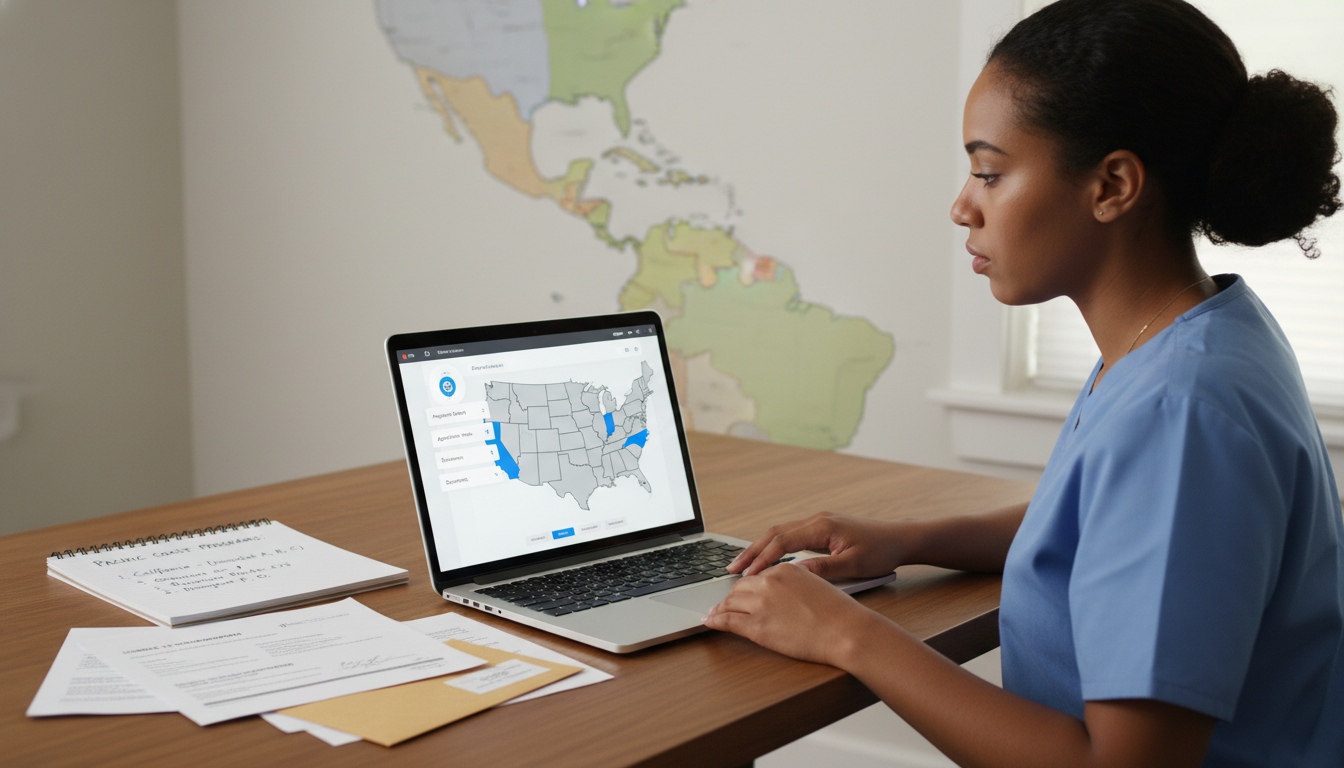
Targeting Pacific Coast Programs Strategically
1. Understand the West Coast Landscape
The Pacific Coast region includes very different environments:
Urban academic centers
- Examples: UCSF, UCLA, Stanford, OHSU, UW
- Very competitive; rarely take Caribbean IMGs with low scores, though rare exceptions exist.
Community teaching hospitals in urban/suburban areas
- Examples: community IM/FM programs in the Los Angeles suburbs, Inland Empire, Central Valley, smaller cities in Oregon/Washington
- More likely to consider holistic applications, especially in primary care.
Federally Qualified Health Center (FQHC)–affiliated programs
- Often mission-driven to serve underserved communities
- May appreciate applicants with bilingual skills, prior service, and those willing to work in rural or underserved settings.
With low or below average board scores, your primary focus should be:
- Community internal medicine and family medicine programs in:
- California’s inland and Central Valley regions
- Tacoma, Spokane, or smaller northwest cities
- Programs newly accredited or recently expanded
2. Build a Tiered List: West Coast + Adjacent States
If your heart is set on the Pacific Coast, don’t limit yourself to only CA/OR/WA. You can:
- Target west coast residency programs as your top preference
- Add adjacent states (Nevada, Arizona, New Mexico, Colorado) with:
- Similar geography and lifestyle
- Often somewhat more IMG-friendly
Create a tiered application strategy:
Tier 1 (Reach West Coast)
- A small number of university-affiliated or moderately competitive programs in CA/OR/WA where:
- Your school has recent matches (e.g., SGU residency match data)
- There’s some evidence of IMG intake
Tier 2 (Core Target – West Coast Community)
- Majority of your applications here
- Community internal medicine, family medicine, and psychiatry programs in:
- Inland California (Fresno, Bakersfield, Stockton, Modesto, Riverside, San Bernardino)
- Smaller metro/suburban areas of Oregon/Washington
Tier 3 (Adjacent States, IMG-Friendly)
- Community-based IM/FM/psych programs in:
- Nevada (Las Vegas, Reno)
- Arizona (Phoenix, Tucson, Yuma)
- New Mexico and Colorado (rural or community-focused programs)
Tier 4 (Safety, including Non-West Coast)
- Highly IMG-friendly programs elsewhere (Midwest, South, Northeast), especially:
- Community internal medicine and family medicine
- Transitional year positions
This strategy:
- Maximizes your chance to match at all
- Maintains a distinct but realistic chance of a Pacific Coast outcome
3. Use Signaling, Preferences, and Geographical Ties Wisely
With ERAS program signaling and preference signals (where available):
- Prioritize west coast programs that:
- Are community-based
- Appear to review IMGs
- Align with your clinical interests (e.g., underserved, primary care)
How to strengthen your regional interest:
- If you have family or long-term friends in California or the Pacific Northwest, mention this in:
- Your application geographic preferences
- Your personal statement (briefly) when tailored to specific programs
- If you have done rotations or observerships on the west coast, highlight:
- What you learned about the patient population
- How you plan to serve that region long-term
Application Execution: How to Present Yourself with Low Scores
1. Letters of Recommendation: The Great Equalizer
With low Step 1 or Step 2 CK, strong letters can distinguish you.
Aim for:
- 3–4 letters, ideally from:
- U.S. internal medicine or family medicine attendings
- A program director or clerkship director when possible
- Letters that:
- Provide specific examples (clinical reasoning, communication, reliability)
- Explicitly affirm you are ready for residency-level responsibility
- Compare you favorably to other students/residents
Letters from well-known institutions on the west coast or adjacent states can be particularly impactful, but a detailed, specific letter from a respected community physician is often more powerful than a generic one from a famous name.
2. Personal Statement: West Coast-Focused, Not Score-Focused
Your personal statement should:
- Clearly state your specialty choice and motivation.
- Show real understanding of primary care needs on the Pacific Coast:
- Underserved communities
- Multilingual and multicultural populations
- Briefly mention, if necessary:
- Any major academic obstacle (e.g., initial Step 1 fail)
- How you improved and what you’ve done since
But mostly, it should:
- Tell a patient-centered, service-driven story
- Align your experiences (e.g., Caribbean clinical experiences, U.S. rotations, community projects) with the mission of west coast residency programs
3. CV and Experiences: Highlight Service and Cultural Competence
Programs on the Pacific Coast often value:
- Ability to care for diverse, multilingual communities
- Interest in public health, homeless care, addiction medicine, migrant health
As a Caribbean IMG, you may already bring:
- International perspective and adaptability
- Bilingual or multilingual skills
- Experience with resource-limited settings
Emphasize:
- Volunteer work or electives in underserved communities (Caribbean or U.S.)
- Any research or QI projects related to health disparities, community medicine, chronic disease in diverse populations
4. Interview Preparation: Addressing Scores Calmly and Confidently
When asked about your low Step 1 score or below average board scores:
- Keep your answer short, factual, and growth-oriented:
- “At that time, my approach to standardized exams was inefficient. I was over-reliant on passive reading. After Step 1, I shifted to a structured plan with question-based learning and regular faculty feedback. My subsequent clerkship evaluations and [Step 2 CK/Step 3] performance reflect that improvement.”
- Avoid:
- Long emotional explanations
- Blame or resentment
- Pivot quickly to:
- Your strengths in clinical communication
- Specific examples of teamwork and reliability
Ask insightful questions in interviews, especially at west coast programs:
- About their patient population (e.g., migrant workers, unhoused patients, indigenous populations)
- Their approach to resident wellness and board prep
- Opportunities to serve rural or underserved communities
This shows you understand their mission—and that you’re not just chasing a California zip code.
FAQs: Low Step Score Strategies for Caribbean IMGs on the Pacific Coast
1. Can I realistically match a California residency program with a low Step 1 or Step 2 score as a Caribbean IMG?
Yes, but with caveats. Your best chances are in community internal medicine and family medicine programs that historically accept IMGs. Academic university programs and highly competitive specialties are unlikely with clearly low scores. To improve your odds:
- Maximize Step 2 CK (and consider Step 3 if already low).
- Obtain strong U.S. clinical experience and letters, ideally in California or neighboring states.
- Apply widely, with a mix of Pacific Coast and more IMG-friendly regions, to ensure you match somewhere.
2. Does being from a well-known Caribbean school like SGU help if I have low scores?
It helps somewhat. Programs are more familiar with SGU residency match outcomes and similar data from large Caribbean schools, which can provide:
- A track record of graduates passing U.S. boards
- Alumni already in west coast residency programs who can vouch for you
However, low scores are still a concern. Your school’s reputation does not erase poor exam performance, but it may: - Make programs more willing to look beyond the numbers
- Help you secure rotations and letters at better-connected hospitals
3. Should I give up on the Pacific Coast and only apply to more IMG-friendly regions if my scores are really low?
Not necessarily. A balanced strategy is:
- Apply to a smaller number of carefully chosen west coast programs where:
- Your school has matched before
- The program is community-based and not heavily scores-driven
- Combine this with a larger number of programs in more IMG-friendly regions (Midwest, South).
This way, you: - Preserve a realistic chance at a west coast residency
- Substantially increase your overall chance of matching, which is more important than geography alone.
4. Is taking Step 3 before applying useful if I already have a low Step 2 CK?
It can be, particularly if:
- You are a reapplicant or older graduate
- Your low Step 2 CK raises concern about board pass risk
A solid Step 3 score: - Shows improvement and resilience
- Reassures programs about your ability to pass future board exams
That said, Step 3 alone will not overcome multiple major red flags. It should be part of a broader strategy that includes: - Strong USCE
- Excellent letters
- Targeted specialty and program selection
By approaching your situation with realism, a clear strategy, and a willingness to adapt, you can still create a path from Caribbean medical school to a west coast residency—even with a low Step 1 score or below average board scores. The key is to be intentional about every step, from exam planning to specialty choice, program list construction, and how you tell your story.