
Understanding the County Hospital Advantage for Applicants with Low Step Scores
For applicants worried about a low Step 1 score, below average board scores, or a failed attempt, county hospital residency programs can be one of the most strategic and realistic pathways to a successful match. These institutions—often called “safety net hospitals”—serve large underserved populations, have high clinical volume, and tend to value work ethic, resilience, and commitment to service as much as (and sometimes more than) test scores.
This article focuses on low Step score strategies specifically tailored to county hospital residency programs in core specialties such as Internal Medicine, Family Medicine, Pediatrics, Psychiatry, Emergency Medicine, and certain Surgical prelim/transitional year positions.
We will cover:
- How county hospital residency programs view Step scores
- How to build a competitive application despite low or failed Step scores
- Targeted application strategies for safety net hospital residency programs
- How to present your narrative in personal statements and interviews
- Specialty-specific considerations within county systems
- Frequently asked questions about matching with low scores
How County Hospital Residency Programs View Step Scores
County hospitals are often affiliated with academic medical centers, but their mission sets them apart: they are the safety net for their communities. That mission strongly shapes how they evaluate applicants.
1. Mission-driven over score-driven
While some university programs filter heavily by score, many county hospital residencies:
- Place high value on clinical performance, especially in high-acuity settings
- Appreciate resilience, grit, and ability to work with underserved populations
- Are more open to applicants with non-linear paths (career changers, prior failures, below average scores) if the rest of the application tells a strong story
You will still face cutoffs at some programs, but you are more likely to find:
- Flexible Step cutoffs or none at all
- Willingness to review applications holistically
- PDs who care about whether you can take care of complex, vulnerable patients in a resource-limited setting
2. Step 1 → Pass/Fail: What still matters?
Although Step 1 is now pass/fail, older low Step 1 scores (from previous scoring eras) and low Step 2 CK scores still matter. Programs may look closely at:
- Step 2 CK as the main numeric metric
- Number of attempts (first pass vs multiple attempts)
- Trend (improvement from Step 1 to Step 2)
For applicants with a low Step 1 score or below average Step 2 CK score:
- County programs may tolerate lower numbers if:
- You passed on your first attempt (even if barely)
- You show clear improvement on later exams
- You have strong letters from county or safety net settings
- You have significant clinical experience with underserved patients
3. Common score thresholds at county hospitals
These vary widely by region and specialty, but some patterns:
- Many county Internal Medicine, Family Medicine, and Psychiatry programs:
- Historically interviewed candidates around the 210–225 Step 2 CK range (or equivalent percentiles), sometimes lower for strong holistic fits
- More competitive specialties in county settings (e.g., Emergency Medicine, categorical Surgery):
- May still prefer 230+, but can be flexible for standout candidates with robust clinical and service backgrounds
Key takeaway: A low or borderline score does not automatically disqualify you from a county hospital residency—but everything else in your application must be thoughtfully optimized.

Building a Strong Application Around Low Step Scores
If you’re matching with low scores, your strategy should be to overcompensate in other domains. County hospital programs, in particular, reward this effort because your strengths align with their mission.
1. Academic remediation and score narrative
Even if your scores are already set, you can still build a stronger academic profile.
A. Demonstrate improvement where possible
- If you have:
- Low Step 1 but higher Step 2 CK: Highlight this upward trend as evidence of adaptability and growth.
- Multiple attempts: Show clear improvement and successful subsequent performance (e.g., shelf exams, in-training exams if reapplying, or additional standardized exams like COMLEX Level 2 for DOs).
B. Take (and excel in) standardized assessments
If you have time before application:
- Consider:
- NBME practice exams as part of your narrative (“I scored X on NBME after structured remediation”).
- A strong Step 3 score (especially for reapplicants or older graduates) can reassure programs.
C. Address systemic or personal factors
If your low Step 1 score resulted from:
- Personal illness
- Family crisis
- Financial/work pressures
- Language or transition challenges (for IMGs)
You can briefly and specifically contextualize this in:
- Your personal statement, and/or
- A short ERAS explanation (if appropriate)
Focus on what you learned and how you changed your study approach—never sound like you are making excuses.
2. Clinical performance: Make your rotations your superpower
County hospital residencies emphasize hands-on clinical skill, especially in high-volume, high-acuity settings.
A. Prioritize strong core clerkship performance
Aim for:
- Honors or High Pass in:
- Internal Medicine
- Family Medicine
- Pediatrics
- Psychiatry
- Surgery and/or Emergency Medicine (if relevant)
If grades are already set:
- Highlight:
- Strong clinical comments from evaluations
- Any recognition for teamwork, communication, or professionalism
B. Choose sub-internships wisely
If you have low scores, your sub-internships (Sub-I’s) or acting internships can “override” concerns:
- Target:
- Rotations at county or safety net hospitals
- Services that are resident-heavy and high-acuity (medicine wards, ICU, ED, urgent care)
- Goals:
- Show you can function like an intern
- Get strong letters of recommendation that specifically address:
- Work ethic
- Clinical reasoning
- Reliability under pressure
- Ability to care for vulnerable populations
C. For IMGs and those without U.S. clinical experience
For county hospital residency programs, U.S.-based clinical experience is particularly valuable:
- Prioritize:
- Hands-on rotations (sub-I, externship, observership with meaningful patient contact if possible)
- Experiences at county or public hospitals rather than private, low-acuity clinics
- Emphasize:
- EHR familiarity
- Understanding of U.S. health system and insurance barriers
- Comfort with diverse, often socioeconomically disadvantaged patient populations
3. Letters of Recommendation Tailored to County Programs
For applicants with below average board scores, letters of recommendation (LoRs) can be the single most powerful counterweight.
A. Who should write your letters?
Prioritize:
- Supervising attendings at county or safety net hospitals
- Faculty known in the specialty (e.g., Division Chiefs, Program Directors, Clerkship Directors)
- Attendings who directly observed:
- Your clinical decision-making
- Your response to feedback
- Your performance in busy, stressful clinical environments
Even one letter from a well-respected county hospital physician can significantly strengthen your chances.
B. What should these letters highlight?
Provide letter writers with a short summary of your story and goals. Ask them (politely) to comment on:
- Your clinical acumen relative to your peers
- Your work ethic and resilience
- How you interact with:
- Underserved and vulnerable patients
- Interprofessional teams (nurses, social workers, case managers)
- Any growth you’ve demonstrated after initial challenges (e.g., after a low Step score or failed test)
Explicit statements that “I would rank this student in the top X% I have worked with” are extremely valuable—especially when your Step scores are low.
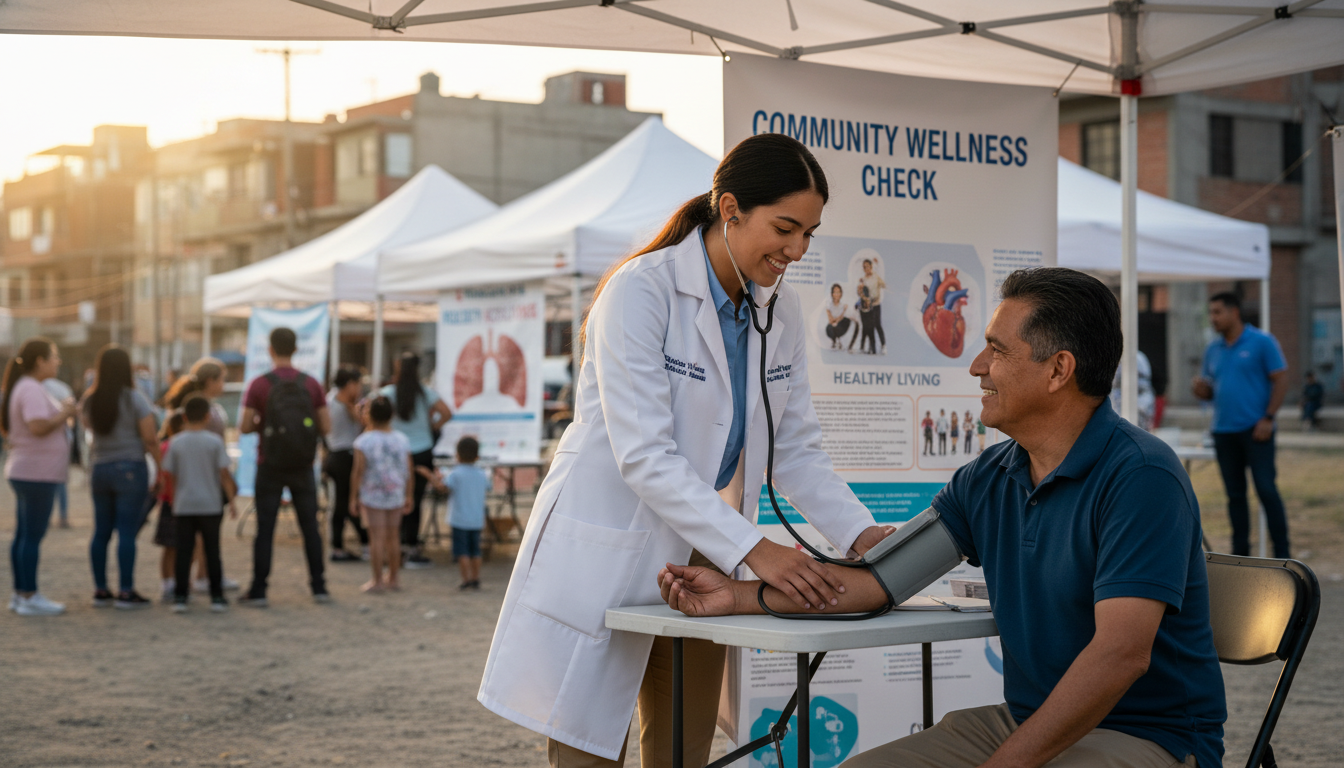
4. Service and Advocacy: Aligning with the Safety Net Mission
County hospitals are safety net institutions by definition: they serve large uninsured or underinsured populations, immigrants, and patients with complex social needs.
If you’re matching with low scores, your alignment with this mission can distinguish you.
Strong experiences include:
- Long-term volunteering at:
- Free clinics
- Homeless shelters
- Substance use programs
- Community outreach or mobile clinics
- Working with:
- Refugee populations
- Non-English speaking communities
- Patients with serious mental illness or addiction
- Quality improvement or research projects focused on:
- Health disparities
- Access to care
- Social determinants of health
In your application, clearly connect:
“I’m specifically drawn to county hospital residency training because I’ve already been doing this type of work, and I want to continue serving similar populations as a resident and beyond.”
Application Strategy: Targeting County and Safety Net Programs with Low Scores
With low or borderline scores, where and how you apply is just as important as what’s in your application.
1. Identifying county hospital residency and safety net programs
Look for:
- Programs based at:
- County hospitals, public hospitals, or health department systems
- Facilities described as “safety net hospitals”, “public teaching hospitals”, or part of a county health service
- Clues on websites:
- Emphasis on care for underserved populations
- Phrases like “safety net,” “public mission,” “indigent care,” or “disproportionate share hospital”
- Partnerships with:
- Federally Qualified Health Centers (FQHCs)
- Public health departments
- Jails/prisons or mobile health clinics
Examples (for illustration; always verify current details):
- Busy urban county hospitals in large metro areas
- Regional public hospitals serving multiple rural counties
- “Charity” or public mission hospitals historically known as safety net institutions
2. Applying broadly and strategically
If you have a low Step 1 score or low Step 2 CK:
- Apply more broadly than your peers:
- Internal Medicine / Family Medicine: often 40–60+ programs
- Pediatrics / Psychiatry: 30–50+ programs
- EM or Surgery prelim: high variance; talk to advisors, but often 35–60+ programs
- Mix:
- A bulk of county/safety net programs
- Some community-based programs that emphasize holistic review
- Fewer highly academic or highly competitive university programs
Your goal: maximize the number of interviews, then excel in person.
3. Reading between the lines on program filters
Some county programs may still use board score filters. To gauge your chances:
- Check:
- Program websites for explicit minimum Step scores
- NRMP/ERAS or specialty organization data (when available)
- Email or call coordinators sparingly and politely if the filter is unclear:
- “I’m very interested in your program given my background in underserved care. I do have a lower Step 2 CK score (XXX). Does your program have strict cutoff criteria I should be aware of before applying?”
This can help you avoid using application slots on programs that would auto-screen you out.
4. Considering transitional or preliminary years
If your Step scores are very low or you have multiple failures, a transitional year or preliminary medicine/surgery year—especially at a county hospital—can:
- Provide U.S. clinical experience and strong letters
- Demonstrate success in a residency environment
- Set you up for a reapplication to a categorical specialty
This is a realistic and often underutilized path for applicants matching with low scores.
Telling Your Story: Personal Statement and Interviews for County Programs
Your narrative can either amplify or undermine your application. County hospital residency programs, more than many others, care deeply about who you are as a person and physician-in-training.
1. Framing low or failed scores without excuses
In your personal statement or interviews:
Do:
- Acknowledge the score directly and briefly:
- “Early in medical school, I struggled with test-taking and time management, which is reflected in my Step 1 score.”
- Emphasize growth:
- “After this experience, I sought mentorship, restructured my study methods, and used spaced repetition and question banks more effectively.”
- Point to evidence of improvement:
- “These changes led to improved performance on my clinical shelves and on Step 2 CK.”
Don’t:
- Blame the exam, school, or circumstances excessively
- Spend more than 2–3 sentences on the issue in the personal statement
- Sound defensive or bitter
Your tone should be mature, reflective, and forward-looking.
2. Highlighting why you fit county hospital residency specifically
County programs want residents who:
- Are comfortable with high patient volume
- Can handle complex social and medical issues
- Will not burn out immediately in a demanding environment
- Value teamwork across disciplines
In your application materials and interviews, emphasize:
- Specific experiences that:
- Show you can handle busy services or resource-limited settings
- Involve vulnerable populations (e.g., homeless patients, undocumented immigrants, patients with substance use disorders)
- Concrete examples:
- A challenging patient case you managed collaboratively with social work and case management
- Times you navigated language barriers or health literacy challenges
Link these explicitly to why a safety net hospital residency is your first choice—not just a backup.
3. Behavioral and situational interview preparation
Expect questions like:
- “Tell me about a time you were overwhelmed clinically and how you handled it.”
- “Describe a situation where you advocated for a patient in a difficult system.”
- “Why are you particularly interested in training at a county hospital?”
Prepare specific, story-based answers using the STAR format (Situation, Task, Action, Result), and be ready to:
- Show that you:
- Learn from mistakes
- Take feedback well
- Stay composed under stress
- Integrate your low Step score experience as an example of:
- Resilience
- Growth mind-set
- Humility
Specialty-Specific Tips within County Hospital Systems
Although the principles above apply across specialties, here are brief nuances for some common fields within county hospital programs.
1. Internal Medicine and Family Medicine
- Often the most accessible for applicants with low Step scores
- County IM/FM programs value:
- Comfort with chronic disease management (diabetes, hypertension, HIV, cirrhosis)
- Primary care for the underserved
- Coordination with public health and social services
- Strengthen your application with:
- Ambulatory rotations in FQHCs or county clinics
- Projects in population health or quality improvement
2. Pediatrics
- Many county pediatric programs serve:
- High proportions of Medicaid, foster care, and immigrant children
- Show:
- Experience with school-based clinics, mobile units, or community pediatric outreach
- Interest in advocacy, child protection, or developmental/behavioral pediatrics in underserved contexts
3. Psychiatry
- County psychiatry programs often:
- Handle serious mental illness, dual diagnoses, and forensic populations
- Strengthen your file through:
- Rotations at county mental health centers or inpatient public psych units
- Experience with community mental health, homeless outreach, or integrated care programs
4. Emergency Medicine and Preliminary Surgery
These are more competitive even in county settings; with low scores:
- You must rely heavily on:
- Outstanding clinical rotations in ED or surgery at county sites
- Strong SLOEs (for EM) or very compelling letters (for Surgery)
- Be realistic:
- Consider EM at less competitive regions or a path via a Prelim year and subsequent transition
- For Surgery, prelim positions in county hospitals can be good foot-in-the-door experiences
Frequently Asked Questions (FAQ)
1. Can I realistically match into a county hospital residency with a low Step 1 score or low Step 2 CK?
Yes, it is realistic, especially in Internal Medicine, Family Medicine, Pediatrics, and Psychiatry, as long as:
- You pass on subsequent attempts
- Your clinical performance and letters are strong
- You demonstrate a clear fit with the mission of safety net and county hospital residency programs
- You apply broadly and strategically
Applicants with multiple failures and very low scores still face significant challenges, but county or safety net programs are often among the most open to holistic review if the rest of the application is strong.
2. How many programs should I apply to if I have below average board scores?
Numbers vary by specialty and competitiveness, but as a general rule for low-score applicants targeting county hospital residency programs:
- Internal Medicine / Family Medicine:
- 40–60+ programs, with a strong emphasis on county/safety net and community programs
- Pediatrics / Psychiatry:
- 30–50+ programs
- Emergency Medicine / Surgery (prelim or categorical):
- Often 35–60+ programs, depending on your exact score profile and advisor input
Work with a dean or advisor to personalize your list and ensure you’re including a high proportion of safety net hospitals and community-heavy programs.
3. Should I address my low Step score in my personal statement?
Yes, but briefly and strategically:
- One short paragraph is usually enough
- Focus on:
- What happened in neutral language
- What you learned
- Concrete changes in your study or time-management approach
- Evidence of subsequent improvement (e.g., stronger Step 2 CK, better clinical performance)
- Avoid dwelling on it or sounding defensive; your primary narrative should be about your motivation, growth, and fit for county hospital training.
4. Is taking Step 3 before applying helpful if my earlier scores are low?
It can be, especially if:
- You are a reapplicant, older graduate, or have multiple prior failures
- You can realistically score significantly higher on Step 3 than on prior exams
A strong Step 3 result:
- Can reassure county hospital programs that you are capable of passing future board exams
- May slightly offset concerns about prior low or failed exams
However:
- A weak Step 3 score can backfire, so only take it early if you are well-prepared.
With careful planning, honest self-assessment, and a focused strategy that highlights your strengths and alignment with the safety net mission, you can absolutely build a compelling application to county hospital residency programs, even with a low Step 1 score or below average board scores. Your numbers are one data point—not your entire story.