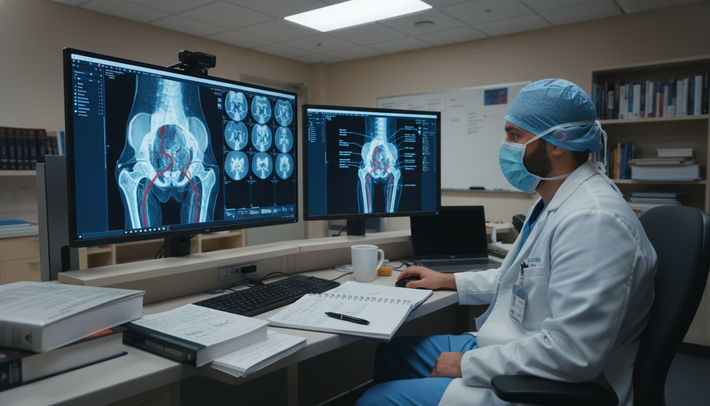
Understanding the Challenge: Low Scores in a Competitive Diagnostic Radiology Landscape
Diagnostic Radiology is one of the more competitive specialties in the residency match. Applicants often have strong academic metrics, research experience, and robust letters of recommendation. When you’re entering the diagnostic radiology match with a low Step 1 score, below average board scores, or a marginal Step 2 CK performance, it can feel like the door is closing before you even knock.
It isn’t.
Programs care about scores because they predict, imperfectly, whether you’ll pass boards and handle an intense cognitive workload. But they are only one part of your application. Many residents have matched into diagnostic radiology with low scores by strategically strengthening every other aspect of their profile, crafting a focused narrative, and applying smartly.
This guide breaks down practical, evidence-informed strategies specifically tailored to:
- Applicants with a low Step 1 score (including pass-only reporting context)
- Applicants with below average board scores (Step 2 CK, COMLEX)
- Reapplicants or IMGs with perceived numerical disadvantages
- Anyone worried about matching with low scores in the radiology residency process
The goal is not to sugarcoat reality; it’s to show you the levers you can control and how to pull them effectively.
Step Scores in Context: How Radiology PDs Actually View Them
Before you can strategize, you need a clear sense of what “low” means and how programs use your exam history in real life.
What Counts as a “Low” Score in Radiology?
Exact numbers vary by year, school, and applicant pool, but broadly:
- USMLE Step 1
- Now reported as Pass/Fail, but:
- Old numeric scores (if you have one) still appear and matter.
- Prior fails remain visible and are significant red flags.
- Now reported as Pass/Fail, but:
- USMLE Step 2 CK
- Generally, diagnostic radiology applicants average above the national mean.
- A “low” Step 2 CK is often:
- < ~230–235 for U.S. MD seniors in more competitive years
- Or any score significantly below your school’s average
- COMLEX (for DO applicants)
- PDs often convert or mentally approximate to USMLE performance.
- “Low” means clearly below common radiology applicant norms at your school.
These are not hard cutoffs; some community or hybrid programs may interview applicants well below these ranges when other application elements are strong.
How Programs Use Scores
For Diagnostic Radiology:
Initial screen
Scores (or Pass/Fail + Step 2 CK) are used to:- Ensure you’re likely to pass ABR boards.
- Quickly filter large applicant numbers.
Secondary assessment After the initial screen, PDs look for:
- Upward trend (weak Step 1 → strong Step 2 CK)
- Consistency with your MSPE, clerkship grades, and narrative
- Evidence that a low score is not equivalent to low work ethic or low ceiling
Major red flags
- Step failures without later strong performance
- Repeated low scores on multiple exams
- No explanation or evidence of change
The key: a single low score (or even multiple) doesn’t end your radiology aspirations, but it must be explained and counterbalanced.
Academic Recovery: Turning Low Scores into a Story of Growth
Your most powerful response to low scores is not an apology—it’s demonstrated improvement. Programs want to see that whatever limited your test performance has been recognized and effectively addressed.
1. Nail Step 2 CK (If You Haven’t Taken It Yet)
For applicants with an existing low Step 1 score, Step 2 CK is your best opportunity for academic redemption.
Concrete strategies:
Start earlier than your peers
- Build a 6–9 month runway, with low-intensity studying at first.
- Aim for a clear and significant jump above the median.
Use high-yield, question-heavy resources
- UWorld (full pass, targeted second pass on weak systems)
- NBME practice exams to track progress
- Anki or another spaced repetition system for retention
Treat Step 2 CK as a job
- Build a daily schedule: specific question counts + review time.
- Protect your best focus hours for study, not clinical busy-work if possible.
Get early help
- If your school has an academic support office or learning specialist, use it.
- Consider tutoring, especially if you also struggled with Step 1.
A strong Step 2 CK (or significant jump relative to Step 1) is one of the most persuasive counters to a low earlier score in the diagnostic radiology match.
2. Excel in Core Clerkships and Radiology Rotations
When board scores are shaky, your clinical performance must be a strength.
Clerkship priorities:
Internal Medicine, Surgery, Neurology, Emergency Medicine
- These rotations are highly relevant to what radiologists interpret daily.
- Honors or strong High Pass can offset the narrative of “weak test-taker.”
Radiology electives
- Aim for at least two radiology-focused rotations, ideally including:
- One at your home institution
- One away rotation (sub-internship style if available)
- Aim for at least two radiology-focused rotations, ideally including:
During these, you want comments like:
- “Exceptionally hard-working”
- “Insightful questions about imaging”
- “Reliable, prepared, and intellectually curious”
These phrases in your MSPE and letters help PDs trust that low scores are not the full story.
3. Know When (and If) to Explain
You’ll need to decide whether to explicitly mention your low Step 1 score or below average board scores in your personal statement or interviews.
When you should consider addressing it:
- Multiple exam attempts or a fail
- Non-representative performance because of:
- Documented health issues
- Major personal crises
- Test anxiety or undiagnosed learning issues (now addressed)
How to frame it:
- Briefly: 2–4 sentences.
- Accept responsibility without dramatizing.
- Show what changed and how that change is reflected in:
- Later grades
- Step 2 CK
- Clinical performance
Avoid:
- Blaming others or the test
- Long explanations that dominate your narrative
- Talking about it in every single answer
Your narrative must focus far more on what you bring to radiology than what went wrong on one exam.

Building a Radiology-Focused Portfolio That Outweighs Low Scores
If your test metrics aren’t going to be your selling point, your radiology-specific portfolio has to shine. Programs care deeply about genuine interest and demonstrated commitment to the specialty.
1. Radiology Research: Quality Over Quantity
You don’t need a dozen first-author publications to match into a radiology residency. You do benefit from:
- 1–3 meaningful projects that you can discuss confidently
- Evidence of:
- Curiosity about imaging
- Ability to see a project through
- Basic understanding of research design
How to find projects:
Home institution radiology department
- Email faculty who are active in research; include:
- Brief intro
- Your interest in diagnostic radiology
- Your availability and skill set (Excel, basic stats, literature review)
- Offer to start with retrospective chart reviews, case series, or quality improvement.
- Email faculty who are active in research; include:
Virtual or multi-institutional collaborations
- Specialty societies often have student sections:
- RSNA (Radiological Society of North America)
- ACR (American College of Radiology)
- Join working groups, case contests, or online research teams.
- Specialty societies often have student sections:
Case reports and educational exhibits
- Easier and faster to complete.
- Excellent way to demonstrate attention to imaging detail and clinical reasoning.
- Present at local, regional, or national conferences when possible.
When your scores are low, radiology research helps PDs see you as someone who has already invested time and effort in the specialty.
2. Relationships with Radiology Faculty
Strong letters of recommendation from radiologists can overshadow some score concerns.
Aim for 2–3 radiology-specific letters, ideally:
- From faculty who:
- Supervised you directly in a rotation or research
- Saw you interacting with the team consistently
- Who can credibly say:
- You function at or above the level of typical radiology-bound students
- You are teachable, reliable, and a good colleague
Practical tips:
- Show up early to reading rooms and stay engaged.
- Ask focused, thoughtful questions:
- “How would this imaging finding change management?”
- “What pitfalls should I watch for in diagnosing X?”
- Offer to help with:
- Preparing talks
- Literature review
- Building teaching cases
When you ask for a letter, be direct:
“Would you feel comfortable writing me a strong letter of recommendation for diagnostic radiology?”
If they hesitate, thank them and ask someone else.
3. Subspecialty Exposure and Electives
Breadth of radiology exposure strengthens your case:
Body imaging, neuroradiology, MSK, pediatric radiology, emergency radiology
- Even brief exposure can show:
- You’ve seen the variety within the field
- You’re not applying on a whim
- Even brief exposure can show:
Non-radiology but imaging-heavy electives
- Cardiology (echo, CT, MRI)
- Orthopedics (MSK imaging)
- Neurosurgery/neurology (neuroimaging)
- Oncology (PET/CT, staging imaging)
Use these rotations to highlight how you’re already thinking like a radiologist in your evaluations and letters.
Strategic Application Planning: Where and How to Apply with Low Scores
Even the best narrative and portfolio need a well-designed application strategy. Matching with low scores in diagnostic radiology is often about fit and targeting.
1. Build a Realistic Program List
Your goal is to maximize the chance of interviews and a final radiology residency match, not just apply to “brand names.”
Factors that may favor you:
Home program
- Often your best shot, especially if:
- You’ve done rotations there
- You have advocates in the department
- Often your best shot, especially if:
Programs with a broader academic profile
- Community or hybrid academic/community programs
- Programs in less geographically competitive areas:
- Midwest
- Some Southern regions
- Smaller cities
Programs that historically interview IMGs or DOs
- Look at past match lists from your school
- Talk to recent grads with similar profiles
Factors that may be tougher with low scores:
- Top 10–20 academic radiology programs
- Highly sought-after cities (NYC, SF, LA, Boston)
These aren’t necessarily impossible if you have extraordinary strengths elsewhere, but they should not dominate your list.
2. Use Strategic Signaling (If Available)
If your application cycle includes program signaling or preference signaling:
- Reserve your signals for:
- Programs where you have a realistic chance (not just the most famous)
- Places where you:
- Have personal ties
- Did a rotation
- Have a faculty advocate
Signaling a program where your chances are essentially zero is a wasted opportunity, especially with low scores.
3. Consider Backup and Parallel Plans
Reality check is crucial. You can still be passionate about radiology and design a plan that protects your long-term goals.
Options include:
Transitional or prelim year + reapplication
- Apply broadly to prelim medicine or surgery.
- Spend the year:
- Building radiology research
- Strengthening faculty relationships
- Improving your application narrative
Related specialties
- Internal Medicine with a later goal of pursuing:
- Cardiology imaging
- Pulmonary/critical care imaging-intensive roles
- Neurology or PM&R with strong neuroimaging or MSK imaging interest
- Internal Medicine with a later goal of pursuing:
Dedicated research year in radiology
- Some institutions offer one-year research fellowships for medical students or grads.
- Ideal if:
- You can secure strong mentorship
- You can realistically produce posters/papers
- They are open to supporting a future match attempt
A backup plan does not mean giving up; it means you’re taking a sustainable view of your career.
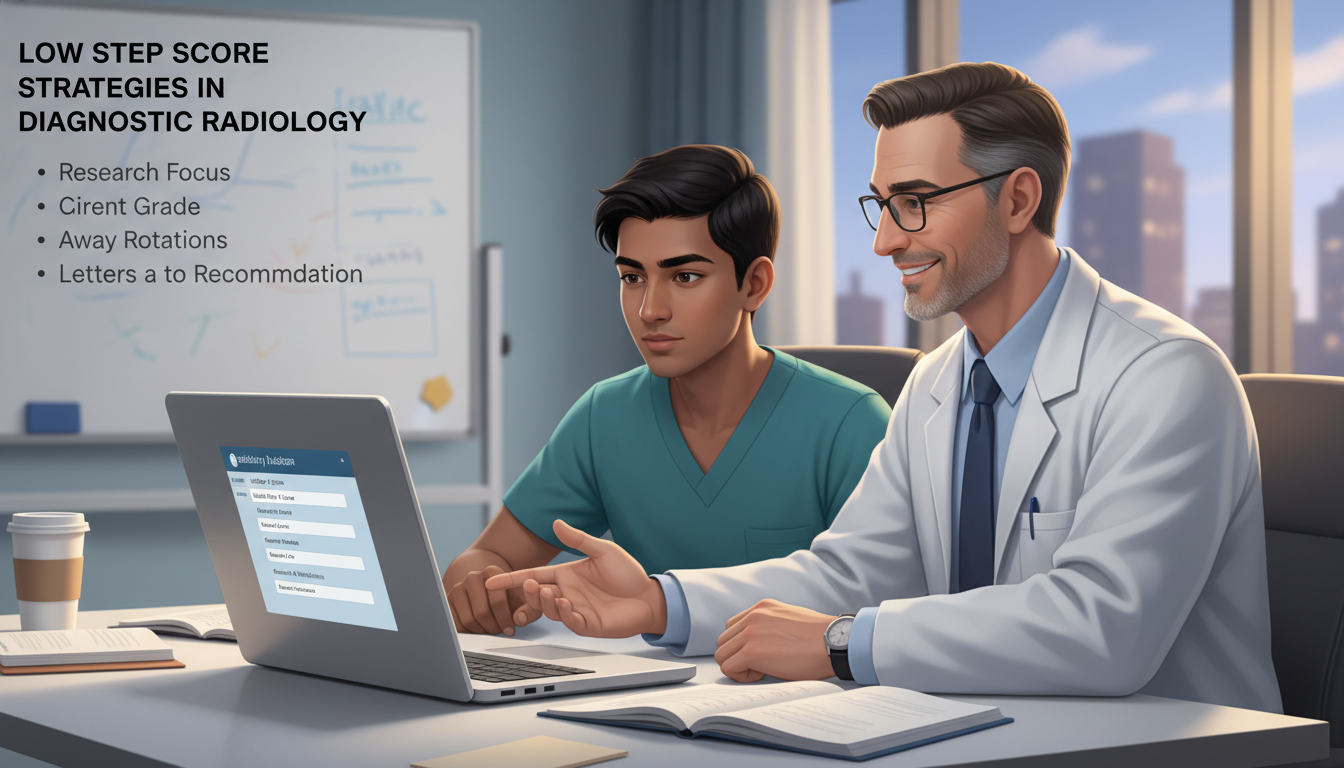
Crafting Your Narrative: Personal Statement, ERAS, and Interviews
Your story is what weaves together low Step 1 or Step 2 scores with your strengths, growth, and fit for diagnostic radiology.
1. Personal Statement: From Deficit to Direction
Your personal statement should:
Emphasize:
- What drew you to imaging in the first place
- Concrete experiences in radiology (rotations, research, cases)
- Traits that matter in diagnostic radiology:
- Attention to detail
- Pattern recognition
- Collaborative mindset
- Comfort with uncertainty and complex decision-making
Optionally, briefly acknowledge low scores if needed:
- 1–2 sentences describing:
- The context (only if truly relevant)
- The growth that followed (Step 2 CK improvement, stronger clinical performance)
- 1–2 sentences describing:
Example framing (adapted generically):
“Early in medical school, I struggled with standardized tests and underperformed on Step 1. With mentorship and a more disciplined approach, I improved my study strategies and test-taking skills, leading to stronger performance on Step 2 CK and in my clinical clerkships. These experiences taught me to seek feedback, adapt quickly, and persevere—qualities that have also shaped how I approach complex imaging cases.”
Keep the majority of your essay focused on why radiology and how you’ve already begun to think like a radiologist.
2. ERAS Application Details
With low scores, consistency and clarity in the rest of ERAS matter even more.
Education and experiences
- Highlight sustained involvement rather than a long list of one-offs.
- Emphasize:
- Teaching roles
- Leadership (especially in radiology or imaging-focused groups)
- Quality improvement or systems-based projects
Work and volunteer experiences
- Show reliability and maturity.
- If you’ve held jobs that required attention to detail, data analysis, or teamwork, draw parallels to radiology.
Publications, presentations, posters
- Clearly mark radiology-related items.
- Practice explaining each item concisely for interviews.
3. Interview Strategies with Below Average Board Scores
On interview day, radiology programs want to know:
- Are you someone they’d want in the reading room?
- Are you coachable and collaborative?
- Will you pass boards and thrive in their training environment?
Common questions you may face:
- “I see Step 1/Step 2 didn’t go as well as you’d like. What changed afterward?”
- “Tell me about a time you faced a significant challenge and how you handled it.”
- “Why diagnostic radiology, and why now?”
Effective responses:
Be straightforward and brief about scores:
- Take ownership: “I didn’t perform as well as I’d planned.”
- Show specific changes you made.
- Point to concrete improvements: “Since then, I… and my performance in X reflects that.”
Pivot to strengths:
- Clinical evaluations
- Research productivity
- Radiology faculty advocacy
- Examples of initiative and reliability
Show you understand the field:
- Discuss how you handle uncertainty.
- Talk about a memorable imaging case:
- What you saw
- How you reasoned through it
- How imaging changed management
Radiology remains a people field, even if much of the work is in dark rooms. Let them see that you’re someone they can trust at 2 a.m. when the trauma scans are rolling in.
FAQs: Matching into Diagnostic Radiology with Low Step Scores
1. Can I realistically match into a radiology residency with a low Step 1 score?
Yes, it’s possible, especially if:
- You strongly improve on Step 2 CK
- You have solid clinical evaluations and radiology rotations
- You build a coherent radiology-focused application (research, letters, experiences)
You may have fewer options at the most competitive programs or locations, but many residents in diagnostic radiology today started with less-than-ideal Step 1 scores and matched after demonstrating growth and commitment.
2. What if both my Step 1 and Step 2 CK scores are below average?
The path is more challenging, but still not automatically closed. You will need to:
- Highlight other strengths:
- Excellent rotation performance
- Outstanding letters from radiology faculty
- Radiology research or academic involvement
- Apply broadly and strategically:
- Include more community and hybrid programs
- Consider prelim year, research year, or reapplication paths if necessary
- Be very candid with mentors and PDs at your home institution about your chances and program list.
3. Should I take Step 3 before applying to radiology to offset low earlier scores?
Usually, no—unless:
- You are a reapplicant or IMG with multiple prior low scores and:
- You have time to prepare thoroughly.
- You are very confident you can significantly outperform your previous exams.
A strong Step 3 can help reassure PDs about board-passing potential, but a mediocre one may reinforce doubts. Discuss this with your dean’s office or a trusted radiology mentor before deciding.
4. How many radiology programs should I apply to if I have low scores?
There is no magic number, but applicants with low Step 1 or below average board scores often:
- Apply to a high number of programs (sometimes 60–100+), especially if:
- They are IMGs
- They have multiple exam attempts
- They lack a strong home radiology program
Quality still matters:
Build a list that includes:
- Home and regional programs
- Community and hybrid programs
- Less geographically competitive locations
Then adjust volume based on feedback from mentors who understand your full profile.
Low exam scores are a real obstacle in the diagnostic radiology match, but they are not a final verdict. By combining academic recovery, radiology-specific investment, strong mentorship, and careful application strategy, you can give yourself a realistic and often quite robust chance to match.
Your goal from this point forward is simple:
Make every new data point—from clerkships, to Step 2 CK, to research, to interviews—tell a clear story of growth, resilience, and genuine readiness for a career in diagnostic radiology.