
Understanding the Challenge: Low Scores, Global Health, and the Non‑US Citizen IMG
For a non-US citizen IMG with a low Step score, pursuing a residency with a global health focus can feel like an uphill battle. You may be worried that a low Step 1 score, below average board scores, or a failed attempt will automatically end your chances. It doesn’t.
Residency programs—especially those with a global health residency track or strong international medicine focus—often value qualities that go beyond a numerical score: resilience, cross-cultural experience, language skills, adaptability, and a demonstrated commitment to underserved populations.
However, as a foreign national medical graduate, you must strategically manage three simultaneous challenges:
- Low or marginal USMLE performance
- IMG status and non-US citizenship (visa needs)
- Competitive nature of global health–oriented programs
This article will walk you through concrete, practical strategies to:
- Reframe and contextualize your low scores
- Build a powerful global health–centered application
- Choose programs and pathways that are realistic yet ambitious
- Communicate your narrative effectively in your personal statement and interviews
- Avoid common mistakes that sabotage strong, mission-driven applicants
Throughout, the focus is on strategy, not perfection. Many residents in strong programs began with “red flags” and turned them into evidence of perseverance and growth. You can too.
Step 1: Reframing and Repairing a Low Score Profile
A low Step score is a data point, not your entire identity. Still, you need a plan to address it systematically.
Clarify Where You Stand
Before you design your strategy, define your academic profile clearly:
- Did you pass on the first attempt or have a failed attempt?
- Is the issue a single low Step 1 score, or are all board scores below average?
- Is Step 1 pass/fail on your transcript, with Step 2 CK being low?
- How recently did you graduate (YOG)?
- Any additional academic concerns (repeated years, leave of absence, low med school grades)?
Programs look at patterns. Your goal is to show an upward trajectory and credible evidence that you can handle residency-level learning.
Strategic Moves If Step 1 Is Low But Pass/Fail
If Step 1 is reported as pass/fail and you barely passed or were borderline:
Prioritize Step 2 CK performance
- Create a 3–4 month intensive study schedule.
- Use high-yield Q-banks (UWorld, Amboss) and ensure you thoroughly review explanations.
- Track your progress with NBME practice tests and aim for at least at or slightly above the national mean if possible.
Show pattern improvement
- If your medical school offers internal exams or shelf exams, highlight improved performance over time.
- Ask mentors to mention your improvement in letters of recommendation (LORs).
Strategic Moves If You Have Multiple Low Scores or a Failure
If you’re matching with low scores and possibly a failed attempt:
Control what’s still changeable
- If Step 3 is realistically attainable before Match, a solid performance can reassure programs you’ve mastered test-taking weaknesses.
- Do not rush Step 3 if underprepared; a second weak score can worsen concerns.
Strengthen “non-score” indicators of academic reliability
- Obtain strong US clinical evaluations that mention:
- “Reads extensively”
- “Mastered complex cases”
- “Shows rapid growth over rotation”
- Highlight completion of academic projects: QI, case reports, or global health research with structured methodology.
- Obtain strong US clinical evaluations that mention:
Be ready with a clear, honest explanation
- Programs don’t want excuses, but they respond well to:
- Insight: You understand what went wrong.
- Accountability: You take responsibility.
- Action: You implemented concrete changes and improved.
- Programs don’t want excuses, but they respond well to:
Example explanation approach:
“During my initial Step 1 preparation, I underestimated the volume of material and did not use question banks effectively. Recognizing this, I redesigned my study approach for Step 2 by focusing on timed questions, error analysis, and weekly self-assessment. As a result, my Step 2 CK score improved by 18 points, and I have maintained strong performance on clinical rotations.”
Use Global Health to Strengthen, Not Distract from Scores
It’s tempting to “hide” behind global health interests when worried about exam performance. Instead:
- Show that global health experience strengthened your clinical and academic abilities:
- Managing limited resources → stronger diagnostic reasoning
- Working in different systems → flexible clinical thinking
- Teaching or training local staff → reinforced core knowledge
Align your global health narrative with growth and maturity, not as a substitute for exam readiness.
Step 2: Building a Global Health–Focused Application That Offsets Low Scores
As a non-US citizen IMG, your competitive advantage lies in your real-world international experience and cultural adaptability. You can leverage this to stand out in programs with international medicine or global health missions—even if your test scores are modest.
Deepen, Don’t Just List, Global Health Experience
Programs see many applicants who “did a short medical mission trip.” That alone is rarely compelling. To rise above this:
Pursue longitudinal involvement
- Ongoing collaboration with one site or organization (e.g., 6–12+ months over several years) is far more impressive than one-week trips.
Take on responsibility, not just observation
- Examples:
- Helping to run a chronic disease clinic in a rural area
- Coordinating vaccination campaigns
- Participating in data collection for a local research registry
- Leading health education workshops in underserved communities
- Examples:
Link global health to scholarship
- Case reports from international settings
- Retrospective chart reviews on disease patterns in low-resource environments
- Qualitative research (e.g., interviews with patients or community health workers)
These experiences can balance low test scores by demonstrating academic curiosity and leadership.
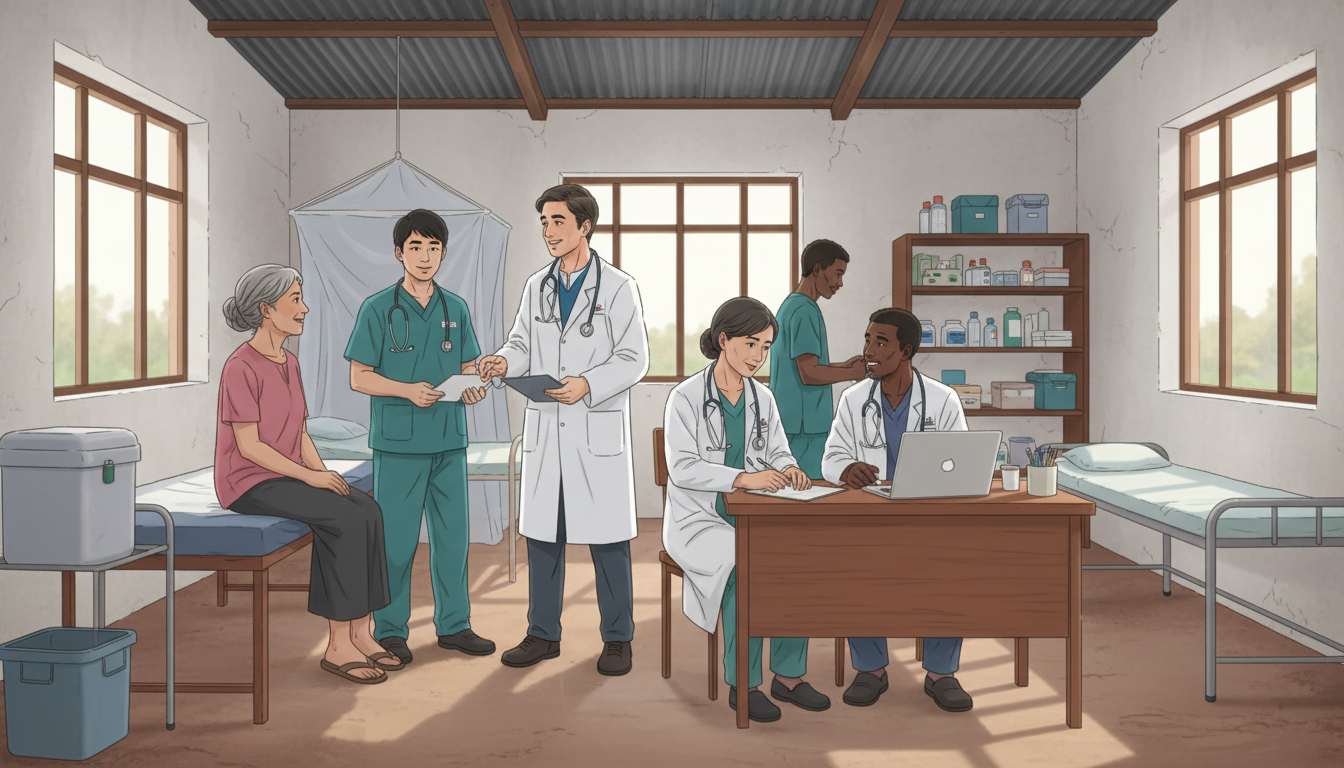
Highlight Skills Valued by Global Health Residency Tracks
Programs with a global health residency track or strong global mission often prioritize:
- Language skills (especially Spanish, French, Portuguese, or regional languages)
- Cultural and religious sensitivity
- Ability to work in low-resource or unstable environments
- Teamwork with multidisciplinary and international teams
- Humility, adaptability, and ethical responsibility
In your CV and personal statement, explicitly show:
- Multi-lingual patient encounters
- Situations where you navigated cultural misunderstandings
- Examples where you balanced local norms with evidence-based care
- Contributions to local capacity building (training nurses, community health workers)
Create a Focused “Global Health Portfolio”
Formalize your experience into a cohesive, application-ready package:
- Segment in your CV:
- “Global Health and International Medicine Experience” as a distinct section
- Highlight in ERAS experiences:
- For each entry: setting, population, your specific role, duration, and measurable outcomes
- Include related achievements:
- Global health certificates (e.g., from universities or organizations)
- MPH courses or online modules related to epidemiology, tropical medicine, or health systems
- Presentations or posters at global health conferences
This turns you from “an IMG with low scores” into “a mission-driven global health applicant with a coherent track record,” which many programs are explicitly seeking.
Step 3: Choosing Programs and Pathways Strategically
Even the strongest global health narrative will struggle in programs where score cutoffs are rigid or visa sponsorship is limited. Strategic targeting is crucial for a foreign national medical graduate.
Identify Programs with Genuine Global Health Commitment
Look for programs that do more than just mention “diversity” on their website:
- Programs with a formal global health residency track
- Institutions that host:
- Global health centers or institutes
- Partnerships with hospitals in low- and middle-income countries
- Regular global health electives for residents
- Residency websites that list:
- Faculty with global health backgrounds
- Ongoing international collaborations or research projects
- Alumni working in global or refugee health
These programs often value lived international experience and may be more flexible on scores if you superbly match their mission.
Match Global Health to the Right Specialty and Setting
Global health opportunities exist across specialties, but the pathway and competitiveness differ:
Internal Medicine, Family Medicine, Pediatrics
- Common primary pathways into global health roles
- Many programs have explicit global health or international medicine tracks
- Community-based programs with safety-net or immigrant populations often align strongly with global health values
Emergency Medicine and OB/Gyn
- Also important in global health, but often more competitive; low scores may be more limiting.
Given low scores, prioritize:
- Community and university-affiliated community programs with:
- Strong immigrant/refugee patient populations
- Federally Qualified Health Centers (FQHCs) or public hospital affiliations
- Track record of training IMGs
Analyze Program Requirements and Patterns
For each target program:
- Check if they publicly list minimum score cutoffs
- Review:
- % of IMGs in the program
- % of non-US citizen IMGs (where available)
- Whether they sponsor visas (J-1 or H-1B)
- Use NRMP data, FREIDA, and program websites to see if past residents:
- Have global health backgrounds
- Have IMGs matching from your country or region
Create a tiered list:
- Likely: Programs IMG-friendly, with global health or underserved focus, and no strict high score cutoffs
- Possible: Moderate competitiveness but strong alignment with your experience
- Reach: Academic programs with prestigious global health tracks; apply if your global health CV is exceptional and you can afford the applications
Your goal is to maximize mission fit + IMG-friendliness + realistic score thresholds.
Step 4: Strengthening the Non-Score Parts of Your File
When you’re a non-US citizen IMG with low Step scores, every non-exam component must be deliberate and polished.
US Clinical Experience (USCE) with Global or Underserved Focus
Aim for hands-on USCE (sub-internships, electives, externships, observerships where you can at least meaningfully participate):
- Prioritize sites that:
- Serve immigrants, refugees, or uninsured populations
- Have mobile clinics or community outreach
- Collaborate with international or migrant health organizations
During these rotations:
- Show up early, over-prepare, and read on every case
- Ask for specific feedback and act on it
- Politely request that attendings mention:
- Work ethic
- Clinical reasoning
- Improvement over time
- Cultural competence and patient communication
These LORs can partly offset concerns about matching with low scores.
Letters of Recommendation Strategically Chosen
Aim for:
- At least 2–3 strong US-based LORs in your target specialty
- If possible, 1 LOR from someone with global health credentials (e.g., faculty who runs a global clinic or has done international work)
Ask letter writers to:
- Explicitly address concerns about your ability to handle clinical workload
- Comment on:
- Reliability
- Clinical judgment
- Work ethic
- Your commitment to underserved or global populations
You can gently guide them by sharing your CV, personal statement, and a brief note summarizing what aspects you hope they might highlight.
Personal Statement: From “Low Scores” to “Resilient Global Health Advocate”
Your personal statement must do two things simultaneously:
- Convince programs you are fully capable of handling residency
- Show why their program, especially if global health–oriented, is the right match
Avoid spending paragraphs discussing your low scores. Instead:
- Brief, honest acknowledgment (if you have a major red flag like a failure)
- Immediately pivot to what changed, and show an upward trajectory
- Focus the remainder on your global health story:
- A key patient or turning point that shaped your commitment
- What you learned from working across cultures or in low-resource settings
- How those experiences will make you an asset to their patient population
Conclude with clear alignment:
- Mention your interests in:
- Refugee health
- Immigrant health
- Tropical diseases
- Health systems strengthening
- Briefly tie these to specific features of the program’s curriculum or patient population.

CV Presentation for a Foreign National Medical Graduate
As a foreign national medical graduate, your CV must be easy to digest for US program directors:
- Use US-style formatting (chronological, clear sections)
- Clarify:
- Degree equivalents (e.g., MBBS = MD)
- Internship or foundation year roles
- Under each experience, emphasize:
- Accomplishments, not just duties
- Metrics where possible (number of patients seen, projects completed, etc.)
Step 5: Application Tactics, Timing, and Interview Strategy
Your overall application strategy can amplify or negate all your preparation.
Apply Early, Broadly, and Intelligently
- Apply on day 1 of ERAS opening if possible.
- Be realistic about numbers:
- Many non-US citizen IMGs with low or below average board scores apply to more programs (often 80–150, depending on specialty and resources).
- Balance:
- Programs with robust global health tracks
- Community programs serving diverse, underserved populations
- Some “safety” programs that are IMG-friendly even if not heavily branded as global health
Emphasize your commitment to underserved patients and international medicine, even at programs without formal global tracks; many community programs do global health work locally.
Navigating Visas as a Foreign National Medical Graduate
As a non-US citizen IMG, your need for J-1 or H-1B sponsorship narrows options:
- Confirm visa sponsorship before applying using FREIDA and program websites.
- J-1 is more widely sponsored; H-1B often has higher score and Step 3 expectations.
- If your scores are low and Step 3 is incomplete, focusing on J-1–sponsoring, IMG-friendly programs is usually more realistic.
Interview Preparation: Owning Your Narrative
In interviews, low scores may come up explicitly or implicitly. Prepare concise responses:
- Acknowledge: “My Step 1 score does not reflect my current clinical capabilities.”
- Explain briefly: One or two sentences on what went wrong.
- Highlight change: “For Step 2, I implemented X, Y, Z strategies, leading to improved performance and stronger clinical evaluations.”
- Refocus: Pivot to how your extensive global health experience has prepared you for their patient population and training environment.
Also prepare to discuss:
- Ethical dilemmas in global health
- How you handle resource limitations
- Cultural misunderstandings and communication challenges
- Long-term career goals in global or underserved medicine
Strong, thoughtful answers can easily outweigh a test score on a program director’s memory.
Common Pitfalls to Avoid for Low-Score, Global Health–Focused IMGs
Over-relying on global health to “compensate” for exams
- Programs still need evidence you can pass future boards. Balance passion with academic reassurance.
Applying only to elite global health programs
- Prestigious university programs are appealing but often highly competitive. Include community and safety-net programs where your experience may be even more valued.
Weak or generic letters of recommendation
- A generic “good student” letter does not help you overcome low scores. Prioritize depth and specificity.
Ignoring visa realities
- Applying broadly to programs that don’t sponsor visas wastes time and money. Be methodical.
Unstructured explanation of low scores
- Rambling or defensive explanations worry program directors. Plan a concise, mature narrative.
Short-term, superficial “medical missions” without depth
- One-off trips can look performative. Focus on sustained involvement and concrete roles.
Final Thoughts: Turning a Perceived Weakness into a Compelling Story
As a non-US citizen IMG with a low Step 1 score or below average board scores, the pathway into a global health–aligned residency is challenging—but far from impossible. Many current residents in global health tracks once worried they would never match.
Your advantage is your authentic global perspective, your willingness to serve in complex environments, and your proven adaptability. If you:
- Take an honest and strategic approach to your score profile
- Build and document a coherent global health portfolio
- Target programs thoughtfully, emphasizing mission fit and visa reality
- Communicate maturity, insight, and growth in your personal statement and interviews
You can present yourself not as a “low-score applicant,” but as a resilient, globally minded physician who will enrich any residency program’s mission in international medicine and underserved care.
FAQ: Low Step Score Strategies for Non-US Citizen IMGs in Global Health
1. Can I match into a global health–focused residency if I have failed Step 1 once?
Yes, it is still possible, though more challenging. Programs will look for clear evidence of improvement (higher Step 2 CK, strong clinical evaluations, potentially a solid Step 3). You must provide a concise, honest explanation for the failure and demonstrate that you have changed your study strategies. A robust, longitudinal global health record plus strong USCE and LORs can significantly improve your chances.
2. Should I take Step 3 before applying if my scores are already low?
It depends on your readiness and target programs. For a foreign national medical graduate needing an H-1B visa, a strong Step 3 score can be helpful or even required. However, if you are not ready, another low score can worsen your profile. If you can realistically achieve a solid performance (at or above average), Step 3 can reassure programs. Otherwise, focus on Step 2 CK strength, USCE, and application quality.
3. Do I need formal global health research to be competitive for international medicine tracks?
Not necessarily. While research is helpful, many global health–oriented programs value direct clinical and community experience just as much. Quality matters more than quantity. A few well-executed projects—such as a case series from a low-resource setting, a QI initiative at a rural clinic, or a thoughtful qualitative study—can be more impactful than numerous superficial abstracts.
4. Is it better to prioritize IMG-friendly programs or those with strong global health branding?
Ideally, you target the overlap: programs that are both IMG-friendly and have a track record in underserved or global health work. However, when forced to choose, ensure that a significant portion of your application list includes IMG-friendly programs that sponsor your visa type. Many community and safety-net programs care deeply about global health principles—even if they are not labeled as “global health tracks”—because their daily work mirrors international medicine challenges in local underserved populations.