
Understanding Your Starting Point as a Non‑US Citizen IMG with Low Scores
Interventional Radiology (IR) is one of the most competitive specialties in the U.S. matching system. For a non-US citizen IMG or foreign national medical graduate, a low Step 1 score, low Step 2 CK score, or overall below average board scores add yet another layer of challenge.
That does not automatically mean IR is impossible. It does mean:
- You must be more strategic than the average applicant
- You may need a longer preparation timeline (often 2–3 application cycles)
- You must build strengths so compelling that they offset your test score weakness
This article focuses on realistic, high-yield strategies for a non-US citizen IMG who:
- Has a low Step 1 score (including pass/fail with a prior fail, or numerical score below average)
- May have below average board scores overall
- Wants to pursue an Interventional Radiology residency (Integrated IR/DR or ESIR pathway)
- Faces visa and IMG barriers in addition to exam performance
We’ll break down what you can and cannot control, then build a stepwise plan that maximizes your chances in the IR match while also protecting you with smart backup routes.
Step 1: Reframe the Problem – What “Low Score” Really Means in IR
How IR Programs View Low Scores
Interventional Radiology programs typically look at your application in three broad categories:
Screening metrics
- USMLE scores (Step 1, Step 2 CK)
- Number of attempts
- Graduation year
- Citizenship and visa status
Radiology/IR-specific potential
- Radiology and IR letters of recommendation (LORs)
- IR-focused research and presentations
- Exposure to U.S. IR departments (electives, observerships)
- Performance on away rotations and sub-internships
Global fit and risk
- Communication skills
- Professionalism and work ethic
- Team fit
- Evidence you’ll pass the boards on the first try
A low Step 1 or low Step 2 CK hurts you most at the initial screening stage. Many programs use score filters before even reading applications. As a non-US citizen IMG, you’re already at risk of being filtered out; adding below average board scores worsens this.
But IR selection is not based on scores alone. Your goal is to:
- Minimize the damage of low scores
- Maximize all other parts of your profile so some programs decide you’re worth a closer look
What Counts as “Low” in the Current IR Landscape?
While numbers change slightly year to year, in competitive specialties like IR:
- Scores below the national mean are already a mild disadvantage
- Scores 10–15 points below the mean are a significant disadvantage
- Any USMLE failure is a serious red flag, particularly for IR
For non-US citizen IMGs:
- Many IR programs do not consider IMGs at all
- Among those that do, some set higher score filters than for U.S. grads
- J-1 is more common than H-1B; some programs do not sponsor any visas
If you are a foreign national medical graduate with a low Step 1 score, your realistic goal should be to:
- Use Step 2 CK and possibly Step 3 to demonstrate improvement
- Build IR-specific strengths that outweigh your weakness in standardized tests
- Develop parallel pathways that can still lead to Interventional Radiology (e.g., via Diagnostic Radiology, Internal Medicine → IR fellowships, or IR-heavy practices abroad)
Step 2: Academic “Damage Control” – Turning Your Test Profile Around
Even with a low Step 1, you can still change the story. Program directors want evidence that:
- You learned from your poor performance
- You can pass the American Board of Radiology exams in the future
- You are improving and trending upward
1. Make Step 2 CK Your Redemption Exam
For a non-US citizen IMG trying to enter interventional radiology residency with low scores, Step 2 CK is your best academic rescue tool.
Targets for Step 2 CK:
- Aim for a score above the national mean (ideally ≥ 245) if feasible
- At minimum, aim for a score significantly higher than your Step 1 to show a clear upward trend
Practical strategies:
- Treat Step 2 CK as a full-time job for 3–4 months if possible
- Use UWorld as your primary Qbank, with 1–2 passes
- Add NBME practice exams and UWSA (UWorld self-assessments) to monitor readiness
- Consider focused tutoring if you previously failed or scored very low on Step 1
If you’ve already taken Step 2 CK and it’s low:
- Strongly consider taking and passing Step 3 with a clearly better performance to change the trend
- Be prepared to explain your improvement clearly in your application and interviews
2. Address Exam Weaknesses Objectively
Low scores, especially for a foreign national medical graduate, raise concerns about:
- Test-taking strategy
- English language comprehension under time pressure
- Stamina and focus for long exams
To counter that:
- Take Step 3 early (before or during your first application cycle) if:
- You have two low scores already, or
- You had a USMLE failure
- Use Step 3 as “proof of concept” that, given time and correction, you can pass rigorous U.S. exams
Also:
- Take OET (or past TOEFL/IELTS) seriously; high performance helps reassure programs about language issues
- If you had exam accommodations in the past, be ready to explain them honestly and confidently if asked
3. Reveal – Don’t Hide – Your Score Story
In your personal statement and, where appropriate, in the ERAS Additional Information or Program Signals letters, you should:
- Briefly acknowledge low or below average board scores
- Avoid blaming others (school, test center, pandemic, etc.)
- Emphasize what changed:
- Studying approach
- Time management
- Resources
- Mindset
Your narrative should be:
“I struggled initially on standardized exams for reasons X and Y, recognized those weaknesses, changed my approach by doing A, B, C, and as a result improved significantly on Step 2 CK / Step 3 and on in-training exams.”
You are not just defending a low Step 1 score; you’re demonstrating growth and resilience, a key trait for demanding specialties like IR.
Step 3: Build an IR-Centric Profile That Outweighs Your Scores
For IR, radiology and IR-specific strengths can occasionally offset low exam scores, especially at IMG-friendly or smaller academic/community programs.
1. Secure U.S.-Based IR or Radiology Experience
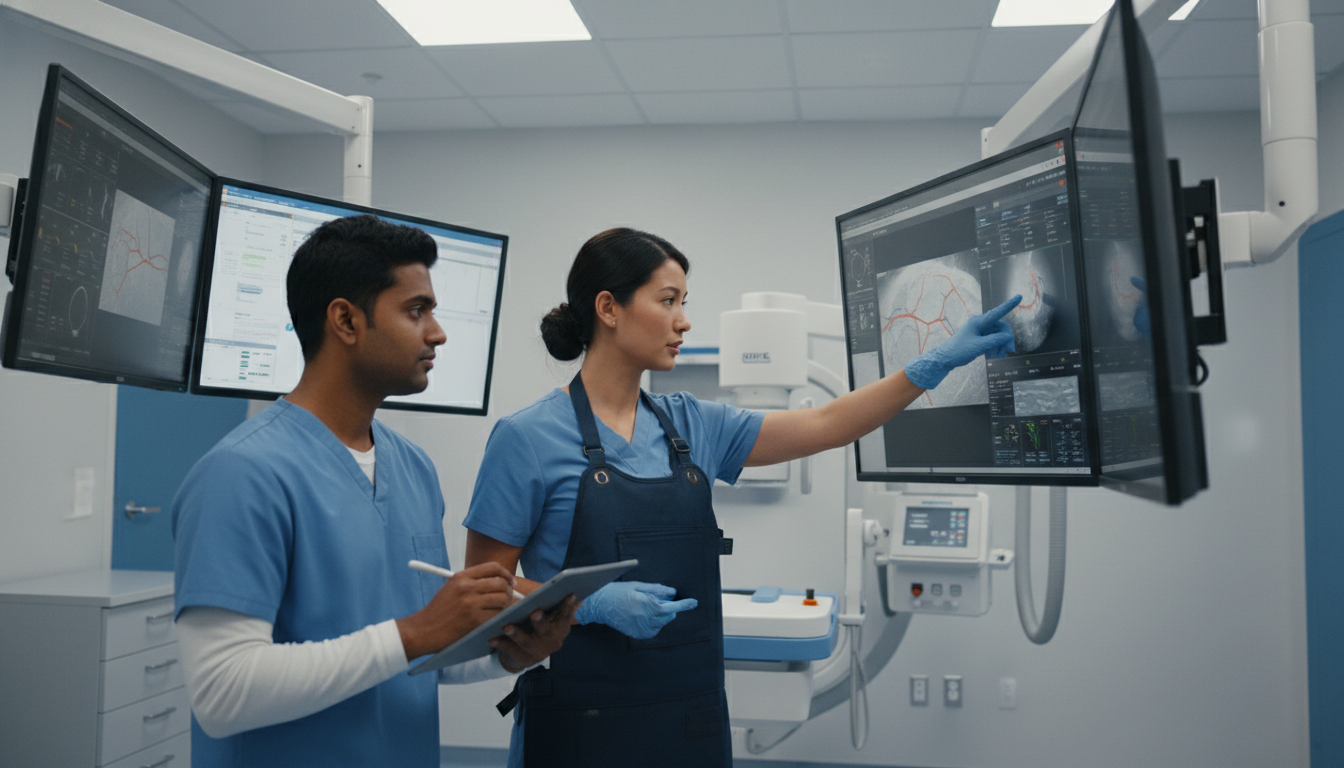
As a non-US citizen IMG, you must prove you can function effectively in a U.S. clinical environment.
High-yield types of exposure:
IR Observerships
- 2–3 months total (or more) across one or multiple U.S. IR departments
- Aim for academic centers where IR is separate from diagnostic radiology
- Be visible, reliable, and proactive (within boundaries of your role)
Diagnostic Radiology Observerships
- Show that you understand imaging fundamentals
- Get comfortable with U.S. radiology reporting formats and language
Sub-internships (if eligible)
- In surgery, internal medicine, or ICU where IR commonly consults
- Demonstrate your ability to manage sick patients—a crucial IR skill
During these experiences:
- Show up early, stay late when appropriate
- Ask smart, focused questions (not excessive; respect time)
- Offer help with simple but useful tasks (presenting cases, collecting data, drafting case reports)
- Always follow rules about no direct patient care if you’re in an observer role
2. Get Strong, Specific IR Letters of Recommendation
For IR match committees, LORs from U.S. IR or radiology faculty can matter more than an extra few points on USMLE.
Aim for at least:
One strong letter from an interventional radiologist, ideally:
- Someone who has supervised you for at least 4–8 weeks
- Someone active in academic IR (publications, conferences, committees)
One additional letter from:
- A diagnostic radiologist
- An internal medicine or surgery attending who can speak to your clinical excellence and work ethic
What makes an LOR strong enough to help offset low scores?
- Specific detail: Describing particular cases, presentations, or projects you handled well
- Comparative language: “Among the top 10% of students I’ve worked with in the last five years”
- Direct endorsement for IR: “I strongly support Dr. X for an integrated IR/DR position.”
Be transparent with letter writers about:
- Your non-US citizen IMG status
- Your low Step score history
- Your goals for an interventional radiology residency
Sometimes, a faculty member aware of your weaknesses but still willing to write a strong, supportive letter is exactly the validation a program needs.
3. Build IR-Focused Research and Academic Productivity
Interventional Radiology is highly academic. Research demonstrates:
- Commitment to the field
- Ability to complete complex projects
- Intellectual curiosity
For a foreign national medical graduate with low scores, IR research can be the single biggest compensating factor.
High-yield options:
Formal IR Research Fellowship (1–2 years) at a U.S. institution
- Especially valuable for non-US citizen IMGs
- Try to choose programs known to be IMG-friendly or with prior IMG fellows
- Focus on producing:
- First- or co-author manuscripts
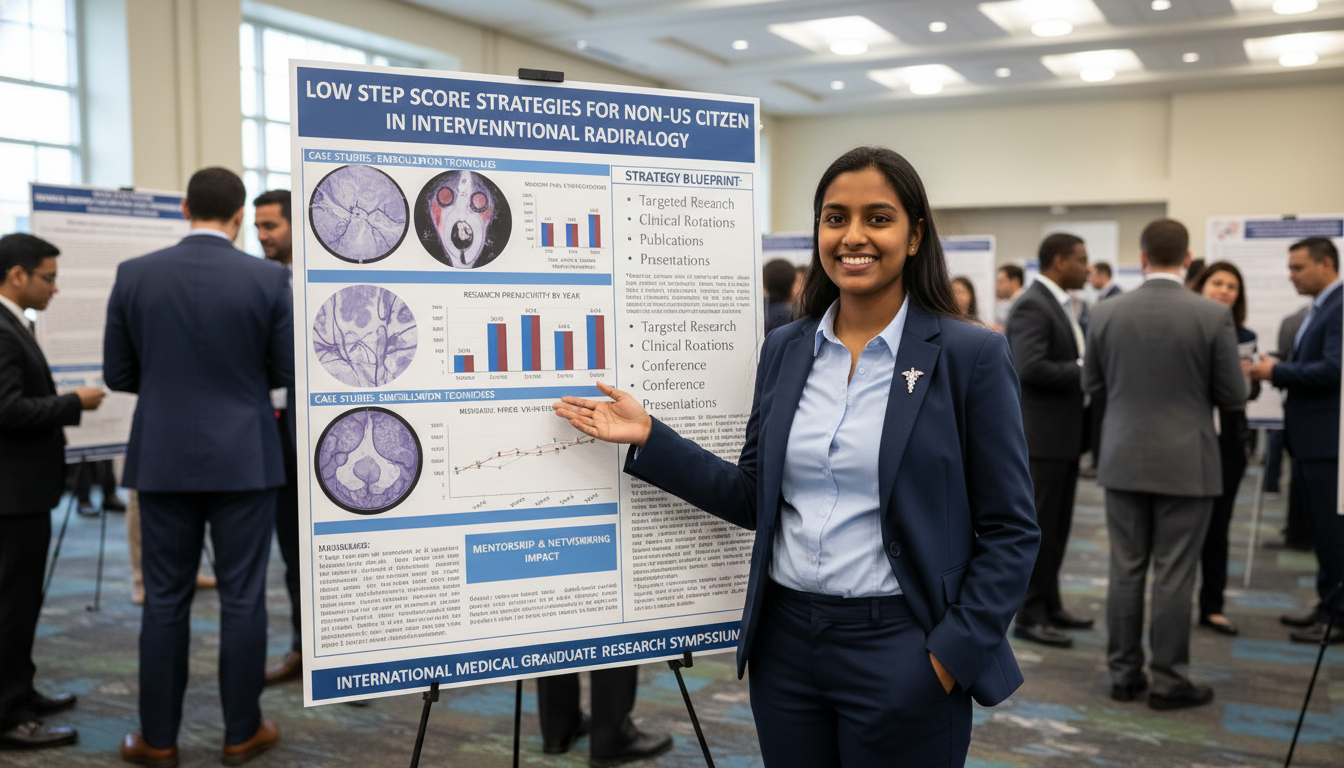
- Abstracts and posters at SIR, RSNA, or other conferences
- Quality improvement or outcomes projects related to IR
Part-time or remote research collaboration
- Email IR faculty with very specific, concise proposals:
- A clear interest area (e.g., peripheral arterial disease, oncologic interventions)
- Your skills (data extraction, statistics software, literature review)
- Your availability and timeline
- Be reliable and meet all deadlines; build a reputation as someone who “gets things done”
- Email IR faculty with very specific, concise proposals:
Case reports and imaging vignettes
- Faster to complete; perfect for early CV-building
- Focus on interesting or rare IR procedures, complications, or innovative solutions
Over 1–2 years, you want to build a research profile that looks like:
- Multiple IR-related abstracts and posters
- At least a few published papers (even as co-author)
- Maybe one or two first-author publications
Such a record can significantly shift how IR program directors perceive a non-US citizen IMG with below average board scores.
Step 4: Application Strategy – How to Apply Smart with Low Scores
Even with excellent preparation, many non-U.S. citizen IMGs with low scores fail to match simply because of poor strategy: wrong programs, too few applications, or no backup plan.
1. Understand IR Pathways and Build Parallel Routes
To practice Interventional Radiology in the U.S., you can reach it through multiple paths:
Integrated IR/DR Residency (5–6 years)
- Categorical: includes PGY-1 year
- Advanced: starts at PGY-2 after a separate preliminary year
ESIR + Independent IR Residency
- Match into Diagnostic Radiology
- Do ESIR (Early Specialization in IR) during DR residency
- Then 1–2 years of Independent IR residency
Diagnostic Radiology → Independent IR (no ESIR)
- Match into DR
- Then complete a longer Independent IR program
Non-radiology pathways outside the U.S. (if match in U.S. IR fails)
- IR-focused fellowships in your home country or other regions
- Later attempt to enter the U.S. as an experienced IR physician
For a foreign national medical graduate with a low Step 1 score:
- Path 1 (Integrated IR) is highly competitive and may be unrealistic as the only path
- Path 2 or 3 (via DR) often provides better odds, as some DR programs are more open to IMGs, and once inside DR you can prove yourself and compete for IR spots
- You should absolutely consider applying to a mix of IR and DR programs, with IR as the primary but DR as the robust backup
2. Program Selection: Casting a Wide, Targeted Net
With low scores, program choice is critical. A smart IR match strategy for non-US citizen IMGs should include:
Apply to all programs that:
- Accept IMGs
- Sponsor your required visa (typically J-1; some also sponsor H-1B)
Focus particularly on:
- University-affiliated community programs
- Smaller academic centers that are not top 10–15 in radiology rankings
- Programs where prior IMGs have matched in DR or IR
To identify IMG- and visa-friendly IR/DR programs:
Use resources:
- FREIDA
- Program websites (check “eligibility” and “visa sponsorship” sections)
- NRMP “Charting Outcomes” and specialty-specific data
- Word-of-mouth from recent IMGs in radiology/IR
Maintain a spreadsheet tracking:
- Visa type accepted (J-1 vs H-1B vs none)
- Number of IMGs in current residents
- USMLE minimums or unofficial filters
Expect to apply to:
- Most or all IR programs that are not explicitly closed to IMGs
- A large number of DR programs (often 60–120+) depending on your profile
- In some cases, additional preliminary medicine/surgery programs for advanced positions
3. Tailor Your Application Around IR Commitment
Every part of your application should reinforce your genuine commitment to Interventional Radiology, not just “any radiology”:
Personal Statement
- One IR-focused statement for IR programs
- A slightly modified DR-oriented statement for diagnostic radiology applications
- Include:
- A clear origin story (how you discovered IR)
- Concrete patient/case experiences from IR observerships or research
- Reflection on the procedural + clinical nature of IR
- A brief explanation of your test score journey and improvement
Experience Descriptions in ERAS
- Emphasize IR roles: research, case reports, electives, observerships
- Use active verbs: “designed,” “analyzed,” “presented,” “coordinated”
- Highlight outcomes: presentations, publications, QI improvements
Program Signals / Preference Signals (if available)
- Use them wisely on programs that:
- Accept IMGs
- Have some IR/DR research or ESIR options
- Are not ultra-elite (unless you have a significant IR research record)
- Use them wisely on programs that:
4. Prepare for Interviews with Score Questions in Mind
If you secure interviews, you have already passed the “screen.” Now you must convince them:
- Your low scores will not predict future failure
- You are worth the risk for their limited IR positions
Interview preparation:
Prepare a short, honest script about your scores:
- “My Step 1 was X because…
Since then, I changed my approach by doing Y…
This led to my improved performance on Step 2 CK / Step 3 and my success in [research, clinical rotations].
I’m confident these changes will help me succeed on the ABR exams.”
- “My Step 1 was X because…
Practice behavioral questions:
- “Tell me about a time you failed and how you responded.”
- “How do you handle high-stress situations or long procedures?”
Highlight your unique strengths as a non-US citizen IMG:
- Multilingual skills
- Cultural competence with diverse patient populations
- Resilience and adaptability from training in different systems
Step 5: Timelines, Backup Plans, and When to Pivot
1. Give Yourself Enough Time
With low scores, it is often unrealistic to go directly from graduation to a successful IR match in 1–2 years. A more realistic timeline may look like:
Year 0–1 (or during med school):
- Take and pass Step 1 and Step 2 CK
- Identify score weaknesses, start limited IR exposure/research
Year 1–2:
- Spend 1–2 years in a U.S.-based IR research position or observerships
- Take Step 3 (if needed) and improve your academic profile
- Produce meaningful research output
- Secure strong U.S. letters
Year 2–3:
- Apply broadly to Integrated IR/DR and DR programs
- Include a robust DR backup
- Potentially reapply a second time with more experience if the first year is unsuccessful
2. Design Failsafes Without Abandoning IR
For some non-US citizen IMGs with very low or multiple failed scores, a direct IR match in the U.S. may remain unlikely despite best efforts. You should still protect your long-term IR dream with:
Applying to Internal Medicine or Surgery in the U.S. with an eye toward:
- Future IR fellowship abroad
- Later returning to the U.S. with more clinical experience and a stronger profile
Considering IR training in your home country or other regions:
- Build a robust IR case log
- Present at international conferences
- Attempt U.S. positions later as a trained IR physician
A pivot away from direct IR residency does not mean the end of an IR career. It means taking a longer, alternative road that fits your real constraints.
Frequently Asked Questions (FAQ)
1. Can a non-US citizen IMG with a low Step 1 score realistically match into Integrated IR?
Yes, but the probability is low, and it heavily depends on:
- Having a significantly stronger Step 2 CK and/or Step 3
- Completing 1–2 years of substantial IR research with publications
- Obtaining excellent U.S. IR letters of recommendation
- Applying very broadly and including DR as a parallel route
For many such applicants, a more realistic goal is to match into Diagnostic Radiology with ESIR, then proceed to Independent IR.
2. Which is more important for me: IR research or clinical observerships?
For a foreign national medical graduate with low or below average board scores:
IR Research
- Essential for building a standout CV, especially over 1–2 years
- Can produce tangible metrics: publications, abstracts, posters
- Shows intellectual commitment to IR
U.S. Clinical/IR Observerships
- Crucial for understanding the U.S. system and culture
- Source of strong, detailed LORs
- Demonstrate communication, teamwork, and professionalism
Ideally, you should do both, but if forced to choose, a longer IR research position that also offers some clinical exposure is often the best investment.
3. How low is “too low” to keep trying for IR?
There is no absolute cutoff; it depends on the rest of your application. However, if you are:
- A non-US citizen IMG
- With multiple USMLE failures or both Step 1 and Step 2 CK significantly below average
- With no strong upward trend, and
- Limited ability to spend years in research or observerships
Then the chance of matching directly into Integrated IR is extremely small. In such cases, it is usually wiser to:
- Pursue Diagnostic Radiology (if still feasible), or
- Choose another specialty that is more IMG-friendly, then consider IR options (locally or abroad) later.
4. Should I delay my application to improve my chances?
If you are a foreign national medical graduate with low scores and no U.S. IR research, minimal IR exposure, and no strong letters yet, then yes, delaying 1–2 years to work in IR research and observerships can dramatically improve your odds.
However, you must balance this with:
- Being too far out from graduation, which some programs view negatively (e.g., >5–7 years since graduation)
- Financial and visa constraints
If you can use the extra time to produce clear, measurable improvements in your profile, delaying is often the right strategic move.
A low Step 1 score or below average board scores do not automatically close the door to Interventional Radiology for a non-US citizen IMG. They do mean you must plan more carefully, work harder to build IR-specific strengths, and be realistic about timelines and backup paths. With structured effort—strong Step 2/3 performance, IR research, U.S. exposure, and a smart application strategy—you can still create viable routes toward an IR career.