
Understanding the Texas Triangle Landscape for IMGs with Low Scores
The Texas Triangle—anchored by Houston, Dallas–Fort Worth, San Antonio, and Austin—is one of the most competitive and fast‑growing medical regions in the United States. For a non-US citizen IMG or foreign national medical graduate, it can feel intimidating to apply here with a low Step 1 score or overall below average board scores.
Yet every year, international graduates with imperfect test histories do match into Texas residency programs, including in the Houston Dallas San Antonio corridor. The difference is rarely “luck”; it’s strategy, targeting, and timing.
This article focuses specifically on low Step score strategies for non-US citizen IMGs targeting the Texas Triangle. You’ll learn how to:
- Realistically assess your competitiveness in Texas
- Prioritize specialties and programs more open to foreign graduates
- Build a portfolio that compensates for weaker scores
- Strategically apply to Texas residency programs despite a low Step 1 score or low Step 2 CK
- Address concerns about visas and non-US citizenship
- Communicate your “story” effectively in the application and interviews
Throughout, “low scores” will be used broadly to mean:
- Step 1: marginal pass, first attempt fail with pass on retake, or score substantially below the national mean (for those still with numerical scores)
- Step 2 CK: below average board scores relative to national mean or program expectations
USMLE Step 1 is now Pass/Fail for current applicants, but many residency programs still infer performance from medical school transcript, CBSE results, or other indicators. The strategies here are applicable whether your low point is Step 1, Step 2 CK, or an exam failure.
Step 1: Honest Competitiveness Check for the Texas Triangle
Before you pour time and money into applications, you need a clear-eyed assessment of where you stand in the Texas context as a non-US citizen IMG with low scores.
1. Understand baseline competitiveness in Texas
Texas in general, and especially the Texas Triangle, has:
- Many large residency programs (excellent news for IMGs)
- Strong in‑state preference for Texas medical schools in some programs
- Varying levels of IMG-friendliness by specialty and hospital system
In internal medicine, family medicine, and pediatrics, you’ll find programs in:
- Houston (e.g., community and university-affiliated hospitals)
- Dallas–Fort Worth (DFW)
- San Antonio
- Smaller cities near the Triangle (e.g., Temple, Bryan/College Station, Waco, Tyler, Lubbock—while not always in the strict geographic Triangle, they are often part of Texas-focused application strategies)
For non-US citizen IMGs, the biggest challenges in Texas are:
- Visa sponsorship (some programs sponsor J-1 only, fewer sponsor H-1B)
- Score cutoffs that may be stricter than in some other states
- Preference for US grads at large academic centers in Houston, Dallas, and San Antonio
2. Know your exact weaknesses
Low scores are not all equal. Clarify:
- Is it just one low exam (e.g., Step 1 low pass, but decent Step 2 CK)?
- Was there a fail or multiple attempts?
- Are there multiple weaker indicators (e.g., low Step 1, low Step 2 CK, and a repeat year in medical school)?
How programs in the Texas Triangle might perceive each scenario:
- Low Step 1 but strong Step 2 CK:
- This is the most salvageable profile. Many Texas programs will consider you if Step 2 CK shows clear improvement, especially in primary care–oriented specialties.
- Fail on Step 1, pass on second attempt, decent Step 2 CK:
- Red flag, but mitigated with good recent performance, strong US clinical experience (USCE), and an honest, growth-focused explanation.
- Low Step 2 CK in addition to low Step 1:
- Much more challenging. You’ll need:
- Strong USCE
- Excellent letters
- A very broad application strategy geographically (not just Texas)
- Willingness to consider less competitive specialties and locations
- Much more challenging. You’ll need:
- Gaps in training plus low scores:
- Requires a carefully prepared narrative and possibly extra credentials (MPH, research, observerships, or transitional training) to show sustained engagement with medicine.
3. Understand the added layer: Non-US citizen status
As a foreign national medical graduate, your non-US citizen status impacts:
- Program selection: Some Texas residency programs simply don’t sponsor visas. Others sponsor only J-1. A smaller subset sponsors H-1B.
- Competitiveness thresholds:
- Programs that sponsor visas often have higher score cutoffs because they receive more applications than they can review.
- Low Step 1 or low Step 2 CK can become an easier filter for them to use.
Action step:
- When reviewing programs in Houston, Dallas, San Antonio, and surrounding areas:
- Check FREIDA and program websites for:
- Visa types accepted
- Whether they list explicit score cutoffs
- Whether they state “US graduates only” or “US/Canadian graduates only”
- Check FREIDA and program websites for:
Step 2: Choose Specialties and Programs Strategically
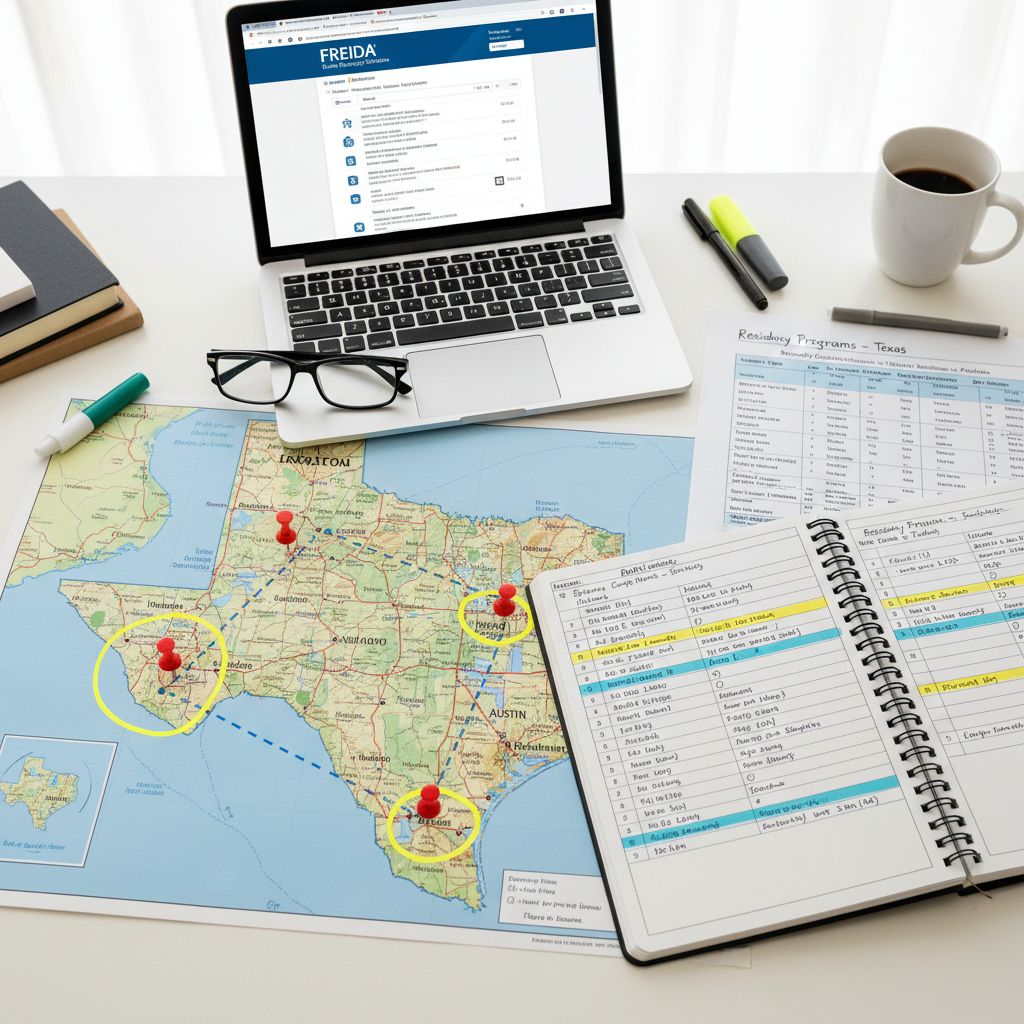
If you have below average board scores, your choice of specialty and program type matters more than ever—especially in a competitive region like the Texas Triangle.
1. Specialties more realistic with low scores
For a non-US citizen IMG with low Step scores, your strongest odds in Texas generally lie in:
- Internal Medicine (community and university-affiliated programs)
- Family Medicine
- Pediatrics (select community or less competitive programs)
- Psychiatry (some community-based or smaller university-affiliated programs)
- Preliminary/Transitional Year (as a stepping stone if your main specialty is too competitive)
Specialties that are typically unrealistic in Texas with low scores as a non-US citizen IMG include:
- Dermatology
- Plastic surgery
- Orthopedic surgery
- Neurosurgery
- ENT, urology, ophthalmology
- Many EM and radiology positions
You might find rare exceptions with unique connections or specific institutional needs, but these are outliers.
2. Targeting specific types of Texas programs
Within the Texas Triangle and nearby regions, prioritize:
- Community-based programs affiliated with:
- Regional health systems
- Safety-net hospitals
- Community teaching hospitals
- Newer or expanding programs, often in:
- Suburban or smaller cities around Houston, DFW, and San Antonio
- Smaller academic centers or branch campuses
Program features that often signal higher IMG-friendliness:
- Current or recent residents who are:
- Non-US citizen IMGs
- From a variety of medical schools internationally
- Explicitly listed visa sponsorship (especially J-1)
- Website language such as:
- “We welcome applications from international medical graduates”
- “No US clinical experience required but preferred”
Red flags for non-US citizen IMGs with low scores:
- “We consider only US and Canadian medical school graduates”
- Explicit score cutoffs higher than your performance (e.g., Step 2 CK ≥ 240)
- No visas sponsored and no history of non-US citizen residents
3. Texas Triangle city-specific considerations
Houston
- Mix of world-famous academic centers and community programs
- Highly competitive institutions often:
- Strongly favor US grads
- Have high score expectations
- More feasible options:
- Community hospitals
- Smaller academic affiliates
- Programs in nearby cities (Beaumont, Conroe, Clear Lake, etc.)
Dallas–Fort Worth (DFW)
- Multiple major health systems
- Several community-based internal medicine and family medicine programs relatively open to IMGs
- However, some large university-based programs primarily prefer US grads
San Antonio & Austin corridor
- San Antonio: combination of military and civilian training environments
- Civilian community programs may be more open than flagship university or military programs
- Austin: smaller number of programs but expanding; competitiveness varies
Surrounding cities in greater Texas
Even if you prefer the Houston Dallas San Antonio area, you should broaden to include nearby and mid-size cities in Texas to increase your odds:
- Temple, Tyler, Lubbock, El Paso, Bryan/College Station, McAllen, Harlingen, Waco, etc.
- Many residents train in these cities and later move to the bigger metros to practice.
Step 3: Compensating for Low Scores – Building a Stronger Application
Texas programs will overlook weaker test performance when other parts of your application are demonstrably excellent and tailored. Your goal is to build an overall profile that says: “Scores are not my strength, but I am an exceptionally reliable, teachable, and committed future resident.”
1. Maximize Step 2 CK and OET/English proof
If Step 1 is your weak spot and you haven’t taken Step 2 CK yet:
- Treat Step 2 CK as your redemption exam.
- Aim for at least at or above the national mean.
- Prepare systematically:
- UWorld (ideally 2 passes)
- NBME practice exams with honest self-assessment
- 4–6 dedicated study weeks if possible
If your Step 2 CK is already low:
- Carefully consider retaking only if there was a fail and ECFMG allows; most programs focus on the first pass score.
- Focus on:
- Strong clinical performance
- USCE excellence
- Clear explanation of weaknesses
For all non-US citizen IMGs:
- Ensure OET Medicine (or similar English certification if required) is completed and with strong results.
- Highlight any:
- English-medium medical education
- US/UK/Canada experience
- Communication-intensive roles (teaching, presentations, patient education)
2. US Clinical Experience (USCE): Your number one compensator
With matching with low scores, USCE can be more important than ever, especially in Texas where programs value practical readiness to work in a high-volume, diverse patient population.
Aim for:
- 4–6 months of USCE if possible, including:
- Hands-on electives (if still a student)
- Observerships
- Externships
- Subinternships
- Prioritize Texas when you can:
- Rotations in Houston, Dallas, San Antonio, or nearby Texas cities
- Clinics or hospitals affiliated with Texas residency programs
Quality of USCE matters more than sheer quantity:
- Seek rotations where:
- You work closely with attendings who are active in residency education
- You can participate in case discussions, presentations, or QI projects
- You interact frequently with residents and show your potential as a team player
3. LORs that actively counter the “low score risk”
Letters of recommendation (LORs) should speak directly to the concerns a program might have about a candidate with below average board scores:
Key qualities your LORs must emphasize:
- Clinical judgment and reasoning
- Reliability and work ethic
- Adaptability and speed of learning
- Communication with patients and teams
- Performance under pressure
Ideal LOR sources for Texas applications:
- Attendings at Texas institutions or systems
- US preceptors with reputations for teaching
- Program/associate program directors (if you had a rotation directly with them)
Encourage your letter writers to address, when appropriate:
- Your improvement trajectory
- How your clinical performance exceeds what test scores might suggest
- Specific examples of initiative, leadership, or outstanding patient care
4. Research and projects: Targeted, not random
You don’t need a PhD or dozens of publications, but meaningful scholarly work can help:
- Case reports or clinical vignettes from your USCE
- Quality improvement (QI) projects at your rotation sites
- Poster presentations at local or national meetings (particularly in internal medicine, family medicine, pediatrics, or psychiatry)
For Texas-focused applications, even small wins count if:
- They are in your target specialty
- They are tied to US-based mentors or institutions
- They show commitment and persistence despite earlier setbacks
Step 4: Application Strategy Tailored to Texas Programs

Once you have shored up your weaknesses and built strengths, you need a precision application plan.
1. Build a Texas-centered but broad geographic strategy
To maximize chances as a non-US citizen IMG with low scores:
- Apply broadly across:
- Texas Triangle (Houston, Dallas, San Antonio, Austin)
- Other Texas cities
- Several IMG‑friendly states outside Texas
- Don’t restrict yourself only to your “dream” cities. Use Texas as a major hub within a broad application network, not your only target.
For example:
- Aim for:
- 80–120 programs in Internal Medicine if this is your primary specialty
- 50–80 in Family Medicine or Pediatrics (depending on your budget)
- Mix of Texas + other IMG-friendly areas (Midwest, some Southern states, some East Coast community programs)
Within Texas specifically:
- Prioritize programs that:
- Explicitly sponsor J-1 visas
- Have historically taken non-US citizen IMGs
- List “no minimum USMLE score” or reasonable thresholds
2. Personal statement: Directly but briefly address low scores
Your personal statement should not be a long apology, but it should not ignore obvious red flags either.
Best practices:
- Acknowledge briefly:
- That your scores are not a perfect reflection of your abilities
- Any specific disruption during your exam time (illness, family situation) without sounding like you’re making excuses
- Emphasize:
- What you learned from the setback
- Concrete steps you took to improve (study strategy, time management, stress control)
- Stronger more recent performance (e.g., Step 2 CK, clinical rotations, evaluation comments)
Example snippet:
“While my Step 1 performance was below my expectations, it prompted me to critically analyze my preparation methods and develop more effective learning strategies. I implemented structured study schedules, active recall techniques, and frequent practice questions, leading to significantly stronger performance on subsequent exams and in my clinical rotations. My evaluations in internal medicine, both in the US and abroad, consistently highlight my clinical judgment, work ethic, and teamwork, which I believe more accurately represent my potential as a resident.”
3. ERAS application details that matter more when scores are low
With below average board scores, everything else in ERAS becomes a signal:
- Medical school performance:
- Honors, distinction grades, class rank (if favorable)
- Improvements over time
- Clinical evaluations:
- Upload MSPE (Dean’s letter) early and ensure it accurately reflects your strengths
- Work experience:
- Any clinical employment, scribing, research assistant, or teaching roles (particularly in the US)
- Volunteer experience:
- Community health work, free clinics, outreach in underserved populations
- Gaps explained clearly and briefly in the Additional Information section
4. Signaling genuine interest in Texas
Programs in Houston, Dallas, and San Antonio want to know: “Why Texas, and why us?”
Show authentic interest by:
- Mentioning specific Texas experiences:
- Rotations
- Family ties
- Long-term career plans in Texas
- Understanding Texas healthcare context:
- Large uninsured and underinsured populations
- Diversity of languages and cultures (Spanish proficiency is a plus)
- Urban vs rural care challenges
In email communications (used sparingly and professionally):
- Express interest with:
- A concise note after you apply (especially if you have a tie to the area)
- An update if you have a significant new achievement (publication, award, improved exam, fresh USCE)
Step 5: Handling Visas, Interviews, and Match Strategy
Non-US citizen IMGs must always keep visa and logistics in mind when targeting Texas residency programs.
1. Visa planning for Texas residency programs
Most Texas programs that accept foreign national medical graduates:
- Sponsor J-1 visas through ECFMG
- Some (fewer) sponsor H-1B visas (often require Step 3 passed before start date, and sometimes before ranking)
With low Step scores:
- Avoid limiting yourself only to H-1B sponsoring programs unless:
- You already have strong scores
- You are fully prepared with Step 3 passed early
- Be open to J-1 as your main pathway, then explore:
- J-1 waiver jobs in Texas after residency
- Long-term immigration strategies with legal guidance
Practical steps:
- Confirm visa policies directly from program websites and FREIDA
- If unclear, check residents’ backgrounds on program websites (many foreign nationals imply visa sponsorship)
2. Preparing for interviews as a low-score candidate
If you receive interviews in the Texas Triangle despite low scores, you’ve already cleared a major barrier. Now you must outperform expectations in person (or virtually).
Key strategies:
- Be ready to confidently, calmly discuss:
- Your exam performance
- What changed afterward
- Evidence of improvement
- Practice specific questions like:
- “Can you tell me about your Step 1 performance?”
- “How do you handle high-stakes pressure now?”
- “What did you learn from that experience?”
When answering, focus on:
- Ownership (no blaming)
- Growth (what you changed in response)
- Reassurance (why this will not repeat in residency)
Also highlight:
- Your fit for Texas and the specific city:
- Cultural adaptability
- Language skills (especially Spanish or languages common in Texas)
- Prior Texas experience or networks
3. Ranking strategy to maximize matching with low scores
When making your rank list:
- Rank all programs where you would truly be willing to train, even if location is not your first choice
- In Texas:
- Don’t rank only the “big-name” academic centers if you had interviews at more community-focused programs
- Value training opportunity and visa support above prestige
- Consider a parallel plan:
- If applying to a competitive specialty, also rank preliminary medicine or transitional year programs
- This gives a foot in the door, and you can reapply with US training on your CV
Common Mistakes Non-US Citizen IMGs with Low Scores Make in Texas Applications
To finish, it’s worth naming frequent, avoidable errors:
Applying too narrowly to only Houston or Dallas academic flagships
- Instead of also targeting community and regional programs.
Ignoring visa realities
- Applying heavily to programs that don’t sponsor visas or have never had non-US citizen residents.
Not addressing low scores at all
- Hoping programs won’t notice, instead of briefly and proactively explaining and showing growth.
Underestimating the power of USCE and LORs
- Relying on exam scores and overseas letters alone.
Waiting too long to take Step 2 CK or Step 3
- Especially if Step 1 is weak and Step 2 CK is your main chance to change the narrative.
Failing to demonstrate a real connection to Texas
- No mention of why Texas Triangle, no local experience, no understanding of the patient population.
Avoiding these pitfalls—and following the strategies outlined above—will put you in the best possible position to match in Texas despite low scores.
FAQs: Low Step Score Strategies for Non-US Citizen IMGs in the Texas Triangle
1. Can a non-US citizen IMG with a low Step 1 score realistically match into a Texas residency program?
Yes, it is possible, especially in internal medicine, family medicine, pediatrics, and some psychiatry and preliminary year programs. Your chances increase significantly if:
- Step 2 CK is at or above average
- You have strong US clinical experience, ideally including time in Texas
- Your letters of recommendation are US-based and very supportive
- You apply broadly within and outside the Texas Triangle
You may not match at the most prestigious academic centers, but there are community and regional programs that remain open to candidates with imperfect exam histories.
2. Is it worth applying to Houston, Dallas, and San Antonio programs if my Step 2 CK is also below average?
It can still be worth applying, but you must be highly strategic:
- Focus on IMG-friendly, community-based programs over top-tier academic institutions.
- Include many other states and smaller cities in Texas to increase your overall interview pool.
- Make sure that the rest of your profile (USCE, LORs, personal statement, research/volunteering) strongly offsets your test scores.
If your application budget is limited, prioritize programs that:
- Explicitly sponsor visas
- Have a history of taking international and non-US citizen graduates
3. Should I retake Step 2 CK if my score is low?
In most cases, no, unless:
- You failed the exam and ECFMG and state rules allow retaking
- You and trusted advisors are confident you can demonstrate a substantial improvement
Programs generally look at your first pass result, and a retake can raise questions. Often, your energy is better spent on:
- Strong USCE
- High-quality LORs
- Research or QI projects
- Interview preparation
- Possibly taking Step 3 (only if you are well-prepared) to show improvement and strengthen H-1B possibilities
4. Is J-1 acceptable if my long-term goal is to practice in Houston or Dallas?
Yes. Many physicians start residency on J-1 visas and later stay in the US through:
- J-1 waiver jobs (often in underserved or rural areas, including within Texas)
- Long-term immigration pathways advised by qualified immigration lawyers
A J-1 visa is often the most realistic and accessible route for a non-US citizen IMG, especially with low scores, since H-1B positions can be more selective and require Step 3 early. If your priority is to enter US residency training, being open to J-1 generally increases your options.
By approaching your application with this level of strategy—honest self-assessment, thoughtful specialty and program targeting, and a carefully built portfolio—you give yourself the best chance of matching in the Texas Triangle, even as a non-US citizen IMG with low Step scores.