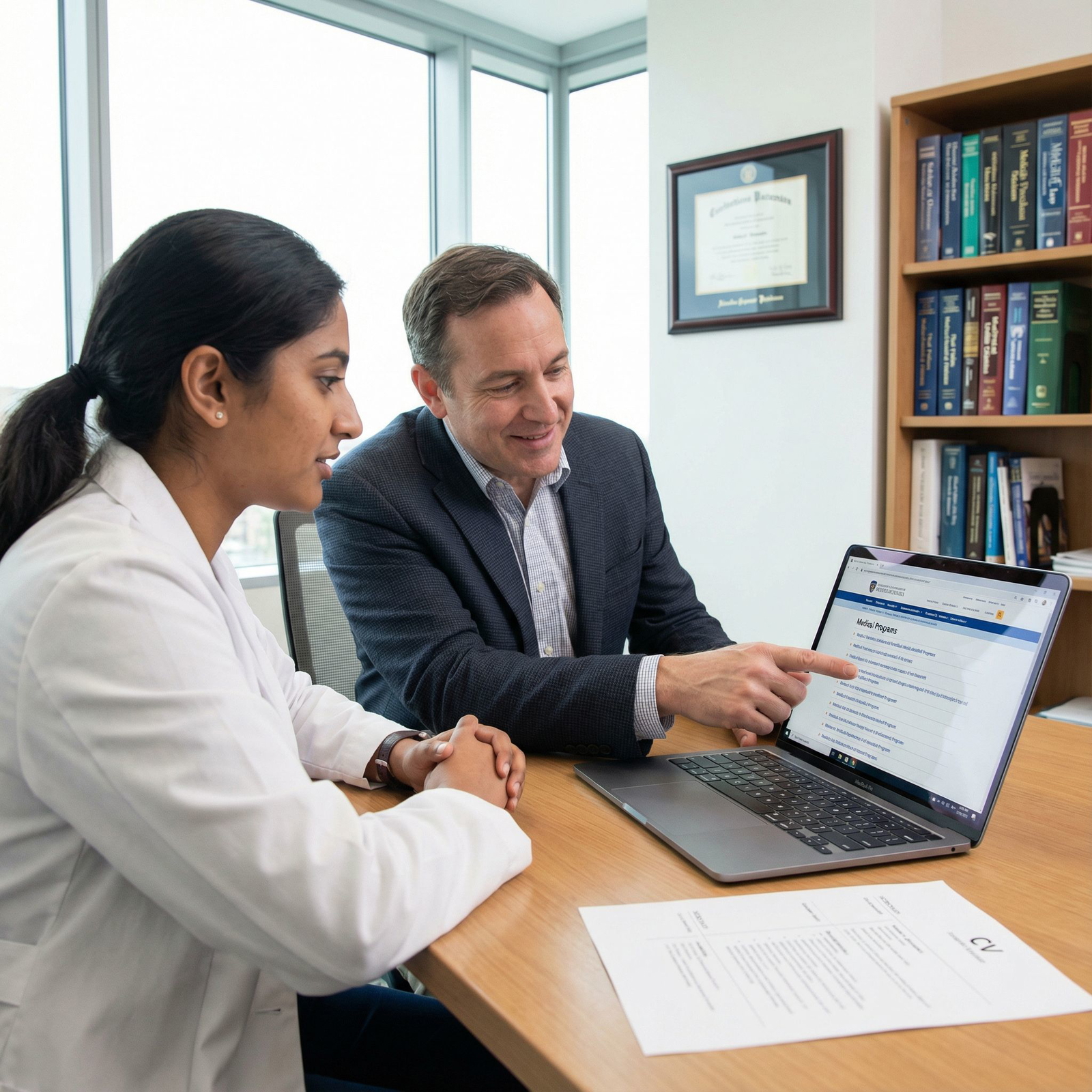
Understanding Your Situation: Low Scores, Remote States, and Visa Status
As a non-US citizen IMG with a low Step score, targeting Alaska residency or Hawaii residency programs can feel intimidating. You may worry that:
- Your low Step 1 score or below average board scores will lead to automatic rejections
- Being a foreign national medical graduate puts you at a disadvantage
- Applying to geographically remote states like Alaska and Hawaii limits options further
- Visa issues (J-1 / H-1B) will make matching even harder
These are real challenges—but they are not absolute barriers.
Residency programs in Alaska and Hawaii are relatively small and can be selective, yet they also often value:
- Commitment to underserved or rural communities
- Cultural adaptability and diversity
- Maturity, resilience, and life experience
- Clear alignment with the region’s population health needs
If you present yourself as a mission-driven candidate with a clear reason to train in these regions and a strong story of improvement after a low Step score, you can still be competitive.
Key mindset shifts:
- Your score is data, not destiny. Treat it as one data point in a broader narrative of growth and resilience.
- Strategy matters more when your numbers are weaker. You can’t send generic applications and hope for the best; you must be deliberate.
- Alaska and Hawaii care about “fit” and commitment. Show specifically why you want there, not just “any” residency.
The rest of this guide gives you a structured plan to improve your chances of matching with low scores in Alaska and Hawaii as a non-US citizen IMG.
Step Scores Reality Check: What “Low” Really Means
Before building a strategy, you need to understand how your scores will likely be viewed.
1. Defining “low” in the current context
- USMLE Step 1: Now pass/fail, but past low numerical scores or multiple attempts still appear and matter. If you failed Step 1 or have an older low Step 1 score, you must address it.
- Step 2 CK: Still numerical and heavily weighted. For many IMGs, Step 2 CK is the primary academic filter.
A “low” score can vary by specialty, but for a foreign national medical graduate:
- Below average board scores = often < 220–225 on Step 2 CK, depending on specialty and year’s averages.
- Very low or high-risk score = ≤ 210–215, or any failure attempt(s).
However, programs in smaller or underserved states sometimes focus on:
- Improvement trend (e.g., weak Step 1, stronger Step 2 CK)
- Postgraduate achievements and US clinical performance
- Letters from trusted US faculty
2. How programs in Alaska and Hawaii may use scores
Alaska and Hawaii have fewer residency programs, concentrated mainly in:
- Family Medicine
- Internal Medicine
- Psychiatry (depending on year and program offerings)
- Some transitional or specialty tracks affiliated with larger mainland institutions
These programs may still use numerical score cutoffs, especially due to large application volumes. But because of their mission to serve unique populations (Native Alaskan, Native Hawaiian, Pacific Islander, rural/remote communities), they may also:
- Look beyond scores for applicants with strong evidence of commitment to primary care, rural health, or community medicine
- Value IMGs who show cultural humility and multilingual skills
- Appreciate applicants with non-traditional paths who bring maturity and resilience
3. Match probabilities for low scores (and what you can control)
While specific Alaska/Hawaii match data is sparse, overall:
- Matching with low scores as a non-US citizen IMG is challenging but not impossible
- Your chances rise significantly if you:
- Apply broadly (not just to Alaska and Hawaii)
- Choose specialties that historically welcome IMGs (e.g., Family Medicine, Internal Medicine, Psychiatry)
- Strengthen non-score components (USCE, letters, personal statement, research, volunteering)
Your plan must be: mitigate the red flag and overcompensate in other areas.

Reframing and Repairing a Low Step Score
You cannot change your score—but you can change how programs interpret it.
1. Show academic recovery with a strong Step 2 CK and Step 3
If your Step 1 was low or you had below average board scores overall, Step 2 CK is your first major opportunity to demonstrate improvement.
- Aim for:
- A score clearly higher than your Step 1 (if numeric)
- A score as close as possible to or above the national mean
- If your Step 2 CK is already low:
- Consider taking Step 3 early if:
- You can realistically score well
- Your visa situation allows it
- A strong Step 3 can partially offset weak earlier scores and reassure programs about your clinical knowledge and test-taking ability.
- Consider taking Step 3 early if:
2. Address the low score honestly in your application
As a non-US citizen IMG, program directors may immediately ask:
“Why was this score low—and will this be a problem in residency?”
You can answer this through:
a. Personal statement (briefly, not the whole essay)
- A short, honest explanation (2–4 sentences) if there was a specific factor:
- Health issue, family crisis, test anxiety, timing with graduation, language transition, etc.
- Emphasize what changed:
- New study strategies
- Improved time management
- Mentorship or coaching you sought out
- Highlight evidence that it worked:
- Better Step 2 CK / Step 3
- Strong clerkship or USCE evaluations
b. MSPE / Dean’s letter (if applicable)
- If your school supports you, ask if they can:
- Contextualize the exam (e.g., known curriculum changes, local exam structure)
- Emphasize your strengths in clinical performance and professionalism
c. Interview responses
You should have a practiced, authentic answer for:
“Can you tell us about your Step score?”
Include three parts:
- Brief context (no long story, no excuses)
- What you changed (study strategy, language skills, time management, stress control)
- Proof of improvement (later exam, US rotations, research, teaching, QA projects)
3. Use letters of recommendation to vouch for your readiness
Strong letters can reduce concern about low scores, especially if they:
- Come from US faculty in core specialties (IM/FM/Psych/ER)
- Explicitly state that:
- You are clinically strong
- You function at or above the level of US graduates
- You are reliable, hardworking, and safe
- Mention your improvement after a bad exam outcome:
- “Despite an early setback on standardized testing, Dr. X has consistently demonstrated excellent clinical judgment and has excelled in our system.”
For Alaska residency or Hawaii residency programs specifically, letters from:
- Physicians with experience in underserved or rural settings
- Faculty working with indigenous or immigrant communities
can be particularly powerful, as they signal mission alignment.
Strategic Targeting: Choosing Programs and Specials Wisely in Alaska & Hawaii
With low scores, where you apply matters as much as how you apply.
1. Understand the program landscape in Alaska and Hawaii
Both states have relatively limited numbers of residency positions, mostly through:
Alaska:
- Family Medicine as the flagship primary care training route
- Programs often emphasize rural rotations, Native Alaskan health, and community medicine
Hawaii:
- Internal Medicine, Family Medicine, Psychiatry, and some other specialties (depending on the year)
- Programs often affiliated with larger universities or health systems, and may have a strong academic or community focus
For a non-US citizen IMG with a low Step 1 score or below average board scores, these realities mean:
- You should not rely solely on Alaska and Hawaii; they should be part of a broader strategy (mainland programs included).
- You must show strong geographic and mission fit to seriously compete for these limited spots.
2. Specialty selection: Aligning difficulty with your profile
Some specialties are extremely competitive for foreign national medical graduates with low scores (e.g., Dermatology, Orthopedics, Plastic Surgery). To maximize your chances:
More realistic options with low scores (especially for IMGs):
- Family Medicine
- Internal Medicine (community programs)
- Psychiatry (some community or smaller programs)
- Transitional Year (in limited cases, but not a standalone plan)
Higher-risk specialties with low scores:
- Anesthesiology, Emergency Medicine, Radiology – possible but more challenging for non-US citizen IMG with low Step scores unless outstanding in other areas.
For Alaska and Hawaii, prioritize specialties that:
- Are heavily community- and primary care–focused
- Emphasize underserved or rural care
- Have a history of accepting IMGs
3. Program selection: Filters, visas, and geographic fit
When building your list:
Check minimum score requirements
- Some programs publicly state filters for Step 1 / Step 2 CK
- If your score is clearly below their line, don’t waste an application unless you have insider knowledge or a direct connection
Verify visa sponsorship
- Many Alaska and Hawaii residency programs sponsor J-1, some may not sponsor H-1B
- As a foreign national medical graduate, this is critical:
- Filter programs in ERAS by visa type if possible
- Confirm on program websites or by email if not clear
Look for IMG-friendly signs
- Recent rosters including IMGs
- Faculty or residents who trained internationally
- Explicit mention of welcoming bilingual or multicultural applicants
Demonstrate geographic preference
Programs in Alaska and Hawaii frequently wonder:
“Will this applicant really come here and stay, or just leave after training?”Show commitment by:
- Mentioning credible reasons to live in Alaska or Hawaii (family ties, prior visits, interest in rural medicine, cultural connections, outdoor lifestyle)
- Completing electives, observerships, or volunteer work in similar remote or underserved settings (even if not in these states)

Building a Strong Application Narrative Beyond the Numbers
When your scores are not your strength, your story and evidence of fit become crucial. Think of your application as a unified narrative:
“I am a non-US citizen IMG committed to serving diverse and underserved communities, particularly in remote or island settings like Alaska and Hawaii. Although I had a low Step score early on, I showed clear academic and clinical improvement and bring proven dedication, cultural flexibility, and resilience.”
Here’s how to construct that narrative.
1. US Clinical Experience (USCE) with purpose
Well-chosen USCE is especially valuable if you’re matching with low scores.
Prioritize:
- Hands-on electives or sub-internships (if still in medical school)
- Supervised observerships or externships in:
- Community hospitals
- Safety-net clinics
- Rural or underserved health centers
If you can’t secure rotations directly in Alaska or Hawaii (which is often difficult), aim for:
- Rotations in rural or frontier areas on the mainland
- Experiences serving:
- Indigenous populations
- Immigrants or refugees
- Islander or coastal communities
In your personal statement and interviews, explicitly connect these experiences to the patient populations of Alaska and Hawaii.
2. Personal statement: Turning weakness into resilience
Your personal statement should:
- Focus on why you want to practice in Alaska or Hawaii
- Highlight service to underserved communities as a guiding theme
- Only briefly reference your low score, framed in a growth mindset
Example structure:
- Opening: A specific patient or experience that shaped your interest in primary care or underserved medicine.
- Development: Your path as an IMG, including exposure to resource-limited settings.
- Challenge: A concise, honest mention of your exam challenge (if needed) and what you learned/changed.
- Proof of growth: Strong Step 2 (or 3), improved clinical evaluations, research or quality projects.
- Fit with Alaska/Hawaii: Explain why training there aligns with your goals:
- Interest in rural practice, telemedicine, chronic disease in indigenous or island populations, mental health in isolated communities, etc.
Avoid spending more than 1 short paragraph on scores; the majority should be about your values, skills, and future goals.
3. Research, quality improvement, and community work
You don’t need high-impact publications, but relevant projects help offset low scores by proving you are hardworking and capable of scholarship.
Consider:
- Quality improvement projects in:
- Chronic disease management (diabetes, hypertension, obesity)
- Telehealth or remote care models
- Behavioral health integration in primary care
- Community health initiatives:
- Vaccination drives
- Outreach to indigenous, migrant, or islander communities
- Language-access programs
These are directly relevant to many Alaska and Hawaii residency programs’ missions.
Highlight your role clearly (design, data collection, patient education, presenting results) and mention any posters, presentations, or local recognition.
4. Professionalism and soft skills
Program directors often say they can work around a low board score but not around:
- Unreliability
- Poor communication
- Lack of teamwork
Show evidence you are a safe and strong colleague:
- Clerkship comments praising professionalism, empathy, and work ethic
- Letters describing how you deal with feedback, stress, and long hours
- Activities that demonstrate leadership:
- Teaching juniors
- Coordinating volunteer programs
- Serving as a liaison for international or minority student groups
For Alaska and Hawaii, highlight:
- Cultural humility and cross-cultural communication skills
- Ability to adapt to new environments, climates, and systems
- Language skills that may benefit diverse patient populations
Practical Timeline & Action Plan for Non-US Citizen IMGs with Low Scores
Bringing this together, here’s a realistic strategy framework.
12–18 months before application
Assess your profile honestly
- List all red flags (low Step 1 score, failed attempts, gaps, below average board scores).
- Decide which specialty or two to focus on (e.g., Family Medicine + Internal Medicine).
Plan exams strategically
- Schedule Step 2 CK (if not done) aiming for as high as possible.
- Consider Step 3 only if you can prepare well and it will be complete before interview season or early in it.
Start targeted USCE
- Secure observerships or electives in community or underserved settings.
- Seek settings similar to Alaska/Hawaii (rural, resource-limited, multicultural).
Engage in relevant research or QI
- Join projects in primary care, rural medicine, or population health if possible.
6–9 months before application (ERAS season)
Finalize exam scores
- Have Step 2 CK result ready and, if possible, Step 3 planned/completed.
Obtain strong letters
- Request 3–4 letters from US attendings who know you well and can:
- Confirm your clinical competence
- Speak to your resilience and growth after exam challenges
- At least one letter should ideally reflect work in an underserved or rural context.
- Request 3–4 letters from US attendings who know you well and can:
Research Alaska and Hawaii programs deeply
- Review each program’s mission, patient population, and selection criteria.
- Make a document listing:
- Score requirements
- Visa sponsorship type
- Number of IMGs currently in the program
Craft tailored personal statements
- One main statement for your specialty.
- Add a brief customization paragraph for programs in Alaska and Hawaii expressing your specific interest in their region and mission.
During ERAS application and interview season
Apply broadly
- Include Alaska residency and Hawaii residency programs that:
- Accept IMGs
- Sponsor your visa type
- But also apply to a large number of mainland programs where you meet basic filters.
- Include Alaska residency and Hawaii residency programs that:
Send targeted interest emails
- After submitting ERAS, send polite, concise emails to:
- Program coordinators or directors in Alaska/Hawaii
- Highlight:
- Your mission-driven interest in underserved and remote communities
- Any connections to the region, population, or similar settings
- That you are a non-US citizen IMG comfortable with relocation and long-term commitment
- After submitting ERAS, send polite, concise emails to:
Excel in interviews
- Prepare clear, honest answers about:
- Your exam history
- Why Alaska or Hawaii fits your personal and professional goals
- Ask thoughtful questions about:
- Rural rotations, telehealth, community outreach
- Opportunities to learn about indigenous or Pacific Islander health
- Prepare clear, honest answers about:
Follow-up professionally
- Send thank-you emails with a brief mention of:
- What you appreciated about the program
- How you see yourself contributing despite a past low score
- Send thank-you emails with a brief mention of:
FAQs: Low Step Score Strategies for Non-US Citizen IMGs in Alaska & Hawaii
1. Can I realistically match in Alaska or Hawaii as a non-US citizen IMG with low Step scores?
Yes, it is possible but competitive. You’ll need to:
- Focus on more IMG-friendly specialties (e.g., Family Medicine, Internal Medicine, Psychiatry)
- Show strong alignment with the mission of serving underserved, rural, and multicultural populations
- Demonstrate clear improvement after your low Step 1 score or below average board scores
- Apply broadly beyond Alaska and Hawaii to protect yourself statistically
2. Should I take Step 3 before applying if my previous scores are low?
If you can prepare adequately and are likely to score well, Step 3 can help:
- Show academic recovery
- Reassure programs about your test-taking and clinical decision-making
- Strengthen your profile for J-1 waiver or future job opportunities
However, a rushed, mediocre Step 3 score can hurt more than help. Only take it early if you can do it well.
3. How do I explain my low Step score in interviews without sounding like I’m making excuses?
Use a simple structure:
- Brief cause: “At the time of my first exam, I underestimated the adjustment to studying in a second language and didn’t use practice tests efficiently.”
- Responsibility: “This was my responsibility, and I took it seriously.”
- Action taken: “I sought mentorship, changed my study methods, built a schedule using NBME assessments, and practiced more timed questions.”
- Evidence of improvement: “As a result, my Step 2 CK and my clinical evaluations were much stronger, and I continue to apply these strategies in all my learning.”
Keep it short, honest, and focused on growth.
4. How can I show genuine interest in Alaska or Hawaii if I’ve never been there?
You can still demonstrate authentic interest by:
- Learning about the health challenges specific to Alaska or Hawaii (e.g., rural access issues, indigenous health disparities, chronic disease patterns)
- Highlighting similar experiences in your home country or other rural/remote settings
- Emphasizing your adaptability, respect for local cultures, and willingness to build a life in a remote or island environment
- Connecting your long-term goals (e.g., working in underserved communities, telemedicine, rural outreach) with what these programs offer
If possible, attending virtual open houses or informational webinars from these programs can further show seriousness and help you tailor your application.
By accepting your low scores as a starting point—not an endpoint—and crafting a thoughtful, mission-based application, you can position yourself as a resilient, committed non-US citizen IMG who is an excellent fit for residency training in Alaska, Hawaii, or similar underserved regions.