
Understanding the Landscape: Low Scores, HBCUs, and Non-US Citizen IMGs
If you are a non-US citizen IMG with a low Step 1 score (or overall below average board scores), aiming for HBCU residency programs, you are navigating several overlapping challenges:
- You are an international medical graduate, often trained outside the US.
- You are a foreign national medical graduate, meaning you also need a visa.
- You have a low Step 1 score or below average board scores, which can limit automatic screening.
- You’re specifically interested in HBCU residency programs such as Meharry residency, Morehouse, and Howard.
The good news: HBCU-affiliated programs often have a strong mission-driven, holistic review culture that can give a genuine chance to applicants with imperfect metrics—especially if your story, values, and contributions align with their mission of serving underserved and minority communities.
This article focuses on concrete, stepwise strategies for matching with low scores as a non-US citizen IMG targeting HBCU-affiliated residencies.
How HBCU Programs View Low Step Scores and IMGs
HBCU residency programs share some characteristics, but each is unique. When you have a low Step 1 score or underwhelming Step 2 CK performance, understanding their context helps you compensate strategically.
1. Mission-Driven, Holistic Review
HBCU programs (e.g., Meharry, Howard, Morehouse, and their affiliated hospitals) often emphasize:
- Service to underserved, minority, and low-resource communities
- A track record of advocacy, leadership, and community engagement
- Commitment to health equity and social justice
For a non-US citizen IMG, this means:
- Your story and mission fit can partially offset low Step scores.
- Experiences in global health, rural care, refugee health, or underserved clinics at home or abroad are powerful.
Action:
In your personal statement and experiences, emphasize:
- Direct work with underserved communities in your home country or during electives.
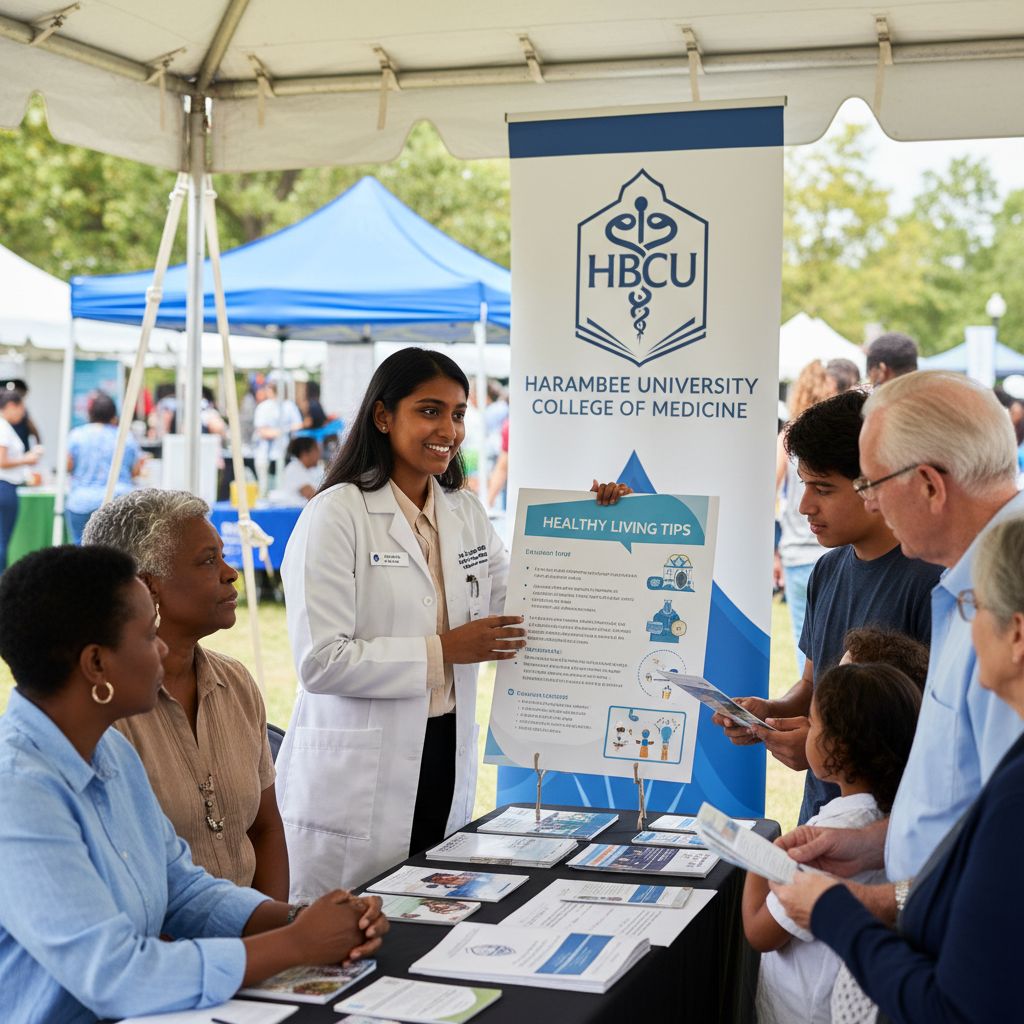
- Any leadership, advocacy, or outreach projects (e.g., health fairs, vaccination drives, patient education workshops).
- Evidence that you understand the history and role of HBCUs in medical education and why that mission resonates with you.
2. IMGs and Visa Sponsorship in HBCU Programs
HBCU-affiliated programs each have their own stance on:
- IMGs (US and non-US citizen)
- Visa sponsorship (J-1 only vs. J-1 and H-1B vs. no visa support)
As a non-US citizen IMG, you must double-check:
- Does the program sponsor visas? Which type?
- Are they historically IMG-friendly?
- Do they list cutoffs for Step scores?
Because HBCUs often work with limited budgets, some do not sponsor H-1B visas. J-1 sponsorship via ECFMG is more common, but you must confirm per program.
Action:
- Create a spreadsheet of HBCU and HBCU-affiliated programs, including:
- Visa types supported (from their websites or FREIDA)
- Historical IMG match data (from match lists, alumni)
- Explicit Step score cutoffs (if any)
- Reach out politely via email to their program coordinator or program director to clarify visa policy if the website is unclear.
Example email snippet:
Dear [Program Coordinator Name],
I am an international medical graduate from [Country], currently ECFMG-certified and planning to apply to [Specialty] residency. I am particularly interested in your program because of its strong commitment to serving underserved communities and training diverse physicians.
May I kindly ask whether your program sponsors J-1 and/or H-1B visas, and whether there are any strict USMLE score cutoffs for interview selection?
Thank you very much for your time and consideration.
Sincerely,
[Your Name], MD (IMG), [Medical School]

Strategy 1: Use Step 2 CK and Clinical Performance to Offset Low Step 1
If Step 1 is low or you failed it once, your Step 2 CK and clinical performance must become your strengths.
1. Turn Step 2 CK into Your Redemption Exam
Programs will ask: “Did this applicant learn from Step 1 and improve?”
If your Step 1 is low:
- Aim for a significant Step 2 CK jump above the national mean if possible.
- Even if that’s not possible, aim to avoid another low or failing score.
- Study with structure and documentation so you can explain your improvement.
Key steps:
- Use NMBE practice exams and UWorld systematically.
- Track your baseline score, identify weak systems, and build a corrective plan.
- If you already have a low Step 2 CK score, be prepared to:
- Emphasize upward trends in clinical grades.
- Highlight strong letters that reassure programs about clinical competence.
2. Leverage Clinical Clerkships, Especially US Rotations
For a foreign national medical graduate, US clinical experience (USCE) is often essential, especially in primary care specialties that are more IMG-friendly (Internal Medicine, Family Medicine, Pediatrics, Psychiatry).
To help with matching with low scores, focus on:
- Hands-on clinical electives in the US (not just observerships) if you can still obtain them.
- Rotations at safety net hospitals, community health centers, or institutions that serve underserved populations.
- Any HBCU-affiliated or mission-aligned hospitals—even if not directly HBCU.
Ask your attendings for letters that specifically mention:
- Your clinical reasoning, reliability, and communication with patients.
- Your ability to work effectively with underserved and diverse populations.
- An explicit statement such as: “I have no concern about this applicant’s ability to perform successfully in a US residency program despite their lower Step score.”
3. Presenting Your Academic Narrative
You will need a coherent explanation for your low Step 1 score (and low Step 2 CK if applicable). Avoid excuses; focus on:
- Context (e.g., lack of structured prep resources, illness, personal hardship).
- Reflection (what you learned about yourself).
- Concrete changes (new study strategies, mentorship, improved time management).
- Evidence of improvement (better performance on Step 2 or in clinical settings).
Example short explanation (for ERAS experiences or interviews):
During Step 1 preparation, I struggled with time management and studied inefficiently, focusing too much on memorization rather than application. After receiving a lower-than-expected score, I sought mentorship from faculty, restructured my study plan around question banks and active recall, and practiced time-limited blocks. These changes helped me perform significantly better in my core clinical rotations and Step 2 CK, and they continue to guide how I prepare for patient care and lifelong learning.
Strategy 2: Align Deeply with HBCU Missions and Community Impact
HBCU residency programs place real weight on mission alignment. As a non-US citizen IMG, you must show you are not just “interested in the US” but genuinely committed to serving underserved communities and addressing health disparities.
1. Build and Highlight Community-Focused Experiences
Think strategically about your experiences:
- Have you worked in low-resource rural areas in your home country?
- Have you volunteered with refugee populations, minority communities, or free clinics?
- Have you participated in public health campaigns, health education, or research on health disparities?
Even if these were not in the US, they matter. Translate them for a US audience:
Example:
- If you worked in a remote clinic in Nigeria, India, or the Caribbean, frame it in terms of:
- Limited resources
- Language barriers
- Trust-building with marginalized communities
- Outcomes or measurable impact (number of patients reached, programs started)
2. Tailor Personal Statements to HBCU-Affiliated Programs
Avoid generic personal statements. For Meharry residency or other HBCU residency programs:
- Reference their mission statement (in your own words, not copy-paste).
- Show that you understand the history and role of HBCUs in training Black physicians and serving underserved populations.
- Explain how your lived experience as a non-US citizen IMG from [Country] gives you a unique perspective on:
- Structural barriers to care
- Cultural humility
- Trust-building with diverse communities
Example framing for a Meharry-focused personal statement:
Growing up in [Country], I witnessed firsthand how poverty, race, and geography dictate who receives quality healthcare. In [rural/urban] clinics, I cared for patients who traveled hours for basic care, often delaying treatment due to cost, stigma, or mistrust.
Meharry’s mission—to serve the underserved and train physicians who are socially conscious and community-centered—mirrors the reasons I chose medicine. As an IMG and foreign national medical graduate, I have learned to navigate cultural, linguistic, and resource barriers. I hope to bring this perspective to Meharry’s residency program, contributing to your work with marginalized communities in [region/program’s local community], while receiving training that will allow me to continue this work throughout my career.
3. Connect with Alumni and Mentors
HBCU residency programs value authentic connections. To strengthen your profile:
- Identify any alumni from your medical school who matched into HBCU or HBCU-affiliated programs.
- Join online communities or webinars targeting IMGs and diversity in medicine.
- Attend virtual open houses for Meharry, Howard, Morehouse, and affiliated hospitals.
Use these interactions to:
- Learn what these programs genuinely value beyond scores.
- Understand how they view a non-US citizen IMG with below average board scores.
- Ask “What helped you stand out despite X challenge?”
Sometimes a simple email from an alumnus to a program director—“I know this applicant and strongly recommend them”—can elevate your application.
Strategy 3: Program Targeting, Application Tactics, and Specialty Choice
With a low Step 1 score, targeting and tactics matter as much as raw qualifications.
1. Be Strategic About Specialty and Competitiveness
If your goal is to maximize your chances of matching with low scores:
- Prioritize more IMG-friendly specialties, such as:
- Internal Medicine
- Family Medicine
- Pediatrics
- Psychiatry
- Be cautious with highly competitive specialties:
- Dermatology, Orthopedics, Neurosurgery, Plastic Surgery
- Even for HBCU programs, these often go to US grads with strong scores.
If you are committed to a more competitive field, consider:
- Completing a preliminary year in Internal Medicine or General Surgery at an IMG-friendly or HBCU-affiliated program.
- Building a strong research and clinical portfolio before reapplying.
2. Understanding HBCU-Affiliated vs. HBCU-Owned Programs
Not all programs that share HBCU values are formally HBCU-owned. For example:
- Meharry partners with several hospitals in Nashville and surrounding regions.
- Howard and Morehouse partner with specific teaching hospitals in their cities.
Also look at:
- Affiliated community hospitals that partner with HBCUs for rotations or have similar missions.
- Institutions serving predominantly minority or underserved populations, even if not HBCUs.
These may:
- Be more open to a non-US citizen IMG with low scores.
- Offer rich opportunities for community engagement.
3. Application Volume and Prioritization
With below average board scores, you must:
- Apply broadly within realistic specialty choices.
- Prioritize:
- HBCU residency programs.
- Programs known to accept IMGs and sponsor J-1 visas.
- Community-based programs and safety-net hospitals.
Avoid relying on:
- A very small number of “dream” academic programs, especially if they explicitly prefer US grads and have high score cutoffs.
Suggested approach:
- Tier 1: HBCU and HBCU-affiliated programs where you strongly align with mission.
- Tier 2: Non-HBCU IMG-friendly community and university-affiliated programs with a track record of J-1 sponsorship.
- Tier 3: Additional programs in IMG-friendly states (e.g., NY, NJ, MI, FL, TX, IL) where your profile still fits.
4. ERAS Application Optimization
Optimize each section of ERAS to downplay scores, highlight strengths:
- Experience section: Emphasize depth over volume—leadership, teaching, and service.
- Research: If you lack high-impact publications, smaller projects, QI projects, or case reports still help, especially if related to health disparities or underserved care.
- MSPE/Dean’s Letter: If possible, request that your school highlight:
- Strong clinical grades
- Teaching roles
- Community projects
- Letters of Recommendation: Aim for:
- 1–2 US-based letters (if possible).
- Letter writers who know you well and can comment on your resilience and growth after low scores.
Strategy 4: Communication, Interviews, and Explaining Low Scores
Getting the interview is only half the battle. You must then communicate effectively—in writing, via email, and during interviews.
1. Proactive but Professional Communication
As a foreign national medical graduate, you may benefit from polite, occasional follow-up:
- Send thank-you emails after interviews.
- If appropriate, send a letter of interest or letter of intent to your top HBCU programs, explaining:
- Why you are specifically committed to their program.
- How their mission aligns with your experience and long-term goals.
2. How to Discuss Low Step Scores in Interviews
Expect a question such as:
“Can you tell me about your Step 1 score and what you learned from that experience?”
Your response should be:
- Brief and honest about the cause (without oversharing).
- Focused on reflection and growth.
- Connected to your improved habits and patient-care skills.
Example answer structure:
- Acknowledge the low score directly, without defensiveness.
- Provide context (e.g., poor strategy, personal challenge).
- Describe concrete changes you made.
- Point to outcomes: better Step 2 CK, clinical performance, feedback.
Example:
My Step 1 score does not reflect my current capabilities. During that period, I underestimated the exam’s emphasis on application and studied passively, focusing on rereading instead of active problem-solving. After receiving the score, I met with faculty mentors, restructured my approach using question banks and spaced repetition, and applied these methods to my clinical rotations and Step 2 CK. As a result, my Step 2 CK score and clinical evaluations improved significantly. This experience taught me to adapt quickly, seek help early, and build sustainable study habits—skills that now guide how I approach complex patient care.
3. Demonstrating Soft Skills and Cultural Humility
HBCU residency programs place strong emphasis on:
- Communication skills
- Teamwork
- Cultural competence
- Empathy toward marginalized patients
As a non-US citizen IMG, use interviews to:
- Show that you are aware of US-specific health disparities, especially affecting Black, Latinx, and low-income communities.
- Describe how your own background helps you connect with patients facing stigma or mistrust.
- Give specific examples of moments when you:
- Overcame language barriers.
- Built trust with skeptical patients.
- Advocated for a patient’s needs.
Strategy 5: If You Don’t Match: Gap Years, Strengthening, and Reapplication
Even with perfect strategy, some non-US citizen IMGs with low Step scores will not match on their first attempt. Planning for that possibility—without giving up—can keep your long-term goal alive.
1. High-Yield Activities for a Gap Year
If you go unmatched or partially matched (e.g., only a prelim spot), prioritize activities that:
- Occur in the US clinical system if possible.
- Directly improve your next application cycle.
Examples:
- Research positions (preferably at institutions with HBCU partnerships or serving underserved populations).
- Clinical research coordinators or QI roles that involve patient interaction.
- Externships or extended observerships where you can earn strong LORs.
- Work in free clinics, global health NGOs, or community health organizations—even if unpaid.
Always aim for letters of recommendation from these experiences.
2. Avoid Low-Yield, High-Risk Choices
Be cautious with:
- Paying large sums for “guaranteed” match help companies.
- Unstructured time with no documented activities.
- Repeating exams unless you and a mentor truly believe improvement is likely and necessary.
3. Continuous Narrative of Growth
When you reapply:
- Show a clear, continuous story:
- “Previously, my application was limited by [low Step score/no US clinical experience]. Over the past year, I have addressed this by [USCE, research, community work], and here is how that has made me a stronger candidate.”
- Be explicit about your continued focus on HBCU residency programs, not only as a backup but as a purposeful choice aligned with your values.
FAQs: Low Step Score Strategies for Non-US Citizen IMGs Aiming at HBCU Programs
1. Can I realistically match into an HBCU residency program with a low Step 1 score as a non-US citizen IMG?
Yes, it is possible, but not guaranteed. HBCU programs are more open to holistic review and mission alignment than many institutions, especially for applicants who demonstrate deep commitment to underserved communities. However, your chances improve significantly if you have:
- A stronger Step 2 CK (or at least not another low score)
- US clinical experience with strong letters
- A clear, compelling story showing mission fit and growth
2. Do HBCU programs sponsor visas for foreign national medical graduates?
Policies vary by program and change over time. Many HBCU-affiliated programs sponsor J-1 visas through ECFMG, but not all will sponsor H-1B visas. Always:
- Check program websites and FREIDA
- Email the program coordinator for confirmation
- Ask about any upcoming policy changes
3. How can I make my application stand out if my scores are below average?
Focus on areas you can control:
- Mission-aligned experiences: Underserved care, public health, community outreach
- Strong letters of recommendation: Especially from US physicians who can comment on your clinical skills, professionalism, and growth
- Tailored personal statements: Explicitly connect your background and goals with the specific mission of HBCU programs like Meharry, Howard, or Morehouse
- Professional communication and interviews: Address low scores honestly, emphasize what you learned and how you improved
4. Is it better to delay applying to residency to improve my Step scores or to gain more US experience?
This depends on your current profile:
- If you have not yet taken Step 2 CK and your Step 1 is low, it may be wise to delay until you can present a stronger Step 2 CK score.
- If your exams are complete and low, extra time might be better spent on US clinical experience, research, and community work that align with HBCU missions. Discuss timing with a trusted mentor who is familiar with IMG and HBCU match patterns; often, a well-planned extra year is better than rushing into an application with major gaps.
By combining targeted exam strategy, mission-driven experiences, careful program selection, and clear communication of your growth, you can significantly improve your chances of matching with low scores as a non-US citizen IMG—especially within the unique, mission-centered environment of HBCU residency programs like Meharry.