
Understanding the Landscape: Low Scores in a Niche Field
Pediatrics-Psychiatry—especially combined programs like Pediatrics/Psychiatry/Child & Adolescent Psychiatry (Triple Board)—attracts a self-selected group of applicants with strong narratives about child development, mental health, and complex systems of care. The relatively small number of programs and positions can make the field seem intimidating, especially if you have a low Step 1 score or below average board scores.
Yet, in this specialty more than many others, programs place genuine weight on:
- Commitment to vulnerable children and families
- Evidence of resilience and growth
- Longitudinal clinical and advocacy work
- Fit with the culture of collaboration across pediatrics and psychiatry
This is a substantial advantage for applicants worried about matching with low scores. Your board scores matter, but they do not define your candidacy. The goal of this guide is to show you what you can control now and how to build a convincing, coherent application for peds psych residency and Triple Board programs despite numeric weaknesses.
We’ll focus on:
- Contextualizing low scores honestly but strategically
- Building a differentiated profile around Pediatrics-Psychiatry
- Choosing programs and pathways wisely
- Communicating your story effectively in statements and interviews
- Planning realistic backup options while still aiming high
Step Scores in Pediatrics-Psychiatry: What They Actually Mean
Residency selection committees in Pediatrics-Psychiatry and Triple Board do review scores, but they rarely treat them as the single decisive metric. Understanding how your scores are viewed helps you plan.
How Programs Use Scores in This Niche
In combined peds-psych or triple board pathways, programs typically use scores to:
Ensure you can pass future boards
- They must maintain pass rates in pediatrics and psychiatry boards.
- Very low scores or multiple failures raise concern about future board performance.
Sort large numbers of applications
- Some programs apply soft filters (e.g., “around the national mean”) when overwhelmed.
- Smaller or mission-driven programs may read more holistically, especially for applicants with strong alignment to child mental health.
Look for trends rather than single numbers
- Improvement from Step 1 to Step 2 CK is a powerful positive sign.
- Consistent underperformance across exams prompts questions, but can sometimes be offset by concrete evidence of growth (tutoring, remediation, etc.).
What Counts as a “Low Score” in This Context?
Because Step 1 is now pass/fail, most “low score” concerns revolve around:
- Past numerical Step 1 score (for older applicants, re-applicants, IMGs) that is below the historical mean
- Step 1 pass on second attempt
- Step 2 CK score below the national mean or with multiple attempts
- COMLEX scores that are clearly below average or show multiple failures
In pediatrics-psychiatry pathways, a low score is often a concern, not a disqualifier, especially if you show:
- Score improvement (Step 2 > Step 1 or better performance on later attempts)
- Strong clerkship performance in peds and psych
- Concrete actions taken to address study skills or test-taking issues
When Scores Become a Critical Red Flag
Programs become more cautious when:
- You failed Step 1 and/or Step 2 CK without a strong explanation or recovery
- There is a pattern: multiple failures, low in-course exams, and weak clinical feedback
- There is no evidence you sought help or changed your strategies
Even in these cases, programs in child mental health fields may be more open to applicants who show insight and clear corrective action. Your task is to present yourself as someone who:
- Understands what went wrong
- Has already implemented practical solutions
- Has evidence of improved performance under those new strategies
Academic Recovery: Turning Low Scores into a Growth Story
If you’re applying to peds psych residency or Triple Board with below average board scores, you need to show not just interest in the field, but academic resilience. Program directors want to feel confident you will pass pediatrics and psychiatry boards and thrive in training.
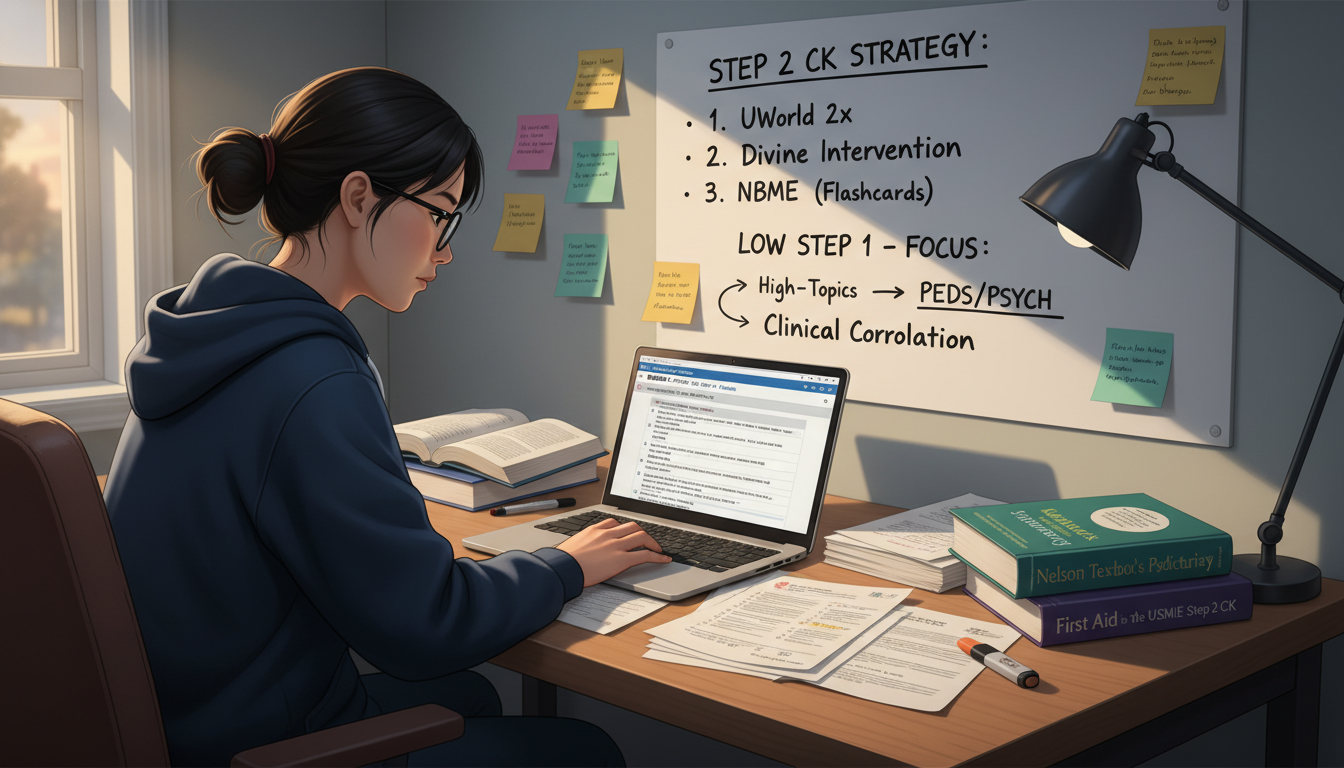
Step 2 CK: Your Most Powerful Academic Signal
For most current applicants, Step 2 CK is the best opportunity to offset a low Step 1 score or borderline performance.
Actionable strategies:
Treat Step 2 as a major pivot point, not an afterthought
- Start at least 3–4 months before your dedicated period, even if lightly.
- Use a “test-enhancing” rotation schedule: medicine, pediatrics, psych, and sub-I’s leading into Step 2.
Build a targeted plan around your Step 1 weaknesses
- Review your Step 1 performance (if available) or clerkship narratives to see where you struggled—biostats, neuro, endocrine, etc.
- Identify knowledge gaps specifically relevant to pediatrics and psychiatry (development, neuro, pharmacology, behavioral health).
Use high-yield, question-heavy resources
- UWorld Step 2 CK – focus on understanding and annotation, not just volume.
- NBME practice exams – take at least 2–3 and track trends.
- Supplement with pediatrics- and psychiatry-focused texts or cases if those were prior weak spots.
Document your improvement
- Keep a record of practice scores and the changes you implemented (study schedule, tutoring, accommodations).
- These details can be referenced subtly in your personal statement or MSPE addendum when explaining growth.
Addressing Failed or Multiple Board Attempts
If you have a Step 1 or Step 2 CK failure, you must:
Explain it briefly, honestly, and non-defensively
- Identify real factors (untreated ADHD, depression, family crisis, inadequate study plan, language adjustment)
- Avoid blaming the exam or making excuses; focus on your response.
Show concrete corrective actions
Examples include:- Formal learning assessment and new strategies implemented
- Meeting with learning specialists or using institutional academic support
- Dedicated test-prep course or professional tutoring
- Time off to address health or mental health concerns
Highlight subsequent academic successes
- Improved Step 2 CK score
- Honors/high passes in pediatrics and psychiatry clerkships
- Strong in-service exams or practice boards (if available during a re-application)
A well-explained failure, accompanied by clear improvement and insight, can actually support your narrative in a field that values psychological insight and resilience.
Strengthening Your Transcript Beyond Scores
Residency committees will look closely at:
- Clerkship grades: Strong performance in pediatrics, psychiatry, and family medicine carries particular weight.
- Sub-internships: A peds or psych sub-I with excellent evaluations can reassure programs about your clinical readiness.
- Narrative comments: Themes like “mature,” “empathetic,” “handles complexity,” and “excellent with children and families” can significantly offset low numbers.
If you have time before applying:
- Aim for a peds sub-I and a psych sub-I, ideally with child exposure.
- Prioritize professionalism, teamwork, and reliability; these traits are carefully read in evaluations.
- Ask for specific feedback from attendings and residents and implement it—then ask them to mention your growth in your letters.
Building a Distinctive Peds-Psych Profile
In pediatrics-psychiatry and Triple Board, differentiation matters at least as much as raw scores. Programs want applicants who truly understand the interface of child health and mental health—and who are likely to stay in this niche.
Clarify and Demonstrate Your Career Vision
You don’t need a perfect 10-year plan, but you should articulate why this combined field, not just pediatrics or psychiatry alone.
Examples of compelling career visions:
- Integrating mental health screening and brief interventions into primary care pediatrics in underserved communities.
- Developing hospital-based programs for medically complex children with co-occurring developmental or psychiatric conditions.
- Building school-based or community-based services that bridge physical and mental health.
- Advocacy for child mental health policy, trauma-informed care, or child protection within pediatric systems.
Concrete actions to support your vision:
- Engage in longitudinal clinical experiences: school clinics, developmental pediatrics, child psych clinics, foster care, juvenile justice systems.
- Participate in quality improvement projects that address both physical and mental health (e.g., depression screening in adolescence with chronic illness).
- Seek advisors or mentors who work at the pediatrics-psychiatry interface—even if your school doesn’t have a Triple Board program.
Clinical and Extracurricular Experiences That Stand Out
For a strong peds psych residency or Triple Board application, focus on:
Child-centered clinical work
- Pediatric rotations where you asked for extra time in developmental-behavioral pediatrics, adolescent clinics, or child psych consults.
- Electives in child and adolescent psychiatry, neurodevelopmental clinics, autism centers, or eating disorder programs.
Longitudinal child advocacy or service
- Consistent involvement in tutoring, mentoring, Big Brothers/Big Sisters, or youth shelters.
- Work with children with special needs, trauma survivors, or children in foster care.
Research and scholarly work (if available)
- Projects on ADHD, autism, depression/anxiety, chronic illness and mental health, school refusal, or trauma.
- Quality improvement in integrated care models or screening for psychosocial issues in pediatric clinics.
If you lack research, focus on depth of experience and reflection rather than breadth. Peds-psych programs often value authentic engagement over flashy CV entries.
Letters of Recommendation: Your Most Powerful Non-Numeric Tool
With below average board scores, your letters of recommendation (LORs) become crucial.
Aim for:
- At least one strong pediatrics letter (ideally from a sub-I or key rotation)
- At least one strong psychiatry letter (preferably child/adolescent psych if possible)
- A third letter from whichever attending knew you best and can speak to your longitudinal growth, work ethic, and suitability for combined training.
Ask letter writers to address:
- Your ability to manage complex, psychosocially challenging cases
- Maturity, communication with families, and interdisciplinary teamwork
- Evidence you learn from feedback and show improvement over time
- Their confidence in your ability to complete a combined or triple board pathway successfully
Give them a brief summary of your narrative, including your score situation and how you’ve grown, so they can contextualize your application in their letters.

Application Strategy: Program Selection, Personal Statements, and Interviews
Your application strategy can make the difference between being screened out and being seriously considered. This is especially true for matching with low scores in a competitive, small field.
Choosing Where (and How Broadly) to Apply
Because Peds-Psych and Triple Board have limited positions, a dual-path application strategy is often wise for applicants with low scores:
Apply to Triple Board / Peds-Psych programs where your narrative is strongest
- Especially those known for holistic review, strong community focus, or mission-driven selection.
- Carefully research each program’s emphasis (e.g., integrated care, developmental-behavioral, trauma, etc.) and tailor accordingly.
Apply broadly to categorical Pediatrics and/or Psychiatry programs
- Prioritize programs with strong child psychiatry or developmental-behavioral tracks.
- Consider smaller, community-based, or newer programs that may have more flexible screening thresholds.
Consider geographic strategy
- Programs in highly desirable urban centers may be more competitive numerically.
- Less saturated regions sometimes offer more opportunities for applicants with lower scores but strong narratives.
Work with a trusted advisor to decide:
- How many total applications you need (often more if your scores are substantially below average)
- The balance between dream, realistic, and safety programs
Crafting a Personal Statement That Addresses, But Doesn’t Obsess Over, Scores
Your personal statement for peds psych residency or Triple Board should:
Lead with your calling, not your scores
- Start with a patient story, a longitudinal experience, or a moment that crystallized your commitment to child health and mental health.
- Show how you naturally gravitate toward bio-psycho-social complexity.
Weave a coherent narrative toward combined training
- Demonstrate that you understand what Triple Board or combined peds-psych entails (five years, dual roles, board requirements).
- Explain why you want to hold pediatric and psychiatric frameworks at once, not serially.
Address low scores briefly and strategically (if necessary)
- 2–4 sentences is usually enough.
- Example structure:
- Acknowledge the issue (e.g., Step 1 performance).
- Provide concise context (illness, ineffective strategy, language barrier, etc.).
- Emphasize what you changed and evidence of improvement (Step 2, clerkships).
- Close the loop: how this experience enhanced your empathy, resilience, or approach to struggling patients.
End with forward-looking goals
- Conclude with a realistic vision of how combined training will shape your career, especially in advocacy, integrated care, or specialized services.
Avoid:
- Overly detailed exam narratives
- Self-pity or intense defensiveness
- Blaming external factors without owning your response
Interview Strategy: Owning Your Story
If you receive interviews, your low Step 1 score or below average board scores may come up—directly or implicitly.
Prepare to:
Give a concise, rehearsed explanation
- 20–40 seconds, factual and calm.
- Emphasize your insight, corrective actions, and subsequent performance.
Pivot to strengths relevant to peds-psych
- “What that experience taught me about working through difficulty is exactly what I bring to caring for children and families under stress…”
Demonstrate deep understanding of the field
- Mention specific aspects of the program’s curriculum that excite you: integrated clinics, developmental-behavioral experiences, collaborative care models, child psych consult services.
Ask thoughtful, field-specific questions
Examples:- How do residents balance their identity as pediatricians and psychiatrists during training?
- What opportunities exist to participate in school-based or community mental health initiatives?
- How does your program support residents preparing for two different board exams?
Interviewers in this field are generally more attuned to who you are as a developing physician than to a single test performance. Use that to your advantage.
Long-Term Resilience: Backup Plans and Future Opportunities
Even with an excellent strategy, small-field applications can be unpredictable, especially when matching with low scores. You need parallel planning that protects your long-term goals.
Smart Backup Pathways
Realistic alternatives that still align with child health and mental health include:
- Categorical Pediatrics with strong behavioral/developmental or adolescent psychiatry electives
- Categorical Psychiatry with heavy child and adolescent focus and future Child & Adolescent Psychiatry (CAP) fellowship
- Family Medicine programs with integrated behavioral health and pediatric-heavy clinics
You can still:
- Do a CAP fellowship after psychiatry
- Build a career in integrated pediatric behavioral health as a pediatrician
- Lead collaborative care or school-based mental health projects from a family medicine base
You lose the specific triple board credential, but not the ability to build a career at the peds-psych interface.
If You Don’t Match the First Time
If you go unmatched:
Do not disappear from clinical work or child-related activities.
- Seek a prelim year (peds/psych/medicine) or a research/clinical position in child mental health or pediatrics.
Strengthen weak areas
- If Step 2 was poor and you have not graduated, consider dedicated remediation and potential retake (if allowed).
- Collect new, stronger letters from supervisors who saw your growth.
Enhance your niche identity
- More child-centered clinical work, advocacy, QI, or research during the interim year.
- Join professional organizations (e.g., AACAP, APA sections focused on children, pediatric societies interested in mental health integration).
Re-apply with a clear narrative of growth
- Program directors often view a well-improved re-applicant favorably, especially in mission-driven fields.
FAQs: Low Step Score Strategies for Pediatrics-Psychiatry and Triple Board
1. Can I realistically match into Triple Board with a low Step 1 score if my Step 2 CK is strong?
Yes, it is possible. In Triple Board and peds-psych pathways, a strong Step 2 CK can significantly offset a low Step 1, especially if:
- You demonstrate clear improvement and insight into your earlier performance.
- Your clinical evaluations in pediatrics and psychiatry are strong.
- Your letters highlight your maturity, reliability, and fit for combined training.
However, because positions are limited, you should still apply broadly, including categorical pediatrics and/or psychiatry programs.
2. Should I explicitly mention my low scores in my personal statement?
If your scores are simply modest but passing and you have no failures, you may not need to mention them at all. If you have a Step failure, multiple attempts, or a particularly low score that is likely to prompt concern, you should address it briefly. Keep it concise, factual, and focused on what you changed and how you improved, rather than on the difficulty itself.
3. How many programs should I apply to if I have below average board scores?
Numbers vary by cycle, but with clearly below average board scores, it’s wise to:
- Apply to all Triple Board/peds-psych programs that fit your geographical and mission preferences.
- Add a broad list of categorical pediatrics and/or psychiatry programs (often 30–60+ depending on your risk profile, IMG status, and geography).
Discuss with your dean’s office or a mentor who understands current match statistics; applicants with academic concerns usually need a wider net.
4. What matters more for peds-psych: research, scores, or clinical experiences?
In this niche, direct, meaningful clinical and advocacy experiences with children and families often matter most. Strong scores and research are helpful but rarely decisive by themselves. Programs especially value:
- Consistent engagement with child populations in clinical or community settings
- Evidence of maturity, empathy, and ability to manage complex psychosocial situations
- Clear understanding of and genuine commitment to the combined nature of the field
If your scores are low, lean into building a deep, coherent portfolio of experiences that prove you are already operating at the peds-psych interface—then let your narrative and letters showcase that reality.
Your Step scores are one part of your story—but in Pediatrics-Psychiatry and Triple Board, they are rarely the most interesting part. With deliberate planning, academic recovery, and a clearly articulated commitment to child health and mental health, you can build a competitive application that reflects who you really are as a future physician.