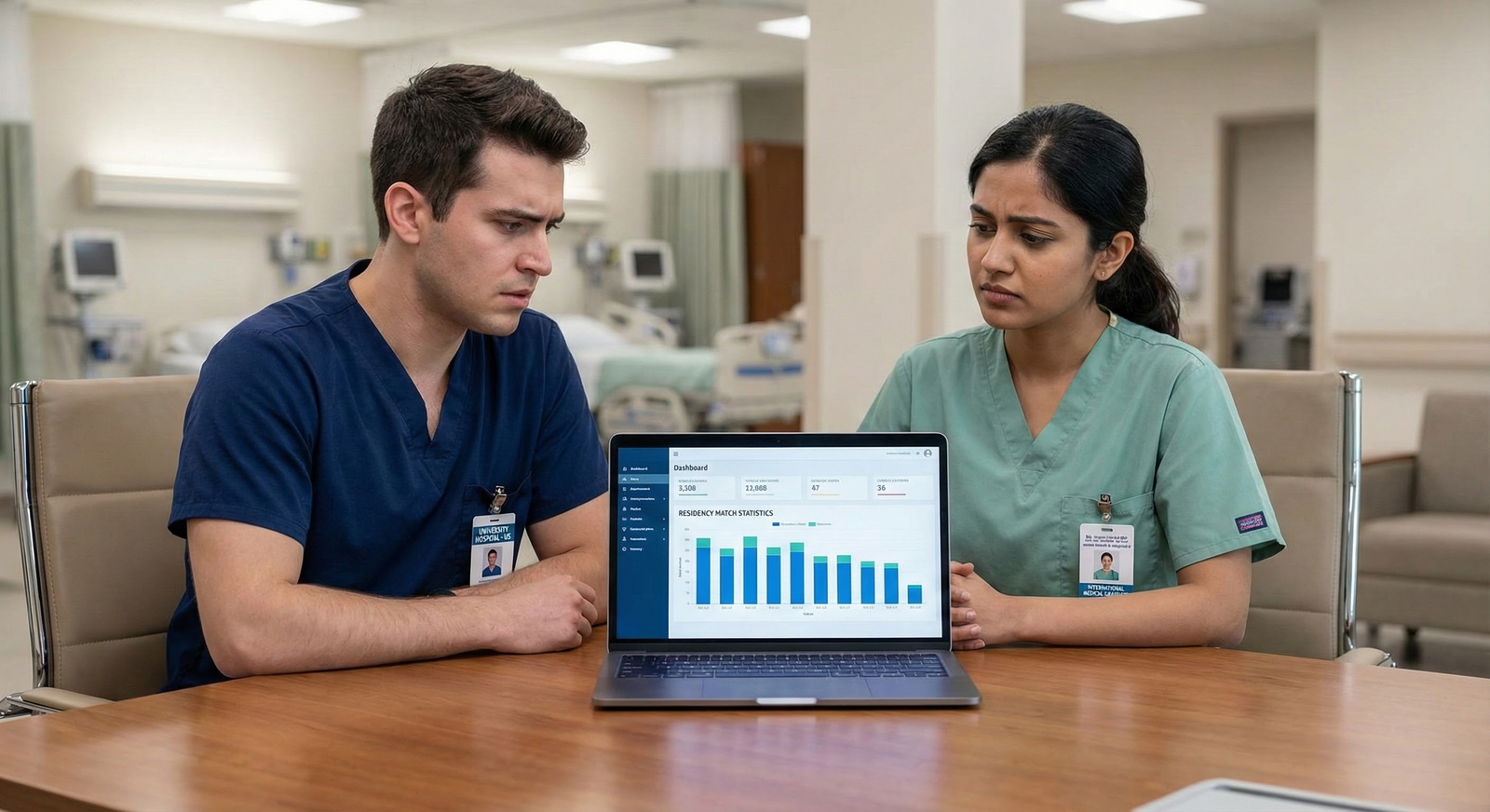
Southern California is one of the most desirable regions in the country for residency—sun, surf, strong academic centers, and competitive community programs. That also means many applicants worry that a low Step 1 score or below average board scores automatically take them out of the running for a Southern California residency.
They don’t.
You will need to be more strategic, realistic, and deliberate than peers with higher scores, but matching is still possible—especially if you understand how SoCal medical training programs think and what you can do now to strengthen your file.
Below is a comprehensive, practical guide to low Step score strategies for residency programs in Southern California, with specific advice for both US MD/DO and international graduates.
Understanding the Southern California Residency Landscape
Before planning strategy, you need an accurate picture of the SoCal residency environment.
1. Spectrum of program competitiveness
Southern California includes:
Highly competitive academic centers
- Examples: UCLA, UC San Diego, UC Irvine, Cedars-Sinai, Loma Linda, Kaiser LA/Orange County, Children’s Hospital Los Angeles, Rady Children’s, USC-affiliated programs.
- These often receive thousands of applications for a small number of spots.
- Even with Step 1 now Pass/Fail, most still use Step 2 CK heavily to screen.
Mid-tier university-affiliated and large community programs
- Examples: Harbor-UCLA, Olive View-UCLA, Riverside, Arrowhead, Kern, Kaiser community sites, large county-affiliated hospitals.
- Still competitive, but often more holistic and flexible, especially for applicants who show strong fit and clinical performance.
Smaller community programs and newer residencies
- Often in Inland Empire or more suburban/exurban areas.
- These may be more open to matching with low scores, especially if you have clear ties to the region and solid letters.
2. How low is “low” in this context?
While each program differs, these rough benchmarks often trigger concern:
Step 1 (pre-Pass/Fail era)
- Below ~215–220 for moderately competitive specialties
- Below ~205–210 for primary care/internal medicine/psychiatry
- Any failure attempts
Step 2 CK
- Below ~220–225 often considered “below average board scores” at many SoCal programs
- Below ~210 is a significant concern for most specialties
- A failed attempt is a major red flag, but not necessarily fatal if explained and improved upon
For applicants with a low Step 1 score but a strong Step 2 CK, there is meaningful room to recover. For those with low Step 1 and low Step 2, you’ll need additional, targeted strategies.
Core Principles When Applying with Low Scores
Regardless of specialty, school background, or visa status, a few key principles apply to everyone trying to match in Southern California with lower-than-desired scores.
1. Understand that the narrative matters as much as the number
Most program directors don’t reject “low score” applicants simply because of the number itself, but because they worry it signals:
- Poor medical knowledge foundation
- Inconsistent work habits
- Risk of future board failures (which hurts program accreditation)
Your job is to replace that fear with a clear, evidence-based narrative:
- What happened? (concise, non-defensive)
- What did you change? (concrete strategies)
- What evidence shows you’re now reliable and safe? (Step 2 CK improvement, shelf scores, clinical performance, research productivity, strong letters)
2. Shift the focus to strengths you can control now
You can’t change existing exam scores. You can still change:
- Step 2 CK and Step 3 (if time allows)
- Clinical grades and evaluations
- Sub-internship (sub-I) performance, especially in SoCal
- Letters of recommendation (LORs)
- Research output and scholarly activity
- Personal statement, ERAS application quality
- Where you apply and how broadly you target programs
3. Realistic program selection is a key strategy, not an afterthought
Many unmatched applicants with low scores made the same core mistake: they only applied to dream coastal programs or over-weighted hyper-competitive SoCal academic centers.
To match in Southern California with low scores, you almost always need to:
- Apply to a mix of:
- SoCal academic and community programs
- Other California regions (Central Valley, Northern CA)
- Out-of-state programs (as match “insurance”)
- Use data (program fill rates, IMG friendliness, DO friendliness, Step cutoffs) instead of wishful thinking
Realism in program choice is not “giving up”—it’s smart risk management so you still achieve your long-term goals.

Concrete Application Strategies for Low Step Scores in SoCal
This section focuses on specific, actionable steps to improve your chances of matching with low scores into a Southern California residency.
1. Optimize Step 2 CK (and Step 3 if applicable)
a. Make Step 2 CK your redemption exam
With Step 1 now Pass/Fail for current students, Step 2 CK often becomes the primary objective measure. For those with numeric Step 1 scores that are low, CK is your best chance to show growth.
- Aim for at least 10–15 points above your Step 1 if both are numeric.
- For those with a low Step 1 score, a strong CK (≥ 235–240) can change how programs perceive you.
b. If CK is already low, consider Step 3 strategically
This is more relevant for:
- International medical graduates (IMGs)
- Prior unmatched applicants
- Those applying in a second cycle
A passed Step 3 can:
- Reduce anxiety about future board performance
- Make you more appealing to visa-sponsoring community programs
- Demonstrate academic maturity after a previous low score pattern
However:
- Only take Step 3 if you have dedicated time to prepare and a realistic chance to pass on the first attempt; another failed exam can worsen your situation.
2. Choose your specialty and track wisely
Not all specialties are created equal when dealing with low scores, particularly in a competitive region like Southern California.
More forgiving specialties (generally) in SoCal
- Family Medicine
- Internal Medicine (especially community programs)
- Psychiatry
- Pediatrics (some community-based programs)
- PM&R (select programs)
More challenging with low scores
- Dermatology, Plastic Surgery, Neurosurgery
- Orthopedics, Otolaryngology, Urology
- Ophthalmology
- Radiology (Diagnostic and IR), Anesthesiology in big academic centers
- Emergency Medicine in popular coastal programs
If you have a low Step 1 score and below average board scores overall, but are currently targeting a highly competitive specialty and you insist on staying in Southern California, understand that:
- You are in a very high-risk group for not matching.
- You may need to:
- Add a backup specialty
- Consider a preliminary year in IM or Surgery
- Look beyond SoCal for residency, with the goal of returning later for fellowship or practice
3. Build a compelling regional “fit” for Southern California
Residency programs in Southern California want trainees who:
- Are likely to stay in the region
- Understand and value the local patient population
- Have some sense of the high cost of living and are still committed
You can strengthen your SoCal “fit” even with low scores by:
- Highlighting meaningful connections:
- Grew up in the area or went to high school/college there
- Family or significant other in Southern California
- Prior work or clinical experience in SoCal
- Emphasizing language skills and cultural competence:
- Spanish, Vietnamese, Korean, Tagalog, Mandarin, or other common languages in the region
- Demonstrating passion for underserved populations:
- Experience with migrant health, border health, inner-city clinics, or county hospital systems
- Longitudinal volunteer work or public health projects
Work this into your:
- ERAS geographic preference signaling
- Personal statement and experiences section
- Emails to programs (where appropriate and professional)
4. Use away rotations and sub-internships strategically
For applicants with low scores, direct clinical exposure in SoCal can significantly change your odds.
a. Goals of a SoCal sub-I/away rotation
- Prove that you are clinically excellent, reliable, and hard-working
- Earn strong letters of recommendation from local faculty
- Become a known quantity within the residency (residents and faculty who will advocate for you)
- Demonstrate that you fit the culture and can work with their patient population
b. How to maximize the rotation
- Arrive over-prepared (review common cases, guidelines, and local patient demographics).
- Be the person who:
- Shows up early, stays until work is done, and helps the team
- Knows your patients better than anyone
- Admits mistakes, learns quickly, and never disappears during hard work
- Politely ask for specific feedback midway through the rotation and adjust.
A below-average score can be overshadowed if an influential attending writes:
“This student was among the top 10% of rotators I have worked with in the last five years and I would strongly rank them for our program.”
That kind of letter is gold in competitive regions.

Strengthening the Rest of Your Application
With low scores, every other component of your ERAS file needs to work harder for you. This is where many applicants can meaningfully shift their odds.
1. Letters of Recommendation (LORs)
For SoCal medical training programs, strong, specific LORs can outweigh low numerical scores.
Aim for:
- At least two letters in your chosen specialty, ideally from:
- Faculty at reputable institutions
- Leaders within the field (program directors, department chairs, clerkship directors)
- One letter from a clinical supervisor who can speak to your:
- Work ethic
- Reliability
- Ability to work with underserved or diverse populations
What makes a letter powerful:
- Concrete comparisons: “Top 5–10% of students I have ever worked with.”
- Specific anecdotes: “Handled a complex patient with language and social barriers with maturity beyond their level.”
- Direct reassurance: “Despite a lower board score, I have no concerns about this student’s ability to pass future board exams and perform well in residency.”
To achieve such letters, you must:
- Be visible and proactive on rotations.
- Ask for letters early and provide:
- Your CV
- Personal statement draft
- Summary of your work with them
- An honest note about your board performance and how you’ve improved
2. Personal Statement: Addressing low scores without over-focusing
Your personal statement should not become an essay about your low Step 1 score. However, ignoring it completely when it’s clearly a problem also seems evasive.
Balanced strategy:
- One short, focused paragraph (3–5 sentences) that:
- Briefly acknowledges the low score (or failure, if applicable).
- Offers a concise, non-excuse explanation (if there is a legitimate reason).
- Emphasizes how you changed your approach (study methods, wellness, time management).
- Ends with evidence of improvement (better clinical performance, higher subsequent exams).
Example structure:
“Early in medical school, I struggled with standardized exam preparation and performed below my expectations on Step 1. I realized that my approach was overly passive and unfocused. In response, I sought mentorship, adopted a more structured question-based learning strategy, and refined my time management. These changes led to a significant improvement on my shelf exams and Step 2 CK, and, more importantly, have made me a more disciplined and reflective learner. I am confident that the habits I have developed will support my success in residency and beyond.”
Then move on. The rest of the statement should sell your fit for the specialty and the region.
3. ERAS application details: polish matters
Programs often scan applications quickly initially. With low scores, you can’t afford careless errors.
- Use clear, outcomes-focused bullets in experiences:
- “Organized health education sessions for 200+ Spanish-speaking patients on diabetes management.”
- “Led QI project that reduced clinic no-show rate by 15% over six months.”
- Emphasize longitudinal commitment over scattered one-off activities.
- Tie activities to skills that programs value:
- Teamwork
- Systems-based practice
- Cultural humility
- Leadership
4. Research and scholarly activity
In Southern California, especially at academic centers, research can partially offset weaker scores by showing:
- Intellectual curiosity
- Persistence and follow-through
- Ability to contribute academically to the program
If you’re late in the game, you may not complete a large project, but you can still:
- Join ongoing projects as a data abstractor or chart reviewer
- Aim for:
- Case reports
- Conference posters
- Quality improvement presentations
Even modest scholarly output is better than none, especially if it aligns with SoCal health issues (immigrant health, homeless populations, chronic disease in underserved communities, etc.).
Interview and Post-Interview Strategy with Low Scores
If you secure interviews in Southern California despite low scores, you’ve already cleared a major hurdle. Programs have decided they are at least open to you. Your performance from here matters enormously.
1. Be ready to discuss your scores confidently
Expect a version of:
“Can you tell us about your Step performance?”
Key principles:
- Be honest and concise; avoid long stories.
- Accept responsibility rather than blaming others or the exam itself.
- Emphasize:
- What you learned
- What you changed
- How the improvements you’ve made will help you as a resident
Programs want to see emotional maturity and growth, not perfection.
2. Highlight strengths that specifically matter in SoCal
During interviews, consciously emphasize:
- Experience with diverse and underserved patients
- Comfort working with limited English proficiency (if you have language skills, mention them concretely)
- Understanding that living in SoCal is expensive and you’ve thought this through (especially if you have family support, scholarships, or other realistic financial planning)
Program directors in Southern California often worry about residents leaving due to cost of living or culture shock. Showing you are committed to the region is an advantage.
3. Sending post-interview communication
If programs indicate that post-interview emails are acceptable:
- Send brief, specific thank-you notes to interviewers.
- Reiterate:
- Your interest in the program
- What you appreciated about their training environment
- Why you see yourself fitting there long-term
Never exaggerate or promise to rank #1 unless you truly mean it and are following NRMP rules.
Putting It All Together: Sample Applicant Scenarios
To make these strategies more concrete, here are brief example profiles and what a realistic SoCal strategy could look like.
Scenario 1: US MD student, low Step 1, stronger CK
- Step 1: 208
- Step 2 CK: 237
- Interested in: Internal Medicine
- Wants: Southern California residency, preferably academic, but open
Strategy:
- Emphasize CK improvement and strong clinical grades in ERAS.
- Apply broadly across:
- SoCal academic + community IM programs
- Central & Northern California IM programs
- Out-of-state IM programs as backup
- Do a sub-I at a SoCal program to gain visibility.
- Seek letters from:
- Sub-I attending in SoCal
- IM clerkship director
- Research mentor (if applicable)
- Target programs known to interview applicants with some exam weaknesses but strong clinical performance (county hospitals, safety-net institutions).
Scenario 2: IMG, multiple below average scores, strong US clinical experience
- Step 1: Pass (borderline or previous low numeric)
- Step 2 CK: 215 on second attempt
- Step 3: Pass
- 6 months US clinical experience in community hospitals, strong letters
- Interested in: Family Medicine or Psychiatry
- Wants: To live in Southern California long-term
Strategy:
- Consider Family Medicine and Psychiatry as primary targets; apply very broadly in and outside California.
- Highlight:
- Step 3 pass
- Strong US letters
- Any SoCal clinical or family connections
- Focus on community programs and newer residencies in Southern California that are IMG-friendly.
- Demonstrate commitment to underserved care and continuity relationships, which many SoCal FM and Psych programs value.
- Accept that matching anywhere in the U.S. may be the critical first step; fellowship or job in SoCal can follow later.
Frequently Asked Questions (FAQ)
1. Can I realistically match into a Southern California residency with a low Step 1 score?
Yes, but it depends on several factors:
- Your Step 2 CK performance and any subsequent exams
- The specialty you’re applying into
- The type of program (academic vs community)
- Strength of your clinical performance, letters, and regional fit
You are more likely to succeed in primary care and less competitive specialties and at community or county-affiliated programs than at top-tier academic centers. However, strong clinical work and a compelling story have helped applicants overcome low scores even at competitive programs.
2. Should I explain my low scores in my personal statement or let my dean’s letter handle it?
If your score is significantly below average, if you have a failed attempt, or if the low score is inconsistent with otherwise strong performance, a brief explanation in the personal statement is usually wise. Keep it:
- Short
- Non-defensive
- Focused on what you changed and how you improved
Your dean’s letter (MSPE) may also mention it, but programs often appreciate hearing your perspective directly.
3. Is it worth doing an away rotation in Southern California if my scores are low?
For many low-score applicants, a SoCal sub-internship or acting internship is one of the highest-yield strategies:
- It lets you become a known quantity, rather than just a number on a page.
- You can earn strong local letters of recommendation.
- You demonstrate that you fit the patient population and working environment of the region.
It is most beneficial if:
- You already have a baseline of solid clinical skills.
- You intend to apply to that specific program or institution.
- You treat it as an extended interview and give your best effort daily.
4. If I can’t match in Southern California now, is it still possible to train or work there later?
Absolutely. Many physicians ultimately practice in Southern California after:
- Completing residency in another state or region
- Returning for fellowship at a SoCal program
- Joining SoCal practice groups or hospital systems later in their careers
If you have low Step scores, expanding your geographic options for residency can be a smart way to secure strong training now, and you can still aim for SoCal medical training at the fellowship or practice level in the future.
Low USMLE scores—even a low Step 1 score or below average board scores—do not automatically end your dream of training in Southern California. They do mean you must approach the process with strategy, honesty, and persistence. By maximizing later exams, excelling clinically, strengthening your letters and regional fit, and applying broadly and realistically, you can significantly improve your chances of matching with low scores into a Southern California residency that sets you up for a fulfilling career.