Understanding Your Situation: US Citizen IMG in Boston with a Low Step Score
If you’re a US citizen IMG or an American studying abroad facing a low Step score, Boston may feel like an especially intimidating target. Massachusetts residency programs—especially those in Boston—are known to be competitive, academically oriented, and often affiliated with prestigious institutions (Harvard, BU, Tufts, UMass, BIDMC, MGH, BMC, etc.).
Yet, a low Step 1 or Step 2 score does not automatically eliminate your chances. It does change your strategy.
In this guide, we’ll focus on:
- How Boston and Massachusetts residency programs think about below average board scores
- How a US citizen IMG can compensate strategically
- Concrete, step-by-step tactics for matching with low scores
- Boston-specific opportunities to stand out despite a low Step 1 score
Throughout, we’ll use the term “low Step score” to include:
- Step 1: Fail or well below national mean (for those who still have numeric scores)
- Step 2 CK: Below average board scores or borderline for your specialty
- For pass/fail Step 1: a fail attempt or a “pass” combined with weak Step 2 CK
Your goal is not to hide your scores. Your goal is to reframe your candidacy so that Boston residency programs can say, “Yes, the score is low, but the rest of this application is too strong to ignore.”
How Boston and Massachusetts Programs View Low Step Scores
Boston and Massachusetts residency programs operate in a dense academic ecosystem. Understanding their mindset will help you plan realistic, targeted strategies.
1. Academic Culture and Score Screens
Many Boston residency programs—especially at large academic centers—use score screens due to volume:
- Internal Medicine at major academic centers may have filters (for example) around Step 2 CK ≥ 220–230 (varies by program and year).
- Competitive specialties (Derm, Ortho, ENT, etc.) may have even higher thresholds.
- Some community or university-affiliated Massachusetts residency programs have more flexible or holistic review processes.
As a US citizen IMG, you may receive more holistic consideration than non–US citizen IMGs, but a low Step score can still trigger automatic filters.
What this means for you:
- You must target programs thoughtfully, not just aim for all “big-name” Boston institutions.
- You need a strong Step 2 CK if your Step 1 is weak or pass/fail.
- You should emphasize everything that isn’t a test score: clinical performance, US clinical experience (USCE), research, letters, and fit.
2. US Citizen IMG Advantage and Limitations
As a US citizen IMG, you have some advantages:
- No visa sponsorship concerns (a plus for some Massachusetts residency programs).
- Often more familiarity with US healthcare and culture.
- Some programs explicitly state they are more open to US citizen IMGs than non-citizen IMGs.
Limitations still present:
- Many Boston programs still prefer US MD/DO and non-IMG graduates.
- Low scores may still lead to automatic filters before your citizenship status is even considered.
Therefore, your strategy is about optimized positioning: leveraging your US citizenship while overcoming suspicion about your training environment and board performance.
3. Boston vs. Broader Massachusetts Strategy
Boston is crowded with highly competitive programs. If your priority is to train in Massachusetts, not necessarily in the city center, you should:
- Include community and community–university affiliated programs in Massachusetts (Worcester, Springfield, Lowell, Brockton, etc.).
- Use these programs to build regional ties and then use fellowship or future job applications to get into the Boston academic ecosystem later.
This “Massachusetts-first, Boston-later” approach is realistic for US citizen IMGs with low Step scores.

Academic Recovery: Maximizing Your Testing and Transcript Profile
You can’t erase a low score, but you can offset and contextualize it. For Boston residency programs, your later academic performance is key.
1. Crush Step 2 CK to Reframe a Low Step 1 Score
If Step 1 is low or you have a fail attempt, Step 2 CK becomes your critical “redemption exam.”
Action steps:
Delay Step 2 CK until you’re fully prepared
- If your Step 1 was low because of rushing, don’t repeat that mistake.
- Sacrificing a few months for a stronger Step 2 CK can significantly improve your competitiveness.
Use a structured study plan
- Question banks (e.g., UWorld) done in timed, random, exam mode.
- Daily mixed systems practice to simulate the real exam.
- Weekly self-assessment (e.g., NBME exams, UWSA) to monitor improvement.
Document the turnaround
- If you go from a low Step 1 to a significantly stronger Step 2 CK score, highlight this in your personal statement and ERAS experiences as evidence of resilience, insight, and growth.
Programs in Boston and across Massachusetts appreciate a “comeback story” when it’s supported by data and behavior change.
2. Clerkship Grades and Dean’s Letter (MSPE)
If you’re still in school or early in clinical training:
- Prioritize Honors or highest possible marks in core clerkships, especially Internal Medicine and Surgery.
- Ask your school how clerkship grades and narrative comments will appear in the MSPE so you can align your efforts.
For American studying abroad in the Caribbean or other regions:
- Some schools have fewer Honors distinctions; still, aim for the top percentiles because Boston programs will scrutinize:
- Clinical evaluations
- Comments on professionalism, teamwork, and responsibility
A pattern of strong clinical evaluations can reassure programs even when your Step scores are below average.
3. Additional Exams and Credentials (If Applicable)
Ways to further bolster your academic profile:
- Shelf Exams / Subject Exams: Strong performance can be mentioned in letters or the MSPE.
- Research Methods Courses, MPH, or other graduate coursework:
- Particularly attractive for academically oriented Boston residency programs.
- Use them to demonstrate you can handle rigorous, English-language academic work.
Emphasize any academic upward trajectory in your application narrative.
Strategic Program Selection in Boston and Massachusetts
Your choice of where to apply is as strategic as how you present yourself. US citizen IMGs with low Step scores need breadth, realism, and smart targeting.
1. Tiered Application Strategy
For matching with low scores, think in terms of tiers:
Reach Programs (Boston academics):
- Examples: major university hospitals, Harvard-affiliated, large academic centers.
- Keep expectations conservative: apply to several but don’t rely on them alone.
Target Programs (Massachusetts university-affiliated and strong community):
- Outside the Boston core or smaller Boston-affiliated hospitals.
- Emphasize fit, community service, or regional ties.
Safety Programs (Nationally, not just MA):
- Community-focused programs in other states more IMG-friendly.
- These increase your overall chance of matching, which is still the top priority.
As a US citizen IMG with a low Step score, a typical application volume for core specialties (like Internal Medicine, Family Medicine, Pediatrics) is often in the 60–120 program range, sometimes more depending on how low your boards are and your other strengths.
2. Identifying Massachusetts Residency Programs More Open to IMGs
Steps to find more receptive Boston or Massachusetts residency programs:
Use program websites and FREIDA:
- Look for “We accept IMGs” or “We require X years of US clinical experience.”
- Check if there’s a minimum Step score listed and whether they sponsor visas (programs that sponsor J-1 or H-1B are often more open to IMGs in general).
Examine current residents’ profiles:
- Do they include IMGs? US citizen IMG? Caribbean graduates?
- Note schools and regions represented (e.g., Caribbean, Eastern Europe, Latin America).
Email program coordinators (carefully):
- Politely ask if they consider applicants with a low Step 1 score or US citizen IMG backgrounds.
- Don’t over-explain or apologize in the first email—just a concise inquiry about minimum requirements and IMG eligibility.
Network with current or former residents:
- Use LinkedIn, school alumni groups, or social media.
- Ask: “How does your program view US citizen IMG applicants with below average board scores?”
- Their insight can prevent wasted applications.
3. Specialty Choice Matters
For Boston:
More feasible (for low scores):
- Internal Medicine (academic and community)
- Family Medicine
- Pediatrics (selected programs)
- Psychiatry (though increasingly competitive)
- Transitional Year / Preliminary Medicine/Surgery (as a stepping stone)
High risk with low scores (especially in Boston):
- Dermatology, Orthopedics, Plastic Surgery, Neurosurgery, ENT
- Emergency Medicine is increasingly competitive and may be challenging with weak boards, especially in Boston.
If you’re set on a competitive specialty, consider:
- Applying broadly outside of Boston for that specialty AND
- Applying more realistically within Boston and Massachusetts for a backup specialty (e.g., Internal Medicine, Family Medicine) that keeps you in the region you want.

Strengthening the Rest of Your Application: Beyond Test Scores
Low Step scores push everything else into the spotlight. Boston residency programs will look carefully at how you perform and present yourself in all other domains.
1. High-Impact US Clinical Experience (USCE) in Boston or Massachusetts
For an American studying abroad or any US citizen IMG, quality USCE is one of the most powerful tools you have.
Aim for:
- Hands-on electives, sub-internships (“sub-Is”), or acting internships in your target specialty.
- Preferably in Boston or neighboring Massachusetts hospitals to demonstrate regional interest and familiarity.
To maximize impact:
Treat every day like a month-long interview:
- Show up early, stay late.
- Take responsibility for knowing your patients thoroughly.
- Volunteer for presentations, teaching moments, and extra tasks.
Make it easy for attendings to write strong, personalized letters of recommendation:
- Ask for feedback mid-rotation (“How can I improve?”).
- Ask at the end: “Do you feel you can write me a strong letter for residency?”
If your Step scores are low, ask attendings to explicitly address your clinical strength and reliability in their letters, helping to counterbalance test-based concerns.
2. Letters of Recommendation Tailored to Boston and Massachusetts
Letters carry extra weight when your numeric metrics are weaker.
Strive for:
- At least one US letter in your target specialty (e.g., Internal Medicine for IM programs).
- If possible, one letter from someone with name or institutional recognition in Boston or Massachusetts.
- Letters that are detailed and concrete, mentioning:
- Clinical reasoning
- Work ethic
- Communication skills
- Teamwork
- Reliability and improvement over time
If you have a mentor or attending in Boston, ask them to mention:
- Your strong desire to practice and train in Massachusetts
- How you understand the patient population and system demands in the region
This helps programs believe you’re a genuine regional fit, not just applying everywhere.
3. Research, Quality Improvement, and Academic Projects
While not absolutely required for all specialties, academic activity can help offset low Step scores, especially in academically-oriented Boston institutions.
High-yield approaches:
Join ongoing research or QI projects with faculty who are active in Boston or nearby Massachusetts institutions.
Even a small role (data collection, chart review, basic statistics) can lead to:
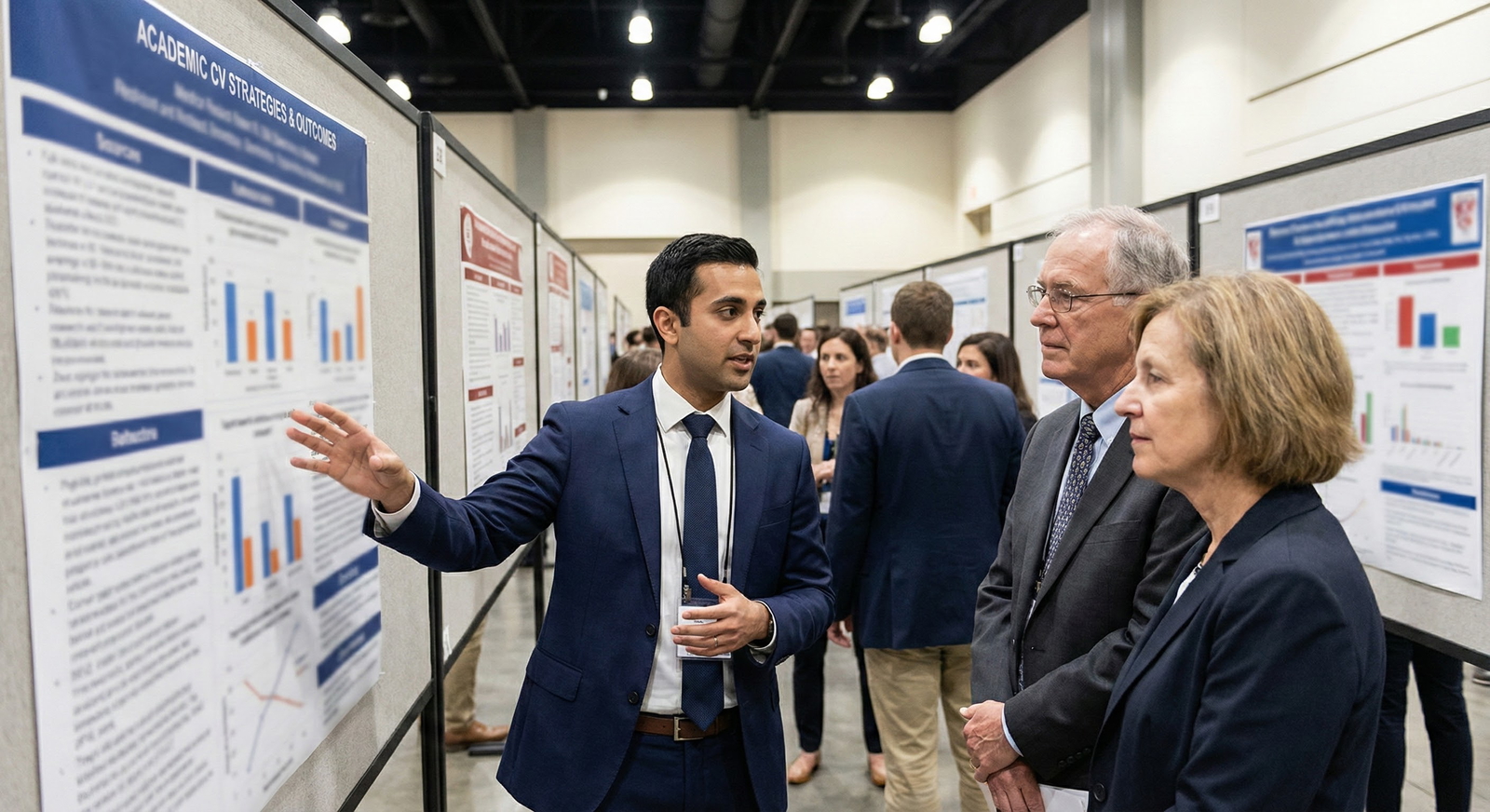
- Abstracts and posters at regional or national conferences
- Publications (case reports, brief reports, retrospective studies)
- Stronger letters from academic mentors
Emphasize projects that:
- Involve patient populations similar to those in Boston (urban underserved, immigrants, complex chronic disease).
- Are presented at New England or Boston-based conferences.
Make sure your ERAS entries clearly state outcomes (e.g., “Accepted poster at [Conference] in Boston, MA”).
4. Personal Statement: Owning and Reframing Low Scores
Your personal statement is not the place to offer excuses—but it is the place to take ownership and show growth.
If you have a low Step 1 score or below average board scores:
Briefly acknowledge it only if you can connect it to clear growth:
- “Early in my medical training, I struggled with standardized test strategies and time management, which was reflected in my Step 1 score. Recognizing this, I sought structured mentorship, revamped my study methods, and focused on integrating clinical knowledge. This commitment is reflected in my improved performance on Step 2 CK and my strong clinical evaluations.”
Then pivot quickly to:
- What you learned about yourself
- How you applied those lessons
- Evidence of change (Step 2, clinical evaluations, research productivity, etc.)
Also use the statement to:
- Show why you specifically want Massachusetts residency training (patient population, academic culture, family ties, previous experience in Boston).
- Demonstrate maturity, resilience, and long-term goals (e.g., community service in Boston neighborhoods, interest in academic medicine, QI, or primary care in Massachusetts).
Interviewing and Post-Interview Strategy for Boston Programs
Once you get interviews, your low Step scores matter far less than how you perform in person (or on Zoom). This is where your US citizen IMG background can genuinely shine.
1. Preparing for Boston-Style Interviews
Boston and Massachusetts residency programs often emphasize:
- Academic curiosity
- Comfort with diversity and complex cases
- Teamwork in high-volume, high-acuity settings
Prepare with:
Behavioral questions:
- “Tell me about a time you received critical feedback.”
- “Describe a challenging patient interaction and how you handled it.”
- “How do you manage stress and prevent burnout?”
Red-flag questions about scores or a fail:
- Have a concise, honest, and confident response.
- Example: “I learned the importance of early self-assessment and seeking help. After Step 1, I changed my approach, sought academic support, and my subsequent performance and clinical evaluations show how I’ve grown from that experience.”
Boston-specific questions:
- “Why Boston?” or “Why Massachusetts?”
- Have concrete reasons: mentors here, family, prior rotations, love of urban academic medicine, commitment to local communities, etc.
2. Using Your US Citizen IMG Identity as a Strength
As an American studying abroad or US citizen IMG, you can uniquely present yourself as:
- Someone who intentionally chose an international experience
- Comfortable in diverse, multicultural settings
- Deeply familiar with US healthcare expectations and culture
Frame this as:
- An asset in caring for Boston’s diverse patient population
- Evidence that you can adapt to different systems and still thrive
Programs may worry that a low Step score means you can’t handle pressure or complexity; your story should show the opposite.
3. Post-Interview Communication and Signaling
For Boston and Massachusetts programs that you’re especially interested in:
- Send sincere, specific thank-you emails after interviews.
- Later in the season, consider a well-crafted “letter of interest” for your top few programs (if they do not discourage it).
In your follow-up communications:
- Briefly reiterate your genuine interest in their specific program and Boston/Massachusetts.
- Highlight one or two aspects of the interview day that resonated with you (e.g., resident camaraderie, patient population, robust teaching, commitment to underserved care).
- If you have an update (new publication, Step 2 CK score, new research or leadership role), mention it concisely.
Always follow NRMP rules; never ask programs how they rank applicants or promise anything you cannot fulfill.
Frequently Asked Questions (FAQ)
1. Can I still match into a Boston residency program with a low Step 1 score as a US citizen IMG?
Yes, it’s possible, but you must be strategic and realistic. Most US citizen IMGs with low scores who match in Boston do so by:
- Achieving a stronger Step 2 CK score
- Securing excellent US clinical experience and letters in Boston or Massachusetts
- Applying to a broad range of programs, including community and university-affiliated hospitals
- Demonstrating strong fit with the region and specialty
You may have to broaden your specialty or program list, but Boston is not completely out of reach.
2. What counts as a “low” Step score for Massachusetts residency programs?
It varies by specialty and program, but generally:
- For medicine-based specialties, scores significantly below the national mean (for your year) are considered “low.”
- Some Boston academic centers use score cutoffs that are above average; community or smaller programs may be more flexible.
- A Step 1 fail attempt is a stronger red flag, but can be partly offset by a strong Step 2 CK and strong clinical performance.
Your focus should be on optimizing Step 2 CK and strengthening all non-test components of your application.
3. How many programs should I apply to as a US citizen IMG with below average board scores?
For core specialties like Internal Medicine, Family Medicine, or Pediatrics:
- Many US citizen IMGs with low Step scores apply to 60–120+ programs, depending on how low their scores are and the strength of the rest of their application.
- If you’re targeting Boston and Massachusetts residency programs, you should still apply broadly across multiple states so you don’t overly concentrate your risk in a single competitive region.
Work with your dean’s office or an advisor experienced with IMG outcomes to tailor your number.
4. Will doing an observership or externship in Boston help me if my Step scores are low?
Yes—if the experience is structured and leads to strong relationships and letters. Observerships alone are less impactful than hands-on electives or sub-internships, but they can still:
- Help you understand the local healthcare environment
- Allow you to network with attendings and residents
- Lead to letters of recommendation if you’re closely involved and demonstrate your clinical knowledge and professionalism
Whenever possible, prioritize hands-on, supervised clinical experience (sub-Is, electives) in Boston or Massachusetts over purely observational roles.
A low Step score does not define your entire application, and it doesn’t erase your potential to become an excellent physician in Boston or anywhere else. As a US citizen IMG, you have meaningful advantages—use them intentionally, build your profile beyond numbers, and approach the process with honesty, resilience, and strategy.