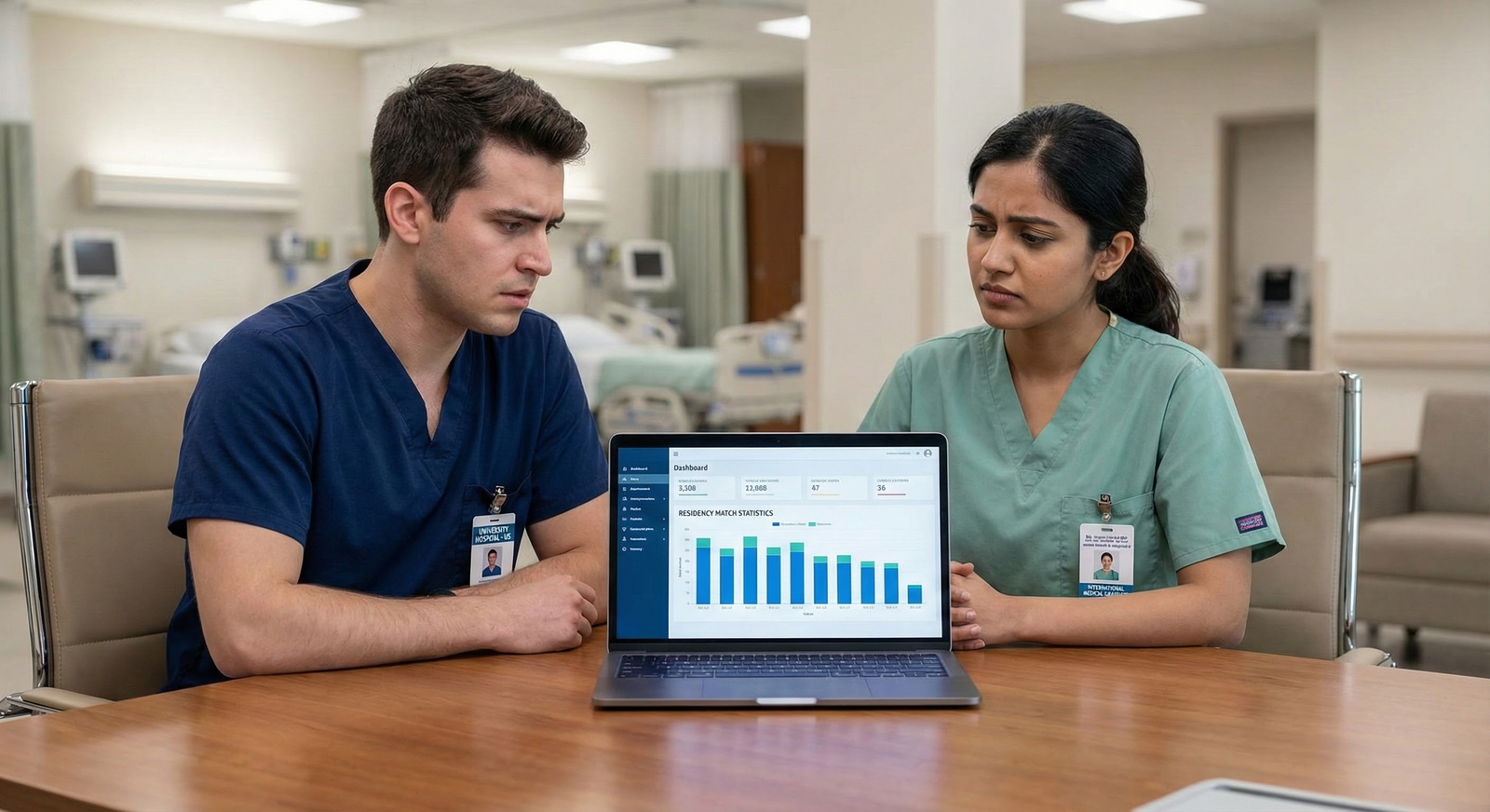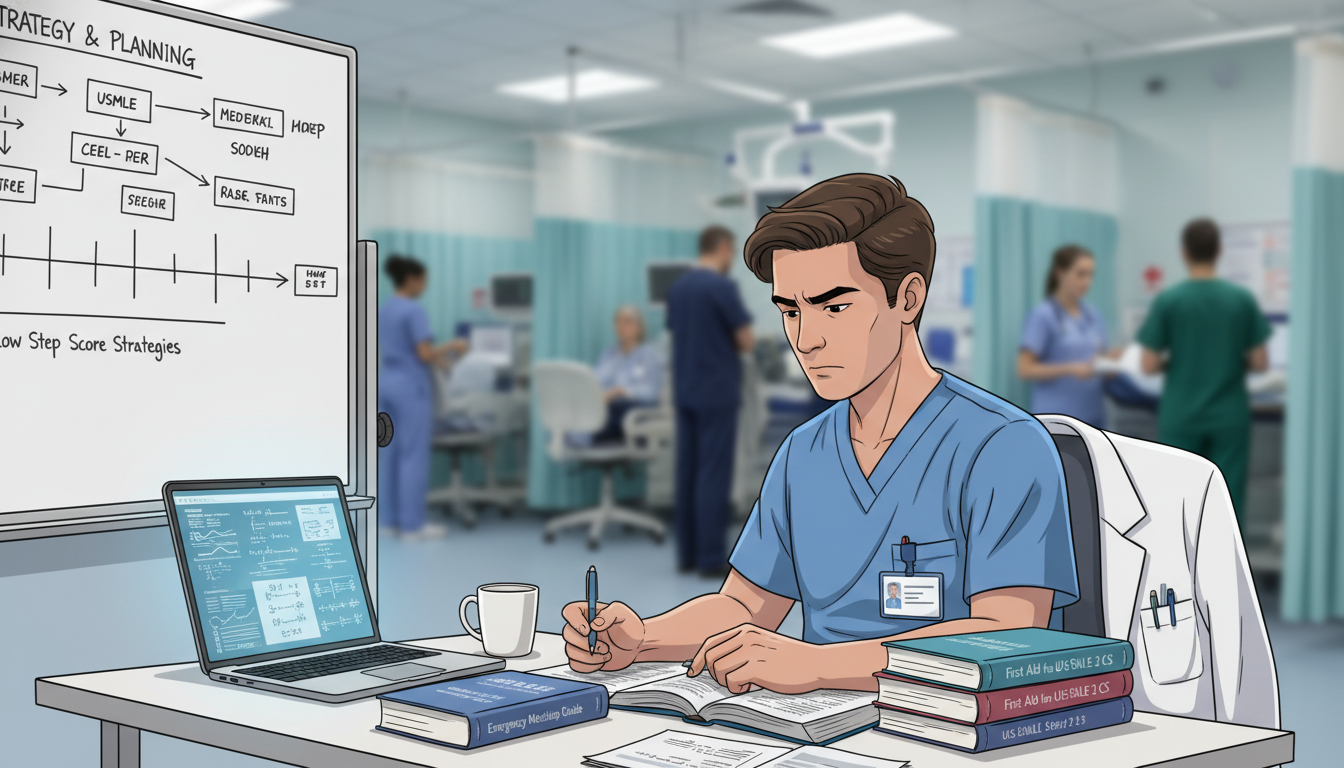
Understanding the Challenge: Low Scores, EM, and the US Citizen IMG Reality
Emergency Medicine (EM) is no longer a quiet backup specialty. It’s competitive, and program directors get far more applications than they can review in depth. For a US citizen IMG or American studying abroad, a low Step 1 score or generally below average board scores can feel like a permanent barrier to an emergency medicine residency.
It isn’t.
You will have fewer automatic looks. You will need to be more strategic, more targeted, and more realistic. But matching with low scores is still possible—especially for a US citizen IMG who understands how to work the system, tell a strong story, and leverage the parts of the application that programs care about just as much (or more) than test scores.
This guide will walk you through:
- How EM programs actually use USMLE scores now
- How to offset low Step scores with clinical and application strengths
- How to build an EM-specific application strategy as a US citizen IMG
- How to choose programs wisely and expand your odds in the EM match
- Concrete timelines and action plans
Throughout, keep this principle in mind:
Scores get you through filters; the rest of your file gets you ranked.
Your job is to (1) survive the filters and (2) become unforgettable once you’re seen.
How EM Programs View Low Scores in the Current Era
Step 1 Pass/Fail and What “Low Score” Means Now
Even though Step 1 is now pass/fail, it doesn’t erase score stigma, especially for:
- Older Step 1 numeric scores that are low
- US citizen IMG from offshore or lesser-known schools
- Candidates retaking exams or with failures
When program directors talk about “low scores,” they are often thinking about:
- Previously numeric Step 1 < ~215–220
- Step 2 CK below the national mean (currently ~245+, varies by year)
- Any fail on Step 1, Step 2 CK, or COMLEX equivalents
For many US citizen IMGs, the biggest hit is a low Step 1 score (if numeric) and/or below average Step 2 CK—and EM is one of the specialties that tends to use score cutoffs during initial screening.
But this is only phase one. Many programs then look much more deeply at:
- EM rotations and SLOEs (Standardized Letters of Evaluation)
- Clinical performance trends (e.g., Step 2 > Step 1)
- Fit, professionalism, and communication skills
- Commitment to EM as a career
The Good News for US Citizen IMGs
As a US citizen IMG or American studying abroad, you do have some advantages over non-US IMGs:
- No visa requirement (major plus for many community and smaller academic programs)
- Often more familiarity with US culture and communication style
- Sometimes prior US residency, employment, or undergrad experience to highlight
Programs will still worry about:
- The rigor and reputation of your school
- Whether you’ve had strong US clinical experience (especially in EM)
- Whether your performance trend is upward or flat
Your goal is to be the US citizen IMG who clearly demonstrates:
“Yes, my board scores are lower than your average EM resident, but you can fully trust my clinical performance, commitment, and fit for your team.”
Academic Recovery: Turning Low Scores into a Comeback Story
Step 2 CK: Your Single Most Powerful Academic Tool
For an US citizen IMG with a low Step 1 or below average board scores, Step 2 CK is your redemption exam.
If you haven’t taken Step 2 CK yet:
- Treat this as the centerpiece of your recovery plan.
- Aim to outperform your Step 1 performance by at least 10–15 points (if you had a numeric Step 1).
- Even if you cannot reach a “top-tier” score, a meaningful upward trend earns attention.
Action steps:
Delay applications if needed
If you can realistically improve your Step 2 CK by delaying exam and ERAS submission by a few weeks (and still meet reasonable deadlines), do it. A stronger Step 2 CK is more valuable than being early by 2–3 weeks.Do an NBME-based study plan
- Use multiple NBME practice exams to gauge progress.
- Schedule Step 2 CK after you are consistently within your target range on practice tests.
- Focus heavily on weak systems and test-taking strategy, not just content.
Explain the story (if necessary)
If there was a clear reason for low Step 1 (illness, family crisis, lack of understanding of exam style), and your Step 2 shows a strong rebound, briefly address it in your personal statement or an ERAS “disadvantaged” or “context” section.
Keep it factual, not emotional, and finish with how you corrected the problem.
Using Clerkship and EM Rotation Grades as Evidence
When scores are weak, clinical performance becomes your proof of competence.
You want to be able to say through your file:
“When I’m with patients and a team, I perform at (or above) the level of my peers—my scores don’t tell the whole story.”
Prioritize:
- Honors/High Pass in core clerkships: Internal Medicine, Surgery, Pediatrics, Ob/Gyn, and especially any ED rotations
- Strong narrative comments in evaluations: phrases like “independent,” “hard-working,” “excellent communicator,” “team player”
- EM electives and sub-internships in the US, with SLOEs from EM programs
If you are still in school:
- Strategically front-load rotations where you can earn strong EM-related evaluations.
- Seek feedback early in every rotation and adjust quickly.
- Tell your attendings: “I’m aiming for EM and want to strengthen my clinical evaluations—what can I do better?”
If you’ve already graduated:
- Focus on securing US clinical experience (USCE), ideally in EM or acute care settings, and try to obtain letters from US physicians (even if not SLOEs, they matter).
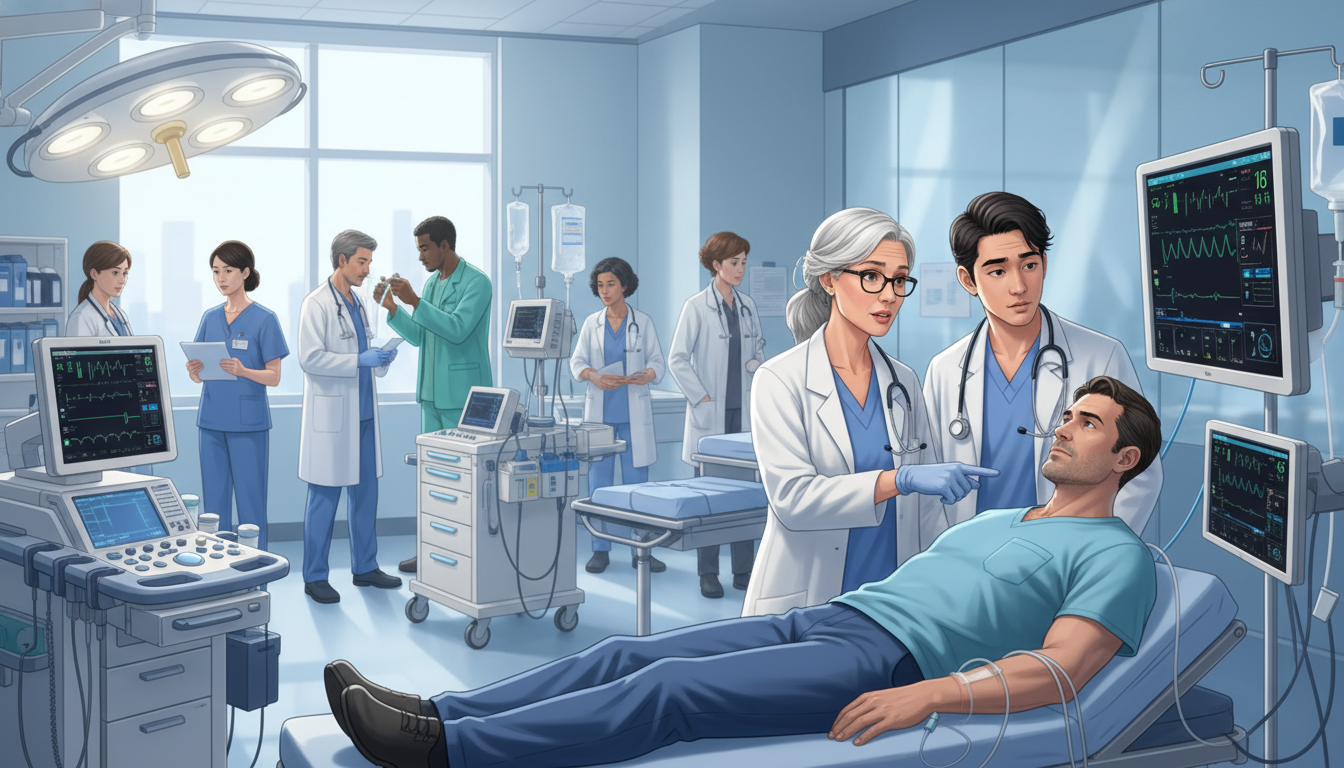
EM-Specific Application Strengths: SLOEs, Rotations, and Fit
In Emergency Medicine, SLOEs are king. For an applicant with low scores, they are often the single most important tool to overcome those numbers.
Maximizing SLOEs (Standardized Letters of Evaluation)
You should aim for at least 2 strong SLOEs, ideally from:
- A university-affiliated EM program
- A community EM program with a strong track record of placing residents
Tactics to optimize your SLOEs:
Choose your sites wisely
- Pick programs that are IMG-friendly and have a history of interviewing or matching US citizen IMG.
- Avoid rotations where you’ve heard the teaching is minimal and you’ll be invisible.
Perform like a sub-intern, not a visitor
- Be present early, stay late, seek tasks, and volunteer for procedures.
- Always be the one who asks: “Anything else I can do for the team before I go?”
Request feedback mid-rotation
Say something like:
“I’m hoping to match in EM and am working to overcome below average board scores. I’d really value your feedback on how I can strengthen my performance and my SLOE.”Clarify your need for a strong SLOE
Without begging, it’s reasonable near the end of a rotation to say:
“I’m applying to EM with less-than-ideal board scores, so clinical evaluations are very important for me. If you feel you can write a strong SLOE, I would be grateful.”
If an attending or program director seems hesitant, it’s a sign the letter may be lukewarm—not fatal, but you may want additional letters from stronger sites.
Aligning Your Story: Why EM, Why You, Why Now?
Program directors want residents who:
- Genuinely want EM, not just “anything that matches”
- Can handle chaos, interruptions, and fast decisions
- Are resilient, reliable, and teachable
Your personal statement, experiences section, and interviews should show:
- A consistent pattern of interest in acute care, procedures, or frontline medicine
(e.g., ED volunteering, EMS, paramedic/EMT work, ICU experiences, global health in emergency settings) - Evidence of team-based work, shift work, or high-stress environments
- Emotional maturity and self-awareness about your low scores and your growth since then
For example, for an American studying abroad at a Caribbean school:
“I chose an offshore medical school understanding the risks and challenges because I was determined to become a physician despite initial academic obstacles. My clinical rotations in busy US emergency departments confirmed that I thrive in high-acuity, team-based environments. While my earlier exam performance was below average, I learned to build systems for preparation and stress management that have carried into my clinical work, where I consistently performed at a high level.”
Avoid sounding apologetic. Own your story, show growth, and pivot to your strengths.
Building a Program Strategy: Where and How to Apply in EM With Low Scores
Be Honest About Competitiveness
With low Step 1 or below average board scores, it is risky to apply narrowly in EM, especially to only the “name-brand” programs. As a US citizen IMG, you will likely need a broad and tiered strategy.
Factors that improve your odds:
- Step 2 CK at or near the national mean (or sharply improved)
- No exam failures
- 2+ strong SLOEs
- Solid clinical evaluations and compelling personal story
If you have multiple red flags (exam failures, large time gaps, or professionalism issues), you need to significantly widen your net and consider applying to a backup specialty.
Tiers of EM Programs to Target
When building your list for the EM match, consider three tiers:
Tier 1 – More Receptive to US Citizen IMG with Lower Scores
These are often:
- Community-based or hybrid academic-community programs
- Located in non-major-coastal cities or less competitive regions
- Historically IMG-friendly
How to find them:
- Look at program websites and resident rosters: do you see US citizen IMGs or American studying abroad backgrounds?
- Talk to recent graduates from your school: where have they matched EM?
- Use NRMP Charting Outcomes and EMRA/ACEP resources to identify IMG-favorable patterns.
Tier 2 – Mixed Receptivity
These tend to be:
- Mid-sized academic centers
- Some university programs that are score-sensitive but flexible for strong clinical performers
You may still get looks here if:
- Your SLOEs are stellar
- Your Step 2 CK shows strong improvement
- Your story and fit are exceptional
Tier 3 – Highly Competitive or Score-Heavy Programs
These are:
- Elite academic centers
- Highly sought-after locations and “brand-name” EM programs
With low scores, you can apply to a few if you have resources and special ties, but do not build your list around them.
How Many Programs Should You Apply To?
Numbers vary by year, but for a US citizen IMG with low scores aiming for EM only:
- 35–60 EM programs is a reasonable target range for most
- More if:
- You have exam failures
- You have limited or no SLOEs
- Your Step 2 CK is well below average
If you’re applying EM plus a backup specialty (e.g., IM or FM), you can:
- Apply to 25–40 EM programs and a similar number of backup programs
- Keep your personal statements and ERAS experiences appropriately tailored
Remember: A focused but broad EM list beats shotgunning the same 10 very competitive programs.

Application Packaging: Crafting an EM File That Outshines Your Scores
Personal Statement for the Low-Score US Citizen IMG in EM
Your personal statement should not be a long apology. It should:
- Briefly acknowledge any major academic red flag (if not addressed elsewhere).
- Emphasize what you’ve learned and how you’ve grown.
- Highlight 2–3 specific EM-related experiences that show:
- Teamwork under pressure
- Comfort with uncertainty
- Commitment to patient-centered, fast-paced care
Example structure:
- Opening: A concise clinical moment that shows EM’s appeal to you.
- Middle: Your path as a US citizen IMG/American studying abroad, acknowledging low Step 1 or board scores if key to your story, and focusing on your adaptation and improvement.
- Closing: Clear statement of commitment to EM and how you see yourself contributing to a residency’s culture (work ethic, teaching, community engagement, etc.).
Avoid:
- Rehashing your entire life story
- Making excuses or blaming your school, test writers, or “the system”
- Over-dramatizing hardship without linking it to concrete growth
CV and ERAS Experiences: Highlight EM-Relevant Strengths
Use your experiences to show:
Longstanding interest in EM/acute care
e.g., ED volunteer, scribe, EMT, lifeguard, ICU research, disaster relief, etc.Resilience and consistency
Sustained commitments over time, not short, scattered one-offs.Leadership and teamwork
Small leadership roles (student groups, team captain, project leader) are valuable when framed well.
For each activity, briefly describe impact and skills gained, not just duties.
For example, instead of:
“Emergency Department Scribe – documented patient encounters.”
Write:
“Documented 15–20 complex ED encounters per shift, improving efficiency of physician documentation and learning ED workflow, triage priorities, and interprofessional communication.”
Letters of Recommendation Beyond SLOEs
While SLOEs are primary, additional letters can help:
- EM faculty who know you well but didn’t write a formal SLOE.
- Non-EM attendings (IM, Surgery, ICU) who can strongly vouch for your clinical performance, work ethic, and reliability.
- A faculty member who can contextualize your low Step scores in light of your clinical excellence.
Aim for:
- 2 SLOEs
- 1–2 additional strong letters (from physicians who truly know your work)
Interview Strategy as a Low-Score EM Applicant
If you get EM interviews with low scores, you’ve already cleared the hardest hurdle. Now you must:
Own your story confidently
If asked about your scores:- Be brief, honest, and forward-looking.
- Example:
“My Step 1 performance reflected both inexperience with standardized exams and poor study planning. I recognized that early, overhauled my approach, and improved significantly on Step 2. More importantly, I’ve consistently performed at a high level clinically, as reflected in my SLOEs.”
Emphasize clinical strength and fit
- Tell specific stories of challenging ED cases or team interactions.
- Show that you understand the realities of EM (night shifts, boarding, burnout risk) and still want it.
Ask thoughtful questions
- About teaching, feedback, wellness, and EM-specific training (ultrasound, critical care, community exposure).
- Not just about schedules and vacation.
Follow up professionally
- A brief, sincere thank-you email is appropriate.
- Reiterate interest where genuine, especially for programs more likely to rank you highly.
Putting It All Together: Stepwise Plan for the EM Match With Low Scores
12–18 Months Before Applying
- Honestly assess your academic record and competitiveness.
- Plan your Step 2 CK timing and create a serious prep schedule.
- Arrange EM rotations in the US (ideally at least 2, with SLOE potential).
- Begin exploring which programs have matched US citizen IMG historically.
6–9 Months Before ERAS Opens
- Take Step 2 CK with adequate preparation; aim for your best possible score, not the earliest date.
- Complete at least one EM rotation early enough to generate a SLOE before ERAS submission.
- Start outlining your personal statement and updating your CV.
ERAS Season (June–September)
- Request and track SLOEs and other letters proactively.
- Finalize your personal statement tailored to Emergency Medicine.
- Build a broad and strategic list of EM programs, emphasizing IMG-friendly and mid-tier programs.
- Submit ERAS applications early but not at the expense of leaving out a strong Step 2 CK score if you can reasonably wait.
Interview Season
- Respond to invites quickly and schedule early dates when possible.
- For each program, research:
- Setting (academic vs community)
- EM training strengths (ultrasound, trauma, critical care)
- Resident culture and lifestyle
- Practice EM-specific interview questions:
- “Why EM?”
- “Tell me about a time you made a mistake.”
- “How do you deal with uncertainty in clinical decisions?”
- Be prepared with a concise, confident explanation of your low Step scores.
Rank List Time
- Rank programs based on:
- Fit and training quality
- Realistic sense of where you are competitive
- Your impressions during interviews (how you were treated matters)
- Don’t try to “game” the algorithm—rank in true order of preference.
FAQs: Low Step Score Strategies for US Citizen IMG in EM
1. Can a US citizen IMG match emergency medicine with a low Step 1 score?
Yes. US citizen IMGs with low Step 1 or below average board scores do match EM every year, especially when they:
- Show strong improvement on Step 2 CK
- Secure 2+ strong SLOEs from US EM rotations
- Apply broadly, including IMG-friendly programs
- Present a cohesive, EM-focused narrative and strong clinical performance
Your chances decrease as scores and red flags stack up, but they are not zero.
2. How low is “too low” to apply to EM at all?
There is no absolute cutoff that applies to everyone. But if you have:
- Multiple exam failures, and
- Step 2 CK well below the national mean, and/or
- No SLOEs or US EM experience
You should strongly consider:
- Applying EM plus a more IMG-friendly backup specialty, or
- Delaying application to strengthen your file (if still possible)
Discuss your situation with advisors familiar with EM and with graduates from your school who have matched or failed to match in EM.
3. How many EM rotations does a US citizen IMG need with low scores?
Generally:
- Minimum: 2 EM rotations with SLOEs
- Ideal: 2–3 EM rotations, with at least 2 yielding strong SLOEs
More rotations are not automatically better; quality and strength of SLOEs matter more than total number of rotations. Don’t over-rotate at the expense of Step 2 CK or other important aspects of your file.
4. Should I mention my low Step scores in my personal statement?
If your scores are simply “not great” but not catastrophic, you don’t need to highlight them. Let your improvement and clinical performance speak for you. If you have:
- A major red flag (failure, significant jump between Step 1 and 2), and
- A clear, honest, and growth-focused explanation
Then a brief mention in your personal statement or ERAS context section can help control the narrative. Keep it short, avoid blame, and finish by emphasizing what you changed and how you now perform.
Low scores do not define your capacity to be an excellent emergency physician. As a US citizen IMG or American studying abroad, you can still build a compelling EM application by mastering the controllable pieces: Step 2 CK, SLOEs, clinical performance, program strategy, and a mature, resilient narrative. Focus relentlessly on what you can improve now—and give programs every reason to look beyond the numbers.