As a US citizen IMG thinking about Miami residency programs, a low Step 1 or Step 2 score can feel like a door slamming shut. It isn’t. For an American studying abroad, particularly with ties to South Florida, there are targeted, realistic strategies that can help you remain competitive—even with a low Step score.
This guide focuses on low Step score strategies specifically for US citizen IMGs aiming for Miami and South Florida residency programs. You’ll learn how program directors think about scores, how to build a Miami-centric application, and how to explain below average board scores without letting them define you.
Understanding How Miami Programs View Low Step Scores
Step scores are often used as an early filter, not a complete judgment of your capability. For a US citizen IMG with a low Step 1 score or below average board scores, your task is to:
- Avoid automatic rejections where possible
- Give programs compelling reasons to look beyond your score
- Show a strong upward trend and local fit (especially important for Miami and South Florida)
What qualifies as a “low” Step score?
Definitions vary, but roughly:
Step 1 (pre-pass/fail era):
- Competitive: 230–250+
- Middle: 215–229
- Low: < 215 (especially < 210)
Step 2 CK (still numeric):
- Competitive: 240+
- Solid: 230–239
- Borderline / Low: 220–229
- Concerning: < 220, multiple attempts, or fails
If you are matching with low scores, your strategy matters more than your raw number.
How Miami and South Florida residency programs use scores
South Florida programs (especially in Miami) range from highly competitive academic centers to more community-focused residency programs. In general:
Academic programs in Miami (e.g., UM/Jackson, large university-based programs)
- May still have implicit or explicit cutoffs (often Step 2 CK ≥ 230 preferred; some won’t say publicly).
- Heavily value strong clinical and research experiences, especially in their hospitals.
- Less flexible with very low scores, but exceptions are made for extraordinary fit or local experience.
Community and smaller programs in South Florida
- More likely to consider US citizen IMGs with lower Step scores, especially with US clinical experience and strong letters.
- Value reliability, team fit, and language skills (Spanish and sometimes Haitian Creole can be a real advantage in Miami).
US citizen status helps
- Being a US citizen IMG is a real plus—they don’t have to sponsor visas, which is a major barrier for many IMGs. Use this advantage explicitly.
Key insight: In Miami, local connection + US citizenship + strong clinical performance can partially offset low Step scores. Your job is to make those factors impossible to ignore.
Step-by-Step Strategy if You Have a Low Step Score
1. Protect and maximize your Step 2 CK
For most US citizen IMGs with a low Step 1, Step 2 CK is your redemption exam.
Do not rush Step 2
- If your Step 1 is low, a weak Step 2 may reinforce concerns and close doors.
- Take an honest NBME self-assessment. Apply only when practice scores are in a range you’re willing to live with.
Aim for clear improvement
- Even if you can’t get a stellar score, going from:
- Step 1: 205 → Step 2: 225+
sends a strong signal of growth and adjustment to US-style exams.
- Step 1: 205 → Step 2: 225+
- Even if you can’t get a stellar score, going from:
Be strategic with timing
- For a Miami-focused applicant with low scores, try to have Step 2 CK done and reported by August–September of application season.
- This allows programs (including Miami residency programs) to see your upward trend early and potentially consider you despite a low Step 1.
If you already have a low Step 2 CK as well
- The strategy shifts from “redeem with Step 2” to “outwork everyone else in every other part of the application”:
- US clinical experience in Miami
- Strong letters from South Florida faculty
- Evidence of reliability and resilience
- Targeted, realistic specialty choices
- The strategy shifts from “redeem with Step 2” to “outwork everyone else in every other part of the application”:
2. Be disciplined about specialty choice
Some specialties remain brutally score-sensitive, especially for IMGs:
Very tough with low scores as an IMG:
- Dermatology, orthopedics, plastics, ENT, urology, ophthalmology, radiation oncology, neurosurgery.
- In Miami, these are extremely competitive even for US MDs.
Moderately competitive but possible with strong application and local ties:
- Emergency medicine, anesthesiology, some internal medicine programs, OB/GYN, some pediatrics programs.
More forgiving fields for US citizen IMGs with low scores:
- Family medicine
- Psychiatry
- Some internal medicine community programs
- Transitional/preliminary year positions (as stepping stones)
If your main priority is to match in South Florida, consider:
- Targeting less score-sensitive specialties first (e.g., Family Medicine or Psychiatry in Miami or nearby), then reassessing your future after residency.
- Building a “tiered list”:
- Tier 1: Realistic specialties in Miami/SoFla
- Tier 2: Same specialties elsewhere in Florida or neighboring states
- Tier 3: Broader US geography with programs known to be IMG-friendly and low-score tolerant
Building a Miami-Centric Application as a US Citizen IMG
For an American studying abroad who wants a South Florida residency, you must convince programs of three things:
- You understand their patient population and culture
- You are reliable and easy to work with
- You are committed to Miami / South Florida, not just using them as a backup region
1. Show real connection to Miami and South Florida
Programs in competitive areas often worry that IMGs will leave quickly or are applying to every region without preference. You want to show the opposite: you belong here.
Ways to demonstrate South Florida ties:
Personal ties
- Grew up in Miami, Broward, or Palm Beach County
- Family living in South Florida
- Spouse/partner working or studying in Miami
- Previous jobs or schooling in the area
Professional exposure
- US clinical rotations in Miami or South Florida, especially at hospitals with residency programs
- Shadowing and volunteer work with Miami-based clinics serving underserved or immigrant communities
- Public health or community outreach work in Little Havana, Hialeah, Homestead, Overtown, or other local communities
In your personal statement and interviews, explicitly connect your story to Miami:
- Talk about your familiarity with bilingual patient communication, immigrant health, and health disparities.
- Emphasize how being a US citizen IMG with multicultural experience prepares you to care for Miami’s diverse population.
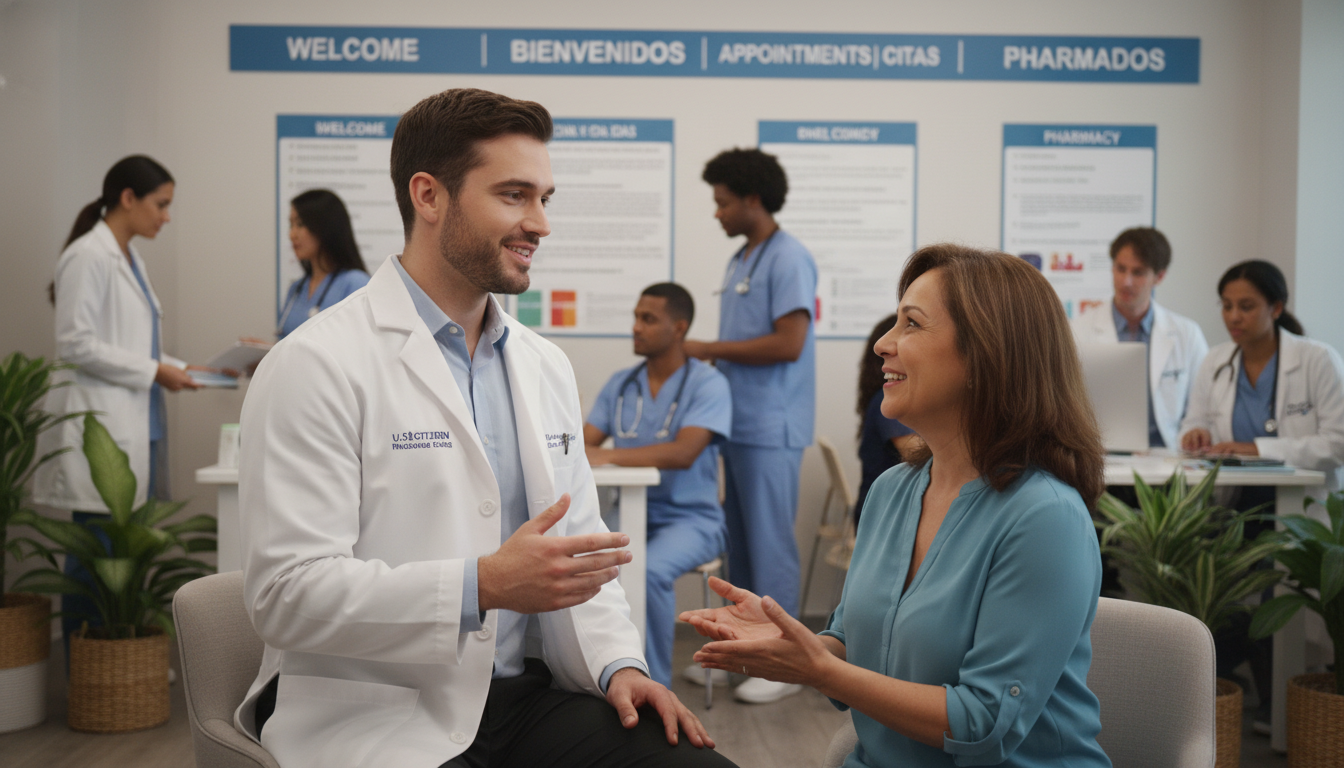
2. Prioritize US clinical experience in Miami or South Florida
For a US citizen IMG with low Step scores, South Florida based US clinical experience (USCE) can be the difference between being filtered out and getting an interview.
Focus on:
- Hands-on clinical electives or sub-internships at:
- Major academic centers in Miami
- Community hospitals with residency programs in Miami-Dade, Broward, or Palm Beach counties
- Letters of Recommendation (LoRs) from:
- US-trained attendings practicing in South Florida
- Faculty affiliated with residency programs in Miami if possible
Tips:
- Choose specialties aligned with what you’ll apply to
- If you’re applying to Internal Medicine, do Internal Medicine rotations in Miami (wards, ICU, clinic).
- Behave like a sub-I even if it’s called an “observership”
- Show up early, know your patients, be proactive, offer to help, ask for feedback.
- Ask specifically for strong, detailed letters
- “Doctor, I’m applying to Miami residency programs in [specialty] as a US citizen IMG with a low Step 1 score but strong clinical performance. Your detailed letter emphasizing my clinical skills and reliability would be incredibly valuable. Would you be comfortable writing that kind of letter for me?”
3. Highlight language skills and cultural competence
Miami programs serve a heavily Spanish-speaking and Caribbean population. If you speak:
- Spanish at a working clinical level, emphasize it everywhere (ERAS, CV, PS, interviews).
- Other relevant languages (Haitian Creole, Portuguese) – clearly state your proficiency.
Concrete ways to showcase this:
- List “Medical Spanish – Advanced/Fluent” on ERAS with examples (e.g., conducted patient interviews, helped interpret during rotations).
- Use your personal statement to describe specific patient encounters where language or cultural understanding improved care.
- In interviews for Miami residency programs, explain how bilingual communication allows you to reduce errors and build rapport quickly.
Explaining Low Scores Without Letting Them Define You
A low Step score is a data point, not your identity. Programs will ask—explicitly or silently—“Why did this happen, and what has changed?”
1. Craft your narrative: responsibility + resilience
When addressing a low Step 1 score or below average board scores, your explanation should:
- Accept responsibility without self-destruction
- Show clear change in behavior, strategy, and outcome
- Emphasize growth and maturity
Weak explanation:
“I had test anxiety and things didn’t go well.”
Stronger explanation:
“In preparation for Step 1, I underestimated the volume of material and relied too heavily on passive review. My score reflects that. Afterward, I sought structured guidance from faculty, shifted to active question-based learning, and implemented a strict study schedule. This change in approach is reflected in my improved clinical exam performance and my stronger Step 2 CK preparation and results.”
If Step 2 is still low, emphasize:
- Strong clinical evaluations (“Exceeds expectations” comments)
- Steady improvement on school exams or subject shelves
- Feedback from supervisors praising your clinical reasoning, reliability, and patient care.
2. Use the personal statement strategically
For a US citizen IMG matching with low scores, your personal statement should:
- Explain (briefly and factually) the low score if it’s likely to concern programs.
- Focus the majority of the content on:
- Your path as an American studying abroad
- Your commitment to Miami / South Florida
- Your clinical strengths and what it’s like to work with you
Recommended structure:
Opening story: A specific patient encounter or moment that ties together:
- Your interest in the specialty
- Your connection to Miami or communities like it
Training and growth:
- Describe how your international education gave you adaptability and diverse clinical exposure.
- Brief, factual mention of low Step score and what changed afterward.
Why this specialty and why Miami:
- Tie your clinical interests to local health needs in South Florida (e.g., diabetes, cardiovascular disease, immigrant health, mental health in underserved populations).
What you bring as a US citizen IMG:
- Bilingual skills, cultural competence, prior work experience in the US, familiarity with the system, and no visa requirement.
3. Secure letters that “overrule” your scores
Well-written, specific letters from Miami faculty or US attendings can blunt the impact of low scores. Ideal letters will:
- Explicitly state that you function at or above the level of current interns or residents.
- Give specific examples of:
- Handling complex patients
- Communication with staff and families
- Reliability under pressure
Example of what you want writers to mention:
“Despite a Step score below our usual threshold, [Applicant] consistently performed at the top of our student cohort clinically. I would rank [him/her/them] in the top 10% of students I’ve worked with over the past five years. I have no hesitation recommending [Applicant] for a residency position in Internal Medicine in any setting, including academic centers.”
Application Tactics: From ERAS List to Miami Interview
Low scores limit your margin of error. You must be strategic in:
- Program selection
- Timing
- Communication
- Post-interview follow-up

1. Build a realistic and diversified program list
For a US citizen IMG targeting South Florida residency spots with low scores:
- Include Miami and South Florida programs, but do not rely on them exclusively.
- Apply to:
- A core set of Miami programs in your specialty (including community-based ones).
- Other Florida programs known to consider IMGs.
- IMG-friendly programs across the US, especially in regions historically more open to IMGs and low Step scores.
Avoid:
- Overly top-heavy lists with mostly university programs that rarely take IMGs with low scores.
- Very narrow geographic focus (only Miami) unless you’re okay with a significant risk of not matching.
2. Use strategic signaling (where possible) and targeted outreach
If your specialty has program signaling (ERAS preference signals), use it:
- Signal programs in Miami and South Florida where you have the strongest fit:
- Rotated there
- Have strong letters from their attendings
- Have family or significant local ties
For targeted outreach:
- After ERAS season opens, you may send short, professional emails to PDs or coordinators:
- Reiterate your US citizen status, South Florida ties, and strong clinical performance.
- Mention specific rotation(s) at their institution if applicable.
- Keep it concise and respectful; never demand an interview.
3. Nail the interviews you do receive
With low scores, every interview is precious.
To stand out in Miami interviews:
- Know the program’s patient population
- Be ready to discuss local health issues: diabetes, obesity, cardiovascular disease, mental health, substance use, immigrant health challenges, language barriers.
- Emphasize your advantages as a US citizen IMG
- Familiarity with US systems, no visa needs, long-term plan to live and work in South Florida.
- Prepare a tight, confident answer to “Tell me about your scores”
- Practice until it sounds natural, not rehearsed.
- Ask smart questions about local training
- “How does your program address the needs of uninsured or undocumented patients in this community?”
- “What opportunities do residents have to engage in community health initiatives in Miami?”
4. Rank list strategy for low scores
On your rank list:
- Put programs in true order of preference; do not game the system by ranking unrealistic “reach” programs higher just because they are famous.
- Include all programs where you could reasonably see yourself training, not just the ones in Miami.
- If matching in the US at all is critical, be generous with your rank list length.
Emotional Reality and Long-Term Perspective
Being a US citizen IMG with low Step scores is stressful. Many applicants feel ashamed or defeated. Recognize:
- Your Step scores reflect performance on specific days, not your entire career potential.
- Many current residents and attendings in Miami had rocky exam histories but built successful careers through perseverance, reputation, and patient-centered care.
- If you remain unmatched:
- There are still re-entry routes:
- Research positions in Miami
- Additional US rotations
- Improved Step exams where possible (e.g., Step 3)
- Reapplying with a stronger profile
- There are still re-entry routes:
What matters most in the long run:
- Consistent clinical excellence
- Reputation among colleagues
- Professional behavior
- How you treat patients and teammates every day
Your journey as an American studying abroad already shows resilience and adaptability. Use that same mindset as you navigate the residency match.
FAQs: Low Step Score Strategies for US Citizen IMG in Miami
1. Can I match into a Miami residency program with a low Step 1 score?
Yes, it is possible, especially if:
- You are a US citizen IMG (no visa concerns)
- You show significant improvement on Step 2 CK or strong clinical evaluations
- You have US clinical experience in Miami or South Florida
- You obtain strong letters from local attendings
- You apply to realistic specialties and include community-based programs
It is harder for very competitive specialties, but more feasible in Family Medicine, Psychiatry, and some Internal Medicine and Pediatrics programs.
2. Should I delay my application to improve my Step 2 CK score?
If your Step 1 is low and your practice Step 2 scores are also low, it may be wise to:
- Delay taking Step 2 until your practice scores reach a range you can accept.
- However, don’t wait too late into the application cycle; programs like to see Step 2 early.
- Work closely with mentors to decide if applying this cycle vs. next makes more sense for you.
For many low-score US citizen IMGs, a strong Step 2 CK is the single best way to improve competitiveness.
3. How many programs should I apply to as a US citizen IMG with low scores?
Numbers vary, but applicants with below average board scores should generally:
- Apply broadly: often 60–100+ programs depending on the specialty competitiveness.
- For more competitive specialties, pair them with a backup specialty where your odds are better.
- Include a mix of:
- Miami and South Florida residency programs
- Other Florida programs
- IMG-friendly programs nationally
Work with an advisor or mentor familiar with IMG outcomes to tailor your list.
4. Is it worth doing unpaid observerships in Miami if I already have my degree?
Yes—if they’re well-chosen. For an American IMG focused on South Florida residency:
- Observerships or externships in Miami can:
- Provide US clinical exposure
- Lead to letters from local faculty
- Strengthen your local connection and understanding of the patient population
- They are most useful if:
- The supervising physician is involved with or well-known by residency programs.
- You are proactive, reliable, and ask for feedback and eventually a letter.
They are not a magic fix for low scores, but in combination with strong performance and strategic application planning, they can meaningfully help your chances of matching with low scores.
By focusing on strategic test-taking, Miami-centered experiences, honest narrative building, and disciplined program selection, a US citizen IMG with low Step scores can still build a compelling case for Miami and South Florida residency programs. Your scores may shape your path, but they do not have to end it.