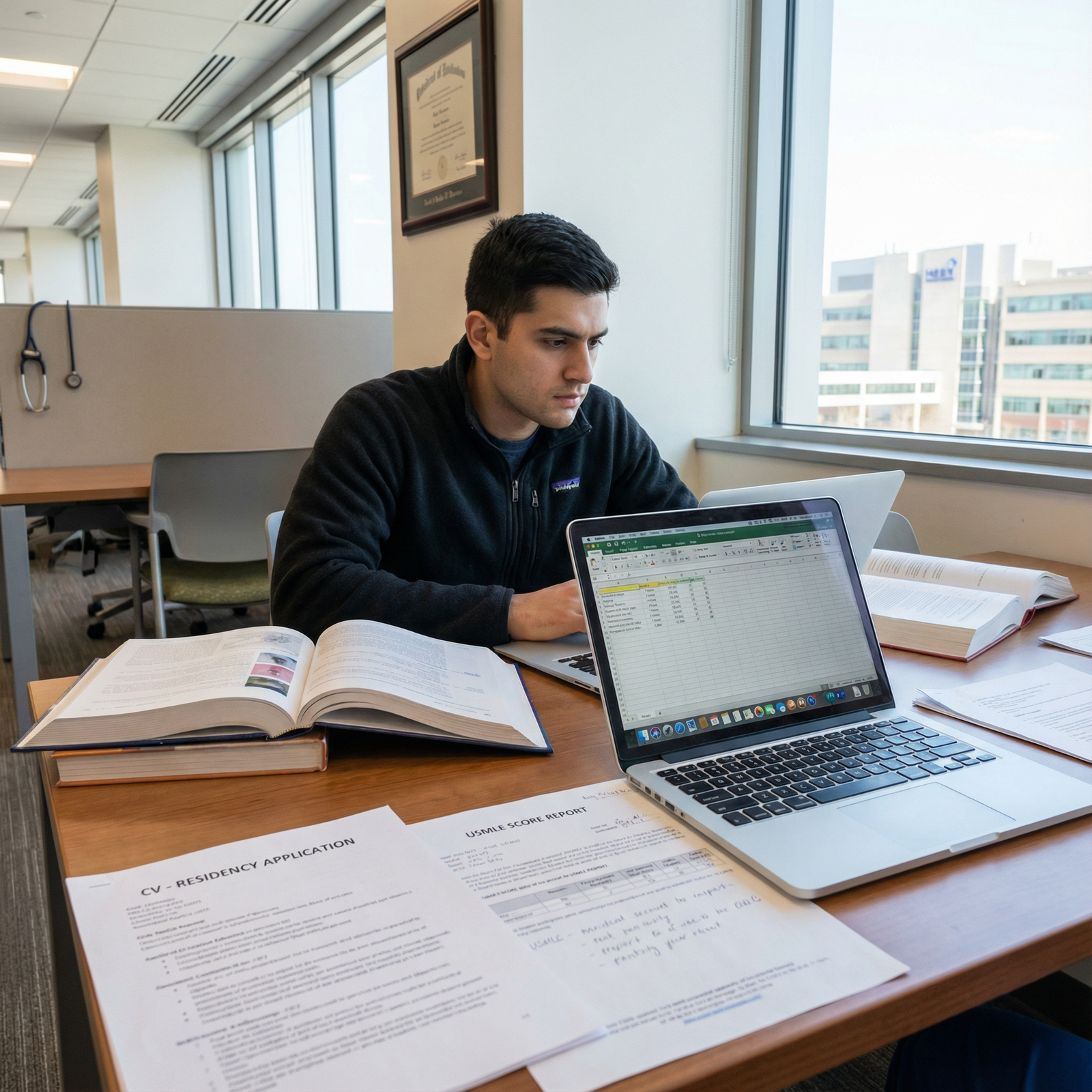
A low or below-average Step score feels devastating when you’re an American studying abroad and aiming for neurosurgery—a specialty known for its extreme competitiveness. But a low Step score does not automatically end your path to a brain surgery residency. It means you will need a different, more strategic, and more deliberate approach than classmates with 260+ scores.
This article is written specifically for the US citizen IMG neurosurgery aspirant who is worried about a low Step 1 score, Step 2 CK, or both. We will focus on realistic, concrete strategies that can move you from “unlikely” to “possible,” while also helping you protect your long-term career in neurosurgery and related fields.
Understanding the Real Impact of a Low Step Score in Neurosurgery
Before designing a strategy, you need a clear-eyed understanding of what you’re up against.
How programs think about scores in neurosurgery
Neurosurgery is among the most selective specialties in the US. Programs receive hundreds of applications for just a few spots. To manage volume, most programs use score thresholds and quick filters such as:
- USMD vs DO vs IMG
- Step 1 (now Pass/Fail, but prior numeric scores still matter for older cohorts)
- Step 2 CK numeric score
- Attempts and failures
- Graduation year
For a US citizen IMG, you are already considered “non-traditional” in program filters. When you add a low Step 1 or below average Step 2 CK, multiple risk flags are raised:
- “Will this person pass the boards?”
- “Do they cope poorly with stress/exams?”
- “If we have limited interview spots, should we gamble on an IMG with low scores?”
However, neurosurgery also has a strong “evidence and performance” culture. Program directors value demonstrated excellence in:
- Research productivity and impact
- Letters of recommendation from neurosurgeons they trust
- Clinical performance, especially in US hospitals
- Grit, resilience, and work ethic
That’s where you can fight back.
What counts as a “low” or “below average” score?
Score distributions shift over time, but for neurosurgery, you’re generally in a high-risk category if:
- Step 2 CK: < 235 (especially problematic below ~225)
- Failed Step 1 or Step 2 on first attempt
- Step 1 (for older cohorts): < 225 is very challenging; < 215 is severely limiting
Even with these numbers, matching with low scores is not impossible—but it is unusual in neurosurgery unless you compensate massively in other domains.
Strategic Mindset: Are You Willing to Play the Long Game?
A lot of US citizen IMGs in neurosurgery want a quick fix: “Which programs will still interview me with a 220?” That’s the wrong starting point.
If you have below average board scores, you must decide:
- Are you committed enough to neurosurgery to invest extra years (often 1–3) in research and networking?
- Are you open to alternative pathways (e.g., research track, preliminary surgery, or another specialty with future neurosurgical overlap)?
- Are you prepared to greatly outperform others in research productivity, away rotations, and clinical work to offset your scores?
This is less about a clever trick and more about radical differentiation.
Think of it this way:
High scores give applicants a ticket to be considered.
Low scores mean you must build such a strong non-score portfolio that people actively want you despite the risk.
Core Strategy Pillars for Low Step Scores in Neurosurgery
These are the major levers you can pull as a US citizen IMG to make neurosurgery still realistically possible.

1. Own your narrative: Address, don’t hide, the low scores
If you’re an American studying abroad, neurosurgery programs will ask: “Why did this US citizen go overseas?” and “What happened with these scores?”
You cannot control their assumptions—but you can control the story you present:
In your personal statement, briefly and professionally acknowledge:
- A Step failure or low score (if significant)
- Key contributing factors (e.g., initial misjudgment of exam style, health/family issue, under-resourced preclinical teaching abroad)
- The specific steps you took to fix the underlying problem (changed study strategies, dedicated USMLE prep courses, UWorld plus NBME tracking, tutoring, mental health support, etc.)
- Evidence of improvement: stronger later exams, in-service exams, shelf scores, research productivity, or clinical feedback
In interviews, be ready with a concise, non-defensive script:
- Acknowledge the score
- Take responsibility
- Emphasize what you learned and how that experience improved your discipline and resilience
- Redirect to your tangible strengths: research, clinical evaluations, commitment, and long-term goals
Programs are used to hearing excuses. Your edge comes from mature self-reflection and clear evidence of growth.
2. Build a research portfolio that screams “neurosurgeon”
For a US citizen IMG with a low Step 1 score or low Step 2, research is often the single most powerful compensator—especially US-based neurosurgery research with recognized faculty.
Target: 1–2 gap years in neurosurgery research (if possible)
If you’re early enough in your training, strongly consider:
- 1–2 dedicated research years at a US neurosurgery department
- Ideally at a major academic center known to train neurosurgeons
- Working under one or two specific faculty who are well-published and well-connected
What you want from those years:
- Multiple abstracts/posters at national/international meetings (AANS, CNS, NCS, etc.)
- Several publications, even if some are case reports, clinical series, scoping reviews, or database analyses
- Opportunities to present research—not just be a minor co-author
- Strong, detailed letters of recommendation highlighting:
- Work ethic
- Intellectual curiosity
- Reliability
- Contribution to manuscripts and study design
- How you compare to past residents/fellows
How to get a neurosurgery research position as a US citizen IMG
Use every connection:
E-mail neurosurgery department research coordinators or faculty with:
- A brief, well-written cover letter explaining your background, neurosurgery interest, and willingness to work hard
- A focused CV emphasizing any previous research or technical skills (stats, coding, imaging)
- Your status as a US citizen IMG is actually advantageous for visas (no sponsorship needed)—mention this clearly
Network at conferences (AANS, CNS, SNS) or local neurosurgery meetings. As a student, you can often get discounted registration or virtual attendance.
Leverage alumni from your international med school who matched neurosurgery or related fields; ask for introductions.
Example: How research changed an IMG’s trajectory
Imagine a US citizen IMG with:
- Step 1: Pass on second attempt
- Step 2 CK: 229
- No home neurosurgery program
He spends two full years at a US neurosurgery department:
- Publishes 6 papers (3 as first author)
- Presents 4 posters at AANS/CNS
- Gets a stellar letter describing him as “indistinguishable from our top USMD students”
His application is still risky, but now some program directors will say:
“Yes, scores are low, but this person has clearly committed and delivered at a high level in neurosurgery. Let’s interview him.”
That’s what you’re aiming for.
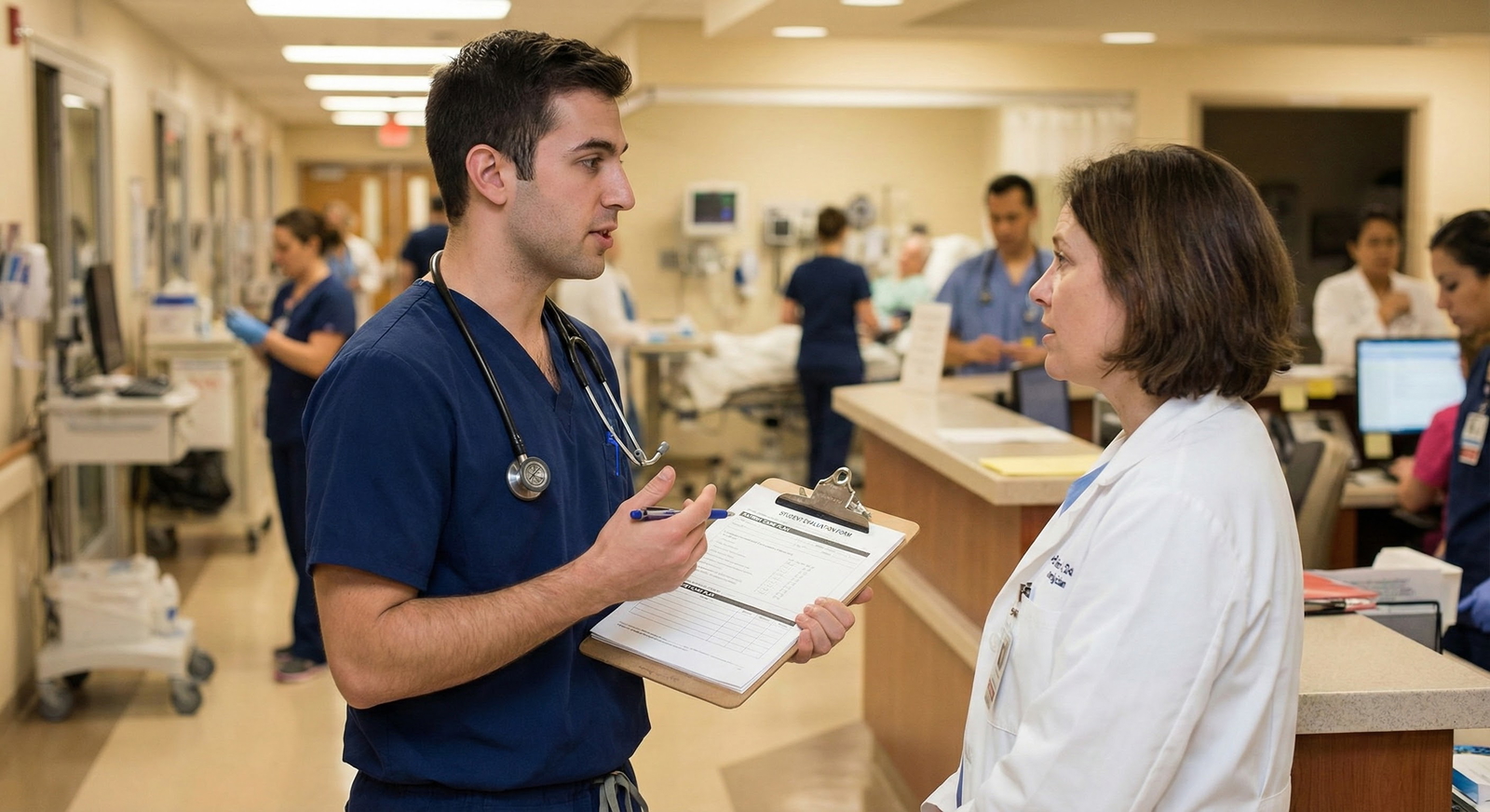
3. Maximize US clinical experience and sub-internships (aways)
For neurosurgery specifically, US-based clinical performance is a huge differentiator—especially for an American studying abroad.
Your goal: secure neurosurgery sub-internships (sub-Is) or advanced electives in the US, ideally at:
- Institutions with neurosurgery residencies
- Especially places where you’ve done research or have faculty advocates
What to focus on during a neurosurgery sub-I
Scores get you in the door—your performance on a sub-I can push you into the accepted circle even with low scores. During the rotation:
- Be the first one there and the last one to leave, consistently
- Learn the workflow: OR, ICU, wards, clinic
- Offer to write notes, present patients, and help with consults (within your allowed scope)
- Demonstrate operating room etiquette (proactivity, sterility, humility, focus)
- Read about every case the night before; show up with a brief understanding of the pathology, anatomy, and procedure
- Show consistent professionalism:
- Never complain about hours
- Always follow through on tasks
- Ask thoughtful, not performative, questions
Outcome: Letters that neutralize your scores
What you want is a letter that says, essentially:
“Yes, the applicant has below average board scores, but based on their actual performance in our neurosurgery service, I would rank them on par with our best US MD students. I have no doubt they will succeed in neurosurgical training.”
That kind of letter can override initial hesitations in some programs.
4. Targeted program selection: Aim where low scores are least fatal
Not all neurosurgery programs view US citizen IMG applicants the same way. With a low Step 1 or low Step 2 CK, you cannot apply as if you are a typical USMD with a 250.
You need a surgical strike strategy, not a spray-and-pray approach.

Build a data-informed program list
Go beyond word of mouth or Reddit anecdotes. Collect:
- List of all ACGME-accredited neurosurgery programs
- For each program:
- Past residents’ medical schools (from program websites)
- Presence of IMGs or DOs in current or past residents
- Known US citizen IMG neurosurgery residents (search LinkedIn, PubMed, institutional pages)
- Program size and geography (smaller/mid-tier programs sometimes more flexible)
Programs that have never taken an IMG or DO in recent years are very unlikely to bend for a low-score US citizen IMG. Your odds are better where there is precedent.
Application tiers for a low-score US citizen IMG
Consider dividing programs into:
Tier 1 – Realistic stretch programs
- Have history of IMGs/DOs
- You have a connection: research, away rotation, mentor email, or shared collaborator
- Location and reputation reasonable, but not top-10 ultra-elite
Tier 2 – Unlikely but justifiable reaches
- Minimal IMG presence, but strong connection (e.g., 2 years of research in that department)
- A mentor there directly encourages you to apply
Tier 3 – Long-shot for branding
- Top-tier programs where your research mentor has strong ties and is willing to lobby for you
- Use sparingly; they’re part of a balanced portfolio, not your main strategy
Given the competitiveness of neurosurgery, you may still need to apply broadly, but your expectations—and how you invest time in outreach—should focus on Tier 1 and Tier 2.
5. Demonstrate clear upward trajectory and exam resilience
A single low Step score is less worrying if everything after that score shows upward momentum.
If your low score was Step 1 (older cohort) and Step 2 is pending
You want Step 2 CK to:
- Beat the mean, or at minimum
- Be significantly higher than Step 1 (Ͼ10–15 points improvement)
This shows that your Step 1 challenges were transient and fixable.
If you already took Step 2 and it’s also low:
- Use other exam proxies:
- Strong NBME subject exam/shelf scores
- Strong in-service exam scores during an intern or research year (if applicable)
- Strong performance in any other standardized tests (where documented)
Then frame your story as:
“I had a rough early performance, but over time I learned how to manage exam preparation and stress. My clinical performance, research, and in-service metrics now align with someone capable of handling board certification.”
Practical exam resilience steps you should be ready to describe
- Changed study methods (e.g., active recall, spaced repetition, Q-banks instead of passive reading)
- Structured schedule with self-accountability
- Addressing sleep, anxiety, or health issues
- Seeking faculty or professional tutoring support
- Tracking NBME/assessment trends over time
Neurosurgery is high stakes. Showing that you’ve systematically fixed weaknesses reassures program directors.
Backup Paths and Contingency Planning
Even with all the right moves, neurosurgery as a US citizen IMG with a low Step score is statistically uncertain. You must plan parallel paths that keep your neurosurgical interests alive.
1. Surgical or neuro-adjacent specialties
Depending on your interests, you can consider:
- Neurology with subspecialty in neurocritical care, epilepsy, neuroimmunology, or vascular neurology
- Physical Medicine & Rehabilitation (PM&R) with spine, neurorehab, or pain focus
- Radiology with neuroradiology fellowship
- Anesthesiology with neuroanesthesia focus
- General surgery with later fellowship in surgical oncology, vascular, or spine-oriented fields
Each of these can keep you close to the nervous system, OR, or neuro ICU environment.
2. Delayed or alternative neurosurgery entry
Some rare but existing alternative routes:
Starting in general surgery residency, then later applying to neurosurgery with:
- Strong in-training performance
- Continued neurosurgery research
- Mentorship and advocacy
Pursuing a postdoctoral research fellowship in neurosurgery after another residency, then aiming for academic roles closely tied to neurosurgery services.
These are not common or guaranteed paths but they exist, particularly for people with unique research skills.
3. Protecting your long-term professional identity
You can still become a “neurosurgical expert” even if you don’t match neurosurgery directly:
- High-level research in neurosurgical topics
- Work in neuro-critical care, neuro-interventional fields, or spine surgery via ortho or pain pathways
- Academic roles in neuroscience, neural engineering, or clinical outcomes research
The key is to define “success” more broadly than simply “PGY-1 neurosurgery resident.” That mindset makes you more likely to take smart, long-term opportunities rather than desperate, short-term gambles.
Practical Action Plan: Step-by-Step for US Citizen IMG with Low Step Scores
To make this more concrete, here’s a sequenced roadmap you can adapt.
If you’re still in medical school (pre-graduation)
Assess your timeline and scores honestly.
- If Step 2 is pending, plan an all-out improvement effort.
- Consider delaying graduation if it gives time for research or sub-Is.
Secure at least one US neurosurgery research opportunity.
- Even 3–6 months during breaks can help.
- Aim to expand to 1–2 years if you can.
Plan US neurosurgery sub-Is strategically.
- Prioritize programs where you’re doing research or know faculty.
- Prepare aggressively before each rotation.
Start building your narrative early.
- Reflect: Why neurosurgery? What have you done to prove it?
- Keep a log of projects, cases, and feedback you can reference in ERAS and interviews.
If you’ve already graduated and are in a gap period
Commit to a full-time neurosurgery research role.
- Preferably at a US academic center; use your US citizenship advantage.
Work towards tangible outputs.
- Submit manuscripts, assist with database projects, learn basic stats.
Attend neurosurgery conferences.
- Present posters; meet faculty and residents.
Discuss your situation honestly with mentors.
- Ask: “Given my scores and performance, do you think neurosurgery is still realistic if I [do X, Y, Z]?”
- Accept feedback—but remember it’s one data point, not destiny.
Prepare a parallel application plan.
- Identify at least one backup specialty and research track you’d genuinely be happy in.
Final Thoughts: Turning a Weakness into a Signal of Strength
For a US citizen IMG with a low Step 1 score, low Step 2 CK, or both, neurosurgery residency is not a level playing field. Many program directors will screen out your application before they ever see your name.
Your mission is to force them to take a second look by building:
- Extraordinary neurosurgery research credentials
- Impeccable US clinical performance on neurosurgery rotations
- Powerful, specific letters from neurosurgeons who know your work deeply
- A mature, honest narrative of resilience and growth
This path is harder and longer than the typical route, and there are no guarantees. But if you’re truly committed—and willing to pursue both neurosurgery and neurosurgery-adjacent opportunities—you can build a meaningful career in this field, even starting from below average board scores.
FAQs: Low Step Score Strategies for US Citizen IMG in Neurosurgery
1. Is neurosurgery realistically possible for a US citizen IMG with low Step scores?
It’s possible but uncommon. Programs typically favor high-scoring USMDs. To have a realistic chance, you generally need:
- Strong US neurosurgery research (often 1–2 gap years)
- Excellent performance on neurosurgery sub-Is in the US
- Powerful letters from neurosurgeons who are known and trusted
- A clear story demonstrating resilience, growth, and long-term commitment
Without these elements, the odds are very low. With them, some programs will still consider you, especially those with prior IMG residents.
2. Should I retake Step exams or take extra exams to compensate?
If you failed Step 1 or Step 2, passing on a second attempt with a stronger performance helps, but it doesn’t erase the first failure. Programs still see the attempt history.
You generally cannot retake a passed Step exam solely to improve the score. Your focus should be on:
- Maximizing Step 2 CK (if not yet taken)
- Demonstrating improved academic performance via shelves, in-service exams, and strong clinical evaluations
- Building a robust research and clinical portfolio
Talk to an academic advisor or neurosurgery mentor before making any drastic exam-related decisions.
3. How many neurosurgery programs should I apply to with low Step scores?
If you proceed with neurosurgery:
- Many US citizen IMGs with low scores apply to most or all neurosurgery programs (60–110), but this is expensive.
- A more strategic approach is to:
- Apply broadly, but prioritize programs that have taken IMGs/DOs and where you have connections.
- Invest time in personalized communication and networking with about 20–30 programs where you have the best chance (research ties, away rotations, mentor advocacy).
No number guarantees interviews. Your network, letters, and portfolio matter more than simply the number of applications.
4. If I don’t match neurosurgery, will that ruin my career?
Not at all. Many excellent physicians with deep interest in the brain and spine work in:
- Neurology, neurocritical care, interventional neurology
- PM&R with spine/neurorehab focus
- Radiology with neuroradiology specialization
- Anesthesiology with neuroanesthesia focus
- General surgery, orthopedics, or pain with spine-oriented practice
You can still contribute to brain surgery research, collaborate with neurosurgeons, and build a respected academic or clinical career. A failed neurosurgery match cycle is painful, but it does not define your entire professional life.
By approaching your application as a long-term strategic project—not simply an ERAS submission—you maximize your chances of building a rewarding neurosurgery or neuro-adjacent career, even as a US citizen IMG with low Step scores.