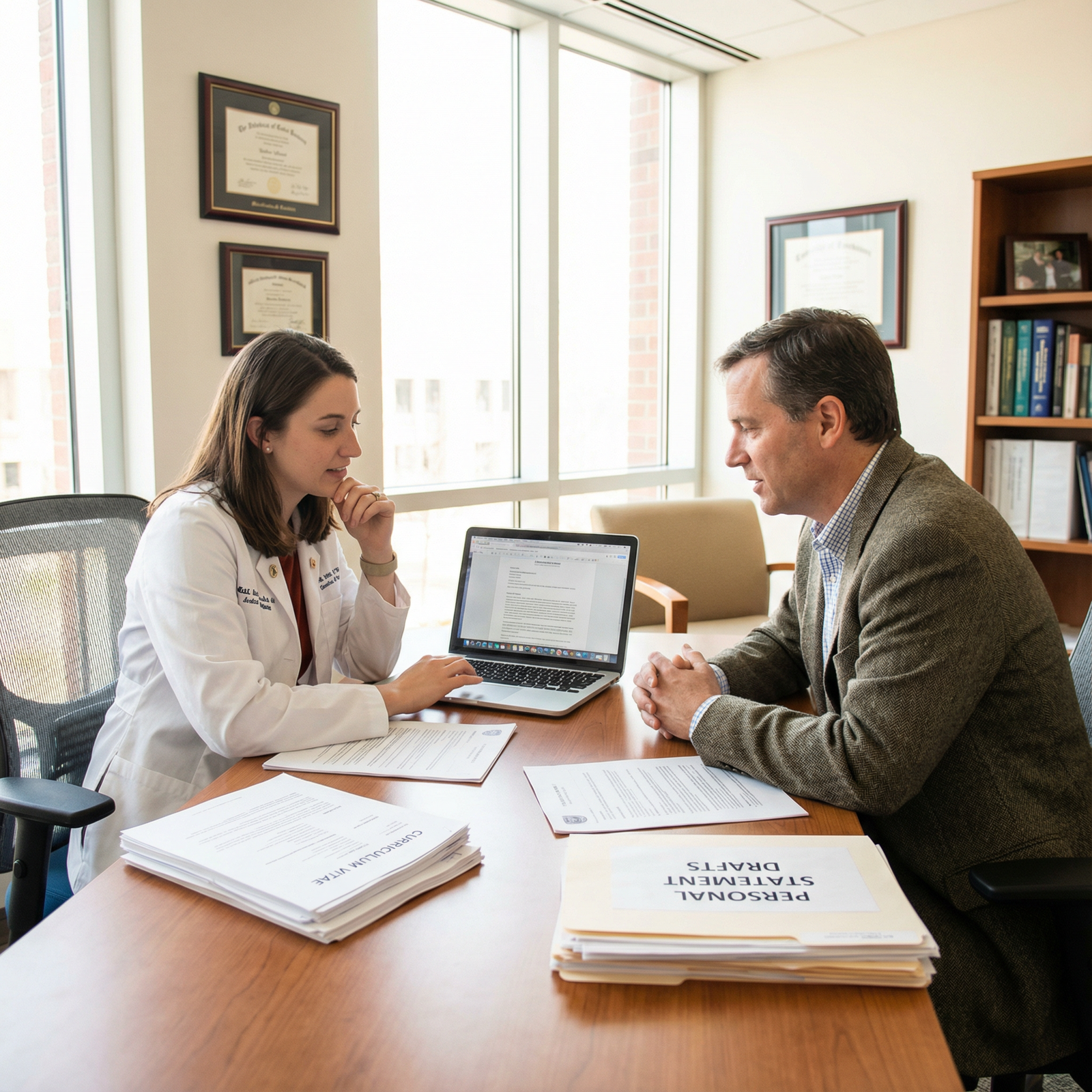
If you are a US citizen IMG or an American studying abroad facing the residency match with a low Step 1 score or below average board scores, you are not alone—especially in a competitive city like Chicago. While the road is steeper, matching is still possible with smart strategy, targeted effort, and realistic planning. This guide focuses on Low Step Score Strategies for US Citizen IMGs targeting Chicago residency programs and Illinois residency spots.
Understanding Your Starting Point as a US Citizen IMG in Chicago
Before choosing strategies, you need an accurate picture of your situation and how Chicago programs may view it.
What counts as a “low Step score” now?
Scoring has shifted with Step 1 becoming Pass/Fail. However, many IMGs still have a numeric Step 1 score (older cohorts), and Step 2 CK remains numeric and heavily weighted.
For the purpose of this article:
- Low Step 1 score: below the historic IMG-competitive range (often <220–225)
- Below average Step 2 CK: typically <225–230 for IMGs interested in internal medicine, pediatrics, family medicine, etc.
- “Low score” is specialty- and program-specific
- An internal medicine program at an academic center in Chicago might prefer Step 2 CK >235–240
- A community-based family medicine program outside downtown may be comfortable with 215–225 if the rest of your application is strong
How Chicago programs think about US Citizen IMGs
Being a US citizen IMG or American studying abroad gives certain advantages over non-US citizen IMGs:
- No visa sponsorship needed
- Often better cultural familiarity with US healthcare
- Sometimes perceived as lower administrative burden
However, you still compete in the IMG pool, and many Chicago residency programs receive thousands of applications. When your board scores are below average, your application must shine in other areas.
The Chicago and Illinois landscape
Chicago and greater Illinois have:
- Academic medical centers (e.g., university-affiliated hospitals)
- Large community teaching hospitals
- Smaller community programs and suburban/regional programs
- Safety-net and county hospitals
In general:
- Central/academic Chicago programs = more competitive
- Outlying/suburban or downstate Illinois residency = often more IMG-friendly and sometimes more flexible with lower scores
Your strategy:
Use Chicago as your base for clinical experience and networking, but cast a wide net across Illinois and nearby states for actual residency applications.
Strategic Self-Assessment: Score Profile, Specialty Choice, and Timeline
You cannot control your score now, but you can control what you do with it.
Step 1: Clarify your score profile
Make a concise “score snapshot” for yourself:
- Step 1: Pass/Fail or numeric (e.g., 205, 215, 225)
- Step 2 CK: numeric score and how it compares to national averages
- Number of attempts: single vs multiple attempts
- Any failures (Step 1, Step 2 CK, Step 3)
Be honest. A residency program director will see it in seconds; you should too.
Example profiles:
- Profile A: Step 1: Pass (first attempt), Step 2 CK: 218, no failures → Low but usable, especially for primary care
- Profile B: Step 1: 204 (1st), Step 2 CK: 224, 1 failure on Step 1 → Needs strong upward trend and explanation
- Profile C: Step 1: Pass, Step 2 CK: 236, no failures → Below the competitive range for some Chicago academic programs, but strong for many community and primary care programs
Step 2: Choose a specialty that fits your reality
With low scores, you must balance interest with probability of matching.
More IMG-friendly and more forgiving specialties (especially in community or regional programs):
- Internal Medicine
- Family Medicine
- Pediatrics (to a lesser extent)
- Psychiatry (competitive but still accessible if everything else is strong)
- Transitional Year / Preliminary Medicine (for certain long-term plans)
More competitive specialties that are very tough with low scores, especially in Chicago:
- Dermatology, Plastic Surgery, Orthopedics, ENT, Neurosurgery, Radiology, EM
- Competitive urban programs in any specialty, especially at big-name universities
If your dream field is highly competitive:
- Consider a two-step path: match into an IMG-friendly specialty first (e.g., IM), then consider fellowship, hospitalist roles, or academic paths that align with your interests.
Step 3: Map your timeline
As a US citizen IMG, your timeline might be nontraditional:
- Are you still in medical school abroad?
- Have you already graduated (and do you have a years since graduation concern)?
- Have you already applied once and gone unmatched?
Create a 12–24 month plan that includes:
- Remaining exams (Step 2 CK, Step 3 if feasible)
- US clinical experience (USCE) blocks in Chicago or Illinois
- Research, Quality Improvement (QI), or volunteer work
- ERAS application year and target Match year
This prevents last-minute panic and creates structured time to compensate for low scores.

Maximizing US Clinical Experience (USCE) in Chicago and Illinois
For US citizen IMGs with low Step scores, US clinical experience is often the single most powerful tool to offset test numbers—especially if you leverage Chicago’s dense network of hospitals.
Prioritize hands-on inpatient experiences
Not all USCE is equal. In the eyes of Chicago residency programs, stronger experiences include:
- Inpatient, hands-on electives or sub-internships
- Direct patient contact, note writing, and order entry (under supervision)
- Observerships are helpful but lower impact than hands-on experience
Target:
- Core-related rotations (IM, FM, Pediatrics, Psychiatry) in the specialty you are applying to
- At least 2–3 months of solid USCE, more if your graduation date gap or scores are problematic
Where to seek USCE in Chicago and nearby
Options include:
- University-affiliated teaching hospitals
- Higher profile letters, but more competitive to obtain
- Can be advantageous even if you eventually match at a community program
- Large community hospitals in Chicago and suburbs
- Often more open to IMGs
- May offer better direct work with attendings and more personalized letters
- Safety-net and county institutions
- Strong exposure to complex pathology and underserved populations
Leverage:
- Alumni networks (especially other Americans studying abroad who are now residents in Chicago or Illinois)
- US citizen IMG-specific organizations and social media groups
- Hospital “international medical graduate” or “visiting student” offices
How to turn USCE into residency leverage
USCE doesn’t help by existing on your CV alone; it helps when it generates:
- Strong, specific, US-style letters of recommendation (LoRs)
- Concrete examples for your personal statement and interviews
- Real networking with program leadership or faculty
During your rotations:
- Be punctual, thorough, and proactive (but not overbearing)
- Volunteer for presentations, patient write-ups, or QI mini-projects
- Ask attendings for feedback early, then show improvement
- Near the end, ask directly for a strong letter of recommendation:
“Would you feel comfortable writing me a strong letter of recommendation for internal medicine residency?”
Aim for 2–3 high-quality US letters in your chosen specialty, ideally from:
- Program directors
- Associate program directors
- Well-known faculty at Chicago or Illinois institutions
Academic Repair: How to Respond to Low or Below Average Board Scores
You can’t change your Step 1 or Step 2 CK score after the fact, but you can change the story around them.
Use Step 2 CK and Step 3 strategically
If your Step 1 was low or you had a failure:
- Step 2 CK becomes your redemption exam
- If you haven’t taken it yet, pause and prepare thoroughly
- Use UWorld, NBME practice exams, and targeted review
- If you can raise your score into the mid-220s or higher, many community Chicago and Illinois programs will re-evaluate your candidacy
If you already have a below average Step 2 CK:
- Consider Step 3 before application if:
- You have at least a few months to prepare seriously
- You can reasonably score solidly passing (ideally clearly above minimum)
- You are applying to specialties like IM or FM where Step 3 is meaningful
- A pass on Step 3 can reassure programs that you’ve overcome earlier exam struggles, particularly if you had a Step 1 or Step 2 CK failure.
Build a visible upward trajectory
Programs love seeing improvement:
- Did your basic science grades improve over time in medical school?
- Did you perform well on clinical exams or OSCEs?
- Did you show better performance in clerkships than in your board exams?
Highlight this trajectory in:
- Your CV: emphasize honors in clinical rotations, strong clerkship comments
- Your personal statement: briefly acknowledging early difficulties, then focusing on what changed and how you improved
- Your interviews: use a concise explanation + strong emphasis on current competence
Addressing low scores and failures in your application
If you have a low score or a failure:
- Do not ignore it if asked directly (in ERAS, supplemental, or interview)
- Keep your explanation:
- Brief (2–4 sentences)
- Honest
- Focused on what you learned and what changed
Example structure for an explanation (personal statement or interview):
- Acknowledge the problem
- Provide concise context (not a long story)
- Emphasize corrective actions
- Show objective improvement
Example:
During my early preparation for Step 1, I underestimated how much I needed to adjust my study methods after transitioning from in-person learning to remote formats. I did not perform as well as I expected, but this experience forced me to restructure my approach—focusing on active learning, disciplined scheduling, and frequent self-assessment. I applied these changes to my clinical studies and Step 2 CK preparation, resulting in a significantly stronger performance and much more confidence in my clinical decision-making.
Programs are not looking for excuses; they are looking for evidence of maturity and growth.

Smart Application Strategy: Targeting Chicago and Illinois with Low Scores
With below average board scores, where and how you apply matters as much as your credentials.
Be realistic yet optimistic with program selection
For Chicago and Illinois specifically:
Academic university programs in downtown Chicago
- Highly competitive; often limited IMG acceptance
- With low scores, apply only if:
- You have strong Chicago USCE at that institution
- You have exceptional letters from faculty there
- You have major strengths (research, publications, unique background)
Community-based programs within or around Chicago
- More IMG-friendly, often value USCE and work ethic highly
- Focus on:
- Internal medicine
- Family medicine
- Pediatrics
- Psychiatry (variable competitiveness)
Suburban, regional, and downstate Illinois residency programs
- Frequently more open to IMGs and low Step 1 / Step 2 CK scores, especially if:
- You show interest in underserved or community care
- You demonstrate commitment to primary care or long-term community practice
- Frequently more open to IMGs and low Step 1 / Step 2 CK scores, especially if:
Action step:
Create a spreadsheet with:
- Program name and location
- IMG acceptance history (from websites, FREIDA, or past residents’ experiences)
- Minimum score filters if available
- Whether they accept multiple attempts
- Notes on your connections (USCE, alumni, mentors, geography)
Overcoming score filters and “auto-screening”
Many programs use numeric filters. To mitigate this:
- Apply broadly to a large number of programs in Illinois and neighboring states (Wisconsin, Indiana, Michigan, Iowa, Missouri)
- Consider community programs and newer/smaller programs that may be less rigid
- Use your networks:
- Ask mentors or letter writers in Chicago if they know PDs or APDs at target programs
- Politely request if they can email or call to draw attention to your application
- Use the supplemental ERAS application (if available) to highlight geographic preference for the Midwest/Chicago area and your fit for community-centered training
While you cannot fully bypass filters, personal advocacy and clear regional interest can sometimes get a PD to pull your application for review.
Crafting an application that shifts focus away from scores
Other pieces of your application can significantly help when matching with low scores:
Personal Statement
- Emphasize:
- Motivation for your specialty
- Concrete stories from USCE or Chicago experiences
- Commitment to serving the communities that Chicago and Illinois programs care about (e.g., underserved, immigrant, urban/rural populations)
- Briefly address low scores only if needed; do not center the essay on tests
- Emphasize:
Letters of Recommendation
- Prioritize 3–4 letters:
- From US attendings in your specialty
- Ideally from Chicago or Illinois institutions
- That mention your clinical reasoning, reliability, and growth
- Letters that state “I strongly recommend” and place you in the top tier of students they’ve worked with can partially offset weak numbers.
- Prioritize 3–4 letters:
CV and Experiences
- Highlight:
- US clinical rotations (with detailed descriptions of responsibilities)
- Research or QI projects, particularly those at Chicago or Illinois hospitals
- Leadership, teaching, and long-term volunteer work
- If you’ve done community service in Chicago neighborhoods, free clinics, or health education, make that visible and specific.
- Highlight:
Interview skills: turning low scores into a non-issue
If you’re invited to interview, the program already sees some potential in you despite your scores.
During interviews:
- Be prepared for direct questions about low Step 1 score or below average Step 2 CK
- Use your prepared concise explanation; then pivot to:
- Growth
- Current competencies
- Positive performance in USCE or Step 3
- Show:
- Excellent communication skills
- Cultural fit with the program (teamwork, humility, reliability)
- Genuine knowledge of and interest in that specific program and its patient population
For Chicago programs specifically, demonstrate:
- Awareness of the city’s diverse communities and healthcare inequities
- Desire to train and possibly practice long-term in the region
- Familiarity with the hospital’s mission or patient demographics
Building a Stronger Overall Profile: Beyond Scores
When you have low scores, the rest of your profile must be substantially above average.
Leverage your identity as a US citizen IMG / American studying abroad
You have a unique blend of experiences:
- Exposure to a different healthcare system abroad
- Familiarity with US culture, language, and patient expectations
- Flexibility and adaptability from training internationally
Use these in your narrative:
- How international training made you adaptable, resourceful, or culturally competent
- How being American studying abroad gives you both international perspective and deep understanding of the US context
- How this background helps you relate to diverse patient populations in Chicago
Consider research and quality improvement in Chicago
Research is not mandatory for all community programs, but it can help, especially in a competitive city.
Options:
- Short-term research or QI with a Chicago or Illinois teaching hospital
- Case reports or chart reviews with attending physicians you meet during USCE
- Participation in ongoing registry studies or outcomes projects
Keep it realistic: it’s better to have one or two completed, presentable projects (poster, abstract, publication) than five incomplete ideas.
Demonstrate commitment to underserved populations
Chicago and many Illinois programs serve:
- Low-income communities
- Immigrant and refugee populations
- Underserved urban or rural regions
Strengthen your application by:
- Volunteering at free clinics, community health fairs, or mobile clinics
- Working with organizations that serve marginalized groups
- Highlighting these experiences in your application as evidence of your values aligning with the program’s mission
Frequently Asked Questions (FAQ)
1. Can I match into a Chicago residency program with a low Step 1 score or below average Step 2 CK as a US citizen IMG?
Yes, it is possible, but not guaranteed. Your chances improve significantly if you:
- Choose IMG-friendlier specialties (IM, FM, Pediatrics, Psychiatry)
- Accumulate strong USCE in Chicago or Illinois
- Obtain excellent letters from US attendings
- Apply broadly to community and regional programs, not only downtown academic centers
- Demonstrate a clear upward trajectory and, if applicable, a Step 3 pass
For many applicants with low scores, you will likely have better odds at community or suburban programs in Illinois and nearby states, using Chicago as your base for USCE and networking.
2. Should I delay my application to improve my profile (e.g., Step 3, more USCE)?
If your current profile has:
- Very low Step 1 and Step 2 CK
- No US clinical experience
- Or multiple failures
then delaying one year to:
- Gain 2–4 months of USCE (preferably in Chicago/Illinois)
- Take and pass Step 3
- Build strong letters and maybe a small research or QI project
can meaningfully improve your match chances.
If your scores are only slightly below average and you already have some USCE and good letters, it may be reasonable to apply in the next cycle without delay.
3. How many programs should I apply to with low scores as a US citizen IMG?
There is no magic number, but with low scores, US citizen IMGs often need to apply very broadly:
- Common ranges: 80–150+ programs depending on specialty, scores, and gaps
- Focus heavily on:
- Community and suburban programs
- IMG-friendly Illinois and Midwest programs
- Places where you have USCE, letters, or personal ties
Applying narrowly to just a handful of Chicago academic programs will usually be insufficient with low scores.
4. Do I need an Illinois-specific strategy if I want to stay in Chicago long term?
Yes. If your long-term goal is to practice in Chicago:
- Be open to matching anywhere in Illinois (or even in neighboring states) first, then returning to Chicago later via:
- Hospitalist positions
- Fellowship training
- Job opportunities after residency
- Show clear geographic commitment in your application:
- USCE in Chicago area
- Volunteer work in Illinois communities
- Personal or family ties to the region
- Even if you match outside of Chicago, the combination of US citizenship + Midwest training + IMG background can be attractive to Chicago employers later.
Low board scores do not define your potential as a physician, but they do require a strategic, disciplined approach to the residency match—especially in a competitive region like Chicago. By maximizing your US clinical experience, building strong relationships and letters, targeting programs intelligently across Illinois, and presenting a narrative of growth and resilience, you can significantly improve your chances of matching as a US citizen IMG, even with low Step 1 or below average Step 2 CK scores.