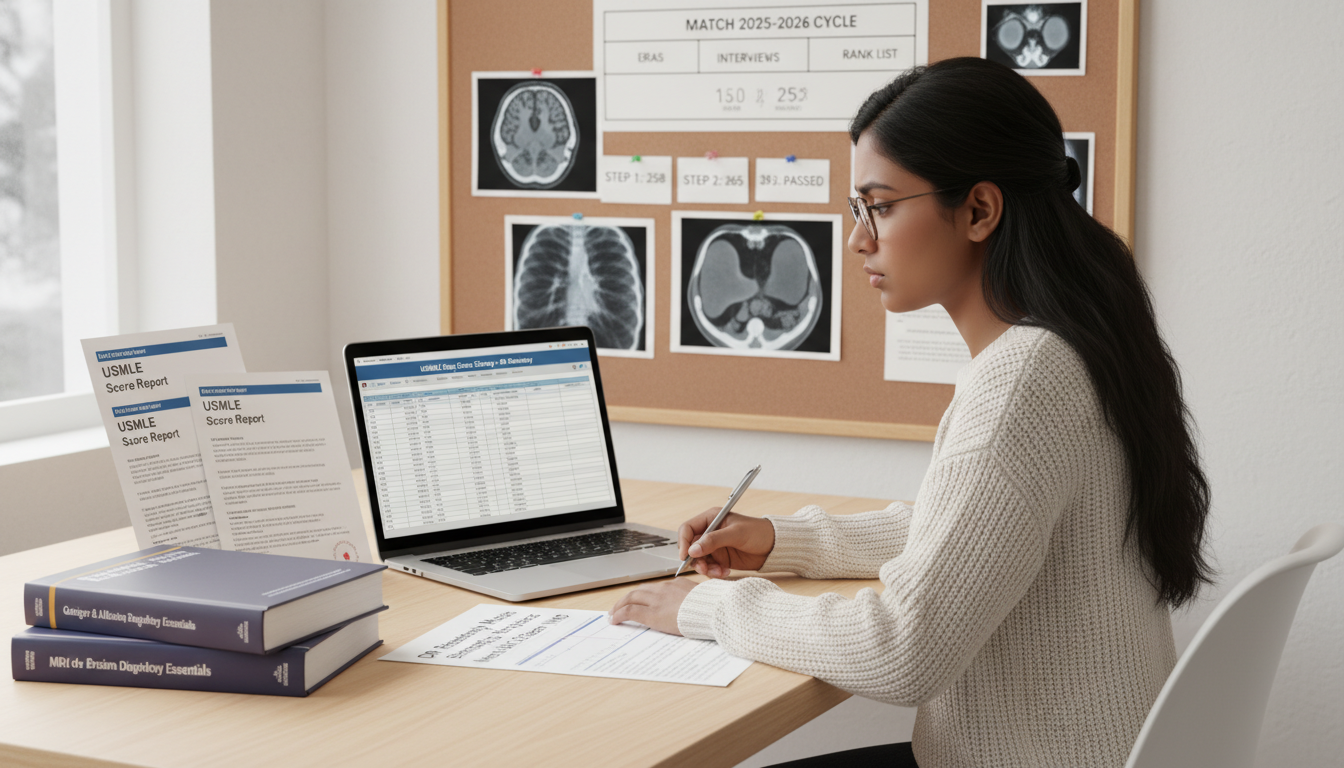
Understanding the Challenge: Low Step Scores and Clinical Informatics
Clinical informatics is still a relatively new and rapidly evolving field. For a non-US citizen IMG (international medical graduate) with a low Step score, it can look both attractive and intimidating:
- Attractive because it emphasizes data, systems, and quality improvement more than direct procedural skills.
- Intimidating because many applicants assume that a low Step 1 score or below average board scores automatically disqualify them.
That assumption is not entirely true.
To practice clinical informatics in the United States, you generally need:
- A residency in a primary specialty (e.g., Internal Medicine, Pediatrics, Family Medicine, Pathology, etc.).
- Then a Clinical Informatics Fellowship (ACGME-accredited), or equivalent training.
This means your first major hurdle is still matching into core residency, and your Step scores matter there. However, the way you position yourself as a future clinical informatics physician can partially offset weaker test scores—especially if you are a foreign national medical graduate.
In this article, we’ll focus on:
- How to realistically assess “low” scores as a non-US citizen IMG
- Ways to strategically choose specialties and programs
- How to build a high-impact informatics profile that compensates for exam weaknesses
- How to leverage research, projects, and health IT training
- How to position yourself specifically for a clinical informatics fellowship despite low scores
Throughout, we’ll use the terms non-US citizen IMG and foreign national medical graduate interchangeably, focusing on the visa-requiring applicant.
Step Scores in Context: What “Low” Means for a Foreign National IMG
What counts as a “low Step score”?
Program directors don’t all share one definition, but for a non-US citizen IMG:
- “Low” Step 1 score (for the years it still counts numerically):
- Typically below the program’s posted or historical average, and
- Often below ~220–225 for moderately competitive IM programs (exact thresholds vary).
- Below average board scores (Step 2 CK):
- Generally < 230 is challenging for mid-tier university programs, especially for visa sponsorship.
- < 220 often pushes you into community programs, prelim positions, or requires a strong compensatory portfolio.
Step 1 is now pass/fail for newer graduates, but:
- Older numerical Step 1 scores still appear in ERAS.
- A borderline pass or multiple attempts is a red flag that must be addressed.
Why low scores hit non-US citizen IMGs harder
For a foreign national medical graduate:
- Visa sponsorship narrows the program pool.
- Many programs use score cutoffs to manage application volume.
- Program directors may worry about:
- Test-taking ability → future board pass rates.
- Adaptation to the US healthcare system.
- Communication skills and team integration.
When combined with low Step 1 or weak Step 2 CK, it can seem almost impossible. It isn’t—but you must be strategic.
How clinical informatics changes the equation
Most programs still prioritize clinical readiness over informatics interest for residency. However, for some program directors:
- A clear, credible trajectory toward clinical informatics can make you more memorable.
- If your file shows strong:
- Data literacy
- Health IT training
- Quality improvement (QI)
- Coding or analytics skills
- Then a low Step score may be somewhat offset by the value you bring to their hospital’s digital transformation projects.
Your job is to turn your application into a “risk-managed asset”:
- Yes, you have lower exam scores.
- But you also bring a unique and immediately usable skill set.
Choosing Your Path: Specialties, Programs, and Pathways to Informatics

Step 1: Identify realistic core specialties
Clinical informatics boards require primary board certification in a clinical specialty (or equivalent pathway while the “practice pathway” is still open, depending on timing).
Common base specialties for future informaticians include:
- Internal Medicine
- Pediatrics
- Family Medicine
- Emergency Medicine
- Anesthesiology
- Pathology
- Radiology
- Psychiatry
- Neurology
- Surgery (less common, but possible)
For a non-US citizen IMG with matching with low scores as a concern, consider:
More IMG-friendly / potentially attainable with low scores:
- Internal Medicine (particularly community or mid-tier university-affiliated)
- Family Medicine
- Pediatrics (select community settings)
- Psychiatry (in some regions)
- Pathology (depends heavily on year and market)
More challenging with low scores for foreign nationals:
- Radiology
- Dermatology
- Competitive surgical fields
- EM at top-tier academic centers
Because you’re aiming for a clinical informatics fellowship, favor specialties that:
- Are IMG friendly, and
- Have a strong informatics footprint (EHR optimization, data-rich care, QI culture).
Internal Medicine and Family Medicine are especially practical for a non-US citizen IMG who wants to pivot into informatics later.
Step 2: Target programs with informatics DNA
Even if a residency doesn’t have a formal Clinical Informatics Fellowship, many have:
- Chief Medical Information Officer (CMIO) or Associate CMIO
- EHR optimization committees
- Data analytics teams
- Quality and patient safety departments using data dashboards
- Digital health or telemedicine initiatives
Look for programs where you can prove your value in informatics during residency, such as:
- Hospitals on advanced EHR systems (Epic, Cerner, Meditech, etc.)
- Institutions with ongoing EHR optimization or major upgrades
- Programs with residents publishing QI or health services research
- Academic centers with bioinformatics, health services, or public health collaborations
Step 3: Be realistic about geography and competitiveness
With below average board scores, location flexibility becomes one of your biggest advantages. As a foreign national medical graduate, you should:
- Prioritize areas that:
- Are less saturated with US graduates (Midwest, South, some community programs in Northeast).
- Historically match IMGs and sponsor visas.
- Apply broadly:
- 150–250+ programs is common for low-score IMGs in IM/FM.
- For each, verify:
- IMG friendliness
- Visa policies (J-1 vs. H-1B)
- Stated or implied score cutoffs (from Program Director’s letters, resident forums, or FREIDA notes).
Even if your long-term goal is clinical informatics, short-term you must first secure any solid residency training position that is:
- Accredited
- Has exposure to EHRs and QI projects
- Open to your involvement in informatics-related initiatives
Compensating for Low Scores: Building a High-Impact Informatics Profile
Reframing your “weakness” into a narrative
Program directors know that:
- Test scores ≠ clinical performance ≠ informatics ability.
Your goal is to tell a cohesive story:
“My standardized test scores are not my strongest metric. However, I have developed deep capability in clinical systems, data, and process improvement, and I want to bring that to your residency and hospital.”
You must then prove this statement with concrete evidence.
Priority 1: Health IT training and recognizable credentials
Enroll in structured health IT training programs that can appear on your CV:
- Formal certificates / degrees:
- Online graduate certificates in Health Informatics, Data Science, or Healthcare Analytics.
- Part-time Master’s in Health Informatics or Public Health with informatics concentration (if realistic).
- Recognized industry courses:
- Coursera/edX/Stanford Online courses in:
- Health informatics
- Biostatistics
- R/Python for data analysis
- Machine learning with healthcare examples
- HIMSS (Healthcare Information and Management Systems Society) courses.
- Coursera/edX/Stanford Online courses in:
- Vendor-focused training (if accessible):
- Epic/Cerner/other EHR training through employment or observer roles (often after you’re in the US).
On your CV and personal statement, this turns a “low Step 1 score” story into an evidence-based commitment to informatics and continuous learning.
Priority 2: Hands-on projects that show real-world impact
Programs value outcomes more than buzzwords. Develop practical informatics projects such as:
Clinical data analyses:
- Use de-identified data (through your home institution, a collaborator, or public datasets).
- Example: Analyze antibiotic prescribing patterns and guideline adherence; propose clinical decision support alerts.
Workflow optimization studies:
- Map a clinical workflow (e.g., triage, diabetes follow-up).
- Identify EHR pain points and propose redesigns or templates.
Digital quality improvement (QI):
- Implement electronic reminders for vaccinations or screening.
- Measure baseline and post-intervention rates.
Patient-facing digital tools:
- Simple web apps or mobile-friendly resources for disease education, appointment reminders, or symptom monitoring.
- Even prototypes or pilots are valuable, especially if tied to outcomes or user feedback.
Document your work as:
- Abstracts for conferences (AMIA, HIMSS, specialty-specific meetings)
- Posters or oral presentations
- Manuscripts (even in smaller or regional journals)
- Preprints (if journals are slow but you want evidence in your ERAS application)
When programs see your low Step score alongside demonstrated, measurable contributions in informatics, some will reconsider your overall potential.
Priority 3: Technical skills relevant to clinical informatics
You don’t need to be a full software engineer, but technical literacy is highly attractive:
Useful skills to highlight:
- Programming / analytics:
- Python (pandas, numpy, matplotlib, basic scikit-learn)
- R (tidyverse)
- SQL (for querying databases)
- Data visualization tools:
- Tableau, Power BI, or similar dashboards
- Statistics:
- Basic regression
- Hypothesis testing
- Interpretation of clinical research
Show these on your CV under a “Technical Skills” or “Informatics Skills” section with specific examples:
- “Developed Python scripts to analyze ED throughput metrics; identified peak congestion times and proposed staffing adjustments.”
- “Built an R-based dashboard to monitor diabetes control rates in clinic population.”
Application Strategy: Crafting a Convincing Story Around Low Scores

Addressing low Step scores directly but strategically
When matching with low scores, avoiding the topic rarely works. Instead:
Acknowledge succinctly:
- “My Step 1/Step 2 scores are not fully reflective of my capabilities due to [brief context: timing, health issue, adjustment to new exam style, etc.].”
Avoid excuses:
- No long stories about unfair questions or conspiracy theories.
- No blaming the exam system.
Demonstrate growth:
- Show how you improved your preparation strategy.
- Point to:
- Stronger later performance in medical school exams,
- Clinical evaluations,
- Research productivity,
- Informatics achievements.
Pivot quickly to strengths:
- “This challenge pushed me to strengthen my analytical skills in other ways, including health IT training, data projects, and QI work.”
Personal statement: Positioning yourself as a future clinical informatician
Your personal statement should not merely say “I like computers” or “I enjoy technology.” Instead, structure it around:
Clinical-first identity:
- Emphasize your motivation to be a strong clinician in your chosen specialty (IM/FM/Peds/etc.).
- Show that informatics is an extension of patient care, not a replacement for it.
Defining informatics experiences:
- Describe 1–2 concrete experiences:
- Implementing a digital tool in clinic.
- Analyzing EHR data to identify gaps in care.
- Working on a telemedicine or decision support project.
- Highlight how these improved patient or system outcomes.
- Describe 1–2 concrete experiences:
Clear future trajectory:
- “I intend to pursue a clinical informatics fellowship after residency.”
- “My goal is to bridge bedside care with data-driven system improvement.”
Connecting to residency program value:
- Explain how your informatics skills can:
- Help with resident scheduling projects.
- Support QI initiatives.
- Assist faculty with data pulls for research.
- The subtext: “I will contribute to your program beyond service requirements.”
- Explain how your informatics skills can:
Letters of recommendation: What you must aim for
Strong letters can partially counterbalance a low Step 1 score or Step 2 CK performance.
Aim for letters that:
- Come from:
- Supervising physicians who know your clinical work.
- Mentors in informatics or research who can vouch for analytical strengths.
- Explicitly mention:
- Reliability and clinical judgment.
- Communication skills and teamwork.
- Evidence of data literacy or informatics impact.
- Capacity to handle US training intensity despite exam scores.
For example, a powerful line from a mentor:
“While his Step 1 score was below the average for our matched residents, Dr. X’s performance on the wards, his leadership in an EHR optimization project, and his ability to translate complex data into actionable clinical insights are among the best I have seen in any trainee.”
Such statements help “neutralize” the board score concern.
Positioning for Clinical Informatics Fellowship as a Non-US Citizen IMG
Understanding the clinical informatics fellowship landscape
ACGME-accredited clinical informatics fellowships typically:
- Are 2 years in length.
- Expect you to have:
- Completed residency in a primary specialty.
- Demonstrated informatics interest and skills.
- Involve:
- Project-based work with EHR teams.
- Data analytics and QI.
- Education in standards, governance, and change management.
For a foreign national medical graduate:
- Visa sponsorship for fellowship may be more limited than for residency.
- Some programs sponsor J-1; H-1B is less common but possible at certain large institutions.
Step 1: Maximize informatics exposure during residency
Once you match, your residency years are your primary audition for future fellowship directors. With or without a low Step 1 score, you can:
Join or start informatics-related committees:
- EHR user groups
- EHR optimization teams
- Medication safety committees
- Telehealth steering groups
Lead or co-lead inpatient or outpatient QI projects with a data component:
- Reducing unnecessary labs or imaging.
- Standardizing order sets.
- Improving discharge documentation.
Seek informatics mentors at your hospital:
- CMIO
- Physician informaticists
- Data scientists in quality or analytics departments
Ask to:
- Shadow them during EHR build sessions.
- Participate in project meetings.
- Take on discrete deliverables (e.g., data pulls, report summaries, user feedback collection).
Step 2: Publish and present as much as reasonably possible
Public output is powerful currency for someone with below average board scores:
Aim for:
- Short communications on QI initiatives.
- Case reports with a data or systems angle.
- Conference abstracts (AMIA, HIMSS, specialty society meetings).
Even if you can’t publish in top-tier journals:
- Regional or specialty journals are fine.
- Preprints or institutional reports still show that you can carry a project from concept to dissemination.
For fellowship applications, include:
- A brief portfolio of informatics projects, each with:
- Problem definition
- Methods
- Outcomes
- Your specific role
Step 3: Networking and mentorship for fellowship
Many clinical informatics opportunities arise through:
- Mentors who trained in informatics.
- Conference connections.
- Cross-institutional collaborations.
As a non-US citizen IMG:
Attend virtual and in-person events (when financially feasible):
- AMIA Clinical Informatics Conference (CIC)
- HIMSS annual meeting
- Specialty-specific digital health symposia
Join relevant mailing lists or interest groups:
- AMIA student/trainee memberships
- Resident interest groups in informatics or digital health
When people know your:
- Residency performance,
- Project track record,
- Clear interest in clinical informatics,
they may be more willing to look past your earlier low Step scores.
Final Thoughts: Turning a Low Score into a Different Kind of Strength
For a non-US citizen IMG or foreign national medical graduate, a low Step 1 score or below average board scores undeniably makes the road harder. You will face more program rejections, narrower visa options, and the psychological stress of “matching with low scores.”
Clinical informatics, however, is a field that:
- Values analytical thinking,
- Rewards real-world outcomes,
- Encourages non-traditional pathways.
If you:
- Choose realistic residency targets (IMG-friendly, EHR-rich, QI-active).
- Invest heavily in health IT training and informatics skills before and during residency.
- Build visible project outputs—posters, publications, dashboards, tools.
- Tell a coherent narrative: “I am a clinician who uses data and technology to solve real problems.”
Then your low exam scores become one data point among many, not the entire picture.
Your ultimate goal is not to hide your low Step score, but to outweigh it with demonstrable value in clinical informatics.
Frequently Asked Questions (FAQ)
1. I have a low Step 1 score and I’m a non-US citizen IMG. Should I still aim for clinical informatics?
Yes—if you are genuinely interested. Your priority is still to match into a core residency. Clinical informatics becomes a second-phase goal. Use your interest in informatics to:
- Differentiate yourself during residency.
- Build a strong project and publication record.
- Become an attractive candidate for a future clinical informatics fellowship.
Your low Step 1 score will not automatically eliminate you from informatics, but you must compensate with strong clinical performance and visible informatics achievements.
2. Does a low Step 2 CK score kill my chances for a clinical informatics fellowship?
Not necessarily, but it raises concerns about clinical boards and training rigor. Fellowship directors primarily look for:
- Successful completion of residency and board eligibility/certification.
- Strong clinical evaluations.
- Demonstrated informatics work (projects, QI, publications).
If your Step 2 CK is low, focus on:
- Passing your specialty boards on the first attempt.
- Building a compelling informatics portfolio during residency.
- Securing letters of recommendation that strongly endorse your clinical and analytical abilities.
3. Is it worth pursuing a Master’s in Health Informatics to compensate for low scores?
It can help, but it is not a magic fix. A degree in Health Informatics or a related field is most valuable when:
- Accompanied by practical projects and outcomes (not just coursework).
- Complementary to ongoing or planned clinical training.
- Financially feasible and not delaying your US clinical entry excessively.
For many non-US citizen IMGs, shorter certificates, targeted courses, and strong project work provide good return on investment without multi-year delays.
4. How early should I start planning for a clinical informatics fellowship?
Ideally:
- Before or during residency application: Build some baseline health IT training and projects to strengthen your application.
- During PGY-1 and PGY-2: Intensively engage in informatics-related projects, committees, and mentorship.
- Apply for fellowship: Typically in PGY-2 or PGY-3, depending on specialty.
Even with low Step scores, an early and sustained commitment to informatics—paired with strong clinical performance—can position you competitively for clinical informatics fellowship opportunities.