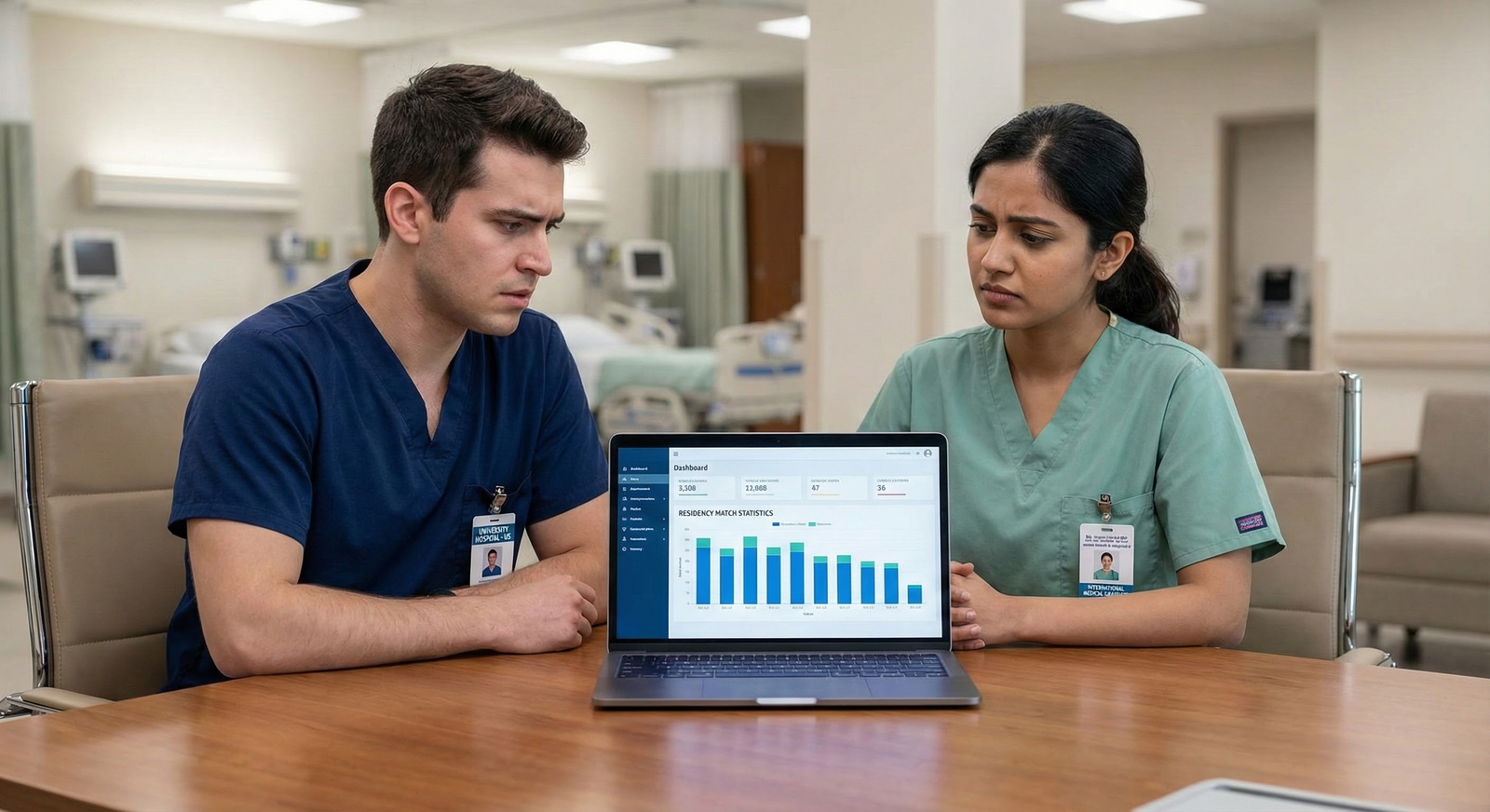
Understanding Step Scores in the Context of Clinical Informatics
Clinical informatics is a unique pathway for an MD graduate. Unlike traditional residency specialties, clinical informatics is most often a subspecialty fellowship (after a primary residency such as internal medicine, pediatrics, emergency medicine, pathology, etc.), though some institutions are building more direct health IT training and informatics-focused tracks.
To develop an effective Step score strategy for clinical informatics, you first need to understand:
- How program directors interpret Step 1, Step 2 CK, and sometimes Step 3
- How informatics-related training values test scores compared with other specialties
- How to compensate if you have a low Step score but strong informatics potential
Step 1 in 2025 and Beyond (Pass/Fail but Still Relevant)
Although Step 1 is now pass/fail, its legacy still influences the allopathic medical school match:
Passed Step 1 on first attempt
- Usually clears most standardized screening filters.
- Programs often use “no failures” as a basic requirement.
Failed Step 1 then passed on second attempt
- Not an automatic rejection, but you must show clear improvement on Step 2 CK.
- You’ll need a proactive narrative (in your personal statement and interviews).
For MD graduates applying to residency or informatics-related tracks, Step 1 is now more of a red flag filter than a ranking tool. The Step 1 score residency era is over; what matters is a pass and your performance on clinical exams, particularly Step 2 CK.
Step 2 CK: The Core Exam for Your Informatics Path
Step 2 CK has become the primary numeric standardized metric for residency selection among MD graduates from allopathic medical schools. Program directors, including those at institutions with strong clinical informatics programs, increasingly focus on Step 2 CK because it:
- Reflects your clinical reasoning and decision-making
- Predicts your performance in clinical care, which is foundational before you move into health IT training or a clinical informatics fellowship
- Serves as the main comparative number across applicants
For someone targeting clinical informatics:
- A solid Step 2 CK score supports your application to a competitive primary specialty (e.g., internal medicine at an academic center with strong informatics presence).
- A low Step score match is still possible if you show excellence in informatics, research, and digital health leadership, but you must be very deliberate.
Step 3 and Its Role for Informatics-Oriented MD Graduates
Step 3 is not required for initial residency applications but can help in certain scenarios:
- If you have a low Step 1 or marginal Step 2 CK, a strong Step 3 can demonstrate late improvement.
- For those aiming at a clinical informatics fellowship, having Step 3 passed early (especially if you want to moonlight or pursue licensure while in fellowship) is an advantage.
- Some informatics fellowships value Step 3 as evidence you have fully cleared USMLE hurdles before focusing on advanced health IT training.
Step 2 CK Strategy for MD Graduates Targeting Clinical Informatics
Your Step 2 CK strategy is the centerpiece of your Step score plan. Even if you already took Step 2 CK, this section is useful to understand how programs interpret your score and how to frame it.
1. Setting Target Score Ranges
While exact thresholds vary, you can think in general terms:
Strong position for most core residencies at academic centers:
Step 2 CK ≥ 245- More breathing room if you also have informatics research, quality improvement, or EHR optimization experience.
Competitive for mid-range academic and strong community programs:
Step 2 CK ~ 230–244- Must combine with strong letters and evidence of informatics interest to align with future clinical informatics fellowship goals.
Possible but needs strategic application and strong portfolio:
Step 2 CK ~ 215–229- This falls in the “low Step score match” territory for some specialties, though still fine for many primary care or less competitive fields.
- Emphasize informatics strengths, robust clinical performance, and program fit.
Below ~215
- You will likely need a carefully tailored list of programs, heavy emphasis on your additional strengths, and sometimes a re-exam strategy (if applicable) or regional targeting.
These are not fixed cutoffs, but they reflect how program directors think about Step scores in the context of the allopathic medical school match.
2. Building a Study Strategy that Aligns with Informatics Thinking
As an MD graduate interested in clinical informatics, you often have:
- Strong systems thinking
- Interest in data, patterns, and workflows
- A preference for concept integration over rote memorization
Leverage that in your Step 2 CK strategy:
Data-Driven Study Plan
- Use a Q-bank (e.g., UWorld) as your primary tool.
- Track performance by system and question type.
- Set weekly targets and adapt based on performance trends, just like informatics dashboards guide quality improvement.
Clinical Algorithm Mindset
- Think in terms of decision trees: “If X, then order Y; if Y is positive, do Z.”
- This parallels diagnostic and treatment paths and is similar to how we design clinical decision support.
Error Analysis with Root-Cause Thinking
- For each missed question, ask: Was it knowledge, interpretation, or test-taking error?
- Categorize and address root causes—just like IT ticket triage or workflow analysis.
Timed Blocks and Simulation
- Take multiple full-length practice tests (NBME, UWSA).
- Use the results to refine both content focus and test endurance.
Matching Strategy with Low or Moderate Step Scores
Not every MD graduate will have a “top tier” Step 2 CK. That does not end your pathway to clinical informatics. In fact, clinical informatics values non-test attributes (systems thinking, communication, leadership, tech fluency) heavily.
This section addresses how to manage a low Step score match scenario while staying on track for informatics.
1. Choosing a Primary Specialty with Informatics Bridges
Clinical informatics fellowship is a subspecialty open to many primary fields, including:
- Internal Medicine
- Family Medicine
- Pediatrics
- Emergency Medicine
- Pathology
- Anesthesiology
- And others (depending on board eligibility rules)
For a low or moderate Step score, consider:
Internal Medicine or Family Medicine at community or regional academic programs
- Often more flexible about Step score cutoffs.
- Many have EHR optimization committees, QI projects, and health IT pilots—ideal for informatics experiences.
Pathology
- Some pathology programs are particularly rich in digital pathology, lab information systems, and data analytics.
Pediatrics
- Growing interest in population health, registries, and pediatric EHR customization.
Focus less on “brand name” and more on:
- Does the program have an EHR you can work on (EPIC, Cerner, etc.)?
- Are there faculty with titles like “Chief Medical Information Officer,” “Clinical Informatics Director,” or “Medical Director of Quality/IT”?
- Are there local clinical informatics fellowship programs within the same institution or region?
2. Application Tactics for MD Graduates with Lower Scores
If your Step 2 CK is not as strong as you wanted:
Broaden Your Program List
- Apply to a wide range of programs: community, regional academic, and a few aspirational academic centers with strong informatics.
- Use program websites, FREIDA, and NRMP data to identify reasonable Step expectations.
Strategic Geographic Targeting
- Programs in less saturated regions (e.g., certain Midwest or Southern areas in the U.S.) may be more open to applicants with modest scores who bring other strengths, like informatics skills.
Personal Statement as a Narrative Tool
- Directly acknowledge low scores only when necessary (e.g., a failure or major discrepancy).
- Emphasize:
- Improvement over time
- Specific informatics accomplishments (EHR build, clinical decision support prototypes, dashboards, data projects)
Letters of Recommendation (LoRs) with Informatics Angle
- Aim for at least one letter from someone who has seen you:
- Use data to improve care
- Participate in quality improvement
- Contribute to health IT training initiatives (EHR onboarding, workflow redesign)
- Aim for at least one letter from someone who has seen you:
Signal Commitment to Informatics Without Threatening Residency Programs
- Program directors want residents who will be reliable clinicians, not residents who are “only here for informatics.”
- Phrase your goals as:
- “I want to be a clinically excellent [internist/pediatrician/etc.] who leverages informatics to improve patient care.”

Building an Informatics Portfolio That Outweighs Mid-Range Scores
For clinical informatics, your portfolio can matter as much as your Step scores, particularly by the time you apply for a clinical informatics fellowship.
1. Activities to Pursue During Medical School and Early Residency
If you are still early in your MD graduate trajectory:
EHR Optimization or Super-User Roles
- Become a “super-user” for EPIC/Cerner.
- Help peers and faculty adopt new features.
Quality Improvement (QI) Projects with Data
- Design projects with clear metrics: e.g., reducing order errors, improving vaccination rates, standardizing discharge instructions.
- Use data extraction tools or basic SQL/R if available.
Health IT Training Involvement
- Assist with resident/faculty EHR onboarding or create user guides.
- This demonstrates both teaching and systems understanding.
Clinical Informatics Electives
- Many academic centers offer informatics electives where you can shadow CMIOs, work on CDS rules, or evaluate workflows.
2. Concrete Examples of Portfolio Elements
Some examples that stand out to clinical informatics fellowship directors:
- A project that uses EHR data to identify high-risk patients and then implements a clinical decision support reminder that measurably improved process measures.
- A QI initiative where you redesigned a CPOE order set to decrease unnecessary labs or imaging.
- A research poster on data quality, interoperability, or clinical workflow redesign presented at AMIA, HIMSS, or a regional informatics conference.
Document these in:
- Your CV (with clear roles and outcomes)
- A professional portfolio or website (optional but helpful)
- Letters from supervising informatics faculty
3. Informal and Formal Health IT Training
Even before fellowship, you can start health IT training:
- Online courses (e.g., Coursera, edX) on:
- Health informatics
- Data analytics for healthcare
- SQL/R/Python for clinical data
- Hospital or system-level informatics committees:
- Join EHR steering committees, safety committees, or digital health taskforces.
- Certification or micro-credentials:
- While not required, brief certificates in informatics, analytics, or project management (e.g., Lean/Six Sigma Yellow Belt) can reinforce your profile.
These activities show commitment far beyond what any Step score can reflect.
From Residency to Clinical Informatics Fellowship: Integrating Scores and Skills
Once you’ve matched into a residency, the central question becomes: How do I position myself for a clinical informatics fellowship?
1. Where Step Scores Still Matter (and Where They Don’t)
By the time you apply for a clinical informatics fellowship:
- Programs will look at your entire trajectory:
- USMLE scores (Step 1 pass, Step 2 CK, maybe Step 3)
- Residency performance (evaluations, milestones)
- Informatics portfolio
For most informatics fellowships:
- A borderline or modest Step 2 CK can be overshadowed by:
- Excellent residency evaluations
- Strong letters describing your analytic and leadership skills
- Concrete informatics work
However:
- Multiple exam failures or a very low Step score may still raise concerns about test-taking ability or medical knowledge baseline.
- In those cases, consider:
- Completing Step 3 with a solid score to show improvement.
- Highlighting any remediation steps or extra academic work you undertook.
2. Intentional Use of Residency Time
Think of residency as the period where you:
- Prove you are a safe, effective clinician
- Build a strong clinical informatics narrative
Specific actions:
- Identify informatics mentors early:
- CMIOs, informatics-trained attendings, or QI leaders.
- Negotiate informatics electives:
- 2–4 weeks blocks where you work directly on IT or data projects.
- Track your impact:
- Before-and-after metrics (e.g., order utilization, alert override rates, documentation completeness).
- Prepare for fellowship interviews:
- Be ready to describe not only what you did, but how you thought, how you measured outcomes, and how you worked with IT and operations teams.
3. Framing Your Story Despite Lower Scores
At interview time for clinical informatics fellowships:
- If asked about lower Step scores:
- Provide a concise, honest explanation (e.g., exam anxiety, adjustment to U.S. style testing, initial study strategy errors).
- Immediately pivot to your subsequent trajectory of improvement:
- Step 2/Step 3 improvement
- Strong residency performance
- Leadership in informatics projects
Your goal is to make your Step scores just one small part of a larger, upward-trending story.

Putting It All Together: A Practical Step Score Strategy Roadmap
Below is a streamlined roadmap for an MD graduate targeting clinical informatics, with attention to the allopathic medical school match and the constraints of low or moderate Step scores.
Phase 1: Pre-Residency (During Medical School / Pre-Application)
Step 1
- Goal: Pass on first attempt.
- If failed:
- Meet with advisors, adjust study methods.
- Plan a Step 2 CK strategy that demonstrates substantial improvement.
Step 2 CK
- Treat as the key numerical exam.
- Study strategically using:
- Data-driven Q-bank review
- Full-length practice exams
- Root-cause analysis of missed questions
- Aim for as high as feasible; but if the result is mid-range, do not abandon your informatics goal.
Early Informatics Exposure
- Join EHR and QI projects.
- Build relationships with informatics-minded faculty.
- Begin light health IT training through online courses.
Phase 2: Residency Application with Possible Low or Moderate Scores
Program Selection
- Choose specialties that:
- Are not hyper-score-dependent for entry.
- Offer exposure to informatics (EHR committees, data projects, local CI fellowships).
- Choose specialties that:
Application Materials
- Personal statement:
- Connect your clinical interests with systems and data.
- Describe any informatics or QI activities.
- CV:
- Highlight concrete projects, outcomes, presentations.
- Letters:
- Seek writers who can speak to your analytic ability, reliability, and teamwork.
- Personal statement:
Interview Preparation
- Practice framing your Step score story succinctly.
- Be prepared to discuss:
- How you learn from data
- How you balance clinical work and systems improvement
Phase 3: During Residency – Building Toward Clinical Informatics Fellowship
Excel Clinically
- Strong clinical performance can compensate powerfully for older Step score concerns.
Deepen Informatics Portfolio
- Take informatics electives.
- Lead or co-lead at least one measurable, data-driven project.
- Seek opportunities to present your work.
Consider Step 3
- If your earlier scores were weak, aim for a solid Step 3 to show growth.
Networking and Mentoring
- Attend informatics meetings (local AMIA chapters, hospital IT committees).
- Ask mentors for targeted advice about fellowship programs that value your strengths.
By following this roadmap, your Step scores become one component of a broader, strategically constructed path to clinical informatics, rather than a single high-stakes gatekeeper.
FAQs: Step Scores and Clinical Informatics Pathway for MD Graduates
1. Can I still pursue clinical informatics if I have a low Step 2 CK score?
Yes. A low Step 2 CK might limit entry to some highly competitive residencies, but it does not eliminate your chance at clinical informatics. Focus on matching into a residency that accepts your profile and offers informatics exposure. Then build a strong clinical and informatics portfolio—fellowship directors routinely accept applicants with varied Step score histories if their later trajectory and informatics work are strong.
2. Does a high Step 2 CK score guarantee a clinical informatics fellowship?
No. While a high Step 2 CK is advantageous for the allopathic medical school match and suggests strong clinical reasoning, clinical informatics fellowships also weigh your informatics experience, leadership, systems thinking, and communication skills. High scores help you enter a strong residency, but they must be paired with real-world informatics engagement.
3. Should I delay my residency application to retake exams or improve scores?
Usually not, unless you had a failure or extremely low score that dramatically restricts your options. In most cases, it is better to:
- Apply strategically to a broad enough range of programs
- Start residency
- Then demonstrate improvement via strong clinical performance (and possibly Step 3) while building informatics experience.
Discuss timing with a trusted advisor who knows your complete academic record.
4. How important is Step 3 for clinical informatics fellowship applications?
Step 3 is helpful but not always mandatory at the time of application. It becomes more important if:
- You have earlier low scores and need evidence of improvement
- You plan to obtain a medical license or moonlight during fellowship
- The specific fellowship program prefers or requires completed licensure steps
Whenever you do take Step 3, aim to show solid performance to reinforce your readiness to move into advanced health IT and informatics roles.
By treating Step scores as inputs in a broader system—rather than your entire identity as an applicant—you can design a deliberate, data-informed path from MD graduate to clinical informatics fellow, even if your exam history is not perfect.