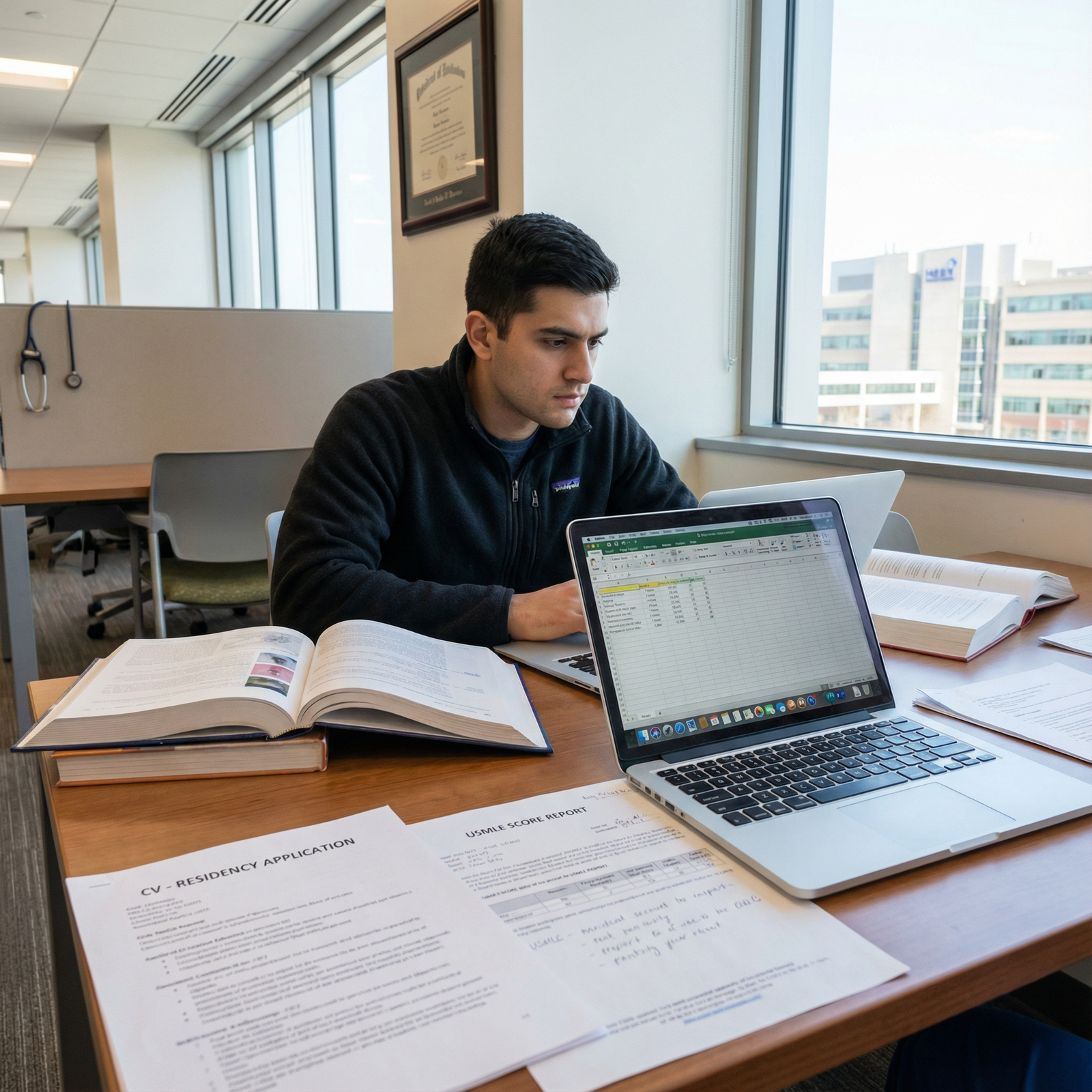
Understanding the Challenge: Low Step Scores as a Non-US Citizen IMG in Seattle
For a non-US citizen IMG, applying to Seattle residency programs with a low Step score can feel intimidating—especially when you see program websites listing “average resident Step scores” that are well above yours. But a low Step 1 score or below average board scores do not automatically disqualify you, especially if you apply strategically and build a compelling overall application.
Seattle and the broader Washington state residency ecosystem feature a mix of highly competitive academic programs (e.g., University of Washington–affiliated programs) and more community-focused or hybrid programs. As a foreign national medical graduate, your main challenges usually include:
- Lower Step 1 or Step 2 CK scores compared with typical matched applicants
- Non-US citizenship and visa needs (often J‑1 or H‑1B)
- Limited US clinical experience (USCE), especially in the Pacific Northwest
- Fewer networking opportunities with faculty in Seattle
This article will focus on practical, evidence-informed strategies for matching with low scores specifically tailored to non-US citizen IMGs interested in Seattle and Washington state residency programs.
Step Scores in Context: What “Low” Really Means in Seattle
Before planning your strategy, clarify where you stand.
What Counts as a “Low” Step Score?
Because Step 1 is now Pass/Fail, program directors rely more heavily on Step 2 CK and on the pre-2022 Step 1 score if you have one. Though specific cutoffs vary:
For many university-based Seattle programs (especially at UW):
- Historically “comfortable” ranges:
- Step 1 (if numeric): 230–245
- Step 2 CK: 235–250+
- A “low score” might be <220 or a fail on first attempt.
- Historically “comfortable” ranges:
For community or hybrid programs in Washington state:
- Many accept a wider range of scores, as long as:
- There is no Step failure, or
- You show clear improvement between attempts.
- Many accept a wider range of scores, as long as:
If you have:
- Step 1: Pass only and
- Step 2 CK: below 220–225,
you are likely in the “low score” category for many Seattle academic programs but still viable for some community, smaller university-affiliated, or out-of-region programs.
Why Seattle Is Particularly Competitive
Seattle is an attractive location—urban, tech-centered, with a strong health system. Program characteristics that increase competition:
- University of Washington is a top-tier academic center
- Many programs serve the WWAMI region (Washington, Wyoming, Alaska, Montana, Idaho), prioritizing applicants tied to the region
- Robust research opportunities attract high-achieving US seniors
As a non-US citizen IMG with below average board scores, your task is to identify realistic targets and build a narrative that offsets the numeric disadvantage.
Targeting the Right Seattle and Washington State Programs
Matching in Seattle with a low Step score is mostly about fit, realism, and diversification. You will likely not build a list exclusively of downtown Seattle programs, but you can design a Washington state–centered strategy.

1. Understand Different Types of Seattle-Area Programs
You’ll encounter several categories:
Flagship academic programs (University of Washington–affiliated in Seattle)
- Medicine, Surgery, Pediatrics, Anesthesia, Psychiatry, etc.
- Very competitive, often research-heavy, strong US MD representation.
- More selective about scores and visa sponsorship, but not impossible.
Hybrid academic–community programs in greater Seattle / Western Washington
- Programs with some UW affiliation or teaching roles but primarily based in community hospitals (e.g., in Tacoma, Everett, Spokane, or smaller cities).
- Sometimes more flexible about lower USMLE scores, especially if other parts of your profile are strong.
Community programs across Washington state
- Family Medicine, Internal Medicine, Psychiatry, Transitional Year, etc.
- Often more IMG-friendly and more open to foreign national medical graduates with lower scores, provided you meet minimums and demonstrate strong clinical performance.
2. Clarify Visa and IMG Policies Early
As a non-US citizen IMG, not every Seattle or Washington state residency will be an option. Carefully check:
- GME / Program websites for:
- Whether they sponsor J‑1, H‑1B, or no visas
- Whether they accept non-US citizen IMGs at all
- Minimum score or attempt policies:
- “We require passing scores on Step 1 and Step 2 CK within two attempts”
- “We prefer Step 2 CK ≥ 230”
If your goal is Seattle but your Step 2 CK is, for example, 208 with a first-attempt pass, you should still apply, but:
- Limit applications to the most competitive academic programs.
- Expand heavily into community and hybrid Washington state residency programs that:
- Accept J‑1 (most do)
- Have a record of matching foreign national medical graduates
3. Use Data and Backchannels
To understand where a non-US citizen IMG with low scores has realistic chances:
- Check FREIDA and program websites for:
- Percentage of IMGs currently in training
- Former residents’ backgrounds
- Review program current resident lists:
- Look for IMGs, especially non-US citizen IMG names or foreign medical schools.
- Contact:
- Former students from your medical school who matched in Washington or the Pacific Northwest
- IMG support groups / forums where people share real outcomes (“matched at X program with Step 2 CK 215 as non-US citizen IMG”).
These insights help you build a tiered list:
- Tier 1 (reach): Select Seattle academic programs that have at least some IMGs and are IMG-aware.
- Tier 2 (target): Hybrid / community-affiliated programs in Washington with moderate IMG representation.
- Tier 3 (safety / backup): Community, rural, or out-of-state programs more historically IMG-friendly.
Strengthening Your Application Beyond Test Scores
You can’t change your Step 1 or Step 2 CK numbers right now, but you can dramatically strengthen everything else. For matching with low scores, program directors often say: “We make exceptions when the rest of the file is outstanding.”
1. US Clinical Experience with a Seattle or Regional Connection
For Seattle-focused applicants, geographic connection matters. If possible:
- Aim for USCE in the Pacific Northwest (Seattle, Tacoma, Spokane, Portland, Boise):
- Observerships
- Hands-on electives (if still a student)
- Externships or clinical research roles with patient exposure
If you can’t secure Seattle-based rotations, target USCE anywhere in the U.S. and highlight:
- Experience in similar patient populations (e.g., underserved, immigrant, Indigenous, or rural communities)
- Systems-based practice in a U.S. hospital (EMR, multidisciplinary teams, QI projects)
Actionable tip:
In your personal statement and interviews, explicitly connect your USCE to why you want to train in the Seattle / Washington region—for example, familiarity with integrated care, rural outreach, or telemedicine, all strong in the Northwest.
2. Letters of Recommendation that Outweigh Low Scores
For non-US citizen IMGs with low Step scores, LORs can be the single strongest compensatory factor.
Aim for:
- At least two US-based letters, ideally from:
- Faculty in the same specialty you’re applying for
- Programs known in Seattle or Washington (UW, OHSU, major systems like Providence, Swedish, MultiCare, Kaiser, etc.)
Content that helps offset low scores:
- Explicit statements about your clinical reasoning and knowledge:
- “Despite a below-average Step score, Dr. X’s performance on the wards was in the top 10% of students I’ve supervised in the past five years.”
- Endorsements of your work ethic, reliability, and improvement trend
- Observations about your adaptability and communication with patients across cultures—particularly relevant to Seattle’s diverse and international patient population.
3. Academic Recovery Narrative: Own the Low Score
Programs understand that exam performance does not always equal clinical ability. What they look for is:
- Honest explanation (not excuses)
- Evidence of improvement, resilience, and self-awareness
Where to address this:
Personal Statement: Briefly, in 2–4 sentences:
- Acknowledge the low score or failed attempt.
- Explain contributing factors (if relevant: language transition, illness, family emergency, poor test strategy) without dramatizing.
- Describe concrete steps you took to improve:
- Different study methods
- UWorld + NBME practice tests
- Dedicated time and structure
- Highlight subsequent academic or clinical successes.
MSPE / Dean’s letter or a faculty letter (if they’re aware and supportive):
- Can contextualize your performance and improvement.
Example phrasing (adapt to your story):
“While my Step 2 CK score does not fully reflect my current knowledge, it was a turning point that led me to restructure my study methods and seek close faculty mentorship. Since then, my in-training exams and clinical evaluations have reflected stronger performance, and I am confident in my ability to meet the demands of residency.”
4. Research and Quality Improvement with Regional Relevance
Seattle residency programs, especially academic ones, value applicants who understand regional health issues and systems.
High-yield topics to explore for research / QI projects:
- Rural/remote care delivery and telehealth
- Substance use disorders, harm reduction, opioid crisis
- Mental health access in underserved populations
- Indigenous and Alaska Native health
- Global health or immigrant and refugee health
You don’t need to publish in NEJM. Even posters, case reports, or QI abstracts can signal that you:
- Think critically about care
- Contribute to a learning environment
- Align with Seattle’s values of innovation and population health
Mention these clearly in ERAS and discuss them in interviews.
Application Strategy: Maximizing Your Chances with Low Scores
Low Step scores simply mean you need to be smarter, earlier, and more thorough with your strategy.

1. Apply Broadly and Thoughtfully
Even if your heart is set on Seattle:
- Do not apply only to Seattle or Washington state programs.
- Use Washington state residency programs as a core focus but surround them with:
- Other West Coast or Pacific states (Oregon, Idaho, Montana, California, Alaska)
- IMG-friendly regions (Midwest, certain East Coast community programs, South)
For a non-US citizen IMG with low Step scores, it’s common to:
- Apply to 80–150+ programs, depending on specialty competitiveness.
- Include multiple tiers of competitiveness.
2. Specialty Choice and Flexibility
Some specialties are extremely difficult in Seattle with low scores (e.g., Dermatology, Plastic Surgery, Neurosurgery, Radiology). Others are more realistic:
More viable in Washington with low scores (if the rest is strong):
- Family Medicine
- Internal Medicine (especially community-based)
- Psychiatry (varies, increasingly competitive)
- Pediatrics (mid-level competitiveness)
- Transitional Year / Preliminary Medicine
More challenging but not impossible if you apply widely:
- Anesthesiology
- Emergency Medicine
- General Surgery (community-heavy list needed)
Consider:
- Dual-application strategy, e.g.:
- Primary: Internal Medicine
- Secondary: Family Medicine or Transitional Year in Washington and other states
This can keep Seattle in reach via laterally entering your target specialty (where possible) or staying regionally close.
3. Timing and Application Readiness
Program directors are more cautious about lower scores when applications come in late. Maximize your advantage by:
- Taking Step 2 CK early enough to have your score in by ERAS opening.
- Having your OET / English testing and ECFMG certification lined up as early as possible.
For non-US citizen IMG applicants:
- Aim to submit your application on Day 1 of ERAS with:
- Completed personal statement
- At least 3–4 strong letters of recommendation uploaded
- All exam scores released
- Transcripts and MSPE uploaded
A complete, early application can be the difference between a screen-out and a second look, especially when your scores are borderline.
4. Tailoring Your Application to Seattle and Washington State
To stand out to Seattle residency programs and Washington state residency directors:
- Customize Program-Specific Paragraphs in your personal statement when allowed:
- Refer to:
- WWAMI training model
- Commitment to rural, underserved, or Native American communities
- Experiences with similar populations in your home country or USCE
- Refer to:
- In ERAS experiences, highlight:
- Any work with immigrant, refugee, or diverse communities
- Global health projects, language skills, or cross-cultural communication
Demonstrate that you’re not applying to Seattle only for lifestyle or scenery, but because you:
- Understand the mission and patient population
- Bring skills and lived experiences that match their goals
Interviewing and Post-Interview Strategy: Turning Opportunities into a Match
Once you secure interviews, your low Step scores become less central and your in-person impression becomes critical.
1. Crafting Your “Low Score Story” for Interviews
Many program directors will ask variations of:
- “I noticed your Step scores are a bit lower than our average. Can you tell me about that?”
Your answer should be:
- Honest and concise
- Reflective and solution-oriented
- Confident but humble
Structure:
- Acknowledge the score and context briefly
- Describe what you learned about yourself (study methods, test strategy, need for support)
- Highlight what you changed and how you’ve already demonstrated improvement (e.g., rotations, in‑service exams, later academic milestones)
- Reassure them:
- “I’ve built reliable systems for knowledge maintenance and exam preparation that I am already using to prepare for in-training exams and board certification.”
Do not:
- Blame others or the exam
- Over-explain or sound defensive
- Claim the score “means nothing”; instead, show you understand their concern and have responded constructively.
2. Communicating Your Commitment to Seattle
Programs want residents who are likely to stay and thrive in the area. As a non-US citizen IMG, they may also wonder about:
- Visa issues
- Long-term geographic plans
Address these by:
- Explaining why Seattle or Washington state resonates with you:
- Climate, outdoor lifestyle
- Interest in academic medicine with regional responsibility
- Alignment with public health or social justice missions
- Mentioning any:
- Friends or family in the Pacific Northwest
- Prior visits, rotations, or conferences there
- Professional goals that align with regional needs (e.g., rural primary care, addiction medicine, community psychiatry)
3. Letters of Interest and Rank List Strategy
After interviews:
- Send targeted, sincere letters of interest to a small number of top-choice Seattle or Washington programs, emphasizing:
- Your fit with their mission
- Your serious interest in staying in the region
- Any aspects of the interview that reinforced your positive impression.
For your rank list:
- Rank programs based on genuine fit, not perceived odds, but stay realistic:
- Place your preferred Seattle programs where you honestly want to train.
- Follow with a broad mix of Washington, regional, and national programs where you’d be happy.
Remember: NRMP data show that even with low Step scores, ranking more programs significantly increases match probability for IMGs.
Frequently Asked Questions (FAQ)
1. Can a non-US citizen IMG with a low Step 1 score still match into a Seattle residency program?
Yes, it is possible, but it is more challenging. Success depends heavily on:
- Strong Step 2 CK (even if still below average, ideally with no failures)
- Robust US clinical experience and strong US letters of recommendation
- A thoughtful, honest narrative about your scores and demonstrated improvement
- Applying to a broad set of programs, not just university-based Seattle ones
Matching directly into a core UW program with a low Step score is difficult but not impossible; many IMGs instead match into community or hybrid Washington state residency programs and remain connected to the region.
2. Should I delay my application to improve my Step 2 CK score?
If you have not yet taken Step 2 CK and you expect your current performance to result in a very low score or failure, it may be wiser to:
- Delay the exam briefly to prepare more thoroughly
- Aim for at least a solid pass with upward trend
However, delaying so long that your score arrives late in the application season can hurt you as well, especially as a foreign national medical graduate. Balance:
- The benefit of a better score
- The risk of applying late and having incomplete files during initial screening
When in doubt, seek advice from:
- Faculty mentors
- Advisors familiar with IMG outcomes in similar situations
3. Will one failed Step attempt automatically prevent me from matching in Seattle?
A single failed attempt does not automatically disqualify you, but it narrows options, especially at the most competitive Seattle academic programs. To remain competitive:
- Ensure subsequent attempts are passes with noticeable improvement
- Develop a clear, honest explanation and show how you’ve changed your approach
- Strengthen other parts of your application (USCE, LORs, research, service) to demonstrate that the failure was an isolated event, not a pattern.
Some community or hybrid Washington state residency programs will still consider you if everything else is strong and visa sponsorship is feasible.
4. How many Washington state and Seattle programs should I apply to as a non-US citizen IMG with below average board scores?
Apply to every program in Washington state that:
- Accepts non-US citizen IMGs
- Sponsors your required visa (usually J‑1; some H‑1B)
- Does not explicitly exclude applicants with your score profile (e.g., strict cutoff above your score)
But do not limit yourself to Washington alone. For most non-US citizen IMGs with low Step scores, a safe target total is:
- 80–150 programs, distributed across:
- Washington and Pacific Northwest programs
- IMG-friendly community and hybrid programs in other regions
This broad approach keeps Seattle in play while significantly increasing your overall chance of matching.
By combining strategic program selection, a strong non-test profile, and a clear, confident narrative about your low Step scores, you can remain a competitive non-US citizen IMG applicant for Seattle and Washington state residency programs. Your scores are one part of your story—not the whole story.