
Understanding Your Situation as a Non‑US Citizen IMG with Low Scores
If you are a non-US citizen IMG or foreign national medical graduate with a low Step 1 score or below average board scores, you are not alone—and you are not automatically excluded from a successful match. Many applicants in your situation match every year, especially into community hospital residency and community-based residency programs.
However, your path requires deliberate strategy, early planning, and honest self-assessment. Before you decide on next steps, clarify these key points:
1. What “Low Scores” Really Mean in Practice
“Low Step 1 score” or “below average board scores” is relative. Program directors think in terms of:
- Pass vs fail (especially now that Step 1 is pass/fail for many cohorts, but older scores still matter)
- Risk (How likely are you to pass in-training exams and board certification?)
- Context (IMG status, school reputation, timing of exams, number of attempts)
For older cohorts or programs still seeing numeric Step 1:
- Historically, a below average score often meant ≤220 for competitive programs; for many community programs, applicants with scores in the 200–215 range could still be competitive if other factors are strong.
- A very low score (e.g., just above passing or multiple attempts) raises concern but does not eliminate all options—especially in less competitive specialties and geographically less popular community hospital residency programs.
For Step 2 CK:
- Community programs still care deeply about Step 2 CK because it better predicts board exam performance.
- A strong Step 2 CK after a weak Step 1 can partially “rescue” your profile.
2. The Additional Hurdles for a Non‑US Citizen IMG
As a foreign national medical graduate, you face structural challenges:
- Visa sponsorship: Not all community-based residency programs sponsor visas (especially H-1B). Many require or prefer J-1 only, and some do not sponsor at all.
- Limited interview slots for IMGs: Some programs cap IMG interviews, regardless of score.
- Screening filters: Many programs auto-filter by:
- Citizenship or visa status
- Years since graduation (YOG)
- USMLE attempts and minimum numeric thresholds
This means that with low scores you must be even more strategic:
- Choose programs that historically welcome IMGs and sponsor your visa.
- Reduce the number of automatic “no” filters your application will trigger.
- Build obvious strengths in other parts of your file (USCE, LORs, research, personal statement).
Strengthening Your Application Profile Beyond the Numbers
The core strategy for matching with low scores is simple: make the rest of your application impossible to ignore. Community hospital programs in particular often value reliability, work ethic, and fit with their patient population and team culture.
1. Maximize US Clinical Experience (USCE)
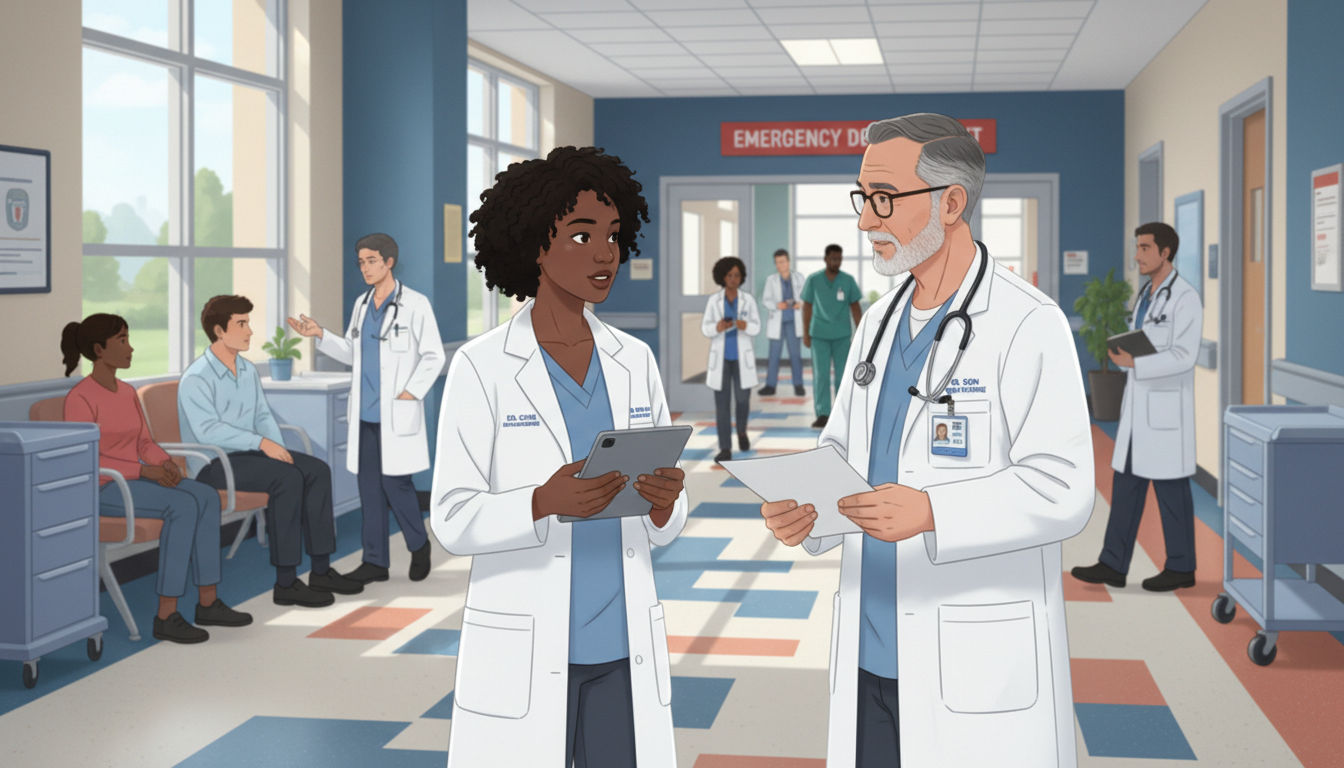
For a non-US citizen IMG with below average board scores, USCE is often the single most powerful compensating factor.
Aim for:
- Hands-on USCE (sub-internships, acting internships, clerkships, or hands-on externships)
- Preferably in community hospital residency settings similar to where you want to match
- Total of at least 3–6 months if feasible
Hands-on means:
- You interact directly with patients under supervision
- You write notes (even if they’re not in the official EMR)
- You present cases on rounds
- You get evaluated by attendings who can write detailed letters
If you passed Step 1 but with a low score:
- Prioritize scheduling USCE before ERAS opens so letters are ready.
If you had a failed attempt:
- Use USCE to demonstrate that you function at or above the level of US graduates, despite that setback.
Red flags for programs:
- Only observerships with no direct patient involvement
- No USCE at all, especially for older YOG or those far from graduation
If you have limited budget:
- Focus on 1–2 high-yield experiences where:
- The institution has a community hospital residency
- IMGs are already on staff or in training
- There is realistic potential for strong letters and maybe even a future interview.
2. Build Strong, Specific Letters of Recommendation
Letters can partly neutralize concerns about low scores if they:
- Come from US-based faculty, ideally in your chosen specialty
- Are from program directors, associate PDs, clerkship directors, or core faculty at teaching hospitals
- Contain specific, comparative comments about your performance
Ask for letters with details such as:
- How you handled complex or high-volume service in a community-based residency environment
- Examples of clinical reasoning, professionalism, communication with patients
- Comments like: “Among the top 10–20% of IMGs I’ve worked with in the last 5 years”
To obtain these letters:
- Arrive early, be prepared, read about your patients, present clearly.
- Ask explicitly during your rotation: “Dr. X, I am applying to community hospital residency programs in internal medicine/family medicine. If I continue to perform at this level or higher, would you feel comfortable writing me a strong letter?”
3. Use Your Personal Statement Strategically
Your personal statement should not be a generic essay. For a foreign national medical graduate with low Step 1 or CK, it is also a damage-control and reframing tool.
Use it to:
- Explain, briefly and honestly, any major academic issues (e.g., one failed attempt, family crisis) without excuses.
- Emphasize how you changed your approach:
- Study skills or time-management improvements
- Using question banks / NBME practice tests more effectively
- Link your story clearly to community-based residency:
- Experience or comfort working with underserved or diverse populations
- Interest in continuity of care, outpatient medicine, or community mental health
- Any language skills that benefit local patient populations
Avoid:
- Over-explaining or re-litigating your score
- Blaming your medical school or testing system
- Using clichés without concrete examples
A concise, honest paragraph acknowledging a low Step or a failed attempt, followed by evidence of growth and later success, is far better than ignoring it.
4. Show Clear Specialty Fit (Especially for IM / FM / Psych)
With low scores, aiming for ultra-competitive specialties is usually unrealistic. For a non-US citizen IMG seeking community hospital programs, the most feasible targets are usually:
- Internal Medicine (IM)
- Family Medicine (FM)
- Psychiatry (Psych)
- Pediatrics (less common but possible)
- Transitional Year / Preliminary positions in some settings
Your CV should show coherent alignment:
- Electives and USCE in the specialty
- Related research or quality improvement
- Shadowing or volunteer work that reflects your intended field
For example:
- If you want community hospital IM, show:
- Wards rotations, ICU or step-down experience
- Outpatient continuity clinic exposure
- QI projects related to hospital flow, readmissions, or chronic disease management
Exam Strategy: Recovering from Low Scores and Failed Attempts
While you can’t change a low Step 1 score, you can control what comes next—and programs notice how the story continues.
1. Make Step 2 CK Your Redemption Exam
For applicants with low Step 1:
- A strong Step 2 CK can significantly improve your chances of matching with low scores overall.
- Many program directors give greater weight to Step 2 CK, especially for IM, FM, and community-based residency programs.
Practical strategies:
- Take Step 2 CK only when fully prepared, especially if you’ve already had one poor performance.
- Use multiple NBME practice exams and aim for a cushion above your target score.
- Build a structured schedule: daily blocks of UWorld or similar questions, periodic self-assessments, and spaced repetition for weak areas.
Discuss timing with advisors:
- Some non-US citizen IMG candidates submit applications with Step 2 CK score already available to reduce anxiety for PDs about their test performance.
- Others apply with “Score pending” if they are confident and their application is otherwise strong. With low Step 1, it’s often safer to have a solid Step 2 CK in hand.
2. Managing Multiple Attempts
Multiple attempts on Step 1 or Step 2 CK are a serious concern for many programs, but not necessarily fatal, especially at community hospital residency programs that understand the challenges for international graduates.
To minimize damage:
- Avoid additional failures at all costs—delay your exam if needed.
- Use a formal assessment plan:
- Take NBME / UWSA tests under exam-like conditions.
- Don’t sit for the exam until you are consistently above passing with a safe margin.
- Consider structured coaching or test-prep programs, especially if you struggled with standardized testing or language barriers.
In your application:
- Address attempts briefly in your personal statement or interviews as:
- An early challenge you learned from
- A catalyst for improving your study methods, resilience, or time management
- Show clear evidence of upward trajectory elsewhere (e.g., improved clinical grades, later exams, strong USCE evaluations).
Targeting the Right Community Hospital and Community-Based Programs
Choosing where and how to apply is critical—especially when matching with low scores is your goal.
1. Understand Community vs University Programs
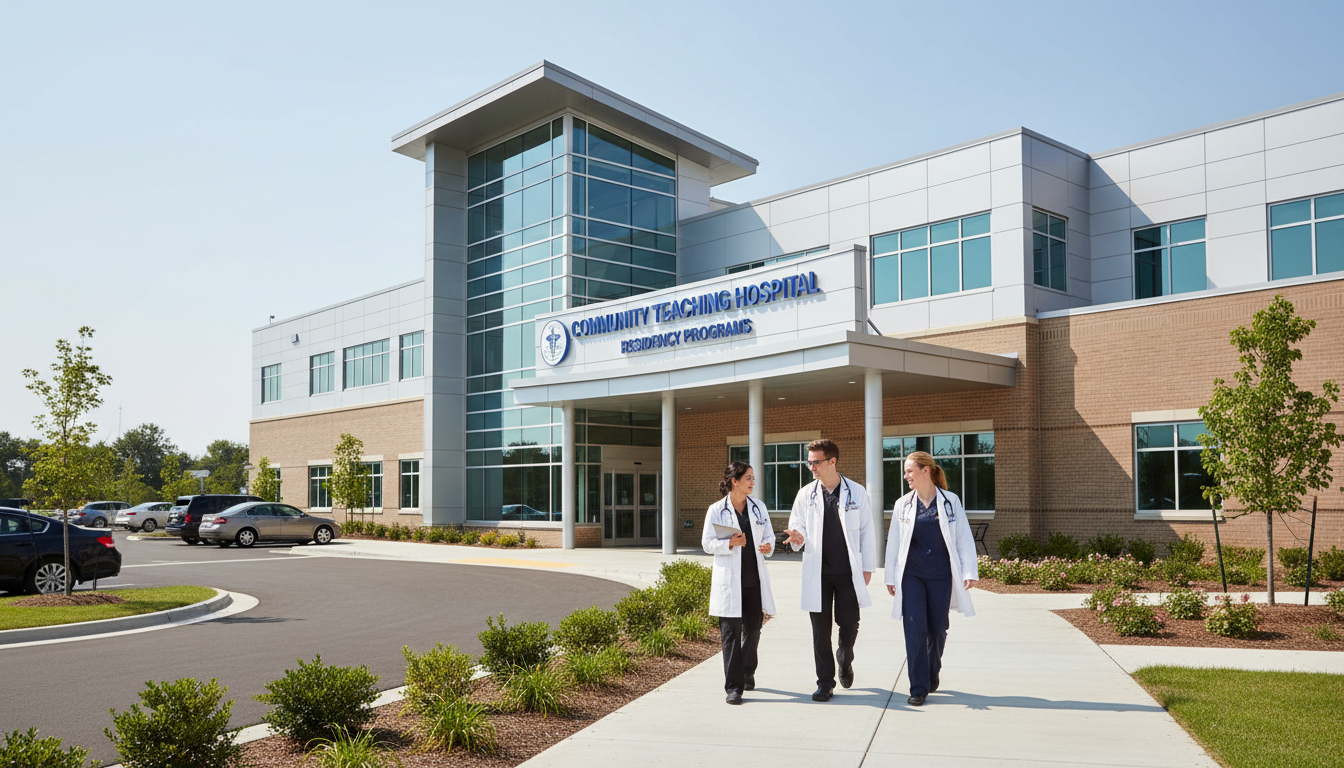
Community hospital residency and community-based residency programs are often:
- Smaller and more personal
- Less research-intensive
- More focused on service, patient care, and teaching basic clinical skills
- Located in suburban, semi-rural, or underserved urban areas
They may be:
- University-affiliated (with some academic connections but mainly community-focused)
- Completely independent community programs
For a non-US citizen IMG with a low Step 1 score, these programs can be more flexible if you demonstrate:
- Strong USCE
- Evidence of being reliable, hardworking, and culturally competent
- A genuine interest in serving their patient population long term
2. Program Selection Strategy with Low Scores
When building your ERAS list, consider:
a. Score Filters and Attempts Policies
Look for:
- Programs that accept multiple attempts
- IMGs in their current and recent resident lists
- Explicit statements like “We consider the entire application” or “No strict USMLE cutoffs”
Avoid or de-prioritize:
- Highly competitive academic programs in major metropolitan areas
- Programs with stated minimum scores significantly above your own
- Programs that do not sponsor visas, if you require one
b. Visa Sponsorship Patterns
As a foreign national medical graduate, you must align your strategy with visa realities:
- Identify which programs sponsor J-1 vs H-1B:
- J-1 sponsorship is more common, especially in community settings.
- H-1B is more selective and often requires strong scores and first-attempt passes.
- Use resources:
- FREIDA and program websites
- Current residents’ profiles (to see visa types and IMG representation)
- Program FAQs or coordinator emails for clarification
If you have low scores plus need an H-1B, your window is narrower. You may need:
- Strong Step 2 CK
- Zero failed attempts
- Extensive USCE and superb letters
If you are flexible to accept J-1, more community-based residency programs become realistic options.
3. Geographic Strategy
With below average board scores, applying only to the most popular states (NY, CA, TX, FL) can be risky. Instead:
- Include less competitive regions:
- Midwest
- South
- Smaller cities or rural areas
- Pay special attention to:
- States with historically high IMG representation
- Community hospitals serving underserved populations, which may welcome committed IMGs
A balanced strategy:
- 20–30% in locations you especially want (if realistic)
- 70–80% in broad, geographically diverse areas where competition may be lower
4. Size and Type of Residency Program
Consider:
- Smaller programs may offer closer mentorship and be more flexible with non-traditional candidates.
- Larger community programs might have more structured support and a track record of matching IMGs to fellowships but could also have more applicants and thus stricter filters.
Review:
- Current resident bios: How many IMGs? What countries? YOG?
- Program outcomes: Do graduates pass boards at high rates? Do they move on to fellowships or primary care jobs?
If you see multiple non-US citizen IMG graduates with similar exam histories (e.g., older YOG, etc.), that’s a strong positive sign.
Application Execution: ERAS, Interview Season, and Ranking
Once you’ve built a realistic target list, you need to execute well at every stage to maximize your chances of matching with low scores.
1. ERAS Application Tactics
- Apply early: Submit ERAS on the opening date or as close as possible. With low scores, you cannot afford a late application.
- Apply broadly: For non-US citizen IMG candidates with low Step 1 / CK, applying to 80–150+ programs in IM/FM is common, depending on budget and profile; adjust based on your strengths and school support.
- Tailor your program signals (if available):
- Use any “signal” or priority feature to highlight community hospital residency programs where:
- You have done USCE
- You have geographic ties
- You strongly fit their mission (e.g., serving specific communities or languages)
- Use any “signal” or priority feature to highlight community hospital residency programs where:
2. Interview Preparation and Performance
For many non-US citizen IMG candidates, interview performance can be the deciding factor once you’re past the score screen.
Prepare to:
- Clearly, confidently explain:
- Any low Step scores or attempts
- Your journey as a foreign national medical graduate
- Why you prefer a community-based residency over a large academic center
- Show deep understanding of:
- The program’s patient population
- Their call structure, rotations, and teaching model
- Demonstrate communication skills:
- Practice common questions with native or fluent English speakers
- Get feedback on accent clarity and speaking pace if needed, without changing your identity
When discussing low scores:
- Keep it brief and honest:
- State the cause (test anxiety, early adjustment to US-style exams, illness)
- State what you learned (new study methods, time management)
- State your improved performance or clinical strengths as evidence of growth
- Shift attention back to:
- Your strong Step 2 CK (if applicable)
- High performance on USCE and letters
3. Ranking Strategies
When ranking:
- Place programs in the true order of your preference—the algorithm works in your favor that way.
- Don’t assume you are “not good enough” for a program if they interviewed you; interviews signal real interest.
- Include all programs where:
- You would attend if it were your only match
- Visa sponsorship is feasible for you
- You believe you can succeed and be supported
Avoid:
- Leaving a program unranked that you would realistically attend.
- Over-ranking programs where you are unhappy with culture or support, simply due to reputation.
Putting It All Together: A Sample Strategic Plan
Here’s an example of how a non-US citizen IMG with a low Step 1 score might structure a 12–18 month strategy targeting community hospital residency programs:
Profile Example:
- Non-US citizen IMG, graduated 2 years ago
- Step 1: 205 (first attempt pass)
- Step 2 CK: Pending
- No USCE yet
Plan:
Months 1–3:
- Begin intensive Step 2 CK preparation, aiming high to counterbalance Step 1.
- Start researching community-based residency programs that:
- Sponsor J-1 visas
- Have a history of IMGs matching
- Apply for USCE in internal medicine / family medicine at community hospitals.
Months 4–6:
- Take Step 2 CK only when practice scores are trending above your target.
- Start a 2–3 month USCE rotation sequence in community hospitals.
- Work closely with attendings to secure strong letters.
Months 7–9:
- Receive Step 2 CK score (aiming ≥ 220+ if possible, or as high as you can achieve).
- Finalize ERAS materials:
- Personal statement tailored to IM/FM community programs
- CV highlighting USCE, language skills, any volunteer service
- Secure 2–3 US letters from USCE and 1 from home institution if strong.
Application Season:
- Apply broadly (e.g., 100–120+ IM/FM programs focused on community hospitals).
- Use any program signaling for your top targets.
- Prepare systematically for interviews; do mock interviews focusing on explaining your journey and scores.
Interview Season & Ranking:
- Attend all realistic interviews.
- Send concise thank-you notes emphasizing your fit and interest, especially for community programs where you did USCE.
- Rank in genuine order of preference, based on program culture, visa sponsorship, and support.
By combining exam recovery, targeted USCE, strong letters, and careful program selection, many non-US citizen IMG candidates with below average board scores succeed in matching into community hospital residency positions.
FAQs: Low Step Score Strategies for Non‑US Citizen IMGs in Community Programs
1. Can I still match into a community hospital residency with a low Step 1 score?
Yes, many non-US citizen IMG applicants with low Step 1 scores match every year, particularly into internal medicine, family medicine, and psychiatry community-based residency programs. Your chances improve significantly if you:
- Achieve a stronger Step 2 CK score
- Obtain hands-on USCE with excellent letters
- Apply broadly to IMG-friendly community programs that sponsor your visa type
2. How many programs should I apply to if I have below average board scores as a foreign national medical graduate?
There is no single number, but many candidates in this situation apply to 80–150+ programs in IM/FM, depending on budget and profile. Focus on:
- IMG-friendly community hospitals
- Programs that explicitly sponsor J-1 or H-1B (as needed)
- States and regions that are less saturated and more open to IMGs
3. Should I explain my low Step scores or failed attempt in my personal statement?
If your score is just modestly low and you have no failures, you may not need to address it directly. However, for very low scores or any failed attempts, a brief, honest explanation followed by emphasis on what changed and how you improved (e.g., better Step 2 CK, strong clinical evaluations) can help. Don’t over-focus on the problem; show growth and resilience.
4. Is research necessary for matching with low scores into community-based residency programs?
Research is usually not mandatory for community hospital residency programs, especially in IM and FM. If you have research, include it, but clinical strength and USCE are more important. If you must choose where to invest limited time and money, prioritize:
- Step 2 CK performance
- Hands-on USCE at community hospitals
- Strong US letters of recommendation
These components carry more weight than research alone in most community-based residency settings.