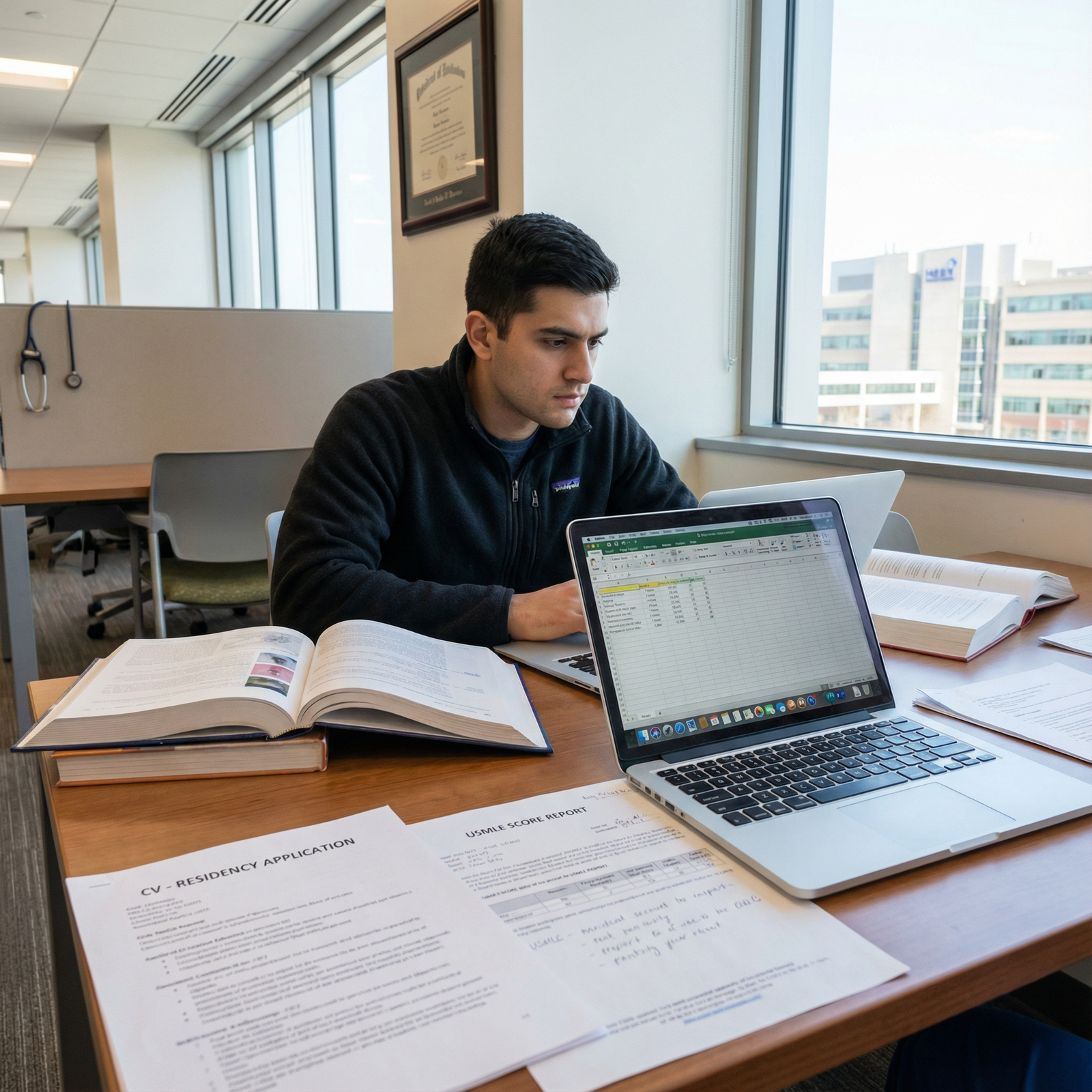
Understanding the Challenge: Low Scores, IMG Status, and Nuclear Medicine
Matching into a nuclear medicine residency as a non-US citizen IMG with a low Step 1 score or below average board scores is absolutely possible—but it requires a deliberate, strategic approach.
You are facing three simultaneous hurdles:
Non-US citizen status
- Need visa sponsorship (usually J-1, sometimes H-1B)
- Program directors may worry about visa logistics and long-term plans
IMG status
- Less familiarity with your school and training quality
- Concerns about adaptation to the US healthcare system
- Implicit bias favoring US graduates, especially with limited positions
Low or below-average scores
- Your application may be screened out by automatic filters
- Harder to be seen as “low risk” by program directors
- Need alternative ways to demonstrate competence and reliability
At the same time, nuclear medicine has some unique features that can work in your favor:
- Smaller specialty with fewer applicants than highly competitive fields
- Many programs value research, imaging experience, and technical skills as much as raw scores
- Some programs historically more open to foreign national medical graduates who show strong academic or research potential
This article focuses on practical, step-by-step strategies to improve your chances of a nuclear medicine match as a non-US citizen IMG with low Step 1 or below average board scores.
Step 1: Reframe Your Application Around Strengths, Not Scores
Your scores are one data point—not your entire story. For matching with low scores, your central task is to redirect program attention away from the numbers and toward clear, objective strengths.
1. Identify and Own Your Score Profile
Be honest and precise about your situation:
- Low Step 1 score:
- If pre-pass/fail: well below national mean or previously failed
- If pass/fail (recent years): failing on first attempt, borderline pass, or multiple attempts
- Low Step 2 CK or Step 3:
- Below average or failed attempt
- Multiple attempts:
- Critical to address, but can be mitigated with improvement and context
Action:
- Make a simple table for yourself:
- Step 1: score/attempts
- Step 2 CK: score/attempts
- Step 3: score/attempts (if taken)
- Any re-takes or remediation in medical school
You are not going to share the table with programs, but you must clearly understand your own risk profile to build the right counter-strategy.
2. Build a “Compensatory Strengths” Narrative
For a foreign national medical graduate with low scores, program directors look for evidence that your scores don’t reflect your real potential. Helpful compensatory strengths include:
- Strong clinical performance: Honors in core rotations, strong narrative evaluations
- Excellent nuclear medicine or radiology-related research
- Consistent upward trajectory (e.g., low Step 1, stronger Step 2 CK or Step 3)
- Demonstrated technical and analytical skills (programming, image analysis, AI, data science, physics)
- Strong English communication and interpersonal skills
- Mature professionalism and reliability
You need to be able to say, implicitly or explicitly:
“Yes, my scores are not ideal—but look at my growth, my work ethic, my concrete achievements, and how well I fit nuclear medicine.”

Step 2: Targeted Profile Building for Nuclear Medicine
Nuclear medicine is a data-heavy, image-focused, and research-friendly specialty. These characteristics create opportunities for a non-US citizen IMG with below average board scores to stand out.
1. Prioritize Nuclear Medicine–Relevant Research
Because nuclear medicine is small, even a few good research projects can put your application in a completely different category.
Where to Start
- Look for nuclear medicine, PET/CT, SPECT/CT, molecular imaging, or theranostics research groups:
- Academic radiology or nuclear medicine departments
- Cancer centers
- Physics or biomedical engineering labs that collaborate with nuclear medicine
For a non-US citizen IMG not yet in the US, consider:
- Remote collaborations: literature reviews, data analysis, AI projects
- Online networking (email faculty, attend virtual department conferences, webinars, SNMMI virtual events)
If you are already in the US:
- Seek postdoctoral research or research scholar positions in nuclear medicine or radiology
- Even a 1–2 year focused research position can dramatically offset low USMLE scores
What Types of Projects Help Most?
- Clinical outcomes of PET/CT or SPECT/CT
- Radiotracer development or novel imaging protocols
- Dosimetry, radiation safety, image quantification
- AI or machine learning applications in nuclear imaging
- Theranostics (e.g., Lu-177, I-131, Ga-68, F-18 tracers)
Concrete goal:
Aim for at least 1–2 first-author and several co-authored abstracts or manuscripts directly related to nuclear medicine before you apply.
2. U.S. Clinical and Imaging Experience — With Strategy
For a non-US citizen IMG, US experience matters—but with low scores, you must be very strategic.
Focus on Quality, Not Random USCE
Instead of general internal medicine observerships, seek:
- Nuclear medicine observerships or electives
- Radiology electives with a strong nuclear medicine component
- Rotations in cancer centers or tertiary hospitals where molecular imaging is central
What you want from these experiences:
- Letters from US nuclear medicine or radiology faculty
- Documented familiarity with:
- US imaging workflow
- Structured reporting
- Interdisciplinary tumor boards
- Radiation safety and regulations
How Many Rotations?
If financially and logistically possible:
- 2–3 months total with clear nuclear medicine exposure
- If that’s too difficult, even 1 well-chosen month with strong mentorship is better than 3 months of random, unrelated observerships
3. Develop a “Technical Skill Edge”
Program directors in nuclear medicine appreciate applicants who understand:
- Basic image processing
- Radiation physics fundamentals
- Data analysis and statistics
- Potential of AI/ML in imaging
You can strengthen your profile by:
- Taking online courses (Coursera, edX, etc.) in:
- Python for data analysis
- Medical imaging informatics
- Intro to AI or machine learning
- Learning basic DICOM handling and image visualization using open-source tools
- Participating in imaging-related hackathons, student projects, or open datasets
Include these in your CV under “Skills” and “Projects”, highlighting how they relate to nuclear medicine.
Step 3: Strategic Program Selection and Application Tactics
With low scores and visa needs, where you apply can matter almost as much as who you are.
1. Understand the Nuclear Medicine Training Pathways
Depending on your country, graduation year, and exam status, nuclear medicine training in the US may occur through:
- Dedicated Nuclear Medicine residency (independent specialty programs)
- Combined Diagnostic Radiology–Nuclear Medicine pathways at some institutions
- Nuclear medicine fellowships after Radiology residency (less relevant if you’re applying now but important for long-term planning)
For this article, we focus on nuclear medicine residency programs themselves, especially those more likely to consider foreign national medical graduates.
2. Filter for Visa-Friendly and IMG-Friendly Programs
As a non-US citizen IMG, you must immediately screen for:
- Programs that sponsor J-1 visas (most common)
- Programs that have previously taken IMGs
- Average or minimum score requirements (when listed)
Action steps:
- Use FRIEDA and individual program websites
- Check program websites for:
- “We sponsor J-1 visa” or “H-1B considered”
- Current resident lists—look for IMGs and non-US names
- Language like “we welcome IMGs,” “we evaluate applications holistically,” or explicit statements about not using rigid cutoffs
If a program clearly states:
- “No visa sponsorship” → do not waste time or money
- “US grads only” → skip these
3. Apply Broadly and Intelligently
With below average board scores, your match strategy should be:
- Apply widely:
- Most nuclear medicine programs, as long as they:
- Accept ECFMG-certified IMGs
- Sponsor visas
- Most nuclear medicine programs, as long as they:
- Prioritize programs:
- At academic centers with active nuclear medicine research
- That are not located in the most competitive cities
- That show prior acceptance of foreign graduates
Remember that some programs may use automatic filters based on Step scores or attempts. To maximize your odds:
- Apply early on Day 1 of ERAS opening
- If a program doesn’t explicitly list cutoffs, email the coordinator politely:
- Ask if they consider IMGs with prior attempts or low scores
- Emphasize your nuclear medicine experience/research in that email signature line
You’re not asking them to review your application early; you’re checking whether their filters will automatically screen you out.

Step 4: Application Components That Offset Low Scores
Every piece of your application can either reinforce doubt about your scores—or prove that the scores are not the whole story. Here’s how to build each component intentionally.
1. Personal Statement: Control the Narrative
Your personal statement should acknowledge your weaknesses indirectly, but focus overwhelmingly on your fit and strengths.
Key elements:
Clear origin story for nuclear medicine:
- Specific clinical case, research project, or mentor that drew you to the field
- Demonstrate understanding that nuclear medicine is more than imaging—it’s physiology, molecular biology, and theranostics
Concrete experiences proving sustained interest:
- Observerships or electives in nuclear medicine
- Research projects and what you actually did (not just titles)
- Tumor board participation, radionuclide therapies, multidisciplinary care
Addressing low scores (carefully):
- Do not write a long explanation unless:
- There is a genuine, brief, and credible context (significant health issue, serious family emergency, language transition, etc.)
- If you mention it, keep it:
- Brief
- Honest
- Focused on what you learned and how your subsequent performance improved (e.g., stronger Step 2 CK, better clinical grades, research productivity)
- Do not write a long explanation unless:
Future vision:
- Show you understand where nuclear medicine is going:
- Theranostics expansion
- Hybrid imaging (PET/MRI, advanced PET/CT)
- AI in quantitative imaging
- State how you want to contribute in the US system—academics, research, clinical innovation, or global collaboration
- Show you understand where nuclear medicine is going:
Do not use generic language like “I am passionate and hardworking.” Show passion and work ethic through specific examples.
2. Letters of Recommendation: Your Most Powerful Tool
For matching with low scores, strong letters can sometimes override test performance.
Aim for:
- 3–4 letters, at least:
- 1–2 from US nuclear medicine or radiology faculty
- 1 from a research mentor in nuclear medicine (US-based if possible)
- 1 from a clinical supervisor who can speak about your professionalism and work ethic
What strong letters should highlight (explicitly):
- Your analytic skills in interpreting imaging findings
- Your attention to detail and reliability
- Your communication with multidisciplinary teams
- How you handle complex information and learn from feedback
- Clear statements like:
- “Despite his/her lower test scores, in my experience their clinical reasoning and commitment place them among the top trainees I have worked with.”
Be proactive:
- Provide your letter writers with:
- Your CV
- Summary of your nuclear medicine experiences and achievements
- Bullet points of projects or patient cases you worked on with them
3. CV and Experiences: Thoughtful Organization
Your CV should visually convey a focused trajectory in nuclear medicine:
- Sections:
- Education and exams (do not hide attempts—programs will see them anyway)
- Clinical experience (highlight imaging and nuclear medicine exposure)
- Research experience (with bold “Nuclear Medicine,” “PET/CT,” “Theranostics,” etc.)
- Publications and abstracts
- Presentations (especially at SNMMI, RSNA, EANM, local nuclear medicine meetings)
- Skills (image analysis, statistics, programming if relevant)
- Volunteer work or leadership (especially if related to education, global health, or oncology)
Use clear, outcome-oriented bullet points to show what you did and what came of it—not just that you “participated” or “observed.”
4. Step 3: Should You Take It?
For some foreign national medical graduates with low scores, Step 3 can be strategically helpful:
- Taking and passing Step 3 before the match may:
- Reduce concerns about future test performance
- Make you more attractive to programs that consider H-1B visas
- Show concrete improvement compared to earlier exams
However:
- If your Step 2 CK is already low, a second poor performance on Step 3 can hurt more than not having it at all.
- If you do take Step 3:
- Prepare thoroughly
- Aim to show a noticeable upward trend
Discuss this with mentors who understand your full profile.
Step 5: Interviews and Post-Interview Strategy with Low Scores
If you secure interviews, your scores have already been “overruled” enough for you to be considered seriously. Now the main question becomes: Are you someone they want to work with for years?
1. Prepare to Discuss Your Scores Confidently
If your low Step 1 score or failed attempt comes up:
- Do not sound defensive or blame external factors
- Use a simple structure:
- Acknowledge briefly (1–2 sentences)
- Provide minimal context only when necessary
- Emphasize what changed afterward and what you learned
Example:
“I did struggle with Step 1 initially. At that time, I underestimated the adjustment needed for a US-style exam and was dealing with a difficult personal situation. I took responsibility, changed my approach, and focused more on integrating basic science with clinical vignettes, which helped me improve on Step 2 CK and in my clinical work. Since then, my evaluations and research output better reflect my capabilities.”
Then pivot quickly back to:
- Your current performance
- Your nuclear medicine-specific skills
- Your long-term commitment to the field
2. Demonstrate Genuine Understanding of Nuclear Medicine
To stand out:
- Be ready to discuss:
- Basic principles of PET/CT and SPECT/CT
- Situations where nuclear medicine changes management (e.g., lymphoma staging, prostate cancer PSMA imaging, parathyroid adenoma localization)
- Radionuclide therapy examples (I-131, Lu-177 DOTATATE, Lu-177 PSMA)
- Ask intelligent, specific questions:
- “How is your program involved in theranostics?”
- “What opportunities are there for residents to participate in image quantification or AI-related projects?”
- “How do residents collaborate with oncology and surgery teams at tumor boards?”
Your goal is to be remembered as the IMG with low scores who is clearly serious about nuclear medicine, understands the field, and is already thinking like a future colleague.
3. Leverage Your Unique Background as a Non-US Citizen IMG
Your international background can be a strength:
- Discuss:
- Exposure to different healthcare systems and resource-limited settings
- How this shaped your appreciation for precise, cost-effective imaging
- Any prior experience with nuclear medicine in your home country (even if limited)
- Interest in future collaborations or knowledge transfer between the US and your home region
Programs may see you not just as a trainee, but as a potential bridge to global collaboration in imaging.
4. Post-Interview Communication
With low scores, it can help to reinforce your interest (within NRMP and program guidelines):
- Send personalized thank-you emails emphasizing:
- Specific things you liked about the program
- How you see yourself contributing (research, teaching, global perspective)
- If a program director has expressed explicit openness to your low scores but concern about visa or fit:
- Clarify your long-term plan and visa flexibility
- Reaffirm, in a professional way, that you would strongly consider ranking them highly
Avoid sounding desperate; focus on enthusiasm and fit.
Final Advice: Mindset and Long-Term Planning
Even with excellent strategy, the nuclear medicine match can be unpredictable—especially for a non-US citizen IMG with below average board scores. You need both:
- A high-intensity, focused application effort now, and
- A long-term backup and growth plan if you don’t match this cycle.
1. If You Don’t Match
If your first application is unsuccessful:
- Request feedback from any program where you interviewed
- Strengthen:
- More targeted nuclear medicine or radiology research
- Additional US imaging-related observerships or positions
- Better English communication skills if needed
- Consider a structured research year at a nuclear medicine department, even without a formal residency spot
Use that year to build:
- More publications
- Stronger letters
- Deeper integration into the department
2. Consider Related Pathways
If nuclear medicine remains your passion, you can also consider:
- Applying to diagnostic radiology in the future and then fellowshipping in nuclear medicine
- Exploring hybrid opportunities in your home country plus periodic research stays in the US
- Working in medical physics, imaging research, or industry roles related to nuclear medicine while continuing to build your academic profile
Your goal is not just to match once—but to build a sustainable career in imaging and molecular medicine.
FAQs
1. Can a non-US citizen IMG with a very low Step 1 score realistically match into nuclear medicine?
Yes, but it requires extra work and strategic planning. Programs may hesitate initially, but if you demonstrate:
- Strong nuclear medicine–focused research
- Solid US imaging experience
- Excellent letters of recommendation from nuclear medicine or radiology faculty
- Clear improvement over time and professional maturity
you can absolutely still match. The smaller applicant pool in nuclear medicine gives you more room to differentiate yourself beyond board scores.
2. What is more important for me: research or US clinical experience?
Both matter, but for nuclear medicine, research often has slightly more impact, especially if it’s clearly in imaging or theranostics and leads to publications or conference presentations. However:
- At least one meaningful US clinical or imaging experience is important to prove you can function in the US system
- If you must choose, a strong nuclear medicine research position at a US institution that also gives you limited clinical exposure is often ideal
3. Should I explain my low scores in my personal statement?
Only if:
- There is a short, credible, and verifiable context (e.g., health emergency, major life event), and
- You can show clear improvement and learning afterward
Do not write long justifications or emotional narratives. Keep any explanation brief, then focus on your growth, achievements, and readiness for residency.
4. How many programs should I apply to as a foreign national medical graduate with low scores?
For a non-US citizen IMG with below average board scores, you should assume:
- There may be automatic filters at several programs
- Some programs will not consider visas seriously
Therefore, it is wise to:
- Apply to most nuclear medicine residency programs that:
- Sponsor J-1 visas
- Have evidence of accepting IMGs
- Expect to need a broad application strategy—often 25+ programs if available, depending on the year and your budget
Always combine broad applications with targeted networking, research, and communication so that you’re more than just another file in the pile.
A low Step 1 score, below average board scores, or a past exam failure do not define your future. As a non-US citizen IMG passionate about nuclear medicine, you can still build a strong, credible pathway to a nuclear medicine match by strategically amplifying your strengths, proving your technical and clinical value, and showing unwavering commitment to the specialty.