Understanding How Step Scores Really Matter in Urology for Non‑US Citizen IMGs
If you are a non-US citizen IMG aiming for urology residency in the United States, your USMLE scores (Step 1 and Step 2 CK) will feel like the center of your application universe. Urology is a small, highly competitive specialty with limited positions and a strong preference for applicants who have clear, objective markers of excellence—especially for a foreign national medical graduate who needs visa sponsorship.
However, “high score or no chance” is an oversimplification, and it can be dangerously discouraging. The true challenge is strategy: understanding where your Step performance places you, and then building a deliberate, multi-year plan around that reality.
This article will walk you through:
- How programs actually interpret Step 1 and Step 2 CK in urology
- What “low Step score” means in this specialty for a non‑US citizen IMG
- How to use a strong Step 2 CK to compensate for a weaker Step 1
- How to tailor your program list, research, and away rotations to your score profile
- Risk‑management strategies if you have a low Step score but still aim for the urology match
Throughout, the focus is not just on scores, but on a Step-centered strategy that integrates visas, research, networking, and personal timelines.
The Urology Score Landscape: Where Do You Stand?
Urology is not Internal Medicine: Understanding the Baseline
Compared to many other specialties, urology is:
- Small: Fewer residency positions nationwide
- Highly competitive: Strong applicant pool, including top US MDs
- Score-conscious: Programs use Step scores as a quick filter for interviews
For a non-US citizen IMG, the score bar is usually higher than for US MD or US DO applicants because:
- Programs have less familiarity with your medical school, so they lean heavily on objective metrics.
- Some programs have institutional or hospital policies that restrict sponsorship of visas.
- There is an assumption—accurate or not—that IMGs should “prove themselves” with very strong exams and research.
What Is a “Low” Step Score in the Context of Urology?
Since score distributions and thresholds change over time, numbers are approximate, but for context:
- Historically strong for urology IMGs:
- Step 1 (pre-pass/fail era): Often ≥ 240–245
- Step 2 CK: Often ≥ 245–250+
- Average/Borderline competitive:
- Step 2 CK: ~235–245
- Low Step score for urology (but not necessarily impossible):
- Step 2 CK: <230–235, especially for a non-US citizen IMG
If your Step 2 CK is <230, you are in “low Step score match” territory for urology—there are paths forward, but they require very careful planning, focused targeting, and sometimes multi-cycle strategies.
The New Reality of Step 1 Pass/Fail
Step 1 is now reported as Pass/Fail, but many non‑US citizen IMGs:
- Took Step 1 before the transition and still have a numeric score, or
- Are worried that a simple “Pass” might be seen as “average” compared to earlier cohorts.
Strategically:
- If you have a low numeric Step 1 score, your focus must be on a high Step 2 CK and strong clinical performance.
- If your Step 1 is pass only, programs will lean even more heavily on Step 2 CK, your MSPE (Dean’s letter), clerkship grades, and letters.
For urology, Step 2 CK is now your primary scoring currency, especially as a non‑US citizen IMG.
Step 1 and Step 2 CK: How Programs Actually Use Them

Step 1: Damage Control vs. Value Add
Scenario A: Low numeric Step 1 (e.g., <225)
For a non-US citizen IMG, this will raise questions for urology programs:
- Did you struggle with basic sciences?
- Are you able to handle the cognitive demands of surgical training?
Your strategy must be:
- High Step 2 CK to clearly show improvement.
- Strong narrative in your personal statement and MSPE emphasizing growth, resilience, and recent excellence.
- Highlighting any honors in clinically relevant rotations and urology electives.
Scenario B: Solid numeric Step 1 (e.g., 235–245)
This helps, but alone it is not enough; you still need:
- Good to strong Step 2 CK
- Urology‑specific experiences and research
- Strong letters to distinguish you from US MDs with similar scores.
Scenario C: Pass/Fail Step 1
If you passed on the first attempt:
- Step 1 is no longer a major differentiator; programs will not dwell too much unless there is a fail or delay.
- The spotlight is totally on Step 2 CK and the rest of your application.
If you failed Step 1 once but then passed:
- You must show significant recovery with Step 2 CK ≥240 (ideally higher) to offset the concern.
- You will likely need a more targeted program list and a stronger emphasis on research and mentorship to compensate.
Step 2 CK: The Central Pillar of Your Score Strategy
For urology, Step 2 CK:
- Is often used as an interview screen (e.g., many programs have an informal floor like 235–240).
- Matters more for non-US citizen IMGs than for US MDs.
- Can rescue a weaker Step 1 or non-traditional background.
As a foreign national medical graduate, aim for:
- Target score for strong competitiveness: ≥ 245–250+
- Reasonable but borderline range: 235–245 (requires a strong rest of application)
- Below 235: You must treat urology as a high-risk objective and prepare backup plans.
Step 2 CK Strategy by Starting Point
If you have not taken Step 2 CK yet:
Delay vs. Early Take:
- If your knowledge base is not solid, do not rush “just to have a score.”
- For urology and a non‑US citizen IMG status, a later but higher score is more beneficial than an earlier average one.
Study with urology in mind:
- Emphasize surgical decision-making, critical care, and internal medicine-level pathophysiology—these will be relevant to letters and interviews.
- Use NBME and UWorld self-assessments to simulate exam conditions; target at least a 245+ equivalent before scheduling your exam if possible.
Timeline alignment with the urology match:
- Urology has an early match through the AUA (traditionally earlier than the NRMP Main Match).
- You need your Step 2 CK score available by the time you apply, ideally already reported when your application is first reviewed.
If you already took Step 2 CK and it is lower than desired (e.g., 225–235):
- Understand that the score is permanent. A retake is generally not possible unless there was an administrative failure.
- Your score strategy must now shift to:
- Maximizing every non‑score strength (research, LORs, US clinical experience, mentorship).
- Hyper-targeting programs that have historically taken IMGs or have more flexible score ranges.
- Considering a staged path (research year, preliminary surgery year, or another specialty first).
Designing a Step‑Centered Application Strategy for Non‑US Citizen IMGs
1. Segment Your Program List by Score Selectivity
Your Step 2 CK and Step 1 profile will determine how you build your urology program list.
High Step Scores (Step 2 CK ≥ 245–250, strong Step 1 or Pass)
- Cast a broad net, but still prioritize:
- Academic centers open to IMGs and visas
- Programs with active research, especially in your interests (e.g., oncology, endourology, male infertility)
- Apply to nearly all urology programs that sponsor visas unless clearly IMG‑averse.
Moderate Step Scores (Step 2 CK 235–245, Step 1 lower or pass)
- More deliberate focus on:
- Mid-tier or community‑based urology programs affiliated with larger institutions
- Programs where prior residents or fellows are IMGs or non‑US citizens
- Institutions in regions more open to IMGs (Midwest, South, some East Coast programs)
- Avoid wasting applications on programs with a strict reputation for “US MD only.”
Low Step Scores (Step 2 CK < 235)
- Understand that your urology application is high risk, especially as a non-US citizen IMG.
- Your list should:
- Focus almost exclusively on programs with a history of taking IMGs and sponsoring visas.
- Be paired with a robust backup plan (e.g., applying simultaneously to general surgery or internal medicine if your advisors strongly recommend it).
Practical step: Build a spreadsheet of urology programs and mark:
- Past IMGs in residency or fellowship
- Visa acceptance (J‑1, H‑1B)
- Location (urban vs. community)
- Apparent research focus (helps weigh fit with your profile)
2. Use Research to Offset Score Disadvantages
For a non-US citizen IMG with a low Step score targeting urology, urology-focused research is one of the most powerful tools you have.
Types of Research That Carry Weight
- Clinical urology projects (outcomes, epidemiology, surgical techniques)
- Prospective or retrospective chart reviews
- Basic science work related to oncology, andrology, kidney physiology, bladder/urethral pathology
- Quality improvement projects in urologic care
More important than the type is the productivity and visibility:
- Abstracts and posters at AUA or subspecialty meetings
- Publications in urology or surgical journals
- Co-authorship with recognized urology faculty in the US
How to Use Research Strategically
Target Mentors at U.S. Institutions
- Even a 6–12 month unpaid or funded research fellowship in a US urology department can transform your application.
- Programs are more comfortable inviting someone they already know from their research team.
Align Your Research Timeline With Your Step Plan
- If you are still preparing for Step 2 CK, consider a lighter research involvement that does not compromise your study time.
- After Step 2 CK, you can shift more heavily into research output and conference participation.
Explicitly Frame Your Research as Proof of Competence
- In your personal statement and interviews, link your research success to your ability to handle complex information, collaborate in teams, and contribute meaningfully to academic urology—especially useful if your Step 1 was low.
Crafting a Step‑Compatible Clinical and Networking Strategy

U.S. Clinical Experience (USCE): Quality Over Quantity
For urology, urology-specific USCE is extremely valuable. With lower scores, this factor becomes even more critical.
Ideal USCE for Urology IMGs
- Sub-internships (sub-I) or acting internships in urology
- Urology electives in academic centers with residency programs
- Observerships are less impactful but better than nothing if hands-on roles are restricted.
Goals of USCE beyond the obvious learning:
- Secure strong urology letters of recommendation from US faculty.
- Demonstrate performance that contradicts any negative assumptions from a low Step score.
- Build relationships with faculty who may advocate for your interview.
Letters of Recommendation to Support a Low or Borderline Step Profile
If you are a non-US citizen IMG with a modest Step 2 CK, you want letters that explicitly address:
- Your clinical judgment and reliability
- Work ethic and resilience (especially if you improved from Step 1 to Step 2)
- Technical or pre-technical surgical aptitude
- Communication skills and professionalism
Strongest letters often come from:
- U.S. urology attendings who supervised you extensively
- Research mentors in urology with academic clout
- A non-urology surgeon or internist can be a secondary letter if they can speak to your overall clinical strength—but prioritize at least 2–3 urology‑specific letters if possible.
Networking as a Multiplier for Your Step Score
In a small specialty like urology, who knows you can sometimes partly offset “what your score is.”
Practical networking steps:
- Attend AUA or regional urology meetings as a student or research fellow.
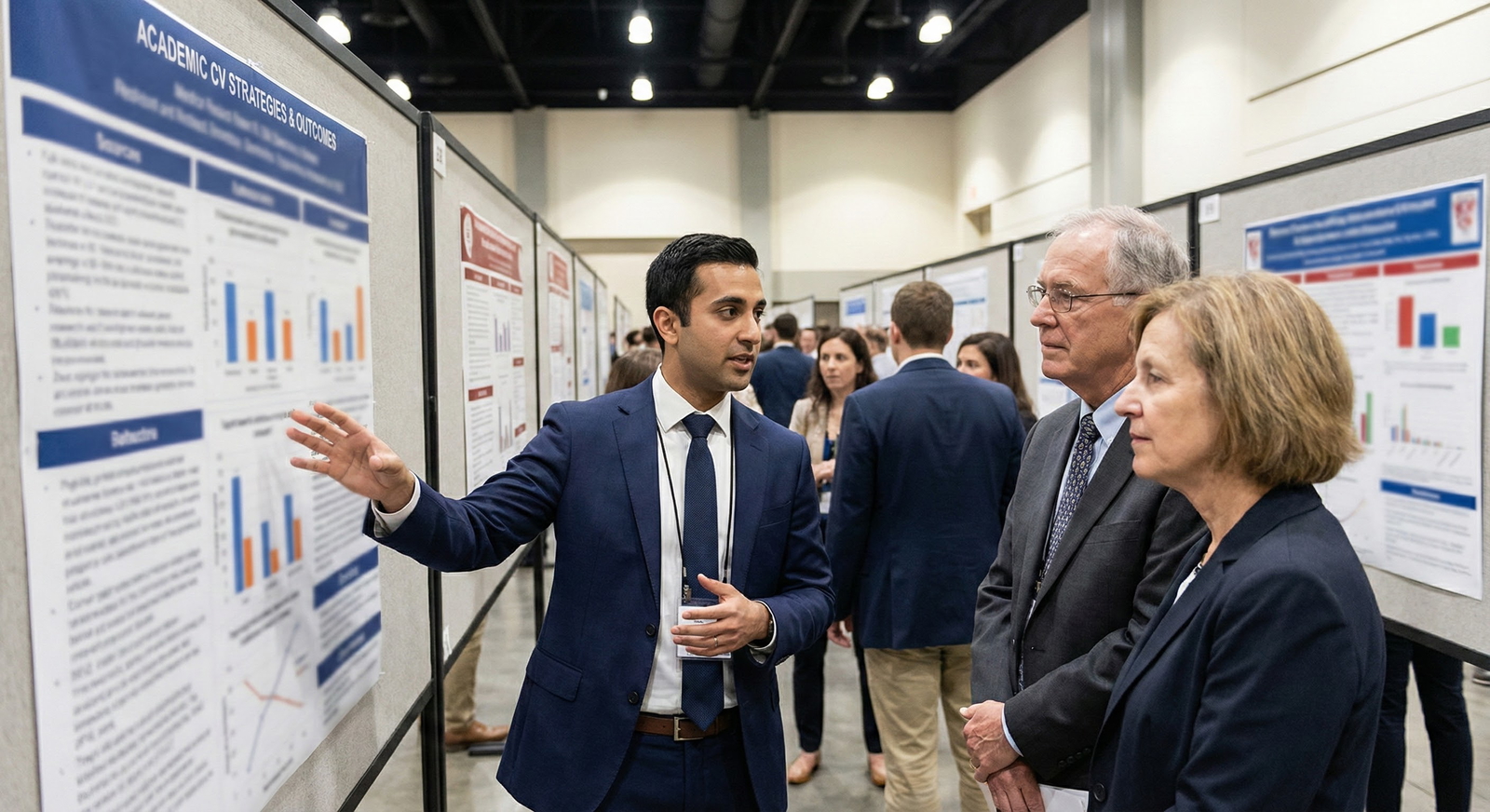
- Introduce yourself to program directors and faculty after lectures or poster sessions where your work is presented.
- Ask mentors to email colleagues at other institutions on your behalf during application season.
If your Step scores are not in the top tier, personal endorsements from respected urologists are one of the most powerful tools you can use.
Risk Management: When Scores Are Low but Urology Is Your Goal
For a non-US citizen IMG with a clearly low Step score match profile (e.g., Step 2 CK <230), a purely “all-in” strategy on urology can be risky. You need to think in parallel tracks:
Track 1: Maximize Urology Chances in the Short Term
Build your strongest possible application for the upcoming urology match:
- Research productivity
- Urology electives and USCE
- High-quality letters
- Tailored personal statement highlighting your specific passion and resilience
Apply strategically to:
- Programs with IMGs and visa sponsorship
- Less “prestige-obsessed” institutions or regions
- Any institution where you have research or clinical connections
Track 2: Medium- to Long-Term Backup Routes
If you do not match in urology, consider:
Dedicated Urology Research Year (or Two) in the U.S.
- Use unmatched year(s) to become heavily involved in urology research.
- Reapply to urology later with greatly strengthened credentials.
Preliminary General Surgery or Transitional Year
- Match into a prelim surgery position and continue to engage with urology faculty, clinics, and research at that institution.
- Some residents successfully transfer or reapply with stronger U.S. experience, though this path is not guaranteed.
Alternate Specialty With Overlap
- Internal medicine with focus on nephrology, oncology, or male reproductive endocrinology
- Radiology or interventional radiology with urologic imaging interest
- This route allows you to work in closely related fields if urology ultimately proves unattainable after several attempts.
When to Reassess
If after 2 cycles of serious, strategic applications with focused improvement and urology-specific achievements you are still not getting interviews or traction, you should:
- Seek honest feedback from urology mentors and program directors.
- Consider redirecting definitively to a backup specialty where your profile (including your Step scores) aligns better with realistic match outcomes.
Example Scenarios and Practical Step Score Strategies
Scenario 1: Non-US Citizen IMG, Step 1 = 224, Step 2 CK = 247
- Status: Urology-competitive, but Step 1 is on the low side for the specialty.
- Strategy:
- Emphasize Step 2 CK improvement as evidence of growth.
- Build strong urology research portfolio and obtain 2–3 US urology LORs.
- Apply broadly to all visa-favorable programs; avoid self-eliminating based on Step 1 alone.
Scenario 2: Non-US Citizen IMG, Step 1 Pass, Step 2 CK = 236
- Status: Borderline but realistic with a strong overall application.
- Strategy:
- Focus on outstanding USCE in urology and research to “lift” your file.
- Prioritize targeted programs with documented IMG acceptance and personal connections.
- Pair urology applications with a solid backup (e.g., general surgery) if mentors advise.
Scenario 3: Non-US Citizen IMG, Step 1 = 210, Step 2 CK = 228
- Status: Low step score match profile for urology.
- Strategy:
- Accept that immediate urology match odds are low.
- Seek a 1–2 year urology research position at a US institution to rebuild your profile.
- Consider applying to a prelim general surgery position while maintaining close ties with urology.
- Reassess after significant research output and stronger US references.
FAQs: Step Score Strategy for Non‑US Citizen IMGs in Urology
1. Can a strong Step 2 CK completely compensate for a low Step 1 for urology as a non‑US citizen IMG?
Not completely, but it can substantially reduce program concerns. A jump from a low Step 1 to a strong Step 2 CK (e.g., from 215 to 245) tells programs you matured academically, adapted to the exam system, and can handle clinical material. You still need strong urology-specific experiences and letters, but Step 2 CK can shift you from “automatic screen-out” to “consider with caution,” which is a major improvement.
2. Is it worth delaying graduation or the match year to improve my Step 2 CK performance?
In many cases, yes. For urology, especially as a non-US citizen IMG, a significantly higher Step 2 CK can be worth a delayed timeline. However, don’t postpone indefinitely. Work with mentors to assess whether 3–6 extra months of solid preparation are likely to yield a meaningful score increase (e.g., from mid-230s to high-240s or beyond).
3. How many urology programs should I apply to as a non‑US citizen IMG with average scores?
Apply as broadly as feasible within programs that:
- Accept J‑1 and/or H‑1B visas, and
- Have a track record of interviewing or matching IMGs.
Because urology is small, “broad” might mean 40–70+ programs if resources allow. Your advisor or mentor can help you filter out institutions historically closed to IMGs so you don’t waste fees.
4. If I have very low Step scores, should I give up on urology completely?
Not automatically. Instead, think strategically and honestly. Ask:
- Can I commit 1–2 years to urology research in the US?
- Do I have or can I build strong mentorship in urology?
- Am I prepared for the emotional and financial cost of a high‑risk path?
If the answer to these is yes, you may pursue a staged approach (research + later application). If multiple cycles pass without progress, it is wise to pivot toward a specialty where your Step scores and profile give you a realistic path to training and a satisfying career.
By understanding how your Step 1 and Step 2 CK scores are interpreted in the context of urology—and by combining that knowledge with targeted research, networking, and program selection—you can move from a passive, score-driven mindset to an active, strategy-driven plan. For a non-US citizen IMG in urology, that shift can be the difference between a discouraging process and an intentional, well-managed path toward your goals.