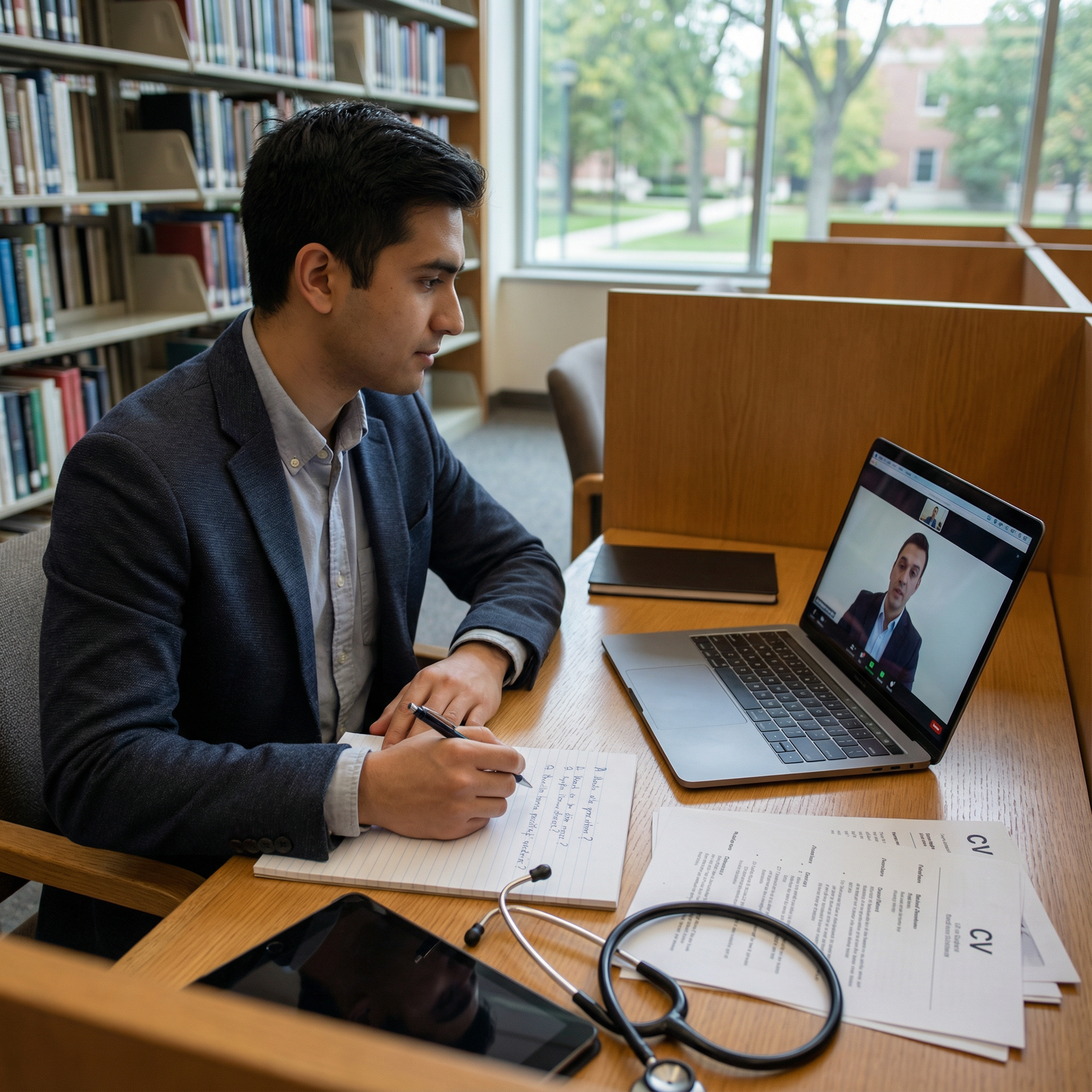
Understanding Your Situation as a Non‑US Citizen IMG with Low Scores
Matching into a transitional year residency (TY program) is competitive for any applicant—but especially for a non-US citizen IMG with a low Step 1 score or generally below average board scores. That does not mean it’s impossible. It does mean you must be extremely strategic, realistic, and organized.
Key challenges you face:
- You are a non-US citizen IMG / foreign national medical graduate, so:
- Some programs cannot sponsor visas.
- Many programs prioritize US graduates and US citizens/green card holders.
- You have low Step scores:
- For older graduates or those who took Step 1 when it was scored, a low Step 1 score is a major screening factor.
- Below average board scores on Step 2 CK (and Step 3 if taken) limit automatic interview invitations.
- Transitional year residency itself is competitive:
- Many applicants use TY programs as a “bridge” year into specialties like radiology, anesthesiology, PM&R, or neurology.
- Programs often receive far more applications than they can reasonably review in depth.
Your goal is to strategically minimize the impact of low scores, highlight your strengths, and target programs where your profile has a realistic chance.
In this guide, you will learn:
- How programs actually view low scores in non-US citizen IMGs
- How to repair or offset low Step scores with a strong Step 2 CK and/or Step 3
- How to select, research, and stratify transitional year programs intelligently
- How to design a compelling ERAS application that tells a clear, upward‑trajectory story
- How to use letters, clinical experience, and networking to get past filters
- Practical tactics for matching with low scores as a foreign national medical graduate
How Programs View Low Scores in Non‑US Citizen IMGs
Program directors don’t all think the same way, but they do share some common concerns. Understanding those concerns helps you craft a targeted strategy.
1. Why scores matter so much for IMGs
Even though USMLE Step 1 is now pass/fail for recent test‑takers, the history of screening by scores persists, especially for IMGs:
- Volume of applications: Transitional year residency programs often receive thousands of applications for a few dozen positions.
- Easy filters: Scores are used as quick filters, particularly against non-US citizen IMGs. A low Step 1 score or low Step 2 CK can lead to automatic rejections.
- Perception of risk: Some program directors worry that applicants with below average board scores:
- May struggle with in‑training exams (ITEs)
- Might fail Step 3 or specialty boards
- Could require more supervision and remediation
For a foreign national medical graduate, low scores can trigger two separate biases: “IMG” + “low performance.”
2. Where transitional year programs are flexible (and where they’re not)
Not all TY programs are equal. Broadly, they fall into:
- Highly competitive, academic TY programs
- Linked to competitive specialties (radiology, anesthesiology, dermatology, radiation oncology, etc.).
- Frequently prioritize matched categorical residents from their own institution or affiliated specialty programs.
- Often have strict score cutoffs—Step 2 CK 235–245+ and may rarely look at foreign national medical graduates with low Step 1 scores.
- Community or non-university TY programs
- Often more flexible, especially if they have trouble filling.
- More likely to consider non-US citizen IMGs, especially those with:
- Strong letters from US physicians
- Demonstrated clinical reliability
- Good communication and team skills
Your best chance of matching with low scores is typically in community-based or less competitive TY programs that sponsor visas and have a history of accepting IMGs.
3. What “low score” means in this context
“Low” is relative, but for non-US citizen IMG applicants to transitional year residency, these thresholds often apply:
- Step 1 (scored era):
- Below ~220 is often considered low for IMGs; below ~210 is high risk.
- Step 2 CK:
- Below ~230 for IMGs in TY programs may be considered below average.
- Step 3 (if taken):
- A pass is more important than a high score, but below ~215–220 may raise concern.
You cannot change old scores, but you can demonstrate improvement. That trajectory matters.

Academic Repair: Step 2 CK, Step 3, and Beyond
When you have a low Step 1 score or other below average board scores, the single most powerful academic strategy is to show a clear upward trend. Transitional year program directors want evidence that past poor performance is not your future.
1. Make Step 2 CK your redemption exam
If your Step 1 is low or borderline, Step 2 CK becomes your flagship score.
Goals for non-US citizen IMGs with low Step 1:
- Aim to score clearly higher than Step 1, even if still slightly below the national average.
- A jump of 15–25+ points from Step 1 to Step 2 CK is viewed positively.
- Focus on:
- Consistent daily questions (e.g., UWorld, AMBOSS)
- At least 2–3 self-assessments to track improvement
- Dedicated study calendar of 6–10 weeks if possible
If Step 2 CK is already taken and also low, you must lean more heavily on non-score strengths (clinical performance, letters, USCE, personal narrative) and consider Step 3 strategically.
2. Should you take Step 3 before applying?
For a non-US citizen IMG with low scores, Step 3 can sometimes be helpful, but it is not always necessary. Consider Step 3 if:
- You are a foreign national requiring a H‑1B visa, and:
- Target programs explicitly prefer or require Step 3 for H‑1B sponsorship.
- Your Step 1 and Step 2 CK are low but passing, and you:
- Are confident you can pass Step 3 on first attempt.
- Want to show that you can handle higher-level exams.
Avoid Step 3 if:
- You are poorly prepared and at significant risk of failing.
- You’re within a few months of the application season and cannot dedicate enough study time.
A marginal or failing Step 3 score can harm you more than help. Only add Step 3 as a positive data point, not a gamble.
3. Use your MSPE, transcript, and medical school performance wisely
For foreign national medical graduates, program directors look at:
- Class ranking or quartile (if available)
- Honors in clinical rotations
- Trends: Did you improve over time? Were early struggles followed by strong clinical performance?
If your pre-clinical years were weak but clinical years were strong, emphasize:
- Honors in internal medicine, surgery, or key rotations.
- Narrative comments praising reliability, communication, and work ethic.
Mention this trajectory directly in your personal statement (e.g., acknowledging early struggles, then showing improvement with concrete examples).
Choosing the Right Transitional Year Programs with Low Scores
Picking the right programs is where many non-US citizen IMGs make their biggest mistakes. You cannot afford to waste ERAS slots on programs where your chance is effectively zero.
1. Understand the types of TY programs
Transitional year residencies fall into several profiles:
Academic TY linked to competitive specialties
- Often pre-allocated to PGY-1 residents entering radiology, anesthesia, etc.
- Typically: high score expectations, few open spots, heavy US grad presence.
- For low Step score non-US citizen IMGs: very low yield.
Community-based TY programs with strong education but less prestige
- Provide broad clinical exposure in medicine, surgery, emergency medicine.
- More likely to take IMGs and support visa sponsorship.
- Often more open to applicants with low Step 1 scores if:
- Score trend is upward
- Clinical and professionalism record is strong
Smaller or newer TY programs
- May have had prior difficulty filling all positions.
- More flexible in candidate profiles.
- Sometimes less rigid about board score cutoffs.
Your strategy: prioritize groups 2 and 3.
2. How to identify IMG‑friendly TY programs
For each target program, examine:
- NRMP Charting Outcomes & Program websites:
- Do they mention accepting IMGs or sponsoring visas?
- Are there minimum score cutoffs published?
- Current and past residents:
- Check program websites for resident lists.
- Look for foreign-sounding names or known IMG medical schools.
- If possible, note visa status or country of origin from LinkedIn or institution profiles.
- FREIDA (AMA database):
- Filter by programs that sponsor J‑1 and/or H‑1B visas.
- Review the number of international graduates per year.
If a program has no IMGs in recent years, no visa sponsorship, and implies high score requirements, it is extremely low yield for your profile.
3. Building a realistic application list with low scores
For non-US citizen IMGs with below average scores, a broad and tiered application strategy is essential.
Example for 60–80 TY applications:
- 10–15% “reach” programs
- Slightly above your score range but historically take some IMGs.
- May have higher academic reputation.
- 50–60% “target” programs
- Past acceptance of IMGs, including non-US citizens.
- Median scores closer to yours.
- Community or hybrid programs.
- 25–35% “safety‑leaning” programs
- Historically less competitive or frequently unfilled.
- More IMGs, smaller locations, less urban or less popular regions.
If TY positions are limited in a particular year, consider:
- Parallel planning:
- Apply to preliminary medicine or preliminary surgery programs in addition to TY.
- Especially if your long‑term specialty (e.g., radiology or anesthesia) tolerates prelim years.
4. Geographic flexibility
For foreign national medical graduates with low Step scores:
- Do not overly restrict location based on preference (e.g., only big coastal cities).
- Be open to:
- Smaller cities
- Midwest or Southern US
- Programs not in major academic hubs
These locations are often less saturated with applicants, and some are more open to IMGs.

Application Components: Turning a Weakness into a Coherent Story
Your ERAS application must do more than list experiences—it must tell a clear, credible story explaining how you have grown beyond your low Step scores.
1. Personal statement: address, but do not obsess over, your low scores
For a non-US citizen IMG matching with low scores, your personal statement is not the place to recite your CV; it’s your chance to:
- Explain any meaningful context behind low performance (briefly and factually).
- Emphasize an upward trajectory and resilience.
- Connect your experiences to why transitional year residency specifically fits your career path.
Tips:
- If you had a low Step 1 score:
- Mention it only if you can also show a concrete change (improved study methods, better Step 2 performance, stronger clinical evaluations).
- Frame it around growth and insight, not excuses.
- Emphasize:
- Adaptability to new systems (important for IMGs).
- Strong work ethic and reliability.
- Commitment to continuous learning and exam preparation.
Sample framing (condensed):
“Early in my training, my Step 1 score did not reflect my true capabilities. That experience forced me to critically examine my study strategies and time management. By restructuring my preparation and focusing on active clinical application, I improved my performance on Step 2 CK and consistently received strong evaluations in core rotations. This growth has prepared me to contribute as a dependable, hardworking intern in a transitional year residency.”
2. Letters of recommendation: your most powerful asset after scores
When your scores are weak, strong, specific letters from US physicians can move your application from “discard” to “consider.”
Aim for:
- 3–4 letters, with at least:
- 2 from US clinical experiences (USCE), ideally from internal medicine, surgery, or a field relevant to your future specialty.
- 1 from your home institution (dean, department chair, or trusted mentor).
What letters should highlight:
- Your clinical judgement and medical knowledge.
- Your reliability, punctuality, and ability to function like an intern.
- Communication skills with patients and team members.
- Explicit comparisons (e.g., “among the top 10% of students I have supervised”).
Be proactive:
- Ask letter writers directly if they can write a “strong, supportive letter”.
- Provide them with your CV, personal statement draft, and specific points you hope they will emphasize (e.g., your improvement after early exam challenges).
3. US clinical experience (USCE) and observerships
For a foreign national medical graduate, especially with low Step scores, quality US clinical experience is crucial.
Prioritize:
- Hands‑on experiences:
- Sub‑internships, externships, or rotations where you:
- Write notes (even if unofficial)
- Present patients
- Attend rounds
- Sub‑internships, externships, or rotations where you:
- Hospital‑based observerships with active teaching:
- Shadowing alone is weaker, but can still produce useful letters if you are engaged.
How to leverage USCE:
- Reflect your performance in letters.
- Describe your role and responsibilities clearly in ERAS.
- Show familiarity with the US health system, EMR, and interprofessional teamwork.
4. CV and experiences: signal maturity and reliability
With low scores, you must compensate by signaling:
- Professionalism: no gaps, no unexplained issues.
- Consistency: regular involvement in clinical, teaching, or community work.
- Commitment to learning: participation in QI projects, M&M conferences, journal clubs.
Examples of helpful experiences to list:
- Longitudinal volunteering in clinics or community health programs.
- Assistant roles in research or QI—even if not first author.
- Teaching roles: tutoring, mentoring junior students, leading exam prep groups.
If you have a gap year or longer:
- Explain it clearly (e.g., family responsibilities, research position, language training, exam preparation).
- Show you stayed engaged in medicine in some capacity (reading, observing, remote projects).
Interview and Ranking Strategies for Low Step Score Non‑US Citizen IMGs
Getting interviews is the hardest part with below average scores. Once you are in the door, you can significantly influence the outcome.
1. Securing interviews: targeted communication
In addition to a broad ERAS application, consider:
Targeted emails to program coordinators or directors:
- Short, respectful note expressing interest.
- Attach CV and mention:
- You are a non-US citizen IMG with valid visa options (if relevant).
- Your particular interests and why their TY program fits.
- Do not apologize excessively for low scores; instead, highlight strengths and recent improvements.
Networking through mentors or alumni:
- Ask US attendings or senior residents if they know anyone at your target TY programs.
- A quick email from a known colleague can help your file get noticed.
2. Owning your narrative during interviews
You may be asked directly about your low Step 1 score or other board performance.
Guidelines for responding:
- Be honest, brief, and non-defensive.
- Acknowledge the issue, focus on what you learned, and highlight subsequent success.
Example response:
“My Step 1 score was below my expectations. At that time, I underestimated the need for structured, question‑based preparation. I reflected on my approach, sought advice from mentors, and changed my study strategies. As a result, I performed better on Step 2 CK and have consistently received strong evaluations from my US clinical rotations. I’m confident that the way I work now reflects those improvements.”
Avoid:
- Blaming external factors excessively (e.g., “the exam was unfair,” “I had too many distractions”).
- Sounding resentful or ashamed.
3. Emphasize attributes TY programs value
Transitional year residency directors are often looking for interns who are:
- Dependable and low‑drama: show up, work hard, get along with the team.
- Adaptable: handle a variety of rotations (medicine, surgery, ED, electives).
- Good communicators: safe handoffs, clear documentation, respectful with patients.
Use specific examples in your interview answers:
- Times you:
- Took ownership of a patient.
- Dealt with a difficult situation (clinical or interpersonal).
- Learned from feedback or error.
4. Ranking strategy with low scores
When making your rank list:
- Rank all programs where you would be willing to work, even if they seem less prestigious.
- Do not try to “game” the algorithm by placing “safety” programs first; rank strictly in order of preference.
- For non-US citizen IMGs:
- Consider visa stability:
- J‑1 vs H‑1B availability.
- Institutional track record for visa processing.
- Consider whether the program’s TY year aligns with your long‑term specialty goals (e.g., more medicine months if planning internal medicine or radiology).
- Consider visa stability:
If you remain unmatched:
- Be prepared with a SOAP strategy well before Match Week (updated CV, LORs, and a list of prelim/TY programs that often have open positions).
FAQs: Low Step Score Strategies for Non‑US Citizen IMGs in Transitional Year
1. Is it realistic for a non-US citizen IMG with a low Step 1 score to match a TY program?
Yes, it can be realistic, but only with careful strategy:
- Focus on TY programs that are IMG‑friendly, especially community-based ones.
- Show a strong upward trend with Step 2 CK and clinical performance.
- Obtain excellent US letters of recommendation.
- Apply broadly and be geographically flexible. While highly competitive academic TY programs may be out of reach, many community programs are open to foreign national medical graduates with below average board scores who demonstrate reliability and growth.
2. Should I postpone my application to improve my chances with a better Step 2 CK or Step 3 score?
Consider postponing one cycle if:
- Your current Step 2 CK is low and you have not yet taken it (or you’re confident you can improve it substantially with more time).
- You can use the year productively (USCE, research, language skills, professional activities).
- You’re at high risk of having no interviews if you apply now.
If you already have both Steps with low scores, postponing may not change your scores, but you can still strengthen your profile with:
- Additional USCE and stronger LORs.
- Research or QI projects.
- Clear, well-explained experience on your CV.
3. Which is better for a low‑score non-US citizen IMG: transitional year or preliminary internal medicine?
It depends on your long‑term specialty and goals:
Transitional year residency:
- Broader rotations (medicine, surgery, ED, electives).
- Often preferred for fields like radiology, anesthesia, PM&R.
- More flexible for career exploration if your specialty is undecided.
Preliminary internal medicine:
- More focused on medicine inpatient rotations.
- Sometimes more numerous than TY spots.
- May be slightly more accessible in some regions for IMGs with low scores.
With low scores, you will often increase your odds by applying to both TY and prelim medicine programs, unless your future specialty has strict preferences.
4. How many programs should I apply to as a low-score foreign national medical graduate?
There is no universal number, but for a non-US citizen IMG with below average scores:
- Consider 60–80+ TY and prelim programs combined, depending on:
- Your exact scores
- Visa needs
- Strength of USCE and letters
- Focus on quality research of each program rather than blind mass applications.
- Incorporate a mix of reach, target, and safety‑leaning programs, with heavier emphasis on targets and safety.
By recognizing how programs interpret low Step scores, strategically improving what you can (especially Step 2 CK), targeting the right transitional year residency programs, and building a coherent, upward‑trajectory application, you can significantly improve your chances of matching with low scores as a non-US citizen IMG. The path is narrower—but with deliberate planning, it is still very much open.