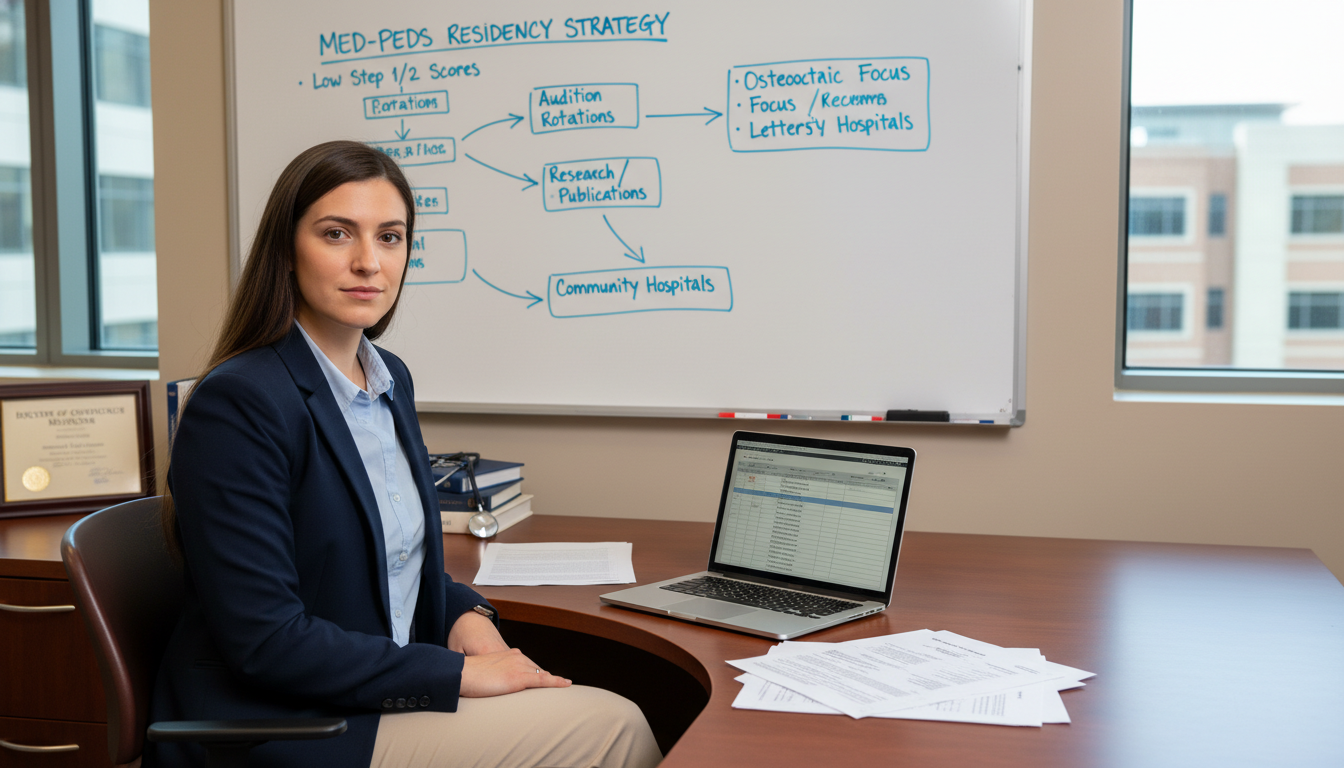
Understanding Low Step Scores in the HBCU Residency Context
For many MD graduates, opening the USMLE score report is a turning point. If you see a low Step 1 or Step 2 CK score—or even a failure—it can feel like your residency goals are slipping away. But for applicants connected to HBCU-affiliated programs, there are unique strengths and pathways that can help counterbalance below average board scores and still lead to a successful allopathic medical school match.
This article focuses on practical, evidence-informed strategies for MD graduates with:
- A low Step 1 score (including Step 1 fail/pass on a retake era),
- A relatively low Step 2 CK score,
- Or a combination of both, including below average board scores.
We will pay particular attention to:
- Leveraging the mission and strengths of HBCU residency programs
- Positioning your experience as an MD graduate from an allopathic medical school
- Designing an application strategy that maximizes match potential despite low scores
The goal is not simply “matching with low scores,” but matching into a program where you can thrive, be supported, and contribute meaningfully—especially within communities traditionally served by HBCUs.
Step 1: Reframe Your Application Around Mission, Not Just Metrics
Why HBCU-Affiliated Programs Can Be Different
Many HBCU residency programs (and other mission-driven institutions) explicitly value:
- Commitment to underserved communities
- Cultural humility and health equity work
- Longitudinal service and advocacy
- Resilience in the face of adversity
Meharry residency programs, Howard, Morehouse, and other HBCU-affiliated GME sites often understand historical inequities in education, standardized testing, and healthcare. They are not “blind” to scores, but they may:
- Read applications more holistically
- Place more weight on sustained service and leadership
- Value lived experience and community engagement
- Be more willing to interview applicants with lower USMLE scores if the rest of the portfolio is compelling
Your job is to make that holistic story impossible to ignore.
Translate Your Story into Application Strength
If your scores are low, you must make the rest of the application exceptional:
Personal Statement Aligned With Mission
- Clearly state your commitment to underserved or marginalized patients.
- Highlight experiences with community health, free clinics, pipeline programs, or advocacy.
- If you are a graduate of an HBCU medical school or undergraduate institution, explain how that shaped your professional identity.
- Do not make the entire statement about your low Step 1 score; briefly acknowledge challenges only if needed, then pivot to growth and impact.
Mission-Consistent CV
- Include:
- Community service (frequency, duration, depth of involvement).
- Leadership roles in SNMA, LMSA, AMSA, community orgs, or interest groups.
- Quality improvement or health equity-focused projects.
- Any work with predominantly Black or underserved populations.
- Include:
Letters of Recommendation (LoRs) With Specificity
- Identify attendings or program leaders who can:
- Speak to your clinical excellence, work ethic, and bedside manner.
- Explicitly address your reliability, teachability, and resilience.
- Contextualize your test performance if they have direct knowledge (e.g., “Despite a below average board score, this resident-level student consistently performs at the top of the team clinically.”)
- Identify attendings or program leaders who can:
Programs may forgive low Step scores if they see a clear, well-documented pattern of clinical strength + mission alignment + positive evaluations.

Step 2: Strategic Score Recovery and Academic Narrative
Understanding “Low” in Context
“Low Step 1 score” or “low Step 2 CK score” is relative and specialty-specific. However, some general guidelines for an MD graduate residency applicant:
- Step 1 (pre-pass/fail era):
- Below ~215–220 often becomes a concern, especially in competitive specialties.
- Step 2 CK:
- Scores below the national mean (often ~240s) are technically “average/low-average.”
- Scores below ~225–230 can be concerning for many core specialties.
Even so, these numbers are not absolute barriers—especially in primary care, internal medicine, family medicine, psychiatry, pediatrics, and some transitional or preliminary year programs, including many HBCU residency programs.
If You Have Another Test Opportunity
If Step 2 CK is still upcoming or you can still take Step 3 before application deadlines:
Make Step 2 CK or Step 3 Your Redemption
- Aim for a clear improvement over your Step 1 performance, even if still not stellar.
- Programs often look for an upward trend more than perfection.
- A solid Step 2 CK can reassure PDs about your ability to pass in‑training and board exams.
Structured Study Over “More Hours”
- Use a formally structured schedule (e.g., 6–10 weeks of focused review).
- Combine:
- A question bank (UWorld or similar)
- A condensed high-yield text or video series
- Daily schedule review of weak systems
- Take NBME practice exams and document improving scores.
Document Your Process
- If you previously struggled (test anxiety, life events, learning issues), show:
- You recognized the problem.
- You changed your study strategies.
- You sought support (learning specialists, counseling, test prep coaching).
- This narrative can be referenced in your MSPE (Dean’s letter) or a brief, factual paragraph in your personal statement if needed.
- If you previously struggled (test anxiety, life events, learning issues), show:
If All Scores Are Already Final (No More Exams Before Match)
When there is no chance to raise scores, your strategy shifts to reframing and reinforcing:
Build a Clear Academic Narrative Example phrasing for an advising note or PS (used sparingly):
“Standardized tests have historically under-represented my true clinical performance; however, on wards and sub-internships, I have consistently been evaluated at or above the level of an incoming intern, including strong performance in high-acuity settings.”
Maximize Evidence of Clinical Excellence
- Target sub-internships (acting internships) in programs and settings aligned with your chosen specialty and HBCU missions.
- Request LoRs that specifically:
- Compare you favorably to peers.
- Emphasize clinical reasoning, professionalism, and patient rapport.
Address Failures Directly but Briefly (If Applicable)
- If you had a Step 1 or Step 2 CK fail:
- State it succinctly if you must discuss it.
- Emphasize what changed:
- Study structure
- Wellness and time management
- Use of institutional resources
- Highlight subsequent successes (e.g., pass on retake, stronger clinical shelf scores, good in-training exam if you’re a reapplicant or prelim year trainee).
- If you had a Step 1 or Step 2 CK fail:
Step 3: Targeted Program Selection for Matching With Low Scores
Choose Specialties with Realistic Thresholds
If your dream was dermatology or orthopedic surgery but your Step performance is significantly below average, you will likely need a pivot. For MD graduate residency applicants with below average board scores, specialties with more flexibility often include:
- Internal Medicine
- Family Medicine
- Psychiatry
- Pediatrics
- Physical Medicine & Rehabilitation (in some settings)
- Transitional Year or Preliminary Internal Medicine as a bridge
Key point: Matching with low scores is achievable when your specialty choice aligns with:
- Your clinical strengths,
- Your narrative,
- And realistic competitiveness.
Focus on HBCU Residency Programs and Mission-Driven Institutions
HBCU-affiliated and safety-net programs are often strong options for an MD graduate residency applicant with low Step scores because they may:
- Take more holistic approaches
- Emphasize service and fit over raw metrics
- Appreciate applicants with lived experience in similar communities
Examples of strategic targeting:
Meharry residency programs (e.g., internal medicine, family medicine, psychiatry) for applicants with:
- Demonstrated commitment to underserved care, particularly Black and rural communities.
- Significant community engagement or public health experience.
Other HBCU-affiliated GME sites, such as:
- Howard University Hospital programs
- Morehouse School of Medicine affiliated residency programs
- HBCU-affiliated community hospitals (depending on the region)
Also consider:
- Safety-net hospitals that serve similar populations.
- County systems or community-based programs with a strong mission of equity and access.
Build a Tiered Application List
For an MD graduate with a low Step 1 score and modest Step 2 CK, a typical strategy might be:
- Total programs applied: Often 35–60+ in primary care fields; more if reapplying or if scores are particularly low.
- Tiers:
- Reach programs (15–20%)
- University or competitive community programs that you’d love but where your scores are on the lower end.
- Target programs (40–50%)
- Mid-range community programs, mission-driven academic centers, a mix of HBCU and non-HBCU institutions where your profile is within or slightly below average but supported by strong experiences.
- Safety programs (30–40%)
- Programs with historically lower average scores or higher proportion of IMGs, smaller or more rural programs, and places clearly open to applicants with some academic challenges.
- Reach programs (15–20%)
Be honest with yourself and your advisor. Data from NRMP’s “Charting Outcomes” and individual program websites can help you gauge your standing.

Step 4: Strengthening Your Application Through Experiences and Relationships
Make Every Clinical Rotation Count
Your clinical evaluations and narrative comments become even more important when scores are low. Focus on:
- Showing up early, staying late, and volunteering for tasks.
- Seeking real-time feedback from residents and attendings.
- Demonstrating growth across the rotation (programs love to see trajectory).
- Improving documentation, oral presentations, and handoffs.
- Building rapport with nurses, ancillary staff, and patients—PDs hear about this.
Example:
An MD graduate with a low Step 1 score but repeated comments like “functions at the level of an intern,” “exceptional bedside manner,” and “trusted to manage complex patients under supervision” can stand out more than someone with high scores and average comments.
Use Away Rotations and Sub-Internships Strategically
If possible, aim for at least one sub-internship or audition rotation at:
- An HBCU residency program you are targeting, or
- A mission-driven hospital that serves a high volume of underserved patients.
During that month:
- Treat it as a month-long interview.
- Ask early what is expected of top-performing students.
- Request a letter of recommendation before you leave, if you’ve done well.
- Express specific interest in their program and knowledge of their patient population.
Your goal is to change the conversation from “low Step scores” to “this is the student we remember as outstanding on our service.”
Harness Mentorship and Sponsorship
Mentorship is indispensable—especially in HBCU-affiliated environments where faculty often have deep experience supporting students who overcame obstacles.
Actionable steps:
- Identify faculty (preferably in your target specialty) who:
- Understand your story and strengths.
- Are willing to review your personal statement and program list.
- Can advocate for you directly to program directors or selection committees.
- Seek mentors outside your institution as well:
- Alumni in your desired specialty.
- HBCU residency grads who matched with low scores and can share tactics.
- National specialty societies’ mentorship programs (e.g., ACP, AAFP, APA, NMA).
Sometimes a single well-placed email from a respected faculty member can move your application from the “maybe” to the “interview” pile.
Step 5: Communicating About Low Scores Without Letting Them Define You
When to Address Low Scores Directly
You do not need to devote large sections of your application to explaining a low Step 1 score. However, it may be wise to briefly address it if:
- You have a USMLE failure on record.
- There were serious mitigating circumstances: health issues, family crisis, major institutional issues.
- Your performance since then represents a clear positive trend.
Recommended locations:
- MSPE (Dean’s letter), if your school includes context.
- A concise paragraph in your personal statement (one to three sentences).
- Potentially in interviews when asked about challenges or setbacks.
How to Frame the Conversation
Focus on three elements:
Ownership
- Acknowledge the outcome without deflecting responsibility.
- Example:
“My Step 1 score was below my expectation and did not reflect my usual academic performance.”
Insight
- Identify specific factors:
- Poor study structure
- Over-reliance on passive learning
- Personal stressors
- Example:
“I realized I had been studying passively and was not adequately simulating exam conditions.”
- Identify specific factors:
Action and Growth
- Describe concrete changes:
- New study plans
- Practice exams
- Tutoring, counseling, wellness improvements
- Tie these to later successes:
- Improved clerkship performance
- Higher shelf scores
- Strong Step 2 CK or Step 3 (if applicable)
- Example:
“In response, I reorganized my study schedule, focused heavily on question-based learning, and regularly reviewed practice exam performance with a faculty mentor. These changes were reflected in my stronger clinical evaluations and improved Step 2 CK score.”
- Describe concrete changes:
During Interviews: Turn Weakness Into a Resilience Story
If asked about low Step scores:
- Stay calm and factual.
- Avoid self-deprecation; maintain professional confidence.
- End with what you’ve done to ensure success in residency (e.g., improved test strategies, time management, support systems).
Remember: many program directors are less concerned about the old score itself and more concerned about whether you’ve learned enough to pass future in-training and board exams and function reliably on the team.
Step 6: Backup Plans and Long-Term Strategy If You Don’t Match
Even with strong preparation, not every applicant matches on the first try—particularly those with multiple academic red flags. Having a structured “Plan B” doesn’t mean you lack confidence; it shows maturity and foresight.
Consider a Transitional or Preliminary Year
A one-year prelim or transitional year, particularly in:
- Internal Medicine
- Surgery (if aiming for a surgical field later)
- A transitional program with strong inpatient exposure
can help you:
- Prove your clinical readiness.
- Earn powerful letters from faculty who can say, “This doctor has already functioned effectively as a PGY-1.”
- Build a track record of passing in-training exams, which reduces program directors’ anxiety about your low Step scores.
Strengthen Your Academic Portfolio During a Gap Year
If unmatched, you can spend 1–2 years building a stronger profile:
- Clinical roles:
- Hospitalist extender roles, research coordinator, clinical educator positions where you work closely with physicians.
- Education:
- A master’s degree in public health, clinical research, or a related field (especially at an HBCU graduate program or institution aligned with your goals).
- Research and quality improvement:
- Join ongoing projects, especially those related to health disparities, community engagement, quality improvement, or medical education.
- Aim for posters, abstracts, or publications.
Continue connecting with HBCU residency programs and mission-driven sites—demonstrating persistence and consistent engagement over time.
FAQs: Low Step Score Strategies for MD Graduate in HBCU-Affiliated Programs
1. Can I match into an HBCU residency program with a low Step 1 score?
Yes, it is possible. HBCU residency programs often use holistic review and may consider your dedication to underserved communities, clinical evaluations, letters of recommendation, and personal story more heavily than a single test score. However, they still need assurance that you can pass future board exams, so any upward trajectory (stronger Step 2 CK, solid in-training exam performance if you’ve done a prelim year) is very helpful.
2. How important is Step 2 CK for me if my Step 1 score is low or I failed Step 1?
Step 2 CK becomes crucial. For MD graduate residency applicants with a low Step 1 score, a stronger Step 2 CK:
- Demonstrates academic growth.
- Reassures programs about your board-passing potential.
- Can partially offset a weak Step 1, especially in primary care, internal medicine, pediatrics, family medicine, psychiatry, and many HBCU-affiliated programs.
If Step 2 CK is still ahead, consider it your best opportunity for academic redemption.
3. Should I talk about my low scores in my personal statement?
If your scores are only modestly below average and you don’t have a failure, you may not need to discuss them at all. Let your clinical performance and mission-driven experiences speak for you. If you have a Step failure or dramatically low scores, a brief, focused explanation that emphasizes growth and subsequent success can be helpful—especially if it aligns with what is documented in your MSPE.
Keep any discussion concise: acknowledge, explain (without making excuses), and highlight what you changed and how you improved.
4. Do HBCU residency programs “favor” applicants from HBCU medical schools or underrepresented backgrounds?
HBCU residency programs are mission-driven and deeply committed to training physicians who will serve and advocate for historically marginalized communities, especially Black communities. They often have strong representation from HBCU medical schools and underrepresented groups, but they do not exclusively select these applicants. MD graduates from any allopathic medical school who demonstrate alignment with the mission, strong clinical performance, and respect for the communities served can be highly competitive—even with below average board scores—if their application is thoughtful, honest, and well-strategized.
By centering your application around mission fit, clinical excellence, and tangible growth, you can shift attention away from low Step scores and toward the qualities that truly make you a strong future resident—particularly within HBCU-affiliated programs and other equitable, community-centered training environments.