
Introduction: Matching Successfully With Less-Than-Ideal Scores
Facing the Residency Match with low USMLE scores can feel overwhelming. In a system that often highlights numbers, it’s easy to believe your fate is sealed the moment your score report arrives. Yet every year, applicants with imperfect or low USMLE Step scores match into solid residency programs—and go on to become excellent physicians.
The Residency Match is not a single-metric judgment. Programs increasingly use a holistic review process that weighs your entire story: clinical performance, letters of recommendation, research, work ethic, professionalism, interpersonal skills, and evidence of resilience in medicine.
This guide will help you:
- Understand how the Residency Match really works for applicants with lower scores
- Build genuine resilience and a productive mindset
- Strengthen every other part of your application strategically
- Prepare to address low scores confidently in interviews
- Leverage institutional and online resources effectively
Your scores are one data point—not your destiny. With thoughtful application strategies and a focus on growth, you can still create a competitive, compelling residency application.
Understanding the Residency Match Landscape With Low USMLE Scores
To plan wisely, you need a clear picture of how program directors think and how your application is viewed in context.
How Programs Evaluate Applications
Residency programs typically consider:
- USMLE scores (Step 1/Step 2 CK)
- Clinical performance (clerkship grades, MSPE/Dean’s letter)
- Letters of recommendation (especially specialty-specific)
- Personal statement and evidence of fit with the program
- Research and scholarly work
- Volunteerism and leadership
- Interview performance and professionalism
While low USMLE scores may limit initial interview offers at some programs, they rarely tell the whole story. Many program directors report that they value:
- Consistent improvement over time
- Strong work ethic and reliability
- Positive feedback from faculty and residents
- Maturity, self-awareness, and coachability
If your scores are not ideal, your strategy is to make the rest of your profile so strong, authentic, and aligned with your target specialty that programs can clearly see your potential.
Specialty Competitiveness and Score Sensitivity
Different specialties weigh USMLE performance differently:
Highly score-sensitive specialties
- Dermatology, Orthopedic Surgery, Plastic Surgery, Neurosurgery, ENT, Radiology
- Often use score filters and favor top-percentile applicants
Moderately competitive specialties with mixed emphasis
- Emergency Medicine, Anesthesiology, OB/GYN, General Surgery, Psychiatry
- Scores matter, but strong clinical performance, letters, and fit can offset lower numbers
Primary care and holistic-oriented specialties
- Internal Medicine, Family Medicine, Pediatrics, PM&R, Psychiatry (again), some community programs
- Often more open to applicants with diverse backgrounds and non-linear pathways
If your scores are significantly below national averages, you may need to:
- Consider applying more heavily to less score-dependent specialties, and/or
- Target community programs, smaller programs, or regions that receive fewer applications
This doesn’t mean abandoning your dream specialty immediately. It does mean being realistic, building parallel plans, and seeking data-driven guidance from advisors.
Using Data and Transparency to Your Advantage
Action steps:
- Review NRMP’s “Charting Outcomes in the Match” for your specialty. Compare your scores with matched and unmatched applicants.
- Look at program websites, where some list minimum score expectations or preferences.
- Ask recent graduates or residents about which programs are known to be more holistic and supportive of non-traditional or lower-score applicants.
Knowing the landscape lets you target your efforts intelligently instead of applying blindly and hoping for the best.
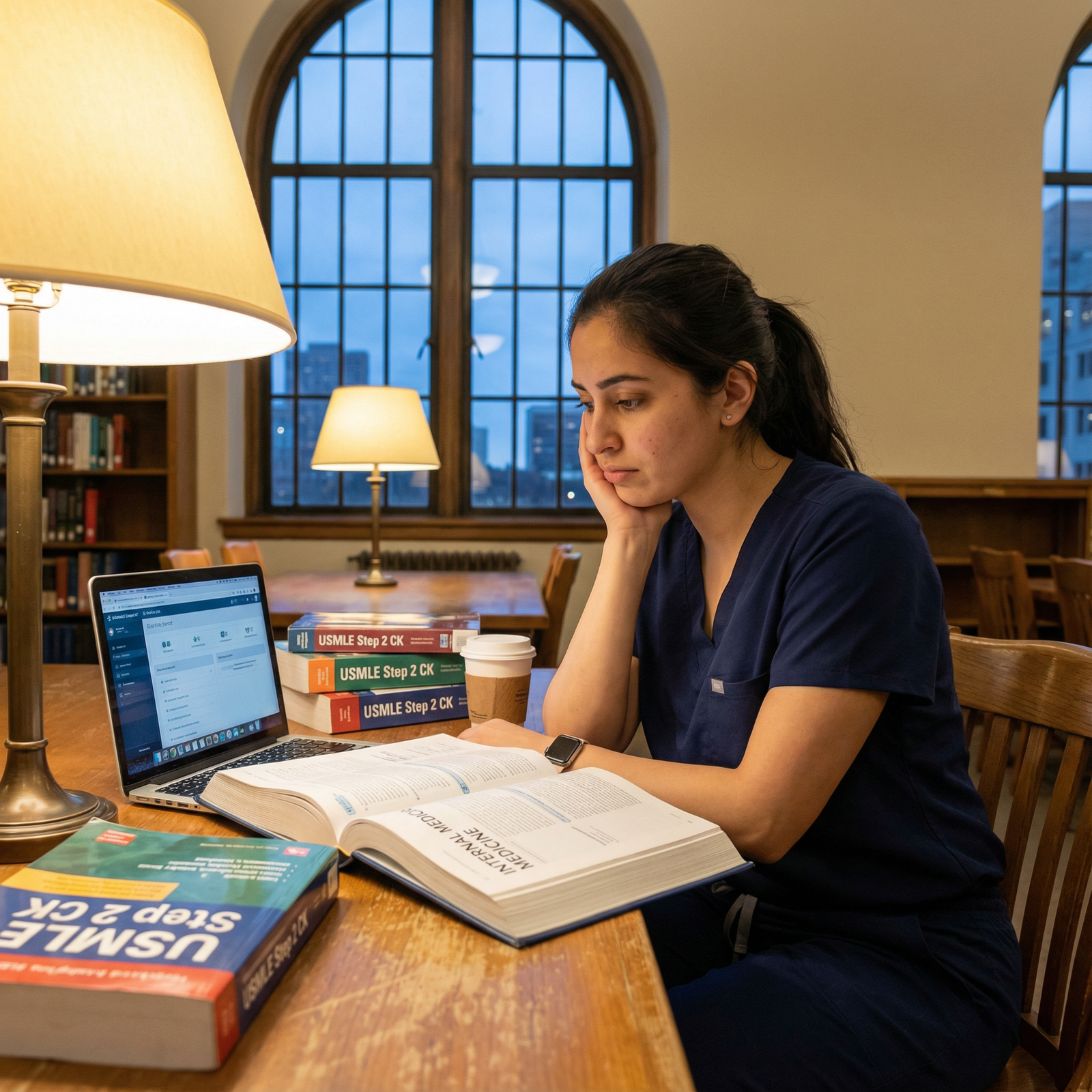
Cultivating Resilience: The Foundation for Moving Forward
Low USMLE scores are not just a statistical issue—they’re an emotional one. How you respond internally will strongly influence your external outcomes.
Building a Productive, Resilient Mindset
1. Honest Acceptance Without Self-Destruction
- Name the facts: “My Step score is X. For my target specialty, that’s below the typical matched range.”
- Avoid harmful labels: Don’t translate this into “I’m not smart enough” or “I can’t be a good doctor.” These are distortions, not truths.
- Separate performance from identity: A test measures how you did under specific conditions at one time, not your potential over an entire career.
Action step:
Write down three reasons beyond test-taking that you’ll make a strong physician (e.g., communication, empathy, reliability, procedural skills). Refer to this when negative thoughts escalate.
2. Adopting a Growth Mindset in Medicine
A growth mindset—believing abilities can be developed—matters immensely for resilience in medicine.
Ask yourself:
- What did my preparation and test experience teach me about how I learn?
- What concrete changes will I make in study methods, time management, or self-care going forward?
- How have I already grown from this experience (e.g., improved time management, better coping strategies)?
Be ready to talk about this growth clearly in your personal statement and interviews.
Emotional Support, Mentorship, and Community
1. Build a Support Network
Isolation amplifies shame and anxiety. Proactively seek:
- Faculty mentors who are honest yet encouraging
- Advisors or deans familiar with match outcomes at your school
- Peers who are also navigating challenges
You are not the first student to face this. Many successful physicians have failed exams, repeated years, or matched only on a second attempt—yet now mentor and lead others.
2. Identify Role Models Who Overcame Obstacles
Ask around or look for:
- Residents or attendings in your specialty who had non-traditional paths
- Alumni from your school who matched after earlier setbacks
- Stories in forums, podcasts, or blogs where physicians share their journey through challenges
These examples provide both inspiration and practical tips—what they did differently, how they framed their story, and what ultimately mattered most.
Enhancing Your Application Holistically: Beyond the Numbers
With low USMLE scores, your goal is to turn the rest of your application into undeniable evidence that you are capable, hardworking, and an excellent fit for residency.
Strengthening Clinical Experiences and Evaluations
1. Excel in Core and Elective Rotations
Clinical grades and narratives can significantly offset test scores.
Action steps:
- On each rotation, ask explicitly: “What can I do to perform at an honors level?”
- Show up early, volunteer for tasks, and be reliable.
- Read daily on your patients and present clearly and efficiently.
- Ask for mid-rotation feedback and act on it immediately.
Outstanding comments in your MSPE and strong evaluations can convince programs you thrive in the real-world clinical environment, even if you struggle with standardized tests.
2. Targeted Sub-Internships / Audition Rotations
If feasible, arrange away rotations or sub-internships at:
- Programs you are particularly interested in
- Institutions that have historically accepted applicants with a range of scores
- Settings where hands-on performance and interpersonal skills are highly valued
On these rotations:
- Treat every day like a month-long interview.
- Build relationships with attendings and senior residents who can later write detailed, supportive letters of recommendation.
Building a Research and Scholarly Profile
You don’t need dozens of publications, but you do want to show academic curiosity and initiative.
Options include:
- Case reports from interesting patients seen on rotations
- Quality improvement (QI) projects in your target specialty or department
- Retrospective chart reviews or literature reviews with a faculty mentor
- Posters or presentations at local, regional, or national conferences
Research involvement signals discipline and commitment. For some specialties (IM, Neurology, PM&R, etc.), even modest scholarly activity can significantly enhance your profile.
Crafting a Compelling, Authentic Personal Statement
Your personal statement is a powerful tool to:
- Demonstrate insight and maturity
- Provide context for your academic record (without making excuses)
- Highlight your resilience in medicine and how you’ve grown
Key principles:
- Tell a coherent story: Why this specialty? How did your experiences, including struggles, shape your interest and strengths?
- Address low scores briefly and strategically if needed:
- Acknowledge: “My Step 1 score does not fully reflect my capabilities.”
- Provide context if appropriate (serious illness, caregiving, major life event), but avoid oversharing or blaming.
- Emphasize growth: New study strategies, improved performance on later exams or clinical rotations.
- Focus on contribution: What will you bring to a residency program—teamwork, empathy, leadership, dedication to underserved populations, teaching interest, etc.?
Have multiple people review your statement, especially someone with residency selection experience.
Securing Strong, Targeted Letters of Recommendation
With low USMLE scores, letters can be one of your greatest assets.
1. Choose Writers Strategically
Prioritize:
- Faculty in your chosen specialty
- Supervisors who have seen you work closely, day after day
- Individuals known to write detailed, supportive letters
A generic letter from a famous name is less helpful than a specific, enthusiastic letter from someone who truly knows you.
2. Help Your Letter Writers Help You
When you request a letter:
- Ask: “Do you feel you can write me a strong letter of recommendation?”
- Share your CV, personal statement draft, and a brief summary of your goals.
- If comfortable, mention your USMLE scores and how you hope the letter can highlight strengths not reflected by those numbers.
A powerful letter might say, for example:
“Although [Student]’s standardized test scores are lower than the typical applicant, their clinical performance, bedside manner, and ability to synthesize complex cases are consistently at the level of an excellent resident.”
Mastering the Residency Interview: Turning a Weakness Into a Strength
The interview is your chance to move beyond your score report and let your character, communication skills, and resilience shine.
Preparation: Practice, Transparency, and Structure
1. Do Multiple Mock Interviews
- Practice with your school’s career office, advisors, or trusted mentors.
- Specifically rehearse answers to questions about your USMLE scores and any red flags.
- Ask for feedback on tone: you want to sound accountable, confident, and forward-looking.
2. Use the STAR Method for Behavioral Questions
When asked about challenges or failures, use:
- Situation – Brief context
- Task – Your responsibility
- Action – What you did
- Result – What happened and what you learned
Example:
- Situation: “I underperformed on Step 1 despite strong clinical evaluations.”
- Task: “I needed to understand why and improve for Step 2 CK.”
- Action: “I analyzed my study methods, sought help from a learning specialist, created a structured schedule, added question banks earlier…”
- Result: “My Step 2 CK score was significantly higher, and more importantly, I improved my daily learning habits and test-taking strategy.”
Addressing Low Scores Confidently and Honestly
When programs ask about your scores:
- Acknowledge without defensiveness: “My Step score was below my expectations.”
- Offer brief context if appropriate (e.g., health or personal issues), but don’t dwell or blame.
- Focus on growth: “Here’s what I changed and how it’s improved my performance since.”
- Redirect to strengths: Highlight clinical evaluations, letters, research, or later successes.
Programs are not looking for perfection; they are looking for people who can recognize weaknesses, adapt, and improve.
Projecting Professionalism, Fit, and Authenticity
During the interview day (virtual or in-person):
- Be courteous and engaged with everyone, from coordinators to residents.
- Show you have researched the program—comment on specific rotations, patient populations, or educational features that appeal to you.
- Ask thoughtful questions that show you’re picturing yourself training there.
Low scores are much less likely to define you once faculty see you as a mature, hardworking future colleague they’d like on their team.

Leveraging Resources Strategically: You Don’t Have to Do This Alone
Many applicants underuse the resources around them. With low scores, you need to maximize every available support.
Institutional Resources: Your Medical School’s Support System
Student affairs / Dean’s office:
- Request a dedicated advising session to analyze your competitiveness, specialty choices, and program list.
- Ask for honest data about previous students with similar profiles and where they matched.
Career development and match advising workshops:
- Attend sessions on CV preparation, ERAS, personal statements, and interviews.
- Many schools offer mock interviews and application review services—use them.
Learning specialists or academic support:
- If test-taking is an ongoing challenge, seek formal support in study skills, test strategies, and performance anxiety management.
Online Communities and Professional Organizations
Used wisely, online communities can offer insight and connection:
Forums (e.g., Student Doctor Network, Reddit med/ResidencyMatch subforums)
- Read success stories from applicants with low scores.
- Gather program-specific tips—but always verify and filter anecdotes carefully.
Specialty societies (e.g., ACP, AAFP, APA, AAP):
- Join student or trainee sections.
- Attend local or national meetings (often with discounted or student rates).
- Network with residents and faculty in your field of interest.
Mentorship programs:
- Many specialty organizations have formal mentorship schemes connecting students with faculty in the field.
- Some also offer webinars on Residency Match strategies, research opportunities, and career planning.
Putting It All Together: Strategic Application Planning
When you’re ready to apply, approach the process systematically.
1. Clarify Your Specialty and Backup Options
- Reflect honestly: Is your dream specialty still realistic given your scores and overall profile?
- Consider dual-application strategies (e.g., Internal Medicine + Family Medicine) if indicated by advisors.
- Aim to love every specialty you apply to, even if one is a backup; you may practice in that field for decades.
2. Build a Thoughtful Program List
Include a strong mix of:
- Community programs
- University-affiliated but less competitive programs
- Programs in less saturated geographic regions
Avoid limiting yourself only to the most desirable cities or big-name institutions; this is where many lower-score applicants get hurt.
3. Apply Early and Broadly
- Submit your ERAS application as early as possible once it opens.
- Consider applying to more programs than the average applicant in your specialty to compensate for initial score screens.
4. Stay Flexible and Proactive
- Be responsive to interview offers and schedule quickly.
- If interview numbers are lower than expected, talk to advisors early about:
- Signaling interest (where appropriate)
- Sending targeted, professional interest emails
- Adjusting your strategy for SOAP or a potential reapplication year
Frequently Asked Questions (FAQs)
Q1: How should I talk about my low USMLE scores in interviews without sounding defensive?
A1: Acknowledge the score briefly, then pivot to growth. For example: “My Step 1 score was below my expectations. At the time, I underestimated how important question-based learning was for me. I met with a learning specialist, overhauled my study approach, and as a result, I improved my Step 2 CK performance and my daily learning on rotations. The experience taught me how to adapt and build better lifelong learning habits.”
Q2: Is it better to switch to a less competitive specialty if my scores are low?
A2: Not always—but you must be realistic. If your scores are far below typical matched ranges for a highly competitive specialty, it can be wise to:
- Discuss your chances in detail with advisors and mentors in that specialty
- Consider a dual-application plan (one competitive specialty + one less competitive)
- Reflect on your core values and what you want your career to look like day to day
Many students discover they can be fulfilled and thrive in specialties they hadn’t originally considered.
Q3: What if I can’t significantly improve my scores (e.g., no more Step exams to take)?
A3: Then your focus shifts entirely to strengthening other domains:
- Outstanding performance on rotations and sub-internships
- Strong, detailed letters of recommendation
- A compelling personal statement that clearly articulates your story and growth
- Research, QI projects, or service work that highlights your commitment and initiative
- Excellent interview skills and professional behavior
Programs regularly rank applicants with lower scores if everything else points to a capable, resilient future resident.
Q4: How do I find mentors who understand my situation and can advocate for me?
A4: Start locally, then branch out:
- Ask clerkship directors, specialty interest group leaders, or research supervisors for mentorship.
- Be candid: “I’m concerned about my USMLE scores and would value your advice on how to build a strong application.”
- Join specialty organizations and attend meetings or webinars where you can meet faculty and residents.
- Use alumni networks—many schools have graduates who are willing to mentor current students, especially those facing challenges they once faced themselves.
Q5: If I don’t match, does that mean I should give up on residency?
A5: Not necessarily. Many excellent physicians matched on a second attempt. If you don’t match:
- Debrief thoroughly with advisors and mentors to understand what went wrong.
- Use the time to strengthen your application—additional clinical experience, research, a master’s degree, or a non-degree research year, depending on your situation and resources.
- Develop a revised, data-driven strategy for the next cycle, potentially adjusting specialty choices or program targets.
Not matching is a major setback, but it is not the end of your medical career unless you decide it is.
Low USMLE scores are a challenge, not a verdict. By cultivating resilience in medicine, strategically enhancing your Residency Match application, and actively using the resources around you, you can still build a meaningful career that reflects your strengths, your values, and your commitment to patient care.