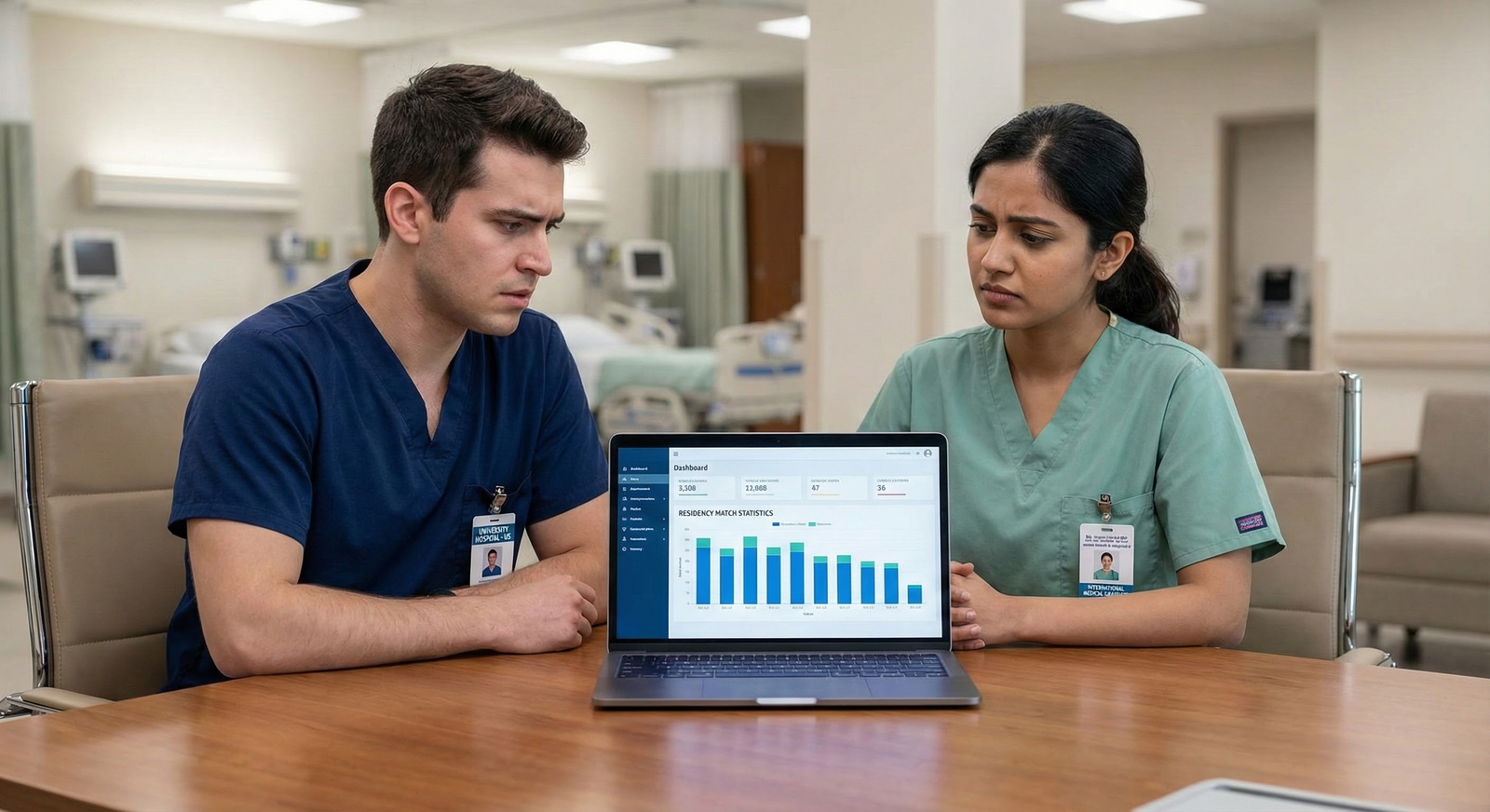
Understanding Step Scores in the Context of Clinical Informatics
If you are a non-US citizen IMG aiming for a future in clinical informatics, your USMLE Step scores feel high-stakes—and they are. But they are not the only stakes.
For a foreign national medical graduate, Step scores serve three major roles:
Residency screening filter
- Many internal medicine, family medicine, pathology, pediatrics, or transitional year programs (common gateways to a later clinical informatics fellowship) use Step 1 (where still available), Step 2 CK, and sometimes Step 3 as initial filters.
- For IMGs, filters are often stricter than for US grads.
Visa and institutional risk management proxy
- Programs taking non-US citizen IMGs on J-1 or H-1B visas want reassurance you will pass boards and complete training successfully. Step scores are used—fairly or not—as a proxy.
Signal of future success in exam-heavy fields
- Clinical informatics itself has a board exam (ABPM/ABPath). PDs in feeder specialties (e.g., Internal Medicine) may favor candidates who demonstrate strong test-taking ability, assuming they will later succeed with certification and health IT training.
At the same time, clinical informatics is a niche, cross-disciplinary field. Programs may value:
- Technical aptitude (data, programming, EHR workflows)
- Systems thinking and quality improvement
- Experience in health IT or digital health
- Research or projects in informatics
That means a low Step score match is still very possible if you understand how to compensate and reframe your profile.
What Counts as “Low” for a Non-US Citizen IMG?
While ranges shift over time, for a non-US citizen IMG seeking an IM/Path/Peds/FM residency with future clinical informatics fellowship ambitions, you can think approximately:
Step 1 (if taken before pass/fail change)
- Below ~220 often triggers concern for IMGs in competitive academic programs.
- Below ~210 will limit options but does not end your chances.
Step 2 CK
250 = Strong, helps offset other weaknesses.
- 240–249 = Solid, competitive for many programs if the rest of your application is strong.
- 225–239 = Acceptable for many community programs; strategy and alignment become crucial.
- < 225 = Challenging but not hopeless; must be offset with targeted program selection, strong narrative, and informatics value-add.
Your mission is twofold:
- Optimize any remaining exam opportunities (especially Step 2 CK and Step 3).
- Build an informatics-focused narrative that makes your Step scores only one part of a much stronger story.
Strategic Approach to Step 1 and Step 2 CK for Non-US Citizen IMGs
Even with Step 1 now pass/fail for most, programs still evaluate exam performance using Step 2 CK and trends. Your strategy should be deliberate.

Step 1 in the New Landscape
If you already have a numeric Step 1 score, your situation differs from those with only Pass/Fail.
High Step 1 (≥ 235)
- Use it as proof of strong fundamentals and test-taking ability.
- PDs may be more comfortable accepting a foreign national medical graduate if Step 1 is clearly strong.
Mid-range Step 1 (220–234)
- Not disqualifying, but Step 2 CK must be significantly stronger to show upward trajectory.
- Your narrative: “I improved with more clinical exposure and US-style training.”
Low Step 1 (< 220)
- This becomes a risk marker for some programs, especially for non-US citizen IMGs.
- Focus: Step 2 CK strategy to create a sharp upward trend and regain trust.
If you only have Pass/Fail Step 1, PDs will rely more heavily on:
- Step 2 CK score
- Clinical evaluations and letters
- Research and academic track record
- Informatics-relevant achievements
For an aspiring clinical informatician, that gives you room to showcase non-exam strengths.
Building a High-Yield Step 2 CK Strategy
Step 2 CK is your main quantitative advantage—or liability. For a non-US citizen IMG heading toward clinical informatics, aim for your maximum possible score, not just a “pass.”
Key principles:
Data-driven baseline
- Take an NBME or UWorld self-assessment 8–12 weeks before your planned exam.
- For a realistic chance at a competitive score:
- Target ≥ 240 on practice tests before sitting.
- If practice is < 225, delay and remediate gaps.
Clinical reasoning over memorization
- Clinical informatics values pattern recognition and algorithmic thinking.
- Focus your Step 2 CK studying on:
- Internal medicine, pediatrics, OB/GYN, surgery, psychiatry
- Minimally tested specialties: review them, but don’t over-invest.
Use Q-banks like performance dashboards
- Treat UWorld/AMBOSS as both content and analytics.
- Track:
- Weak systems (e.g., cardiology, nephrology)
- Type of error: knowledge vs reasoning vs misreading.
- Make weekly adjustments:
- Devote 60–70% of study time to weaknesses.
- Keep 30–40% for mixed blocks to simulate exam conditions.
Optimize exam timing for narrative impact
- If Step 1 is low, delay Step 2 CK until your NBME scores are consistently ≥ 240 (if feasible).
- Take Step 2 CK before application season so programs see your score in ERAS (especially important for non-US citizen IMG candidates, who already start under extra scrutiny).
If you already have a low Step 2 CK
If your Step 2 CK is lower than hoped:
- Do not rush to Step 3 just to “fix” it; a second low score worsens your profile.
- Focus on:
- Strong clinical performance in USCE/observerships.
- Concrete achievements in informatics or quality improvement.
- A compelling personal statement and program-fit strategy.
When and How to Use Step 3 Strategically
Step 3 can serve as:
- A rescue signal for IMGs with weaker Step 1/Step 2 CK.
- Evidence of readiness for H-1B sponsorship (some states/programs require Step 3).
Guidelines:
Only attempt Step 3 if:
- You have enough time to prepare seriously (6–8 weeks dedicated or semi-dedicated).
- You can realistically score better than Step 2 CK, or at least solidly pass.
Good scenarios to take Step 3:
- You are applying with a low Step 1 score and mid-range Step 2 CK, and want to demonstrate upward improvement.
- You need to strengthen your file for community programs that frequently sponsor visas.
Risk scenarios:
- You already have two low scores and limited time—another marginal performance may reinforce PDs’ concerns.
Low Step Score Match Tactics: Turning Weakness into a Manageable Risk
A “low Step score match” is not about pretending the numbers don’t exist; it’s about packaging and context. As a non-US citizen IMG, you have less room for error, but you also have more room for an unusual narrative—especially if you aim for clinical informatics.
Reframing Your Scores
Use your application materials to frame your Step history:
Upward trajectory narrative
- Example: “I struggled initially with multiple-choice testing in a new exam style, but after understanding USMLE expectations, I refined my study approach and improved significantly between Step 1 and Step 2 CK.”
Contextual factors without excuses
- Briefly mention realistic, non-dramatic factors: language adaptation, new educational system, early timing of Step 1, local obligations.
- Then pivot to: “Since then, I have demonstrated steady improvement in clinical reasoning and have excelled in [clinical rotations, USCE, research].”
Data-driven mindset (especially important for future informaticians)
- Show how you used performance data (QBanks, NBMEs) to identify gaps and improve.
- This aligns directly with informatics’ emphasis on using data to drive decisions.
Targeted Program Selection for Non-US Citizen IMGs
Programs vary widely in:
- Willingness to sponsor visas (J-1 vs H-1B)
- Openness to non-US citizen IMGs
- Value placed on informatics and health IT
Steps to identify realistic and strategic targets:
Use NRMP/FRIEDA data and program websites
- Look for:
- Historical percentage of IMGs
- Explicit visa policies
- Mentions of clinical informatics, EHR optimization, quality improvement, data science, or digital health.
- Look for:
Categorize programs into tiers for you (not generic rankings):
- Tier A: Programs with a history of taking non-US citizen IMGs and visible informatics, QI, or IT focus (even if they don’t have a formal clinical informatics fellowship yet).
- Tier B: Community or mid-tier academic programs with IMG presence, moderate Step expectations, but less explicit informatics branding.
- Tier C: Prestige-heavy, highly competitive programs with strict score cutoffs—they may not be realistic if you have low scores and need a visa.
Aim for volume and fit
- With low Step scores and visa needs, plan on applying to a broad list (often 120+ programs) for internal medicine or similar feeder specialties.
- But customize your messages/interests for programs that show any informatics-related inclination.
Immediate Steps if You Already Have Low Scores
If your Step 1 score residency prospects or Step 2 CK result are weaker than planned:
Pause and analyze
- What were your exam prep patterns? Time, resources, and environment?
- What improved and what stayed weak?
Decide: Step 3 now vs strengthen other areas
- If your current schedule and learning curve will not support a clearly better performance, it might be better to:
- Delay Step 3.
- Focus on informatics work, USCE, and letters.
- If your current schedule and learning curve will not support a clearly better performance, it might be better to:
Refine your application cycle strategy
- For upcoming Match:
- Emphasize strengths: research, informatics exposure, leadership, language skills.
- De-emphasize numeric comparison by telling a story focused on impact, not just exams.
- For upcoming Match:
Building an Informatics-Focused Profile to Offset Weak Step Scores
To compete for a future clinical informatics fellowship, you must first secure a residency in a specialty eligible for informatics board certification (e.g., Internal Medicine, Pediatrics, Pathology, Family Medicine, EM, etc.). For a non-US citizen IMG with modest scores, your differentiator can be informatics itself.
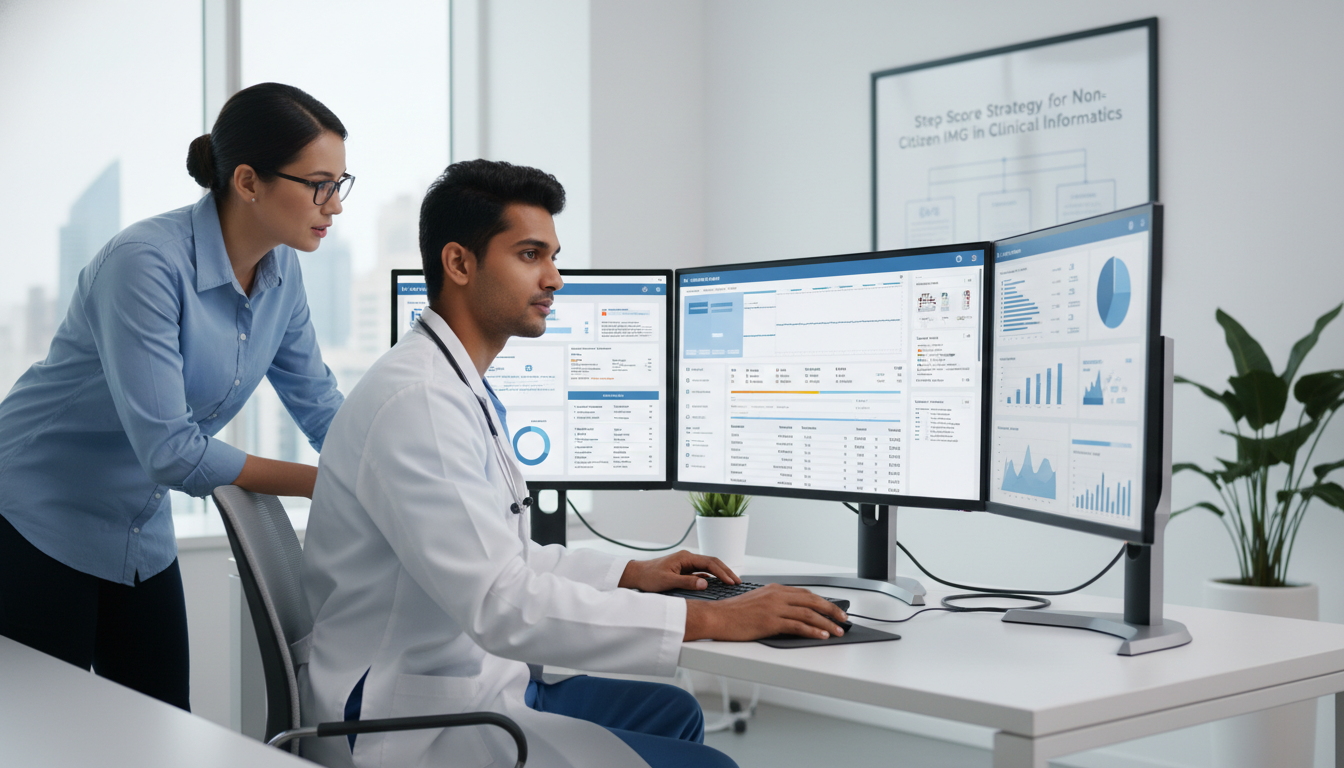
Translate Your Experiences into Informatics Language
Look at your past experiences through an informatics lens:
- Have you:
- Helped implement or optimize an EHR in your home country?
- Built Excel tools, Access databases, or simple apps to track patients?
- Participated in audit/quality improvement projects using data?
- Done research involving data analysis, prediction models, or digital tools?
- Worked with telemedicine platforms during COVID-19?
Turn these into health IT training relevant stories:
- “Led a project to digitize inpatient rounding lists in a resource-limited hospital, reducing handoff errors by X%.”
- “Analyzed local hypertension control data using R/Excel and identified gaps in follow-up that informed clinic workflow changes.”
Concrete Ways to Build Informatics Capital Before Residency
Online Courses and Certificates
- Coursera, edX, or similar:
- Health informatics basics
- Clinical data science, Python/R for healthcare
- Quality improvement and patient safety
- Collect certificates and list them under “Additional Training” in ERAS.
- Coursera, edX, or similar:
Hands-on data skills
- Learn:
- Basic SQL queries
- Introductory Python or R
- Visualization tools (e.g., Tableau, Power BI, or even advanced Excel).
- Build one or two small, well-documented projects (e.g., open-source health datasets analysis) you can discuss in interviews.
- Learn:
Volunteer or collaborative projects
- Connect with researchers/physicians (via LinkedIn, ResearchGate, or alumni networks) working on:
- EHR-based research
- Registry development
- Telehealth or mHealth projects
- Offer help with data cleaning, literature review, or workflow mapping.
- Connect with researchers/physicians (via LinkedIn, ResearchGate, or alumni networks) working on:
Research and publications
- Target:
- Quality improvement abstracts/posters
- Case studies involving telemedicine, EHR use, CDS implementation
- Small retrospective analyses using available data
- Even small-scale, well-executed work can impress PDs when framed correctly.
- Target:
How This Offsets Lower Step Scores
Program directors deciding on a non-US citizen IMG with a modest Step profile may think:
- “Will this person pass boards?”
- “Do they bring something special to the program?”
- “Is there a risk in sponsoring a visa?”
If your file shows:
- Clear Step 2 CK improvement or at least stable performance
- Concrete evidence of informatics skill and initiative
- Projects and achievements that align with the program’s goals (EHR optimization, QI, research, telehealth)
Then your “risk profile” is lower, and your “value profile” is higher. This is particularly true for programs:
- Implementing new EHR features
- Working on quality metrics for CMS
- Participating in population health initiatives
You become not just “another IMG with lower scores,” but a future clinical informatician who can help move the program forward.
Application, Interview, and Post-Match Strategy for Aspiring Clinical Informaticians
Scores open doors, but the rest of your strategy determines whether you walk through.
ERAS and Personal Statement: Narrating a Data-Driven Journey
For a non-US citizen IMG focused on clinical informatics:
- Primary theme: “Clinician who uses data and technology to improve care.”
- Sub-theme: “Adaptable, resilient, and improving over time.”
In your personal statement:
- Acknowledge your exam path briefly (if necessary), but don’t center the story on it.
- Emphasize:
- Clinical experiences that revealed system gaps
- Moments when you used data or technology to solve practical problems
- Your long-term goal: residency → clinical informatics fellowship → system-level impact
Example framing for a low Step 1, improved Step 2 CK candidate:
“My early exposure to USMLE-style exams was challenging, and my Step 1 performance reflected both that adjustment and my focus on patient care over test design. In the years since, I systematically analyzed my learning methods, refined my approach, and improved my performance on Step 2 CK. More importantly, I applied the same data-driven mindset to patient care, leading quality improvement projects that used EHR data to reduce missed follow-ups in our outpatient clinic.”
Letters of Recommendation: The Informatics Angle
Aim for at least one letter that highlights:
- Your analytical thinking and comfort with data
- Your role in any health IT, quality, or process-improvement initiative
- Your reliability and ability to adapt to new systems (especially EHRs)
Even if writers are not informaticians, they can say:
- “She optimized our clinic’s documentation templates to improve data capture.”
- “He independently learned how to extract and analyze data from our EHR reporting tools.”
This makes you memorable.
Interview Strategy: Owning Your Story
If asked directly about your Step 1 score residency implications or low scores:
- Be brief, honest, and forward-looking.
- Link your growth mindset to informatics.
Example response:
“My Step 1 score was lower than I had hoped. I was adjusting to a very different exam style and language context. I reflected on that experience, changed my study strategy, and improved my performance on Step 2 CK. That same process—using data, adjusting strategy, and improving systems—is what attracted me to clinical informatics. I bring that mindset to both exams and patient care.”
Then pivot to:
- Your informatics work
- Specific projects you could contribute to at their institution
- Your long-term plan to pursue a clinical informatics fellowship
Post-Match: Maximizing Your Residency for Future Clinical Informatics Fellowship
Once matched (often in IM, FM, Path, Peds, or EM):
Seek local informatics mentors
- Chief medical information officer (CMIO)
- Clinical informatics faculty or IT liaisons
- QI and patient safety leaders
Join informatics-related committees
- EHR steering committee
- Order set review group
- Quality or safety task forces
Do at least one clear informatics project
- Examples:
- Reduce alert fatigue for a common CDS alert
- Improve structured data capture for a chronic disease registry
- Analyze EHR workflows contributing to delays in care
- Examples:
Plan ahead for clinical informatics fellowship applications
- Most clinical informatics fellowship spots are competitive but value diverse backgrounds.
- Document your projects, collect letters, and maintain a portfolio.
FAQs: Step Scores and Clinical Informatics Pathway for Non-US Citizen IMGs
1. Can I still match into a residency and eventually a clinical informatics fellowship with low Step scores?
Yes, many non-US citizen IMGs with modest Step scores successfully match and later secure a clinical informatics fellowship. Your chances improve if you:
- Demonstrate an upward trend (e.g., stronger Step 2 CK than Step 1).
- Build a robust informatics-focused CV (projects, coursework, data skills).
- Apply broadly and strategically to programs that:
- Accept IMGs
- Sponsor visas
- Show interest in health IT, QI, or digital health
While low scores limit options, they do not close all doors—especially if your narrative and informatics value-add are strong.
2. Should I delay my application to retake or add exams (like Step 3) to improve my profile?
It depends. Delaying can make sense if:
- You are early in your timeline.
- You have a concrete plan to meaningfully improve performance (e.g., Step 3 after structured preparation).
- You can simultaneously build informatics experience and research.
However, simply waiting without strengthening other parts of your profile is rarely helpful. For many non-US citizen IMGs, the most effective strategy is often:
- Apply with your current scores.
- Compensate with informatics projects, strong letters, and targeted program selection.
- Consider Step 3 if it clearly fits your improvement curve and visa goals.
3. How important is formal informatics or programming knowledge before residency?
You do not need to be a professional programmer to pursue a clinical informatics fellowship. However, for a foreign national medical graduate with lower scores, foundational technical skills can strongly differentiate you:
- Basic SQL or Python/R for data handling
- Understanding of EHR structures, data standards (e.g., HL7/FHIR, at a conceptual level)
- Comfort with visualization tools (Tableau, Power BI, or advanced Excel)
These skills, even at a beginner or intermediate level, signal to PDs that you are serious about informatics and capable of contributing to data-driven projects.
4. Which specialties should I target if I want clinical informatics but my scores are not strong?
Most clinical informatics boards require primary specialty certification (e.g., IM, FM, Peds, EM, Pathology, etc.). For a non-US citizen IMG with lower scores:
- Internal Medicine and Family Medicine are common and flexible pathways.
- Pediatrics or Pathology can also lead to clinical informatics, especially if you have related experience or interest.
- Emergency Medicine is an option but can be more competitive for IMGs in some regions.
Choose the specialty that:
- Realistically fits your Step score profile.
- Has reasonable IMG and visa acceptance rates.
- Offers opportunities at that institution to engage in EHR optimization, data, and QI projects.
By treating your Step scores as only one component of a broader, informatics-centered strategy, you can transform a perceived liability into a manageable risk—and build a compelling path from non-US citizen IMG to clinical informatician.