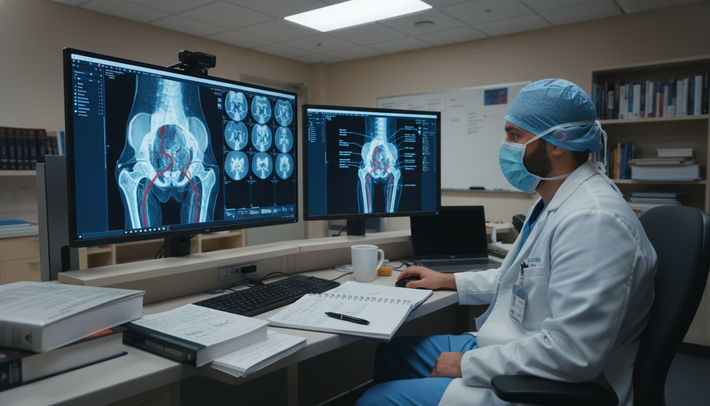
Understanding the IR Match Landscape as a Caribbean IMG
Interventional Radiology (IR) is one of the most competitive specialties in the Match. For a Caribbean IMG, the combination of a developing Step score profile and the Caribbean medical school label means you must be highly deliberate with your strategy.
Why IR Is So Competitive
Several factors make the interventional radiology residency pathway challenging:
- Limited number of spots compared with internal medicine or family medicine
- High proportion of U.S. MD applicants and strong DO applicants
- Strong emphasis on:
- USMLE performance (especially Step 2 CK now that Step 1 is pass/fail for most)
- Research and scholarly activity
- Demonstrated commitment to IR (electives, shadowing, societies)
- Letters of recommendation from academic radiologists/interventionalists
If you are at or from a Caribbean medical school, residency program directors may have:
- Less familiarity with your curriculum
- Concerns about clinical preparation and exam performance
- Bias due to variable outcomes from Caribbean graduates
None of this is insurmountable, but it means you must use your Step score strategy, clinical experiences, and application narrative to address these concerns directly.
Two Common Pathways to IR for Caribbean IMGs
You should understand both main pathways:
Integrated IR/DR residency (most competitive)
- ACGME-accredited integrated programs (6 years total)
- Match directly from medical school
- Requires very strong application (scores, research, letters)
Independent IR residency after diagnostic radiology (DR)
- Match into DR first, then IR (independent residency or ESIR pathway)
- Often more feasible for Caribbean IMGs: focus first on matching DR
- Strong DR application can open IR options later
Your Step score strategy should be realistic about which path is achievable given:
- Your Step 1 and Step 2 CK performance
- Timing (when you graduate, when scores are available)
- Strength of your clinical and research portfolio
If your Step scores are modest or low, consider a two-step plan:
- Primary focus: match into DR, with an IR focus
- Parallel backup: appropriate alternative specialty if DR/IR becomes unrealistic

Step 1: How It Still Matters for Caribbean IMGs
Even though many U.S. students now take Step 1 as pass/fail, many Caribbean med schools and IMGs still have numeric scores from recent years. Programs also pay attention to your “pass on first attempt” status.
If You Have a Numeric Step 1 Score
For a Caribbean IMG targeting IR or DR with IR intent:
Step 1 ≥ 235–240
- Competitive for DR; still a reach for integrated IR without strong research and letters
- Use it to support applications to radiology-heavy prelim programs and strong academic DR programs
Step 1 220–235
- Viable for some DR programs, especially community or university-affiliated
- Integrated IR is a major reach; your application must be exceptional elsewhere
- Emphasize Step 2 CK improvement and strong clinical performance
Step 1 205–219 (low Step score range)
- This is a low Step score match scenario for IR and DR
- Integrated IR is very unlikely
- DR still possible at a small subset of programs if:
- Step 2 CK shows clear upward trend
- You have strong U.S. clinical experience and personalized letters
- You are realistic and apply broadly and strategically
Step 1 < 205 or failed attempt
- For IR/DR, these are major red flags
- You must:
- Show dramatic Step 2 CK recovery
- Provide a credible explanation (without excuses) in your application
- Consider a backup specialty strategy more seriously
If You Have Pass/Fail Step 1
For those with P/F Step 1:
- Programs cannot rank you numerically, so:
- Step 2 CK becomes your primary objective metric
- Class rank, school transcript, and clinical evaluations gain importance
- A first-time pass is critical; a fail is extremely damaging for IR/DR
Strategic Actions Around Step 1 Status
If you haven’t taken Step 1 yet
- Aim for a first-time pass with solid foundational knowledge, even if no numeric score will be reported
- Use your Step 1 prep to prepare for aggressive Step 2 CK strategy
If you already have a low Step 1 score
- Do not rush Step 2 CK; your entire IR match feasibility may rest on this exam
- Use Step 2 CK to prove that your Step 1 performance was an outlier, not your ceiling
If you have a strong Step 1 score
- Leverage that confidence, but do not become complacent
- IR programs still want high Step 2 CK, particularly for IMGs
Step 2 CK Strategy: Turning Your Scores into an Asset
For a Caribbean IMG applying to interventional radiology or diagnostic radiology, Step 2 CK is now the most important examination in your file. It becomes both your “recovery tool” if Step 1 is weak and your differentiator if Step 1 is pass/fail.
What Step 2 CK Score Range Should You Target?
For radiology-focused applications as a Caribbean IMG:
260+
- Exceptional; dramatically improves your IR/DR competitiveness
- Can partly offset weaker aspects such as lesser-known medical school
250–259
- Strong for DR; IR still tough but now within realistic discussion at some programs
- If paired with IR research and strong letters, consider a small number of integrated IR applications plus a broad DR list
240–249
- Solid for DR applications from a Caribbean med school
- IR integrated remains a long shot but some programs might take a look if the rest of your application is excellent
230–239
- Borderline for IR; many DR programs will still consider you, particularly community or mid-tier university programs
- Must emphasize IR interest, clinical excellence, and research
220–229
- This falls into low Step score match territory for IR
- DR will still be possible at a limited subset of programs with the right story and experiences
- You need a strong backup plan (e.g., internal medicine, transitional year, or another field)
<220 or failed attempt
- Integrated IR and most DR programs will be extremely difficult
- Focus on:
- Clarifying your long-term goals (possibly IR via a non-traditional pathway, e.g., internal medicine → critical care with procedural focus)
- Matching into a solid backup specialty first
- Building U.S. clinical experience and possibly planning for a later transition
How to Build an Effective Step 2 CK Study Plan as a Caribbean IMG
Because you may have had less structured basic science training than some U.S. schools, your Step 2 CK strategy must be methodical:
Baseline and Timeline
- Take a NBME practice exam early (6–8 months before test if possible) to get a baseline
- Build a target test date that allows:
- At least 10–12 dedicated weeks if your baseline is low
- Enough time to have your score back before ERAS submission in the cycle you plan to apply
Core Resources
- UWorld Step 2 CK (full pass, then targeted second pass)
- NBME forms (multiple practice tests to track upward trend)
- An outline resource (e.g., Online MedEd, Boards & Beyond, AMBOSS)
- Focus heavily on:
- Internal medicine and emergency medicine (high yield for CK)
- Surgery, OB/GYN, pediatrics, psychiatry in proportion to exam weight
Address Weaknesses from Step 1
- If your Step 1 score was low, identify content areas you struggled with (e.g., renal physiology, endocrine, microbiology)
- Build a dedicated remediation block early in Step 2 prep so the same weak foundations don’t drag down your CK performance
Simulate Test Conditions
- Take full-length practice exams under realistic timing and breaks
- For Caribbean IMGs, fatigue on long tests can be a bigger factor if you are not used to U.S.-style exams
Deciding When to Postpone
- If your practice NBMEs are:
- ≥ 240 and trending upward: reasonable to proceed for IR/DR
- 230–239 with rising trend: may proceed, but consider whether an extra 3–4 weeks could push you above 240
- < 230 close to exam date: consider postponing; for IR/DR as a Caribbean IMG, this may not be sufficient unless other factors are exceptional
- If your practice NBMEs are:
Using Step 2 CK to Tell a Story
Residency programs don’t just want a number; they want a trajectory:
- Low Step 1 → Strong Step 2 CK
- Story: “I adjusted my study strategies, learned how to prepare efficiently, and demonstrated my true capability.”
- Pass/Fail Step 1 → Strong Step 2
- Story: “I used the preclinical foundation to excel in clinically-oriented exams and patient care.”
- Modest Step 1 → Modest Step 2, but strong clinical and research performance
- Story: “I am not defined by test scores; I add value through work ethic, clinical judgment, and IR commitment.”
Use this narrative in your personal statement, interviews, and letters.

Beyond Scores: Building an IR-Focused Application as a Caribbean IMG
Step scores open the door; what gets you into interventional radiology is your total IR portfolio. This becomes even more essential if you have a low Step score match profile.
IR Exposure and Clinical Experiences
Programs want proof that you understand what IR actually is.
Action items:
Electives in IR and Diagnostic Radiology
- Aim for at least one U.S.-based IR elective (4 weeks ideally) at an institution with a residency program
- If you can’t secure IR, seek diagnostic radiology electives with exposure to interventional faculty
Sub-internships in related fields
- Surgical ICU, vascular surgery, hepatology, oncology, and cardiology clinics involving structural interventions can all signal procedural interest
- Mention how these rotations deepened your understanding of IR’s role
Shadowing
- Short-term shadowing in IR can still be valuable if formal electives are limited
- Keep a log of procedures, pathologies, and skills you observed
Research and Scholarly Activity
IR is academic-heavy. Even as a Caribbean IMG, you can build credible research:
Start with case reports and retrospective reviews
- If you’re at a Caribbean medical school like SGU (e.g., SGU residency match successes often feature strong research), use your school’s connections to U.S. sites
- Ask IR or DR faculty about:
- Case report opportunities
- Quality improvement projects
- Retrospective imaging studies
Collaborate remotely
- Many institutions accept external students for data collection, manuscript preparation, or literature reviews
- Join IR interest groups (SIR – Society of Interventional Radiology) and look for student research networks
Present and publish
- Even small projects can lead to:
- Poster presentations at SIR, RSNA, or local conferences
- Abstracts or short communications
- These significantly strengthen your IR match profile
- Even small projects can lead to:
Letters of Recommendation: Who and How Many?
For IR/DR-focused applications, strong letters matter as much as your Step 1 score residency profile:
Aim for:
- 1–2 letters from radiologists (ideally including an interventional radiologist)
- 1 letter from a core clinical specialty where you performed very well (e.g., internal medicine, surgery)
- If possible, 1 letter from a research mentor involved in IR or radiology
Characteristics of powerful letters:
- Specific examples of:
- Work ethic
- Reliability and professionalism
- Curiosity and technical aptitude
- Commentary on your resilience and growth (especially if you have low or modest Step scores)
- Evidence that they know you personally, not generic form letters
Strategic Program Selection: Where to Apply
Given your Caribbean medical school background and Step profile, you must choose programs thoughtfully:
Integrated IR programs
- Apply only if:
- Step 2 CK ≥ 245 (preferably ≥ 250)
- You have IR research and strong letters from IR faculty
- Limit to a select group of realistic targets so you don’t waste efforts
- Many Caribbean IMGs will benefit more from focusing primarily on DR
- Apply only if:
Diagnostic Radiology programs (primary focus)
- Apply broadly: academic, community, and hybrid programs
- Identify programs historically open to:
- Caribbean IMGs or other IMGs
- Non-traditional applicants with strong clinical/research credentials
- Use resources like FREIDA, program websites, and alumni networks (e.g., SGU residency match lists) to see where previous Caribbean grads have matched into radiology
Backup specialties
- Develop a parallel list of programs in:
- Internal medicine
- Transitional year
- Preliminary surgery or internal medicine years
- This ensures you do not go unmatched, preserving a path to IR-related careers later
- Develop a parallel list of programs in:
Tactical Steps Through the Application Timeline
To make your Step score strategy actionable, align it with the residency application calendar.
12–18 Months Before Match
- Decide if you are committing to an IR/DR-focused pathway
- Take Step 2 CK with enough buffer for a possible delay if practice scores are low
- Begin or intensify IR-related research
- Identify potential IR or DR mentors (email, virtual meetings, conferences)
6–9 Months Before ERAS Submission
- Finalize Step 2 CK and ensure your score is reported
- Schedule IR/DR electives and sub-I’s in the U.S.
- Request letters from faculty who can comment on your growth and performance
- Build your CV with clear IR interest sections
ERAS Season
- Tailor your personal statement:
- One version emphasizing IR interest and DR as primary route
- A second version for backup specialties (if applying)
- Highlight:
- Step score trajectory (especially Step 2 CK strategy and improvement)
- IR exposure, research, and mentorship
- Use your Caribbean background as a strength:
- Resilience
- Adaptability across systems
- Cultural competence, especially with diverse patients
Interview Season
- Be ready to discuss:
- How you handled any Step 1 or Step 2 CK challenges
- What you learned from those experiences
- Why IR/DR is the right fit for your skills and values
- Ask programs:
- How often their DR residents match into independent IR
- Support for research and electives in IR
Putting It All Together: Realistic Scenarios and Plans
To clarify how your Step score strategy might look in practice, consider three example profiles.
Scenario 1: Strong Scores, Caribbean IMG
- Step 1: 240
- Step 2 CK: 252
- Multiple U.S. IR electives, 1–2 IR abstracts, letter from IR attending
Strategy:
- Apply to:
- A reasonable number of integrated IR programs (15–25) with IMGs in prior classes
- A broad mix of DR programs (40–60)
- Limit backup to a small number of prelim/transitional year programs
- Emphasize IR research and strong clinical performance
Scenario 2: Moderate Scores, Upward Trend
- Step 1: 218
- Step 2 CK: 240
- One radiology elective, some case reports, strong IM and surgery letters
Strategy:
- Focus primarily on DR programs (50–80 applications), favoring:
- Community and hybrid programs
- Institutions with history of Caribbean IMG matches
- Apply to very few or no integrated IR programs, unless you have unusually strong research and letters
- Build a solid backup specialty list (IM or TY)
- Highlight the improvement from Step 1 → Step 2 and explain what changed in your approach
Scenario 3: Low Scores, Strong Clinical & Research Portfolio
- Step 1: 205
- Step 2 CK: 225
- Multiple IR shadowing experiences, 2 posters, good letters
Strategy:
- Accept that integrated IR is unrealistic and DR is a stretch
- Consider:
- Applying to a small, carefully selected list of DR programs that accept IMGs with lower scores
- A robust primary application in internal medicine, anesthesia, or another specialty that keeps you near procedural work
- Continue IR research and networking; plan for:
- Potential future transitions (e.g., independent IR after DR if you later secure DR, or procedural-heavy subspecialty in another field)
FAQs: Step Scores and IR Strategy for Caribbean IMGs
1. Can a Caribbean IMG with a low Step score still match into interventional radiology?
Yes, but usually not directly and not through the most competitive pathways. For those with a low Step score match profile (e.g., Step 1 or Step 2 CK < 230), the realistic route often involves:
- First matching into diagnostic radiology at a program open to IMGs, or
- Entering another specialty and building a procedural, imaging-focused career
Your best chance with truly low scores is to show a strong upward clinical trajectory, secure excellent letters, and be extremely strategic about program selection.
2. How important is Step 2 CK compared to Step 1 for Caribbean IMGs targeting IR?
For many Caribbean graduates, Step 2 CK is now more important than Step 1. It:
- Provides a clear numerical signal of your current clinical reasoning
- Offers a chance to recover from a weak Step 1
Programs will look closely at your Step 2 CK score, especially if your Step 1 is low or pass/fail. A strong Step 2 CK can significantly improve your viability for DR and, indirectly, for IR.
3. Should I still apply to integrated IR programs if my scores are average?
Apply strategically. If you are a Caribbean IMG with Step 2 CK < 245 and limited IR research, integrated IR is extremely competitive. You may:
- Apply to a small number of integrated IR programs known to consider IMGs if you have strong IR exposure and letters
- Place your main effort on diagnostic radiology programs, which offer a more realistic entry point and still allow you to pursue IR later
4. How can I compensate for lower Step scores in my application?
You can partially offset lower scores by:
- Demonstrating a clear upward trend (especially via Step 2 CK)
- Obtaining strong, personalized letters from IR/DR and core clinical faculty
- Building a credible IR portfolio: electives, shadowing, research, presentations
- Crafting a thoughtful personal statement that explains how you’ve grown, what changed in your study approach, and how your experiences as a Caribbean IMG prepare you to add value to a residency program
None of these completely erase the impact of low scores, but together they can shift a program’s perception from “risky” to “resilient and driven.”
By combining a deliberate Step 1 and Step 2 CK strategy with targeted IR exposure, research, and program selection, a Caribbean IMG can build a realistic and compelling path toward a career in interventional radiology—even in the context of a challenging, highly competitive IR match environment.