
Residency in nuclear medicine is a small, specialized, and rapidly evolving field—and that combination creates both challenges and unique advantages for a DO graduate. Your Step score strategy can determine whether you merely apply or truly compete in the nuclear medicine match.
Below is a comprehensive, practical roadmap tailored specifically for DO graduates targeting nuclear medicine residency, with a special focus on optimizing your Step 1 and Step 2 CK strategy—even if you’re working with a relatively low Step score.
Understanding the Nuclear Medicine Residency Landscape as a DO Graduate
Before you can build a score strategy, you need to understand the structure of nuclear medicine training and how program directors think.
1. Pathways into Nuclear Medicine
Nuclear medicine residency training in the U.S. exists primarily in two formats:
Direct Pathway (Categorical/Primary Nuclear Medicine Residency)
- Length: Typically 3 years after an initial clinical year (transitional year, prelim medicine, prelim surgery, or equivalent).
- Focus: Dedicated to nuclear medicine imaging, radiopharmaceuticals, molecular imaging, and theranostics.
- Applicants: Often internal medicine, radiology, or other prelim residents, but DO graduates can enter directly, especially after a preliminary year.
Nuclear Radiology or Nuclear Medicine Fellowship Pathway
- For those completing or about to complete a diagnostic radiology residency.
- This is less relevant if you’re applying directly from medical school, but it’s useful to understand if you’re considering nuclear medicine long term via radiology.
For this article, we focus on DO graduates applying to primary nuclear medicine residency programs and planning their Step score strategy around that goal.
2. How Competitive Is Nuclear Medicine?
Compared with core specialties (internal medicine, general surgery, dermatology, radiology), nuclear medicine has:
- Fewer total positions (small field = fewer residency slots).
- Lower absolute competition per seat compared with radiology or dermatology.
- Strong preference for applicants who show genuine interest and can handle imaging, physiology, and physics-heavy training.
This is where a DO graduate with a thoughtful testing and application strategy can stand out, even without “perfect” scores.
3. How DO Status Affects Your Nuclear Medicine Match
Osteopathic graduates historically faced more barriers in imaging specialties, but those barriers are shrinking:
- The single accreditation system has normalized DO residency pathways.
- Many nuclear medicine programs are very open to DO graduates, especially those with:
- Strong clinical performance
- Solid board scores (USMLE or COMLEX)
- Demonstrated imaging or nuclear medicine exposure
However, for some university-based programs, Step scores are still used as a quick screen, particularly Step 2 CK now that Step 1 is pass/fail for most contemporary cohorts. That means your Step 2 CK strategy and how you present your scores matter greatly.
Step 1 and Step 2 CK Strategy for DO Graduates Targeting Nuclear Medicine
Even though nuclear medicine is smaller and may be more holistic than some fields, it is still an academic, high-cognitive specialty. You must treat your Step scores as part of your core professional brand.
1. Step 1: Pass/Fail and the DO Graduate
For many current applicants, USMLE Step 1 is now pass/fail. If you already have a numeric Step 1 score (earlier cohort), your strategy is slightly different than if you only have a pass.
If You Have a Numeric Step 1 Score
High score (e.g., >230–235)
- You are competitive for almost all nuclear medicine programs from a test-score perspective.
- Your priority: Avoid a Step 2 CK drop. Aim to be in a similar or slightly higher range.
- Market your Step 1 as evidence of strong test-taking for physiology, pharmacology, and imaging-relevant pathophysiology.
Moderate score (e.g., 215–230)
- You’re still very viable for a nuclear medicine match.
- A strong Step 2 CK becomes your main lever for rising above this baseline.
- Programs may see you as “middle of the pack,” so combine scores with a strong story, nuclear medicine interest, and letters.
Low Step score (e.g., <215)
- You’re in the “low Step score match” group, but nuclear medicine is still realistic.
- Your testing strategy must be:
- Strong Step 2 CK improvement (ideally >230 if possible).
- Early, consistent nuclear medicine exposure.
- Excellent letters and clear explanation of growth since Step 1.
If You Only Have a Step 1 Pass (No Numeric Score)
For DO students who took Step 1 after the transition:
- Programs will focus heavily on Step 2 CK as the main standardized measure.
- A pass alone is neutral—you’re neither advantaged nor penalized by a low number.
- Your main goal: Use Step 2 CK to define your academic ceiling.
2. COMLEX vs USMLE: Should a DO Apply with USMLE Scores?
For a DO graduate in nuclear medicine, taking USMLE is often recommended, though not always mandatory.
Reasons to take USMLE Step 1/Step 2 CK (if still early enough to choose):
- Some nuclear medicine programs still filter by USMLE.
- Makes your application directly comparable to MD applicants.
- Particularly valuable at university-based or research-heavy programs.
If you did not take USMLE:
- You can still match nuclear medicine as a DO with only COMLEX.
- Emphasize:
- Strong COMLEX Level 2 performance
- Class rank or quartiles
- Strong clinical and nuclear medicine evaluations
- Research or scholarly work
Actionable takeaway:
If you are early MS2 or MS3 and serious about academic nuclear medicine, seriously consider taking USMLE Step 2 CK in addition to COMLEX Level 2. If you’re already past the point of choosing, build your strategy around strengthening what you do have.
Recovering from Low Scores: Building a Winning “Low Step Score Match” Strategy
A single exam does not end your nuclear medicine ambitions; it simply reshapes the story you need to tell and the strategy you must follow.

1. Step 2 CK as Your Redemption Exam
If you’re working with a low Step 1 score (or weaker COMLEX Level 1):
- Treat Step 2 CK as a high-yield opportunity to show growth, not just damage control.
- Goal ranges for a DO graduate targeting nuclear medicine (not strict cutoffs, but realistic targets):
- Solidly competitive: ~230–240+
- Very reassuring to PDs: 240–250+
- Still viable with other strengths: 220–230, especially in a smaller field like nuclear medicine
Concrete Step 2 CK Strategy
Backwards-plan from your test date
- 10–12 weeks of serious studying is typical.
- Reserve the last 3–4 weeks for intensive UWorld + NBME practice.
Use targeted resources
- UWorld Step 2 CK (full pass, with careful note review).
- NBME practice exams and UWSA to track progress.
- For DO students: Ensure you understand differences between COMLEX and USMLE style (more detail, less vague stems for USMLE).
Close your Step 1 knowledge gaps
- Step 2 CK still requires strong foundational understanding.
- Reinforce:
- Physiology and pathophysiology (critical for interpreting imaging findings).
- Pharmacology (important for radiopharmaceuticals and contraindications).
Build test-taking resilience
- Practice 4-block or 6-block sessions weekly.
- After each session:
- Log errors by category (content gap vs. misread vs. time pressure).
- Address them with specific actions (e.g., “review nephritic vs nephrotic,” “practice reading the entire last sentence of stem”).
2. Addressing a Low Step Score in Your Application
If you are concerned about your Step 1 score residency prospects, you don’t need to hide from it; you need to contextualize it.
Use your personal statement and/or ERAS meaningful experiences to:
- Show that a challenging exam period led to better study systems, improved clinical performance, or successful Step 2 CK.
- Highlight concrete improvements: higher Step 2 CK, honors in clinical rotations, strong shelf exam scores.
Ask letter writers to:
- Comment on your clinical judgment, reliability, and growth.
- If appropriate, mention your improved performance after early struggles.
Key idea: A low Step score match is much more likely when the applicant shows a clear upward trajectory, not a flat or downward trend.
Beyond Scores: Building a Nuclear Medicine-Focused Application as a DO
Scores get you considered; the rest of your file gets you chosen. Nuclear medicine program directors care deeply about commitment to the field and your potential as an imaging physician.
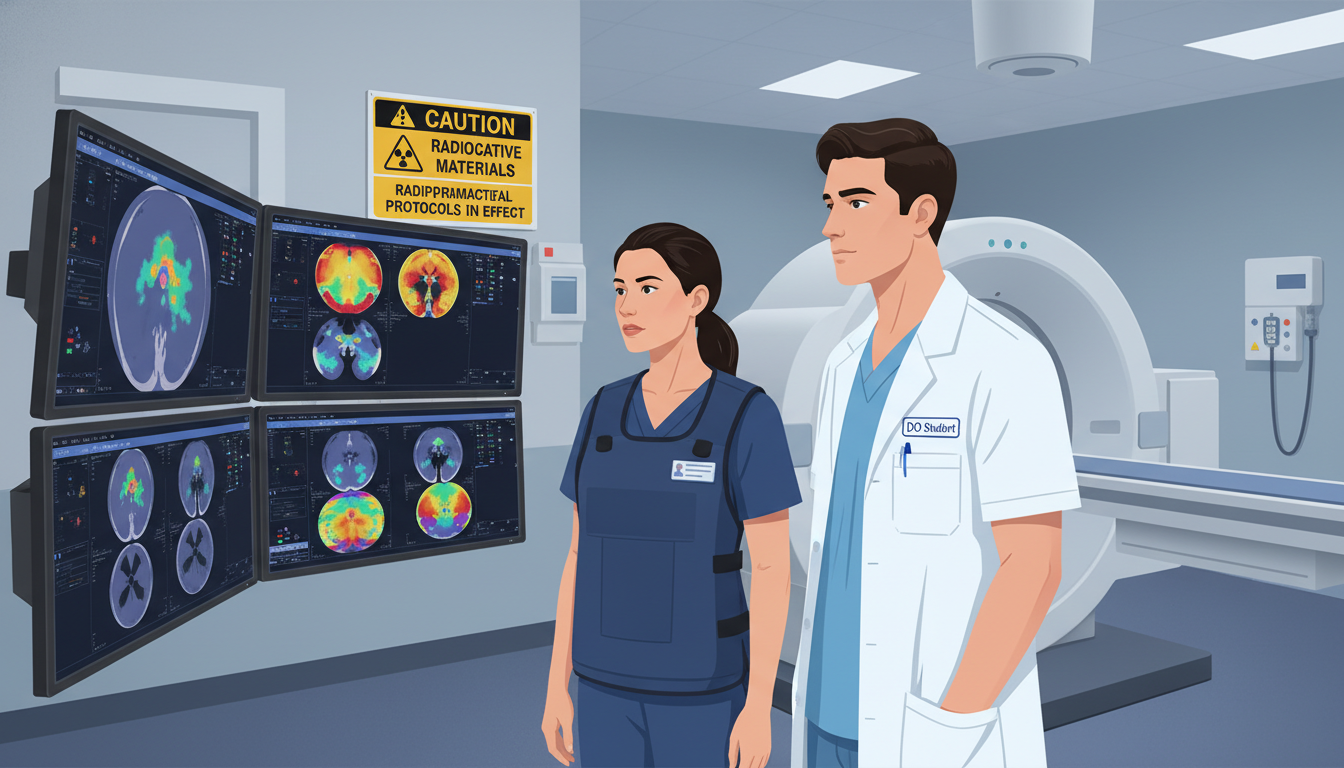
1. Seek Early Nuclear Medicine Exposure
Because nuclear medicine is less visible than other specialties, demonstrating genuine interest is powerful.
Electives and rotations
- Do at least one nuclear medicine elective at your home institution, if available.
- If your school lacks a nuclear medicine department, consider away rotations or structured observerships at academic centers.
What to focus on during rotations
- Learn basic nuclear imaging modalities: PET, SPECT, bone scans, cardiac perfusion, thyroid imaging.
- Ask questions about:
- Radiation safety
- Radiopharmaceuticals
- Indications and contraindications for studies
- Volunteer to:
- Present interesting cases at imaging conferences
- Help with chart review or quality improvement projects
2. Letters of Recommendation: Nuclear Medicine and Beyond
Strong letters can significantly offset borderline scores.
Ideal mix of letters for a nuclear medicine match:
- 1–2 letters from nuclear medicine physicians (or nuclear radiologists) who know you personally.
- 1 letter from a core clinical field (internal medicine, surgery, or radiology) attesting to clinical competence and teamwork.
- Optional: A letter from research or QI mentor if you have substantial scholarly work.
What to ask your letter writers to emphasize:
- Your ability to reason through complex physiological and imaging problems.
- Professionalism, reliability, and work ethic.
- Improvement over time, especially if early academic struggles occurred.
- Specific examples (e.g., case presentations, patient interactions, or initiative during rotation).
3. Research and Scholarly Activity
Nuclear medicine is a research-heavy field, particularly in molecular imaging and theranostics.
Types of projects that matter:
- Case series or case reports involving PET/CT or novel radiotracers.
- Quality improvement projects (e.g., reducing repeat scans, optimizing protocols).
- Chart reviews analyzing diagnostic accuracy or outcomes.
If your school has limited nuclear medicine researchers:
- Connect with radiology departments first; many radiology faculty collaborate with nuclear medicine colleagues.
- Look for remote research opportunities, especially at academic centers with active nuclear medicine divisions.
Even small-scale projects, if well-presented and published or submitted to meetings, significantly enhance your profile when combined with decent Step 2 CK performance.
Crafting a Targeted Application Strategy for the Nuclear Medicine Match
You have your scores, experiences, and letters. Now the question is: how do you maximize your osteopathic residency match chances in nuclear medicine?
1. Selecting Programs Strategically
Because nuclear medicine programs are fewer, you need to be realistic and comprehensive.
Cast a wide net:
Many applicants underestimate how small the nuclear medicine community is. Applying to only a handful of programs is risky, especially with a low Step score.Prioritize programs that:
- Explicitly welcome DO graduates (check websites, contact coordinators politely if unclear).
- Are part of larger academic centers with:
- Radiology departments
- Cancer centers
- Strong PET/CT and theranostic services
Consider geography but avoid over-restricting yourself:
- If your scores are modest, limiting applications to only 1–2 regions can constrain you severely.
2. Tailoring Your Personal Statement
Your personal statement should integrate your Step score story and your nuclear medicine passion without sounding defensive.
- Elements to include:
- A clear narrative of why nuclear medicine: interest in imaging, physiology, oncology, theranostics, or molecular diagnostics.
- Evidence of active exploration: rotations, research, conferences, or mentorship.
- A subtle, solution-oriented mention of any academic hurdles, framed in terms of:
- Insight (what you learned)
- Action (what you changed)
- Outcome (Step 2 CK improvement, strong clinical performance)
Avoid long apologies about a low Step score. Instead, show resilience and maturation.
3. Step 2 CK Timing Relative to ERAS Submission
Maximizing your Step 2 CK’s benefit in the match requires attention to timing.
Ideal timing:
- Take Step 2 CK early enough so your score is available by the time you submit ERAS (typically September).
- That allows PDs to see your improvement and not anchor too heavily on a low Step 1.
If Step 2 CK may be lower than hoped:
- You may still choose to release it, especially if Step 1 was already low. A slightly higher or similar score can still show stability.
- Discuss individual strategy with your advisor; each case is nuanced.
Practical Example Scenarios for DO Applicants
To pull this together, here are three realistic DO graduate scenarios and how each might shape a Step score strategy for a nuclear medicine residency match.
Scenario 1: Strong Scores, Limited Exposure
- DO graduate
- Step 1: 236
- Step 2 CK: 244
- COMLEX: above national mean
- Minimal nuclear medicine exposure so far
Strategy:
- You are competitively scored.
- Focus:
- Schedule 1–2 nuclear medicine electives early.
- Seek at least one nuclear medicine letter.
- Join a small nuclear imaging project or case series.
- Emphasize your strong test scores as evidence that you’ll manage the physics and imaging demands well.
Scenario 2: Low Step 1, Strong Step 2 CK
- DO graduate
- Step 1: 205
- Step 2 CK: 236
- Clear upward trend on COMLEX Levels 1 and 2
Strategy:
- Use Step 2 CK and your COMLEX progression to frame an academic growth narrative.
- Highlight:
- Strong clinical rotations and shelf performance.
- At least one strong nuclear medicine or radiology rotation with an excellent letter.
- In your personal statement, briefly acknowledge initial adjustment difficulties, then emphasize how improved study systems led to your Step 2 CK jump and clinical success.
Scenario 3: Low Step 1 and Modest Step 2 CK
- DO graduate
- Step 1: 205
- Step 2 CK: 220
- Still below average, but pass on both
Strategy:
- Rely more heavily on:
- Rotations at nuclear medicine programs where you can shine clinically.
- Strong letters attesting to your reliability, clinical sense, and fit for nuclear medicine.
- A robust story of genuine interest: electives, reading, conferences, and small research projects.
- Apply broadly:
- Focus on nuclear medicine programs known to value holistic review.
- Don’t restrict yourself geographically.
- Your match odds are not zero; they hinge on how effectively you demonstrate commitment, professionalism, and upward trajectory in all non-test domains.
Frequently Asked Questions (FAQ)
1. As a DO graduate, do I need USMLE scores to match into nuclear medicine?
Not strictly, but they help. Many nuclear medicine residency programs can and do accept COMLEX-only applicants. However, USMLE Step 2 CK makes you more directly comparable to MD applicants and may prevent automatic screening out at some university-based programs. If you are still early in training and serious about an academic nuclear medicine career, taking USMLE Step 2 CK in addition to COMLEX Level 2 is beneficial.
2. What Step scores do I “need” for a nuclear medicine residency?
There is no universal cutoff, especially in a small specialty. Generally:
- Highly reassuring profile: Step 2 CK ~240–250+
- Comfortable range: ~230–240
- Still viable with strong non-score strengths: ~220–230
Lower scores can still match if paired with excellent letters, strong nuclear medicine exposure, solid COMLEX performance, and a compelling narrative of growth. Nuclear medicine is more flexible than fields like dermatology or integrated plastics, but it is still academically rigorous.
3. How can I compensate for a low Step score when applying to nuclear medicine?
Compensation strategies include:
- Demonstrating a strong upward trend (better Step 2 CK, stronger COMLEX Level 2).
- Earning outstanding evaluations and letters from nuclear medicine or radiology faculty.
- Completing nuclear medicine electives/aways, making yourself known to programs.
- Getting involved in nuclear imaging research, QI projects, or case reports.
- Communicating a thoughtful, honest narrative of improvement in your personal statement and interviews.
The combination of genuine interest, growth, and professionalism can significantly offset numerical weaknesses.
4. Does nuclear medicine care about osteopathic principles or OMM experience?
Nuclear medicine itself is not procedure-heavy in the osteopathic manipulative sense. However, as a DO graduate, your holistic patient perspective, communication skills, and grounding in functional anatomy and physiology can be an asset. Program directors will not choose you because of OMM, but they will value the patient-centered, systems-based thinking that osteopathic training provides—especially in a specialty dealing with complex oncologic and systemic disease imaging.
By combining a realistic Step score strategy with targeted nuclear medicine experiences, strong letters, and a clear narrative of growth, a DO graduate can not only match into nuclear medicine—but thrive in it. Your Step scores are one piece of the puzzle, not the whole picture. The key is to manage them strategically and let the rest of your application amplify your true potential.