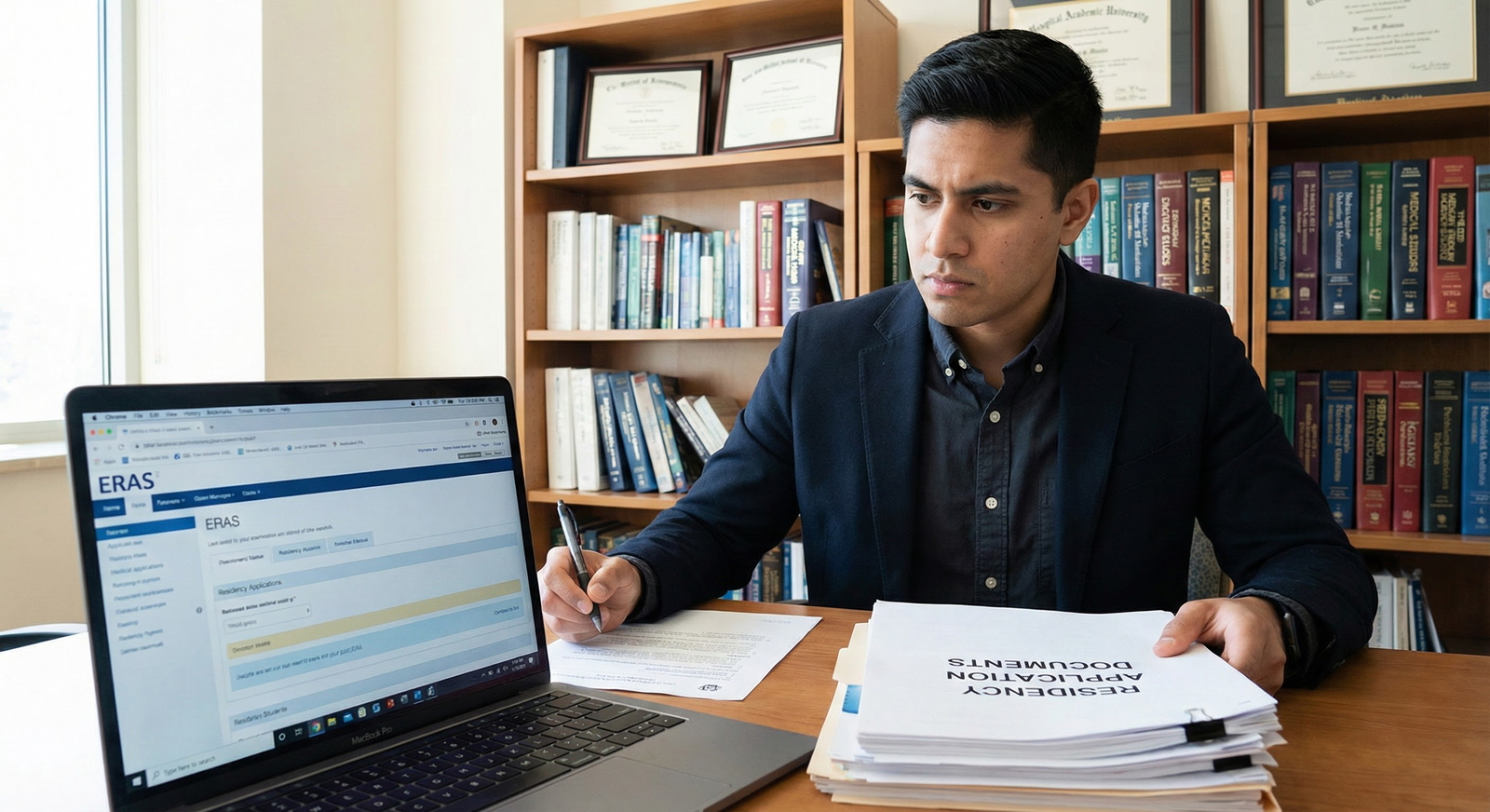
Diagnostic radiology is one of the most competitive specialties in the United States, and for a non-US citizen IMG, the bar is even higher. Step scores still matter—yes, even with Step 1 pass/fail—especially when you are a foreign national medical graduate competing with US MDs, DOs, and US-IMGs.
This guide focuses specifically on Step score strategy for non-US citizen IMGs targeting diagnostic radiology residency. The goal is to show you how to:
- Interpret your scores realistically for the diagnostic radiology match
- Use Step 2 CK strategy to offset Step 1 issues
- Build a targeted application if you have a low Step score or exam setbacks
- Decide where and how to apply as a foreign national medical graduate depending on your profile
Understanding How Step Scores Are Viewed in Diagnostic Radiology
Before building a strategy, you need to understand how radiology program directors think about USMLE scores—especially for a non-US citizen IMG.
Step 1: Now Pass/Fail, but Still Influential
For older graduates (or those who tested before pass/fail), Step 1 numeric scores may still appear and be used. For current applicants, Step 1 is reported as Pass/Fail, but its impact remains indirect:
- Pass on first attempt
- Minimizes concern; lets programs focus on your Step 2 CK and overall file.
- Fail on first attempt
- Major red flag in radiology, especially for a non-US citizen IMG.
- You must (1) pass on the next attempt, and (2) significantly out-perform on Step 2 CK to show recovery and reliability.
Even with pass/fail, many radiology programs—especially competitive academic centers—still ask about Step 1 performance during interviews or via supplemental questions. A strong Step 2 CK can help them feel comfortable that your knowledge base is sound even if Step 1 was marginal.
Step 2 CK: The Core Academic Filter for Radiology
With Step 1 now pass/fail, Step 2 CK is the most important exam score for competitive specialties like diagnostic radiology. For a foreign national medical graduate, Step 2 CK often becomes:
- Your primary standardized academic metric
- Your main tool to offset disadvantages (IMG status, non-US med school reputation, visa needs, or older YOG)
Rough score categories for diagnostic radiology (for IMGs)
(These are approximate and can change by cycle; think in terms of competitiveness tiers, not absolute cutoffs.)
250+:
- Very strong for an IMG in radiology.
- Can open doors at some mid- to high-tier programs, especially if paired with strong US clinical experience and letters.
- Still not a guarantee at elite programs, but makes you competitive.
240–249:
- Competitive for many community and some mid-level academic programs.
- Solid for a non-US citizen IMG, but you will need strong supporting elements: research, radiology exposure, strong LORs, and a thoughtful program list.
230–239:
- Borderline for radiology in the US as a foreign national medical graduate.
- Match is possible, but you must execute everything else exceptionally well and apply broadly, often with a back-up specialty.
<230 or multiple attempts:
- A low Step score for match in radiology, especially as a non-US citizen IMG.
- Not necessarily impossible, but the path is narrow and often requires:
- Significant radiology research or advanced degrees (e.g., MPH, MS, PhD)
- Strong connections/mentorship within US radiology
- Very broad application strategy + a realistic backup specialty
How Program Directors Use Step Scores for IMGs
Specific to non-US citizen IMGs, Step scores are often used to:
- Screen: Many programs set higher cutoffs for IMGs than for US grads.
- Compare across unknown schools: Scores help calibrate your performance against US-trained students.
- Estimate exam reliability: Multiple attempts can be seen as riskier for in-training and board exams.
- Prioritize interview offers: When faced with hundreds of applicants, high Step 2 CK scores help you float to the top of the IMG pool.
Key point: As a non-US citizen IMG, your Step 2 CK score often must be substantially higher than the average matched US MD in radiology to achieve similar odds.
Step 2 CK Strategy: Your Primary Lever as a Non-US Citizen IMG
For most current applicants, Step 2 CK is your main controllable academic weapon. A deliberate, disciplined strategy here is essential.

1. Timing Step 2 CK Relative to Your Application
For diagnostic radiology, you should aim to have a strong Step 2 CK score available by ERAS opening (September). For a non-US citizen IMG, this is even more critical, because many programs:
- Will not rank you highly without a Step 2 CK score.
- Use Step 2 to decide whether to interview IMGs at all.
Optimal timing targets:
- Test date: April–July of the year you plan to apply.
- Score release: Typically within 2–4 weeks after your exam.
If your practice scores are weak, it may be better to delay the exam (within reason) to boost performance—even if that means your score appears a bit later in the season—than to rush and end up with a low Step 2 score that severely limits radiology chances.
2. Structured Preparation: IMG-Specific Considerations
Many non-US citizen IMGs face real challenges for Step 2 CK:
- Extended gap since core clinical years
- Different curriculum style
- Non-English-native background
- Limited access to high-quality teaching hospitals
To overcome these, create a structured, high-yield Step 2 CK strategy:
a. Baseline Assessment
- Take a NBME practice exam early (e.g., NBME 10 or 11) to:
- Identify weak systems (e.g., cardiology, neurology)
- Estimate your target score gap (e.g., NBME 228, target 245+)
b. Focused Resources (Aim for Depth, Not Quantity)
Commonly effective combo for IMGs:
- Question bank:
- UWorld Step 2 CK (primary)
- Anki or another spaced repetition system:
- For reinforcing UWorld concepts and common algorithms.
- Video/text references (choose 1 primary, 1 backup at most):
- Online MedEd, Boards & Beyond (if available), or a concise Step 2 CK review book.
Radiology-specific tip: While Step 2 CK is mostly clinical, pay attention to:
- Imaging indications (e.g., when to order CT vs MRI vs ultrasound)
- Basic interpretation of common films (CXR, CT head)
- Contrast use and contraindications
These will help both on the exam and in interviews.
c. Deliberate Practice Strategy
- Aim for 2,000–3,000 questions total (UWorld + possibly one supplemental bank).
- Work in timed, random blocks after your foundation is set to simulate real exam conditions.
- Use detailed review:
- For each missed question, identify:
- Content gap
- Test-taking/trap issue
- Language or misreading problem
- For each missed question, identify:
Log these patterns in a “mistake journal” and review weekly.
3. Setting a Realistic Step 2 CK Target for Radiology
As a foreign national medical graduate aiming for diagnostic radiology:
- If Step 1 is Pass on first attempt:
- Aim for 245–250+ to be reasonably competitive at many community + some academic programs.
- If Step 1 has a Fail, or your medical school is less known:
- Aim for 250+ to help compensate.
- If you already have a low Step 1 numeric score (older examinees):
- Step 2 CK should ideally be >20 points higher than Step 1 to show growth.
4. What If Your Baseline is Low?
If early NBME scores are below ~220, you’re in low Step score match territory if you rush. Adjust your Step 2 CK strategy:
- Extend study to 4–6 months total, divided into:
- Foundation phase (2–3 months):
- Slow UWorld with detailed review
- Daily Anki/spaced repetition
- Consolidation phase (1–2 months):
- Second pass of weak areas
- Weekly NBME or UWSA practice tests
- Foundation phase (2–3 months):
- Only schedule Step 2 CK when two consecutive practice exams are near or above your target score (e.g., if you want 245, aim for consistent 240–250 on NBME/UWSA).
5. Handling a Disappointing Step 2 CK Score
If your Step 2 CK ends up below 235 and you are a non-US citizen IMG, your chances in radiology decline sharply, but strategy still matters:
If you have not yet applied:
- Consider taking time for:
- Additional research in radiology
- Electives or observerships
- Maybe a US-based degree program (MPH/MS) with radiology or imaging research
- Reassess whether to apply for radiology in this cycle or delay.
- Consider taking time for:
If you are about to apply or already applied:
- Apply very broadly to radiology (including many community and smaller academic programs).
- Simultaneously apply to a backup specialty where your score is more competitive (e.g., internal medicine, preliminary positions).
- Use your personal statement and letters to show academic growth and reliability.
Strategy If You Already Have Low Step Scores
Many foreign national medical graduates come to this question after the fact: “My Steps are already low. Is diagnostic radiology still possible?”
This section addresses salvage strategies for:
- Older numeric Step 1 scores <230
- Step 2 CK <235
- Exam failures (Step 1 or Step 2)

1. Honest Risk Assessment for Radiology
For a non-US citizen IMG, the following combinations make radiology extremely difficult (but not always 100% impossible):
- Step 2 CK <230, regardless of Step 1
- Any exam failure + Step 2 CK <240
- Both low scores + needing a visa + older YOG (e.g., >5 years)
In such scenarios, you must be realistic:
- Could you spend 2–3 additional years doing research and networking?
- Are you willing to accept a very low match probability after heavy investment?
- Would a different specialty (e.g., Internal Medicine with imaging/research focus) still satisfy your long-term goals?
2. Strengthening the Rest of Your Application
If you decide to still pursue radiology despite low Step scores, your strategy must be exceptional in other domains:
a. Radiology Research
- Aim for:
- Case reports and case series in imaging journals
- Retrospective imaging studies with US-based mentors
- Conference abstracts/posters (RSNA, ARRS, subspecialty societies)
Being heavily involved in research can sometimes outweigh a low Step score match profile, especially at institutions that know you personally.
b. US Clinical and Radiology Exposure
For non-US citizen IMGs, credible US experience signals:
- Familiarity with the US system
- Proven communication skills
- Performance in a real clinical environment
Try to obtain:
- US clinical rotations in internal medicine, surgery, or neurology (good for Step 2 CK context)
- Radiology observerships or externships:
- Even if not hands-on, these allow you to:
- Understand daily workflow
- Impress faculty
- Earn strong radiology-specific letters of recommendation
- Even if not hands-on, these allow you to:
c. Exceptional Letters of Recommendation (LORs)
For radiology, ideal LORs for an IMG include:
- 1–2 letters from US academic radiologists who know you well
- 1 letter from an internal medicine or surgery attending who can speak to your clinical decision-making and reliability
- Possibly 1 letter from a research mentor, especially if radiology-focused
Your letters should explicitly address:
- Your mastery of clinical material (de-emphasizing any low Step score)
- Your work ethic, reliability, and curiosity
- Your ability to learn from setbacks (if you had failures)
3. Crafting a Step Narrative in Your Personal Statement
If your scores are low or you had failures, do not ignore them in your application narrative. Instead:
- Briefly acknowledge the issue:
- Provide context, not excuses (language adjustment, health issues, poor early strategy).
- Emphasize:
- What changed in your study methods
- How your clinical performance improved later (clerkship grades, research output, later exams)
- Your Step 2 CK strategy in hindsight (if it shows growth and insight)
Program directors are more open to applicants who:
- Recognize their weaknesses
- Demonstrate consistent improvement over time
- Present clear evidence of current competence
Application Strategy: Using Step Scores to Guide Where and How You Apply
Your USMLE performance should strongly shape your diagnostic radiology match strategy as a non-US citizen IMG.
1. Building a Realistic Program List
Segment programs into tiers based on how they typically treat IMGs:
Highly competitive academic programs
- Usually accept few or no non-US citizen IMGs
- Often expect 250+ Step 2 CK even from US grads
- For most IMGs, only apply if:
- You have exceptional research at that institution, and
- Strong internal support/mentorship
Mid-tier academic + strong community programs
- Some accept IMGs, often with high Step 2 CK and strong profiles.
- Your best targets if:
- Step 2 CK ~245–255
- Good research and US experience
Smaller community and university-affiliated programs
- More open to IMGs, especially if they have a history of sponsoring visas.
- Where a solid 230–240+ Step 2 CK with good supporting elements can be sufficient.
Use tools like:
- FREIDA (filtering by IMGs and visa status)
- Program websites (look at current residents’ medical schools)
- Word-of-mouth via alumni/mentors
2. Visa and Citizenship Considerations
As a non-US citizen IMG, your need for a visa matters almost as much as your Step scores:
- Programs that do not sponsor visas are essentially off-limits, regardless of exam performance.
- Some programs sponsor only J-1, fewer sponsor H-1B.
When creating your list:
- Identify programs that sponsor your required visa type
- Understand that programs may have:
- Higher Step score expectations for visa candidates
- Additional concerns about long-term retention and licensing
3. Using a Dual-Path or Backup Specialty Strategy
If your Step scores are borderline for radiology:
- Combine a focused radiology application with:
- A concurrent application to a backup specialty where your Step profile is more competitive.
Common back-ups for IMGs with radiology interest:
- Internal Medicine (with later options in:
- Imaging research
- Cardiology with imaging focus
- Pulmonology/critical care with imaging-heavy practice)
- Preliminary medicine or surgery years that can:
- Keep you in the system
- Add US experience
- Provide time to strengthen your radiology profile
When you choose this route:
- Write distinct personal statements:
- One with a clear radiology narrative
- One for your backup specialty (e.g., Internal Medicine) that still highlights your interest in diagnostic reasoning but does not undermine commitment.
Practical 12–18 Month Timeline for Non-US Citizen IMG Targeting Radiology
To put everything together, here’s a sample structured timeline for a final-year student or recent graduate:
12–18 months before application (January–March, Year -1)
- Decide primary goal: diagnostic radiology residency in the US.
- Start Step 2 CK prep (light at first, focusing on weak areas).
- Reach out to radiology departments for research opportunities or observerships.
9–12 months before application (April–June, Year -1)
- Intensify Step 2 CK prep.
- Take first NBME practice exam; adjust strategy.
- Secure US clinical rotations if feasible (internal medicine, surgery, neurology).
- Begin at least one radiology research project.
6–9 months before application (July–September, Year -1)
- Take Step 2 CK when consistent practice scores are around your target.
- Get involved more deeply in radiology research and observerships.
- Start drafting your CV and list of experiences.
3–6 months before application (October–December, Year -1)
- Receive Step 2 CK score; reassess strategy:
- Decide how broadly to apply to radiology.
- Decide whether to include a backup specialty.
- Seek strong LORs from US radiologists and clinicians.
- Continue research; aim for at least abstract submissions.
0–3 months before ERAS submission (March–June, Application Year)
- Finalize personal statements (including a Step narrative if needed).
- Build a program list focusing on:
- IMG-friendly radiology programs
- Programs sponsoring your visa type
- Geographic and institutional diversity
ERAS submission and interview season (September–January, Application Year)
- Submit ERAS early with finalized documents.
- Send targeted update letters only when you have significant new achievements (paper accepted, major presentation).
- Prepare to discuss:
- Your exam journey and improvements
- Radiology-specific experiences
- How your background as a non-US citizen IMG uniquely strengthens your candidacy
FAQs: Step Score Strategy for Non-US Citizen IMG in Diagnostic Radiology
1. Is a 240 Step 2 CK score enough for a non-US citizen IMG to match in diagnostic radiology?
A 240 is borderline but not hopeless. For a non-US citizen IMG:
- With excellent radiology research, US letters, and observerships, you can be competitive at:
- Some community-based or smaller academic programs that are IMG-friendly.
- Without those, your odds decrease significantly.
You should strongly consider:
- Applying very broadly to radiology
- Including a backup specialty, especially if other parts of your profile are not exceptional
2. Can a very strong Step 2 CK score compensate for a low Step 1 or a Step 1 failure?
To some extent, yes. Programs often view a high Step 2 CK as evidence of:
- Academic growth
- Better study habits
- Readiness for clinical decision-making
However, a Step 1 failure will still be a red flag, particularly in a competitive specialty like radiology. You will need:
- Step 2 CK ideally ≥250
- Strong letters and US experience
- A clear, honest explanation of your earlier difficulty and how you’ve improved
3. If my Step 2 CK score is below 230, should I still apply to radiology?
In most cases, with Step 2 CK <230, the diagnostic radiology match as a non-US citizen IMG becomes very unlikely unless:
- You have exceptional US-based radiology research (multiple publications at major centers), and
- Strong institutional support from those same programs
Even then, match probability remains low. Many applicants in this range are better served by:
- Applying to a less competitive specialty they can be happy in, or
- Building a longer-term plan (e.g., research fellowship, additional degrees) if they are absolutely committed to radiology.
4. How many radiology programs should a non-US citizen IMG with mid-range Step scores apply to?
If your Step 2 CK is in the 235–245 range:
- Consider applying to 60–100 radiology programs, focusing on:
- Programs known to accept IMGs
- Visa-sponsoring institutions
- A mix of community and university-affiliated centers
Simultaneously, consider applying to a backup specialty to protect against a complete mismatch. The exact number also depends on your research, US experience, and year of graduation.
By using your Step scores intelligently—especially your Step 2 CK strategy—and aligning them with realistic program choices, research, and radiology exposure, you can build a thoughtful, competitive application pathway as a non-US citizen IMG targeting diagnostic radiology residency in the United States.