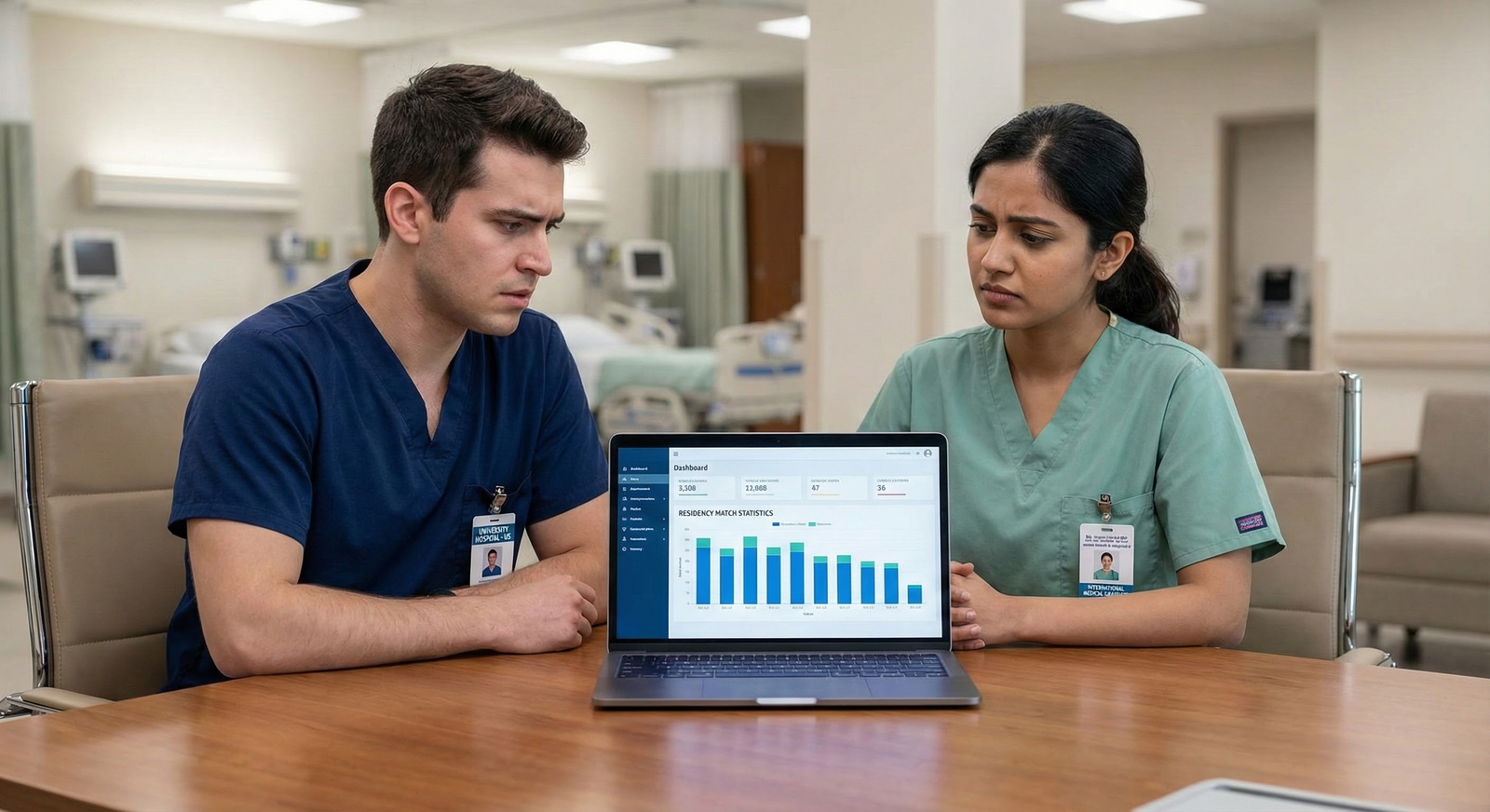
Understanding the Step Score Landscape for US Citizen IMGs in Diagnostic Radiology
Diagnostic radiology is one of the more competitive specialties in the NRMP Match. For a US citizen IMG or an American studying abroad, Step scores often feel like the single biggest barrier between you and a radiology residency. That perception isn’t completely wrong—but it isn’t the full story either.
This article focuses specifically on Step score strategy for a US citizen IMG targeting diagnostic radiology. We’ll break down how Step 1, Step 2 CK, and (if relevant) Step 3 play into the diagnostic radiology match, how to plan if you have a low Step score, and how to rebuild a competitive profile when your numbers aren’t perfect.
You’ll see “US citizen IMG” and “American studying abroad” used interchangeably—they both describe Americans who earned or are earning their MD/MBBS outside the US or Canada.
How Programs View Step Scores in Diagnostic Radiology
Before you build a strategy, you must understand the playing field.
1. Step 1 in the Pass/Fail Era
Even though Step 1 is now pass/fail, it still matters:
- Program filters: Many programs still auto-screen for Step 1 = Pass on first attempt. A fail can be a significant red flag, particularly in radiology.
- Timing of the exam: Delays in taking or passing Step 1 can raise questions about academic readiness, especially in a cognitively intensive specialty like radiology.
- Context with Step 2: With no numeric Step 1 score, Step 2 CK has become the primary objective academic signal.
For a US citizen IMG, Step 1 must be passed cleanly and early enough to allow time for a strong Step 2 CK before ERAS submission.
2. Step 2 CK: The Key Differentiator
Diagnostic radiology is driven by pattern recognition and clinical reasoning—skills Step 2 CK is designed to test. Programs now use Step 2 CK scores more heavily for ranking and deciding who to interview, especially for IMGs.
Typical patterns:
- Competitive US MDs often have Step 2 CK scores well above national mean.
- For US citizen IMGs, programs often set higher internal thresholds because:
- They may be less familiar with your school.
- They rely more on standardized metrics to compare applicants.
While exact cutoffs vary by program and year, a strong Step 2 CK strategy can partially compensate for a less prestigious school and limited US clinical experiences.
3. How Radiology Programs Use Scores
Programs generally use Step scores in three ways:
Screening/Filtering:
- Pass on Step 1 (no repeat).
- Step 2 CK above internal cutoff (this might be 230–240+ at more competitive programs; some community or mid-tier programs may be more flexible, especially for US citizens).
- No multiple exam failures.
Risk Assessment:
- Low or borderline scores raise concerns about:
- Passing future in-training exams.
- Passing ABR board exams.
- They may look for evidence that you can handle radiology’s steep learning curve, e.g., improved Step 2 CK, strong clinical evaluations, or solid research output.
- Low or borderline scores raise concerns about:
Tie-Breaking and Ranking:
- Among otherwise similar candidates, higher scores can still tip decisions.
- For an IMG, Step 2 CK can be the difference between being “screened out,” “interviewed,” or “ranked to match” at academic radiology programs.
Planning Your Step 1 and Step 2 CK Timeline as a US Citizen IMG
Your biggest advantage as a US citizen IMG is citizenship—you avoid visa concerns, which is a major barrier for non-US IMGs. The trade-off is that programs often still expect strong performance to justify choosing an IMG at all. That means your Step timeline must be strategic.
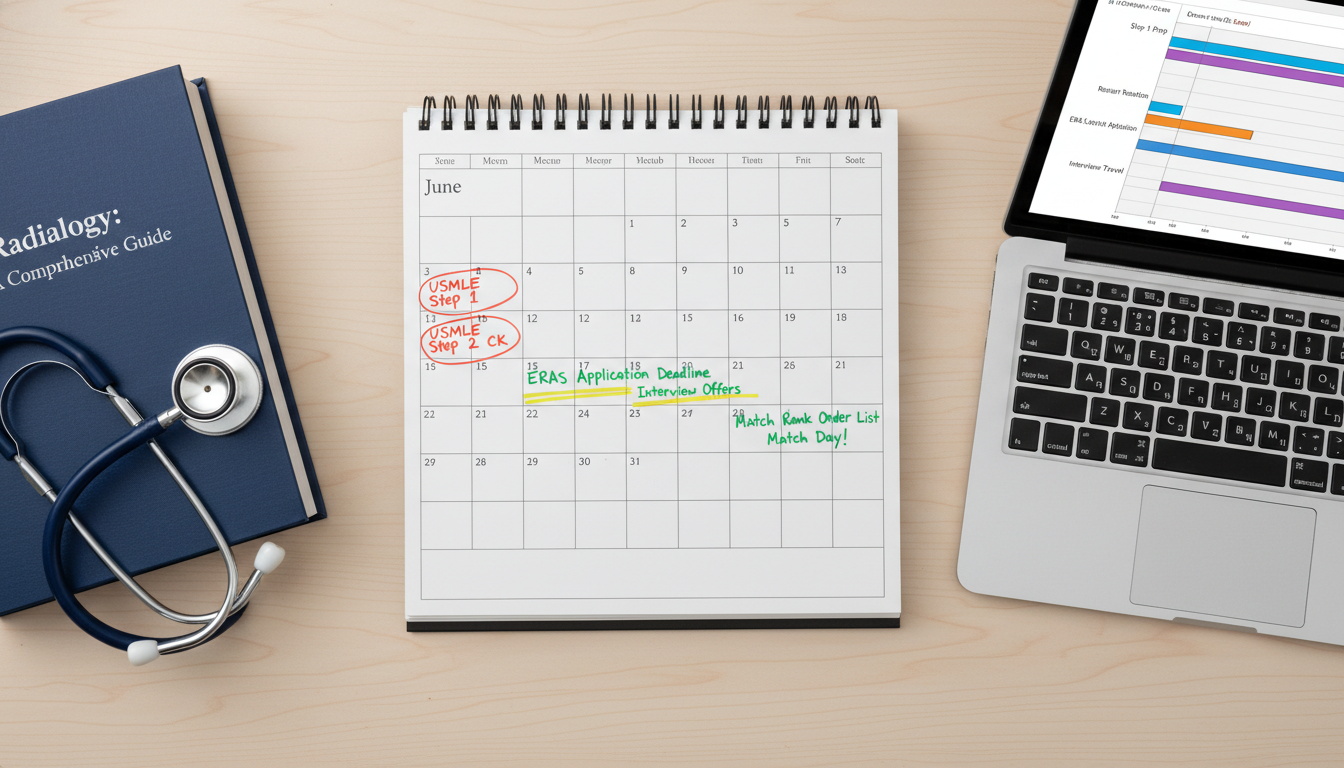
Ideal Step Timeline for Radiology Applicants
Assuming a standard US match cycle (residency starting July Year X):
- Step 1:
- Completed by end of MS2-equivalent year or ~18–24 months before Match.
- Aim to pass on first attempt.
- Step 2 CK:
- Target exam date by June–July of the application year (Year X−1).
- This ensures a reported score before ERAS opens (September).
- ERAS Submission:
- September of Year X−1 with Step 2 CK score in hand, not “pending.”
For US citizen IMGs, this is critical. Many IMG-heavy programs will not invite without a Step 2 CK score, especially in radiology.
If Your Timeline Is Delayed
If Step 1 or Step 2 CK is delayed, prioritize:
- Step 2 CK completion before ERAS opens if at all possible.
- If you must apply without a Step 2 CK score:
- Make this clear in your personal statement and MSPE (if applicable).
- Provide a definite scheduled date (e.g., “scheduled for October 12”).
- Understand this will significantly limit interviews in a competitive specialty.
In some scenarios, delaying your application cycle by one year can be strategically smarter—especially if:
- Your Step 1 was marginal or failed once.
- You need more time to ensure a high Step 2 CK, not just a pass.
Step 1 Strategy for US Citizen IMGs in Radiology
Even pass/fail Step 1 still demands a focused strategy, especially if you’re an American studying abroad at a school with variable outcomes on USMLE.
Core Principles
Pass on the first attempt is non-negotiable.
- A failure doesn’t completely end your chances, but it will severely narrow them in radiology.
- If you’re academically borderline, it may be smarter to extend your prep period or adjust your exam date instead of risking an early fail.
Use performance data from NBME practice exams.
- Avoid taking Step 1 until your latest NBME or equivalent predictor suggests ≥ 95% chance of passing.
- For IMGs, being cautious is better; a failed attempt can be far more damaging than a delay.
Integrate radiology-oriented thinking early (lightly).
- While Step 1 isn’t radiology-specific, basic imaging knowledge (e.g., head CT basics, chest X-ray signs) is occasionally tested and primes your brain for the field.
- Supplement with short, focused radiology resources—but don’t overdo it. Step 1 is still largely foundational basic science.
What if You Failed Step 1?
A Step 1 failure is a serious obstacle but not always fatal. For a US citizen IMG targeting radiology, you must respond strategically:
Retake Preparation:
- Do a structured remediation with faculty, if your school offers this.
- Use detailed NBME review to identify patterns: is it content gaps, test anxiety, or timing?
Crush Step 2 CK to show academic recovery.
- Program directors will look for a clear upward trajectory, especially with a strong Step 2 CK (often ≥ the 50th–60th percentile or higher if you’re aiming for academic programs).
Narrative Framing:
- In your personal statement and interviews, frame it as:
- A setback that led to significant changes in study methods.
- A turning point that ultimately improved your performance.
- Do not make excuses; emphasize maturity and growth.
- In your personal statement and interviews, frame it as:
Step 2 CK Strategy: Your Main Academic Weapon
For a US citizen IMG in diagnostic radiology, Step 2 CK is your primary academic currency. This is where you can offset limitations in pedigree, school reputation, or earlier missteps.

Target Ranges and Context
Exact cutoffs shift yearly and by program, but as a broad directional guide:
- Highly competitive academic radiology programs:
- Many successful IMG candidates often have Step 2 CK well above mean (e.g., high 230s–250s+ historically, though exact percentiles matter more now than specific numbers).
- Mid-tier/community or IMG-friendly programs:
- Many are open to moderate scores if:
- You’re a US citizen.
- You have strong clinical evaluations, some research, and realistic program targeting.
- Many are open to moderate scores if:
If you have a low Step 1 score or a fail, you should aim to overshoot the “average” Step 2 CK expectation for IMGs to demonstrate true capability.
Building a High-Yield Step 2 CK Study Plan
Prioritize Qbanks early and consistently.
- UWorld is still the gold standard.
- Aim to complete at least one full pass, with many IMGs needing 1.5–2 passes to shore up weaker foundations.
Use NBMEs and other self-assessments strategically.
- Start 8–10 weeks before the exam with your first NBME.
- Take a new assessment every 2–3 weeks to:
- Track progress.
- Adjust focus (e.g., if OB/GYN is weak, refocus there).
Drive improvement with error analysis.
- Don’t just mark questions right or wrong; build a written error log:
- Was the mistake content, interpretation, or rushing?
- What mini-lesson can you write for your future self?
- Don’t just mark questions right or wrong; build a written error log:
Schedule Step 2 CK with margin.
- Aim for exam date 2–3 months before ERAS, giving time for:
- Score reporting.
- A retake, if drastically needed (though this is not ideal).
- It’s better to take a gap year than to rush Step 2 CK and carry a permanently low score into a radiology application.
- Aim for exam date 2–3 months before ERAS, giving time for:
Step 2 CK Strategy if Your Baseline Is Weak
Many US citizen IMGs at offshore schools feel underprepared clinically. If your early NBME scores are low:
- Extend your study period by several months, if your school and finances allow it.
- Use a systematic content resource (e.g., concise Step 2 CK text or video series) alongside Qbank questions to fill knowledge gaps.
- Prioritize core medicine, neurology, and surgery, which often form the bulk of high-yield questions.
- Consider short-term live or online prep courses if you struggle with structure or test-taking.
Matching in Radiology With a Low Step Score: Damage Control and Optimization
Not everyone will achieve a standout Step 2 CK. If you’re worried about a low Step score match scenario, you still have room to maneuver—especially as a US citizen IMG with flexibility in geography and program type.
What “Low Step Score” Means in Radiology Context
“Low” is relative. For diagnostic radiology:
- Mildly low: Just under the typical thresholds for academic programs but still passing and above failure risk.
- Moderately low: Clearly below what competitive programs usually accept for IMGs, but still passing on first attempt.
- Severely low / multiple attempts: Below most programs’ filters or with exam failures.
Your exact category helps shape strategy.
Strategies if You Have Mildly or Moderately Low Scores
Broaden Your Program List Aggressively
- Include:
- Community-based radiology residencies.
- Programs in less popular geographic regions.
- Programs historically matching US citizen IMGs.
- Apply to a high number of programs (sometimes 60–90+ for radiology) to offset weaker metrics.
- Include:
Strengthen the Rest of Your Application
- US Clinical Experience (USCE):
- If possible, get at least 1–2 radiology observerships or electives in the US.
- Also seek a strong internal medicine or surgery rotation with excellent evaluations; radiology programs value broad clinical reasoning.
- Letters of Recommendation:
- At least one letter from a US radiologist who knows you well.
- One from a core clinical specialty (e.g., internal medicine) highlighting your clinical judgment and work ethic.
- Research:
- Even small-scale case reports, chart reviews, or quality improvement projects in radiology are better than nothing.
- If you can’t access radiology research locally, consider:
- Remote collaborations.
- Online radiology interest groups (e.g., RAD-AID, specialty societies with student arms).
- US Clinical Experience (USCE):
Leverage Your Story as a US Citizen IMG
- Emphasize:
- Clear commitment to radiology (not a backup).
- Reasons for studying abroad and what you’ve gained (resilience, adaptability).
- Long-term plans to practice radiology in the US, possibly in underserved or less saturated regions.
- Emphasize:
Use a Supplemental Application/Signaling (If Available) Wisely
- Some cycles include program signaling or supplemental applications.
- Use these to signal realistic yet solid programs where an IMG with your profile has a fighting chance, not only extreme reach options.
When to Consider a Parallel or Staged Path
If scores are very low or you have multiple USMLE attempts, a direct diagnostic radiology match may be unrealistic in the first try. Options:
Parallel Apply (Radiology + Another Specialty)
- Consider IM, transitional year, or preliminary year applications.
- This is higher risk and complex to manage but can provide:
- A clinical foothold in the US.
- Opportunity to build a stronger resume and possibly reapply to radiology later.
Plan a Two-Step Radiology Path
- Match into another specialty (often internal medicine).
- Pursue radiology-related:
- Electives.
- Research.
- Faculty relationships.
- Later, attempt to transfer into radiology (rare, highly competitive, but not impossible).
Dedicated Radiology Research Year (Pre- or Post-Match)
- At a major academic center, this can:
- Generate publications and letters.
- Demonstrate sustained interest and competence.
- Best paired with at least decent Step 2 CK scores; very low scores may still block you despite research.
- At a major academic center, this can:
Step 3: When It Helps a US Citizen IMG in Radiology
Step 3 is not required to apply for diagnostic radiology, but as a US citizen IMG, it may be strategically useful in some scenarios.
When Step 3 Can Help
You have borderline or low Step 1/Step 2 CK but:
- You believe you can significantly outperform on Step 3.
- You want to signal to programs that:
- You can pass board-style exams.
- You won’t be a liability for US licensing or ABR board passage.
You are aiming at programs that historically like their residents to have Step 3 completed early (sometimes for moonlighting or licensing reasons).
When It’s Not Worth It
- Your Step 2 CK is already strong and your main limitation is lack of USCE or research.
- Your exam-taking track record suggests Step 3 might not improve the narrative.
- Time and money are better spent on:
- US clinical experiences.
- Radiology observerships.
- Research or away rotations.
If you decide to take Step 3 before applying, ensure:
- You’re prepared enough to avoid a fail—which could worsen your application.
- You time it so the score is available by interview season.
Practical Scenarios and Sample Strategies
To make this more concrete, here are example profiles and strategic choices:
Scenario 1: American Studying Abroad, Average Step 2 CK, No Failures
Profile:
- US citizen IMG, Step 1: Pass, Step 2 CK: around national mean.
- A few US rotations but no radiology-specific experience.
Strategy:
- Add 2–3 US radiology observerships or electives before applying.
- Secure at least one strong radiology letter.
- Target a broad range of radiology programs, especially:
- Community-based.
- Geographically less popular regions.
- Consider a bit of radiology-focused research (even small, local projects).
Scenario 2: Step 1 Failure, Strong Step 2 CK
Profile:
- Step 1: Failed once, then passed.
- Step 2 CK: significantly above mean.
- Good clinical evaluations.
Strategy:
- Lean heavily on the strong Step 2 CK as evidence of growth.
- Address Step 1 failure briefly in your personal statement as a learning point and turning point.
- Obtain letters emphasizing your:
- Clinical reasoning.
- Maturity.
- Reliability.
- Apply broadly; favor programs with history of taking IMGs and those that are more holistic.
Scenario 3: Low Step 2 CK, Limited USCE
Profile:
- Step 1: Pass.
- Step 2 CK: clearly below typical radiology applicant average.
- Only home-country clinical experience.
Strategy:
- Strongly consider:
- Delay in applying by one year to:
- Gain USCE (especially radiology observerships).
- Pursue radiology research.
- Or parallel application with another specialty if you must apply now.
- Delay in applying by one year to:
- Emphasize:
- US citizenship (no visa issues).
- Clinical strengths and non-score metrics.
- Tailor expectations:
- Focus on IMG-friendly, community-heavy radiology programs.
- Strongly consider:
Key Takeaways for US Citizen IMGs Targeting Diagnostic Radiology
Step 2 CK is your primary academic battleground.
With Step 1 pass/fail, your Step 2 CK score will heavily influence your diagnostic radiology match prospects.A “low Step score” is not the end—but it changes the strategy.
You must compensate through broader applications, more USCE, radiology letters, and realistic program targeting.Citizenship helps, but doesn’t replace performance.
Being a US citizen IMG removes visa barriers, but programs still need evidence you can thrive in a demanding, exam-heavy specialty.Timeline discipline is essential.
Passing Step 1 on the first attempt and having a reported Step 2 CK before ERAS opens are crucial for a radiology residency application.Narrative and trajectory matter.
Programs look favorably on applicants who show improvement over time, especially after a setback, with clear commitment to radiology.
FAQ: Step Score Strategy for US Citizen IMGs in Diagnostic Radiology
1. What Step 2 CK score do I need as a US citizen IMG to be competitive for diagnostic radiology?
There is no single cutoff, but broadly:
- For top academic programs, successful IMG applicants often have a Step 2 CK clearly above the national mean (historically in the high 230s–250s+).
- For more IMG-friendly or community-based programs, a moderate score with strong supporting factors (USCE, radiology letters, research, strong narrative) may still be viable.
Think in terms of percentiles and the full profile. If your Step 2 CK is close to or slightly below mean, you’ll need to compensate with broader applications and stronger non-score features.
2. Can I match into radiology with a low Step score as an American studying abroad?
It’s possible but challenging. A low Step score match in radiology usually requires:
- Applying to many programs, especially those that are IMG-friendly and in less competitive locations.
- Building a strong non-score profile:
- Radiology observerships/electives.
- Strong US letters of recommendation (at least one from a radiologist).
- Evidence of commitment to radiology (research, involvement in radiology societies).
- Being strategic and realistic: consider paralleling another specialty if scores are significantly low or if you have exam failures.
3. Should I delay my application to improve my radiology chances after a low Step score?
For US citizen IMGs, taking an extra year can be very wise if:
- Your Step 2 CK is significantly lower than you believe you can achieve, and you haven’t yet taken it.
- You need more time to:
- Build US clinical experience (especially in radiology).
- Engage in radiology research.
- Improve your overall portfolio.
Delaying may be preferable to applying with a weak profile and accumulating an unsuccessful match attempt, particularly in a competitive specialty like radiology.
4. Is Step 3 necessary before applying to diagnostic radiology as a US citizen IMG?
No, Step 3 is not required to apply for radiology. It can be helpful in specific situations:
- If your prior Step scores are borderline and you’re confident you can demonstrate improvement with a strong Step 3.
- If you’re applying to programs that appreciate having residents already licensed or closer to full licensure.
However, if there’s a risk of scoring poorly or failing Step 3, it can hurt more than help. Most US citizen IMGs are better served by focusing on Step 2 CK, USCE, radiology letters, and research before taking Step 3.
By understanding how programs weigh Step scores and aligning your Step 1, Step 2 CK, and (if needed) Step 3 strategy with your overall diagnostic radiology application, you can maximize your chances—even as a US citizen IMG with imperfect numbers.