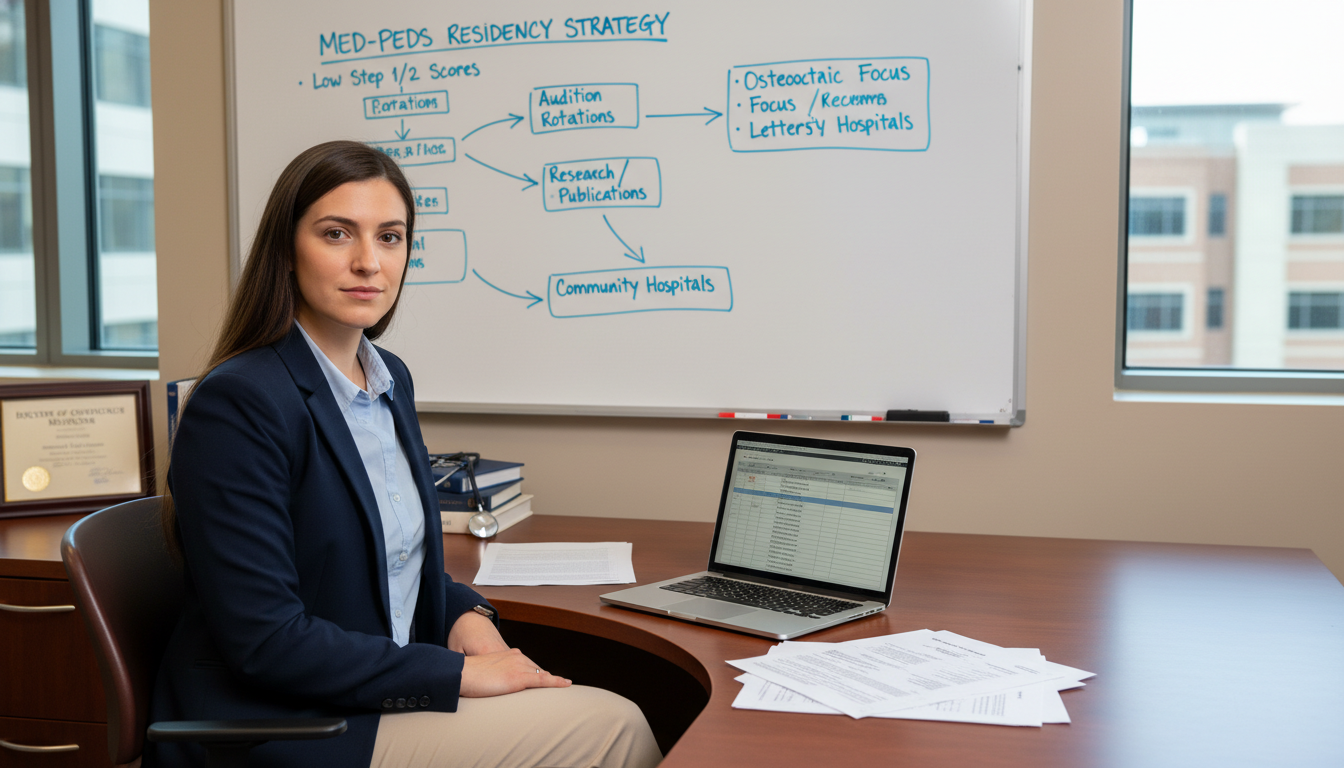
Physical Medicine & Rehabilitation (PM&R) is one of the most IMG-friendly specialties in the United States, and that can be a major advantage if you are a US citizen IMG or an American studying abroad. But your USMLE performance—especially a lower Step 1 or Step 2 CK—can shape how you need to plan your path to a physiatry match.
This article lays out a detailed, realistic Step score strategy for US citizen IMGs pursuing PM&R. You’ll learn how programs think about scores now that Step 1 is Pass/Fail, what to do if you have a low Step score or a failure, and how to combine test strategy with clinical, research, and networking moves to maximize your chances.
Understanding Step Scores in the PM&R Match (for US Citizen IMGs)
PM&R is known for being relatively welcoming to IMGs, but that doesn’t mean scores don’t matter. As a US citizen IMG, you often sit in a “middle” category: programs are more comfortable with you than with non–US citizen IMGs (because of visa simplicity), but they still may scrutinize your metrics more than they would a US MD.
How programs now view Step 1 for PM&R
Although Step 1 is now Pass/Fail, its impact hasn’t disappeared—especially for IMGs.
Programs generally use Step 1 as:
- A screening tool:
- Pass on first attempt → Green flag; you’re likely above many IMG applicants who failed.
- Fail on Step 1 → Not an automatic rejection in PM&R, but it can hurt, especially at more competitive or academic programs.
- A rough predictor of performance in exams and clinical reasoning.
- A context signal: Was the fail early and followed by clear improvement, or part of a pattern?
For US citizen IMGs, many programs silently ask:
“If this applicant struggled with Step 1, can they handle the clinical demands and board exams in the US system?”
Your job is to clearly answer: “Yes, and here’s the proof.”
How Step 2 CK fits into PM&R residency selection
With Step 1 Pass/Fail, Step 2 CK is the primary numerical academic signal. For a US citizen IMG targeting PM&R:
Strong Step 2 CK can:
- Compensate for a marginal Step 1 (pass on second attempt, borderline performance).
- Make you competitive at mid-to-upper tier PM&R programs.
- Support your application if you attend a lesser-known international school.
Moderate or low Step 2 CK requires a different strategy:
- More strategic program list (especially IMG-friendly PM&R programs).
- Stronger clinical, research, networking components.
- Possibly applying with a transitional year (TY) or prelim backup.
Typical score expectations (rough guide, not hard cutoffs)
These ranges are general patterns for PM&R, not strict cutoffs and will shift slightly over time. Think of them as a framework:
Step 2 CK ≥ 245
- Strong for PM&R, even as a US citizen IMG.
- Can be competitive at many university programs and strong community programs.
Step 2 CK 235–244
- Solid for PM&R.
- Competitive for many IMG-friendly university-affiliated and strong community programs.
- Narrative and application quality still matter.
Step 2 CK 220–234
- Viable, but you must:
- Apply broadly.
- Emphasize US clinical experience, strong letters, and clear fit with PM&R.
- Use targeted networking and away rotations if possible.
- Viable, but you must:
Step 2 CK < 220 or exam failures
- Not a “no,” but requires a deliberate low Step score match strategy:
- Very broad application list.
- Possibly adding a backup specialty or TY/prelim strategy.
- Concrete evidence of improvement (recent coursework, strong clerkship narrative, robust clinical performance, research productivity, or retake success if applicable).
- Not a “no,” but requires a deliberate low Step score match strategy:
Building a Step 2 CK Strategy as a US Citizen IMG in PM&R
Once you understand how programs view your numbers, you can design a Step 2 CK strategy that aligns with PM&R expectations and your timeline as an American studying abroad.
Step 2 CK timing for PM&R applicants
Goal: Have a competitive Step 2 CK score available by ERAS opening (September), or at least by the time programs start reviewing applications.
Consider these timing scenarios:
You’re early (1+ years before applying)
- Ideal: You can plan Step 2 CK during clinical rotations that reinforce high-yield material (medicine, surgery).
- Build a long, steady prep with weekly practice questions.
You’re ~6–9 months from ERAS submission
- Aim to test no later than June/July so your score is back by early application review.
- If you anticipate a lower score, taking it later risks having no numeric score when programs first screen.
You’re closer to ERAS and worried about performance
- Strategic delay is sometimes wise if:
- Your practice tests are clearly below your goal (e.g., <215) and you can materially improve with 4–8 more weeks.
- But: having no Step 2 CK score at application time can hurt US citizen IMGs more than MD seniors.
- Strategic delay is sometimes wise if:
Study strategy tailored to PM&R goals
Since PM&R is less cutthroat than derm or ortho, your Step 2 CK approach should be:
- Efficient rather than perfectionistic
- Focused on clinical reasoning and rehabilitation-relevant topics (neuro, MSK, pain, chronic disease)
Core components:
Question banks (QBs)
- Prioritize:
- UWorld Step 2 CK (primary)
- Amboss or a second QB as supplement if time allows.
- Approach:
- 40–80 questions per day in timed, random mode when possible.
- Thorough review with attention to patterns in your mistakes (e.g., neuroanatomy gaps, rheum, rehab-related conditions).
- Prioritize:
Practice exams
- Use NBME and UWorld self-assessments regularly:
- Take a baseline at the start of dedicated prep.
- Repeat every 2–3 weeks to track growth.
- For a PM&R-targeted physiatry match:
- Aim to be at or above your target range (e.g., 235+ if feasible) on at least 2 practice tests before test day.
- Use NBME and UWorld self-assessments regularly:
Content emphasis aligned with PM&R
- PM&R programs will be reassured by strong performance in:
- Neurology (stroke, spinal cord injury, TBI, neuromuscular disease)
- Musculoskeletal (back pain, arthritis, fractures, post-op rehab)
- Rheumatology and pain
- Internal medicine (chronic disease management, cardiopulm, diabetes, etc.)
- Don’t ignore OB/GYN, peds, psych, etc., but your clinical identity in your application will benefit if your narrative, experiences, and apparent strengths match key PM&R domains.
- PM&R programs will be reassured by strong performance in:
Particular emphasis if you had Step 1 struggles
- If Step 1 was marginal or you failed once:
- Build extra time into prep.
- Consider a structured course or tutor if you have repeated difficulty with standardized tests.
- Show trend of improvement: practice test scores should clearly move upward over 6–12 weeks.
- If Step 1 was marginal or you failed once:
Strategies for Applicants with Lower Step Scores or Failures
Many US citizen IMGs successfully match PM&R with non-ideal Step scores. The difference is often in how intentionally they manage the rest of the application.

If you passed Step 1 but anticipate a low Step 2 CK
If your practice exams are consistently in the low 220s or below:
Maximize your ceiling before test day
- Identify consistent weak areas using QB analytics.
- Do focused, high-yield review rather than trying to relearn everything.
- Consider 2–3 intensive weeks off from clinical obligations if possible.
Be realistic about goals
- A jump of 15–20 points in 4–6 weeks is sometimes possible; 30+ is unlikely.
- For PM&R, a solid 225–230 may still be workable if:
- You are a US citizen IMG.
- You build an application that clearly screams “future physiatrist”: PM&R electives, strong letters, rehab-related projects.
Balance test date vs. application completeness
- If you’re hovering at 215 but improving:
- A 4–6 week delay that moves you into the low- to mid-230s can materially help your application.
- But don’t push the exam so late that:
- Programs never see your score before interview offers.
- You miss chances at early interview invitations.
- If you’re hovering at 215 but improving:
If you failed Step 1 or Step 2 CK
A failed exam doesn’t automatically disqualify you from PM&R, but it demands a coherent recovery plan.
Your goals:
Demonstrate academic recovery
- Crush the retake (if applicable) and/or Step 2 CK.
- Show stability in later performance: clinical grades, shelf exams, research, or other measurable outcomes.
Control the narrative in your application
- Use your personal statement or program director’s letter (if you have one) to:
- Briefly acknowledge the failure without excuses.
- Explain what changed: study methods, time management, health, family situation (without oversharing).
- Highlight your subsequent success as evidence of resilience.
- Use your personal statement or program director’s letter (if you have one) to:
Target program types strategically
- Focus on:
- Community PM&R programs.
- University-affiliated programs with documented IMG intake.
- Programs where US citizen IMG residents or faculty currently work (check websites, talk to alumni).
- Be prepared to apply very broadly (50+ PM&R programs is common for IMGs with red flags).
- Focus on:
Consider a multi-step path For some, especially with multiple low scores or repeated failures, you may:
- Pursue a preliminary year (internal medicine, surgery, or transitional) while strengthening your application.
- Build US experience, get new letters, and reapply in PM&R with a stronger overall profile.
Beyond Scores: Building a PM&R-Competitive IMG Application
Your Step 1 score residency impact is now more about Pass vs Fail, but Step 2 CK and your overall PM&R story are what will differentiate you as a US citizen IMG. Scores open doors; your application content convinces programs to invite you.
US clinical experience (USCE) in PM&R and related fields
For a physiatry match, USCE is crucial, especially for IMGs. Prioritize:
PM&R electives or sub-internships
- Aim for at least one PM&R rotation in the US, ideally:
- At a program where you want to apply.
- At an institution known to be IMG-friendly.
- Goals during these rotations:
- Demonstrate maturity, teamwork, and curiosity.
- Ask for strong letters from physiatrists who know you well.
- Aim for at least one PM&R rotation in the US, ideally:
Related rotations
- Neurology
- Orthopedics
- Rheumatology
- Internal medicine (especially inpatient) These reinforce your clinical foundation and your narrative as a future physiatrist.
Performance over pedigree
- Coming from a lesser-known international school matters less if:
- You excel in US rotations.
- Attendings personally advocate for you in letters and calls.
- Coming from a lesser-known international school matters less if:
Letters of recommendation (LORs)
For a US citizen IMG targeting PM&R:
Aim for:
- 2 letters from physiatrists (ideally, from US rotations).
- 1 letter from a core specialty (IM, neuro, ortho, or surgery) or a research mentor.
What programs want to see:
- Direct observation of your clinical skills.
- Clear, specific statements:
- “This student functioned at the level of an intern.”
- “I would rank this applicant in the top 10% of students I’ve worked with in the last five years.”
- Evidence of fit:
- Interest in rehab principles, patient-centered care, interdisciplinary teamwork.
Research and scholarly activity
You don’t need a PhD or dozens of publications, but for PM&R:
Rehab-related research is a plus:
- Stroke rehab outcomes
- Spinal cord injury management
- Pain management
- MSK ultrasound, EMG, or sports rehab
As a US citizen IMG with modest or low Step scores:
- Even posters, QI projects, or case reports can:
- Show academic engagement.
- Signal investment in PM&R as a long-term career, not a backup plan.
- Even posters, QI projects, or case reports can:
Personal statement and narrative: framing low scores
Your personal statement can either work against you (if you ignore obvious red flags) or help reframe them.
If you have a low Step score or failure:
- Briefly acknowledge:
- “During my initial board preparation, I struggled with time management and overemphasized passive studying.”
- Emphasize growth:
- “I changed my approach by… [practice-based learning, spaced repetition, QBank-driven study], and my subsequent Step 2 CK performance and clinical evaluations reflect this improvement.”
- Then pivot decisively to:
- Why PM&R?
- What clinical experiences drew you to rehab?
- How your resilience, adaptability, and patient-centered focus make you a strong future physiatrist.
Application Strategy: Program List, Networking, and Backup Plans
Even with a careful Step 2 CK strategy, your match outcome in PM&R depends heavily on how you apply as a US citizen IMG.
Building a realistic PM&R program list
Take a systematic approach:
Start with IMG-friendliness data
- Use NRMP, FREIDA, and program websites to identify:
- How many IMGs (esp. US citizen IMG) each program has taken recently.
- Whether they explicitly accept IMGs.
- Focus on:
- Community-based PM&R programs.
- University-affiliated community programs.
- Institutions where current residents include IMGs.
- Use NRMP, FREIDA, and program websites to identify:
Stratify your list by competitiveness Consider three tiers:
- Reach (10–20%)
- Strong university programs, more competitive locations, research-heavy institutions.
- Core (50–60%)
- Solid university-affiliated and community programs with a track record of US citizen IMG matches.
- Safety/backup (20–30%)
- Programs with many IMGs, newer programs, or less desired locations.
Adjust your proportions depending on your profile:
- High Step 2 CK (≥245) → more reach programs reasonable.
- Step 2 CK ~225–235, or red flags → heavier emphasis on core and safety programs.
- Reach (10–20%)
Numbers matter for low Step score applicants
- With a low Step score match strategy, it’s common to:
- Apply to 60–80+ PM&R programs if finances permit.
- As a US citizen IMG, your visa-free status increases your value, but doesn’t fully offset low scores.
- With a low Step score match strategy, it’s common to:
Networking and visibility
Networking is often underutilized by US citizen IMGs but can significantly alter your chances.
Key strategies:
Away rotations / visiting student electives
- Among the most powerful ways to:
- Get noticed.
- Secure strong LORs.
- Turn a “maybe” program into an interview.
- Among the most powerful ways to:
Conferences and professional organizations
- AAPM&R, AAP, and regional PM&R societies:
- Present a poster or attend sessions.
- Introduce yourself to faculty from programs where you’re applying.
- Follow up with a brief email:
- Thank them for their time.
- Reference a specific conversation.
- Attach your CV if appropriate.
- AAPM&R, AAP, and regional PM&R societies:
Outreach to program coordinators and directors
- Brief, professional messages:
- Confirm they accept US citizen IMGs from your school.
- Inquire about away rotations or virtual electives.
- Express specific interest (what about their program resonates with your goals).
- Brief, professional messages:
Leveraging your school’s alumni network
- Ask your dean’s office or career services about:
- Alumni in PM&R.
- Alumni in any US residency (they may connect you with PM&R contacts).
- Ask your dean’s office or career services about:
Backup planning without undermining your PM&R focus
It’s wise to have a backup plan if you have:
- Very low scores (e.g., Step 2 CK <220).
- Multiple exam failures.
- Limited USCE and restricted financial ability to apply broadly.
Possible backup strategies:
- Applying to a combination of:
- PM&R categorical programs.
- Prelim/TY programs (internal medicine, surgery, transitional).
- A second, more IMG-friendly specialty (e.g., internal medicine) if you’re truly open to it.
Important:
Even if you build a low Step score match backup plan, make sure your application to PM&R still clearly conveys that:
- PM&R is your primary career goal, not an afterthought.
- Your experiences and motivations align with rehabilitation medicine.
FAQs: Step Scores and PM&R for US Citizen IMGs
1. I’m a US citizen IMG with a low Step 1 score (or a fail) but a solid Step 2 CK. Can I still match PM&R?
Yes. Many US citizen IMGs with a Step 1 fail and improved Step 2 CK have matched PM&R. Your strategy should include:
- Explicitly framing your improvement in your application.
- Strong PM&R rotations and letters from physiatrists.
- A broad, IMG-friendly program list.
- Emphasis on your strengths beyond exam scores (clinical performance, communication, work ethic).
Programs place significant weight on trajectory; a strong Step 2 CK score and solid clinical record can reassure them.
2. What Step 2 CK score should a US citizen IMG aim for to be competitive in PM&R?
There are no absolute cutoffs, but broadly:
- ≥245: Strong for PM&R, opens doors at many academic and university-affiliated programs.
- 235–244: Competitive for a large number of programs, especially with strong PM&R fit.
- 220–234: Still viable with a targeted Step 2 CK strategy, especially if you:
- Apply broadly.
- Have good USCE, strong LORs, and a consistent PM&R narrative.
- <220: You will need a low Step score match approach, a very broad application list, and excellent non-score elements.
3. Is PM&R really IMG-friendly for Americans studying abroad?
Yes, relatively speaking. PM&R takes a noticeable number of IMGs each year, and US citizen IMGs often have an edge over non-US IMGs due to visa simplicity. However:
- Not all PM&R programs are IMG-friendly.
- Stronger academic, research-focused, or top-tier university programs may still heavily favor US MDs.
- Your competitiveness depends on your total package—scores, USCE, letters, research, and narrative.
4. Should I delay Step 2 CK to try for a higher score if I’m an IMG targeting PM&R?
It depends on your situation:
Delay is reasonable if:
- Your practice scores are well below your goal and you can realistically improve with extra time.
- You’re more than 2–3 months from ERAS and won’t compromise application completeness.
Delay is risky if:
- Your score will not be available for programs by the time they start reviewing applications.
- You’re relying on Step 2 CK to compensate for a weak Step 1 and programs may screen you out for having no numeric score.
A common approach as a US citizen IMG is to aim for an on-time exam with maximal preparation, ensuring your Step 2 CK score strongly supports your PM&R goals while being available when programs first review applications.
By combining a smart Step 1 and Step 2 CK strategy with targeted US clinical experience, strong letters, a focused PM&R narrative, and broad, data-driven program selection, a US citizen IMG can absolutely build a successful path to a physiatry match—even with imperfect scores.