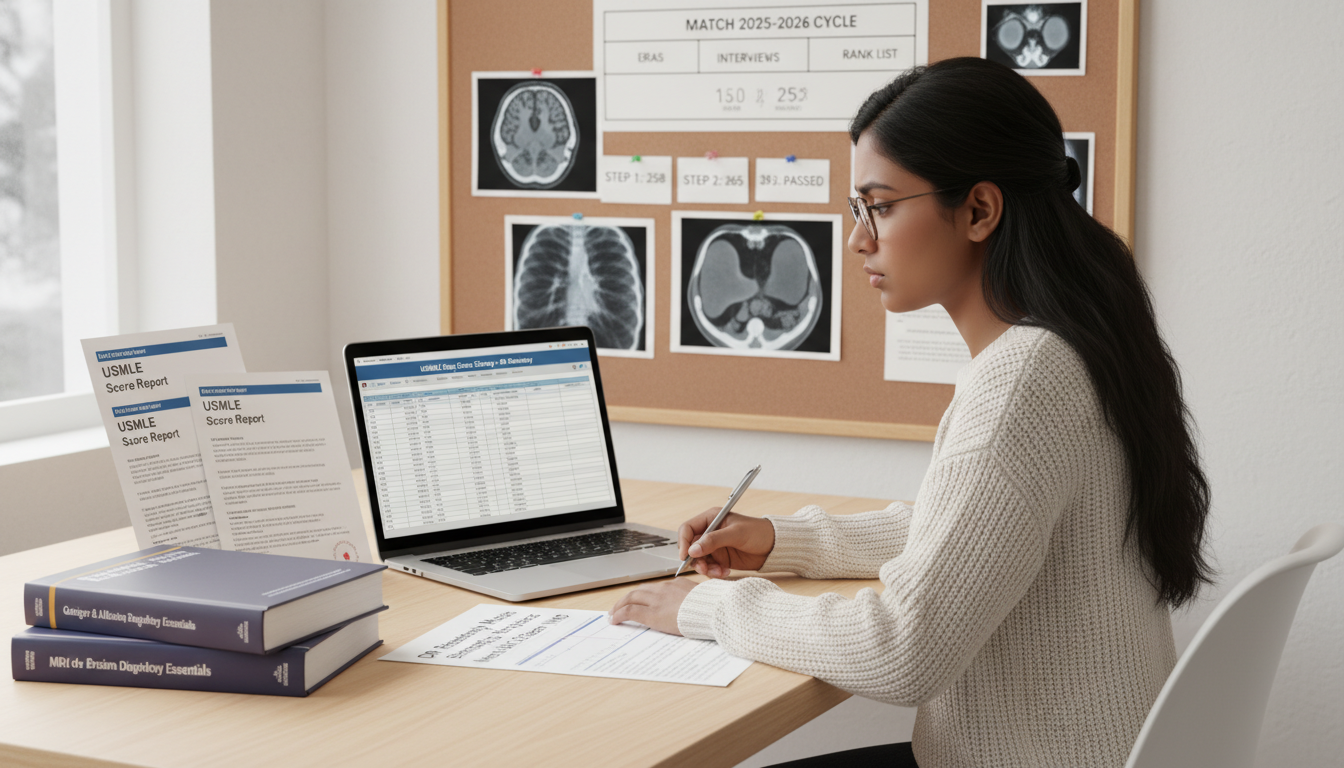
Understanding the Challenge: Low Scores, Non-US Citizenship, and the Bay Area
A non-US citizen IMG applying to competitive San Francisco residency and Bay Area residency programs faces a triple challenge:
- You are an international medical graduate (training outside the U.S. or Canada)
- You are a foreign national medical graduate needing visa sponsorship
- You have a low Step 1 score, low Step 2 score, or overall below average board scores
This does not mean you cannot match. It means you must be strategic, focused, and realistic—and you must build compensating strengths that make programs comfortable taking a chance on you.
In the Bay Area, the bar is particularly high:
- Highly desired location (San Francisco, Oakland, San Jose, Palo Alto, Berkeley, etc.)
- Large number of U.S. MD/DO applicants
- Many programs affiliated with major academic institutions (UCSF, Stanford, Kaiser, county systems, Sutter, VA, etc.)
- Some programs have limited or no visa sponsorship
Your goal is to neutralize the impact of low scores and magnify every other strength you have. This article outlines a step-by-step strategy for matching with low scores as a non-US citizen IMG aiming for the San Francisco Bay Area.
Step 1: Be Ruthlessly Honest With Your Numbers and Profile
Before planning, you must know exactly where you stand.
1. Assess Your USMLE / COMLEX Profile
- Low Step 1 score (now pass/fail, but low or multiple attempts still matter)
- Below average board scores on Step 2 CK or equivalent
- Any failed attempts (Step 1, Step 2, OET, etc.)
- Time since graduation (YOG)
- Multiple exam attempts or score trend (e.g., Step 1 fail, then Step 2 pass with modest score)
Programs in the Bay Area historically prefer:
- Single attempts
- No failures
- Strong Step 2 CK, especially now that Step 1 is pass/fail
- Recent graduation (often ≤ 3–5 years)
If you are outside any of these “ideal” criteria, you must treat it as a known drawback and plan compensating strategies.
2. Understand How Low Scores Are Interpreted
For a foreign national medical graduate, low scores often raise program concerns:
- Can this applicant pass the ABIM/ABFM/ABP/etc. board exams?
- Is this applicant able to handle our clinical and academic workload?
- Are there red flags about knowledge base or study discipline?
Your strategy must directly address these concerns through:
- Strong Step 2 CK performance (if still upcoming) or explanation
- Consistent progress and improvement
- Strong clinical evaluations and letters that emphasize knowledge, reliability, and teachability
3. Clarify Your Bay Area Expectations
Ask yourself:
- Is your top priority: location (Bay Area), specialty, or simply matching anywhere in the U.S.?
- Are you willing to:
- Do a transition year / prelim / research year first?
- Start outside the Bay Area and transfer later?
- Apply more broadly beyond California?
For many non-US citizen IMGs with matching with low scores as a core concern, a purely “San Francisco or nothing” strategy is very high risk. A smarter approach:
- Primary goal: match somewhere
- Secondary goal: aim for Bay Area or California if possible
- Long-term goal: move toward Bay Area via fellowships, jobs, or transfers
Step 2: Target the Right Specialties and Programs in the Bay Area
Not all specialties and programs are equally realistic for a non-US citizen IMG with below average board scores.
1. Prioritize More Attainable Specialties
Generally more realistic (especially with low scores):
- Internal Medicine (community-based programs)
- Family Medicine
- Psychiatry (some programs)
- Pediatrics (community-based)
- Transitional Year / Preliminary Internal Medicine (as paths into future specialty)
Very difficult with low scores as a non-US citizen IMG:
- Dermatology
- Plastic Surgery
- Neurosurgery
- Orthopedic Surgery
- Otolaryngology
- Ophthalmology
- Radiation Oncology
- Integrated Vascular / CT Surgery
Moderately difficult but not impossible with strong story and experience:
- General Surgery (usually community programs, often start as prelim)
- Ob/Gyn
- Emergency Medicine (more U.S. clinical experience often needed)
- Anesthesiology
If your scores are significantly below average, you dramatically increase your chances by aligning with less competitive specialties and community-based programs in or near the Bay Area.
2. Research Bay Area and Nearby Programs Thoroughly
Focus on:
- Visa policies (J-1 vs H-1B vs none)
- History of accepting IMGs (especially non-US citizen IMG backgrounds)
- Average USMLE scores (if reported)
- Number of residents and program size (larger programs may have more flexibility)
- Community vs academic (community programs often more IMG-friendly)
Include:
- Greater San Francisco Area:
- San Francisco (city and county hospitals, VA, Kaiser)
- Oakland, Berkeley, Richmond
- Daly City, South San Francisco, San Mateo, Redwood City
- Broader Bay Area:
- San Jose, Santa Clara, Sunnyvale
- Fremont, Hayward, Walnut Creek, Concord
- Napa, Vallejo, Santa Rosa, etc.
Also consider Central Valley and other parts of California:
- Stockton, Modesto, Fresno, Bakersfield, Merced, Redding, etc.
These regions often have more IMG-friendly programs, and once you are in California, it’s easier to build local networks connecting back to San Francisco residency programs for fellowships or jobs.
3. Use Data and Outreach
Practical steps:
- Check program websites for:
- “We sponsor J-1/H-1B” vs “No visa sponsorship”
- “We accept IMGs” vs “Graduates from LCME/DO schools only”
- Look up current residents on program websites/LinkedIn:
- How many IMGs? From where?
- Any foreign national medical graduate profiles?
- Reach out to:
- Program coordinators (brief, respectful emails to clarify visa and IMG policy)
- Current residents with similar backgrounds (e.g., non-US citizen IMG from your region)

Step 3: Build a Compensating Profile Around Low Scores
To overcome a low Step 1 score or below average board scores, you need a portfolio of strengths that reassures programs.
1. Maximize Step 2 CK (and Step 3 if possible)
If you have not taken Step 2 CK:
- Treat it as your redemption exam.
- Aim for well above passing, ideally at or above the national mean.
- Use high-yield resources (UWorld, NBME/UWSA practice tests, Anki, etc.).
- Take the exam when fully prepared, not just “to get it done.”
If you have already taken Step 2 CK and it’s also low:
- Consider taking Step 3 before application season if:
- You can realistically score comfortably passing (a fail is worse than not taking it).
- You are applying to IM/FM/psych/peds/anesthesia.
- Step 3 is especially valuable for a foreign national medical graduate because:
- Some programs prefer it for H-1B visa sponsorship
- It signals exam competency and reduces anxiety about future board exam failure
2. Secure Strong U.S. Clinical Experience (USCE)
In the Bay Area and across California, U.S. clinical experience is essential, especially for IMGs with low scores.
Most valued forms:
- Hands-on electives or sub-internships (for students)
- Hands-on observerships / externships in inpatient or outpatient settings
- U.S. research year at a recognized institution
For the San Francisco Bay Area, consider:
- UCSF and affiliates (Zuckerberg San Francisco General, VA, etc.)
- Stanford and affiliates (Palo Alto, VA, Santa Clara)
- Kaiser facilities (San Francisco, Oakland, San Jose, Santa Clara, etc.)
- County and community hospitals (Contra Costa, Alameda Health System, Santa Clara Valley Medical Center)
If Bay Area USCE is not possible:
- Obtain strong USCE elsewhere in the U.S., then use that experience to network into the Bay Area later.
Focus on:
- Direct patient care (if allowed)
- Showing reliability, professionalism, and clinical reasoning
- Asking for strong, specific letters of recommendation from U.S. attendings
3. Craft Powerful Letters of Recommendation (LoRs)
For a non-US citizen IMG with low scores, LoRs can make or break your application.
Prioritize:
- At least 2–3 U.S. letters, ideally from:
- Academic institutions or respected community programs
- Physicians in your chosen specialty
- Writers who can address:
- Your clinical judgment and knowledge
- Work ethic, reliability, and communication skills
- Your progress over time and ability to learn from feedback
What you want your letters to implicitly tell PDs:
“Despite low board scores, this applicant functions at or above the level of our current residents and is safe, teachable, and hardworking.”
Provide your letter writers:
- Your CV and personal statement
- A concise, honest summary of your exam history (if you are comfortable)
- Bullet points of strengths and key cases they saw you handle
Step 4: Tell a Coherent, Honest Story in Your Application
Programs don’t just see a number; they see a story. You should control that narrative.
1. Personal Statement: Frame, Don’t Apologize Excessively
Your personal statement should:
- Focus on why this specialty, why you’re committed, and what you bring
- Include brief, strategic explanation of exams only if:
- You have a major red flag (failure, very low score, large gap)
- You can explain it in a way that shows growth, not excuses
Example of framing a low Step 1:
“During my early preparation for Step 1, I struggled with test-taking anxiety and time management, which ultimately contributed to a score that did not reflect my clinical abilities. Recognizing this, I sought structured mentorship, revised my study methods, and built more disciplined daily routines. These changes led to a significantly stronger performance on Step 2 CK and have continued to shape my consistent, methodical approach to learning on the wards.”
Key points:
- Briefly acknowledge the issue
- Take responsibility without excessive self-blame
- Show specific actions you took and evidence of improvement
2. ERAS Application: Consistency and Detail
Use all relevant sections to strengthen your story:
- Experiences:
- Highlight meaningful USCE, research, volunteering, and leadership
- Emphasize continuity with the Bay Area if present (family ties, previous work, long-standing interest)
- Geographic preferences (if applicable):
- If you indicate “West Coast” or “California,” make sure your reasons are genuine (e.g., family, support network, community you want to serve)
- Addressing gaps:
- Explain any long gaps (visa waits, family responsibilities, COVID disruptions) with clarity and professionalism
For a foreign national medical graduate, visa history should be clearly and honestly described in any requested sections.

Step 5: Application Strategy: Where, When, and How Many
With low scores and visa needs, your application strategy is just as important as your qualifications.
1. Apply Broadly—Even If Your Heart Is in the Bay Area
If your main dream is a San Francisco residency or Bay Area residency, you should still:
- Apply widely across:
- California (including Central Valley and Southern California)
- Other IMG-friendly states (NY, NJ, MI, OH, PA, TX, FL, etc.)
- Include programs that:
- Explicitly sponsor J-1 (and H-1B if important to you)
- Have historical non-US citizen IMG representation
Realistic application volume for a non-US citizen IMG with below average board scores (for IM/FM/Peds/Psych):
- Often 80–150 programs, sometimes more
- Customized list based on:
- Specialty competitiveness
- Your score profile
- Visa support
Reserve a portion of your applications for the Bay Area and broader California, but do not limit yourself to them.
2. Time Your Application Perfectly
- Submit ERAS on opening day, not weeks later.
- Have all key components ready:
- Completed application
- Uploaded LoRs (at least 2–3)
- USMLE transcripts
- ECFMG certification (or very close to it if you’re still finishing exams)
Many California and Bay Area programs screen heavily early; late applications with low scores are rarely reviewed.
3. Smart Use of Signaling (If Available)
If your specialty uses preference signaling:
- Use one or two signals on Bay Area programs you would truly attend
- Use the rest on programs where your profile fits and that show IMG-friendliness
- Avoid signaling only “dream” programs that are complete reaches
Step 6: Stand Out During Interviews (And Even Before)
If you get an interview invite, you’ve already passed the “score filter.” Now you must confirm that you’re more than your numbers.
1. Before the Interview
- Respond quickly and professionally to interview invitations and scheduling emails.
- Research each program:
- Patient population (e.g., underserved communities, immigrant groups)
- Academic vs community orientation
- Call structure, clinics, and key rotations
- Prepare a concise explanation of your exam history if asked:
- 2–3 sentences
- Focused on growth and current readiness
2. During the Interview
Strategies to offset low scores:
- Emphasize clinical readiness:
- Discuss USCE experiences with specific patient cases (maintaining confidentiality)
- Share examples of handling complex situations, teamwork, and communication
- Show alignment with program’s mission:
- For Bay Area: highlight interest in serving diverse, multicultural populations; addressing health disparities; working with immigrant communities
- Demonstrate maturity and resilience:
- Honestly describe challenges (exams, immigration, finances) and how you adapted
Example answer if asked about low scores:
“My Step 1 score was lower than I had hoped, mainly due to ineffective study strategies and test anxiety at that time. Since then, I changed my approach by using more active learning, structured schedules, and frequent practice exams, which helped me perform better clinically and on Step 2 CK. My mentors in U.S. clinical rotations have consistently affirmed that my knowledge and judgment are at resident level, and I’ve built daily habits that I believe will help me succeed with in-training and board exams.”
3. After the Interview
- Send personalized thank-you emails to interviewers and the program coordinator within 24–48 hours.
- Reinforce:
- Your fit with the program
- Your commitment to the patient population and region
- Any unique skills (language abilities, prior research, community work)
Step 7: Long-Term Strategy if You Don’t Match in the Bay Area (or At All)
Even with a perfect strategy, some non-US citizen IMGs with low scores will not match on the first attempt. It’s important to have a Plan B that still moves you toward your Bay Area goal.
1. If You Match, But Not in the Bay Area
- Focus on being a top-performing resident wherever you are:
- Strong clinical evaluations
- Participation in QI projects, research, or teaching
- Build a profile that’s attractive to Bay Area fellowship programs (e.g., UCSF, Stanford, Bay Area community fellowships).
- Network at conferences and through your faculty to connect with Bay Area physicians.
2. If You Match Outside California
- Use residency years to:
- Develop California-relevant experience (e.g., underserved/immigrant health, community medicine, research in areas valued by Bay Area institutions).
- Maintain connections with Bay Area professional circles (virtual conferences, electives, away rotations if possible).
3. If You Do Not Match
For a foreign national medical graduate, options may be constrained by visa status, but you still have paths:
- Research positions (paid or unpaid) at UCSF, Stanford, Kaiser, or other Bay Area institutions
- Additional U.S. clinical observerships
- Strengthening USMLE profile (Step 3 if not done, improved performance if allowed)
- Rewriting personal statement and re-targeting program list more realistically
- Considering slightly less competitive specialties or community-focused programs
The key is to show progress each year, not stagnation.
FAQs: Low Step Scores and Bay Area Residency for Non-US Citizen IMGs
1. Is it still possible to match in a San Francisco residency program with a low Step score as a non-US citizen IMG?
It is possible but difficult. Many San Francisco and Bay Area programs are highly competitive, with strong U.S. MD/DO applicants and limited visa sponsorship. To have a chance, you typically need:
- Strong Step 2 CK (and possibly Step 3)
- Excellent U.S. clinical experience and letters
- A compelling personal story and clear fit with the program’s mission
- A very broad application strategy, not Bay Area only
For many candidates, the more realistic path is to match elsewhere first, then pursue Bay Area fellowships or jobs later.
2. How low is “too low” for board scores in Bay Area residency programs?
There is no universal cutoff. Some programs have hard filters (e.g., Step 2 CK > 220), while others review more holistically. In general:
- One low but passing score with improvement later is often acceptable with a strong profile.
- Very low or multiple failed attempts significantly limit options, especially in competitive specialties.
- For many non-US citizen IMGs, the focus should shift to:
- Strong USCE
- Excellent LoRs
- Demonstrated growth and reliability
- Targeting IMG-friendly, community-based programs
3. Does Step 3 really help a non-US citizen IMG with low scores?
Step 3 can help in three ways:
- It shows you can pass a major standardized exam, easing concerns from PDs.
- It can make you more attractive to programs that offer H-1B visas.
- It signals commitment and readiness to train in the U.S.
However, taking Step 3 with inadequate preparation and failing will hurt you. Only take it if:
- You have enough time to prepare properly
- Practice scores suggest you will pass comfortably
4. How important is it to have Bay Area-specific experience to match in the region?
Bay Area-specific experience (research, observerships, electives) is helpful but not mandatory. More important is:
- High-quality U.S. experience anywhere in the country
- Strong letters from respected U.S. physicians
- A genuine, well-articulated reason for wanting to train in California or the Bay Area (e.g., family, community commitment, language skills, prior life experience on the West Coast)
If you can get even a short rotation, observership, or research opportunity in the Bay Area, it can help you:
- Understand local healthcare systems and patient populations
- Network with faculty who might advocate for you
- Demonstrate your commitment to training in the region
By combining strategic specialty and program selection, focused exam redemption, strong U.S. clinical and letter support, and honest, growth-oriented storytelling, a non-US citizen IMG with low Step scores can still build a credible path toward a San Francisco or Bay Area residency—either directly or through a staged, long-term plan.