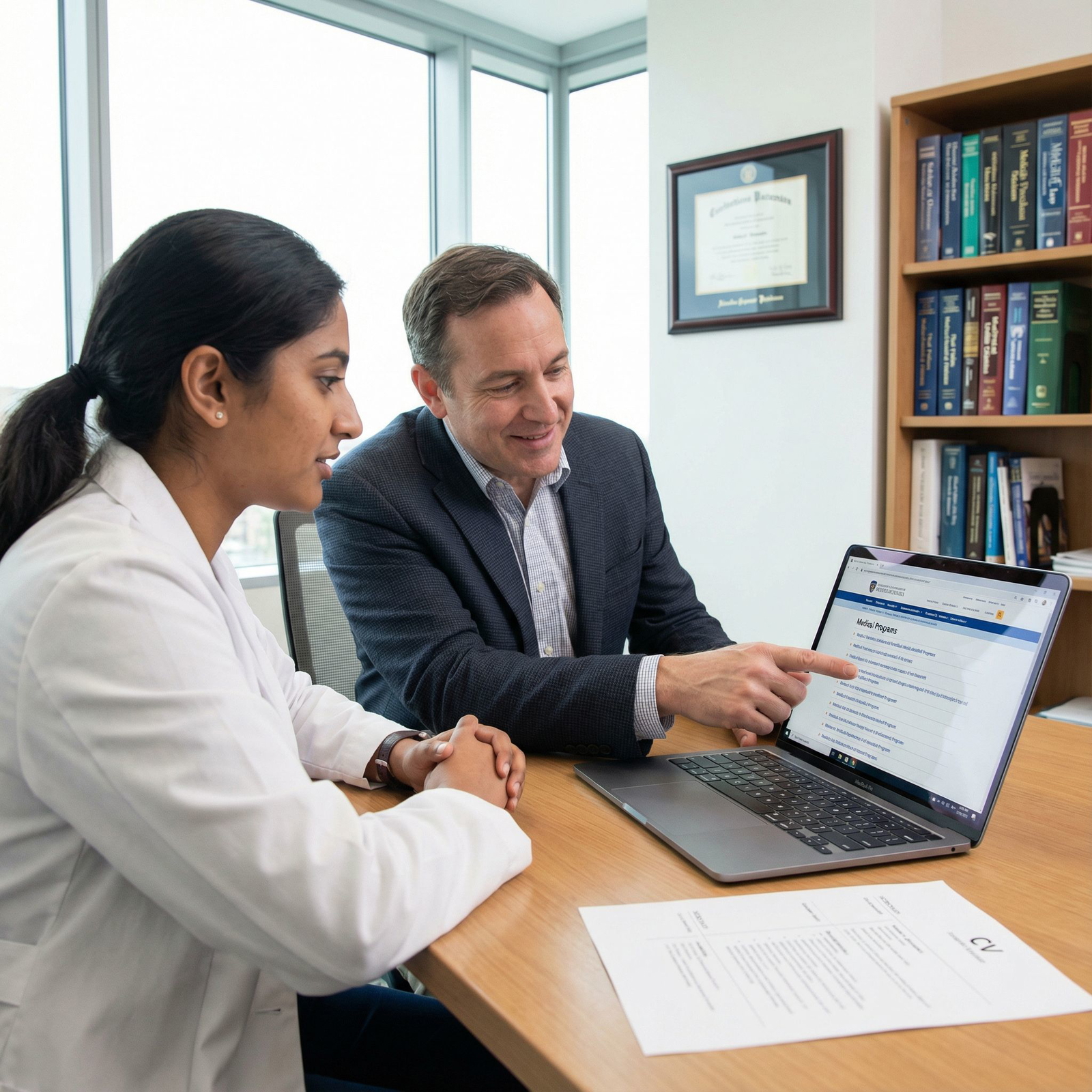
As a US citizen IMG and American studying abroad, aiming for diagnostic radiology with a low Step score can feel discouraging—but it is absolutely still possible to match. Radiology is competitive, yet programs regularly take applicants with below average board scores when the rest of the application is thoughtfully built to de‑risk the score concern.
This guide focuses on strategies for low Step scores specifically for US citizen IMGs targeting diagnostic radiology residency. It will walk you through:
- Understanding how programs interpret low scores
- Tactical ways to offset risk and strengthen your profile
- Application and interview strategies specific to radiology
- Sample timelines and realistic program list planning
Understanding Low Step Scores in the Diagnostic Radiology Context
What “low” actually means
“Low Step score” is relative. Program directors think in terms of risk, not just a raw number.
For diagnostic radiology, “low” commonly includes:
Step 1 (Pass/Fail era)
- A pass is necessary, but context matters:
- Multiple attempts raise red flags
- Very late Step 1 completion or long gaps can prompt questions
- A pass is necessary, but context matters:
Step 2 CK (now the primary numeric filter)
- Below ~230 may be considered below average for competitive radiology programs
- <220 is often “low” at mid-tier academic programs
- <210 is considered significantly low and will heavily limit interview chances in radiology unless you have substantial compensating strengths
If you had a low Step 1 score from older numeric scoring, many programs will put more weight on Step 2 CK and your overall trend.
Why radiology cares about scores
Diagnostic radiology:
- Requires strong foundational knowledge in physics, anatomy, and pattern recognition
- Has rigorous in‑training exams and a high‑stakes ABR board exam
- Operates in programs with historically high board pass-rate expectations
Lower scores can make program directors worry about:
- Board exam performance risk
- Need for extra educational support
- Whether you can handle the volume and complexity of radiology call and reading rooms
Your job is to reframe the narrative: demonstrate that despite a low score, you are:
- Academically capable
- Reliable and hardworking
- Progressing upward, not plateauing or deteriorating
Advantage and disadvantage as a US citizen IMG
As a US citizen IMG / American studying abroad, you are in a mixed position:
Advantages:
- No visa sponsorship required → fewer administrative barriers
- Familiar with US culture and communication style
- Often more flexible geographically than US MD seniors
Disadvantages:
- Still face “IMG stigma” and program biases
- Competing with US MD and DO students in a competitive specialty
- May lack home‑program support in radiology
The key is to convert your “US citizen IMG” status into a logistical advantage (no visa, can start on time, easier onboarding) while aggressively addressing academic concerns.
Step 1: Analyze Your Scores and Build a Narrative
Clarify where you stand
Start by documenting:
- Step 1: Pass/Fail status, attempts, and timing
- Step 2 CK: Score, percentile, and timing
- Any failed attempts on Step 1, Step 2 CK, or school exams
- Clinical evaluations and class rank (if applicable)
Then, define your score category:
Mildly low Step 2 CK (220–229)
- Competitive for some community and hybrid programs
- Many university programs still possible if the rest of the application is strong
Moderately low (210–219)
- Academic programs more selective; community and smaller academic affiliates more realistic
- Needs clear evidence of academic growth and radiology commitment
Significantly low (<210 or multiple failures)
- Radiology becomes a long‑shot at most programs
- Requires a multi‑year strategic plan, possibly including research, a prelim year, or considering backup specialties
Build an honest improvement story
Programs don’t just want “excuses”; they want explanations with evidence of change. A strong narrative might include:
- Specific factors (illness, family crisis, inadequate strategy, language/transition issues)
- Concrete steps you took afterward:
- Changed study methods (question banks, Anki, NBMEs)
- Sought tutoring or academic support
- Demonstrated improvement on:
- Shelf exams
- Step 2 CK compared to Step 1
- Clinical grades
Example narrative (to guide your thinking):
“I underperformed on Step 1 due to poor time management and ineffective passive studying. Realizing this, I completely restructured my approach—switched from reading to question-based learning, created a daily schedule, and studied in a structured group. My Step 2 CK score, along with strong clinical evaluations and high performance on the surgery and medicine shelves, reflects this improvement and my ability to adapt and succeed in a demanding environment.”
You’ll later adapt this narrative into:
- Personal statement
- MSPE (if your school addresses it)
- Interview answers
Step 2: Strengthening Your Application Beyond Scores
1. Excel on Step 2 CK and any remaining exams
If you have not yet taken Step 2 CK, it becomes your single most important exam as a low Step 1 or pass/fail Step 1 applicant.
Action steps:
- Aim for a clear upward trend vs. your Step 1 performance
- Use high‑yield resources (UWorld, NBME assessments, AMBOSS) intensely
- Block off dedicated time (6–8 weeks if possible) without major distractions
- Take at least 2 NBME practice exams and address weak systems aggressively
If your Step 2 is already low, focus on:
- Strong clinical and shelf exam performance
- Potential later Step 3 attempt (see below)
2. Consider Step 3 strategically
For an IMG with low scores, Step 3 can be:
Helpful when:
- Taken before or early in application season
- You score reasonably well (ideally ≥220)
- You’re applying to programs concerned about visa/board risk (less of an issue as a US citizen but still relevant for academic risk assessment)
Harmful if:
- You fail or score even lower → reinforces concern
- You rush into it without thoroughly preparing
As a US citizen IMG, Step 3 is optional but potentially beneficial if:
- You have multiple attempts or particularly low earlier scores
- You can study properly and expect a modest to strong result
3. Prioritize strong US clinical experience with radiology exposure
Diagnostic radiology programs want to see:
- Comfort in the US clinical system
- Strong communication skills with patients and teams
- Genuine interest in radiology
For US citizen IMGs, US clinical experience (USCE) is crucial:
- Aim for 4–8 weeks of US rotations minimum, including:
- Radiology electives
- Sub-internships in medicine or surgery (to demonstrate clinical strength)
When organizing radiology electives:
- Prefer university or academic-affiliated hospitals, but don’t ignore strong community programs with residency programs
- Engage actively:
- Read about cases you see that day
- Ask to preview studies before the attending reviews them
- Volunteer to present interesting cases at readouts or conferences
This sets you up for:
- Radiology-specific letters of recommendation
- Personal relationships with faculty who can advocate for you

4. Obtain high-impact letters of recommendation
With below average board scores, your letters of recommendation (LORs) become even more critical.
Aim for:
At least 2 radiology letters:
- From faculty who know you well
- Ideally including a program director, associate PD, or section chief
1 clinical letter (internal medicine, surgery, emergency medicine) highlighting:
- Work ethic
- Reliability
- Teamwork
- Communication skills
What makes a letter “high-impact”?
- Specific, detailed examples (“He independently reviewed prior imaging to understand the evolution of the disease…”)
- Comparative language (“Among the top 10% of students I’ve worked with in the last 5 years…”)
- Explicit endorsement for radiology (“I strongly recommend her for diagnostic radiology residency without reservation…”)
Be proactive:
- Ask faculty directly:
- “Do you feel you can write a strong letter of recommendation for my radiology applications?”
- Provide:
- Your CV
- Personal statement draft
- Score report (if you trust the faculty) to help contextualize your growth
5. Build meaningful radiology‑focused research and scholarly work
Research is a powerful offset to low scores—especially in radiology, which is imaging‑driven and academic in nature.
Paths to radiology research for US citizen IMGs:
- Visiting electives at research‑active institutions
- Remote collaboration via:
- Alumni connections
- Cold email outreach to radiology faculty (polite, concise email with CV attached)
- Formal research fellowships (often 1–2 years) in radiology departments
Types of projects:
- Case reports and case series (quick wins, especially in subspecialties like neuroradiology, MSK, or pediatric radiology)
- Retrospective chart or imaging reviews
- Quality improvement (QI) projects in imaging workflows
- Educational posters/presentations at RSNA, AUR, ARRS, regional radiology meetings
For a low-score applicant, a 1–2 year radiology research position can dramatically change your trajectory by:
- Providing US experience and mentoring
- Producing posters, abstracts, and possibly publications
- Allowing you to earn strong letters from academic radiologists
Step 3: Tailoring Your Application Materials for Radiology with Low Scores
Crafting a radiology‑focused personal statement
Your personal statement should:
Show a clear “Why radiology?”
- Specific experiences that drew you to imaging
- Cases where imaging changed management or outcomes
- Long-term goals (e.g., academic radiologist, community practice, IR vs DR focus)
Address low scores briefly but constructively
- 2–4 sentences is usually enough
- Avoid excuses; emphasize what you learned and how you improved
Demonstrate radiology‑relevant traits:
- Attention to detail
- Pattern recognition and analytic thinking
- Comfort with technology and PACS systems
- Strong communication of findings to clinicians
Sample structure:
- Hook: a short story or moment that sparked or solidified your interest in radiology
- Body: your experiences in radiology electives, research, and clinical rotations
- Brief acknowledgement of academic challenge and subsequent improvement
- Conclusion: career goals and what you will bring to a diagnostic radiology residency program
Addressing scores in ERAS and MSPE
- Use the additional information or experiences section to briefly clarify:
- Repeat exams
- Gaps in training
- Ask your medical school to:
- Highlight upward academic trends in the MSPE
- Emphasize any honors, strong clinical ratings, or ranking improvements
If you had a failed Step 1 or Step 2 attempt, consider a short, factual statement, such as:
“I failed Step 1 on my first attempt due to poor time management and an ineffective study approach. Following this, I restructured my preparation, sought faculty guidance, and implemented a question-based strategy, which contributed to my passing Step 1 on the second attempt and improved performance on clinical clerkships and Step 2 CK.”
Step 4: Strategic Program Selection and Application Tactics
Understand where US citizen IMGs with low scores realistically match
For US citizen IMG applicants to diagnostic radiology with low scores, the most realistic programs are often:
- Community hospital programs with radiology residencies
- Smaller academic affiliates/university‑community hybrids
- Newer programs (recently accredited)
- Programs in less desired locations (e.g., smaller cities, non-coastal, Midwest/South)
Less realistic targets with low scores:
- Top‑tier academic centers (major name‑brand institutions)
- Highly research‑heavy or “big-name” programs in major coastal metros
- Programs that rarely or never interview IMGs
Build a data‑driven program list
Action steps:
Use FREIDA, program websites, and NRMP data to identify:
- Programs that have historically taken IMGs
- Programs that list minimum Step scores (and whether your scores meet them)
Aim for a broad application strategy:
- 50–80+ radiology programs if financially possible, especially if your Step 2 is <225
- Include:
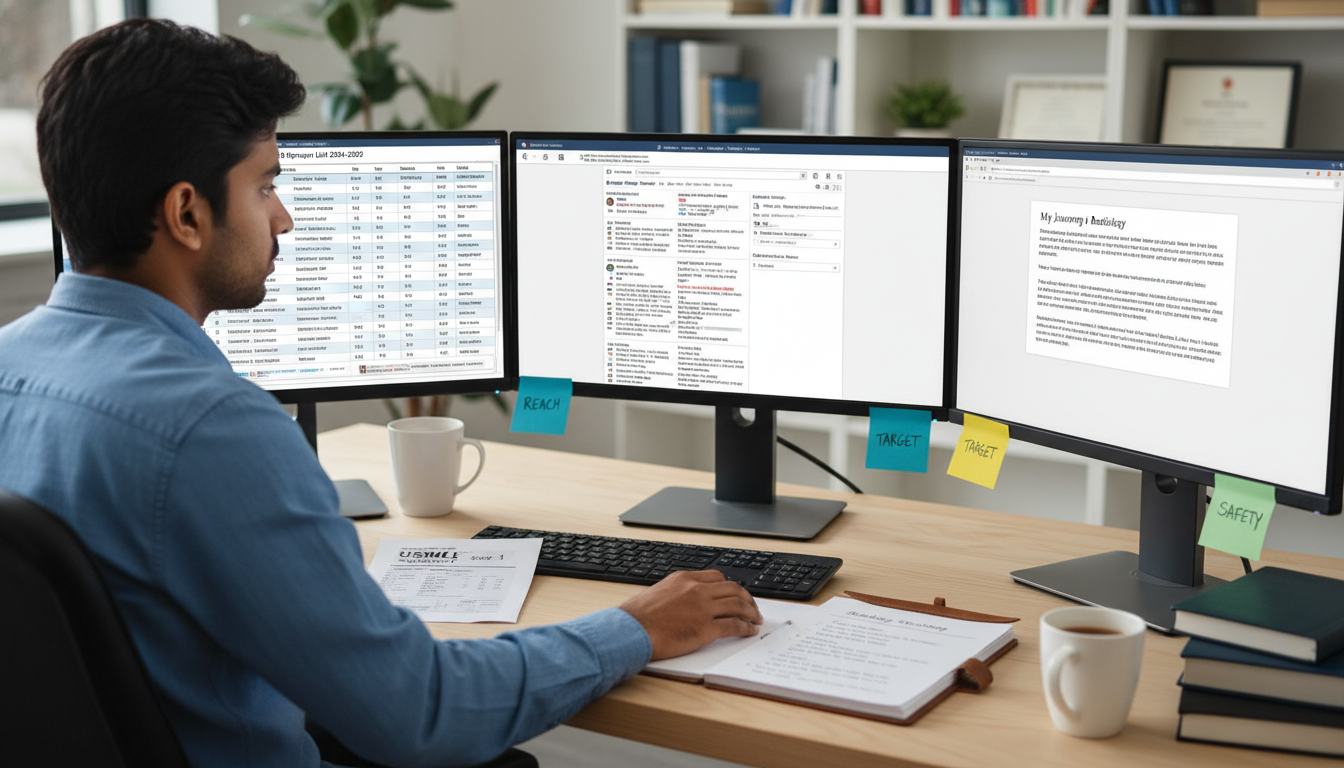
- A few “reach” programs
- A solid core of realistic programs (IMG-friendly with your range of scores)
- Some “safety” programs (newer or more rural)
Consider geographic strategy:
- Many US MDs concentrate applications on major cities and coasts
- As a US citizen IMG, be willing to:
- Apply to Midwest, South, smaller cities
- Rank programs you would genuinely attend even if not in an ideal location
Decide on a backup specialty or dual‑apply strategy
With significantly low scores (<210 or multiple failures), radiology may need to be:
- One track within a dual-application strategy, such as:
- Diagnostic Radiology + Internal Medicine
- Diagnostic Radiology + Transitional Year / Preliminary Medicine, with intention to reapply to DR
- Diagnostic Radiology + Family Medicine (less common but possible)
Key points if dual‑applying:
- Prepare two tailored personal statements
- Ensure your letters support both fields, or have a mix (radiology and the backup specialty)
- Be prepared to discuss sincerely why you’d be content in either path
Use signaling and rotations strategically (if available)
Some cycles allow program preference signaling (depending on specialty and year). If radiology uses signaling in your cycle:
- Signal:
- Programs where you have done rotations
- Institutions where you have strong personal or geographic ties
- Programs known to be IMG‑friendly where your profile fits
Even without official signals:
- Away rotations and strong networking at specific programs essentially serve as “real-life signals” of interest and fit.
Step 5: Interview and Communication Strategy for Low-Score DR Applicants
Preparing to discuss low scores confidently
You should expect variations of:
- “Can you tell me about your Step scores?”
- “What happened on Step 1/Step 2?”
- “How have you addressed that weakness?”
Your response framework:
- Brief explanation (1–2 sentences)
- Concrete steps you took to improve
- Evidence of improvement (clinical grades, Step 2 score, research productivity)
- Reassurance and forward-looking statement (confidence in handling radiology training and boards)
Example answer:
“I underperformed on Step 1 because my study approach was too passive and I struggled with time management. After that, I sought mentorship from upperclassmen and faculty, switched to question-based learning with structured daily schedules, and used NBME practice tests to guide my preparation. This led to stronger performance on Step 2 CK and on my clinical rotations, where I consistently received positive evaluations. These changes in my habits are permanent, and I’m confident they will help me manage the demands of radiology training and the ABR boards.”
Highlighting strengths that matter to radiology
Program directors want to see more than test scores. Emphasize:
- Ability to work in a team (radiologists interact with clinicians constantly)
- Clear, concise communication skills (both verbal and written reports)
- Demonstrated interest in imaging:
- Cases you found particularly educational
- Research or QI projects you undertook
- Radiology conferences or lectures you attended
Use specific stories:
- A time you identified an imaging finding that changed management
- A case presentation or radiology conference where you contributed meaningfully
- A moment on a rotation when you went the extra mile for a patient or team
Post‑interview communication
Use:
- Thank‑you emails: Personalized, specific to the program and conversation
- Occasional update letters:
- New publication or poster accepted
- Step 3 passed (if taken)
- Additional achievements or responsibilities
Be honest: never imply you are ranking a program first unless you truly are and are allowed to state that under prevailing NRMP rules and institutional policies.
Putting It All Together: Sample Strategic Paths
Scenario 1: US citizen IMG, Step 1 Pass, Step 2 CK 226
- Radiology research elective at a US institution
- 2–3 strong radiology LORs, 1 internal medicine LOR
- 1–2 radiology away rotations at IMG‑friendly programs
- Apply to 60–80 radiology programs:
- Mix of community, hybrid, and less competitive academic programs
- Consider Step 3 after matching, not needed pre‑match
Chance of some diagnostic radiology interviews is realistic with targeted strategy.
Scenario 2: US citizen IMG, Step 1 Pass, Step 2 CK 212, strong clinical grades
- Take a research year in radiology at an academic center
- Produce 3–5 posters/abstracts, aim for at least 1 publication
- Secure excellent letters from research mentors and clinical attendings
- Apply broadly (80+ programs), including many smaller programs in non-coastal areas
- Possibly dual-apply to internal medicine as a backup
Still challenging, but with strong research and LORs, a small number of radiology interview invites is possible.
Scenario 3: US citizen IMG, Step 1 failure (later pass), Step 2 CK 205
- Radiology remains highly competitive; need long-term view
- Strongly consider:
- 1–2 years of radiology research
- Step 3 with thorough preparation to score >220
- Dual-application to internal medicine or TY/prelim medicine
- Build a track record that proves your actual performance (research productivity, clinical excellence) rather than the old test score
Realistically, you may match into internal medicine first, then pursue radiology again later as an internal transfer or by reapplying after proving yourself in US training.
FAQs: Low Step Score Strategies for US Citizen IMG in Diagnostic Radiology
1. As a US citizen IMG with a low Step 2 CK, is diagnostic radiology still realistic?
Yes, but it depends on how low and what else you bring. With a Step 2 CK in the low 220s, a strong application (good LORs, US clinical experience, some research) can still earn interviews at IMG‑friendly community or hybrid programs. Under ~210, radiology becomes much more challenging, and you should strongly consider a multi‑year strategy with research and possibly a backup specialty.
2. Should I take Step 3 before applying if my Step 1 or Step 2 is low?
Only if you can confidently prepare and perform better. A solid Step 3 (e.g., ≥220) can reassure programs about your board exam potential. However, a poor Step 3 result worsens your situation. For many US citizen IMGs, Step 3 is optional but strategically helpful if done well—especially with multiple attempts or significantly low earlier scores.
3. How many radiology programs should I apply to with low scores?
If you are matching with low scores, particularly as an IMG, volume matters. Aim for:
- At least 50 programs if Step 2 CK is ≥225
- 60–80+ programs if Step 2 CK is below 225
Prioritize programs with:
- A history of interviewing/matching IMGs
- Locations outside highly competitive urban/coastal markets
- Clear minimum score thresholds that you meet or are close to meeting
4. Is it better to do a radiology research year or jump straight into a backup specialty?
If your primary goal is still diagnostic radiology and your scores are significantly low, a radiology research year (or two) can be more valuable than immediately entering a backup specialty, because it:
- Builds your radiology‑specific portfolio
- Provides strong radiology mentorship and letters
- Shows sustained interest and productivity in the field
However, if financial, visa (not your issue as a US citizen), or personal constraints limit your ability to take extra years, entering a backup specialty like internal medicine first can be reasonable, with the understanding that transitioning to radiology later will still be competitive and uncertain.
If you share your specific Step scores, year of graduation, and current experience (research, USCE), a more tailored strategic plan can be outlined for your situation.