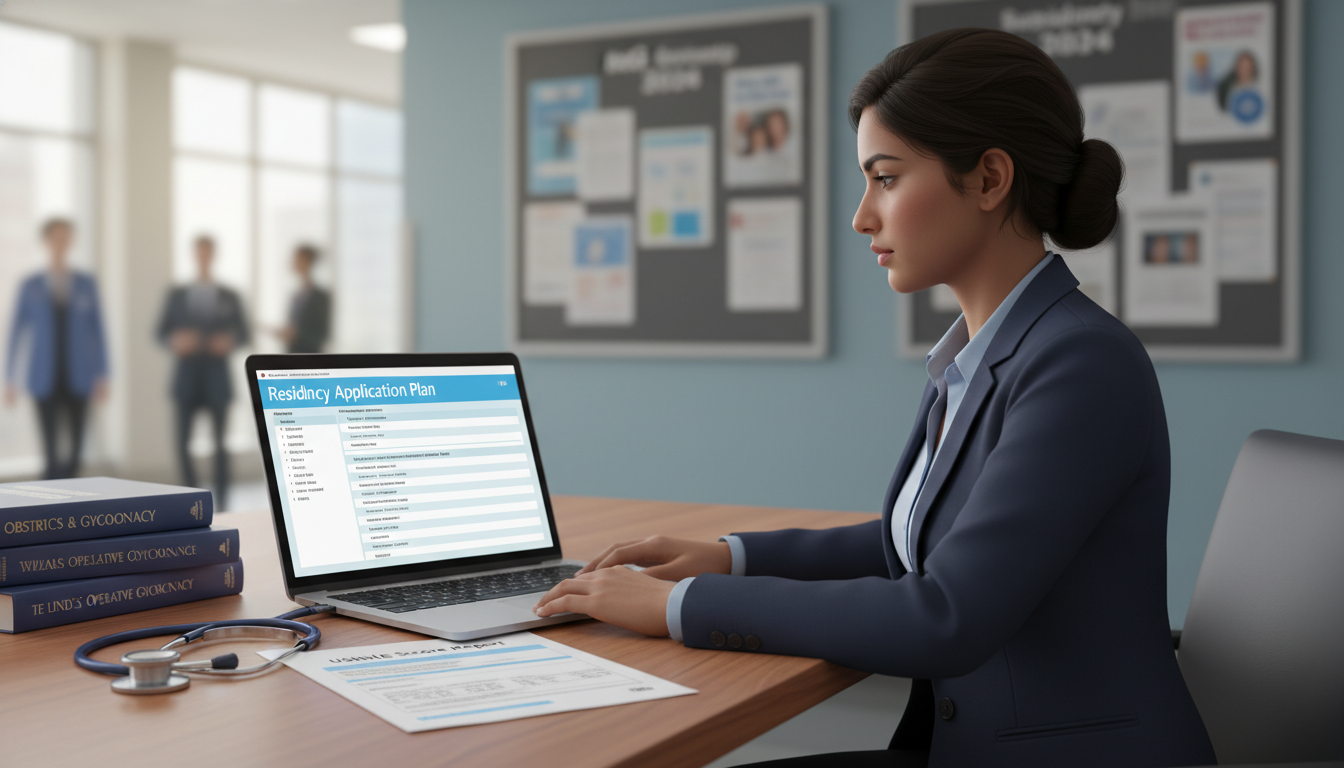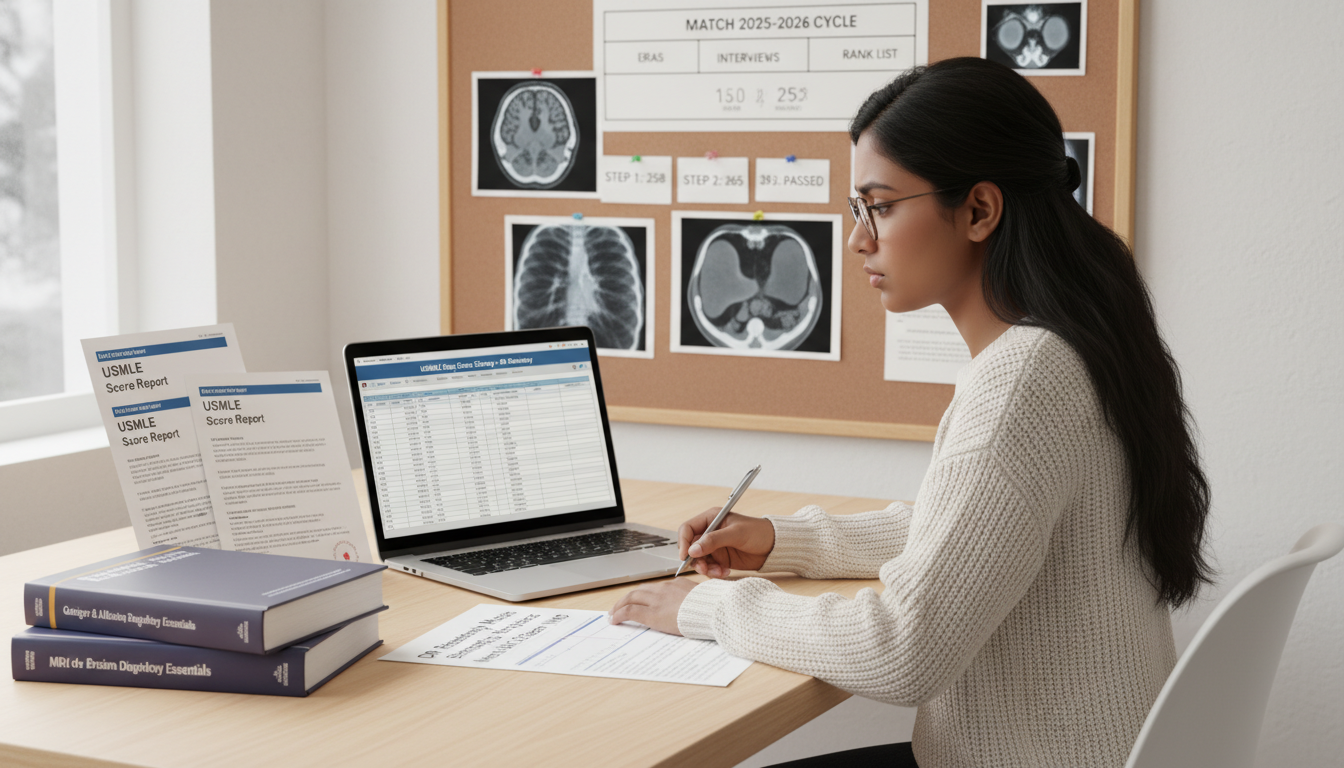
If you’re a US citizen IMG with a low Step 1 score—or generally below average board scores—considering clinical informatics, you are very much still in the game. Clinical informatics is a niche, growing field where your value is measured by more than a three‑digit number. However, you need to be strategic, realistic, and proactive.
This article lays out a concrete roadmap to move from “low score and worried” to “competitive candidate with a clear informatics story,” specifically tailored for:
- US citizen IMG
- American studying abroad (Caribbean, Europe, Asia, etc.)
- Interested in Clinical Informatics and related health IT training
- Concerned about matching with low scores
Understanding Your Position as a US Citizen IMG With Low Scores
Before building a strategy, you need a clear, unemotional assessment of where you stand.
1. What “Low” or “Below Average” Means Today
Board scores are relative to the applicant pool:
USMLE Step 1 (now Pass/Fail):
- A pass on first attempt is the new baseline.
- A fail or multiple attempts is a significant red flag, but not always fatal if you can build a strong rehabilitation narrative.
USMLE Step 2 CK (still scored):
- A “low Step 1 score” is now less of a problem than a low Step 2 CK score.
- Programs vary, but many see < 230–235 as below their typical matched applicant average in competitive specialties.
- For IM or FM primary residencies that could lead to clinical informatics, ≥ 220–225 is often workable, especially for a US citizen IMG with strong other attributes.
When discussing your application, think in terms of:
- Step 1: pass/fail; any attempt history
- Step 2 CK: numeric score and trend relative to Step 1 performance
Your label is not just “low score” but, for example:
“US citizen IMG with Step 1 pass on first attempt, 221 on Step 2 CK, and strong informatics research.”
That specificity is important for planning.
2. How Being a US Citizen IMG Helps—and How It Doesn’t
As an American studying abroad, you have two contrasting realities:
Advantages:
- No visa sponsorship needed—huge advantage over non‑US citizen IMGs.
- Better cultural familiarity with US healthcare, documentation, and patient expectations.
- Often easier for PDs to see you staying in the US long‑term, which matters for informatics roles linked to institutional systems.
Challenges:
- You are still an IMG:
- Many programs maintain separate filters for US MD/DO vs. IMG.
- Some residencies still auto‑screen out IMGs below certain score thresholds.
Key mindset shift:
Your goal is not to erase the IMG label nor the low scores—you can’t—but to overwhelm those liabilities with a coherent, evidence‑based story of clinical and informatics promise.
How Clinical Informatics Programs Evaluate Applicants
Most Clinical Informatics Fellowships are ACGME‑accredited subspecialty fellowships; you generally must complete a primary residency first (usually Internal Medicine, Pediatrics, Family Medicine, Emergency Medicine, Pathology, etc.).
So you have two linked challenges:
- Match into a residency that can credibly lead to informatics.
- Build a profile that clinical informatics fellowship directors will respect later.
1. What Matters for Residency Programs That Are Informatics‑Friendly
Programs that are informatics‑aware or affiliated with health IT training initiatives care about:
- US clinical experience (USCE) and performance
- Step 2 CK and any Step 3 (if taken)
- Strength of letters of recommendation (LORs)
- Ability to handle complex systems, QI, and data‑driven projects
- Demonstrated interest in clinical informatics / health IT
They may also ask informally:
- Is this applicant going to finish residency successfully?
- Is this someone who could add value to our EHR optimization, quality, or data initiatives?
Your informatics interest can be a plus, especially if paired with a grounded commitment to patient care.
2. What Clinical Informatics Fellowship Directors Look For Later
Fast‑forward to fellowship applications. Clinical informatics programs tend to look for:
- Solid but not necessarily stellar scores (by then, residency performance matters more)
- Demonstrated informatics experience:
- EHR optimization work
- Clinical decision support (CDS) projects
- Quality improvement with a strong data component
- Exposure to data analytics, interoperability, or AI/ML in healthcare
- Strong residency performance:
- Good in‑training exam performance
- Strong LORs from informatics‑aligned mentors
- Evidence you can balance clinical work with informatics work
- A clear, credible career trajectory in informatics
They are often less score‑driven than competitive subspecialties like cardiology or GI, and more interested in whether you’ve already behaved like a junior informatician.
Choosing the Right Residency Pathway as a US Citizen IMG
Your first major strategic decision is: Which residency should you target to set up clinical informatics?
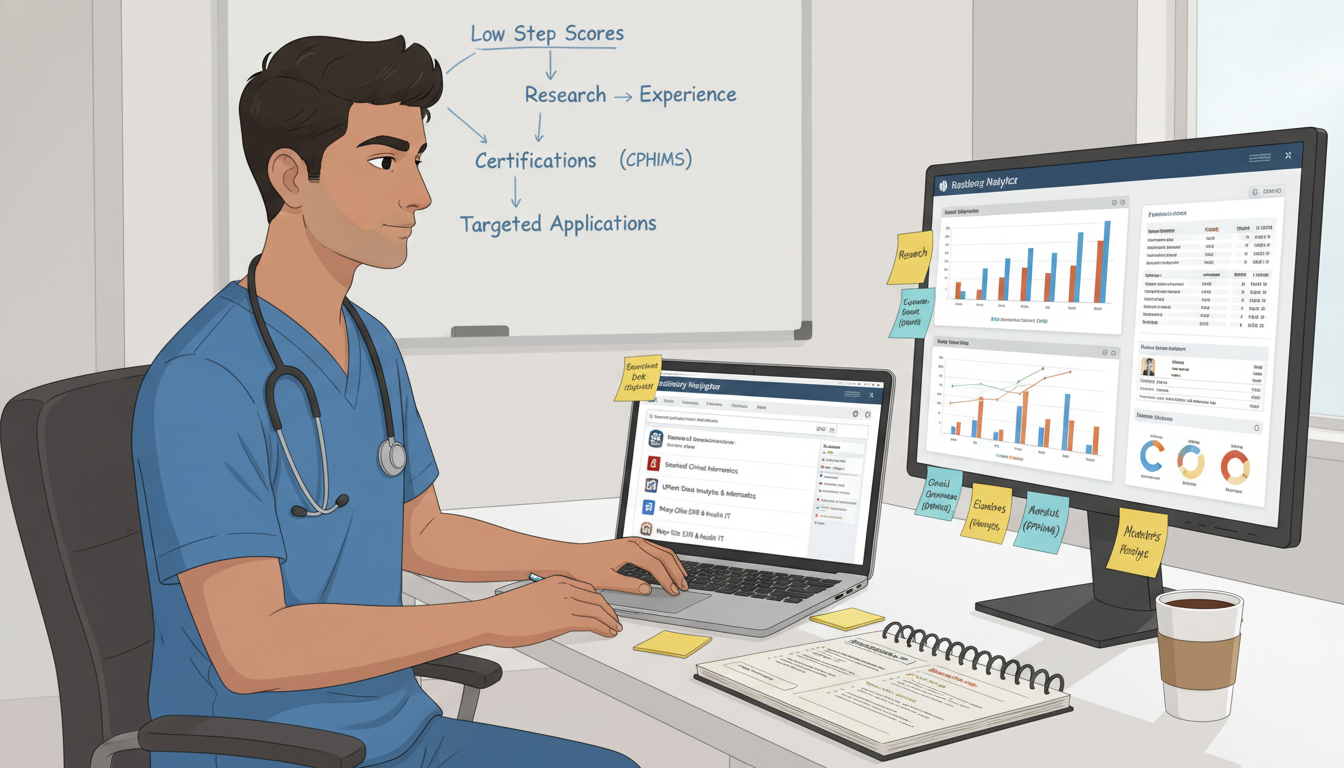
1. Realistic Core Specialties for Low or Below Average Scores
For many US citizen IMGs with lower scores, the most realistic cores that still align well with informatics are:
- Internal Medicine (IM) – Common, versatile, heavy EHR use, many programs with QI and informatics exposure.
- Family Medicine (FM) – Strong population health and outpatient EHR focus; growing interest in telehealth and care coordination.
- Pediatrics – If you have strong pediatric experiences and interest; many large children’s hospitals are informatics‑rich environments.
Less common but possible:
- Pathology – Very data‑heavy, but competitive at informatics‑rich institutions; low scores can be an issue.
- Emergency Medicine – Good match for workflow, triage systems, and decision support, but EM residencies can be competitive depending on region.
With low Step 1 scores and borderline Step 2 CK, your safest route is often community‑based IM or FM programs that are IMG‑friendly and affiliated with strong health systems that use major EHRs (Epic, Cerner, etc.).
2. Target Programs That “Think Informatics”
When researching residency programs, look for:
- Affiliation with a medical school that has a biomedical informatics or health IT training program.
- Presence of faculty with titles like:
- Chief Medical Information Officer (CMIO)
- Associate CMIO / Physician Informaticist
- Director of Clinical Decision Support
- Program descriptions mentioning:
- Quality Improvement (QI)
- EHR optimization
- Data analytics
- Population health initiatives
- Clinical informatics electives
These programs are more likely to:
- Value your informatics work as a differentiator.
- Offer you projects and mentorship that will later make your clinical informatics fellowship application stand out.
3. Geography and Program Tier Strategy
To maximize your chances with low scores:
Be geographically flexible.
- Apply broadly beyond highly desired cities (New York, California, major coastal metros).
- Consider the Midwest, South, and smaller cities where IMG‑friendly programs are more common.
Prioritize IMG‑friendly programs.
- Use tools like FREIDA, residency explorer, and program websites.
- Look for high percentages of IMGs in current residents.
Balance dream, target, and safety programs.
- Dream: large academic IM programs with strong informatics reputations.
- Target: community/university‑affiliated programs with EHR/QI emphasis.
- Safety: smaller community programs that are historically IMG‑friendly, as long as they use a modern EHR and support QI work.
Tactical Steps to Offset Low Step Scores
You cannot change your score, but you can change the story around it and overwhelm it with other strengths. This section is the heart of your practical strategy.

1. Turn Your Informatics Interest Into Tangible Output
A vague interest in “computers and medicine” is not enough. You need evidence.
A. Self‑Education in Informatics & Health IT
Consider formal or semi‑formal learning that can go on your CV:
- Online courses / certificates:
- Coursera, edX, or university‑based certificates in:
- Biomedical informatics
- Health data science
- Health IT and EHR systems
- Data analytics in healthcare
- Coursera, edX, or university‑based certificates in:
- Short courses or bootcamps in:
- SQL, R, or Python (especially in a healthcare or clinical data context)
- Data visualization (Tableau, Power BI)
Include these explicitly under “Additional Training / Health IT Training” on your CV.
B. Projects You Can Start Even as a Student or Graduate
Examples:
Retrospective chart review using hospital data (with IRB approval).
Survey‑based study on EHR usability or physician burnout related to documentation.
Mock clinical decision support (CDS) design:
- Develop a CDS algorithm on paper or in a simple tool (e.g., Excel or a basic app prototype).
- Write it up as a poster or abstract, even if not fully implemented.
Quality Improvement (QI) initiatives:
- E.g., improving documentation completeness, reducing duplicate orders, or optimizing order sets.
C. Turn Projects Into CV‑Ready Achievements
Your goal: at least one of the following before you apply:
- Abstract accepted at a regional or national meeting (e.g., AMIA, ACP, FM conferences).
- Poster presentation on informatics or EHR‑related topic.
- Manuscript submitted or accepted (even as co‑author).
These are powerful, especially when programs see “low Step 1 score” but then see that you:
“Published a study on EHR‑based risk prediction for readmissions at [institution].”
2. Strengthen Your US Clinical Experience (USCE)
For a US citizen IMG, strong USCE can mitigate weaker scores significantly.
Aim for:
- At least 2–3 months of hands‑on or direct patient care USCE (sub‑internships, externships, or supervised clinical work), if possible.
- Prioritize sites with robust EHR systems and potential informatics mentors.
How to make USCE informatics‑rich:
Ask during rotations:
- “Is there anyone involved in EHR optimization, QI, or data analytics whom I could meet or shadow?”
- “Are there ongoing projects I could help with—small data pulls, chart reviews, or PowerPoint prep?”
Document contributions in detail:
- “Assisted in data collection for a QI project on EHR‑based sepsis alerts.”
- “Participated in weekly informatics/QI meetings.”
This gives you talking points for interviews and content for letters of recommendation.
3. Letters of Recommendation That Speak Beyond Scores
With low scores, LORs become even more critical.
Your ideal LOR mix might include:
1–2 letters from US academic physicians in your desired specialty (IM or FM), emphasizing:
- Clinical reliability
- Communication skills
- Teamwork
- Improvement over time
1 letter from someone with informatics/QI involvement (e.g., CMIO, QI director), emphasizing:
- Analytical thinking
- Ability to understand workflow and data
- Initiative on informatics‑related projects
Give your letter writers:
- An updated CV highlighting informatics projects and USCE.
- A short, honest “personal statement summary” explaining:
- Your interest in clinical informatics.
- How you’ve worked to overcome or contextualize your below average board scores.
Their letters can then pre‑empt concerns about your score by saying things like:
“Although Dr. X’s Step 2 CK is lower than many of our students, their performance in our informatics‑heavy internal medicine rotation was excellent, and they functioned at the level of a strong PGY‑1.”
4. Crafting a Personal Statement That Reframes Low Scores
Your personal statement for residency is not where you dwell on numbers, but it is a place to reframe your trajectory.
Key elements for a US citizen IMG pursuing clinical informatics:
A clear, authentic origin story:
- A patient or systems problem that sparked your interest in data‑driven care.
- Exposure to EHR limitations or safety events that could be improved by better informatics.
Demonstrated action:
- The courses, projects, and QI work you actually did.
- Tools you learned (even at beginner level): e.g., basic Python for data cleaning.
Balanced tone:
- Emphasize commitment to patient care first, informatics second (residency PDs want clinicians, not full‑time IT staff).
- Communicate that you understand the rigors of residency and are not trying to “escape” clinical work because of low scores.
If you had a very low Step 1 score or a fail, a brief, accountable explanation may help:
- One to two sentences acknowledging:
- The circumstance (e.g., illness, family crises, poor early strategy).
- What changed (new study methods, improved Step 2 performance, disciplined approach).
Do not over‑apologize or make excuses; show growth.
5. Strategic Program Communication
Because many programs have automatic filters, especially for IMGs with low scores, use every mechanism available to personalize your candidacy:
Program‑specific emails:
- Short, respectful notes to program coordinators or PDs:
- Reaffirm your interest.
- Highlight that you’re a US citizen IMG with strong USCE and informatics interest.
- Mention any regional ties or reasons you’re likely to stay long term.
- Short, respectful notes to program coordinators or PDs:
Signal your informatics value:
- Offer to share an abstract or poster you presented on an EHR or QI topic.
- Briefly state how you hope to contribute to their QI and data initiatives as a resident.
This can nudge a program to look past a low Step 1 or below average Step 2 CK and read your full application.
Planning for Long‑Term Success in Clinical Informatics
Once you secure a residency, your low Step scores fade in importance—but your preparation for a clinical informatics fellowship needs to begin early.
1. Perform Strongly in Residency
Fellowship directors will look much more at:
- In‑training exam scores (IM-ITE, etc.)
- Rotation evaluations
- Any Step 3 performance, if not already taken
If test‑taking is a weakness, treat in‑training exams as a chance to show improvement and responsiveness to feedback.
2. Build an “Informatics Track” for Yourself
During residency:
Seek a resident mentor or faculty mentor involved in:
- QI committee
- EHR implementation/optimization
- Data warehouse/EHR reporting
Aim for 1–2 substantial projects:
- A CDS optimization project (e.g., refining an alert to reduce alert fatigue).
- A population health or readmission reduction project using EHR data.
- Telemedicine workflow optimization and documentation improvement.
Present your work:
- Hospital’s QI day, regional meetings, AMIA, ACP, STFM, etc.
Each project becomes a talking point and CV line item for fellowship applications.
3. Align with Formal Training Opportunities
Look for:
- Institutional Certificate programs in Clinical Informatics or Health IT.
- Protected time for QI or data projects in PGY‑2 or PGY‑3.
- Rotations with the informatics or IT department, shadowing CMIOs or analyst teams.
These experiences demonstrate that you’re not casually interested—you’re intentionally building an informatics identity.
4. Addressing Score Questions in Fellowship Interviews
If your low Step 1 score or below average board scores come up later:
- Acknowledge succinctly.
- Emphasize your trajectory:
- Better clinical performance.
- Strong in‑training scores or Step 3.
- Tangible informatics contributions.
Fellowship directors are usually more concerned with:
- Whether you can manage complex projects.
- Whether you can communicate across clinical and IT teams.
- Whether you’re reliable and self‑directed.
If you’ve done the work, your earlier scores will be an interesting footnote, not a defining feature.
Frequently Asked Questions (FAQ)
1. Can I still pursue clinical informatics if I have a very low Step 1 score or a failed attempt?
Yes, but you must be especially strategic. Focus on:
- Passing Step 1 on a subsequent attempt and doing as well as possible on Step 2 CK.
- Building strong USCE and excellent letters that vouch for your reliability.
- Creating a robust informatics portfolio (courses, projects, posters).
Your first goal is to match into a primary residency (often IM or FM). Once you’re in residency, your performance and informatics accomplishments will matter more than your earlier low score.
2. As a US citizen IMG, do I need better scores than US MD/DO graduates to get into informatics‑friendly residencies?
In practice, yes—many programs unconsciously or explicitly expect higher scores from IMGs than US graduates. However, as a US citizen IMG, you reduce visa concerns and can sometimes compensate for slightly lower scores with:
- Strong USCE
- Excellent communication and teamwork
- Well‑documented interest in clinical informatics and QI
- Regional ties and genuine program‑specific interest
Your informatics skills can be a differentiator if they’re concrete, not just theoretical.
3. Do I need to do a formal master’s in informatics or data science to be competitive for a clinical informatics fellowship?
Not necessarily. Many successful fellows have:
- No formal master’s degree.
- Instead, a strong track record of:
- Informatics‑related QI projects.
- EHR optimization or CDS work.
- Posters and publications in informatics topics.
A master’s in biomedical informatics, public health (with data focus), or data science can help, but it is not mandatory and should not delay your primary goal of securing and completing residency unless there is a compelling reason.
4. How many programs should I apply to if I have low scores and want to match into an informatics‑relevant residency?
As a US citizen IMG with low Step scores, plan to apply broadly, often:
- IM or FM: 80–120 programs is common for below average board scores, adjusted for your specific score, USCE, and other strengths.
- Include a balanced list:
- A few aspirational academic programs with strong informatics presence.
- Many mid‑tier academic/community hybrids.
- A substantial number of historically IMG‑friendly community programs.
Your informatics interest should be highlighted but not over‑central; programs need to see you as a future clinician who brings informatics value, not as someone trying to avoid clinical work.
By accepting your low Step 1 or below average board scores as fixed and focusing instead on building a coherent, evidence‑based clinical informatics narrative, you can still carve out a strong path. As a US citizen IMG, you have leverage in the US system—use it wisely by combining broad residency applications, targeted informatics experience, and clear, honest communication about your goals.