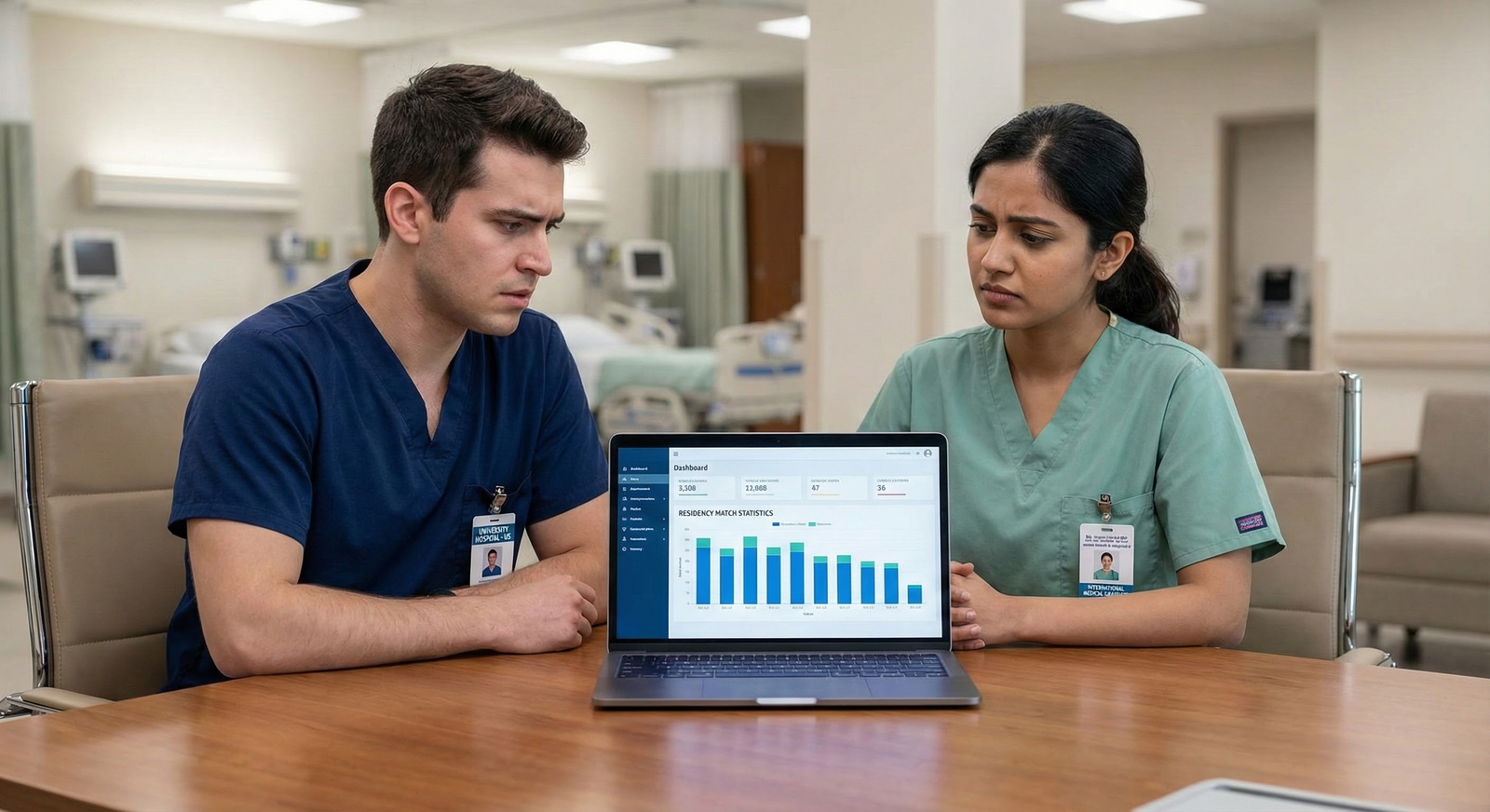
As a US citizen IMG, studying medicine abroad and then aiming for residency in Cleveland can feel both exciting and intimidating—especially if you’re dealing with a low Step 1 score or below average board scores. The good news: matching with low scores is absolutely possible, including into strong Cleveland residency programs, if you approach your application with a focused, strategic plan.
This guide is written specifically for American students studying abroad who are targeting Cleveland residency programs (including, but not limited to, Cleveland Clinic residency opportunities) and who are worried about a low Step 1 score or overall board performance.
Understanding What “Low Step Score” Means for a US Citizen IMG
Before building a strategy, you need clarity on what you’re up against and what matters most for a US citizen IMG targeting Cleveland.
What counts as a low Step score?
Because Step 1 is now Pass/Fail, “low score” usually refers to:
- Step 2 CK below 230 (for competitive academic centers)
- Or Step 1 pass on second attempt, rather than first
- Or a pass on Step 1 with multiple marginal NBME/CBSSA results documented in your MSPE
- Historically, US IMGs matching to mid-tier IM or FM tended to have 225–235 on Step 1/2; scores below this range now raise concern, especially for competitive specialties and academic centers.
Cleveland institutions (like Cleveland Clinic, University Hospitals, and MetroHealth) are familiar with US citizen IMGs. But their volume of applications means they use board scores as a quick screen—especially for large programs such as internal medicine, pediatrics, and general surgery.
Why low scores are not the end of the story
Program directors consistently emphasize:
- Step 2 CK is now king. For a US citizen IMG with a low Step 1, a strong Step 2 CK is critical.
- Scores help get you through the initial filter, but interviews and ranks rely heavily on:
- US clinical experience (USCE)
- Letters of recommendation (LORs)
- Clerkship performance
- Professionalism, communication, and “fit”
- Personal statement and narrative
Your job is to offset your low Step 1 or below average board scores with overwhelming strength in other dimensions—especially ones that Cleveland programs care about.
Targeting Cleveland: Know the Landscape and Set Realistic Goals
Cleveland is a medium-sized city with an outsized medical footprint. As a US citizen IMG with a low Step score, you need to know where you realistically fit and how to position yourself.
Major Cleveland training hubs
Key institutions/program clusters include:
Cleveland Clinic
- Multiple residencies (IM, neurology, surgery, anesthesia, etc.)
- Very competitive, research-oriented, with many international grads but usually high board score expectations
- Cleveland Clinic residency programs often look for sustained academic excellence, strong Step 2 CK, and research productivity
University Hospitals Cleveland Medical Center (UH)
- Affiliated with Case Western Reserve University
- Academic programs with moderate-to-high competitiveness
- Historically more open to strong US IMGs with robust USCE and good interviews
MetroHealth System
- Safety-net, academic-community hybrid
- More IMG-friendly in many specialties, particularly internal medicine, pediatrics, family medicine, and some prelim/TY programs
Community hospitals near Cleveland (e.g., Akron, Canton, Youngstown, smaller systems)
- Often more flexible with slightly lower scores if other parts of your application are strong
- Excellent options for matching with low scores while still training in Northeast Ohio or within driving distance of Cleveland
Realistic targeting with low scores
For a US citizen IMG with low Step scores, a reasonable Cleveland-oriented strategy often includes:
Core focus specialties:
- Internal Medicine
- Family Medicine
- Pediatrics
- Psychiatry
- Transitional Year / Preliminary IM (if you’re reapplying or exploring categorical options later)
More challenging (but not impossible) with low scores:
- Anesthesiology
- Neurology
- Emergency Medicine
- Obstetrics/Gynecology
Very challenging with low Step 2 CK or repeated failures:
- Dermatology
- Orthopedic Surgery
- Neurosurgery
- Integrated Plastics
- ENT
- Radiology (Diagnostic or IR)
Instead of asking “Can I match at Cleveland Clinic with low scores?” reframe to:
“How can I maximize my chances of matching in or around Cleveland, and if I aim for Cleveland Clinic residency, what do I need to demonstrate to compensate for low boards?”

Academic Recovery: How to Handle Low Step Scores Strategically
If your Step 1 or Step 2 CK is below average, the single most powerful corrective action is demonstrating an upward trend and current competence.
1. Treat Step 2 CK as your redemption exam
For US citizen IMGs now, Step 2 CK is the primary standardized metric programs see. If Step 1 went poorly, Step 2 CK is your chance to show:
- You learned from your mistakes
- You can handle clinically oriented content
- You can function safely in residency
Targets for a US citizen IMG with low Step 1:
- Aim for ≥ 240 if you’re trying for academic IM, pediatrics, or psychiatry in Cleveland
- Aim for ≥ 230 at minimum if you’re hoping for good community or academic-affiliated programs in Northeast Ohio
- If your Step 2 score is already low, focus on other academic signals (see below)
Actionable steps:
- Take a diagnostic NBME to identify weak systems and disciplines.
- Use a focused resources approach:
- UWorld (thoroughly, with notes or Anki)
- NBME exams every 2–3 weeks
- One core text or video resource (OnlineMedEd, AMBOSS, or similar)
- Study in structured blocks (4–6 hours of high-yield work daily for 8–12 weeks, if possible).
- Treat this like your second chance at a first impression—because for many PDs, it is.
2. Use clerkships and sub-internships as “real-world exams”
Cleveland programs care intensely about how you work on the wards. If your Step scores are weak, you need to shine clinically.
For American students studying abroad, this often means arranging robust US clinical experiences (USCE):
- Core rotations or electives in Internal Medicine, Family Medicine, Pediatrics, or Psychiatry at:
- MetroHealth
- University Hospitals
- Affiliated community hospitals near Cleveland
- Sub-internships (sub-Is) or acting internships in your chosen specialty:
- Aim for at least one sub-I in the US at an ACGME-affiliated program, ideally in Ohio or nearby states (PA, MI, NY).
During these rotations:
- Be early, prepared, and enthusiastic
- Read about your patients and present clearly and concisely
- Ask for mid-rotation feedback, then act on it
- Show professionalism and reliability—these traits often outweigh an old exam score
High-quality evaluations and letters of recommendation from these rotations can significantly offset below average board scores.
3. Consider additional academic signals
If your scores are truly low or you’ve had exam failures, add other evidence of academic capability:
- US-based research experience in your target field (even short-term, 3–6 months)
- Abstracts or posters presented at regional or national conferences (e.g., ACP, AAFP, APA)
- US or online certificate courses (clinical research, QI, public health) from reputable institutions
- A Master’s degree (MPH, clinical research) can help but is a longer and more expensive route; only pursue if it fits your long-term goals and you can still apply broadly.
Maximizing USCE, Networking, and LORs—Especially in Cleveland
For US citizen IMGs with low Step scores, relationships and reputation often matter more than raw numbers—particularly in a tight-knit region like Cleveland.
1. Plan Cleveland-focused USCE rotations
If Cleveland is your target, ask:
- Can I rotate at:
- Cleveland Clinic (many IMGs do observerships or short electives)
- University Hospitals
- MetroHealth
- Community-affiliated hospitals in the Cleveland metropolitan area
When arranging rotations:
- Prioritize hands-on clinical electives over pure observerships.
- If observerships are your only option, choose settings where:
- You have frequent attending contact
- You can attend teaching conferences, grand rounds, and case discussions
- There’s a realistic possibility of an LOR from an academic faculty member
2. Craft truly strong letters of recommendation
You want at least:
- Three to four strong US letters, ideally:
- Two from your intended specialty (e.g., IM if you’re applying IM)
- At least one from a Cleveland or Ohio-based physician (if possible)
- At least one from someone with a faculty title and some involvement in residency education
Ask for letters in person when possible, and say something like:
“Dr. X, I’m a US citizen IMG applying in Internal Medicine. I know my Step 1 score is not ideal, but I’m working hard to show that I can be a strong resident. Would you feel comfortable writing a strong letter of recommendation that speaks to my clinical performance and readiness for residency?”
This gives them an “out” if they can’t be strongly supportive, and it nudges them to mention your growth and competence, which directly counters the low scores.
3. Network strategically in Cleveland
As a US citizen IMG, your American background may help you connect with faculty and residents more easily. Use that:
- Attend:
- Grand rounds and teaching conferences at Cleveland-area hospitals when on rotation
- Local/regional specialty society meetings or networking events
- Introduce yourself respectfully:
- “I’m a US citizen IMG studying at [school abroad], rotating here this month. I’m very interested in doing residency in Cleveland, especially in [specialty].”
- Ask targeted questions:
- “What do you think are the most important things for an IMG with a low Step 1 score to show in their application?”
- “Are there program-specific things I should emphasize if I hope to match here?”
After meaningful interactions, send a brief thank-you email and, if appropriate, update them on your progress. Over months, these small interactions can lead to informal advocacy, which is especially valuable if you’re matching with low scores.

Application Strategy: How to Build a Cleveland-Friendly, Score-Resilient ERAS Profile
When ERAS opens, you need an application that acknowledges your low Step score without being defined by it.
1. Specialties and “tiers”: choosing where to apply
Given low scores, consider the following three-tier application strategy:
Tier 1 – Dream / High Reach (Cleveland-focused)
Programs like:
- Cleveland Clinic residency programs in IM, pediatrics, or less competitive specialties
- Certain programs at University Hospitals
Apply here selectively, only if you have:
- Strong Step 2 CK (≥ 235–240)
- Excellent USCE and letters
- Possibly some research or meaningful experiences directly tied to Cleveland or the institution
Tier 2 – Realistic Academic / Academic-Community
- MetroHealth programs
- UH community-affiliated hospitals
- Community programs in Akron, Canton, Youngstown, and other nearby cities
Apply generously, as these are your bread-and-butter target programs.
Tier 3 – Safety (Community and smaller programs)
- More IMG-friendly community IM/FM/Psych/Peds across Ohio and surrounding states
- Be willing to broaden beyond Cleveland if you are truly worried about matching with low scores.
2. Number of applications
For a US citizen IMG with a low Step score in a core specialty (IM, FM, Psych, Peds):
- Internal Medicine: 60–100+ programs, including many community and IMG-friendly sites
- Family Medicine: 40–70 programs
- Psychiatry or Pediatrics: 60–90 programs, depending on competitiveness and your profile
Most Cleveland IMGs who match didn’t only apply in Cleveland. They applied broadly and then ranked Cleveland-area programs highly when they received interviews.
3. Personal statement: control your narrative
Your personal statement is where you contextualize, not apologize for, low scores.
Do:
- Acknowledge briefly and factually if there was a clear reason (e.g., illness, family crisis, adjustment to a new system)
- Emphasize:
- Growth: “I adapted my study strategies and improved significantly on Step 2 CK…”
- Clinical strengths: strong performance in US electives, sub-Is, and patient care
- Commitment to Cleveland: family ties, long-term plans, meaningful time spent in Northeast Ohio
Avoid:
- Over-focusing on scores or sounding defensive
- Blaming others (school, exam, unfairness)
- Overexplaining minor score issues
Example framing:
“My Step 1 performance was not reflective of my true capabilities. At that time, I struggled with [brief reason], and I had not yet found an effective study approach. Since then, I have refined my learning strategies, completed US clinical experiences with strong evaluations, and significantly improved on Step 2 CK. These experiences have reinforced my resilience and my ability to grow from setbacks—qualities I bring to residency.”
4. MSPE and transcripts: minimize red flags
If your school’s MSPE highlights your poor performance, you can:
- Ask your dean or advisor how they typically present bad scores and whether any contextual remarks are allowed.
- Ensure your recent clinical grades and comments are as strong as possible to show clear improvement.
5. Signaling strong interest in Cleveland
Ways to show programs you’re serious about Cleveland:
- Emphasize Cleveland ties (family, prior training, partner’s job) in your ERAS geographic preferences and personal statement.
- On interviews, clearly state:
- “I’m particularly interested in staying in the Cleveland area long-term.”
- Use any program signals (PD letters, preference signaling if available) for key Cleveland residency programs if the match cycle offers that mechanism.
Interview Season and Ranking: Converting Opportunities into a Match
Getting an interview means someone believes you could succeed in their program despite low scores. Your job is to confirm that belief and make your low Step score fade into the background.
1. Prepare for common low-score questions
Cleveland program directors may ask variations of:
- “Can you walk me through what happened with Step 1?”
- “What did you change between Step 1 and Step 2?”
- “How do you manage high-stakes pressure now?”
When answering:
- Be brief, honest, and specific.
- Emphasize:
- Insight: you understand what went wrong
- Action: concrete changes you made
- Outcome: improved performance, strong USCE, clinical letters
Example:
“On Step 1, I underestimated the volume of material and didn’t use question banks effectively. I learned from that and built a structured plan for Step 2 CK, focusing on timed questions and targeted review of weaknesses. My Step 2 CK score and US clinical evaluations reflect those changes and my current readiness for residency.”
2. Showcase your strengths beyond numbers
On interviews, especially in Cleveland:
- Highlight:
- Prior exposure to the Cleveland healthcare environment (e.g., rotations)
- Comfort with diverse, often underserved patient populations
- Experience with team-based care and interprofessional communication
- Show you understand:
- The program’s patient population (e.g., MetroHealth’s safety-net mission)
- The local healthcare landscape
- The realities of living in Cleveland (weather, cost of living, neighborhoods)
3. Ranking strategy for US citizen IMGs with low scores
When ranking:
- Rank all programs where you would be willing to train, regardless of perceived prestige.
- Give slight priority to:
- Programs where:
- You have strong connections
- Faculty explicitly encouraged you
- You felt the culture was supportive of IMGs and remediation
- Programs where:
To maximize odds of matching with low scores, don’t “reach” too aggressively on your rank list. It’s common and sensible to rank:
- A few dream Cleveland programs (e.g., certain Cleveland Clinic or UH residencies)
- All realistic Cleveland-area programs where you interviewed
- Strong community and IMG-friendly programs across Ohio and neighboring states
Frequently Asked Questions (FAQ)
1. Can a US citizen IMG with a low Step 1 score still match into a Cleveland Clinic residency?
It’s possible but significantly more competitive. To have a realistic shot at Cleveland Clinic residency with low Step 1, you generally need:
- A strong Step 2 CK score (ideally ≥ 240)
- Several months of high-quality USCE with excellent evaluations
- Strong US-based letters, ideally from academic faculty and, if possible, from Cleveland-area institutions
- Evidence of research or academic interest, especially for internal medicine or subspecialty-oriented fields
Even then, plan to apply broadly and consider Cleveland Clinic as a reach, not your only plan.
2. Is being a US citizen IMG an advantage compared to non-US IMGs with similar low scores?
Often, yes—especially in community and some academic-community programs. As an American studying abroad, you:
- Usually have fewer visa-related barriers
- May be perceived as more likely to stay in the US long-term
- Often share cultural familiarity with US patients and healthcare teams
However, if your board scores are significantly lower than non-US IMGs, they may still be selected over you for some academic Cleveland residency programs. Your best move is to make Step 2 CK and USCE as strong as possible and emphasize your commitment to Cleveland and the local community.
3. How many Cleveland programs should I apply to if my scores are below average?
Apply to every Cleveland-area program in your chosen specialty that is at least moderately IMG-friendly, and then cast a wide net beyond Cleveland. For example, for Internal Medicine with low scores, you might:
- Apply to:
- Cleveland Clinic (main and some community affiliates) – if you have some competitive strengths
- University Hospitals and affiliates
- MetroHealth
- Nearby programs in Akron, Canton, and Youngstown
- Plus dozens of additional community and academic-community programs across the Midwest and East Coast.
Think of Cleveland as your geographic preference, not your entire strategy.
4. I failed Step 1 or Step 2 once. Can I still realistically match in or near Cleveland?
Yes, but your path becomes narrower and more dependent on other strengths. Programs in Cleveland and surrounding areas have matched applicants with prior failures, especially if:
- There is a clear upward trend with a solid Step 2 CK score on the second attempt.
- You have excellent US clinical performance with strong letters.
- You apply broadly and include many IMG-friendly community programs.
- You can articulate clearly and calmly what went wrong and how you’ve changed.
If your goal is specifically to live and work in Cleveland long-term, you might first match into a community program elsewhere, then later apply for fellowship or jobs in Cleveland after proving yourself in residency.
If you focus relentlessly on Step 2 CK performance, strong USCE in or near Cleveland, powerful letters, and a clear narrative of growth, your identity as a US citizen IMG with a low Step score does not have to define your destiny. Many before you have matched into solid Cleveland residency programs despite below average board scores; with a clear, disciplined strategy, you can be one of them.