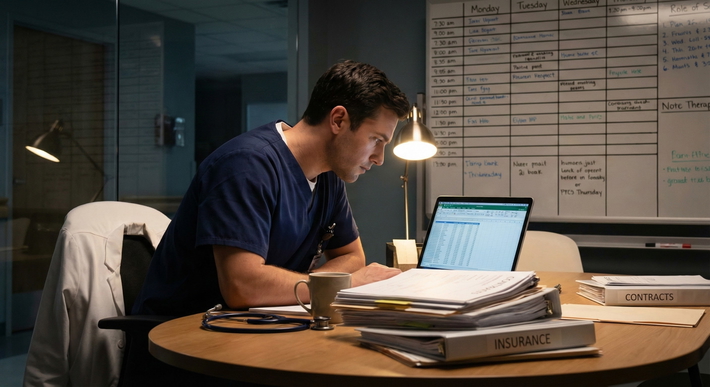
If I ask for accommodations right after Match, will my new program think I hid something?
That’s the real fear. Not the polished version. The 2 a.m. version. If I ask now, will they think I’m difficult, dishonest, fragile, or not ready for residency? Will I somehow ruin the goodwill before I’ve even shown up for orientation? Will my name become that incoming intern with issues?
I get why this spirals. Match Day is supposed to feel like relief, and instead some people are sitting there with an acceptance in one hand and a draft email in the other, wondering if sending it will make everything wobble. But here’s my direct answer: asking for reasonable accommodations after Match is not, by itself, a red flag. It’s a professional process. Programs deal with this. Hospitals deal with this. GME offices deal with this. The part that matters is how you do it.
Because yes, timing matters. Wording matters. Documentation matters. Who you contact matters. A panicked, vague email to the wrong person can create confusion you didn’t need. A clear, calm request through the right channel usually lands very differently.
And that’s what this is really about now. You matched. Good. That part is done. Now you need a safe, workable transition into training so you can actually function when July hits instead of trying to white-knuckle preventable problems.
Will asking for accommodations right after Match make my new program think I hid something?
Usually, no. Programs understand that interview disclosure and onboarding logistics are different things. You were not required to turn interviews into a memoir about your medical history. A post-Match accommodation request is not some dramatic confession. It’s a workplace access issue.
What programs legitimately worry about is logistics. Can schedules be built in time? Does equipment need to be ordered? Does occupational health need to be involved? Is there a process that has to run through HR or disability services? That’s normal. What they are not supposed to do is leap from “this person requested an accommodation” to “this person is incompetent.”
Applicants, of course, assume the worst. I’ve heard every version of it:
- “They’ll think I’m high-maintenance.”
- “I’ll lose goodwill before I even start.”
- “What if my contract gets delayed?”
- “What if they quietly retaliate?”
- “What if my PD decides I’m a problem resident in advance?”
That fear is real. It’s also not a reason to stay silent when you need something to safely do the job.
Accommodations are about access and function. Not a confession that you can’t be a doctor. Not proof you’re weak. Not a scarlet letter. Common post-Match accommodation issues can include:
- schedule structure for recurring treatment
- testing accommodations for onboarding modules or required exams
- lactation-related needs
- mobility access
- mental health treatment scheduling
- assistive technology
- leave coordination
- ergonomic modifications
- interpreter services
- medication storage
- parking or housing-linked accessibility concerns
Also, don’t assume one person handles all of this. They usually don’t. The program director may not be the right first stop. GME, HR, occupational health, employee health, disability/access offices, and program coordinators can all have different roles. That division actually helps. It keeps this from becoming weirdly personal.
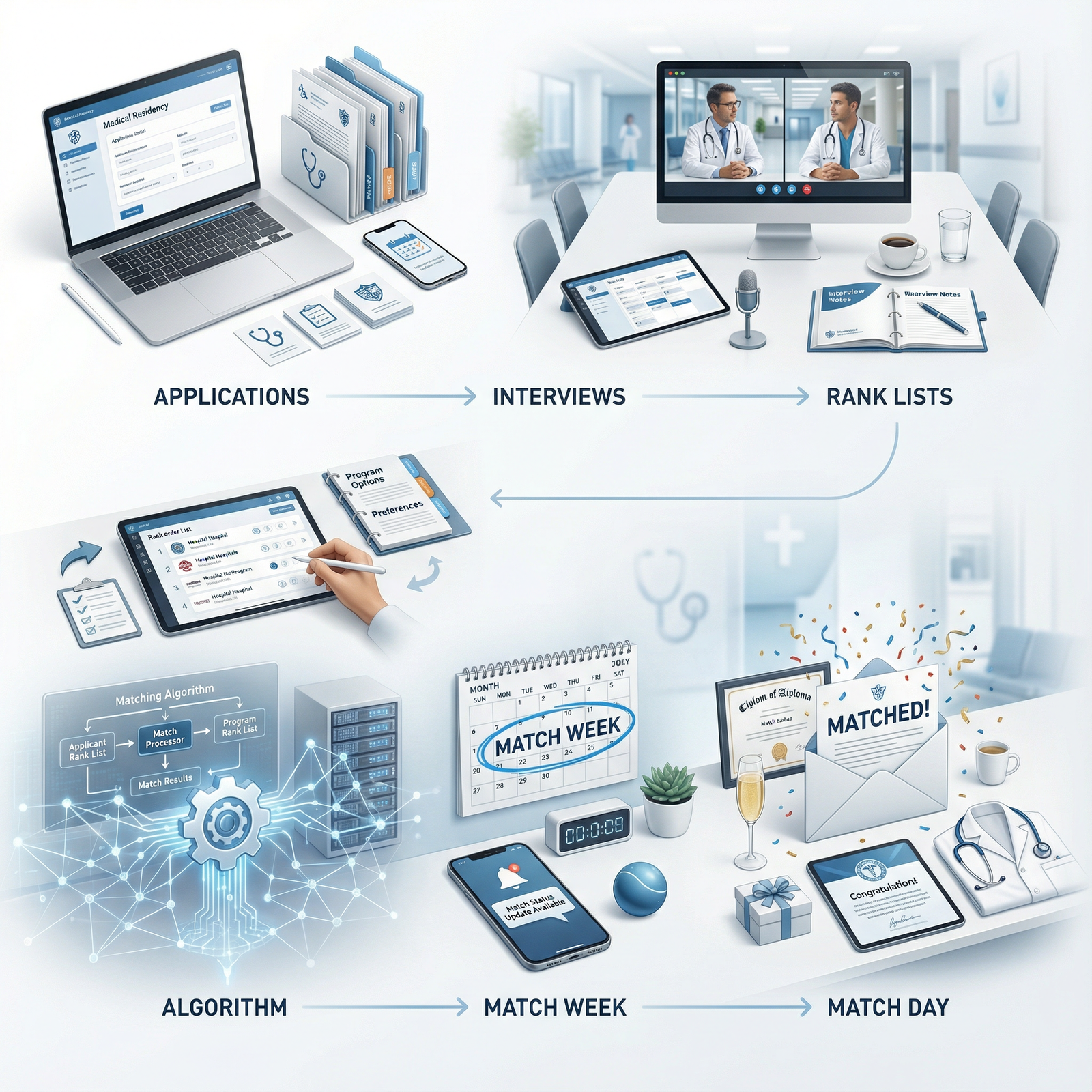
What residency programs usually worry about — and what they are not supposed to assume
Here’s the blunt version: programs are allowed to worry about operations. They are not allowed to treat an accommodation request like evidence that you lied your way into Match.
That distinction matters.
A legitimate operational concern sounds like this: We need to know this early enough to adjust orientation access, scheduling blocks, call room setup, parking, badge access, pumping space, or equipment procurement. Fair.
An inappropriate assumption sounds like this: If you need an accommodation, maybe you can’t handle residency. Not fair. Not acceptable. And frankly, lazy thinking.
The reason applicants get so rattled is that these can feel similar from the outside. A delayed email. A request for documentation. Someone asking follow-up questions. Suddenly your brain goes: That’s it. They regret ranking me. Usually? No. Usually they’re trying to figure out who owns the request and how to implement it.
Still, some requests are more likely to trigger confusion if they’re broad or poorly framed. “I need a lighter schedule” is the kind of phrase that makes people nervous because it tells them nothing useful. It sounds indefinite. It sounds like they’re supposed to guess. And hospitals hate guessing. If instead you say, “I’m requesting advance schedule notice and protected time for a weekly medical appointment so I can maintain treatment and safely perform my duties,” that’s concrete. It sounds adult. It gives them something to work with.
The categories that commonly come up after Match are broader than people think:
- Schedule-related: recurring treatment appointments, protected pumping time, advance notice of schedules.
- Physical access: elevators, call rooms, parking, accessible housing, mobility-friendly workspaces.
- Technology/support tools: screen readers, dictation tools, amplified devices, ergonomic equipment.
- Testing/onboarding: accommodations for mandatory training modules, onboarding exams, or institutional testing.
- Health-related logistics: medication refrigeration or storage, time-sensitive treatment needs, leave coordination.
- Procedure or task modifications: ergonomic supports, seating options, tools that reduce symptom flare during procedures or overnight work.
The bigger point: needing one of these doesn’t mean you can’t function. It means you’re trying to function without doing something reckless or stupid. Which is exactly what a residency program should want.
When to ask after Match so it does not feel last-minute or alarming
Ask as soon as you know what you need. That’s the rule. Not “as soon as you stop feeling embarrassed.” Not “after I prove I’m chill.” As soon as you know.
Ideally, that means before orientation deadlines and before schedules are locked. If your request touches anything operationally annoying — housing accessibility, parking, equipment ordering, pumping space, interpreter services, medication storage, call room access, ergonomic setup for procedures — earlier is better. Much better.
Some things are urgent for day one. Some aren’t.
Urgent day-one issues usually include:
- mobility or building access
- housing-linked accessibility if arranged through the institution
- lactation space and pumping logistics
- assistive technology setup
- interpreter services
- medication storage
- parking tied to disability access
- equipment that has to be ordered
Potentially non-urgent issues can sometimes wait until onboarding contacts are assigned:
- fine-tuning recurring schedule preferences
- follow-up clarification about documentation
- minor workflow adjustments that don’t affect startup logistics
And if you’re sitting there thinking, Did I already wait too long? probably not. Late isn’t ideal. But silence is usually worse than a clear request. A concise email in April or May is fixable. Showing up in July and revealing a problem that affects scheduling, access, or safety is what actually creates alarm.
If you’re unsure exactly what to request, ask for the process first. That’s a smart move and it buys you structure. You do not need to have perfect legal phrasing before you reach out.
How to ask without oversharing: the safest email structure
This is where anxious people sabotage themselves. They write six dense paragraphs, apologize seventeen times, disclose their entire diagnosis history, and somehow make a normal accommodation request sound like a crisis memo.
Don’t do that.
Your first email should be simple:
- Say you’re excited to join the program.
- State that you’re requesting an accommodation.
- Briefly describe the functional need.
- Ask for the appropriate process or contact.
- Offer documentation if needed.
That’s it. Clean. Professional. No emotional autobiography.
A safe template looks like this:
Dear [Name],
I’m very excited to be joining [Program] this July. I’m reaching out to ask about the process for requesting a workplace accommodation related to a medical condition. I will need [brief functional need/accommodation category] in order to safely and effectively perform my responsibilities during residency.If there is a specific office or formal process for this, I’d appreciate being directed to the appropriate contact. I’m happy to provide documentation if needed.
Thank you,
[Your Name]
Notice what’s not in there. No dramatic backstory. No “I’m so sorry to be difficult.” No “I didn’t want to tell anyone because I was afraid you wouldn’t rank me.” Absolutely not. That kind of oversharing doesn’t make you sound honest. It makes the situation feel emotionally loaded when it doesn’t need to be.
You also don’t need to dump your diagnosis into a PD’s inbox on first contact. There’s a difference between disclosing a condition and describing a work-related need.
- Condition disclosure: “I have X diagnosis and here’s my whole history.”
- Functional framing: “I need Y support to safely perform Z responsibilities.”
Functional framing is safer, cleaner, and usually enough to start. If more detailed medical documentation is required, that often goes through HR or disability services rather than becoming gossip disguised as administration.
Who should you contact first? Follow the institution’s process if it’s available. Often the best starting points are:
- GME office
- HR
- disability/access office
- program coordinator
If the program has no obvious guidance, the coordinator is often the practical gatekeeper who knows where these requests go. I’d use the formal route before sending a vulnerable email straight to the program director if I can avoid it. Not because the PD is evil. Just because structure is better than vibes.

What documentation might be requested — and how to avoid getting stuck in paperwork panic
Some institutions require formal documentation right away. Others start with an interactive discussion and sort paperwork out after. Either way, don’t interpret documentation requests as suspicion. This is normal. Bureaucratic, annoying, normal.
What they often want documentation to show is pretty basic:
- the condition or limitation
- the functional impact at work
- why the requested accommodation makes sense
That’s it. Not your life story.
The real problem is often outside the program. Clinicians take forever. Old paperwork is missing. Forms are vague. Someone fills out a note saying “patient needs help” and nothing else, which is the administrative equivalent of tossing a napkin into the ocean.
Get ahead of that. Early.
Practical steps:
- contact your treating clinician as soon as you match
- ask whether the institution has a specific form
- gather prior accommodation records if you have them
- keep copies of everything
- follow up politely but persistently
If you already know your psychiatrist, therapist, specialist, OB, PCP, or rehab clinician moves at glacial speed, plan accordingly. This is not the moment for magical thinking.
Requests most likely to trigger confusion, and how to phrase them more clearly
Some requests make programs uneasy fast. Not because they’re wrong, but because they’re vague, sweeping, or framed like ultimatums.
The usual high-anxiety scenarios are:
- schedule exemptions
- call modifications
- extended leave near the start date
- restrictions that may affect core duties
- requests with no functional explanation
“I need a lighter schedule” is bad wording. So is “I can’t do residency unless you guarantee…” Both create panic because they sound open-ended and absolute.
You want to focus on essential functions and workable alternatives. That changes the whole tone.
For example:
Instead of “I need a lighter schedule,” say:
“I am requesting advance scheduling notice and a consistent weekly protected time for a medical appointment so I can maintain treatment and safely perform my duties.”Instead of “I need help with call,” say:
“I am requesting ergonomic modifications and access to brief symptom-management breaks during overnight shifts so I can safely perform required responsibilities.”Instead of “I can’t stand for long procedures,” say:
“I’m requesting a seating or ergonomic support option during specific prolonged procedures to safely sustain performance.”Instead of “I need months off right when residency starts,” say:
“I’d like to discuss leave coordination related to a medical need and understand the institution’s formal process for planning coverage and return-to-work expectations.”
Specific beats vague. Always.
And yes, some requests are harder than others. If you’re asking for something that touches core duties, the exact wording matters a lot. So does your willingness to engage in problem-solving. Not every request will be granted exactly as proposed. That’s not automatically rejection. The interactive process often means the first draft gets refined.
If you are terrified of backlash: how to protect yourself professionally
First: keep everything factual, timely, and in writing. That alone cuts down a lot of nonsense.
Second: use formal institutional channels. Verbal hallway assurances are comforting and useless. If it matters, it needs an email trail.
If someone seems dismissive, don’t melt down and don’t pick a fight. Restate the request. Ask for the formal process. Then summarize the conversation by email.
For example:
Thank you for speaking with me today. I wanted to summarize my understanding that the next step is [X], and that documentation should be sent to [Y]. Please let me know if I’ve misunderstood the process.
That kind of note is gold. Calm. Precise. Hard to distort later.
Also, not every delay is retaliation. Hospitals are bureaucratic jungles. Onboarding gets messy. Coordinators are chasing licenses, badges, ACLS records, drug screens, payroll, and forty-seven forms no human being should ever have to complete. A slow response is frustrating, but it’s not automatically sinister.
That said, if the handling is clearly inappropriate — dismissive comments, refusal to identify a process, pressure to reveal unnecessary medical details to the wrong people, explicit retaliation vibes — escalate. Sensibly.
Possible escalation points:
- GME leadership
- HR
- disability/access office
- ombuds office
- legal counsel, if things get truly ugly
You do not need to silently absorb bad process just to seem easygoing. That impulse is how people get steamrolled.
You are not ruining your start by asking for what you need
I know it feels risky. I know your brain keeps saying, What if this changes how they see me before I even arrive? But a thoughtful accommodation request is not evidence that you’re weak, deceptive, or unserious. It’s evidence that you’re preparing to do the job safely and well.
That’s the grown-up move. Not silence. Not panic. Not showing up unprepared and hoping adrenaline fixes everything.
So act early. Be concise. Use the right channel. Focus on safe performance, not emotional confession. And remember that plenty of residents do this successfully, even if nobody talks about it out loud because medicine still loves pretending everyone is effortlessly invincible. Dumb culture. Don’t copy it.
Asking professionally now can prevent much bigger problems once residency starts. And that’s not raising red flags. That’s protecting your future self.