Understanding Your Future: What Happens After Match Day?
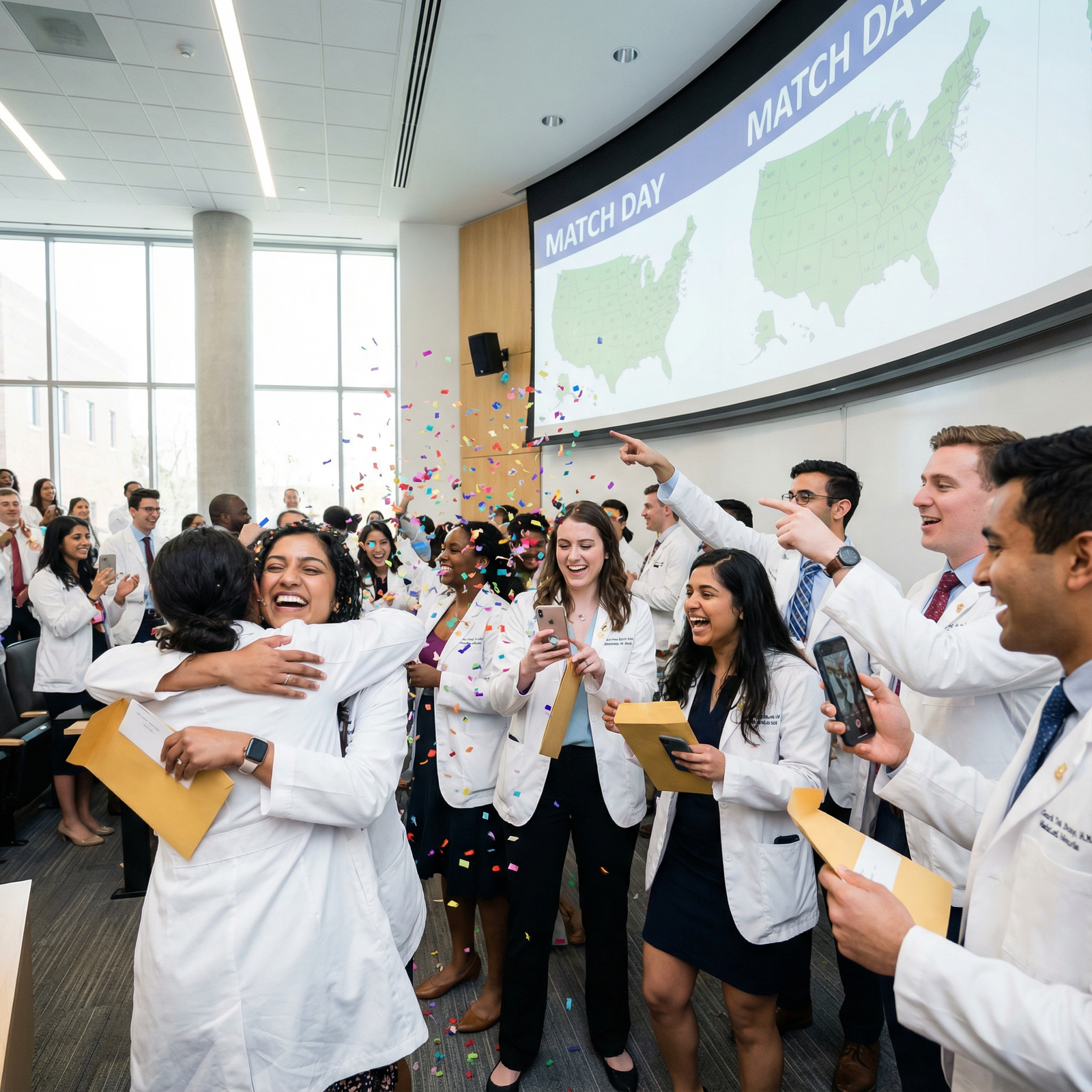
Match Day is one of the most emotional and defining moments in a medical career. The envelope opens, your residency preparation feels suddenly real, and the next chapter of your professional life comes into focus. But after the photos, social media posts, and celebrations, many students are left asking: What actually happens now?
This guide walks you step-by-step through what to expect after Match Day—from immediate next steps and logistics, to thriving in residency, protecting your well-being, and planning your longer-term medical career.
Whether you’re thrilled with your match, still processing mixed emotions, or somewhere in between, understanding the post-match landscape can help you move forward with clarity and confidence.
1. Match Day: Celebrate, Process, and Communicate
Match Day is more than a placement announcement—it’s a milestone in your identity as a physician-in-training.
1.1 Celebrate Intentionally
You’ve invested years into getting here. Allow yourself to fully acknowledge that.
Share the news thoughtfully
- Call or video chat with close family and friends who supported you through exams, rotations, and interviews.
- Share on social media if you’re comfortable—but remember, not everyone matched or got their top choice. Lead with gratitude and sensitivity.
- Consider a short email or message to mentors, letter writers, and advisors thanking them and updating them on where you matched.
Mark the occasion
- Attend your school’s Match Day celebration or organize a small gathering with classmates, even if virtual.
- Take photos and write down a few thoughts about how you feel—it can be powerful to look back on later in your career.
1.2 Give Yourself Space to Process
Even if you matched well, emotions can be complex:
- You may be excited about the specialty but anxious about the location.
- You may have matched your top program but feel imposter syndrome.
- You may be disappointed with your result but still relieved to have matched.
All of these are normal.
Practical ways to process:
- Journal how you feel about:
- Your new city
- Your training program
- Your specialty decision
- Talk with classmates who had a similar outcome—or a very different one—to broaden your perspective.
- Schedule a debrief with a trusted mentor or advisor to discuss how your Match result fits into your long-term medical career goals.
Remember: Match Day is a pivotal moment, but it does not permanently define your worth, potential, or the entirety of your future options as a physician.
2. Post-Match Logistics: Documentation, Housing, and Finances
Once the initial excitement settles, you’ll move into a more practical phase of residency preparation. Getting organized early reduces stress and allows you to focus on graduating and enjoying your final months of medical school.

2.1 Documentation and Licensing Essentials
Requirements vary by state and specialty, but common steps include:
State Medical Licensure or Training License
Most interns work under a training license or a limited medical license, not a full independent license.
- Check your residency program’s onboarding portal for:
- State licensing instructions
- Deadlines (often several months before July 1)
- Required forms and background checks
- Gather documents early, such as:
- Official medical school transcripts
- USMLE/COMLEX score reports
- Passport or government ID
- Immunization records and TB testing
- Social Security card (for payroll in the U.S.)
Licensing delays can postpone your start date or ability to work—treat these tasks as time-sensitive.
Final Examinations and Certifications
Depending on your path and specialty:
- USMLE/COMLEX
- Ensure you’ve completed any remaining exams required by your program (e.g., COMLEX Level 2 or USMLE Step exams).
- Track any score report deadlines your institution or program may have.
- ACLS/BLS/ATLS/NRP/PALS
- Many residencies require Advanced Cardiac Life Support (ACLS) and Basic Life Support (BLS) before orientation.
- Certain specialties may also require:
- PALS (Pediatrics)
- NRP (Neonatal Resuscitation, for OB/GYN or Pediatrics)
- ATLS (for Surgery, EM, etc.)
- Ask your program which courses they provide versus which you must obtain beforehand.
2.2 Relocation and Housing
If you’re moving for residency, relocation is one of the biggest practical challenges after Match Day.
Steps to streamline the move:
Research your new city early
- Commute patterns and typical resident call schedules
- Neighborhood safety, cost of living, and proximity to the hospital
- Access to grocery stores, gyms, and public transport
Connect with current residents
- Ask about recommended apartment complexes or neighborhoods.
- Clarify whether on-call rooms are reliable or if you’ll often need to drive in at night.
- Get realistic insight into parking, traffic, and public transit options.
Plan your housing timeline
- Aim to secure housing at least 1–2 months before your start date, if possible.
- Consider short-term leasing or month-to-month options if you’re unfamiliar with the city.
- If moving with a partner or family, discuss childcare, schools, and employment resources.
Budget for moving costs
- Moving truck or shipping fees
- Deposits and first month’s rent
- Utility setup costs and renter’s insurance
Keep important residency documents with you during the move—not in checked luggage or moving trucks.
2.3 Financial Planning: From Student to Resident Income
Transitioning from student status to a resident salary affects loans, taxes, and day-to-day budgeting.
Build a Basic Budget
Resident salaries are modest compared to attending income but often higher than typical student income. To avoid financial stress:
- Estimate your after-tax monthly pay.
- Subtract:
- Rent/mortgage and utilities
- Food and transportation
- Loan payments (see below)
- Insurance (health, disability, renter’s)
- Allocate some amount—however small—to:
- Emergency savings
- Retirement (if your institution offers a 401(k)/403(b) with match)
Student Loans and Repayment Strategy
- Learn about:
- Income-Driven Repayment (IDR) plans
- Public Service Loan Forgiveness (PSLF) if your hospital is a qualifying employer
- Set a reminder to update your income status shortly after starting residency so your payments can be recalculated appropriately.
- Consider a meeting with a financial planner who understands physicians’ unique timelines.
3. Starting Residency Strong: Professionalism, Networking, and Culture
Residency is where your identity as a physician truly takes shape. The early months set the tone for your professional relationships and learning environment.
3.1 Understanding Program Culture and Expectations
Most programs have a structured orientation that covers:
- Electronic health record (EHR) training
- Hospital policies and safety protocols
- Duty hour rules and scheduling systems
- Wellness resources and support services
Use this time to:
- Clarify expectations about:
- Communication with attendings
- Documentation and note-writing
- Handoffs and sign-out
- Learn who does what:
- Chief residents’ roles
- Program coordinator’s responsibilities
- How to escalate clinical concerns
Being proactive, respectful, and curious in the first weeks can leave a strong impression and make later challenges easier to manage.
3.2 Strategic Networking in Residency
Networking in residency is less about collecting business cards and more about building long-term professional relationships.
Build Relationships with Supervisors and Mentors
- Request a brief meeting with your program director and key faculty:
- Share your career interests (e.g., fellowship, academics, community practice).
- Ask what successful residents do differently in your program.
- Identify potential mentors:
- A research mentor for scholarly projects
- A clinical mentor in your desired subspecialty
- A wellness or “life” mentor for career/life integration
Mentors can later support you with fellowship or job applications, letters of recommendation, and career pivots.
Connect with Fellow Residents and Interprofessional Teams
- Your co-residents will be your primary support system:
- Join group chats or social events.
- Share study schedules or board prep resources.
- Normalize talking about struggles and imposter syndrome.
- Build rapport with:
- Nurses, pharmacists, social workers, and case managers.
- These relationships improve patient care and make your daily work more manageable.
Engage in the Larger Professional Community
- Consider joining:
- National specialty societies (often with discounted resident rates).
- Local or state medical societies or advocacy groups.
- Attend regional or national conferences if possible:
- Present a poster or oral abstract if you have research.
- Introduce yourself to leaders in programs or fields that interest you for future fellowship or job opportunities.
Networking throughout residency sets you up for smoother fellowship applications, stronger references, and broader career options.
4. Embracing the Learning Curve: Growth, Feedback, and Self-Care
Residency is demanding by design. How you approach the learning curve—and your own well-being—will shape your experience as much as your clinical skills.

4.1 Clinical Skill Development and Lifelong Learning Habits
Learn Efficiently on the Job
- Treat each patient as a learning opportunity:
- Ask yourself, “What’s one question this case raises that I don’t fully understand?”
- Read a short, focused article or guideline during downtime or after your shift.
- Keep a running list (digital or small notebook) of:
- Topics to review
- Procedures you want more practice with
- Clinical pearls from attendings
Seek and Use Feedback Intentionally
- Proactively ask for specific feedback:
- “What’s one thing I did well on this admission?”
- “What’s one thing I should do differently next time?”
- When receiving constructive criticism:
- Avoid defensiveness; ask clarifying questions.
- Turn it into an action plan and follow up later to show growth.
Residents who seek and implement feedback are often viewed as highly coachable and professional.
Use Institutional Learning Resources
Most hospitals and programs offer:
- Simulation labs for procedures and emergency scenarios
- Case conferences, grand rounds, and journal clubs
- Online subscriptions to resources like UpToDate, DynaMed, or specialty-specific tools
Take advantage of these early and regularly—they’re part of your compensation and training value.
4.2 Self-Care and Burnout Prevention in Residency
Self-care is not a luxury; it’s a professional responsibility. Burnout can affect your learning, patient care, and personal life.
Build a Sustainable Routine
Even with a variable call schedule, you can prioritize fundamentals:
- Sleep: Protect your sleep windows as much as possible, even if fragmented.
- Nutrition: Pack snacks or quick meals so you’re not relying solely on vending machines.
- Movement: Short walks, stretching, or quick workouts between shifts can be surprisingly effective.
Protect Your Mental Health
- Know the signs of burnout and depression:
- Emotional exhaustion
- Cynicism or detachment
- Decreased sense of accomplishment
- Use available supports:
- Confidential counseling services
- Resident support groups or peer support programs
- Employee assistance programs (EAPs)
Normalize talking about stress and struggle; your peers likely feel the same, even if they’re not saying it.
Maintain Important Relationships
Residency can strain personal relationships if you’re not intentional.
- Communicate realistic expectations about your schedule with partners, friends, and family.
- When off, be present: put down your phone, plan simple but meaningful activities.
- For those in long-distance relationships, schedule regular check-ins or shared virtual activities (movie nights, meals, etc.).
5. Navigating Common Challenges and Unexpected Turns
Even with careful residency preparation, you may face situations that don’t match your expectations—professionally or personally.
5.1 Work–Life Integration, Not Just Work–Life Balance
“Balance” might be unrealistic when you’re on 80-hour weeks, but you can still aim for integration:
- Time blocking
- Decide in advance which off-days will be strictly personal and which can include extra study or research.
- Setting boundaries
- Avoid saying “yes” to every project, committee, or research opportunity—especially early on. Quality over quantity.
- Micro-rest and recovery
- Use short breaks to mentally reset: a brief walk outside, a podcast, guided breathing, or quick stretch.
5.2 Coping with Disappointment or Mismatch
Sometimes your residency or specialty feels different than what you envisioned.
- You might:
- Miss family or your previous city more than expected.
- Question your specialty choice.
- Struggle with a program culture that doesn’t fit you well.
Practical approaches:
- Talk early with:
- A trusted attending
- Chief resident
- Program director or advisor
They can help differentiate between normal adjustment challenges and a deeper mismatch.
- Explore your options:
- Within your specialty: different career paths (academic vs community, inpatient vs outpatient).
- Across specialties: if truly misaligned, discuss the process and implications of seeking a change.
Your path may not be linear, and that’s okay. Many excellent physicians have changed directions during or after training.
6. Looking Beyond Residency: Long-Term Career Planning
Even while you’re adapting to intern year, it helps to keep your broader medical career on the horizon. Small, consistent steps can position you well for what comes after residency.
6.1 Career Development During Residency
Explore Subspecialty and Career Path Options
- Rotate broadly and pay attention to:
- What kind of patients and pathologies you enjoy most
- Which practice environments energize you (ICU vs clinic, OR vs wards)
- The lifestyles and practice patterns of attendings in different roles
- If considering fellowship:
- Learn typical application timelines for your specialty.
- Seek early mentorship from faculty in that subspecialty.
- Build a record of scholarly activity (research, QI projects, teaching) aligned with your interest.
Build a Professional Portfolio
Keep an updated record of:
- Publications, presentations, posters, and QI projects
- Teaching activities (lectures, workshops, small groups)
- Leadership roles (chief resident, committee work, advocacy)
This will make future fellowship or job applications and CV updates much easier.
6.2 Job Search and Transition to Attending Life
For residents not pursuing fellowship—or after fellowship—job planning ideally starts 12–18 months before your desired start date.
- Network strategically
- Use conferences, alumni networks, and faculty connections to learn about positions not widely advertised.
- Talk to recent graduates about their job search experiences and contracts.
- Engage with recruiters and employers
- Understand the difference between hospital-employed, academic, and private practice roles.
- Review contracts carefully, ideally with a healthcare attorney, focusing on:
- Compensation structures
- Non-compete clauses
- Call responsibilities
- Support for continuing medical education (CME)
Being intentional about your first attending job can improve your satisfaction and set you up for long-term success.
FAQ: Common Questions About Life After Match Day and Residency
1. What should I do in the weeks immediately after Match Day?
In the first few weeks:
- Celebrate and share the news with your support system.
- Carefully review any communication from your residency program about onboarding.
- Start collecting documents for credentialing and licensing.
- Begin researching your new city and potential housing options.
- Schedule time with an advisor or mentor to discuss how your Match aligns with your long-term medical career goals.
Use this period to balance celebration with early, low-stress residency preparation.
2. What if I didn’t match or I’m participating in SOAP?
If you did not match:
- Participate actively in the Supplemental Offer and Acceptance Program (SOAP) if eligible, with the help of your dean’s office or advisors.
- If you remain unmatched after SOAP, consider:
- A structured gap year with clinical work, research, or a master’s degree to strengthen your next application.
- Honest reflection and advising to assess whether to reapply in the same specialty, switch specialties, or adjust strategy.
Not matching is painful, but it does not end your path to a medical career. Many physicians have successfully matched on a subsequent attempt and gone on to fulfilling careers.
3. How can I best prepare myself academically before starting residency?
Academic preparation doesn’t have to be overwhelming:
- Review key high-yield topics for your specialty (e.g., common emergencies, bread-and-butter conditions, initial management of critical patients).
- Familiarize yourself with core guidelines or algorithms commonly used in your field.
- Identify trusted resources (books, apps, websites) you’ll use during residency.
- Ask future co-residents or current interns what they wish they had reviewed before starting.
Focus on building a solid foundation, not mastering everything—you will learn a tremendous amount on the job.
4. What if I realize during residency that I want to change specialties?
Changing specialties is possible, but requires planning:
- Talk confidentially with your program director or a trusted mentor as soon as you have serious concerns.
- Clarify whether your dissatisfaction is with the specialty itself, the specific program, or temporary stressors.
- If a change is appropriate:
- Explore open positions in your desired specialty (often through your GME office, specialty societies, or NRMP in a later cycle).
- Prepare to re-enter the Match or arrange a direct transfer if feasible.
Be prepared for logistical and financial implications, including extending your training timeline.
5. How can I protect my well-being and prevent burnout during residency?
To reduce burnout risk:
- Prioritize sleep, nutrition, and physical activity, even in small increments.
- Use institutional wellness resources (counseling, support groups, wellness initiatives).
- Maintain contact with people who know you outside of medicine.
- Set realistic expectations: there will be hard rotations and easier ones—pace yourself accordingly.
- Seek help early if you notice persistent sadness, anxiety, or loss of motivation.
Protecting your well-being is essential not only for you, but for your patients and your long-term medical career.
Life after Match Day is a blend of excitement, uncertainty, and rapid growth. By celebrating meaningfully, organizing your logistics, engaging in professional networking, embracing the steep learning curve, and prioritizing self-care, you’ll be better equipped to navigate residency and beyond—and to become the competent, compassionate physician you set out to be.