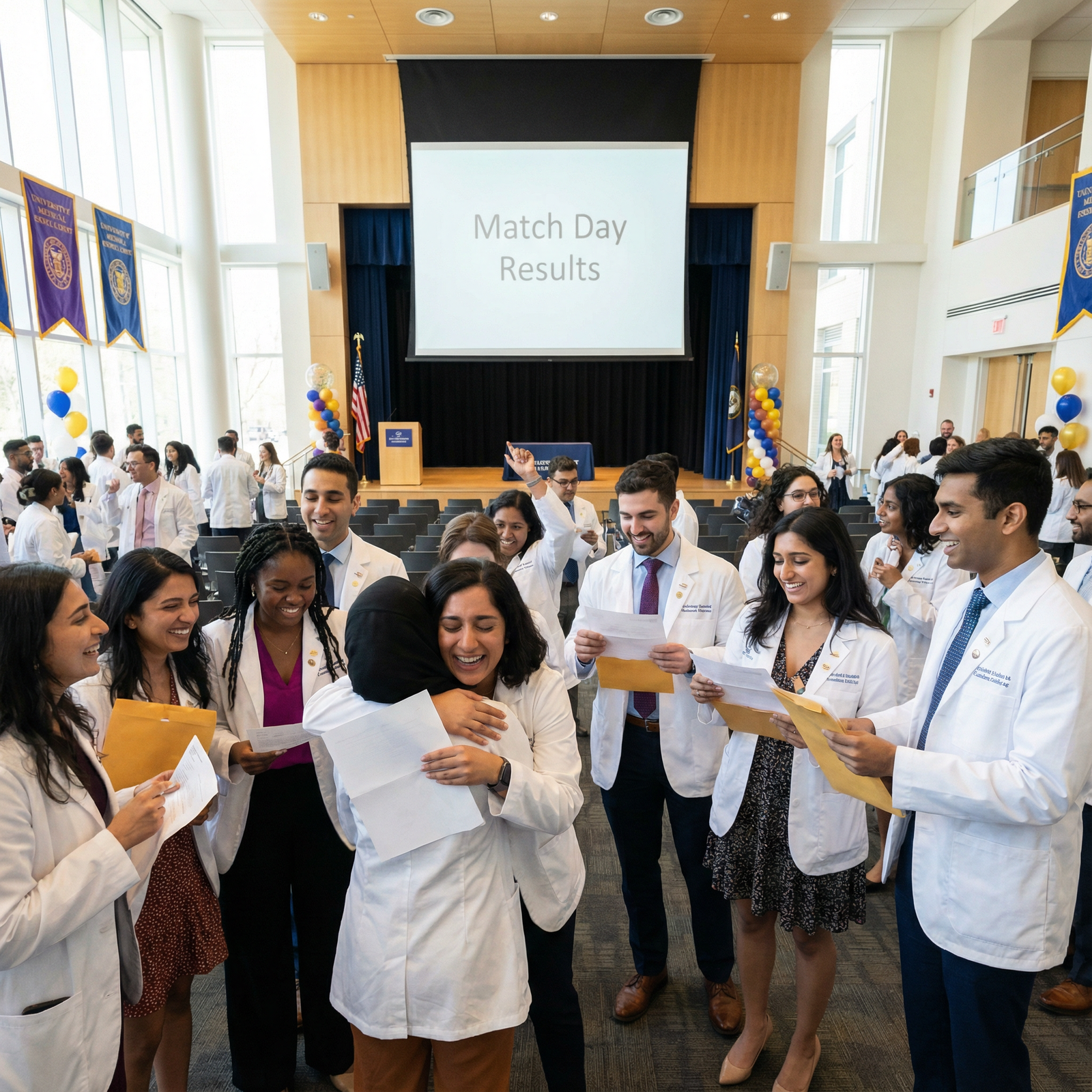
Match Day is one of the most anticipated milestones in medical education. It marks the transition from student to physician-in-training and determines where you will spend the next three to seven years of your life in residency. Yet in the swirl of emotions—excitement, anxiety, relief, and sometimes disappointment—it can be hard to clearly interpret what your Match Day results actually mean and what to do next.
This step-by-step guide is designed to help you decode your Match Day results, understand the process behind them, and make informed decisions about your future in healthcare—whether you matched at your top choice, matched unexpectedly somewhere else, or did not match at all.
Understanding How the Residency Match Works
Before you can fully understand your Match Day results, it helps to clearly grasp how the National Resident Matching Program (NRMP) Match process actually works. Knowing the mechanics can demystify your outcome and guide your next steps.
The Basics of the NRMP Match Algorithm
The NRMP uses a computerized, applicant-proposing algorithm to pair applicants with residency programs. Both applicants and programs submit Rank Order Lists (ROLs), and the algorithm attempts to place each applicant into the most preferred program that also wants them.
Key points:
- The algorithm favors the applicant’s preferences.
- You are never penalized for ranking programs “optimistically.”
- The order on your rank list matters far more than where you think you stand with a program.
In simple terms: the algorithm starts with your first-ranked program and tries to place you there. If that program also ranked you and has available positions, you are tentatively matched. If the program fills with applicants it prefers more (based on its ROL), you may be “bumped” and the algorithm then tries your next choice, and so on, until you are either matched or all options are exhausted.
Key Components of the Match Process
1. Rank Order List (ROL)
The ROL is the backbone of the entire Match system:
- Applicant ROL: You list programs in true order of preference, regardless of how competitive they are.
- Program ROL: Programs rank candidates they interviewed in order of preference.
Important considerations for your ROL:
- Honesty matters: Ranking based on where you believe you will match, rather than where you genuinely want to train, can backfire.
- No “gaming” the algorithm: The system is explicitly designed to reward honest ranking.
2. Match Types and Applicant Categories
Your Match Day experience can vary depending on who you are and which Match you’re in:
- US allopathic seniors (MD seniors)
- US osteopathic seniors (DO seniors)
- International medical graduates (IMGs)
- Previous graduates / reapplicants
There are also different “Match types,” such as:
- Categorical positions (e.g., Internal Medicine, Pediatrics, General Surgery) – full residency training.
- Preliminary positions (typically 1 year, often in Internal Medicine or Surgery) – often followed by an advanced specialty (e.g., Neurology, Radiology, Anesthesiology).
- Advanced positions (e.g., Dermatology, Radiology, Anesthesiology) – start after a required preliminary or transitional year.
Understanding which category you fall into and what position type you ranked helps you interpret your Match Day message more accurately.
3. Match Week vs. Match Day
Many applicants mix these up:
- Monday of Match Week (11 AM ET): You find out whether you matched, not where.
- Monday–Thursday of Match Week: SOAP (Supplemental Offer and Acceptance Program) for those who did not match or are partially matched.
- Friday of Match Week (Match Day at 12 PM local time for most schools): You learn where you matched and your full training path (categorical, preliminary + advanced, etc.).

What Your Match Day Results Actually Show
Once your results go live—often through the NRMP’s R3 system and via your medical school—you’ll see specific information that tells you whether and where you are going for residency.
1. “Matched” – You Secured a Residency Position
If you matched, your results will clarify:
- Specialty (e.g., Internal Medicine, Emergency Medicine, Psychiatry)
- Program name and institution
- Program location (city, state)
- Program type:
- Categorical
- Preliminary
- Transitional
- Advanced
For combined or multi-step training, you may see:
- A categorical program that covers your entire training (e.g., Internal Medicine 3 years)
- A preliminary year and a separate advanced program, often starting the following year
Understanding this structure is crucial for planning:
- Categorical Internal Medicine (3 years): You’ll likely be in one place for the full duration.
- Prelim Medicine (1 year) + Neurology (advanced, 3 years): You may spend your first year at one hospital and the rest at another.
2. “Partially Matched” – Matched to Only Part of Your Training
Some applicants match only to:
- A preliminary / transitional year but not to the advanced specialty, or
- An advanced position but no prelim year
This scenario commonly affects those applying in specialties that require a separate preliminary year (e.g., Radiology, Anesthesiology, Dermatology, PM&R).
If you partially matched:
- You have a position, which is good.
- You still need to secure the missing part of your training (either via SOAP, a later scramble, or the next cycle).
3. “Did Not Match” – No Residency Position This Cycle
If you receive a “Did Not Match” result, it means:
- The algorithm could not place you into any of the programs on your rank list.
- You will receive information about participating in SOAP if eligible.
- It is a painful outcome—but it is not the end of your medical career.
For unmatched candidates, what you do in the first 48–72 hours can significantly shape your next year and future opportunities in healthcare.
4. Delays, Errors, and Discrepancies
Occasionally, technical or administrative issues can occur:
- Incomplete results
- Difficulty accessing the NRMP system
- Information that doesn’t match what you expected (e.g., wrong program name)
If anything seems incorrect:
- Immediately contact NRMP via their official support channels.
- Alert your medical school’s dean’s office or student affairs; they can often help expedite clarifications.
- Document what you see (screenshots, email confirmations) for reference.
Step-by-Step Guide If You Matched
Matching is a significant achievement—years of exams, clerkships, and interviews culminating in a single line of text. After the initial celebration, it’s time to start planning.
Step 1: Allow Yourself to Celebrate
Even if you didn’t match at your #1 choice, you matched into residency—something not everyone accomplishes on their first attempt.
Ways to celebrate thoughtfully:
- Share the news with family, friends, mentors, and faculty.
- Participate in your school’s Match Day ceremony if there is one.
- Take photos or videos to remember the day; it truly is a once-in-a-lifetime milestone.
If your feelings are mixed (e.g., matched but not at your top choice), know that this is normal. You can be both grateful and disappointed at the same time. Both emotions are valid.
Step 2: Understand Your Program and Training Path
Once your Match Day results are in hand:
Clarify your program type and duration
- Categorical vs. prelim vs. advanced vs. transitional.
- Total years of training.
Review your offer carefully
- Check program location, start date, and any specific requirements.
- Confirm whether housing, parking, or other logistics are mentioned in your welcome materials.
Read the program’s website and any welcome packets
- Curriculum structure (rotations, night float systems, didactics).
- Patient population (community vs. academic center, rural vs. urban).
- Call schedules and typical workload.
Understanding what awaits you can help reduce anxiety and make your transition smoother.
Step 3: Connect Early With Your Residency Program
Early connection sets a positive tone:
- Respond promptly to any welcome emails from program leadership or coordinators.
- Join group chats, Slack channels, or social media groups for incoming interns.
- Reach out to current residents (especially those who share your interests or background) to ask about:
- Housing recommendations
- Commute times
- How to prepare clinically
- The culture of the program
This early networking doubles as informal career guidance and can help you integrate more quickly once you arrive.
Step 4: Plan Your Transition From Medical School to Residency
Key logistical and professional tasks:
Administrative paperwork
- Employment contracts, benefits, HR onboarding.
- Drug screening, background checks, immunization records.
- State medical training license applications, if required.
Relocation planning
- Decide on your moving timeline and budget.
- Start searching for housing (consider proximity to hospital, safety, cost).
- If moving with a partner or family, align timelines and expectations.
Clinical preparation
- Brush up on bread-and-butter cases in your specialty.
- Ask residents which references or apps they actually use on the wards.
- Consider reading intern “survival guides” for your specialty.
Financial planning
- Build a basic post-graduation budget (consider student loan payments, moving costs, housing).
- Explore public service loan forgiveness and income-driven repayment options early.
Step 5: Reflect on Your Match and Long-Term Career Goals
Even if you matched at your top choice, take time to:
- Reflect on what kind of physician you hope to become.
- Identify your interests within the specialty (e.g., hospitalist vs. fellowship, academic vs. community practice).
- Keep an open mind—many residents discover new passions during training (e.g., medical education, research, health policy).
Match Day is not the final destination; it’s a major step in a career that will continue to evolve.
Step-by-Step Guide If You Did Not Match
Not matching is deeply painful, especially after years of effort. However, many respected physicians in every specialty have walked this path and built meaningful, successful careers. The coming days are about two parallel tasks: managing the immediate logistics (SOAP or next steps) and caring for your emotional well-being.
Step 1: Take Care of Yourself—Emotionally and Practically
It’s normal to feel:
- Shock, disbelief, or numbness
- Shame or embarrassment
- Fear about your future in medicine
First actions:
- Give yourself permission to feel upset; this is a major loss.
- Lean on trusted friends, family, mentors, or mental health professionals.
- Limit social media if it intensifies negative feelings.
- If your school offers wellness or counseling services, consider using them.
You are not alone, and not matching does not define your worth as a future physician.
Step 2: Understand the SOAP (Supplemental Offer and Acceptance Program)
SOAP exists specifically to help unmatched or partially matched applicants secure unfilled residency positions during Match Week.
Basic SOAP structure:
- Eligibility: Determined by NRMP and communicated on Monday of Match Week.
- List of unfilled programs: Released to SOAP-eligible applicants and their schools.
- Application rounds: Applicants submit applications via ERAS to available programs; programs review and then extend offers in multiple rounds.
- Offers and acceptances: You may receive offers during specific time windows; you can accept one position.
Action steps during SOAP:
- Meet immediately with your dean’s office or career advising team.
- Review your application’s strengths and weaknesses.
- Identify realistic specialty and program fits from the unfilled list.
- Broaden your scope strategically.
- Consider related or less competitive specialties that genuinely interest you.
- Keep an eye on program geography, program culture, and your long-term goals.
- Prepare concise, compelling communication.
- Update your personal statement to reflect flexibility and insight.
- Be ready for quick virtual interviews.
While SOAP moves rapidly, thoughtful strategy still matters. Balance the urgency of securing a position with authenticity about your interests.
Step 3: If You Remain Unmatched After SOAP
If you do not secure a position through SOAP, your path is longer, but still viable. At this point, shift from emergency response to strategic planning for the next cycle.
Key questions to explore with advisors or mentors:
Specialty choice
- Is your chosen specialty ultra-competitive?
- Would a less competitive but still satisfying specialty better align with your credentials and goals?
Application profile
- USMLE/COMLEX scores, clerkship performance, professionalism evaluations.
- Number and quality of interviews you received.
- Strength and specificity of letters of recommendation.
Gaps or red flags
- Unexplained leaves, professionalism concerns, exam failures.
- Limited clinical experience in the US (for IMGs).
Potential productive gap-year options:
- Clinical research positions (especially in your target specialty).
- Dedicated clinical roles (e.g., research assistant, clinical fellowships for IMGs, hospitalist scribe roles).
- Teaching or academic roles (e.g., anatomy lab instructor, preclinical course assistant).
- Additional clinical experience (subinternships, observerships, externships).
Choose roles that:
- Keep you clinically engaged.
- Connect you with mentors who can advocate for you.
- Strengthen specific weaknesses in your prior application.
Step 4: Rebuilding Confidence and Crafting a Stronger Application
Over the next months:
- Develop a clear narrative: Be prepared to explain what you learned from not matching, how you’ve grown, and why you’re now a stronger candidate.
- Strengthen your portfolio:
- Seek new letters of recommendation from supervisors who know your work well.
- Present or publish research, even in smaller venues.
- Highlight leadership, teaching, or quality improvement projects.
- Seek structured career guidance:
- Meet regularly with your school’s career advisors.
- Find a mentor in your target specialty (or a related specialty if you’re adjusting your plan).
- Consider external advising resources if needed.
Your unmatched year can become a powerful story of resilience, maturity, and dedication if you approach it strategically.

Long-Term Perspective: Match Day as One Chapter in Your Medical Career
Match Day feels definitive, but it is only one chapter in a much longer story. Many trajectories in healthcare are nonlinear—people change specialties, reapply, pursue additional training, or pivot into academic, leadership, or policy roles.
If You Matched at a Lower-Ranked or Unexpected Program
It’s common to worry:
- “Will this hurt my fellowship chances?”
- “Did I ruin my career by not matching at a big-name institution?”
Reality checks:
- Residents from a wide variety of programs match into competitive fellowships every year.
- Your performance in residency (clinical excellence, exams, letters, scholarly activity) often matters more than your program’s name.
- Strong mentorship, a supportive culture, and good training volume can outweigh prestige.
Focus on:
- Being coachable and hardworking.
- Building relationships with faculty and peers.
- Taking advantage of opportunities offered by your program.
If You’re Preparing to Reapply in a Future Cycle
Adopt a long-term mindset:
- Many applicants match successfully on their second or third attempt.
- The extra year can set you up for a more thoughtful, focused, mature career path.
- There is no single “right” timeline for becoming a practicing physician.
Your future patients will care about the kind of doctor you are, not how many attempts it took you to match.
Frequently Asked Questions About Match Day Results and Next Steps
1. What is the difference between SOAP and the regular Match process?
The regular Match process:
- Is driven by the NRMP algorithm.
- Uses Rank Order Lists from both applicants and programs.
- Occurs once per cycle, culminating in Match Day.
The Supplemental Offer and Acceptance Program (SOAP):
- Occurs during Match Week after the main algorithm has run.
- Is only for applicants who are unmatched or partially matched and are SOAP-eligible.
- Involves:
- A list of programs with unfilled positions.
- Applicants sending targeted applications through ERAS.
- Programs extending offers in several timed “rounds.”
- Ends when applicants either accept a position or complete the process without a match.
SOAP is more compressed and transactional than the main Match, but it can provide a critical pathway into residency.
2. Can I apply for residency again if I didn’t match?
Yes. You can absolutely reapply in the next residency cycle. Many physicians who did not match on their first attempt eventually:
- Secure positions in their original specialty.
- Pivot to closely related specialties where they thrive.
- Build distinguished careers in clinical practice, teaching, or research.
To increase your chances on a reapplication:
- Conduct an honest review of your previous application with advisors.
- Address weakness areas (exam scores, clinical performance, lack of experience, letters).
- Use your gap year to gain meaningful clinical, research, or educational experience.
- Craft a compelling personal statement that explains your growth since the prior cycle.
3. What resources are available for unmatched candidates?
Unmatched candidates can access multiple support systems:
Medical school resources
- Dean’s office and student affairs.
- Career advisors and faculty mentors.
- Wellness and mental health services.
National organizations
- NRMP guidance materials on SOAP and reapplication.
- Specialty societies (e.g., ACP, AAFP, ACEP) that sometimes offer mentoring or networking.
Peer networks
- Online forums and social media groups for unmatched applicants.
- Alumni who previously went unmatched and then successfully matched.
Professional services (optional)
- Application editing, interview coaching, or advising services—best used as supplements to, not replacements for, your school’s support.
4. Should I accept any residency position offered during SOAP?
Not automatically. During SOAP, time pressure is intense, but your decision still shapes your career and life for years. Consider:
- Specialty fit: Can you see yourself practicing in this field long term, or is it at least aligned with your broader interests?
- Program environment: Ask about culture, workload, supervision, and support.
- Geography and personal situation: Factor in family, financial needs, and feasibility of relocation.
However, in some circumstances—especially if you have struggled significantly to match—a SOAP position in a less preferred specialty may still be a valuable foothold in the healthcare system. Discuss trade-offs carefully with mentors and advisors before deciding.
5. How can I stay informed and connected with NRMP and residency programs?
To stay updated:
Check the NRMP website regularly for:
- Official timelines and deadlines.
- Policy updates.
- SOAP and Match guidance.
Monitor your email closely during Match Week, SOAP, and the onboarding period:
- Watch for communications from NRMP, ERAS, and programs.
- Keep your contact information up to date.
Use your medical school’s channels:
- Many schools share updates via class listservs, online portals, or deans’ newsletters.
Staying informed allows you to respond quickly to time-sensitive opportunities or requirements.
Match Day is charged with emotion, but it is not the final verdict on your potential as a physician. Whether you matched into your dream residency, found yourself somewhere unexpected, or are regrouping after not matching, you still have multiple paths forward in medicine.
By understanding how the Match works, carefully decoding your results, seeking timely career guidance, and taking deliberate next steps, you can navigate this transition with clarity and resilience—and continue building a meaningful, impactful career in healthcare.