
The month before internship makes or breaks your first three months as a resident. Most people waste it. You will not.
You’ve got two choices from May to June: drift, or run a tight pre‑internship playbook. At this point, you do not need more vague “rest and recharge” advice. You need a week‑by‑week, then day‑by‑day plan for studying, scheduling, and life admin so that July 1 does not hit like a truck.
Let’s walk it in order.
Big Picture: Your 8‑Week Runway (Mid‑May to June 30)
Here’s the frame: everything you do now should serve one of three goals:
- Prevent crises in July–August
- Make you safe and functional on day one
- Buy back sleep and sanity later
If something doesn’t do at least one of those, it’s optional.
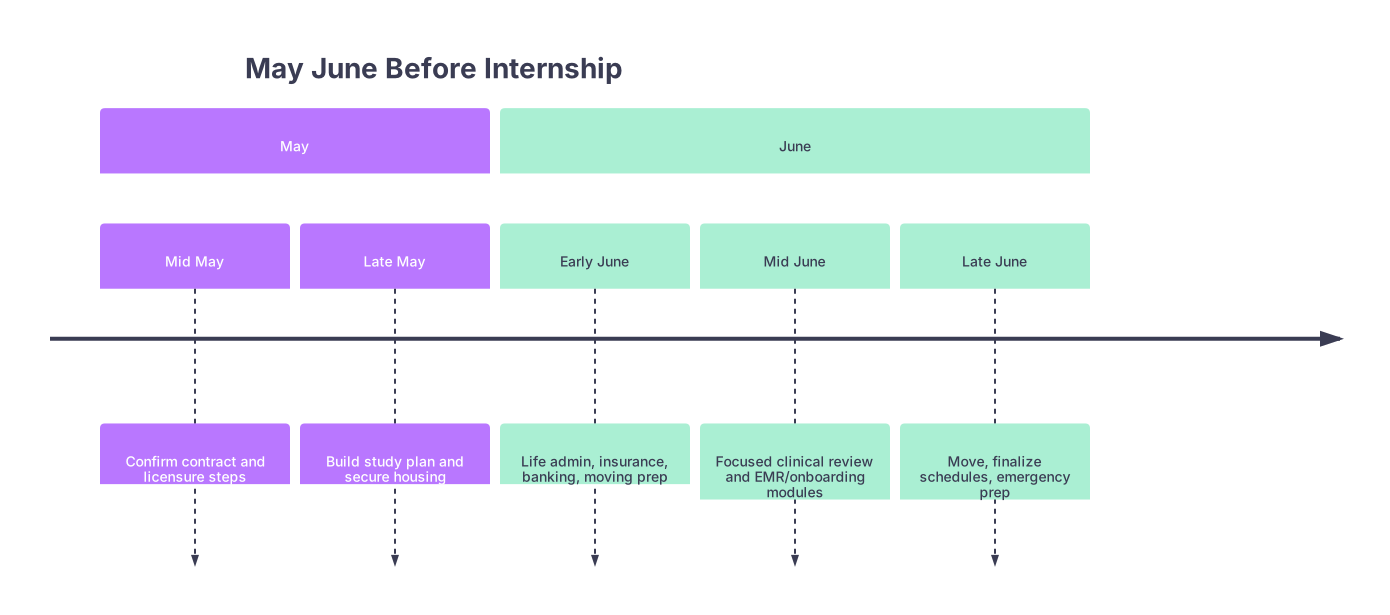
At this point in the year (post–Match, pre‑orientation), your timeline looks roughly like this:
| Period | Event |
|---|---|
| May - Mid May | Confirm contract and licensure steps |
| May - Late May | Build study plan and secure housing |
| June - Early June | Life admin, insurance, banking, moving prep |
| June - Mid June | Focused clinical review and EMR/onboarding modules |
| June - Late June | Move, finalize schedules, emergency prep |
Keep that arc in mind as we zoom in.
Mid–Late May: Lock the Foundations
At this point you should stop thinking like a student and start acting like incoming staff. The hospital expects you to be ready; they’re not going to chase you.
Week 1 (Mid–May): Paperwork and Protection
Your job this week: remove any chance that HR, licensing, or credentialing delay your start.
By the end of this week you should have:
- Signed and returned your contract
- Submitted every “pending” item in your onboarding portal
- A clear list of remaining licensing/credentialing steps, with dates
Start the week like this:
-
- Confirm your state medical license status (temporary vs full).
- Check:
- Background checks complete?
- Fingerprinting done?
- Notary forms submitted?
- If anything is unclear, email GME now, not “next week.” Credentialing delays are how people end up starting late or scrambling.
HR and benefits
- Log into the hospital HR/Onboarding portal.
- Complete:
- I‑9 and tax forms (W‑4, state withholding)
- Direct deposit info
- Immunization documentation
- Drug screen appointment (if required)
- Screenshot or PDF every confirmation page. You’ll thank yourself when something “goes missing.”
Malpractice and contracts
- Verify:
- Start date and expected hours
- Moonlighting policy (if applicable)
- Malpractice coverage (claims‑made vs occurrence)
- If you do not understand a clause, ask a current resident or program coordinator for translation. Lawyers are great, but residents know what actually matters.
- Verify:
Program communication
- Check your new hospital email and set it up on your phone.
- Read every email with “orientation,” “schedule,” or “onboarding” in the subject.
- Create one folder called “Residency – Critical” and move anything you might need again.
At this point you should have zero “unread” program emails and zero unanswered portal tasks.
Week 2 (Late May): Housing, Schedules, and Baseline Study Plan
Now you stabilize your life logistics and design your study framework.
- Confirm:
- Lease signed or move‑in date scheduled
- Parking or transit plan to the hospital
- Approximate commute time during rush hour
- Do at least one real commute test at the time you’ll usually be driving or taking transit. Do not guess.
Schedules
You’ll get a draft master schedule or at least your first rotation block.
At this point you should:
- Identify:
- Your July rotation
- Call schedule (nights, weekends, 24‑hour call if applicable)
- Create a simple calendar (Google, Outlook, whatever) and block:
- Orientation days
- First rotation dates
- Call shifts as “all day busy” or “no plans”
This is your skeleton. Everything else fits around it.
Study plan basics
Stop pretending you’ll read 10 hours a day. You won’t. Build a realistic structure.
You want a 4–6 week pre‑intern curriculum with:
- 60–90 minutes / day of focused clinical review
- 20–30 minutes / day of question‑based learning (yes, even pre‑intern)
- A short, high‑yield procedures/EMR/safety checklist for your specialty
For example, if you’re starting internal medicine:
- Core resources:
- Pocket Medicine
- MKSAP Qs or UWorld IM Qs (small daily dose, not a marathon)
- A short “intern boot camp” series if your program provides one
For surgery:
- Core resources:
- Surgical Recall (for quick call prep)
- DeVirgilio or equivalent for cases
- Basic knot‑tying and suturing practice schedule
Write this down as a weekly template, not vague intentions.
Early June: Build Systems Before You’re Exhausted
By June, your paperwork should be mostly done. Now you build the invisible scaffolding: banking, insurance, phone, health, and home systems that prevent mid‑call disasters.
Week 3 (Early June): Money, Insurance, and Essentials
At this point you should be acting like you’re about to take a pay cut and a sleep cut. Because you are.
| Item | Target Timing |
|---|---|
| Direct deposit set | Mid May |
| Emergency fund | Early June |
| Disability insurance | Early June |
| Budget draft | Early June |
| Credit cards updated | Early June |
Money and banking
- Confirm direct deposit routing and account numbers.
- Set up:
- Rent and utilities on auto‑pay
- Minimum credit card payment on auto‑pay
- Create a bare‑bones budget:
- Rent, utilities, insurance, loan payments
- Food and transport
- Aim for 1–2 months of expenses in an emergency fund if possible. If not possible, still track cash tightly.
Insurance
- Health:
- Review your residency health plan options; pick and enroll.
- Confirm coverage start date (often July 1).
- Disability:
- If you don’t have own‑occupation coverage, this is the last semi‑calm moment to get it.
- Renters:
- Cheap, boring, but mandatory. Get a policy and list any required building/hospital entities if needed.
Phone, Internet, and IDs
- Make sure:
- Your phone plan is stable and has good coverage near the hospital.
- You’ll have home internet up and running by move‑in + 1 day.
- Collect:
- Driver’s license or state ID
- Passport
- Social Security card (or at least know where it is)
Anything you might need for credentialing later should be in a physical folder labeled “Residency Docs.”
Week 4 (Early–Mid June): Medical, Mental, and Home Setup
At this point you should be thinking like your own patient.
Your own medical care
Schedule (for before July if possible):
- Primary care visit:
- Medication refills for at least 3–6 months
- Chronic issues addressed or at least acknowledged
- Dentist:
- Cleaning + any urgent work. You won’t schedule a crown mid‑ICU.
- Ophthalmology/Optometry:
- Extra pair of glasses, updated Rx if needed.
If you take any daily meds, set up automatic refills at a pharmacy near your hospital or home.
Mental health
I’ll say it bluntly: waiting until you’re drowning in October to find a therapist is a rookie mistake.
In early–mid June:
- Identify:
- A therapist or counselor who takes your new insurance (or offers reasonable self‑pay).
- A psychiatrist if you already see one or think you might need one.
- Consider:
- Scheduling a “check‑in” appointment for August or September now. If you don’t need it, you can cancel. If you do, you’ll be grateful.
Home systems
Your goal here is “future me can survive on autopilot.”
Set up:
Food
- Stock pantry with:
- Shelf‑stable basics (rice, pasta, beans, canned soups)
- High‑protein snacks (nuts, protein bars, yogurt if you’ve got a big fridge)
- Pick 2–3 “intern meals” that take <15 minutes:
- Example: frozen veggies + rotisserie chicken + microwave rice.
- Stock pantry with:
Cleaning
- Basic kit: vacuum, all‑purpose cleaner, trash bags, laundry detergent.
- Decide now: are you paying for a monthly cleaning service? If so, schedule first visit for late July.
Sleep
- Blackout curtains or eye mask.
- Earplugs or white noise app.
- If you’re on nights first: consider a cheap box fan + blackout curtain combo now, not later.
At this point your future home should be more or less “livable on day 2,” not a construction zone.
Mid–Late June: Focused Study and Clinical Prep
Now you shift from macro‑life to micro‑competence. This is where studying matters—but only if it’s targeted.
Week 5 (Mid June): Rotation‑Specific Prep
You know your first rotation by now. Use it.
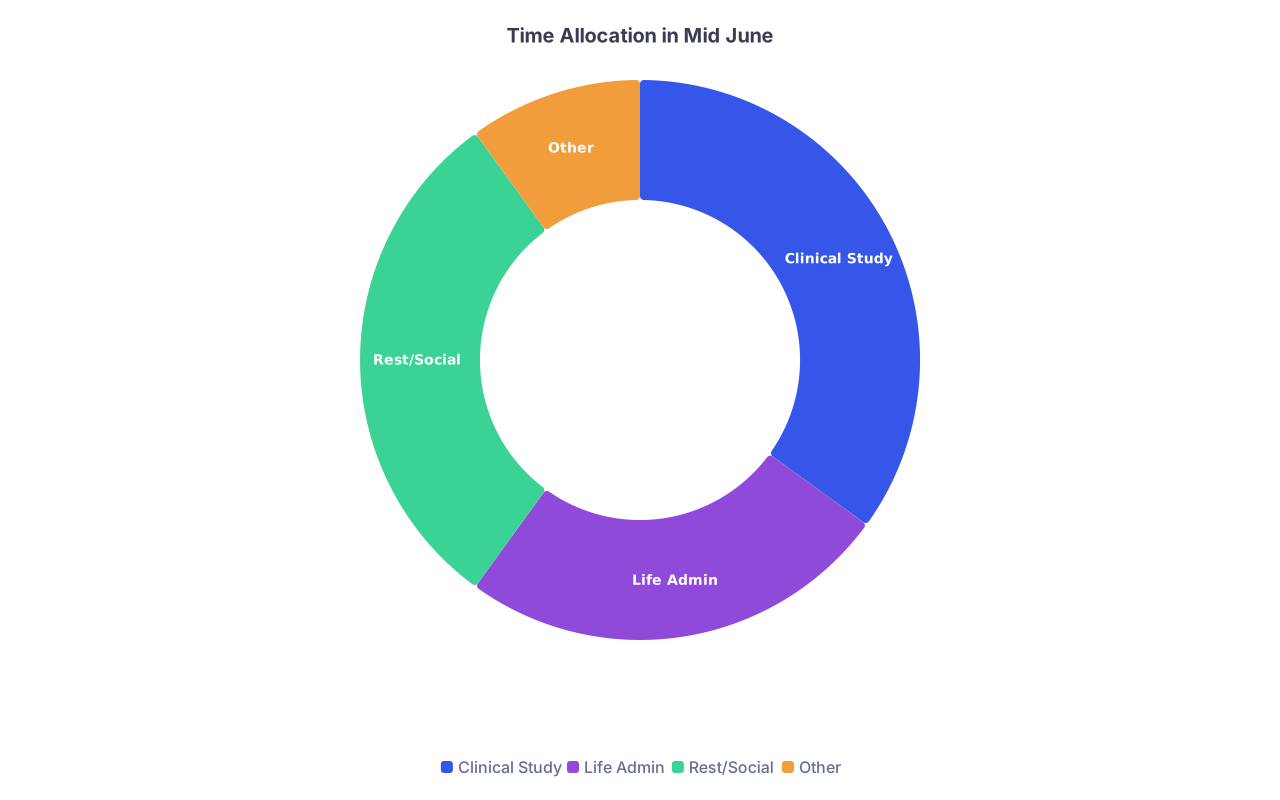
| Category | Value |
|---|---|
| Clinical Study | 35 |
| Life Admin | 25 |
| Rest/Social | 30 |
| Other | 10 |
Aim for something like that balance. Hyper‑studying with zero rest backfires.
Internal Medicine or similar ward month
Your focus:
- Recognition and first‑pass management of:
- Chest pain, dyspnea, altered mental status, sepsis, DKA, GI bleed.
- Daily bread and butter:
- CHF, COPD, pneumonia, UTI/pyelo, cirrhosis complications, AFib.
- Tools:
- Skim Pocket Medicine sections on your most common admitting diagnoses.
- Do 10–20 relevant UWorld/MKSAP questions per day, untimed but focused.
Surgery
Your focus:
- Pre‑op and post‑op orders (fluids, pain control, prophylaxis).
- Common emergencies: SBO, appendicitis, cholecystitis, post‑op fever, bleeding.
- Learn:
- How to write basic post‑op notes and ward progress notes.
- Basic lab/line management (when to pull foley, JP drain basics).
Peds, OB/GYN, EM, Psych
Same principle: identify top 10–15 conditions + emergencies you’re most likely to see week 1. Ignore zebras.
General tasks this week
By the end of week 5 you should:
- Have a short list (1–2 pages) of “first‑call scripts”:
- What to ask in a page about chest pain, fever, hypotension, SOB, “patient fell.”
- Have read:
- Your program’s handbook or intern guide.
- Any EMR tip sheets or workflow docs they sent.
Week 6 (Mid–Late June): EMR, Orders, and On‑the‑Ground Logistics
This week is about how to actually function at the hospital.
If your program offers EMR training modules or a sandbox environment, do them. Do not click randomly for 5 minutes and call it good.
Focus on:
- How to:
- Place admission orders / order sets
- Write progress notes
- Order pain meds safely (doses, frequencies)
- Order imaging with appropriate indications
- Where to find:
- Old notes
- Micro results
- Radiology reports
- Discharge summaries
If they offer a cheat sheet, print it and keep it in your white coat.
Physical logistics
In this period you should:
- Tour the hospital if allowed beforehand:
- Find: call rooms, resident workrooms, cafeteria, ED entrance, main labs, radiology.
- Confirm:
- Parking pass or transit card details.
- Where to pick up your ID badge and scrubs on day one.
- Understand:
- How to page someone.
- What the “rapid response” and “code blue” process looks like on your floors.
Refine your study
Shift your study now to:
- Brief daily review:
- 30–45 minutes clinical reading
- 10–20 questions
- Practical micro‑skills:
- How to present a new admission succinctly.
- How to structure a SOAP note efficiently.
At this point you should feel “rusty but not lost,” not “I’m going to read all of Harrison’s.”
Last 7–10 Days of June: Move, Reset, and Micro‑Prep
Do not cram in the final week. You’ll just show up exhausted.
7–10 Days Before Start: The Move and Setup
Moving
- Aim to be physically moved and sleeping in your new place at least 5–7 days before orientation.
- First 24 hours after move‑in:
- Build the bed.
- Set up a place for your keys, badge, and wallet.
- Unpack kitchen basics and scrub supplies.
Final life admin passes
In this window, you should:
Confirm:
- Orientation date, time, dress code, and location (building + room).
- First rotation start time and where to report.
Prepare:
- One “intern bag” with:
- Pen + backup pen
- Small notebook or note cards
- Pocket reference (or phone app fully downloaded)
- Snacks, water bottle
- One “intern bag” with:
Check:
- Your name and specialty on any rosters or schedules they’ve sent.
- Any outstanding onboarding modules; complete them now.
3–5 Days Before Start: Light Review and Emergency Planning
Now is for sharpening + contingency planning.
Light clinical review
Daily:
- 30–45 minutes:
- Review your “top emergencies” list.
- Skim a few common order sets or note templates.
- No more than 10–15 questions per day—just to keep your brain warm.
Emergency and contingency planning
You want answer keys to “what if everything goes sideways”:
- Who is your:
- First call co‑intern or senior on your service?
- Program coordinator (with phone number saved)?
- GME office main line?
- For your personal life:
- Identify an emergency contact in your new city if you have one.
- Share your basic schedule and hospital info with a family member or close friend.
Sleep transition
If you start on days:
- Lock in a consistent sleep‑wake cycle the last 3–4 days.
- Avoid staying up until 2 AM “because it’s my last free week.” Everyone does that. They all regret it.
If you start on nights:
- Slide your sleep schedule later by 1–2 hours each day.
- Blackout curtain + white noise ready.
The Day Before Orientation: No Heroics
At this point you should not be studying. You should be stabilizing.
Your checklist:
- Lay out:
- Clothes for orientation. Generally business casual unless told otherwise.
- Hospital folder with:
- ID (driver’s license/passport)
- Vaccination card if needed
- Any paperwork they explicitly said to bring
- Pack your bag:
- Notebook, pens, small snack, water bottle, phone charger.
- Walk through:
- Where you’re parking or which train/bus to take.
- What time you’re leaving home (with a 15–20 minute buffer).
Then: light dinner, one episode of something numbing, and bed.
Simple Daily Template for May–June
You do not need a military schedule, but you do need a default day. Something like:
- 30–60 min: Clinical study (AM or early afternoon)
- 20–30 min: Questions or case‑based review
- 30–60 min: Life admin/errands (bank, insurance, moving, etc.)
- The rest: social time, exercise, or actual rest
On busier moving days, compress the study block instead of deleting it completely. Consistency beats intensity here.
The Two Things That Actually Matter
By the time you hit July 1, you want two things:
No avoidable fires.
Contract signed, license clear, benefits active, housing stable, money flowing, medications and health needs handled. Crises will come from medicine, not from your bank app or landlord.Safe, not superhuman, clinical readiness.
You’re not supposed to be an attending. You’re supposed to:- Recognize sick from not sick
- Know first steps for common emergencies
- Use your EMR and paging system without panicking
If you walk into orientation with those two under control, you’re already ahead of a lot of your co‑interns—whether they admit it or not.