
The month before internship makes or breaks your first three months on the wards. Most people waste it. You will not.
This four-week countdown is the difference between showing up to orientation wide‑eyed and overwhelmed… or walking in like someone who already knows how to think and act like an intern. At each point I will tell you exactly what to do, and what can wait.
Overview: Your Four-Week Orientation Countdown
You have four competing priorities:
- Systems & logistics
- Clinical refresh
- Personal life & finances
- Professional identity (how you show up as an intern)
We are going to sequence them. Heavy systems and life setup early. Clinical ramp-up and on‑the‑ground prep late.
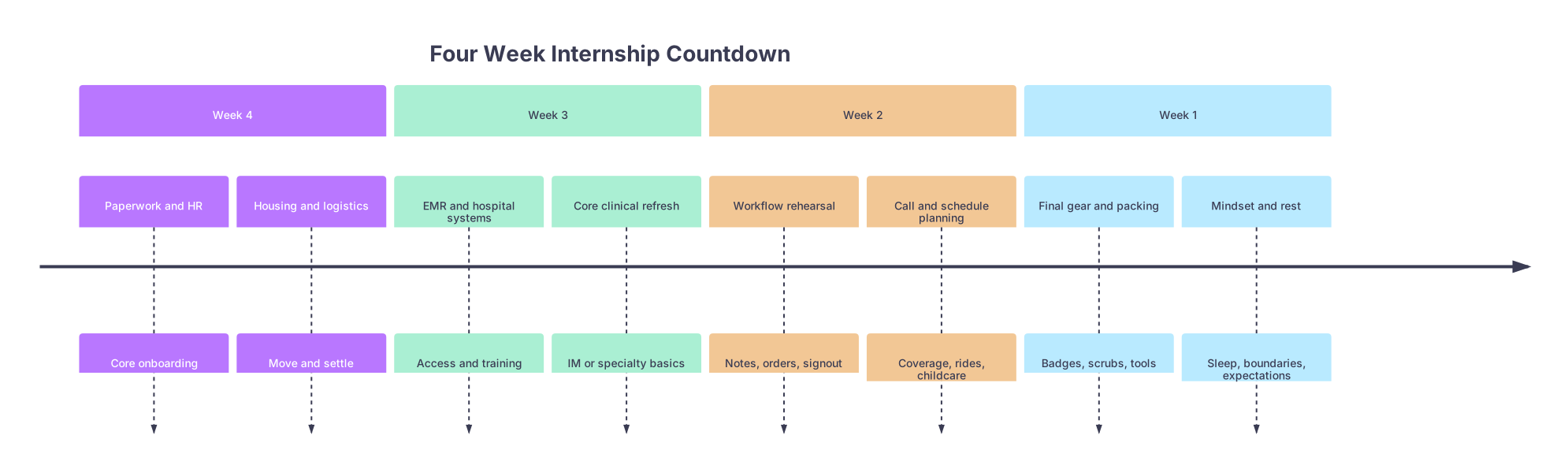
| Period | Event |
|---|---|
| Week 4 - Paperwork and HR | Core onboarding |
| Week 4 - Housing and logistics | Move and settle |
| Week 3 - EMR and hospital systems | Access and training |
| Week 3 - Core clinical refresh | IM or specialty basics |
| Week 2 - Workflow rehearsal | Notes, orders, signout |
| Week 2 - Call and schedule planning | Coverage, rides, childcare |
| Week 1 - Final gear and packing | Badges, scrubs, tools |
| Week 1 - Mindset and rest | Sleep, boundaries, expectations |
At this point you should accept one fact: you will not “finish” everything. The goal is to be 80–90 percent ready in the right places, not 100 percent ready in the wrong ones.
Week 4 Before Orientation: Infrastructure and Non‑Negotiables
At four weeks out, you are not “studying.” You are building the skeleton that will hold your life together when you are Q4 call and post‑call delirious.
Administrative and HR Setup
By the end of this week, you should:
- Have completed 90–100 percent of HR and onboarding tasks.
- Know exactly what remains and when it is due.
Concrete checklist:
- Employment paperwork: contracts signed, I‑9 forms, direct deposit.
- Background checks and drug screen appointments scheduled (or completed).
- Occupational health:
- Immunization records uploaded.
- TB screening completed or scheduled.
- Mask fit testing appointment on your calendar.
- Required online modules:
- HIPAA, compliance, harassment, infection control.
- If your program uses a specific LMS (HealthStream, Cornerstone), confirm login works.
Mistake I see every year: people ignore these emails because they look boring, then scramble the week of orientation when they realize HR will not clear them to start.
Housing, Transportation, and Daily Life
By the end of Week 4, you should be physically and logistically capable of showing up to the hospital at 5:30 a.m. with no drama.
Non‑negotiables:
- Housing:
- Lease signed or renewed.
- Move‑in date confirmed.
- If you are moving cities, movers or truck scheduled.
- Commute:
- Route tested at the actual hour you will commute (traffic at 6 a.m. is different from noon).
- Parking pass requested / public transit card obtained.
- Backup plan if your car dies (rideshare budget, co‑resident carpool).
- Phone & data:
- Reliable smartphone with enough battery life for 12–16 hours.
- Hospital communication apps installed (TigerConnect, Voalte, Epic Haiku/Canto, etc.).

Financial Setup: Stop Future Headaches Now
By this point you should:
- Know when your first paycheck arrives.
- Have a simple, realistic plan for month one.
Core tasks:
- Direct deposit confirmed with HR.
- Student loan status understood:
- Grace period vs repayment start.
- If going for PSLF, servicer and employment certification requirements noted.
- Set up:
- Automatic payment for at least minimums on loans / credit cards.
- Basic monthly budget (rent, food, gas, parking, utilities).
You do not need a full financial plan. You do need to avoid missed payments during your first ICU month.
Personal Commitments and Support Network
Before things get busy, decide what matters and what is realistically maintainable.
By end of Week 4:
- Tell close family / partner what your first 3 months will look like:
- Call frequency expectations.
- That you may be unreliable for events.
- Identify 1–2 “anchors” you will try to protect:
- Weekly dinner with partner.
- Sunday morning call with parents.
- One fitness session per week.
Do not promise more than you can deliver. Interns who pretend they can “keep everything the same” burn out faster.
Week 3 Before Orientation: Systems Access and Clinical Reboot
At this point you should stop thinking like a medical student. Your goal is not to memorize esoteric facts; it is to function inside this hospital, with this EMR, on this team.
Hospital Systems and EMR Access
By the middle of Week 3, you should:
- Have login credentials for:
- Hospital email.
- EMR (Epic, Cerner, Meditech, etc.).
- Paging or secure messaging system.
- Successfully logged in to each at least once.
Your to‑do list:
- Confirm:
- MFA (multi‑factor authentication) set up.
- Remote access/VPN working on your laptop, if provided.
- Skim:
- Any EMR “tip sheets” sent to you.
- Department orientation packets (especially floor maps, codes, who to call for what).
If EMR training videos are available, spread them out this week. 20–30 minutes at a time. Not five hours in one miserable sitting.
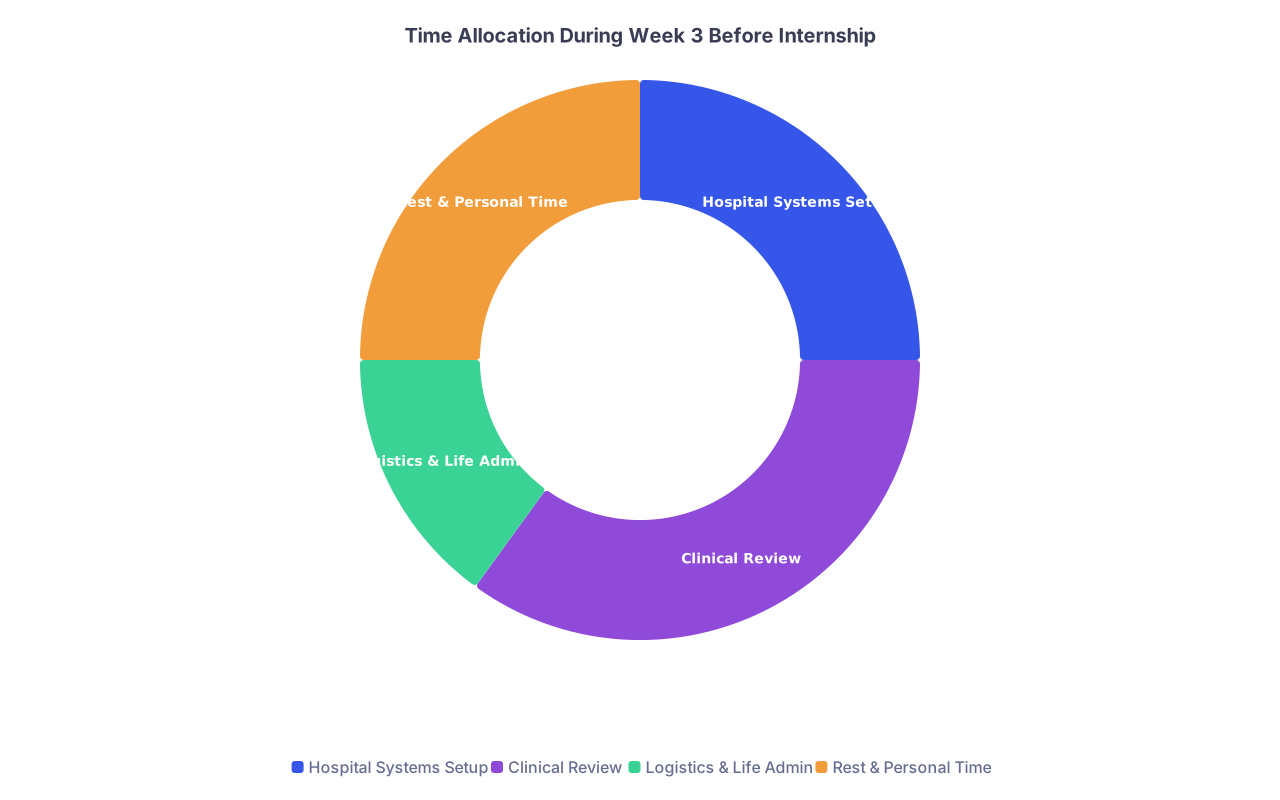
| Category | Value |
|---|---|
| Hospital Systems Setup | 25 |
| Clinical Review | 35 |
| Logistics & Life Admin | 15 |
| Rest & Personal Time | 25 |
Targeted Clinical Review: General, Not Obsessive
Your goal now: dust off the basics, not master subspecialty minutiae.
Focus on:
- For Internal Medicine / Transitional / Preliminary:
- Approach to chest pain, shortness of breath, fever, altered mental status, AKI.
- Initial management of sepsis, DKA, upper GI bleed, COPD/asthma exacerbation.
- Common inpatient meds: anticoagulants, insulin regimens, antibiotics for typical infections.
- For Surgery:
- Post‑op fever differential.
- Fluid and electrolyte management basics.
- DVT prophylaxis, pain control strategies, NPO and diet advancement.
- For Pediatrics:
- Pediatric vitals by age.
- Dehydration assessment.
- Bronchiolitis, asthma, sepsis workup by age.
Structure your study:
- 30–60 minutes a day.
- High-yield resources (Uptodate summaries, MKSAP questions, Step‑Up to Medicine for IM, surgical house officer manuals, etc.).
- One “mini‑topic” per day.
If you catch yourself reading a 20‑page guideline on vasculitis this month, you have wandered off the path.
Week 2 Before Orientation: Workflow, Communication, and Call Prep
At this point you should start acting like an intern in your head. Not just “knowing medicine,” but moving information around efficiently.
Note‑Writing and Order‑Writing Practice
By the end of Week 2, you should be able to write:
- A focused H&P note in < 25 minutes.
- A concise daily progress note in < 10–15 minutes.
- A simple discharge summary structure from memory.
If your program sends you templates or example notes, use them. If not, create your own skeleton:
- H&P:
- ID / CC, HPI with assessment structure, focused ROS, pertinent PMH/meds/allergies, focused exam, data, A/P by problem.
- Progress note:
- Overnight events, subjective, focused objective, salient labs/imaging, 3–7 problem‑based plan.
- Discharge summary:
- Brief hospital course by problem, key labs/imaging, procedures, pending tests, follow-up, discharge meds and instructions.
You can literally open a blank Word or Google Doc and rehearse on old patient cases from MS4. That practice counts.
Signout and Communication
Bad signout is the fastest way to feel unsafe at 3 a.m. Good signout makes night float survivable.
This week you should:
- Learn or design:
- A standard signout format (e.g., “sick, stable, watch, dispo” or I‑PASS).
- How your program expects signout (verbal only, EMR handoff tool, both).
- Practice:
- Taking a complex patient and boiling their story into 3–5 lines.
- Stating ONE or TWO clear “if/then” contingency plans.
Example:
- “67‑year‑old with decompensated cirrhosis admitted with SBP, on day 3 of ceftriaxone. Still mildly hypotensive but improved from admission, MAP >65 on midodrine. If MAP <60 despite fluids, page cross‑cover senior, consider ICU eval. Watch for worsening confusion or GI bleed.”
Efficiency matters more than poetry.
Call, Coverage, and Real‑Life Logistics
By the end of Week 2 you should:
- Know your July schedule.
- Understand your call structure (night float vs 24‑hour call, weekend coverage).
Then do this:
- Block off:
- Key days: orientation, ACLS/BLS days, first call, first ICU or ED shift.
- Arrange:
- Childcare backup plans for nights and weekends.
- Pet care if you will be gone 16+ hours.
- Rides home for the first few post‑call days if you are prone to drowsy driving.
Do not wait until the first Friday call to realize your daycare closes at 6 p.m. and you have no backup.
| Area | Goal by End of Week 2 |
|---|---|
| Notes & Orders | Draft templates and practice 3+ cases |
| Signout | Standard format chosen and rehearsed |
| Schedule | July shifts entered in calendar |
| Call Logistics | Childcare/transport backup confirmed |
| Communication | Paging and handoff expectations known |
Week 1 Before Orientation: Gear, Mindset, and Final Checks
This is not a “cram” week. The smart move is controlled, targeted prep with generous sleep and recovery.
Gear and Physical Setup
By mid‑week, you should have:
- Clothing:
- 5–7 sets of work‑appropriate outfits (or scrubs, if provided).
- Comfortable, waterproof shoes you can stand in for 12+ hours.
- At least one backup pair in case of… fluids.
- White coats:
- Program‑issued coats picked up if available.
- Old med school coats laundered and name badge removed if you will reuse temporarily.
- Tools:
- Stethoscope labeled with your name.
- Small notebook or index cards.
- Pens (plural), highlighters.
- A small portable charger + cable for your phone.
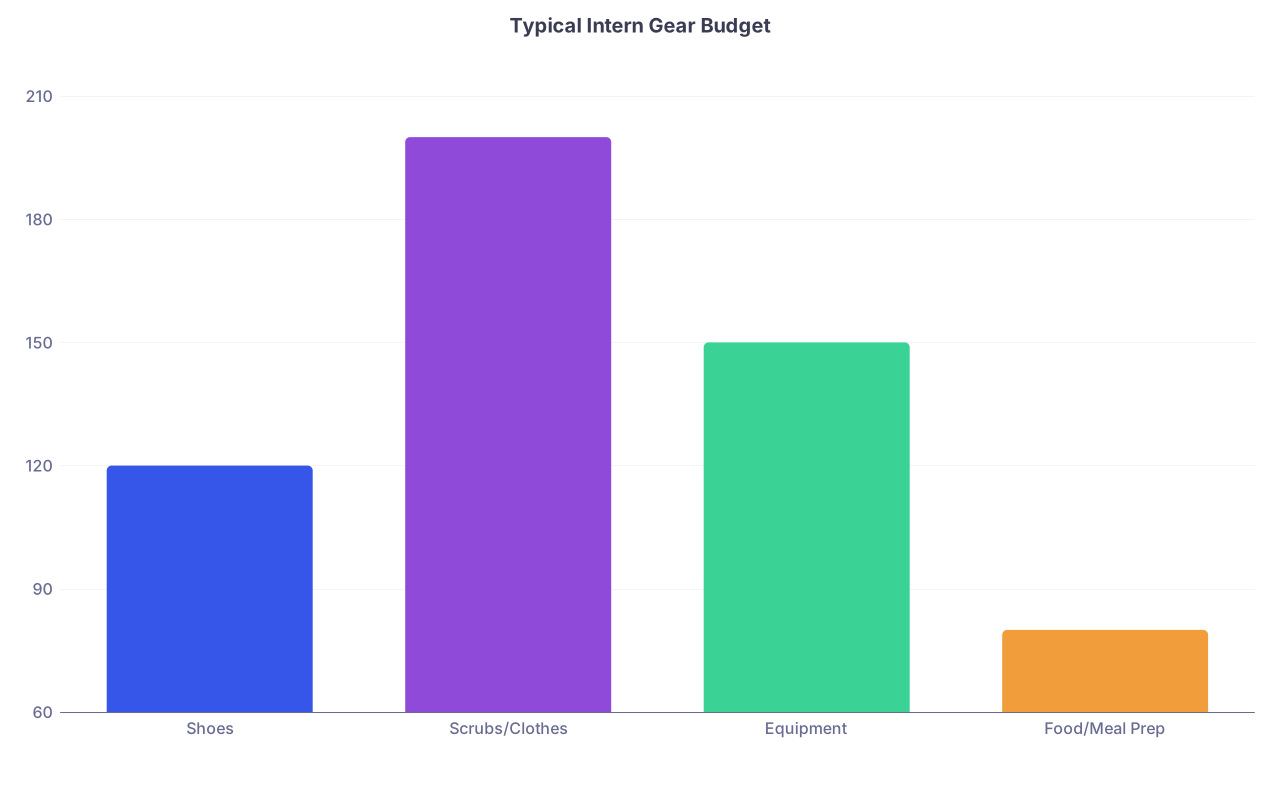
| Category | Value |
|---|---|
| Shoes | 120 |
| Scrubs/Clothes | 200 |
| Equipment | 150 |
| Food/Meal Prep | 80 |
Do not overspend on gadgets you will not use. The $40 heavy multi‑tool in your pocket on day 1 will live in a drawer by day 10.
Mental Rehearsal and Expectation Reset
At this point you should deliberately lower some expectations:
- You will feel slow.
- You will look things up constantly.
- You will miss things and need to be corrected.
That is the job.
Use this week to:
- Re-read:
- Your program’s intern handbook. Focus on: call policies, sick call procedures, evaluation criteria, and escalation hierarchies.
- Clarify:
- Who your first‑month chief/senior is.
- How to reach them if something is unclear the day before orientation.
Do a “day in the life” mental run:
- Alarm time.
- Commute.
- Where you will park.
- Where you enter the building.
- Where orientation check‑in is.
- Where the resident work room is likely to be.
Sounds trivial. It trims a shocking amount of stress.

Sleep, Health, and Burnout Prevention (Before It Starts)
You cannot “bank” sleep long‑term, but you can avoid starting day 1 already depleted.
The final week:
- Aim for:
- A stable sleep schedule aligned as closely as possible with your first rotation.
- Taper:
- Late‑night social events.
- Alcohol and heavy meals late at night.
- Lock in:
- One simple physical routine you can keep:
- 10–15 minutes of movement (walk, push‑ups, stretching) 3 times a week.
- A quick stress relief tool:
- 5‑minute breathing app, short meditation, or brief journaling.
- One simple physical routine you can keep:
You are not becoming a wellness influencer. You are just trying not to flame out by August.
Orientation Week: On-the-Ground Execution
Now you are here. At this point you should stop “planning” and start observing and integrating.
Day 0–1: Learn the Skeleton of Your System
On the first 1–2 days of orientation, your focus is not the lectures. It is the map.
Your goals:
- Physically locate:
- Work rooms
- Call rooms
- Cafeteria / coffee
- Restrooms and locker rooms
- Pharmacy window and blood bank
- Main wards, ICU, ED, radiology
- Identify:
- How codes are called (what number, what phrase).
- How to call a rapid response.
- Where crash carts usually live.
Write these things down. You will forget under stress.
Day 2–3: Understand Expectations and Culture
While others are zoning out during PowerPoints, you are listening for:
- What your program actually cares about for interns:
- Timeliness vs note thoroughness.
- Early signout vs staying late to help.
- Duty hour strictness vs “finish the work.”
- Feedback mechanics:
- How often you are evaluated.
- Which behaviors are repeatedly praised or criticized by PDs and chiefs.
At this point you should ask at least 2–3 pointed questions to a senior or chief:
- “If you could go back to your first month, what would you do differently?”
- “What do interns here get in trouble for most often?”
- “On this service, what does a ‘good’ intern look like to you?”
Write their answers somewhere you will see them in week 1.
Final 24–48 Hours Before First Real Shift
Your checklist the day before you step onto the floors as an actual intern:
- Confirm:
- Start time and location.
- Who you will report to (name of senior or attending).
- What to bring (badge, pager, stethoscope, notebook, any program‑specific forms).
- Pack your bag:
- ID badge, parking pass/transit card.
- Stethoscope, pens, notebook.
- Small snack and water bottle.
- Phone charger.
- Evening routine:
- Light dinner.
- Clothes laid out.
- One or two quick topic reviews relevant to your first rotation (e.g., heart failure for cards, sepsis for ICU).
- Bed early. Seriously.

Core Takeaways
- Front‑load logistics and admin. Week 4 and 3 are for housing, HR, EMR access, and life infrastructure, not for grinding question banks.
- Practice workflows, not trivia. Week 2 and 1 are for notes, orders, signout, communication, and realistic scheduling, plus modest targeted clinical review.
- Protect your bandwidth. Enter orientation rested, geared up, and clear on expectations so you can spend your limited cognitive load on the right thing: becoming a safe, functional intern from day one.