
The way attendings judge you on Day One has almost nothing to do with what you bragged about in your ERAS application.
On Match Day you think they care about your Step 2 score, your research pubs, your away rotations. The truth: by the time you show up for orientation, everyone assumes you’re roughly “good enough” academically. What attendings care about now is whether you’re going to make their lives easier or harder on call next week.
Let me walk you through what actually happens behind the doors you never see.
The Reality Behind “We’re So Excited You Matched Here”
Here’s the part no one says at the welcome dinner.
Program directors and attendings have already labeled your class before you step foot in the hospital. Not as individuals (yet), but as “this looks like a strong class” or “we had to reach a bit this year.” That judgment is based on the list they saw on Match Day, not your smiling face.
Once you arrive, the hierarchy shifts fast:
- PDs stop thinking of you as applicants.
- Chief residents start thinking of you as workload.
- Attendings start thinking of you as liability or asset.
They don’t care about the flowery speeches. They care about: “Can I leave this intern on nights with a PGY-2 and not get sued?”
On Day One, here’s the mental checklist running quietly in every decent attending’s head when they meet you for the first time:
- Are you safe?
- Are you trainable?
- Are you going to vanish when work gets hard?
- Are you going to blow up my day with drama?
And they figure that out faster than you think.
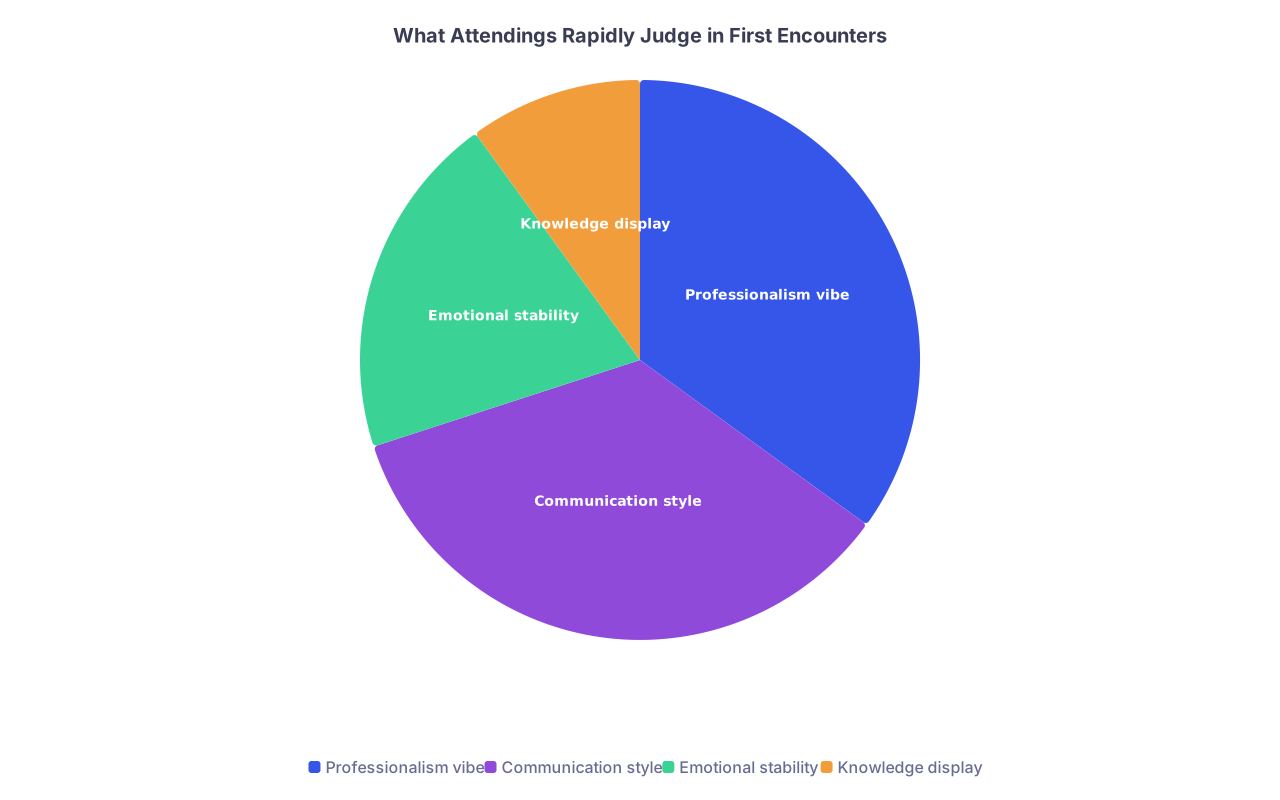
The First 10 Minutes: What They Clock Immediately
| Category | Value |
|---|---|
| Professionalism vibe | 35 |
| Communication style | 35 |
| Emotional stability | 20 |
| Knowledge display | 10 |
You think they’re listening to your intro about your research in sepsis biomarkers. They’re not. They’re doing pattern recognition. Let me break down what they actually notice in the first real interaction.
1. How You Show Up Physically
Yes, appearance matters. Not in a superficial “are you pretty” way. In a “do I trust you with very sick people” way.
They’re looking at:
- Are you on time, or breathless and late to literally your first day?
- Are you dressed like a physician or like a student trying to cosplay as one?
- Is your badge visible, or are you constantly fumbling for it?
I watched an attending in IM at a big-name program in Boston whisper to the chief after orientation: “If that guy shows up late in July, I’m not letting him touch my ICU list.” That intern had been five minutes late to the first morning welcome session. You think no one noticed. They do.
You don’t need a designer suit. You need:
- Clean. Not wrinkled.
- Badge on, visible.
- Shoes you can run in but aren’t destroyed sneakers.
- No backpack exploding with junk. Organized.
All of this signals: “I understand this is a job, not an extension of med school.”
2. Your Baseline Professional Demeanor
This is subtle but brutal.
Attendings subconsciously sort you into three buckets on Day One:
- Looks like a colleague-in-training
- Looks like a student
- Looks like trouble
The “colleague-in-training” crowd does a few things:
They make eye contact. They shake hands or at least nod like an adult, not like a kid meeting a celebrity. Their introduction is short and clear: “I’m Alex, one of the new interns on your team. Good to meet you.” Not a 90-second monologue about where they went to undergrad.
If you over-apologize, talk too quickly, or keep describing yourself as “just an intern,” you slide yourself backwards. They want humility, not self-erasure. Big difference.
The Thing That Matters More Than Your Step Score: How You Think Out Loud

| Step | Description |
|---|---|
| Step 1 | First Interaction |
| Step 2 | Assess clinical reasoning |
| Step 3 | High supervision required |
| Step 4 | Trusted early |
| Step 5 | Slow responsibilities |
| Step 6 | Watch closely |
| Step 7 | Safe communication? |
| Step 8 | Teachable? |
Here’s the part residents never explain well to you: attendings don’t expect you to be clinically brilliant on Day One. They expect you to be coherent.
They test this quietly with very simple prompts:
- “Tell me about the patient in bed 3.”
- “What do you think is going on?”
- “What’s your plan for tonight if they worsen?”
They don’t care if your differential is perfect. They care if your thinking is:
- Structured
- Prioritized
- Honest about uncertainty
If you can say: “I’m not totally sure yet, but here’s what I’m worried about and here’s what I already checked,” you rise fast in their internal ranking.
A lot of nervous new interns do the wrong thing: they start guessing what they think the attending wants to hear, throwing buzzwords and half-remembered guidelines. Attendings sniff that out immediately. They would rather hear, “I don’t know, but here’s how I’ll find out,” than watch you fake confidence.
One trauma attending I know uses the same line with every new intern: “If you ever say ‘I’m fine’ when you have no idea what you’re doing, you’re off my service. I can fix lack of knowledge. I can’t fix lying.”
They’re not looking for encyclopedias. They’re looking for honest problem-solvers.
The Unsexy Trait That Makes You an Attending’s Favorite: Reliability
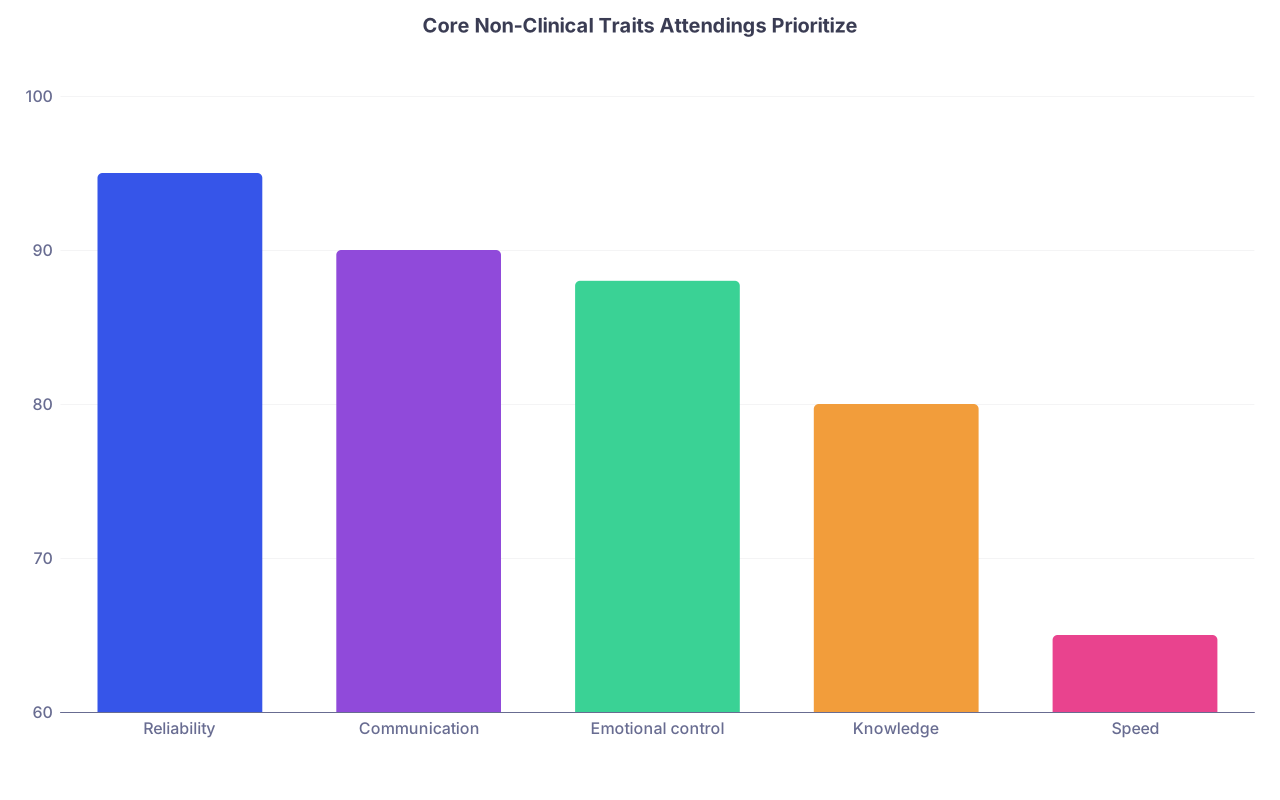
This is the big one. The boring one. The one that actually rules everything.
Attendings quietly track: When they say they’ll do something, does it happen? Every time? Without reminders?
Here’s what they notice in the first week that locks in your reputation:
- Do you write down tasks when they’re mentioned, or nod and forget half of them?
- Do you close the loop? “I called radiology; CT is scheduled for 2 pm.”
- Do you pre-empt problems? “I saw that his creatinine bumped; I reduced the ACE inhibitor and ordered a repeat BMP.”
You think reliability is invisible. It isn’t. Attendings hear from senior residents: “She always closes the loop” or “He needs constant follow-up.”
That becomes your label. It sticks for years.
| Intern Type | What Attendings Hear From Seniors |
|---|---|
| The Reliable One | "If she says it’s done, it’s done." |
| The Ghost | "Disappears when things get busy." |
| The Spinner | "Always looks busy, stuff falls through." |
| The High-Maintenance | "Smart, but constant drama and chaos." |
Out of all of these, attendings will take a solid, slightly slower “Reliable One” over the brilliant but chaotic “High-Maintenance” every single time.
Emotional Stability: Are You Safe Under Pressure?
| Category | Value |
|---|---|
| Reliability | 95 |
| Communication | 90 |
| Emotional control | 88 |
| Knowledge | 80 |
| Speed | 65 |
No one tells you this bluntly enough: attendings are constantly scanning you for emotional volatility.
They’re not measuring whether you feel anxious. Everyone does. They’re measuring whether your anxiety spills onto patients, nurses, and the team.
The red flags they pick up fast:
- You blame others reflexively: “The nurse didn’t tell me.”
- You melt down when given constructive feedback.
- You get visibly rattled by minor setbacks: a lost lab, a busy consult service.
- You complain about “being disrespected” by staff on literally Week One.
I watched a surgery intern implode in July because he confronted an experienced scrub nurse in front of the whole OR about “not supporting him as a learner.” The attending didn’t yell. Just never let that intern near their cases again.
Here’s what stabilizing behavior looks like from an attending’s view:
- You take a hit (criticism, a bad outcome, a rough night) and still function.
- You say “Got it” more than “But…”
- You debrief after the storm, not in the middle of it.
- When you’re overwhelmed, you say, “I need help prioritizing,” not “This is impossible.”
Attendings are looking for: When things get scary at 3 am, will you freeze, explode, or calmly say, “I need backup right now”?
How You Interact With Nurses Tells Them Almost Everything
If you remember one line from this article, remember this:
How you treat nurses on Day One is how attendings will believe you treat everyone when they’re not watching.
Attendings have heard every story. The nurse goes to the attending privately: “Your new intern is great” vs “Your new intern is… a lot.” That carries far more weight than your glowing MS4 evaluations.
Positive signs they clock fast:
- You introduce yourself to every nurse on your team, not just attendings.
- You listen to nursing concerns without being defensive.
- You say, “Thank you for catching that” when they flag an issue.
Negative signs:
- You dismiss basic concerns: “His vitals have always looked like that.”
- You weaponize your degree: “I’m the doctor; just do it.”
- You ignore pages and then get snippy when they escalate.
I know an ICU attending who literally told his fellows: “I don’t care what the Step score is. If the nurses don’t like them, I don’t either. It always comes back to bite me.”
You want the secret cheat code? Have nurses quietly think: “That intern listens and follows through.” Everything else becomes easier.
Teachability: Are You Going To Get Better or Just Get Defensive?

Attendings don’t expect you to be fully formed. They expect you to be moldable.
The fastest way to get mentally blacklisted isn’t lack of knowledge. It’s defensiveness.
Here’s how a lot of new interns screw this up:
- They over-explain every mistake.
- They say “I thought…” in a tone that really means “I was right.”
- They preface every case with: “So I might be totally wrong, but…” to soften the blow.
What attendings actually listen for:
- “You’re right, I missed that. I’ll update my note and put in the order.”
- “I see why that was a problem. What would you have done instead?”
- “Can I run a similar case by you to make sure I’ve got it?”
I remember an attending on cards who loved a particular intern. Not because she was brilliant (she was decent but not exceptional). Because every time he corrected her, the next day she’d say, “I applied what you said on this new patient; does this sound better?” That’s catnip to someone who likes teaching. You become worth investing in.
If you want attendings to go to bat for you for fellowships later, this is the trait they need to see early.
Situational Awareness: Do You Notice the Room or Just Your Note?
There’s a difference between an intern who just does tasks and an intern who actually sees what’s happening.
Attendings watch this on rounds:
- When they step into a room, do you look at the patient or keep typing?
- Do you notice the family member in the corner looking terrified?
- Do you realize when a nurse is waiting at the door with a critical lab?
The clueless intern stares at the EMR, trying to finish the note before noon conference. The sharp intern looks up, notices the oxygen tank nearly empty, and quietly steps out to get it changed while the attending finishes their exam.
No one gives you direct feedback every time you do this. But attendings notice. That’s the intern whose name they remember months later when someone asks, “Who should we put on this high-risk rotation?”
Integrity: The Quiet Dealbreaker

This part is non-negotiable. And yes, people screw it up every year.
Attendings are watching Day One (and every day after) for:
- Do you admit when you didn’t do something yet?
- Do you correct the record when someone assumes you checked a result you didn’t?
- Do you document accurately, or do you “round up” your exam?
The fastest way to turn an attending ice-cold is to get caught lying. And they always find out. A nurse contradicts your story. A chart time-stamp doesn’t match. A lab “you reviewed” was never opened.
Most attendings are surprisingly forgiving about knowledge gaps. They’re ruthless about dishonesty, because it puts their license on the line.
I know a PD who quietly told the CCC after a single incident in July: “We’re done promoting him unless something dramatically changes. I can’t trust him.” That intern never recovered reputation-wise. All because he said he’d seen a patient he hadn’t.
If you forgot, say you forgot. If you didn’t know, say you didn’t know. You might get a stern look. You will not get your career blown up.
How They Separate “July Intern” From “Future Chief” By September
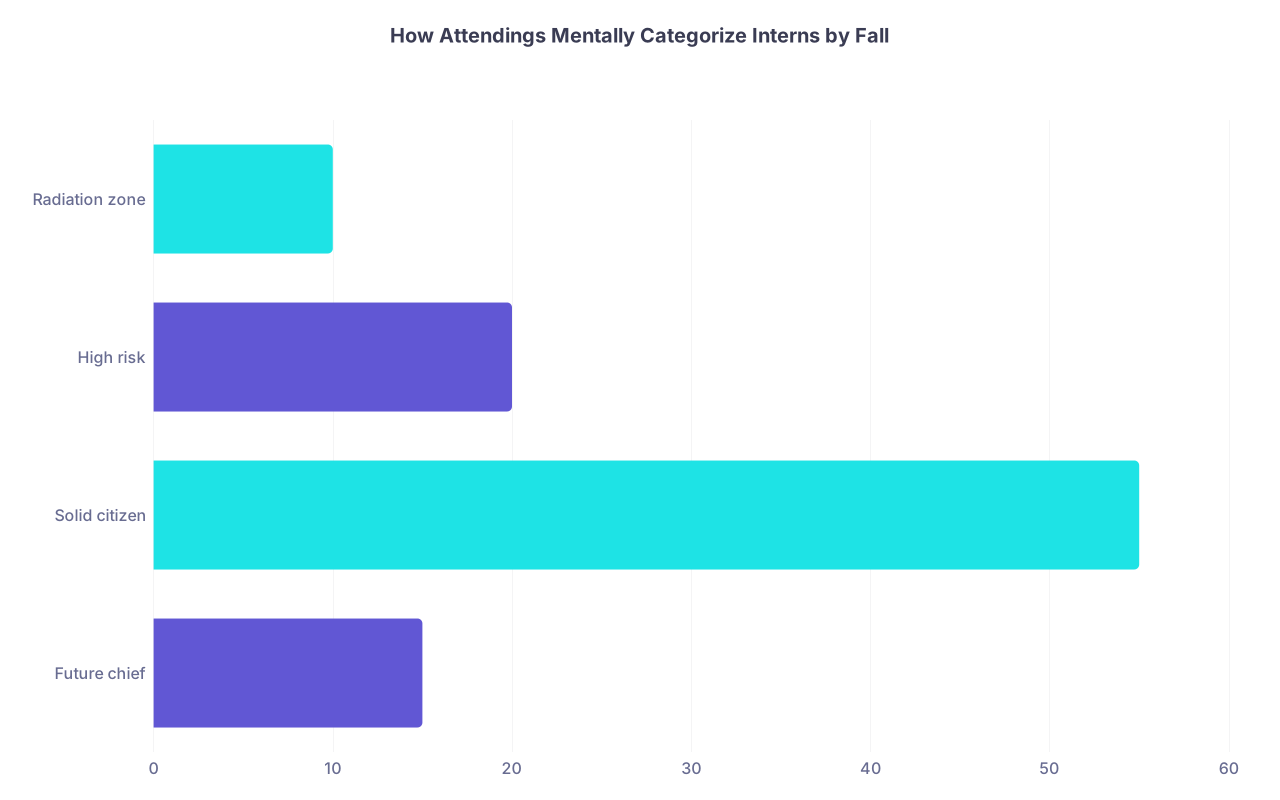
Here’s the hard truth: attendings do not wait until end-of-year evals to decide who they think the future chiefs, top fellows, and problem children are. Those categories start forming in their heads in the first one to three months.
The distinctions have almost nothing to do with raw intelligence. They look more like this:
- Future chief: Calm, reliable, respected by nurses, asks good questions, owns mistakes.
- Solid citizen: Gets work done, not dramatic, may not lead but doesn’t sink.
- High risk: Smart but scattered, defensive, intermittently unreliable.
- Radiation zone: Dishonesty, poor professionalism, emotionally unstable around patients.
| Category | Value |
|---|---|
| Future chief | 15 |
| Solid citizen | 55 |
| High risk | 20 |
| Radiation zone | 10 |
You don’t control everything. But on Day One and Week One, you control more than you think.
The “future chief” types almost always do a few things early:
- They respond to pages quickly and politely.
- They pre-round properly, not performatively.
- They show up prepared. They’ve read about the common problems on their service.
- They don’t name-drop their med school or scores. Ever. They act like rookies who are here to learn.
And I’ll say this plainly: many of you reading this are capable of being “future chief” material. But if you show up acting like you’re still a fourth-year student on a sub-I vacation month, you’ll never get that label, no matter how smart you are.
Practical Adjustment: What To Actually Do on Day One

Let’s strip this down to a few behaviors you can actually implement immediately.
- Arrive early enough that you can find the workroom, log in, and not look lost.
- Introduce yourself briefly to your attending, seniors, and nurses. Simple, confident, not over the top.
- Have a system for tracking tasks: note, app, whatever. But visible. When someone says, “Call nephrology,” write it instantly.
- Ask one or two focused questions. Not to show off. To show you’re engaged. “I haven’t managed a lot of decompensated cirrhosis yet — is there a resource you recommend I read tonight?”
- When (not if) you’re overwhelmed, say: “I’m a bit overloaded — can you help me prioritize what has to be done before noon?” That signals humility and situational awareness, not weakness.
Maybe the most powerful thing: thank people. Nurses, seniors, attendings. “Thanks for walking me through that admission.” That’s how you start to be seen as someone people like working with. Which in residency, matters almost as much as competence.