
It’s the afternoon of Match Day. Your phone is buzzing, your family’s texting confetti, and your future co-residents are already hunting each other down on Instagram. On paper, all of you are “PGY‑1 incoming.” Equal. Clean slate.
Behind closed doors? You’ve already been ranked.
Not officially. Not in ERAS. Not in any document you’ll ever see.
But in the minds of the program director, the chiefs, and a couple of loud senior residents, there’s already a mental tier list of the new class—who they think will be a star, who might struggle, and who they’re already bracing themselves for.
Let me walk you through how that actually happens, because you’re not going to hear this on the pre‑interview Zoom “We’re all a family” talk.
Step One: The Real Rank List Never Really Dies
Everyone thinks Match Day is the end of ranking. Interns are chosen, envelopes opened, story over.
Not how it works.
The real psychological ranking starts months earlier—when programs build their NRMP rank list—and then it just… never fully disappears.
Here’s what happens behind the scenes.
During ranking season, the leadership meets over and over again: PD, APDs, a couple of key attendings, maybe chief residents. They spend hours arguing over your names. They remember the strongest and the strangest.
Someone says, “The MD/PhD from Michigan who did that sepsis project—what was his name? He should be high.”
Or, “The guy who kept correcting the fellow about statistics? No. Hard no.”
Those impressions get anchored. By late January, that rank list is not just a spreadsheet—it’s a story in their heads.
Fast‑forward to Match Day. When the “Matched List” comes in, every PD I’ve ever sat with does the same thing. They pull up their final NRMP rank list, then the list of who actually matched, and they mentally overlay them.
They’re not thinking: “We got 12 interns.”
They’re thinking: “We got #3, #7, #12, #19, #24, #26, #31, #44…”
And then, quietly, they notice patterns:
- “We didn’t get our top research heavy candidate.”
- “We did get the person the chiefs loved.”
- “The applicant I was skeptical about? They’re coming.”
That “ordering” sticks. No one says it out loud as a formal ranking anymore, because legally and professionally you’re now all equals. But they remember who they had at the top of the list.
And yes, they remember who was barely on it.
The Hidden Scorecard: What PDs Actually Remember About You
You think they remember your Step scores and your publications. They don’t. Not really. That stuff got you in the door and onto the rank list.
What sticks in their brains are signals. Let me break down the ones that survive long after Match Day.
1. The “Safe Workhorse” vs “High-Ceiling Wildcard”
Every program has a running mental taxonomy. They’ll never call it that, but they all use it.
Workhorses:
“These are the ones who will just show up, be solid, not make my life harder.”
Wildcards:
“Could be amazing. Could crash and burn. Strong CV but I don’t fully trust the signal.”
When Match results come in, someone will say, “We got a nice mix of solid workhorses and a couple of high‑ceiling types.” That’s not a compliment or an insult. It’s risk assessment.
What drives that?
- Consistent, detailed letters from people they know and trust
- Clear longitudinal clinical work (Sub‑I, home rotation, away rotation) with no drama
- Or on the flip side, the “flashy” file with lots of research but vague or generic clinical comments
The irony: some of you think your big grant or your 12th publication is what makes you a “top recruit.” Often it’s the no‑nonsense, “this person made our lives easier on nights” comment that puts you above someone with 20 papers.
2. Letters from Their Inner Circle
Secret you already suspect, but I’ll spell it out:
Not all letters are equal. Not even close.
That PD who wrote you a glowing letter from a “name” institution? If your PD doesn’t know them personally or by reputation, that letter gets read more cautiously.
But if the letter writer is in their inner circle—same specialty, same conferences, old fellowship buddy—the impact is enormous.
I’ve sat in meetings where the PD literally says, “I don’t care what the personal statement says, if Pat Lee from Hopkins says ‘I’d take them in my program,’ we bump them up.”
So when the new class list shows up, they remember:
- “This one is Dr. X’s ‘top 3 of the last decade’.”
- “This one had that lukewarm ‘will do fine’ letter from someone we trust.”
- “This one—no one I know put their name on the line.”
Those phrases become the shorthand by which they talk about you before you ever arrive.
3. Interview Room Behavior (Not the Personality You Think You Showed)
You’re thinking about your answers. They’re thinking about your meta.
People love to obsess over what to say on interview day. But what gets remembered is different:
- Did you interrupt? Especially women or more junior interviewers?
- Did you ask a thoughtful question that showed you actually knew the program—one step beyond reading the website?
- Did you treat the coordinator and residents like real humans or props?
I’ve watched applicants nuke themselves not with one big mistake, but a steady drip of small tells:
- Repeatedly checking their phone on a “bathroom break” between rooms and then cutting it too close
- Smirking at the mention of certain rotations or patient populations
- Dominating group interactions
Those applicants get an asterisk. On Match Day, when their name shows up, someone goes, “Oh. That one. Strong on paper, a little… much.” And that word “much” sticks.
4. The Sub‑I / Away Rotation Whisper Network
If you rotated at the program, you’re not starting at zero. At all.
By the time Match happens, the chiefs and seniors have already had a couple of hallway conversations with the PD:
- “She was on my MICU month—top third of the rotators this year.”
- “He was… fine. Needed a lot of direction. Not unsafe, but not someone I’d put alone at 2 a.m. early in the year.”
- “Quiet, but dependable. Very teachable. No ego.”
Those phrases become your label in that program’s mind.
On Match Day, when your name appears, the PD will literally turn to a chief and say, “Remind me, how did she do on wards?” And whatever comes out in the next 10 seconds shapes their pre‑Day‑One ranking more than your entire ERAS application.
The Unspoken Tier List: How Your Class Gets “Sorted” Before You Start
No program will admit they do this informally, but they all do some version of it.
Right after Match, PDs and chiefs start planning:
- Who can we put on early heavy rotations?
- Who needs a softer landing block?
- Who’s safe to put on nights earlier?
- Who do we pair together so the team doesn’t implode?
That’s where the real internal “ranking” happens.
Internal Categories They’ll Never Call By Name
They don’t go on a whiteboard, but the categories exist:
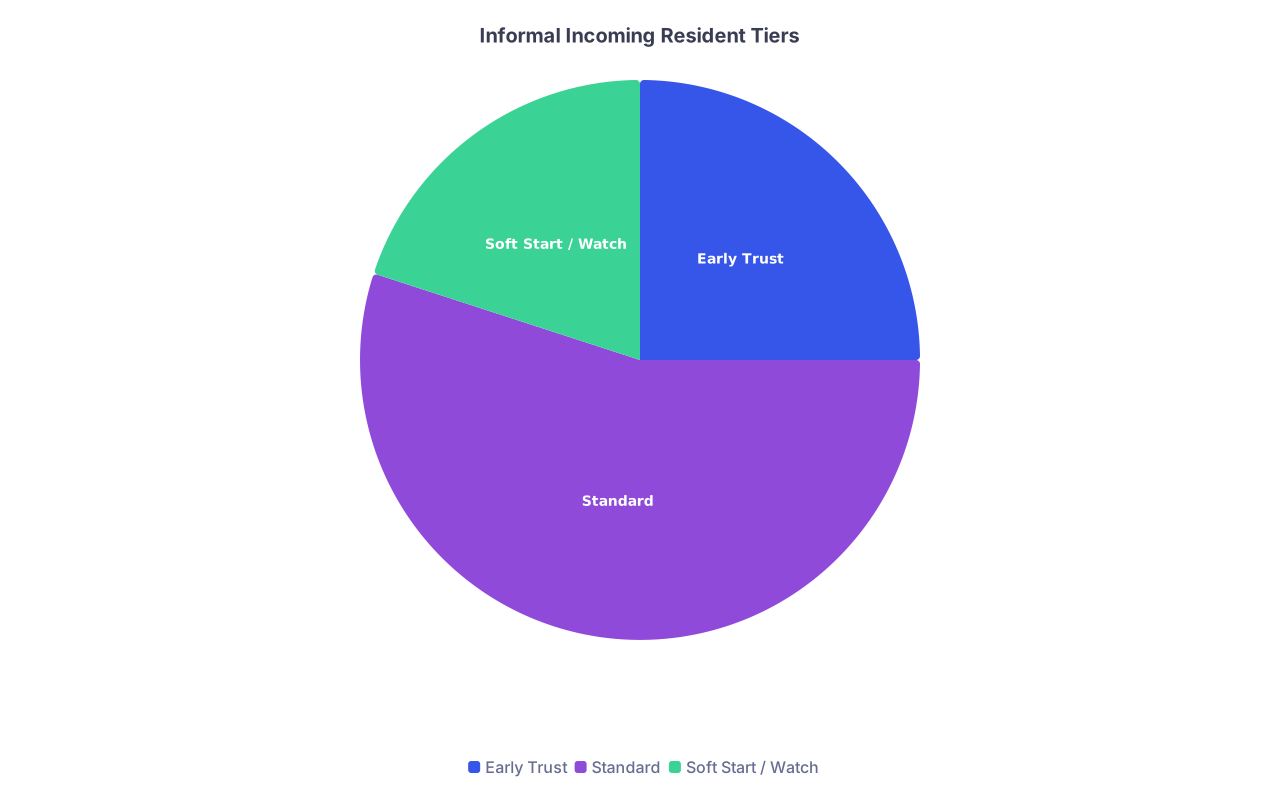
Early Trust Group
“We can safely put them on nights or in the ICU by Block 2–3 with some backup.”Standard Onboarding Group
“They’ll be fine with the normal ramp‑up—wards, ED, electives shuffled in.”Soft Start / Watch List
“Let’s give them a cushier first block, maybe clinic or consults. No nights right away.”
Soft Start does not always mean they think you’re weak. Sometimes it means:
“High anxiety, perfectionistic, could burn out fast—give them room to acclimate.”
And yes, there’s a quiet mental concern list: “If we’re going to have remediation issues from this class, probability is it will be from these 1–2 people.”
That’s the harsh reality.
| Category | Value |
|---|---|
| Early Trust | 25 |
| Standard | 55 |
| Soft Start / Watch | 20 |
Numbers are approximate, obviously, but that’s the typical split I’ve seen: a minority are instantly trusted, a majority are in the middle, and a small subset are approached more cautiously.
What Actually Moves You Up (or Down) Before Day One
Here’s where it gets interesting. You think the ranking is set in stone the moment they see who matched. It’s not.
There are a few quiet data points that still influence where they slot you mentally in the weeks between Match and Orientation.
1. How You Communicate After Matching
Programs watch how you behave the moment you get in.
Emails about contracts, credentialing, onboarding tasks—those are not just paperwork. They’re small tests.
The interns who:
- Respond within a reasonable time
- Are polite but concise
- Don’t need reminders for every single document
Get mentally filed under: “Organized, low‑maintenance.”
The ones who:
- Need multiple reminders
- Send panicky, disorganized emails with no subject line
- Have drama with licensing, background checks, or scheduling without owning their part
Get put in: “Could be a headache” bucket.
No one will ever tell you this, but I’ve seen a PD change their mind from “standard” to “soft start” based solely on chaotic pre‑arrival communication.
2. The Off‑the‑Record Phone Call
There’s a completely unofficial, but extremely real, channel: the back‑channel phone call.
Sometimes it’s late—after Match—because the PD got spooked by something vague in a letter or a comment. They pick up the phone.
“Hey, you trained this student—anything I should know?”
Most of the time, the response is normal: “They’re solid. No major concerns.”
Sometimes, it isn’t.
Phrases that quietly sink you down the mental list:
- “Very bright, but needed a lot of emotional support.”
- “Had some professionalism growing pains early.”
- “Good heart, but not the most efficient. Might struggle on high‑volume services.”
None of those are fatal. But they absolutely alter where you’re mentally placed within your class before you arrive.
3. Social Media and Reputation Drift
Is your social media being actively combed? Usually no. Programs are too busy.
But people talk. Residents at different programs went to med school together. Fellows talk. Attendings gossip more than you think.
If you were “that student” at your med school—chronic complainer, SNAFUs on rotations, or very loud about hating certain patient populations—it sometimes leaks.
I’ve been in rooms where a chief says, “Oh—I know that name. Our MS4s rotated with them at X. They said… he was a lot.” And then everyone goes quiet.
Again, not fatal. But your initial class placement is now: “Wait and see. Don’t throw into the deep end yet.”
How This Quiet Ranking Affects Your First Few Months
Here’s the part you actually care about: what does this mental hierarchy do to your life?
1. Block Scheduling and Early Rotations
The schedule isn’t random. The chiefs and PD often sit “their list” next to the rotation grid.
Who gets the heavy wards block in July? Often at least one:
- Home student they know well
- Strong rotator they trust
- Known team player with good reviews
Who gets elective or outpatient first? That might be:
- People they think need time to adjust
- People with concerning but non‑specific feedback
- Or occasionally someone strong who has a life event (wedding, baby, etc.)
You’ll feel this without anyone saying it. You’ll notice who’s on nights by September and who hasn’t touched a high‑volume service yet.
2. Early Faculty Attention
Faculty and fellows often “adopt” interns they’re excited about. Unofficially.
The research‑minded attending already knows which intern was the “big grant” applicant. The PD has probably mentioned: “Keep an eye on her, she’s interested in cards critical care.” Those people get earlier invitations:
- “Want to join this QI project?”
- “Come to this conference case review.”
- “We’re starting a study—interested in helping?”
Does that mean everyone else is screwed? No. But the first few months’ opportunities aren’t handed out equally. They’re targeted to people who were already seen as high‑potential or high‑alignment.
3. How Much Slack You Get on Early Mistakes
Everyone screws up as an intern. Everyone.
Here’s the hard truth: the same mistake from two different people gets interpreted very differently.
If you came in as “top of the list, strong letters, our chiefs loved them,” your early stumbles get read as:
- “Just adjusting.”
- “New environment.”
- “He’ll figure it out.”
If you came in as “we had some questions but ranked them anyway,” those same stumbles might be:
- “See, this is what we were worried about.”
- “Pattern?”
- “We should flag this early.”
This is why I tell people: your first month is not about impressing anyone—it’s about not confirming the worst version of whatever quiet narrative they already have about you.
How to Rewrite Your “Rank” Once You Arrive
The good news: the pre‑Day‑One hierarchy is not destiny. It’s a hypothesis.
Within 3–6 months, many programs have a new mental rank list. And you’d be surprised how often it doesn’t match the original one.
Here’s what actually moves people up.
1. Reliability Over Brilliance
Programs will take reliable over “genius” every time.
I’ve watched plenty of “top of our list” interns slide into the middle of the pack because they were inconsistent, moody, or too fragile under pressure.
On the other hand, interns initially viewed as “average” ended up the quiet anchors of their class, because they:
- Showed up on time
- Owned their mistakes without dramatics
- Took feedback and visibly improved within weeks
- Didn’t generate drama with nurses or co‑residents
You want to climb the internal pecking order? Be boringly reliable for the first 3 months. It’s deadly effective.
2. Rapid Learning Curve
PDs and chiefs track trajectories, not snapshots.
Intern A: starts strong, plateaus, resists feedback.
Intern B: starts shaky, but each month, there’s a clear uptick.
By fall, everyone is more impressed by Intern B.
If they had you mentally in the “soft start / question mark” bin and you:
- Engage in sign‑out more confidently
- Anticipate cross‑cover issues
- Clean up your notes
- Stop repeating the same errors
They quietly move you up.
3. How You Treat Everyone, Not Just Attendings
The nurses. The clerks. The night float seniors. The ED staff.
Every program has a moment where a PD asks the nurse manager or chief nurse, “How’s the new class?”
They don’t give Step scores. They give adjectives.
“Respectful.”
“Arrogant.”
“Scattered.”
“Wonderful with families.”
And then the PD will ask: “Anyone standing out? Good or bad?” Names get mentioned. That filters straight into how they talk about you in faculty meetings.
If you want to hack the system that pre‑ranked you, this is your biggest lever. Be the intern the nurses like working with. It travels fast.
Quick Reality Check: How Much Should You Obsess Over This?
You shouldn’t. You should understand it, not spin over it.
Yes, they’ve already formed expectations. Yes, they’ve slotted you into mental bins before you touch an order set.
But here’s the deeper truth I’ve seen after years of watching this:
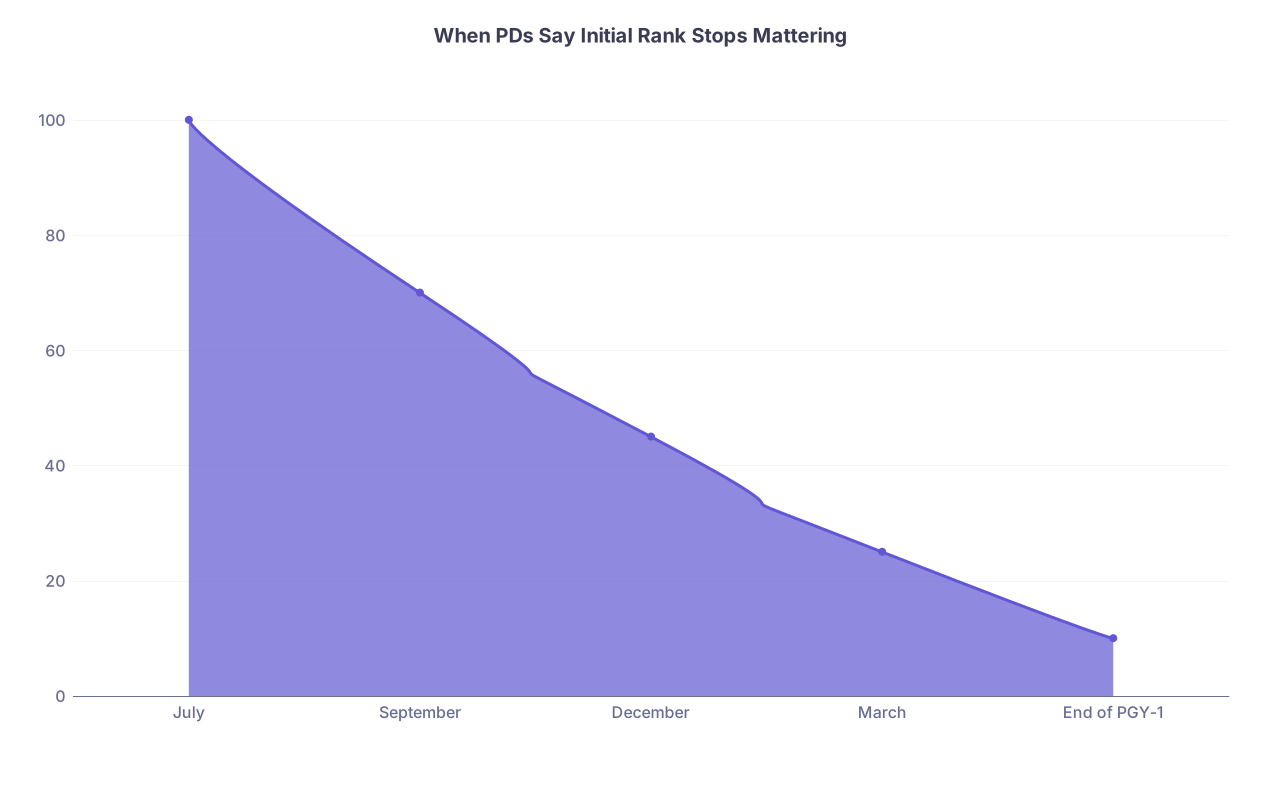
By the end of PGY‑1, the original ERAS-based rank list is mostly irrelevant.
The new internal ranking is based on:
- Who they trust on call
- Who families compliment
- Who the nurses would want admitted to them if they were sick
- Who keeps it together at 3 a.m. when it’s chaos
So if you matched somewhere and you’re convinced you were near the “bottom” of their original list? Stop obsessing. They’re not re-reading your application. They’re watching what you do on rounds tomorrow.
Your job is simple:
Do not live down to the worst story they might have told themselves about you.
Make it easy for them to update their mental file.

| Step | Description |
|---|---|
| Step 1 | Match Day List |
| Step 2 | Pre Day One Impressions |
| Step 3 | Early Rotations and Schedule |
| Step 4 | Observed Performance |
| Step 5 | Updated Mental Ranking |
| Step 6 | Opportunities and Trust |
| Step 7 | Long Term Reputation |
| Step 8 | Direct Feedback and Coaching |
| Factor | How Interns Rate It | How PDs Actually Use It Early |
|---|---|---|
| Step scores / exams | Very high | Low (mostly pre‑interview) |
| Research / publications | Very high | Moderate (for niche paths) |
| Interview performance | High | High (for initial trust) |
| Sub‑I / rotation reputation | Moderate | Very high |
| Onboarding communication | Low | Moderate |
| Early reliability on wards | Moderate | Extremely high |

What You Should Actually Do With This Knowledge
Use it to shift your mindset, not to feed paranoia.
If you’re about to start as a new intern:
- Assume there’s a quiet narrative about you. Your job is to update it, not guess it.
- Take onboarding seriously. Every interaction is a data point.
- Be predictably prepared and low‑drama. That alone will move you into the “trusted” group over time.
If you just matched and you’re wondering where you stood on their original list, I’ll give you the honest answer: it doesn’t matter anymore. The game has changed.
Day One is the start of a different kind of ranking. One you actually control.
| Category | Value |
|---|---|
| July | 100 |
| September | 70 |
| December | 45 |
| March | 25 |
| End of PGY-1 | 10 |
By the end of PGY‑1, maybe 10% of your reputation is still tied to their original impression. The rest is built on how you actually did the job.