
Your Match letter is not the finish line. It is the beginning of the part where your social media can actually ruin your career.
I have watched residents lose contracts, get called into the PD’s office in week one, and start intern year already labeled as “a problem” because of what they posted between Match Day and July 1. Not their clinical skills. Not their exams. Their Instagram, Twitter, TikTok, and group chats.
Do not make the mistake of thinking, “I already matched, I am safe.” You are not.
The Dangerous Gap: Match Day to Day 1
This is the riskiest stretch for online missteps:
- Match Day euphoria
- The “I’m done” post-boards burnout
- A long runway before anyone is supervising you closely
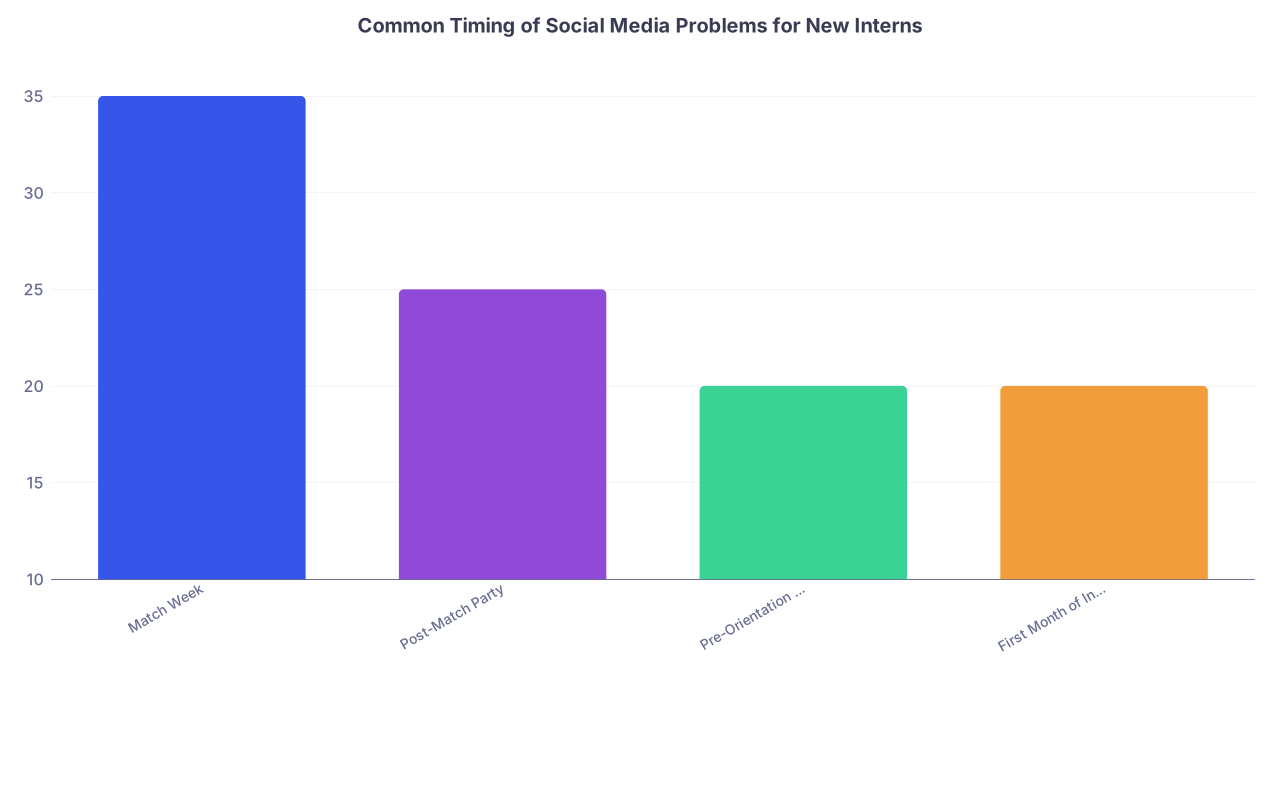
| Category | Value |
|---|---|
| Match Week | 35 |
| Post-Match Party | 25 |
| Pre-Orientation Month | 20 |
| First Month of Internship | 20 |
Here is the part many students miss:
Your “match” is contingent on:
- Credentialing and HR review
- Professionalism checks (yes, including your online presence)
- Program leadership’s ongoing willingness to train you
They absolutely can:
- Rescind a contract before start date
- Put you on a professional behavior remediation plan on day one
- Mark you early as “high risk” in internal notes
The myth that gets people in trouble
The belief: “Once I matched, they cannot touch me.”
Reality:
- GME and hospitals are terrified of reputational risk.
- Programs have zero patience for incoming interns who already show poor judgment.
- Everything you post after Match Day is now being read in the context of “future hospital employee,” not “random student.”
You worked too hard to throw away trust before you even set foot on the ward.
Mistake #1: Match Flexing That Crosses the Line
Celebrating Match Day is fine. Being reckless about how you do it online is not.
Problem behaviors I see every year
- Screenshots of rank lists, emails, or ERAS details
- Posting old rank screenshots
- Sharing “I ranked X #1, thank God I did not end up at Y”
- Showing PD emails/messages or “confidential” encouragement notes
That last one is a huge red flag. Program directors really hate seeing their private communications turned into content.
Trashing programs publicly
I have literally seen:- “So glad I escaped [Program Name] after that weird interview”
- “If you matched at [Hospital], I am praying for you. Yikes.”
Guess who else sees that?
- Faculty from those hospitals.
- Fellows who rotate between institutions.
- Your own PD, who very likely knows the PD you just insulted.
Arrogant flexing that reads unprofessional
The classic captions:- “I own [City] now.”
- “Come find me at [Hospital], peasants.”
- “Biggest flex of 2026: I will be your doctor.”
It might get laughs from your classmates. It does not get laughs in the PD group chat.
How this bites you later
- Programs send screenshots to each other. I have seen the email chains.
- Your PD may walk into orientation already knowing you as “the one who posted that thing.”
- Any future professionalism issue will be interpreted as “pattern of poor judgment,” not a one-off.
Safer approach:
- Celebrate the result, not your superiority.
- Keep specific programs and people out of your captions.
- Never share private communication from faculty or PDs.
Mistake #2: HIPAA-by-Social-Media Before You Even Start
Yes, you can violate privacy laws before your first day.
I have seen incoming interns:
- Post patient stories from acting internships with details enough to identify
- Share images from clinical sites without permission
- Brag about procedures they “helped with” in ways that are not anonymized

Common pre-internship privacy mistakes
- “De-identified” stories that are not de-identified
You think: “No name, so it is fine.”
Wrong. If someone who was there can tell who it is, you are on thin ice.
Red flags include:
- Rare conditions in a small community
- Specific dates, units, ages, or circumstances
- Unflattering descriptions of patient behavior or appearance
Posting photos in patient-care areas
Examples:- OR selfies with visible equipment tags or patient info on monitors/labels
- ICU photos where the whiteboard, room number, or bed label is visible
- Hallway shots with patient or family members in the background
These are the pictures that get sent straight to risk management.
- Reposting colleagues’ borderline content
You may think a retweet or repost is harmless. It is not.
If it hits the wrong eye, “Everyone in that group seems unprofessional” becomes the narrative.
Why it haunts interns
- Compliance or risk management calls your PD: “This new intern is already a problem.”
- Early, increased monitoring during rotations. You get less benefit of the doubt.
- Future fellowship or job letters framed with, “This resident had a privacy-related professionalism concern in PGY-1.”
The fix is boring but effective:
No clinical stories, no clinical photos, no “crazy case” posts. Especially not now.
Mistake #3: Posting Your Party Life Like You Are Not About to Be a Physician
You are allowed to have a life. What you cannot do is broadcast poor judgment.
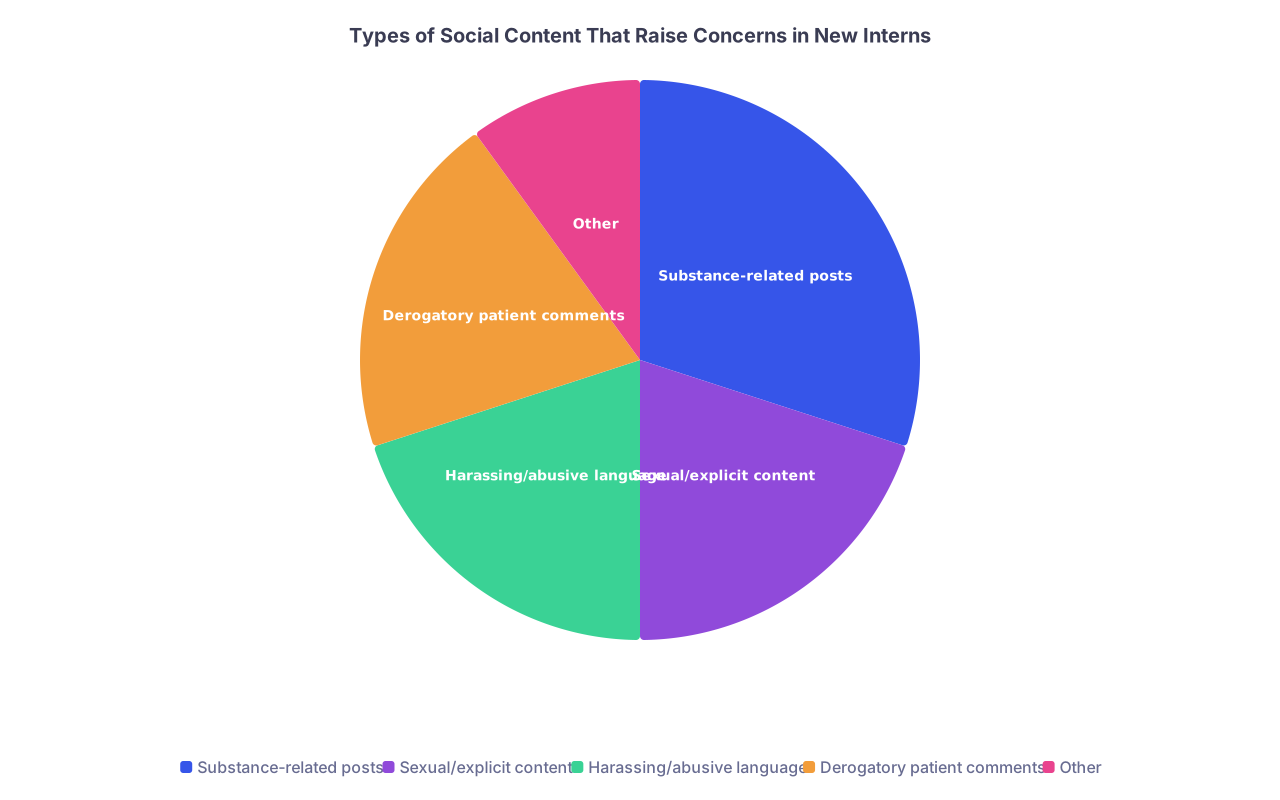
| Category | Value |
|---|---|
| Substance-related posts | 30 |
| Sexual/explicit content | 20 |
| Harassing/abusive language | 20 |
| Derogatory patient comments | 20 |
| Other | 10 |
The patterns that get interns branded as unprofessional
- Alcohol and drugs as your brand
- Stories of you blackout drunk, vomiting, slurring
- Posts glamorizing marijuana, pills, etc., especially with captions like “How I cope with medicine”
- Visible drug use or paraphernalia
No, “it’s legal in my state” does not save you if it triggers questions about impairment and safety.
- Explicit or highly sexual content
- Thirst-trap accounts that are easy to connect with your full name
- OnlyFans side gigs tied to your real identity
- Content mixing sexual jokes with your new role (“Your future doctor is a freak,” etc.)
Programs are conservative about reputation. They worry about news headlines, not your philosophical right to do what you want.
- Gloating about being irresponsible
- Posts about skipping shifts, blowing off responsibilities, or cheating during training
- “I passed Step 2 without opening a book lol” type content
- Jokes about cutting corners or not caring about patient safety
Even if you are exaggerating—it does not look funny from the C-suite.
Why this matters more after you match
As a student, you are one of thousands with very little institutional visibility.
As a future resident, you are:
- An employee with hospital ID and badge
- A representative of your program to patients and the public
- One screenshot away from ending up in front of a credentialing committee
You do not need to live like a monk. You need to stop making your worst moments searchable.
Mistake #4: Bad-Mouthing Your School, Classmates, or Faculty Publicly
This one feels harmless to many students. It is not. The medical world is much smaller than you think.
I have watched this exact scenario happen:
- Incoming intern posts a long rant dragging their med school’s administration by name.
- Names individual faculty and “toxic attendings.”
- Their new program’s associate PD did residency with the dean they just slandered.
- Guess what happens to their reputation before Day 1.
| Your Assumption | Actual Reality |
|---|---|
| Only classmates | Classmates, faculty, alumni, program directors |
| Just my followers | Screenshots in group chats, emails, PD networks |
| It will disappear | Cached, archived, saved, forwarded |
Variations of this mistake
- Public Twitter threads calling specific institutions racist/sexist/toxic with identifiable staff and no evidence
- Instagram stories mocking deans or staff by name or using demeaning nicknames
- TikToks that dramatize confidential school conflicts with real details
Are there real problems in medicine? Yes. Should they sometimes be called out? Also yes. But if you do it sloppily, publicly, and emotionally, it is you who will pay the price first.
Programs put a premium on “low drama” trainees. They do not want the intern who looks like a walking HR complaint on social.
If you are serious about advocacy, do it:
- Thoughtfully
- With some separation from your personal identifiers
- Without casually doxxing individuals you will see again in this tiny profession
Mistake #5: Forgetting That DMs and Group Chats Are Not Private
The most naive belief: “It is just in the group chat. It is fine.”
I have seen entire intern classes dragged into meetings because of:
- Screenshots from a private Signal / WhatsApp / GroupMe chat
- Slack channels with “jokes” about nurses, patients, or other residents
- Direct messages that turned into formal complaints

| Step | Description |
|---|---|
| Step 1 | You send edgy message |
| Step 2 | Chat member offended |
| Step 3 | Screenshot taken |
| Step 4 | Shared with trusted friend |
| Step 5 | Forwarded to chief or PD |
| Step 6 | You called for meeting |
High-risk content in “private” spaces
- Derogatory comments about nurses, techs, or specific colleagues
- Jokes about harming patients, ignoring pages, or faking notes
- Mocking patients’ weight, language, education, or socioeconomics
- Sexist, racist, homophobic, or otherwise discriminatory garbage that “everyone knows is a joke”
That “everyone” always ends up including one person who is not laughing and hits forward.
Your new program will hold you responsible for what you write—even in DMs—if it ends up in their hands.
Treat every typed word as if it could appear on a projector at orientation with your name on it. Because sometimes, it essentially does.
Mistake #6: Blurring Professional and Personal Branding Sloppily
There is nothing wrong with having a professional presence online. The mistake is:
- Mixing personal chaos and professional identity in one account
- Making abrupt “I am professional now” changes without cleaning your history
- Tagging your future hospital in posts that are not remotely professional

Sloppy behavior that causes headaches
Using your full legal name on an account with years of questionable content
When someone Googles “Firstname Lastname MD,” your old “party Instagram” shows up first. Excellent.Tagging your new hospital or program in every non-professional post
- Beach photos in minimal clothing
- Heavy drinking nights
- Spicy relationship drama
All lovingly connected to the hospital brand.
- Declaring yourself an expert before you are even licensed
- “Future cardiologist. DMs open for medical questions.”
- Giving medical advice publicly without disclaimers
- Criticizing guidelines, specialties, or therapies from a place of obvious inexperience
Programs notice hubris. So do future fellowship directors.
A cleaner way to set things up
You do not need to disappear from the internet, but you should:
- Decide which account (if any) is your professional face
- Strip your full name and school/hospital from personal accounts you do not plan to professionalize
- Make older, questionable content private or archive it
- Avoid sharing strong medical opinions in public until you know what you are talking about
Professional branding can help your career. Sloppy branding just arms people with reasons not to trust you.
Mistake #7: Ignoring Your Digital Footprint Until Someone Else Brings It Up
The worst position to be in is reactive:
- PD: “We need to talk about a post that was brought to our attention.”
- You: “I did not realize that was still up.”
It always sounds weak. It reads as “careless,” not “unlucky.”
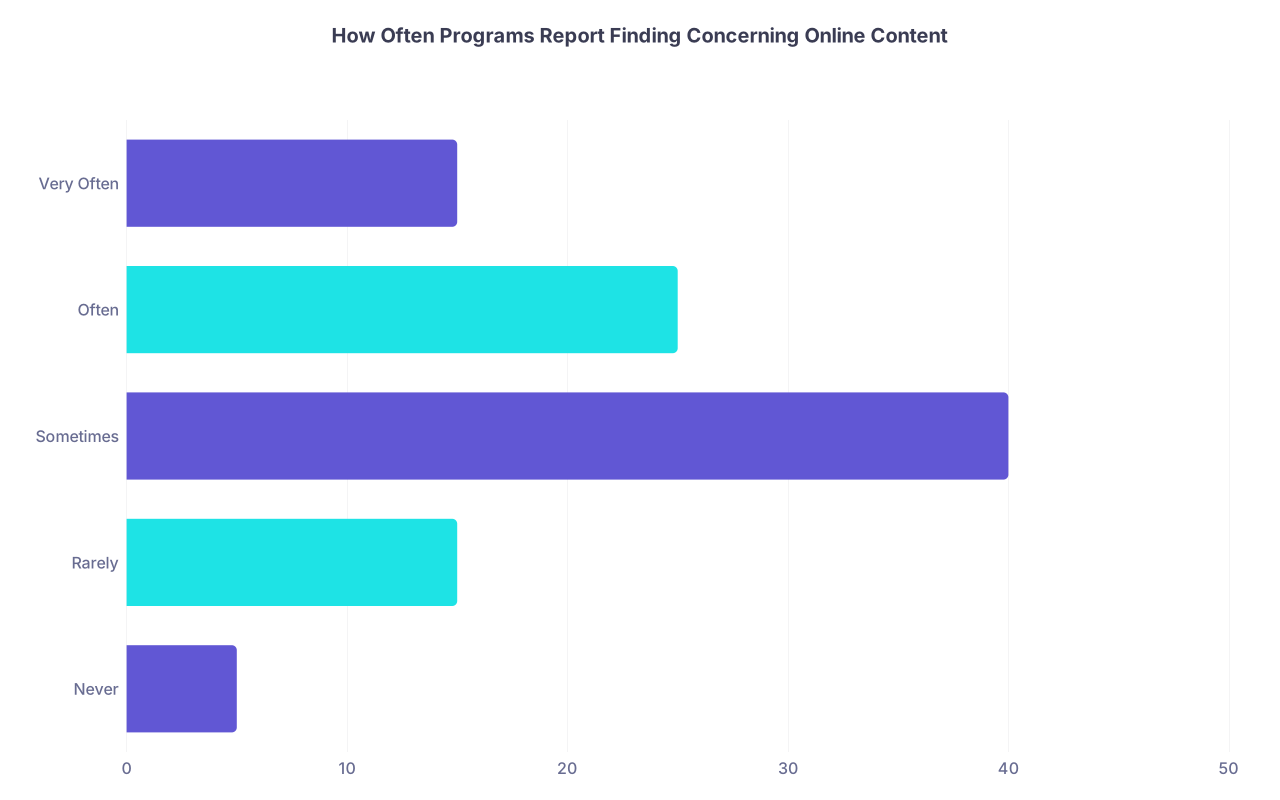
| Category | Value |
|---|---|
| Never | 5 |
| Rarely | 15 |
| Sometimes | 40 |
| Often | 25 |
| Very Often | 15 |
What you should do before July 1
Think of it as digital pre-rounding on yourself:
Search yourself like a PD would
- Google your full name + “MD,” “medicine,” “residency,” your school
- Check images, not just web results
- See what is public on Facebook, Instagram, TikTok, Twitter, LinkedIn
Audit your last 3–5 years of posts
You are not looking for perfection. You are hunting for:- Obvious unprofessional content
- Anything that insults groups of people, programs, or institutions
- Clinical content that looks even remotely like a privacy issue
Deal with borderline content ruthlessly
Archive, delete, or lock down. Do not convince yourself “it is probably fine.”
PDs are not reading your posts with maximum generosity.Review your tags
Your friends may have tagged you in things you do not remember.
Untag, ask for removal, and tighten tag permissions.
This is not paranoia. It is basic self-preservation.
Mistake #8: Underestimating How Fast Things Spread Among Programs
Let me be blunt:
Program directors talk. Chiefs talk. Faculty talk. A lot.
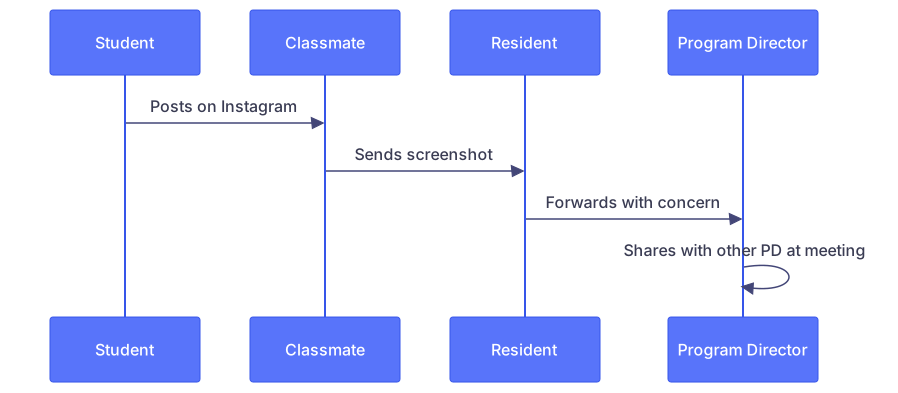
I have personally seen:
- A single screenshot circulate among multiple programs in the same specialty within 24 hours
- Applicants’ names brought up at regional meetings because of online behavior
- Reputation from one training site poison opportunities at another
You are entering a profession that runs on backchannel communication. Sometimes that helps you. Sometimes it does the opposite.
Your goal should be simple: do not be the story everyone is laughing or cringing about at the PD dinner.
A Simple Framework: The “Future Email Test”
You do not need a 20-page social media policy in your head. Use this instead.
Before you post, ask:
“If this screenshot were emailed to my program director, with no context and my full name, what would happen?”
Three possible answers:
Nothing
- At worst, they roll their eyes and move on.
Safe enough.
- At worst, they roll their eyes and move on.
Awkward conversation
- You get called in, asked to explain, and warned.
This is already too much risk for something as useless as a tweet or story.
- You get called in, asked to explain, and warned.
Formal concern
- Risk management, HR, or GME becomes involved.
- Words like “professionalism,” “fitness for duty,” or “remediation” appear.
Never worth it.
If your gut says it lands anywhere near #2 or #3, you already know what to do.
The Bottom Line
Three points to keep front and center:
- The Match is not a free pass. Programs can and do act on what you post after Match Day, including before you start.
- The internet never forgets, and medicine has a very long memory. Screenshots travel faster than you think, and the circle of people who care about your online behavior is bigger than you want to believe.
- Protect your career now by treating every post, story, and message as if your PD, your future fellowship director, and your sickest patient’s family might read it. Because one day, they just might.