
It is 4:37 p.m. on Match Day. The confetti has settled. Your phone is slowing down from the flood of texts. Reality is creeping in: you matched, but now you actually have to talk to the program that owns your next 3–7 years.
You open your email. There is a welcome message from your new residency program. A few details. A contact person. Maybe a request for some documents.
You start typing a response.
Stop. This is where people blow it.
I have watched perfectly solid interns walk into July carrying a “problem” label because of what they did in the 48 hours after Match Day. Not their Step scores. Not their letters. Their communication. One careless email. One weird phone call. One tone-deaf request.
Let me walk you through the seven post-Match communication mistakes that immediately raise red flags for program directors (PDs) and coordinators—plus how to avoid being “that intern” before you even show up.
Mistake #1: Treating Your PD Like a Buddy in Your First Email
You just matched. You feel like you “know” the PD from interview day. You remember they laughed at your joke about night float. You decide to send a casual, friendly email:
“Hey Dr. S! Super pumped to be joining the fam!! Can’t wait to crush intern year. Lmk what you need from me. – J”
No. Absolutely not.
Here is what goes through a PD’s mind when they see that style of message on Day 1:
- “Is this person going to talk to patients like this?”
- “Is this how they document?”
- “Are they going to understand boundaries with staff and attendings?”
You do not know them. They do not know you. Interview day was a sales pitch, not a friendship.
The safe move:
- Use formal address unless told otherwise: “Dr. Smith” and “Dear Dr. Smith,” not “Hey” and certainly not first names.
- Write in complete sentences. Spell things out. No text shorthand. No “u,” “lmk,” “gonna,” or emojis.
- Keep it short and clear: express gratitude, confirm you are excited, respond to any asked-for items, and stop.
If your PD later signs emails with their first name and “Please call me Mike,” that is your green light to relax slightly. But your first few communications should signal professionalism and judgment.
If your first message reads like a group chat, you have already lost points you did not need to lose.
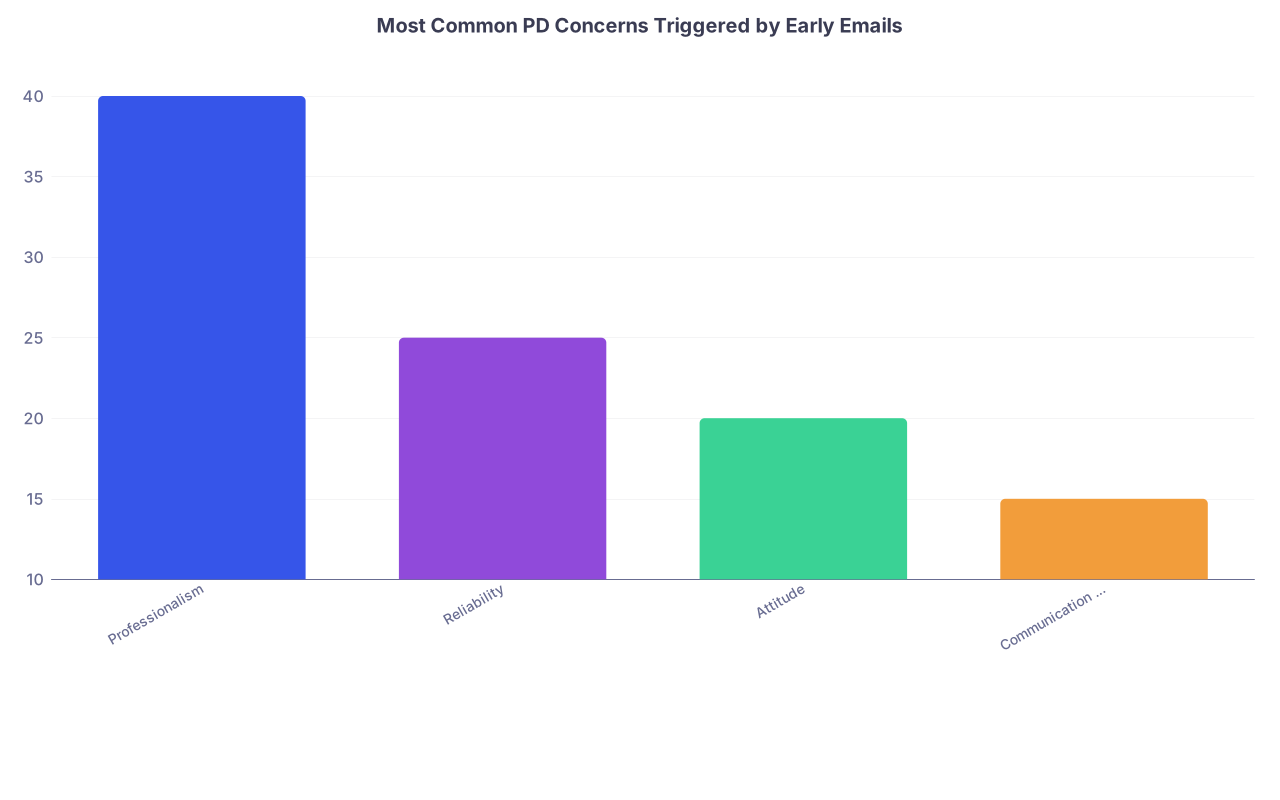
| Category | Value |
|---|---|
| Professionalism | 40 |
| Reliability | 25 |
| Attitude | 20 |
| Communication Skills | 15 |
Mistake #2: Radio Silence After the Welcome Email
You receive a welcome email that ends with something like:
“We are excited you will be joining us. Please confirm receipt of this email and that the attached information is accurate.”
And you… say nothing. For days.
This is one of the fastest ways to make a coordinator walk into the PD’s office and say, “We might have a problem with this one.”
Why? Because the jump from “student” to “intern” is fundamentally about reliability. PDs are not just judging your knowledge. They are watching:
- Do you read your email?
- Do you follow basic instructions?
- Do you respond in a reasonable time frame?
I have seen programs start an internal “watch list” for new interns based entirely on lack of responsiveness in March–May.
Avoid the mistake:
- If an email asks for confirmation or action, respond within 24–48 hours. Even if you cannot complete the task yet, reply with acknowledgement and a realistic timeline.
- If you are swamped or traveling, say so: “I have received this and will complete the forms by Friday.”
- If you did not get an expected email (for example, they said “you’ll receive onboarding details by Monday” and it is now Wednesday), it is fine to send a short, polite check-in.
Silence reads as disorganization at best, disregard at worst. Neither is how you want your file mentally labeled.
Mistake #3: Making Demands About Schedule or Location Immediately
This one gets people in trouble every single year.
You match. Within 24–72 hours, you email or call with something like:
- “I need my vacation in July for a wedding.”
- “I can’t do nights my first month.”
- “I need to be assigned to [campus / clinic / track] because my partner lives nearby.”
- “I would like to switch my preliminary year to your categorical spot.”
From the PD perspective, this screams: “High maintenance. Centered on self. May be difficult all year.”
Look, you are allowed to have needs. You are allowed to have a family, a partner, a life. But the timing and tone of how you raise these issues is everything.
When is it reasonable to bring up constraints?
- Hard, non-negotiable issues that affect your ability to start or work safely (visas, licensure problems, serious medical conditions) should be disclosed early.
- Genuine emergencies that arise after Match (unexpected surgery, high-risk pregnancy, sudden caregiving role) absolutely need early communication.
But “I already booked a 10-day vacation in July” is not an emergency. That tells the program your personal travel planning took precedence over understanding how residency works.
If you truly have a major life event, your approach matters:
Wrong:
“Hi, I need July 5–15 off for my wedding and honeymoon. Please block that now.”
Better:
“Dear Dr. Smith, I am very grateful to be joining the program. I wanted to ask about the usual process for vacation requests. I have a previously-planned wedding on [date] and am hoping to see whether there is any flexibility to request that time. I understand scheduling constraints and will of course follow whatever system is in place.”
You still might not get what you want. But you will not be labeled “entitled before Day 1.”

Mistake #4: Sharing Program Doubts or Complaints Over Email
Match is emotional. Maybe you did not match at your top choice. Maybe you are disappointed with the city. Maybe you felt “love-bombed” during interview season and now feel misled.
Here is the mistake: using those emotions to drive your first communications.
Things PDs never want to see in a post-Match message:
- “I was surprised to match here as it was not my top choice, but I will make the best of it.”
- “I am still pretty disappointed about where I ended up, but I guess this will work.”
- “I got off a waitlist at [‘better’ program name]—can I switch?”
Or, even worse, saying those things to other faculty or residents on email threads you do not realize are visible to leadership. It happens. People forward.
The PD is not your therapist. They are not your class group chat. They are evaluating whether you are coachable, professional, and able to contain your feelings when necessary.
If you are grieving the match result, that is real. Talk to:
- Friends
- Family
- A mentor not at that institution
- A therapist
Not your PD. Not your coordinator. Not on email, not on text, not in any written format that lives forever.
And especially not on social media where residents and faculty can and do see screenshots.
Mistake #5: Being Vague or Dishonest About Visa, Licensing, or Legal Issues
Programs lose their minds over preventable bureaucratic disasters. And they remember exactly which intern’s name was attached when things blow up in June.
A common high-risk behavior: minimizing or hiding anything that could affect your ability to start on time.
This includes:
- Visa issues or changes in status
- Licensing exam failures or retakes not fully disclosed
- State medical board problems
- Background check concerns
- Health conditions that require accommodations
Here is how people get into trouble. They say:
- “I think it will be fine” instead of confirming with actual documentation.
- “I did not want to bother the program with this yet.”
- Or they just say nothing and hope it resolves itself.
From the PD and GME office standpoint, this looks like dishonesty or poor judgment. They would much rather deal with a messy, early problem that you flag than discover in late June that you cannot be credentialed.
Avoid the mistake:
- If you matched on a visa or require a visa, respond promptly to any communication from GME or the program about documents.
- If something in your situation changes, tell them early, clearly, and in writing.
- If you are unsure whether something is relevant, ask a short, direct question: “Should I inform the GME office about X, and if so, what is the best way to do that?”
You do not need to send your entire medical history. But if something would prevent you from starting work as scheduled, hiding it is the fastest way to destroy trust before you arrive.
| Issue Type | Example |
|---|---|
| Visa status | Change from F-1 to needing J-1 |
| Licensing | Step 2 CK failure awaiting retake |
| Legal / background | Recent arrest or charge |
| Health affecting work | Planned surgery near July 1 start |
Mistake #6: Over-Familiar Texting or Social Media Contact
You get added to a group chat with current residents. Maybe someone gives out their number. You find your future chiefs on Instagram. You feel welcomed.
And then someone crosses the line.
Classic bad moves:
- Texting chiefs or PDs late at night for non-urgent issues.
- Sending memes or jokes about patients, call schedules, or other programs to group messages where faculty are present.
- DM-ing attendings on Instagram or Facebook like they are your friends.
- Posting stories complaining about “being stuck at [Program Name]” and thinking accounts are private. They are not.
PDs and chiefs understand you are a human, not a robot. They are not shocked that you have social media. They are not offended by the occasional meme. What alarms them is impaired judgment.
Two things they watch for closely:
- Professional boundaries – Do you understand the difference between co-intern banter and communication with leadership?
- Confidentiality and discretion – Are you broadcasting things that could violate patient privacy, insult the hospital, or breach trust?
Before you send or post anything that mentions:
- Patients
- Specific units or services
- Your program by name
- Your co-residents or faculty
Ask a simple question: “If this were screenshotted and emailed to the PD, would I be comfortable explaining it?”
If the answer is no—or if you even hesitate—do not send it.
Your license and reputation are not worth 10 seconds of validation from a story reaction.
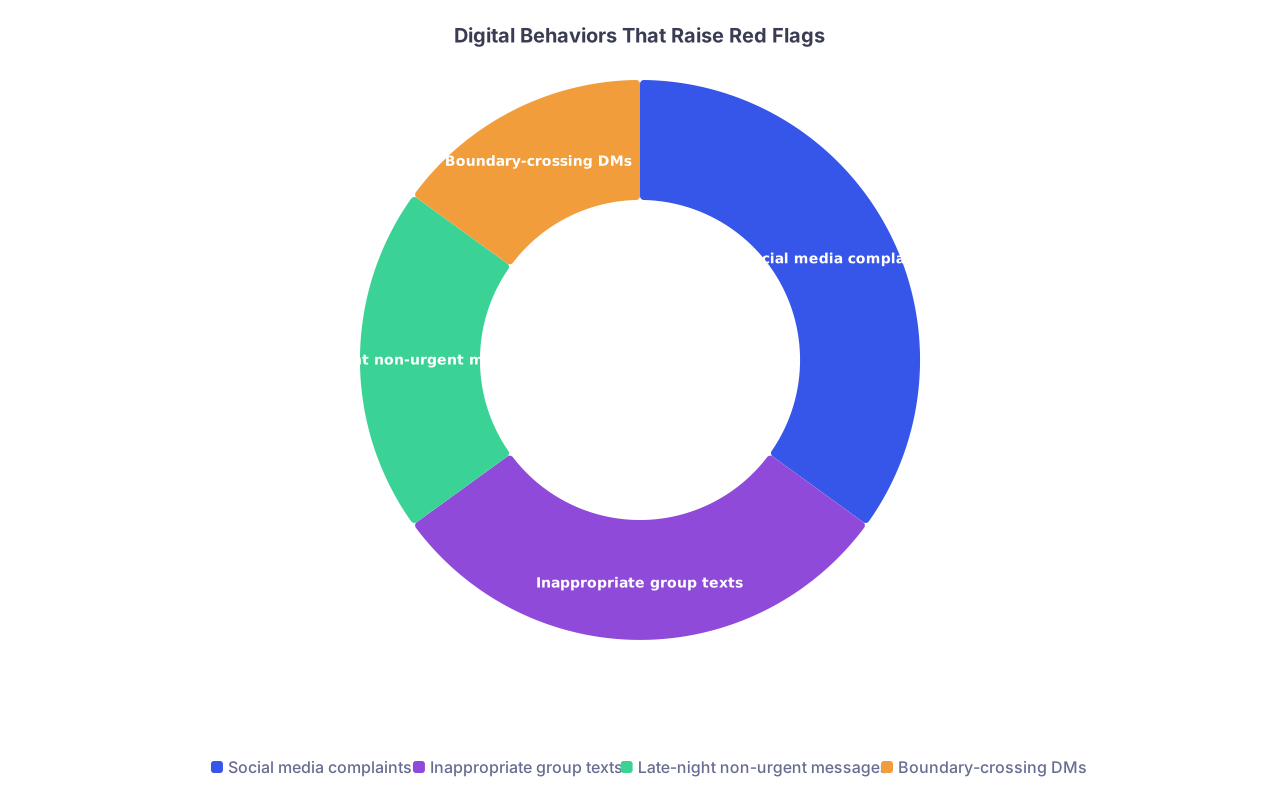
| Category | Value |
|---|---|
| Social media complaints | 35 |
| Inappropriate group texts | 30 |
| Late-night non-urgent messages | 20 |
| Boundary-crossing DMs | 15 |
Mistake #7: Turning Every Question into a Long-Winded Life Story
On the other side of the spectrum from radio silence is this: sending multi-paragraph, emotionally loaded emails about relatively simple logistical questions.
Examples I have actually seen versions of:
- A 900-word email explaining why they prefer day shifts for the first six months, complete with family history.
- A detailed narrative about being “burned” in medical school whenever asked to sign a basic form, demanding multiple reassurances and clarifications.
- Long apologies for minor delays, full of unnecessary personal drama.
PDs and coordinators are busy. They are handling dozens of interns, faculty, schedules, accreditation, and crises you know nothing about. When every interaction with you becomes an emotional project, you get categorized very quickly as “high maintenance.”
That does not mean you cannot ask questions. Ask questions. Clarify expectations. Just keep it precise.
A better pattern:
- One email = one topic (or a clearly related set of topics).
- Keep it under 10–12 lines if possible.
- Use bullet points sparingly if you have multiple specific questions.
- Save the full life story for your therapist, not your coordinator.
Another trap: apologizing excessively. A short, clean apology once is fine. But long, repetitive self-flagellation over small issues makes programs worry you lack resilience and may crumble under normal residency stress.
They want you to be accountable. Not fragile.

How to Communicate Like Someone They Trust
You do not need to be perfect. You just need to not make the obvious mistakes.
A simple structure for nearly all post-Match communications:
- Clear subject line. “Match – New PGY-1 – [Your Name] – [Short topic]”
- Brief greeting. “Dear Dr. Smith,” or “Dear Ms. Johnson,”
- One-line context. “I am excited to be joining the program as a PGY-1 in Internal Medicine this July.”
- The point. One to three short paragraphs with what you are asking, answering, or informing.
- Concrete follow-up. “I will submit X by [date].” or “Could you confirm whether Y is acceptable?”
- Professional close. “Best regards,” “Sincerely,” etc., with your full name and contact info.
If you follow that structure and avoid the seven landmines above, you are already in the top half of your class communication-wise. Probably the top quartile.
Programs remember the interns who start like adults.
Quick Comparison: Calm vs. Concerning Messages
| Situation | Concerning Version | Better Version |
|---|---|---|
| First reply to PD | “Hey, so hyped to join!!” | “Dear Dr. Smith, thank you for the warm welcome...” |
| Vacation request | “I need July 3–14 off for my trip.” | “Is there a process to request time off around X?” |
| Onboarding delay | Silence for a week | “I received the forms and will submit by Friday.” |
| Visa complication | “I think it should be fine.” | “My visa status changed; here are the details.” |
FAQs
1. Do I need to email my PD directly right after Match Day, even if the program has not contacted me yet?
No. If they have not emailed yet, you do not need to chase them down on Day 1. Many programs send a coordinated message from the coordinator or GME office first. If you have heard nothing at all after about a week, a short, polite email to the coordinator (not the PD) asking if there is any initial paperwork or information you should expect is reasonable. Do not send a long personal statement about your life; just check in.
2. Is it ever appropriate to text a PD or program leadership?
Only if they explicitly give you their number and say text is acceptable for certain issues. Even then, treat text as a channel for brief, time-sensitive matters: being late due to an emergency, confirming a meeting location, or urgent questions. Do not use text for long explanations, complaints, or non-urgent questions that can wait for email. And never text late at night unless it is truly urgent and clearly impacts patient care or safety once you have started.
3. How honest should I be about personal struggles (burnout, mental health, family issues) before residency starts?
You should be honest about anything that materially affects your ability to start on time, be present, or perform the essential duties of the job, especially if you may need accommodations. That said, the PD is not the ideal person for raw emotional processing. Stick to clear, factual communication about needs, documents, and timelines. Handle the emotional side with your own support system and professionals, not in lengthy emails to leadership.
4. What if I already made one of these mistakes in an email—can I fix it or is the damage done?
You cannot un-send an email, but you can change the pattern. If you sent something too casual or demanding, your next communications should be clean, professional, and concise. Do not send a second long apology; that just draws more attention. Simply shift your tone going forward and demonstrate reliability—respond on time, complete onboarding tasks, and show up prepared. Most PDs are willing to let one mildly off email go if your subsequent behavior is solid.
Key points:
Treat early communication like part of your professional file—because it is. Avoid casual, demanding, or emotionally messy messages in the first weeks after Match. Respond reliably, be honest about real barriers, and keep your life story off the program’s inbox.